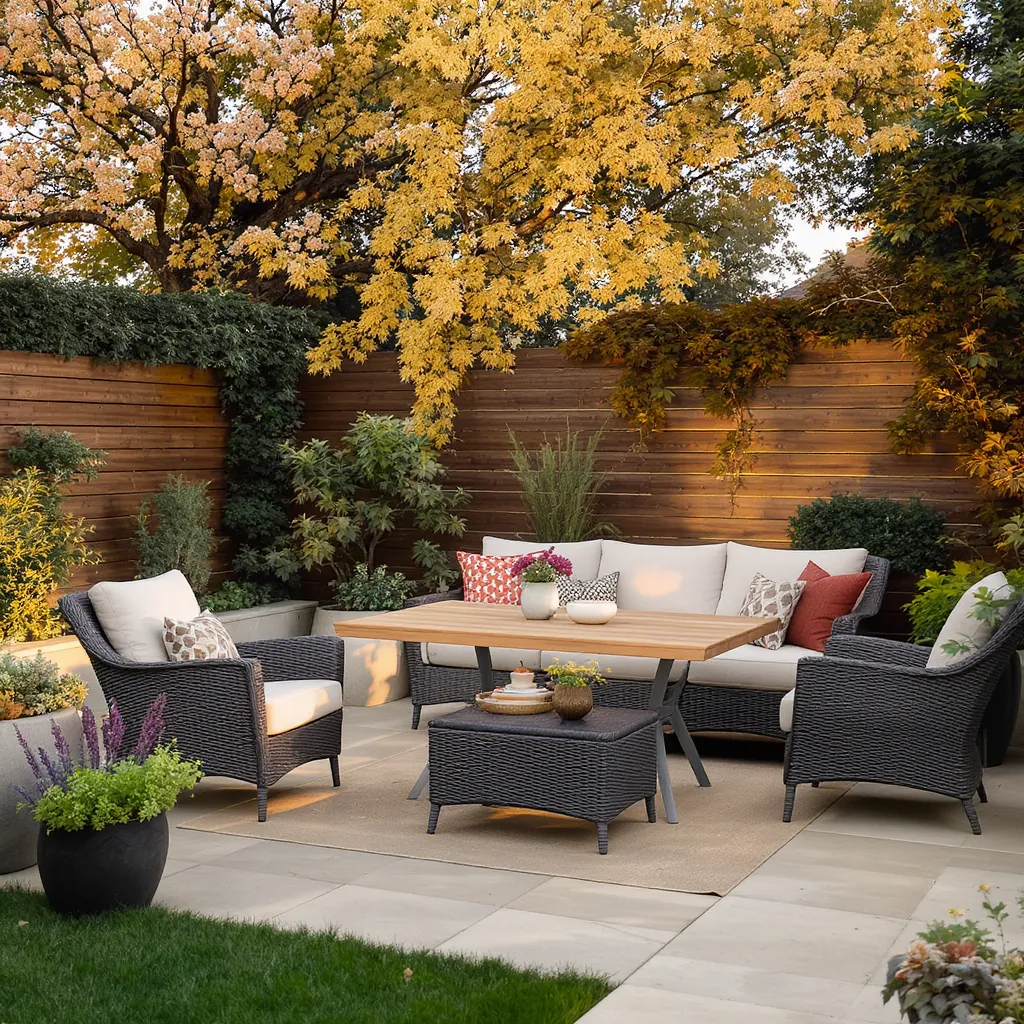
Outdoor Furniture Material: Best Options for Style and Durability
Choosing the right outdoor furniture material isn’t just about style — it’s about making a smart investment that withstands weather, wear, and time. Therefore, whether you have a sprawling garden, a cozy balcony, or a sunny patio, the material you select will determine how your furniture looks, feels, and lasts.
In this guide, we’ll explore popular outdoor furniture materials, their pros and cons, maintenance tips, and how to match them to your space and lifestyle. Consequently, you’ll walk away with the confidence to choose pieces that are both beautiful and built to last.
“When it comes to outdoor furniture, material choice is the single most important factor for longevity and comfort.” — Jane Thompson, Outdoor Living Magazine
Understanding Outdoor Furniture Material Basics
Outdoor furniture materials range from natural woods to modern synthetics. Each has unique qualities that affect durability, upkeep, and aesthetics. Therefore, before diving into specific options, consider these key factors:
- Climate resistance: How well does the material handle rain, sun, humidity, and temperature changes?
- Maintenance needs: Are you willing to oil, cover, or clean it regularly?
- Comfort and style: Does it align with your decor vision?
Let’s compare some common materials based on these factors:
| Material | Durability | Maintenance | Style |
|---|---|---|---|
| Teak Wood | High | Low | Classic |
| Aluminum | High | Very Low | Modern |
| Wicker (Synthetic) | Medium-High | Low | Casual |
| Steel | High | Medium | Industrial |
As you can see, materials like teak and aluminum score high on durability, while synthetic wicker offers a casual look with relatively low upkeep.
Teak Outdoor Furniture Material: The Gold Standard for Gardens
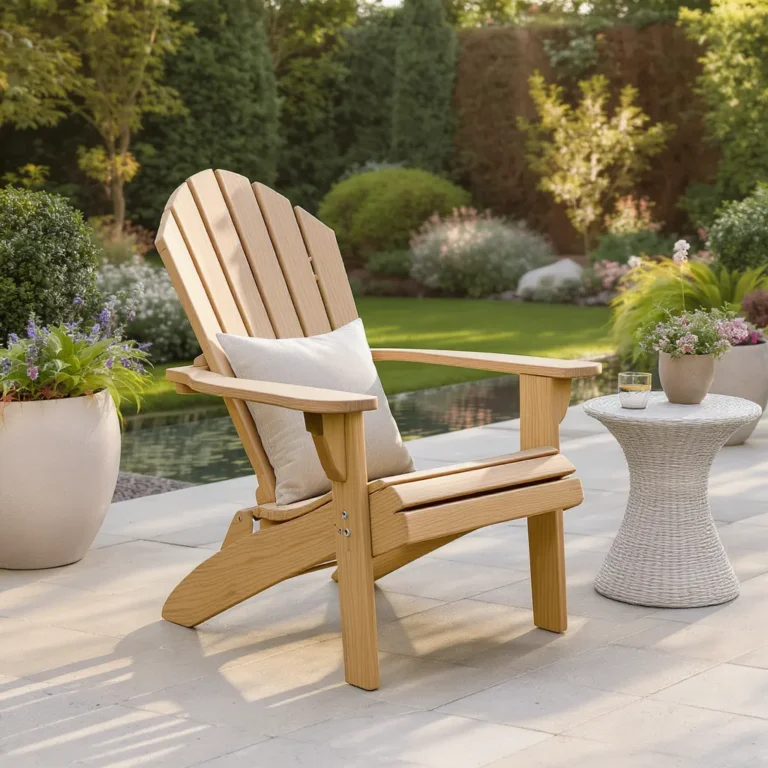
Teak is often hailed as the ultimate outdoor furniture material. It’s a dense hardwood with natural oils that resist water, insects, and decay. This makes it ideal for outdoor dining sets, benches, and loungers.
Pros:
- Exceptional durability in all climates
- Timeless, elegant appearance
- Low maintenance — occasional cleaning and optional oiling
Cons:
- Higher upfront cost
- Can develop a silver-gray patina over time if not oiled
Many luxury outdoor furniture brands choose teak because it can last over 20 years with minimal care. In coastal regions, it’s particularly valued for resisting salt and moisture damage. Additionally, you can learn more about best materials for outdoor furniture to compare teak against other options.
. Additionally, you can explore the timeless appeal of garden chairs for inspiration.
Aluminum Outdoor Furniture Material: Lightweight and Rust-Resistant
Aluminum is another top choice for patio furniture. Powder-coated aluminum resists rust and fading, making it perfect for modern designs and humid climates.
Pros:
- Extremely lightweight and easy to move
- Rust-resistant
- Low maintenance — just wipe clean
Cons:
- Can heat up in direct sun
- Less traditional aesthetic compared to wood
If you enjoy rearranging your outdoor setup or need stackable chairs for compact storage, aluminum is a practical option. Moreover, you can explore stackable garden chairs for small UK gardens for more space-saving ideas.
“Aluminum offers unbeatable convenience for homeowners who want stylish furniture without the hassle of heavy lifting or constant upkeep.” — Mark Rivera, Patio Design Experts
Synthetic Wicker Outdoor Furniture Material: Casual Comfort with Durability
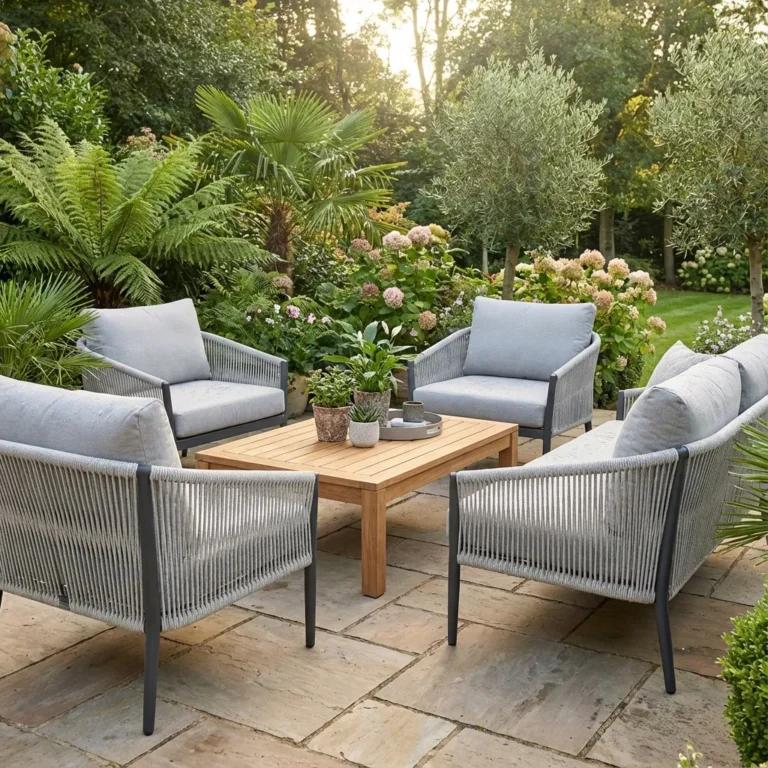
Synthetic wicker, often made from resin or polyethylene, combines the charm of traditional wicker with improved weather resistance. Therefore, it’s a popular choice for those seeking a relaxed, inviting vibe.
Pros:
- UV-resistant and waterproof
- Lightweight
- Available in many colors and styles
Cons:
- Can look less premium than natural materials
- Lower lifespan compared to teak or aluminum
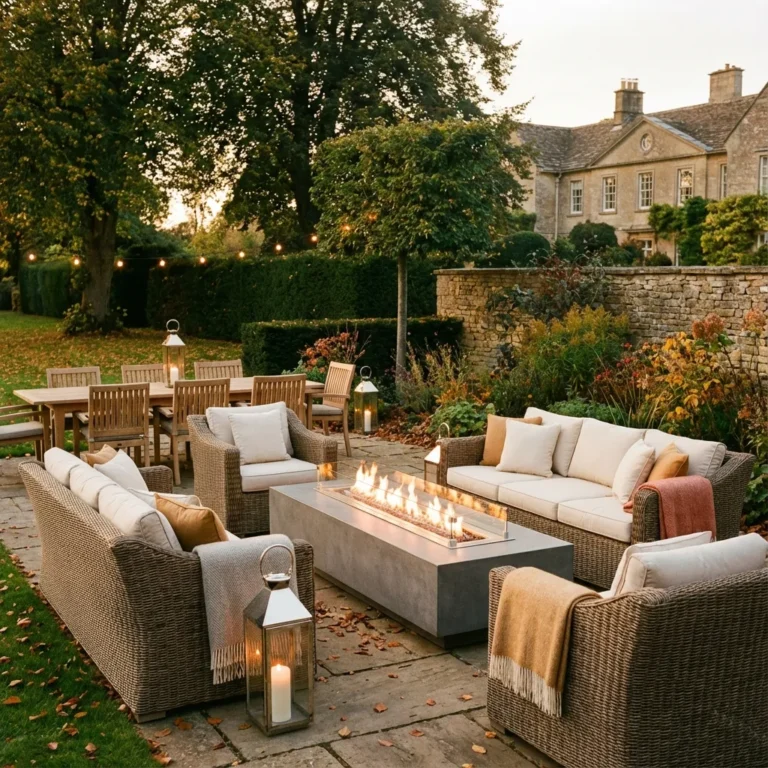
Synthetic wicker works well in covered outdoor spaces or climates with moderate weather. Moreover, you can pair it with plush cushions for maximum comfort. For more inspiration, see stylish balcony sets with durable rattan garden furniture.
Steel and Iron Outdoor Furniture Material: Industrial Strength for Outdoors
Steel and wrought iron bring a bold, industrial look to outdoor spaces. They’re extremely sturdy but require regular maintenance to prevent rust.
Pros:
- Heavy and wind-resistant
- Classic or industrial aesthetic
Cons:
- Prone to rust without protective coating
- Heavy to move
Steel is best suited for stationary pieces like park benches or ornate garden tables. Nevertheless, applying a protective finish annually can prevent long-term damage.
Matching Outdoor Furniture Material to Your Space and Lifestyle
Choosing the right material isn’t just about durability — it’s about how you use your space.
- Small balconies: Lightweight aluminum or synthetic wicker for easy movement
- Large gardens: Teak for timeless elegance and weather resistance
- Coastal homes: Teak or powder-coated aluminum to handle salt air
- Urban patios: Steel or aluminum for sleek, modern designs
Consequently, consider your climate, maintenance willingness, and design preferences before making a decision. In contrast, rushing into a purchase without research can lead to costly mistakes.
| Space Type | Best Material | Reason |
|---|---|---|
| Balcony | Aluminum | Lightweight, compact |
| Garden | Teak | Weather-resistant elegance |
| Coastal Patio | Powder-coated Aluminum | Salt air protection |
| Urban Deck | Steel | Strong, modern look |
Outdoor Furniture Material Maintenance Tips for Longevity
Regardless of the material, proper care extends your furniture’s life. Additionally, consistent upkeep prevents deterioration.
- Teak: Clean with mild soap and water; oil if you prefer the golden color
- Aluminum: Wipe regularly; avoid abrasive cleaners
- Synthetic Wicker: Hose down occasionally; store cushions indoors
- Steel: Apply rust-resistant coating annually
Furthermore, covering furniture during off-season and storing cushions indoors can significantly reduce wear.
Outdoor Furniture Material Trends and Future Outlook
Outdoor furniture design increasingly focuses on sustainability and innovation. As a result, recycled materials, eco-friendly coatings, and modular designs are gaining popularity. Moreover, expect to see more hybrid materials that combine the strengths of multiple options.
You can also explore outdoor furniture trends 2025: sustainable, stylish, functional ideas for upcoming design inspirations.
Tools and Resources for Outdoor Furniture Material Shoppers
Before you buy, explore:
- Retailer showrooms for tactile inspection
- Online reviews for real-world durability insights
- Manufacturer warranties for peace of mind
Similarly, leading retailers like Yardbird and Trex Furniture offer detailed material guides and virtual consultations.
Conclusion: Choosing the Right Outdoor Furniture Material
Selecting the right outdoor furniture material balances beauty, durability, and practicality. Teak delivers timeless elegance, aluminum offers lightweight convenience, synthetic wicker brings casual comfort, and steel provides industrial strength.
Ultimately, by considering your climate, space, and lifestyle, you can choose a material that keeps your outdoor space looking great for years. Start by visiting reputable retailers, comparing materials firsthand, and asking about care requirements. Your garden, patio, or balcony deserves furniture that not only looks amazing but stands the test of time.
Invest wisely, and you’ll enjoy countless sunny mornings and starry nights in a space that’s truly yours.