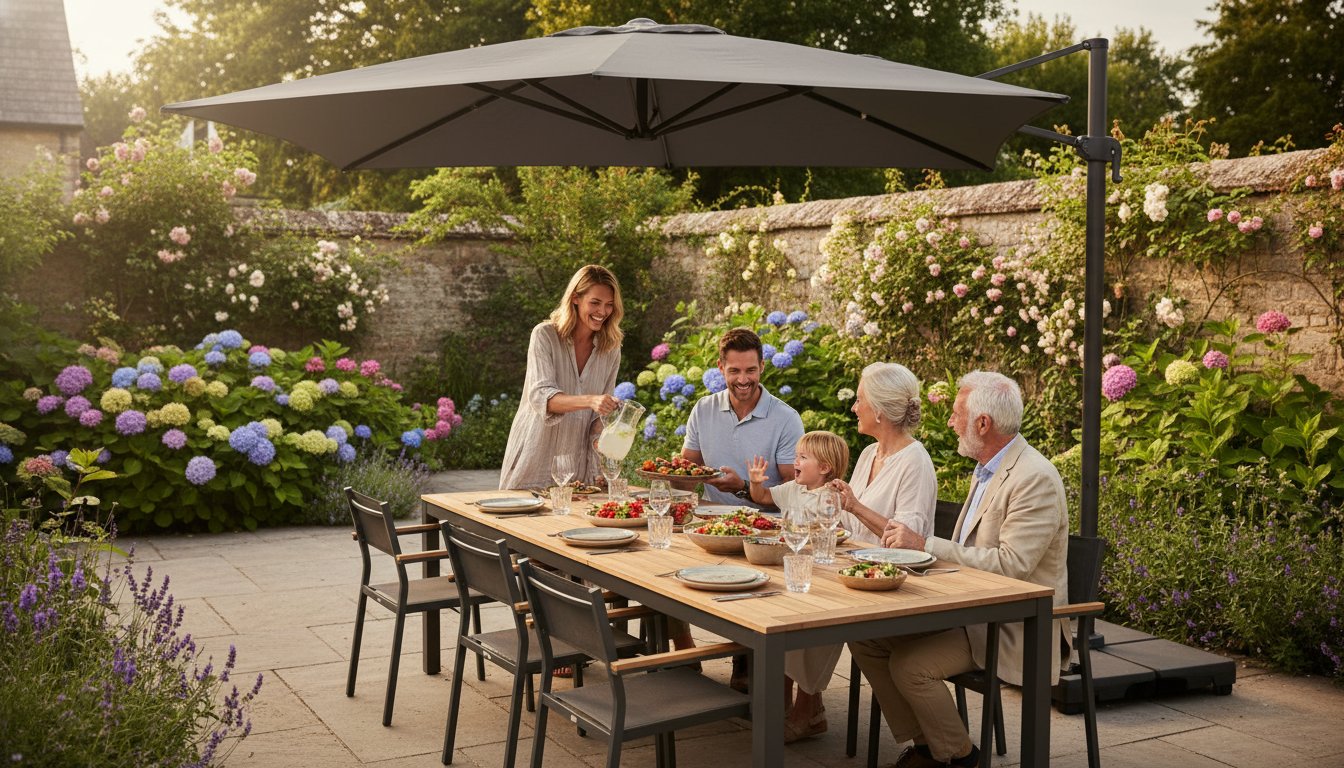
How to Choose the Perfect Parasol for Your Outdoor Dining Set
Creating the perfect setting for alfresco dining is a joy, but choosing the right garden parasol can quickly become a source of confusion. Are you wondering what size will perfectly shade your new dining set, or worried about it taking flight in a sudden gust of wind? The world of cantilever versus centre-pole designs and all-weather fabrics can feel overwhelming, especially when you need a solution that can withstand the unpredictable British weather without fading or losing its premium look.
Put those worries aside. Consider this your definitive guide to finding that perfect blend of affordable luxury and practical reassurance. We are here to demystify the process, helping you select a durable, high-quality parasol that is the perfect fit for your space. Our expert advice walks you through choosing the right type, size, and features to ensure your purchase is stable, stylish, and ready for years of enjoyment. Get ready to transform your garden into the ultimate destination for comfortable and elegant outdoor living.
Key Takeaways
-
Understand the key differences between cantilever and centre-pole designs to find the perfect style for your dining space.
-
Measure your dining table first; the canopy should extend at least 60cm beyond the edge for optimal shade and coverage.
-
Don’t overlook the base – selecting the correct weight is the most important step for ensuring your parasol is safe and stable in unpredictable British weather.
-
Look for durable, all-weather materials and user-friendly features like crank lifts to make your outdoor dining experience effortless.
Table of Contents
Cantilever vs. Centre-Pole Parasols: The First Big Decision
Selecting the perfect parasol is a defining step towards creating your dream outdoor dining experience. Your choice will largely come down to two primary styles: the traditional centre-pole parasol and the modern, versatile cantilever parasol. Each offers distinct advantages, and understanding them is key to finding the ideal shade solution for your garden, patio, or terrace, ensuring comfort and style even in the unpredictable British weather.
The Classic Centre-Pole Parasol
The centre-pole design is the quintessential garden umbrella, a timeless choice for many outdoor settings. As the name suggests, its pole runs straight down the middle, designed to fit through a purpose-built hole in your dining table. This classic design has a long lineage, and the history of the parasol shows its evolution as a sunshade. It’s an excellent space-saver, making it ideal for smaller patios or more compact dining sets where floor space is at a premium. These models are often more affordable and simpler to operate. The main consideration is the central pole itself, which can sometimes interrupt sightlines and conversation across the table.
The Versatile Cantilever Parasol
A cantilever, or overhanging, parasol offers a more contemporary and flexible approach to garden shade. Its clever design features a free-standing pole and weighted base positioned to the side, allowing the canopy to hang gracefully over your dining area. This provides completely unobstructed views and ample space for your guests, making it perfect for larger or irregularly shaped tables without a central hole. Many premium cantilever models also boast advanced features like 360-degree rotation and adjustable tilt functions, giving you precise control over your shade throughout the day. This adaptability makes it a great choice for covering both outdoor dining sets and nearby lounge areas with a single, stylish solution.
Ultimately, the right choice depends on your space and style. For a traditional, symmetrical dining setup where space is limited, the centre-pole is a reliable and elegant option. If you value unobstructed views, have a large or uniquely shaped table, or desire the flexibility to shade multiple areas, the superior functionality of a cantilever model is the perfect investment for your outdoor oasis.
Getting the Size and Shape Right for Your Table
Selecting the perfect parasol starts with getting the size right. This is the most crucial step to ensure your outdoor dining area is both comfortable and functional. As a general rule of thumb, the parasol canopy should extend at least 60cm (2ft) beyond the edge of your table on all sides. This generous overhang guarantees that all your guests remain comfortably in the shade, even as the sun moves across the sky.
A larger canopy doesn’t just enhance comfort; it’s a vital part of staying safe during the sunniest days. A generously sized parasol provides more complete protection from direct sunlight. In fact, health experts at The Skin Cancer Foundation advise that high-quality, UPF-rated umbrellas are a smart and stylish way to shield yourself and your family from harmful UV radiation.
Measuring for Perfect Coverage
To find your ideal canopy size, simply measure the diameter of your round table or the length of your rectangular table. Add approximately 1.2 metres (4ft) to this measurement to determine the minimum diameter your parasol canopy should have. Before you buy, it’s also wise to measure your garden space to ensure the open canopy won’t obstruct pathways or brush against fences or walls.
| Table Size (Diameter or Width) | Recommended Parasol Diameter |
|---|---|
| 90cm – 120cm (3-4ft) | 2.5m (8ft) |
| 150cm – 180cm (5-6ft) | 3.0m (10ft) |
| 210cm+ (7ft+) | 3.5m+ (11ft+) |
Matching Shape to Your Furniture
The shape of your canopy influences both the style and the effectiveness of your shade. A classic round parasol beautifully complements round or smaller square tables, creating a timeless and inviting look. For long, rectangular dining tables , a square or rectangular canopy is the superior choice. It provides maximum, uniform coverage, ensuring guests at the ends of the table are just as shaded as those in the middle. This shape also delivers a wonderfully contemporary aesthetic. For example, a square parasol looks particularly striking paired with a modern set like the Rona 4-Seat Aluminium & Teak Dining Set, perfectly echoing its clean, geometric lines.
Essential Features and Materials for UK Weather
To truly withstand the ever-unpredictable British weather, the perfect parasol must combine stylish design with robust engineering. Beyond the colour and size, the materials and features determine its longevity and ease of use. Investing in quality from the start ensures your outdoor dining area remains a comfortable and protected haven, whether you’re seeking shade from the sun or shelter from a passing shower.
Frame Materials: Aluminium vs. Wood
Aluminium frames are a superb choice for a modern garden. They are lightweight, exceptionally strong, and completely rust-proof, promising years of maintenance-free performance. Their sleek, contemporary finish pairs beautifully with designer furniture like our lounge sofa sets. For a more traditional aesthetic, wooden frames offer a classic, natural charm. While beautiful, they do require some annual treating to protect them from the elements and maintain their rich colour.
Canopy Fabrics: UV Protection and Durability
The primary role of a canopy is to provide shade, and its quality is paramount. Look for fabrics with a high Ultraviolet Protection Factor (UPF) rating, a crucial component of effective sun protection for you and your family. Polyester is a popular and cost-effective choice that offers good durability. For superior, long-lasting performance, consider premium fabrics like olefin, which provide enhanced resistance to fading and moisture. Always ensure your chosen canopy is treated to be showerproof, ready for any light summer drizzles.
User-Friendly Mechanisms
Effortless operation is key to enjoying your garden furniture. A high-quality garden parasol should be simple to use, not a chore. Look for these essential features for a hassle-free experience:
- **Crank Handle:** This mechanism makes opening and closing even the largest canopies a smooth, one-person job, removing any heavy lifting.

- **Tilt Function:** A tilting mechanism is invaluable, allowing you to angle the canopy throughout the day to ensure you stay perfectly shaded as the sun moves across the sky.

- **Air Vent:** A vent at the top of the canopy is vital for stability. It allows gusts of wind to pass through rather than catching the fabric, preventing it from lifting in breezy conditions.
Don’t Forget the Base: A Guide to Stability
You’ve chosen a beautiful parasol to complete your outdoor dining set, but the most critical component for safety and performance is often overlooked: the base. In the ever-unpredictable British weather, a sturdy and correctly weighted base is not just a recommendation-it’s essential. An undersized base is the number one cause of parasols tipping over, which can cause damage to your furniture and pose a serious safety risk.
Think of the base as the foundation of your outdoor comfort. Investing in the right one ensures your shade remains stable and secure, allowing you to relax and entertain with complete peace of mind, whatever the weather decides to do.
Choosing the Right Base Weight
The golden rule is simple: the larger the parasol canopy, the heavier the base needs to be. The canopy acts like a sail, and a sudden gust of wind can exert significant force. As a general guide, we recommend matching the weight to the diameter of your canopy:
-
For canopies up to 2.5m: A 25kg base is typically sufficient for through-table use.
-
For canopies 3m and larger: Look for a base of 50kg or more to provide reliable stability.
-
For cantilever parasols: Due to their offset design, these require significantly heavier, specialised bases, often starting from 90kg to ensure they are properly anchored.
While these are excellent guidelines, we always advise checking the manufacturer’s specific recommendation for your model to guarantee a perfect and safe fit.
Types of Parasol Bases
Beyond weight, the material and style of your base play a key role in both function and aesthetics. You can choose a design that perfectly complements your premium garden furniture.
-
Granite Bases: Offering the ultimate combination of premium style and substantial weight, granite bases are a durable and elegant choice. Their polished, natural finish adds a touch of luxury to any patio.
-
Fillable Bases: A highly practical and versatile option. These durable plastic bases are lightweight when empty, then can be filled with water or sand. For maximum weight, we recommend using sand, as it’s denser than water.
-
Slab Bases: For heavy-duty stability, a slab base is an outstanding solution. These frames are designed to be weighted with standard paving slabs, providing an incredibly secure and wind-resistant foundation.
Securing your investment is key to creating your dream outdoor living experience. Explore the durable and stylish options at Rengard to find the perfect anchor for your shade.
Care and Maintenance: Protecting Your Investment
Your new parasol is more than just a source of shade; it’s a stylish centrepiece for your dream outdoor living experience. To ensure it remains a beautiful and functional part of your garden for many years to come, a little care and maintenance go a long way. Protecting this key investment is simple and ensures it’s always ready for those perfect sunny afternoons, season after season.
First and foremost, always close your parasol when it is not in use. This is especially critical during breezy conditions or overnight. The often unpredictable British weather can bring sudden gusts of wind that can strain the canopy or damage the frame, so making this a habit is the single most effective way to extend its life and prevent accidents.
Routine Cleaning and Upkeep
Keeping your parasol looking its best is a straightforward task that prevents the build-up of dirt and maintains the fabric’s premium look. For best results:
-
Clean the Canopy: Gently brush off any loose dirt. Using a simple solution of mild soap and lukewarm water, wipe the fabric with a soft cloth or sponge. Avoid harsh chemicals or detergents, as these can strip the fabric’s protective water-resistant and UV-coatings. Rinse thoroughly with clean water and allow it to air dry completely in the open position.
-
Wipe the Frame: Whether aluminium or wood, regularly wipe the frame and pole with a damp cloth to remove dust, pollen, and grime.
-
Check Mechanisms: Periodically inspect all fittings, joints, and the crank handle. Gently tighten any loose screws to ensure smooth, safe, and reliable operation for years to come.
Off-Season Storage
When summer fades and you begin to use your garden less, proper storage is essential to protect your parasol through the harsher winter months. Before putting it away, ensure the canopy is completely clean and dry to prevent any risk of mould or mildew forming during storage.
A dedicated, high-quality weather-proof cover is the best defence against damp, frost, and fading, keeping your parasol in pristine condition for the following spring. For ultimate protection, we recommend storing it upright in a dry, sheltered location such as a garage or shed. This simple step ensures your investment is perfectly preserved and ready for the first hint of sunshine.
Create Your Perfect Shaded Haven
Choosing the right parasol is about more than just shade; it’s about creating the perfect atmosphere for your outdoor dining experience. As we’ve explored, the key lies in balancing style with practicality-from selecting the right type for your space to ensuring the size and shape perfectly complement your table. By prioritising durable, weather-resistant materials and a correctly weighted base, you can be confident your investment will stand strong against the elements, season after season.
Ready to find the ideal centrepiece for your garden? At Rengard, we specialise in affordable luxury. Our premium collection is expertly designed to withstand the unpredictable British weather, crafted from high-quality materials for lasting style and performance. Discover our collection of premium garden parasols and enjoy the complete Rengard experience with free delivery and assembly across mainland UK. Elevate your outdoor living and create unforgettable moments in the shade.
Frequently Asked Questions
What’s the difference between polyester and olefin canopy fabric?
Polyester is a popular, cost-effective choice known for its good UV resistance and quick-drying properties, making it a great value option. Olefin, on the other hand, is a premium, solution-dyed fabric offering superior fade and stain resistance, as well as enhanced durability. While polyester provides excellent performance, olefin is the superior choice for those seeking the ultimate in long-lasting colour vibrancy and all-weather resilience, representing a fantastic long-term investment for your outdoor space.
Can I leave my parasol outside all year round in the UK?
While our parasols are built with durable, all-weather materials, we recommend storing them during the harsh winter months to prolong their life. For the rest of the year, using a quality, water-resistant cover is essential to protect the canopy from rain, debris, and UV damage. This simple step ensures your parasol remains in pristine condition, ready for you to enjoy whenever the sun makes an appearance in the ever-unpredictable British weather.
How do I secure a parasol on a windy day?
The key to stability is a substantial, heavy base. For a dining table parasol, a base of at least 25kg is recommended, but for freestanding models, consider 50kg or more. Always ensure the pole is securely tightened into the base. On particularly blustery days, it is always wisest to lower and secure the canopy. This prevents the parasol from acting like a sail, protecting both the product and your garden furniture from potential damage.
Do all garden tables have a hole for a parasol?
Not all garden dining tables come with a central hole. Many contemporary designs, especially those with glass or ceramic tops, opt for a seamless surface. If your chosen table doesn’t have a hole, a cantilever parasol is the perfect stylish solution. These versatile models feature an offset base and an articulated arm, allowing you to position the canopy perfectly over your dining set without needing a central pole, offering both shade and an unobstructed view.
Is a parasol with built-in LED lights worth it?
Absolutely! An LED-lit parasol is a fantastic investment for extending your outdoor enjoyment long after the sun sets. These models create a warm, inviting ambience, perfect for evening dining or relaxing with drinks. They eliminate the need for separate, cumbersome lighting, offering a seamless and stylish solution. For those who love to entertain and want to create a truly magical outdoor living experience, an integrated LED parasol provides both practical illumination and a touch of affordable luxury.
How much should I expect to spend on a quality parasol and base?
For a durable, high-quality parasol and a suitably weighted base, you should expect a combined investment of between £200 and £500. A good quality 2.7m crank-and-tilt model might start around £120-£180, with a necessary 25kg base costing an additional £50-£80. Larger or premium cantilever models will be at the higher end of this range. Investing in this price bracket ensures you receive a product with a robust frame and a fade-resistant, all-weather canopy.