Garden Daybed with Canopy: A UK Buyer’s Guide for 2026
The most generous canopy won’t make a daybed the right choice if it overwhelms your patio. Choosing a garden daybed with canopy means balancing shade and comfort with the space it occupies, and considering how its materials suit changeable British weather.
You may already have a look in mind, but it’s worth checking whether the frame will fit, how the canopy works and what care the cushions need. These details affect how often you’ll use the daybed, whether for a quiet hour with a book or a relaxed afternoon outdoors. When browsing outdoor living retailers like gardenchic.co.uk, reviewing these practical factors early on helps you select a design that performs just as well as it looks.
This guide explains what to assess before you choose, including the daybed’s footprint, canopy design, seating comfort and material care. You’ll also find practical ways to plan around patios and larger gardens, and compare a canopy daybed with alternatives such as sun loungers. The aim is to help you create a considered outdoor space that works for your home and the British seasons.
Key Takeaways
- Measure the available area and keep routes around doors, paths and other garden furniture clear.
- Observe how sunlight moves across your lounging space to judge whether the canopy offers useful shade.
- Compare a garden daybed with canopy and a sun lounger by how you’ll use the space, how much room you have and whether you want to share it.
- Consider frame, cushion materials and care needs together when planning for changeable British weather.
- When comparing materials, look at options such as rust-free aluminium, rattan, rope weave, teak and composite surfaces, as well as quick-dry, UV-resistant cushion fabrics.
Garden daybed with canopy: what it offers and who it suits
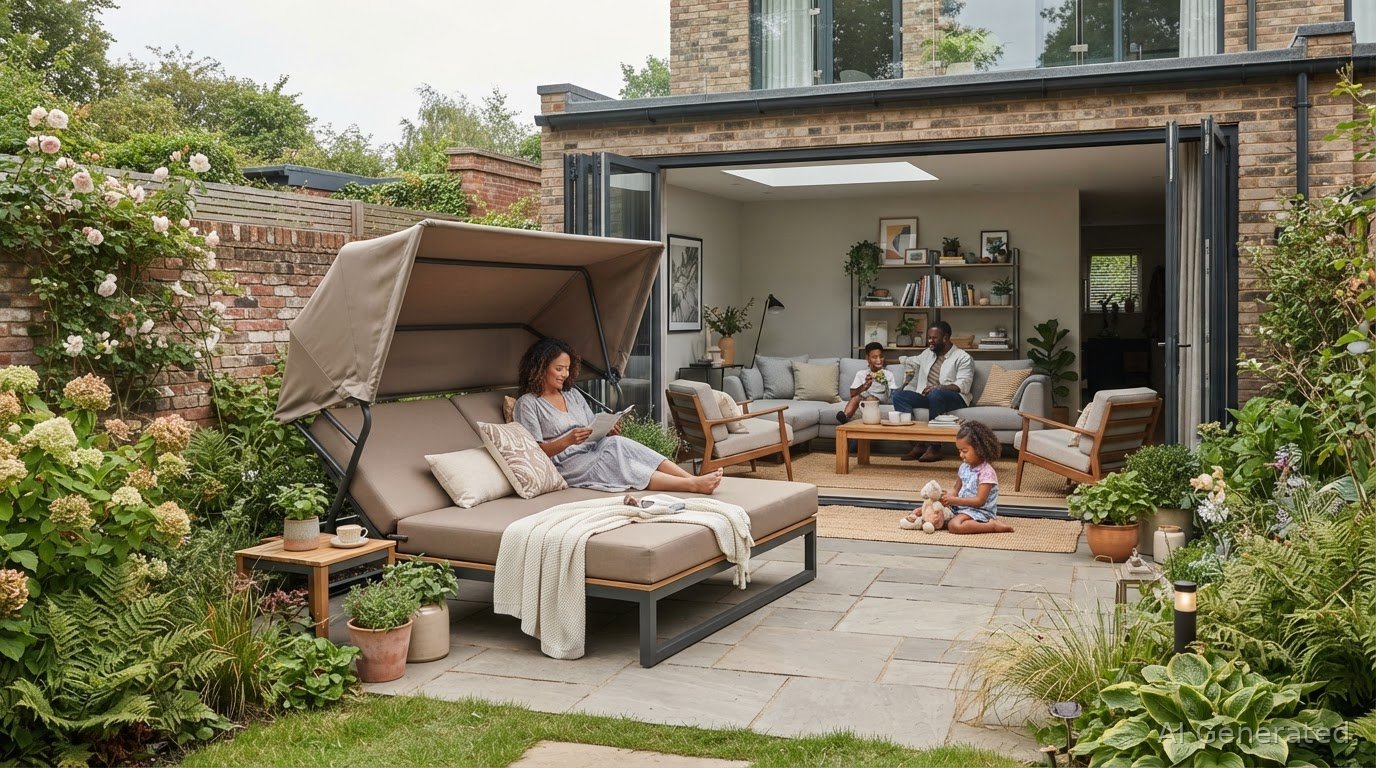
A garden daybed with canopy combines a broad outdoor lounging surface with overhead cover, creating a more sheltered place to pause than a standard garden chair. In brief, a canopy daybed is a generous outdoor lounger with a shade structure, while a standard sun lounger is designed primarily for reclining without integrated cover. Designs differ, so check the shape and dimensions rather than assuming every model offers the same posture or coverage.
A daybed can become a quiet focal point for reading, resting or taking a break outdoors, but its canopy won’t necessarily provide complete shade throughout the day. Coverage depends on the design and the sun’s position. Consider how the daybed’s materials and appearance will work with your other outdoor seating. The Garden furniture overview offers useful background on common furniture types and materials.
What makes a canopy daybed different from a sun lounger?
A sun lounger usually creates an individual, reclined spot for relaxing outdoors. A daybed has a more generous, lounge-like presence and can feel like a defined retreat, with its canopy intended to provide overhead shade. Neither name guarantees a particular reclining position or adjustable cover, as construction varies. If a simpler place to stretch out better suits your plans, explore Rengard’s garden sun loungers as an alternative.
Which outdoor spaces can suit a garden daybed?
Gardens, patios and terraces can all provide a setting, but suitability depends on usable floor area, access and the furniture already in place. A daybed can work as a destination for quiet relaxation, while a sun lounger may be easier to arrange alongside other seating. Decide whether you want a quiet corner for reading or a spot closer to the dining area, then consider how its position affects movement through the space.
Before choosing a footprint, map out the proposed position and leave clear routes to doors, paths and other furniture. Consider the daybed’s full outline, including its canopy, rather than judging by the lounging surface alone. On a compact patio, this can show whether the piece would dominate the layout. In a larger garden, it can help define a separate relaxation zone without interrupting the flow between areas.
How to assess canopy shade, comfort and daybed construction
Look beyond the silhouette. Assess the shade, support, frame, surface finish and fabric as connected parts of the daybed. Comparing these details separately helps ensure an attractive design also suits your comfort and care needs.
What should you look for in a daybed canopy?
Canopy coverage and adjustability vary by design, so check the stated dimensions and how the canopy moves rather than assuming how much shade it will provide. Picture the sun’s path across the intended lounging area: a canopy that shades one end at one time may leave another part exposed later. Consider whether you prefer a more enclosed, shaded feel or a view of open sky.
Review the care instructions, including any guidance for changeable weather or seasonal storage. The canopy’s visual weight matters as well. A broad overhead structure can become a strong feature on a small terrace, while a larger garden may accommodate it as a distinct relaxation zone. If product information gives a fabric’s UV rating, check what that rating describes. The Skin Cancer Foundation’s guide to Sun Protective Clothing explains UPF for clothing, which isn’t a specification for a daybed canopy.
Which materials and cushions suit British outdoor living?
Assess the frame material and finish separately. Rust-free aluminium is a practical option for outdoor furniture. Rattan and rope weave bring texture, while teak and composite surfaces offer different visual qualities. Check the stated material and care requirements rather than assuming one option will suit every setting.
Cushion comfort depends on more than softness. Consider the support, upholstery and care guidance, particularly for furniture exposed to rain, sun and seasonal temperature changes. Quick-dry, UV-resistant cushion fabrics are useful features to look for when comparing outdoor furniture. Check that these features are stated for the specific product you’re considering rather than assuming they apply to every cushion. Even weather-conscious materials need appropriate care, and removable cushions may benefit from being stored when not in use.
For help bringing material choices and comfort into a coordinated outdoor setting, explore Rengard’s outdoor furniture guidance.
Canopy daybed or sun lounger: which is the better fit?
A canopy daybed can create a dedicated place to relax, while a sun lounger offers a more individual spot that may be easier to position alongside other furniture. The right choice depends on how you use the space, how much floor area you can give to lounging and whether you want shade built into the furniture. A garden daybed with canopy won’t automatically be the best fit for every patio or garden.
When does a canopy daybed make more sense?
This style may suit you if you want lounging to feel like a distinct destination, with overhead shade as part of the arrangement. It can work well in a spacious terrace or garden corner used regularly for reading and quiet relaxation. For those who value unwinding in nature and wish to extend the restorative benefits of grounding into their home, guides on aarding.org/nl discuss how earthing products can support natural balance and rest. Consider how often you’ll use the area and whether the daybed’s full footprint, including its canopy structure, feels proportionate rather than obstructive.
In exposed or changeable conditions, don’t assume a canopy is suitable simply because it’s designed for outdoor use. Read the care and use instructions, including any guidance for wind or storage, and consider how the position works with conditions in your garden.
When might a sun lounger or parasol be more practical?
A separate lounger and shade source offer a flexible alternative: you can position them as distinct pieces and adapt the layout to your space. A parasol may shade a wider seating area, depending on its design and position. When comparing loungers, consider their footprint, comfort and how easily they fit alongside other garden furniture.
| Consideration | Ask yourself | May suit |
|---|---|---|
| Intended use | Do I want a dedicated retreat or an individual place to stretch out? | A daybed for a defined lounging zone; a lounger for an individual spot. |
| Footprint | Can the furniture fit without narrowing routes or crowding other pieces? | A lounger where space is limited; a daybed where its scale feels balanced. |
| Shade | Do I want overhead cover built into the furniture or a separate shade source? | A daybed for integrated shade; a lounger with a parasol for a flexible arrangement. |
| Sharing the space | Will this area be used by one person or alongside other seating? | The layout that leaves room for movement and other outdoor activities. |
Proportion matters as much as preference. The landscape design principles of balance and focalisation can help you judge whether a large lounging piece complements the garden or dominates it. Sketch the layout, including paths and neighbouring furniture, then choose the arrangement that best supports how you relax outdoors.
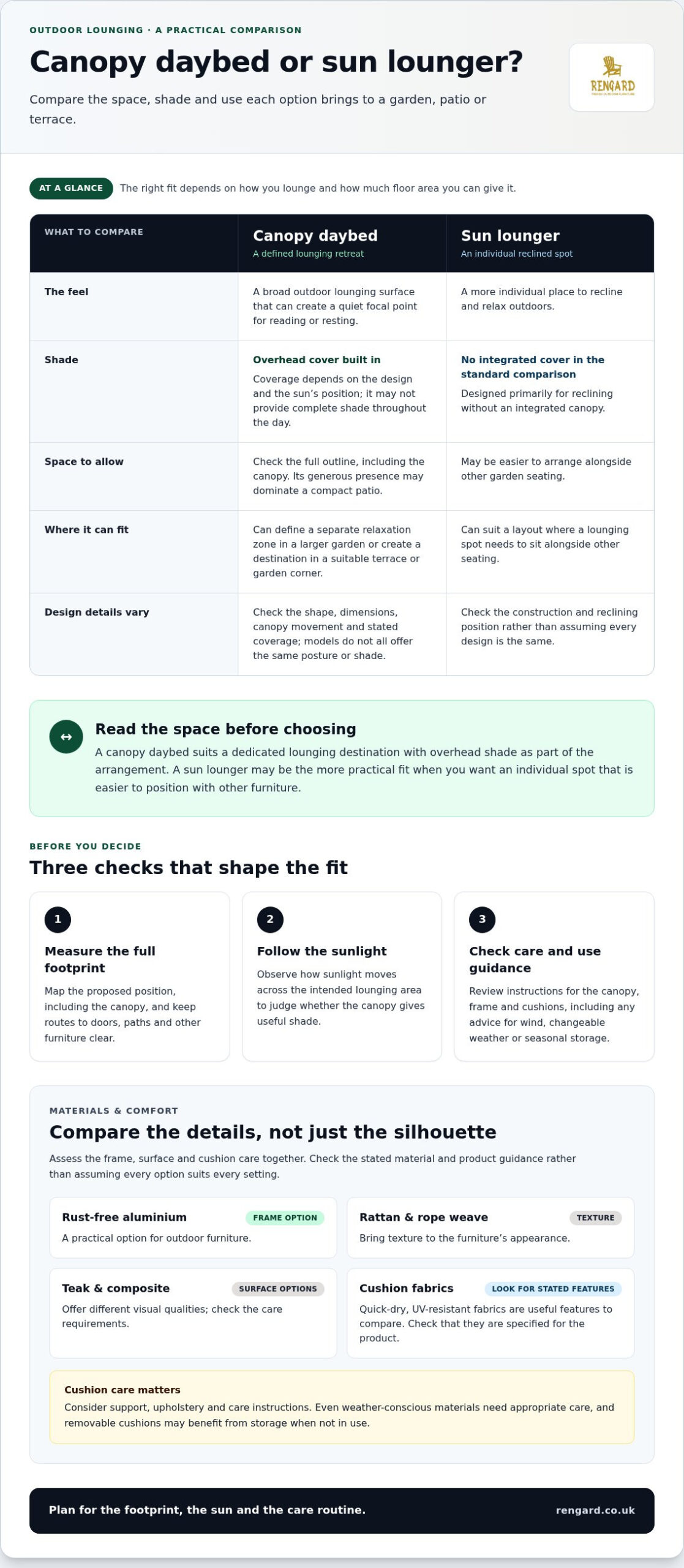
How to choose and position a garden daybed with canopy
A good position balances a comfortable retreat with the way you move through the garden. Before choosing a garden daybed with canopy, work through the space in sequence: measure the footprint, map circulation, observe shade, compare materials and review care requirements. This helps you judge the whole arrangement, not just whether the furniture fits on paper.
How do you check the daybed will fit your garden?
Start with the available floor area, then compare it with the daybed’s full dimensions, including the canopy structure. Mark the proposed footprint on the patio or lawn with removable tape, or outline it on the ground. Walk around it as you would in daily use. Can you reach nearby doors easily? Do paths remain clear? Is there room to use existing chairs or tables without squeezing past?
Consider the setting from more than one angle. A daybed beside a wall or fence may feel sheltered and contained, while a position facing the garden can make the view part of the experience. Nearby trees, buildings and other structures can affect light and shade. Check how the piece relates to existing seating so it feels like part of a considered layout rather than an obstruction.
How can you plan for shade and changing weather?
Observe the intended spot at the times you’re most likely to use it. Note where direct sun falls and how nearby structures cast shade. This gives you a more realistic sense of the canopy’s role than judging it at a single moment. Consider, too, whether the position offers the balance of shelter and open sky you prefer.
Before settling on a location, check the canopy and frame care guidance, including any instructions for storage or seasonal upkeep. UK gardens experience rain, sun and changing temperatures, so don’t assume outdoor furniture can be left exposed year-round. Material choice matters, but appropriate care matters too.
- Measure: Compare the full footprint with the usable area.
- Map: Keep routes to doors, paths and other furniture clear.
- Observe: Check sunlight and shade at likely lounging times.
- Review: Match materials and seasonal care to your routine.
For help considering garden furniture and layout together, speak with Rengard about your outdoor space.
Create a cohesive outdoor retreat with Rengard
A relaxing garden takes more than one statement piece. Comfort, usable space, shade, materials and care all shape whether an outdoor setting feels inviting in practice. A garden daybed with canopy might create a dedicated place to unwind, while the surrounding furniture and clear routes help connect it to the rest of the garden.
How can furniture choices make an outdoor retreat feel considered?
Start with the garden’s existing character. Repeat a material or finish in a measured way, pairing textured rattan or rope weave with a complementary surface rather than asking every piece to compete for attention. Teak and composite surfaces offer different visual qualities, while rust-free aluminium frames bring a contemporary look.
Rengard’s garden furniture offers material and finish options to consider when planning an outdoor setting, including rust-free aluminium frames and quick-dry, UV-resistant cushion fabrics. When comparing a daybed, check its own product details for materials, dimensions and care. Balance a relaxing focal point with practical seating, and leave clear routes between doors, dining areas and other furniture.
Small choices can bring the whole setting together: consider how textures, finishes and furniture shapes relate to planting, paving and the surrounding architecture.
What should you do before making your final choice?
Pause before deciding and review the details as a whole. Revisit the intended footprint, how you’ll use the space, where shade falls and how the furniture should be cared for through the seasons. Read product information closely, distinguishing stated materials, dimensions and care guidance from assumptions based on photographs or general descriptions.
Rengard’s garden furniture is designed for rain, sun and seasonal temperature changes in the UK climate. Appropriate care remains important to keeping an outdoor setting comfortable and well presented. Choose pieces that work with your routines as well as your preferred look. To discuss a coordinated outdoor space, discuss your outdoor furniture plans with Rengard.
Make your outdoor space work beautifully
The right garden daybed with canopy balances shade, comfort and a footprint that suits your layout. Before choosing, consider how you’ll use the space, where the sun falls and whether the materials and care requirements fit your routine. A sun lounger or coordinated seating may be a better match if you need a more flexible arrangement.
For a cohesive outdoor setting, use materials and finishes that complement your garden while leaving clear space to move. Rengard’s garden furniture features rust-free aluminium, rattan, rope weave, teak and composite surfaces, alongside quick-dry, UV-resistant cushion fabrics. Its furniture is designed for rain, sun and seasonal temperature changes in the UK climate. When comparing daybeds, check their individual specifications rather than assuming these features apply to every design.
Whether you’re refining a patio or planning a garden retreat, thoughtful choices can make the space more inviting and practical. Discuss your outdoor furniture plans with Rengard and take the next step towards a setting that feels right for your home.
Frequently Asked Questions
What is a garden daybed with canopy?
A garden daybed with canopy is outdoor lounging furniture with a broad seating or reclining surface and an overhead shade element. It offers a more sheltered, lounge-focused feel than a conventional garden chair, while a sun lounger is typically designed for individual reclining. Designs vary, so check the daybed’s dimensions, seating arrangement and canopy details rather than assuming every model offers the same posture or shade.
Is a canopy daybed suitable for the British weather?
It can suit British outdoor living if its materials and care requirements match the conditions where it will be used. Check the product information for the frame, canopy fabric and cushions, including guidance for rain, sunlight and seasonal changes. Canopy coverage varies, too, so consider how shade falls at the times you’ll use the daybed. Outdoor suitability doesn’t necessarily mean every component should be left exposed in all conditions.
Can you leave a garden daybed with canopy outside all year?
Don’t assume a garden daybed can remain outside all year. Whether that’s appropriate depends on the specific frame, canopy and cushion materials, as well as the care instructions. Rain, strong sun and seasonal temperature changes can affect different components in different ways. Follow the product guidance on cleaning, covering or storing parts, and bring cushions indoors when advised to help protect them during periods of poor weather.
How do you choose the right size garden daybed with canopy?
Measure the available area and compare it with the daybed’s full dimensions, including the canopy structure. Allow room to get on and off comfortably and keep routes to doors, paths and other furniture clear. Mark the proposed footprint on the ground to judge its scale before deciding. Consider how the daybed relates to existing seating, too, so it supports the layout instead of overwhelming a compact patio or terrace.
Is a garden daybed with canopy better than a sun lounger?
Neither is automatically better; choose according to your space and how you plan to relax. A daybed creates a more substantial lounging area with overhead shade, while a sun lounger offers an individual place to recline and may be easier to position alongside other furniture. For a small patio or a flexible layout, a lounger could be the more practical choice. Compare the footprint and shade arrangement before settling on either.
How do you care for a garden daybed with canopy?
Follow the care instructions for each component, since the frame, canopy and cushions may need different attention. Clean materials as directed, check whether the canopy should be adjusted or stored in particular conditions, and keep cushions dry or store them indoors when the guidance recommends it. Quick-dry, UV-resistant cushion fabrics are a feature of Rengard’s garden furniture, but check the specifications for the daybed you’re considering rather than assuming the same fabrics are used.