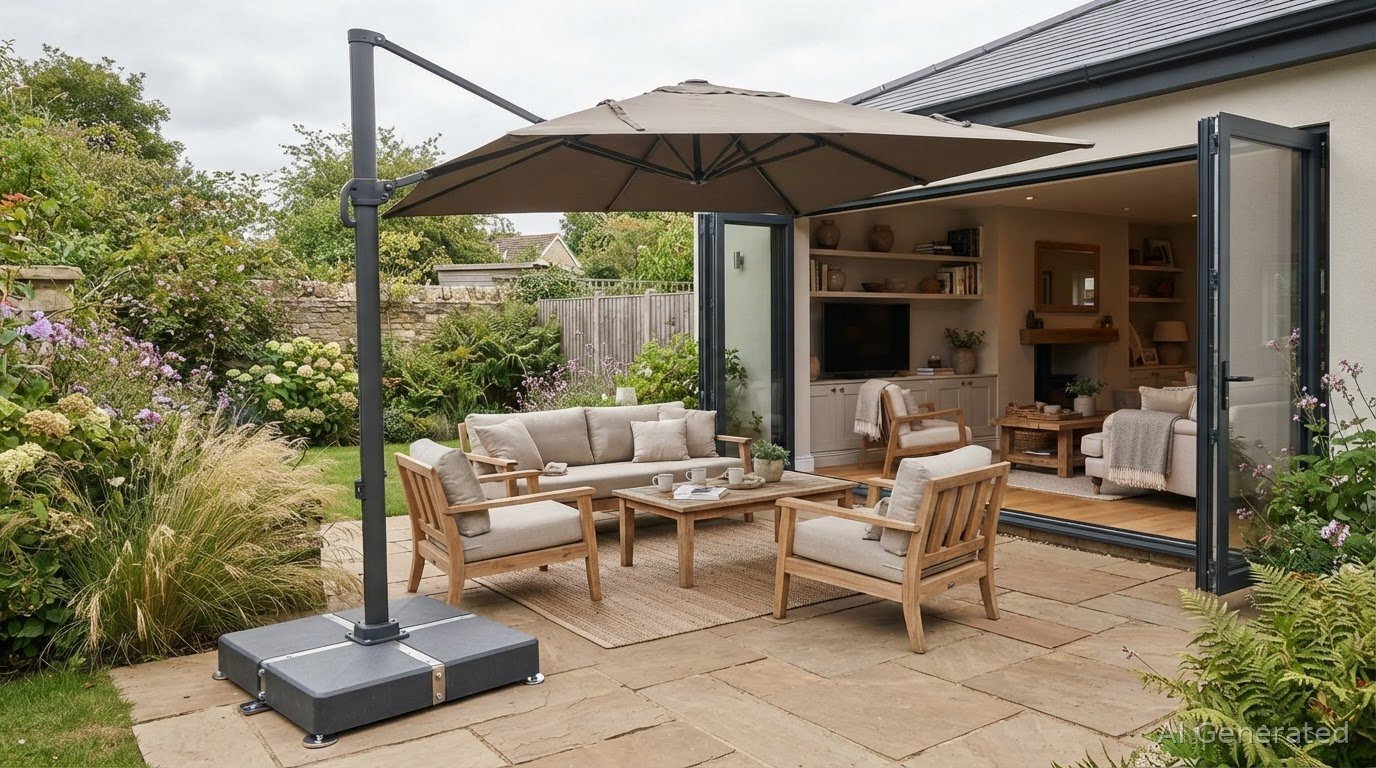
How to Secure a Garden Parasol With a Base or Ground Anchor
A heavy base isn’t the only way to keep a garden parasol secure. A useful starting rule for a weighted base is 5 kg for every 3 metres of parasol diameter, but a fixed ground anchor or a properly bolted support may suit your space better. How to secure a garden parasol depends on its size, the surface beneath it and how exposed the spot is to wind.
If you’re wondering whether it’s too windy for a cantilever parasol, close it during strong winds and take it down in extreme weather. A secure fixing helps, but it doesn’t make an open canopy suitable for every condition.
This guide explains how to choose a base, install a ground anchor and secure a parasol to a patio, deck or wall. You’ll also learn how to match the fixing to your outdoor surface and when permanent support may be more practical.
Key Takeaways
- Use the guide of 5 kg of base weight for every 3 metres of parasol diameter, and choose a stable, level position.
- Match the fixing to the surface: a screw-in spike suits ground, while a properly installed anchor or bolted support can work for a fixed position.
- Before fixing a parasol to a deck or patio, make sure the support is secured into a suitable structural surface, not just a loose or uneven layer.
- Close the canopy in strong winds and take the parasol down in extreme weather; a secure base does not remove wind risk.
- Consider how you’ll move, remove and store the parasol when choosing between a weighted base and a permanent anchor.
What’s The Right Weight For A Parasol Base?
Match the base to the parasol’s canopy and pole, then place it on level, solid ground. The right choice also depends on where sunlight falls and how exposed your patio or garden is to wind.
This video explains how cantilever umbrellas respond to wind, and how weighted bases and anchors can help.
-
Match the base to the parasol
Measure the canopy diameter and check the pole fits the base sleeve. A useful guide is 5 kg of base weight for every 3 metres of parasol diameter. This is a starting point, not a substitute for checking the parasol’s own requirements. A large cantilever umbrella puts more leverage on its support than a centre-pole model, so it needs a stable, suitable fixing.
-
Select a suitable weighted base
Choose a base that matches the parasol’s pole and canopy, and position it on level, solid ground. Weighting slabs may be plastic, filled with sand or water, or made from wood, concrete or steel. For extra security, add sandbags or concrete blocks on top of the base. Choose a sturdy parasol and check its pole and frame for damage before use.
-
Prevent the base from tipping or sliding
Set the base flat with its full footprint supported, and avoid uneven paving or soft ground. If it shifts, move it to a firmer, level surface and add suitable weight. Sandbags can add stability, but close the canopy during strong winds. The NHS advises securing garden furniture to help prevent damage or injury to others.
- Track sunlight across your seating area to choose the parasol’s position. Place it so the shade reaches a dining table or lounge space when needed, while keeping a clear route around the base. A position beside a wall or fence may offer some protection from heavy winds. For a ground anchor, choose level ground where the canopy can shade the intended area without blocking access.
- Close the parasol when it’s not in use and always close it during strong winds. Take it down in extreme weather. Don’t leave it exposed through winter: store it in a dry, sheltered place, such as a shed or garage. A cover can help prevent mildew from humidity and rust on metal poles. An unsecured parasol can topple or move in the wind, risking damage or injury.
Drawbacks of fillable, concrete, stone and metal parasol bases
Each base type involves a different trade-off, such as mobility, fitting, storage or permanent installation. Compare these practical considerations with your patio layout before choosing a support.
- Assess a fillable base by how easily you can fill, empty and reposition it. Sand or water adds ballast, but the base becomes cumbersome when filled and needs careful handling when moved. An empty, lightweight shell is easier to store, but offers less support until filled. Check how it fills and whether it fits the pole before positioning it.
- Consider how difficult concrete, stone and metal bases are to handle. Their weight can make repositioning difficult, so they suit layouts where the parasol stays in one place. On a compact patio, a heavy base can also take up useful floor space. Measure its footprint and the walking route before placing it beside a dining set.
- Decide whether a permanent anchor is preferable to a movable base. A ground-set fixing removes the need for a traditional parasol base, but is difficult to move after installation. Choose the location based on your seating arrangement and the canopy’s reach. Professional installation is recommended for a permanent fixing set in cement.
- Plan the excavation before installing an in-ground concrete base. One suggested hole for an in-ground parasol base measures 40x40x55 cm; an in-ground concrete parasol base uses a 40x40x45 cm hole. The stated concrete mortar requirement is 150 kg. These requirements make this a substantial installation, not a quick substitute for moving a weighted base.
- Prepare the ground and concrete carefully. Compact the soil firmly so it doesn’t mix into the poured concrete, then poke through the wet mix to release air bubbles. Apply a thin layer of grease to the anchor screws before pressing the anchor into the concrete. Follow the anchor’s position and alignment instructions while the mix is workable.
- Use sandbags or concrete blocks only as extra ballast on a base that already fits the parasol. They add weight but also make the arrangement harder to move. Position them securely rather than balancing them loosely, and keep access around the base clear. A table’s central hole is another option for a centre-pole parasol, provided the table is strong and dense enough. An offset canopy needs a compatible support.
Ground anchoring as an alternative to a heavy base
A ground anchor can keep a parasol in place without a bulky base. Choose a fixing suited to the surface, canopy and intended position.
-
Choose an anchor instead of a heavy base
Choose an anchor if a weighted parasol base takes up too much patio space. A correctly installed ground fixing can remove the need for a traditional base, leaving more room around dining chairs. It suits a fixed seating layout, but makes moving the parasol less convenient. For a cantilever canopy, match the anchor to the parasol’s mounting system and intended position.
-
Install the anchor in soil or a terrace
Choose an installation method suited to the ground. A screw-in lawn spike can be used in a garden, but not on hard or rocky surfaces. An anchor can also be integrated into a terrace or set in a small concrete footing. For a permanent fixing, place the ground anchor in a hole and fill it with cement. Professional installation is recommended.
- Match the parasol base weight to the canopy if you use a removable support. A useful guide is 5 kg for every 3 metres of parasol diameter. A base that’s too light can leave a larger canopy unstable, particularly in exposed positions. Check that the parasol pole fits securely, and follow the base maker’s instructions. The canopy’s size and design affect how much support it needs.
- Add extra weight only if the base is compatible with it. Sandbags or concrete blocks can sit on top of a parasol base for added security. Arrange them evenly so the base stays balanced and the route around your seating remains clear. Extra weight makes a base harder to move, so decide where it will sit before loading it.
- Check the anchor’s position before securing the parasol. Place it where the canopy can shade the dining or seating area without blocking access. Keep the support upright and the ground around it stable. Even a durable fixing needs sensible wind management: close the canopy during strong winds and take the parasol down in extreme weather. No anchor makes an open canopy suitable for every condition.
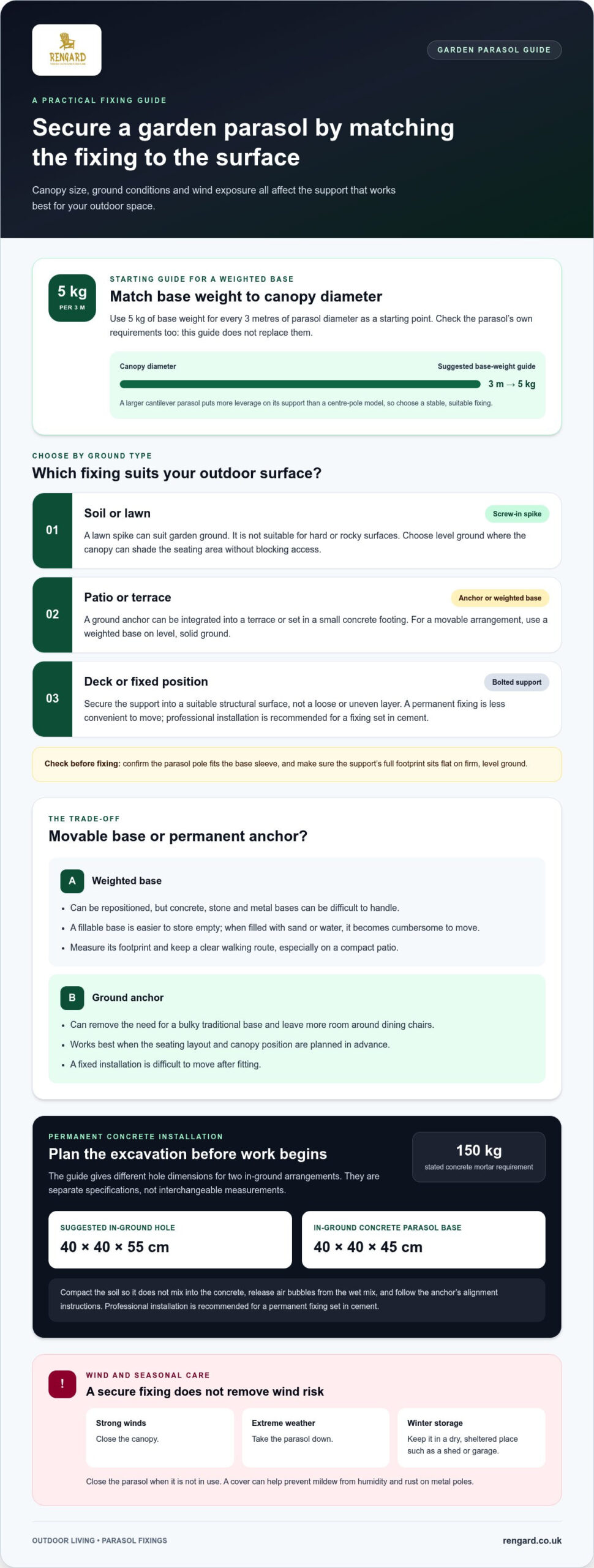
Tools and materials for ground-anchor installation
Choose a fixing suited to the surface and parasol before gathering materials. A soil anchor, deck tube and wall bracket each require a different installation approach.
- Identify the mounting system and gather its specified components before starting. For a removable outdoor umbrella, these may include a ground anchor or outer steel tube and a matching sleeve for the pole. A patio fixing may need metal screws; a wall or ceiling mount commonly uses screws or dowels. Choose hardware suited to the mounting surface.
- Consider a modular outer-tube arrangement if you want to remove the parasol between uses. One suggested setup runs a steel tube through the deck and into the ground, leaving it flush with the deck surface. The parasol can then be inserted into and removed from the installed anchor, rather than leaving a projecting fitting in the outdoor space.
- Mark the position before installing a ground anchor. Align it with the centre of the intended shade area, leaving clear access around the pole. Check that the ground is level: an umbrella on uneven ground can become unbalanced. Set the anchor upright and level so the parasol pole sits straight rather than leaning across the seating area.
- Match the fixing method to the patio, deck or wall. A floor support can be screwed directly into a wooden or concrete surface using metal screws. A wall or ceiling mount is usually attached with screws or dowels. For a removable deck tube, ensure its opening finishes flush with the decking, not above the walking surface.
- Insert the straight parasol pole only after the anchor is fitted and aligned. Slide it into the compatible sleeve, then secure it using the mount’s intended fastening points. Check that the pole sits firmly without rocking. A snug fit helps keep the umbrella upright; a loose or mismatched sleeve can let it shift in the anchor.
- Inspect the installation before opening the canopy. Check that the support is level, fasteners are secure and the route around the parasol is clear. In changeable British weather, close the canopy during strong winds and remove it in extreme weather. A fixed anchor keeps the support in position, but doesn’t make an open parasol suitable for every condition.
Bolting a parasol to a patio, deck or wall
- Choose a fixed support if your garden is exposed to high winds. A wheeled parasol is unsuitable for these areas, while a bolted fixing keeps the base in position. This doesn’t make an open canopy safe in strong winds, so close the parasol when conditions turn gusty. Cantilever parasols also need a fixing that suits their support design.
- Match the floor support to the patio surface before drilling. A parasol floor support can be screwed directly into wooden or concrete surfaces using metal screws. Set the support square to the area you want shaded, then mark its fixing points. On concrete, use a fixing method suited to the surface and the support’s instructions.
- Locate the deck structure before attaching a support. The fixings need to reach suitable timber beneath the boards, rather than relying on decking alone. One homeowner described having 2×6 timber beneath each of four proposed fixing points, and considered a threaded insert at least 2 inches long. Treat this as an example, not a universal specification.
- Align the base with a joist or supporting timber. One suggested approach uses a screw through each half of the parasol base into a deck joist. Keep the fitting level and secure, then check that the parasol pole sits upright. If the base has bolt-on legs, removing them when the parasol is away can leave a smaller hole and reduce the obstruction.
- Attach a wall or ceiling mount with screws or dowels suited to the surface. Position it so the canopy shades the intended seating area without obstructing a doorway or route. Check the parasol’s reach before fixing the bracket. The support must also hold the pole securely, without allowing it to shift during use.
- Finish by checking every screw and the parasol’s movement. Drive deck screws flush with the surface; protruding screw heads can be unsafe to stand on. Open and close the canopy, confirming that the pole remains properly seated. Remove the parasol before extreme weather, and close it during strong winds, even with a bolted fixing.
Inspect the deck screws as part of the installation, rather than relying only on whether the support feels secure. One commenter advised checking that every deck screw is flush, as raised screw heads can be unsafe to stand on. Check the area around the fixing and correct any screw head that remains raised before walking there.
Wind can affect a centre-pole patio umbrella, so a secure fixing system matters. Even with the umbrella attached to the patio, wind remains a consideration during use. Check both the screw heads and the fixing before opening the canopy.
Rengard: Furniture Accessories
Rengard offers Furniture Accessories to help complete a considered outdoor setting. Once you’ve planned the parasol’s position and fixing, think about how the surrounding garden furniture can support the way you use the space, from relaxed seating to outdoor dining.
Choose finishing touches that complement your garden layout and existing furniture, keeping the area practical and cohesive. Explore Rengard’s Furniture Accessories as you shape your outdoor space.
Make your outdoor space ready for the season
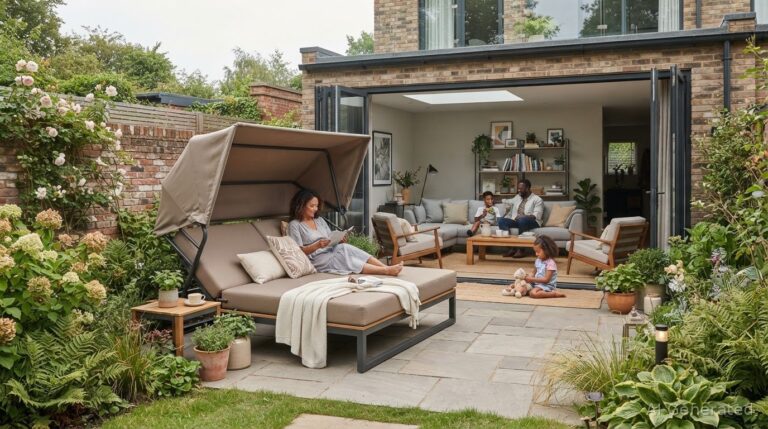
Securing the parasol is one part of creating an inviting outdoor space that works well day to day. Consider how your garden chairs, dining table or lounge seating relate to the shaded area, and leave comfortable room to move between them. A thoughtful layout helps the whole patio feel balanced.
As you decide how to secure a garden parasol, consider how its position fits your plans for relaxing and dining outdoors. Small changes to the layout can make the space more comfortable without crowding the patio.
For help planning your outdoor furniture, contact Rengard. Take the next step towards a garden setting that feels welcoming and ready to enjoy.
Frequently Asked Questions
Is there too much wind for a cantilever parasol?
Yes. If the canopy starts to sway or rotate, conditions are too windy to leave it open. Watch the canopy and frame rather than relying only on how the weather feels at ground level. Wind can catch the broad surface above your seating area. Secure nearby lightweight items too, so they don’t become hazards if gusts pick them up.
How do you hold a garden parasol without a stand?
Use a mounting point designed for the parasol pole, rather than improvising with loose objects. A table’s central hole can hold a straight-pole parasol, provided the table is strong and dense enough. Check that the pole sits securely in the opening and that the table remains steady as the canopy is opened. Keep chairs clear of the pole’s immediate area.
How do you use a floor support for a patio parasol?
Position the support where the canopy will shade your seating without blocking access to doors or paths. Before attaching it, place the parasol pole in the holder and assess its reach over the table or chairs. This dry fit helps you avoid fixing the support where the canopy sits awkwardly or the furniture is inconvenient to use.
What do you need?
You need a parasol support compatible with the pole and a fixing method suited to the installation surface. Gather the tools listed in the support’s fitting instructions, plus a level to check alignment. A concrete-set anchor also requires concrete mortar. Lay out the components before starting, and keep the parasol separate until the support is firmly installed.
How do you secure a garden parasol in the UK?
Choose a support suited to your parasol and the surface where it will stand. In a small paved courtyard, a fixed fitting can preserve floor space; in a flexible seating area, a movable base may suit changing layouts better. Position the parasol to shade the table or lounge area, while keeping a clear route around the garden furniture.
What weight parasol base is needed for different parasol sizes?
Use the parasol maker’s recommended base weight for the specific model and canopy dimensions. Larger canopies generally require more support, and an offset design distributes its load differently from a straight-pole parasol. A sheltered corner and an exposed terrace also present different conditions. If the model’s instructions specify a weight, use that figure rather than choosing by appearance alone.
How do you choose the right parasol base for a cantilever parasol?
Choose a base compatible with the cantilever frame, then check its footprint against the available space. It must sit without obstructing chairs, table legs or the route through the patio. Consider where the canopy will reach as it moves over the seating area. A compact layout may suit a fixed position, while a changing arrangement may need more flexibility.
How do you anchor a garden parasol to a patio or decking?
First decide whether the parasol should be removable or stay fixed in one position. This affects the fitting: a flush deck sleeve can leave the surface clearer when the pole is removed, while a fixed floor support stays in place. Either way, plan the canopy’s reach and keep the finished installation clear of walking routes and moving furniture.