Garden sofa or dining set: which suits your outdoor life
The better choice depends on how you use your garden: a dining set suits regular meals outdoors, while a garden sofa is better for stretching out, relaxing and conversation. If you’re weighing up whether a garden sofa or dining set is better, let your outdoor habits lead the decision, then consider comfort and the space available. There’s no need to choose the most impressive-looking set if it doesn’t suit the way you live.
Picture both options: a table ready for long lunches, or a comfortable lounge for quiet afternoons. The practical difference is how you sit and what you want to do, whether that means eating without balancing a plate or unwinding with a drink.
This guide compares comfort, layout and everyday use, with ideas for making the most of compact patios and larger gardens. You’ll come away knowing which option fits your outdoor routine, and when it makes sense to create both dining and lounging areas.
Key Takeaways
- Start with the way you spend time outside, then choose furniture that supports your usual activities.
- Plan the layout around usable space, including room to pull out chairs and move comfortably.
- Consider whether your outdoor table needs to handle proper meals, games or other everyday tasks.
- Compare seat shape and cushion comfort with how long you like to relax outdoors.
- Use your dining habits to decide whether a dedicated eating area or a more relaxed lounge arrangement suits you best.
Garden lounge furniture vs dining furniture: which do you actually need?
Choose a garden sofa for relaxed seating and conversation, or a dining set for meals at a suitable table height. UK prices vary with materials, size and included pieces; compare warranty coverage and inspect stability, edges and assembly instructions for safe everyday use.
Measure the usable outdoor space, not just the paved area, and consider how children and guests will use it.
For a visual example of how layout and lifestyle influence the choice, watch this short guide:
Furniture for entertaining
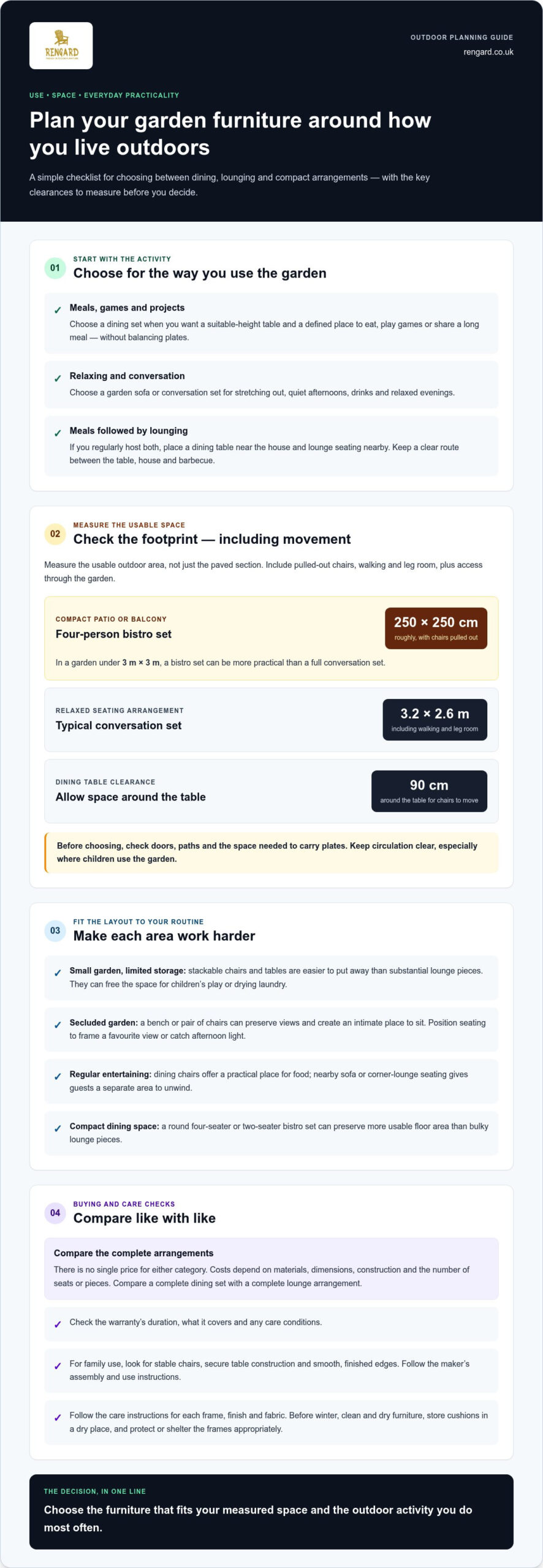
A dining set gives guests a defined place to eat, play games or share a long meal. For larger gatherings, dining arrangements are available for eight or more people, while a sofa set creates a separate conversation area for drinks after dinner. If your garden hosts both meals and relaxed evenings, position the table near the house and lounge seating nearby, keeping a clear route between them.
Choices for smaller gardens
In a garden under 3 m × 3 m, a bistro set can be more practical than a full conversation set. A four-person bistro arrangement needs roughly 250 cm × 250 cm when chairs are pulled out, so allow for that occupied footprint. A typical conversation set needs about 3.2 m × 2.6 m, including walking and leg room. For children, keep circulation clear and avoid blocking access through the garden.
A dining table also needs room for chairs to move: allow approximately 90 cm around it. In a compact space, a round four-seater or a two-seater bistro set can preserve more usable floor area than bulky lounge pieces. Measure doors, paths and the space needed to carry plates before choosing.
Prices and buying checks
There is no single price for either category: the total depends on the materials, dimensions, construction and number of seats or pieces included. Compare like with like, such as a complete dining set against a complete lounge arrangement, rather than comparing a sofa alone with a table-and-chair set.
Check the warranty’s duration, what it covers and any care conditions before buying. For family use, look for stable chairs, secure table construction and smooth, finished edges; follow the maker’s assembly and use instructions. These checks differ from layout decisions because they help assess suitability for regular use, not how much floor space a set occupies.
| Option | Best suited to | Space consideration | Everyday use |
|---|---|---|---|
| Garden sofa | Conversation and relaxed evenings | Room for seating and movement | Lounging with children nearby |
| Dining set | Meals, games and projects | Allow 90 cm around the table | Eating without balancing plates |
| Bistro set | Compact patios and balconies | Four-person footprint about 250 cm × 250 cm | Smaller meals and intimate gatherings |
Choose the set that fits your measured space and the activity you expect to do most often.
Matching furniture to lifestyle and outdoor activities
Match each piece to the activities that happen most often outdoors. A garden sofa encourages relaxation and conversation, while a dining table supports meals, board games and longer gatherings. Consider whether summer evenings usually mean reading outside, eating with family or hosting friends.
For a small garden without a storage area, stackable chairs and tables are easier to put away than substantial lounge pieces. Stack them against a sheltered wall when the space needs to serve another purpose, such as children’s play or drying laundry. A compact dining arrangement can also keep the central area open between meals.
A secluded garden often works best with sparse furnishings. One bench or a pair of chairs can preserve a clear view of planting and create an intimate place to sit. In this layout, avoid filling every corner with matching pieces; position seating where it frames a favourite view or catches the afternoon light.
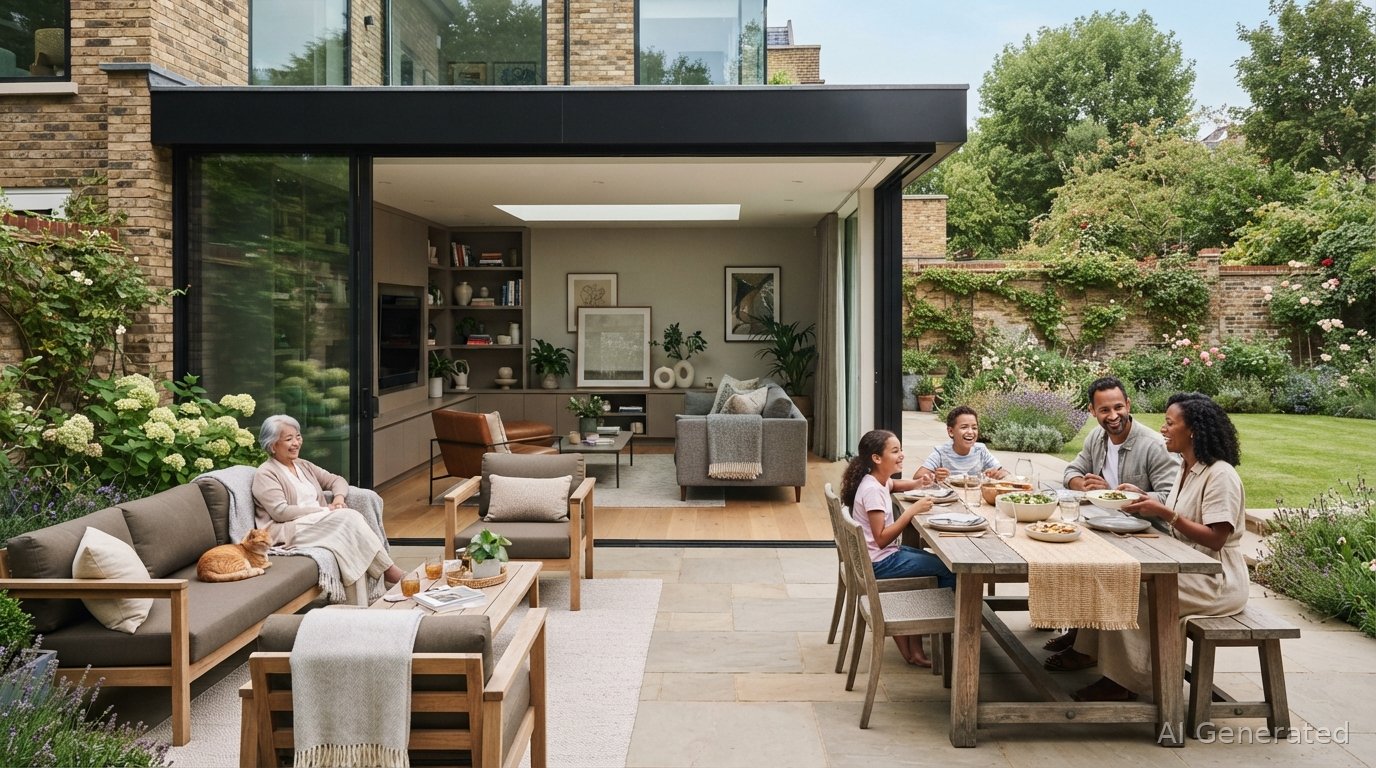
For parties and long barbecue evenings, plan for both eating and relaxed conversation. A dining table with garden chairs gives guests a practical place for food, while a garden sofa or corner lounge nearby creates a separate space to unwind. Keep a clear route between the table, house and barbecue so guests carrying plates can move safely.
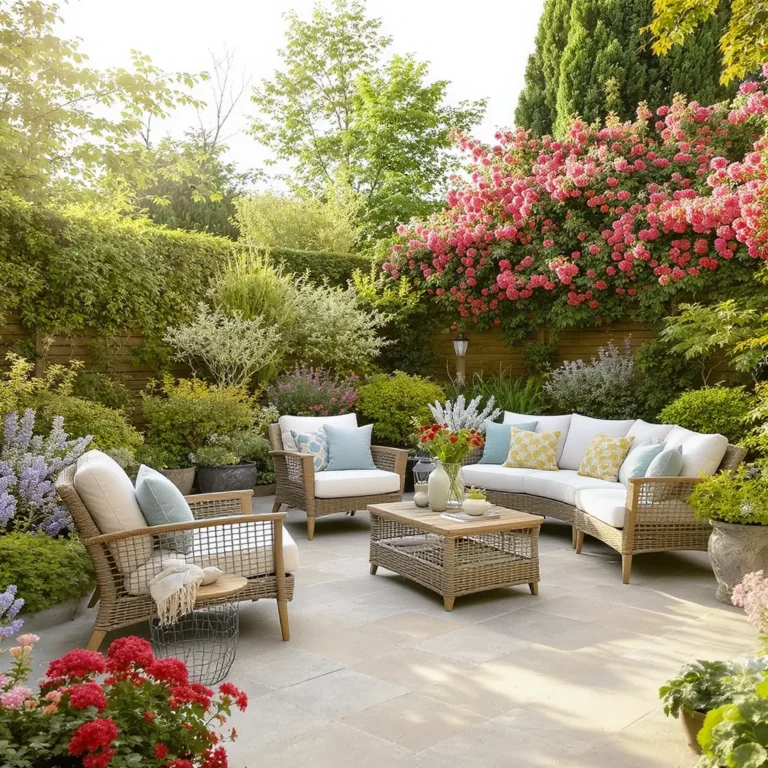
Colour and material choices can make these different zones feel connected. Repeat a colour in cushions and dining-chair details, then pair it with a shared material, such as rattan or teak. For a calmer arrangement, combine neutral furniture with a single contrasting cushion colour. Rengard’s quick-dry, UV-resistant cushion fabrics and weather-resistant materials suit outdoor use in the UK, while a coordinated palette helps the layout feel considered.
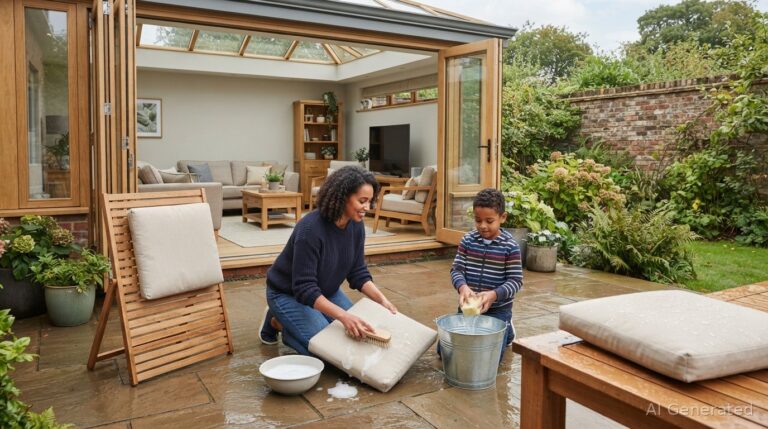
Maintenance depends on the frame, finish and fabric, so follow the care instructions supplied with each set. Before winter, clean and dry furniture, store cushions in a dry place, and use suitable protection or sheltered storage for the frames. Stackable pieces can be easier to store where space is limited, whilst larger lounge sets may need a clear, planned storage area.
Try this simple decision process: note your main outdoor activity, identify whether you have storage, then sketch the furniture zones. A family that eats outside regularly may prioritise a dining table; a household that mainly relaxes outdoors may prefer lounge seating. If guests come for barbecues, combining both functions can make the garden more adaptable.
Choose colours and materials that work across your dining and lounge areas, then adapt the arrangement to your routine as the seasons change.
Conversation Sets vs Dining Sets: Which Layout Suits Your Garden?
A dining set gives meals and activities a defined surface; a conversation set prioritises relaxed seating. Before combining them, compare table height, chair access and the activities each layout supports.
Dining sets for structured meals
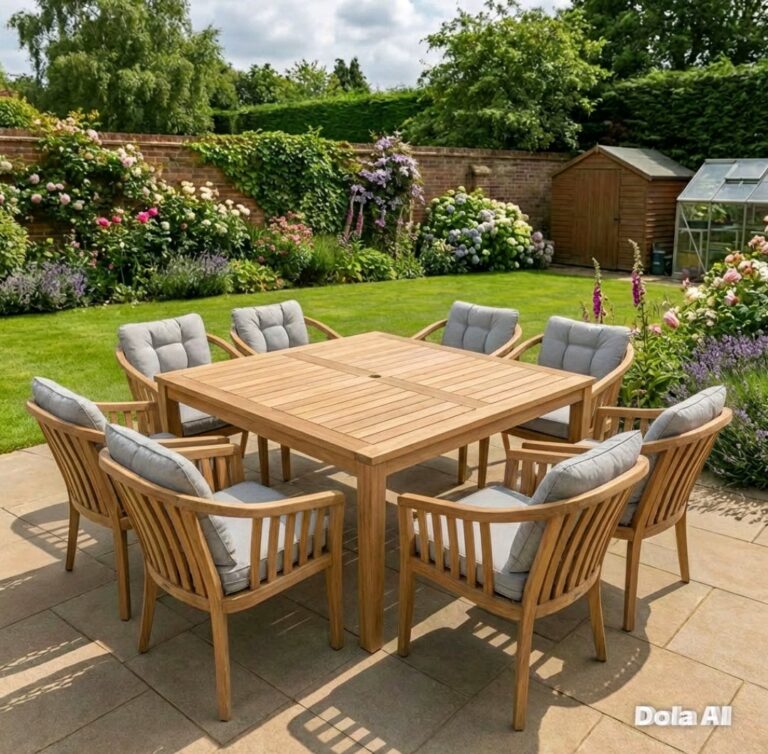
Dining sets pair chairs with a table designed for eating, board games or outdoor projects. Their upright posture and usable tabletop make them more practical than low lounge seating for a full meal. Outdoor dining tables typically sit 72-76 cm above the ground, with seats around 42-48 cm high. This difference helps diners sit comfortably and reach plates without leaning across a low coffee table.
A compact four-seat set suits everyday meals without committing the whole patio to a large arrangement. Round outdoor tables measuring 100-120 cm across can seat four, whilst a square table offers another compact shape. Leave space for chairs to move and for people to carry food through the layout. For a balcony or narrow terrace, a smaller table can keep the route from the door clear.
Bistro sets offer another option for compact gardens and balconies. A smaller arrangement creates a defined spot for coffee or a light meal, with fewer pieces to position than a larger dining set. Consider the table shape in relation to the available space: a round table can make it easier to move around, while a square option may sit neatly against a wall.
Conversation sets for eating
Conversation sets usually combine sofas, loveseats or chairs with occasional tables. Their low arrangement supports conversation and lounging, but the table is less suited to a formal meal. Conversation tables typically sit 40-50 cm above the ground, so eating a full dinner can mean reaching down or balancing plates. They work well for casual food such as sandwiches, pizza and nibbles.
For relaxed hosting, place a conversation set where guests can face one another, then use its table for drinks and small plates. Modular pieces can be rearranged for different occasions, such as opening the layout for a gathering or bringing seats closer for a quieter evening. This flexibility differs from a fixed dining arrangement, where each chair faces the table.
Combining both layouts can suit a larger patio: set dining chairs near the house for meals, then position lounge seating nearby for conversation afterwards. A medium lounge set and a four- to six-seat dining set can coexist comfortably in an area around 30 square metres or more. Keep a clear path between both zones.
Choose a dining set if structured meals are central to your outdoor routine; choose conversation seating for relaxed gatherings. In a compact space, a four-seat dining set or bistro arrangement can provide a practical middle ground.
Comfort and cushion features
For longer periods of relaxation, cushions tend to make a more noticeable comfort difference on lounge furniture than on dining chairs. A garden sofa invites you to settle in, so consider how its seat and back feel when sitting upright and leaning back. Try both positions before deciding whether the cushions suit a quiet afternoon or an evening with guests.
Dining chairs serve a different purpose: they support a more upright posture for eating and conversation around the table. Cushions can soften the seat, but they don’t change the table’s height or make a low lounge arrangement practical for a full meal. If outdoor entertaining over dinner is a priority, consider how the chairs feel throughout a meal, rather than judging them by a brief sit.
Think about the balance between softness and support. Deep, yielding cushions may feel inviting at first, while firmer support may suit longer periods of sitting. Try the seating as you expect to use it: sit back on a sofa, change positions, and sit at a dining table as you would while eating. On a smaller patio, also consider whether cushions make the furniture feel visually crowded.
Fabric matters in the UK, where outdoor furniture can encounter damp weather and strong summer sunlight. Outdoor fabrics should be weather-resistant and fade-proof. Compare the fabric feel and colour with the frame, then consider how the complete set will look beside paving, planting or a brick wall. A neutral sofa with one contrasting cushion colour can create a composed lounge zone; coordinated dining cushions can link that area with a square table nearby.
Use these checks when comparing comfort:
- For a garden sofa: sit back and check that the seat and back cushions support your preferred lounging position.
- For dining chairs: test the seated posture at the table, especially if meals or entertaining usually last longer.
- For a smaller space: assess how the cushions look alongside the tables and other pieces, both in use and arranged neatly.
In changeable UK conditions, follow the care instructions supplied with your furniture and cushions. Keeping cushions dry between uses helps maintain a comfortable seat; put them away when the weather turns wet, then return them when the outdoor space is ready again. A sofa is often the stronger comfort solution for relaxation, whilst dining chairs with cushions can add softness without shifting the set’s focus from eating.
Garden use and outdoor dining habits
The most useful clue is what you actually do outside, not how often you hope to entertain. If you eat breakfast, lunch or dinner outdoors whenever the weather permits, a dining table gives meals a natural home. If your garden is mainly for conversation, reading or watching children play, lounge seating may get more use. Picture a typical summer day before choosing: does it involve plates, or coffee and time to relax?
For regular outdoor meals, consider how easily you can carry food from the kitchen. A table near the patio doors can make breakfast outside feel simple, while a distant seating area may suit an occasional evening drink better. Dining furniture also avoids balancing plates on laps. A sofa and low coffee table work well for casual food, such as sandwiches or nibbles, rather than a meal that needs cutlery and several dishes.
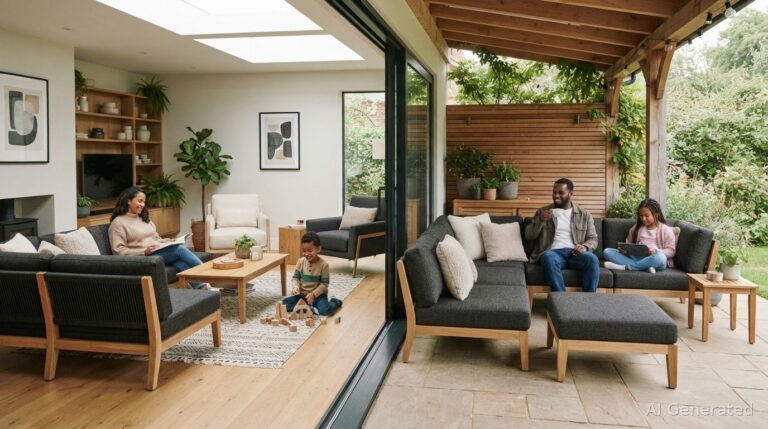
Daily routines matter too. For example, a garden sofa can give an adult a comfortable place to watch a toddler play while keeping the garden in view. A dining set can support drawing, games or a family meal at the same table. If both uses are part of your week, a table-and-chairs layout may offer more everyday function than a second lounge area.
For hosting, plan around what guests do before and after eating. Place the dining table close to the kitchen or barbecue, then position conversation seating nearby for drinks once plates are cleared. In a larger garden, a table on the patio and armchairs elsewhere can create distinct zones without making the whole space feel like one furniture set. Keep a clear route between them for serving food.
Limited space may call for furniture that performs more than one role. A dining-height table that can be raised or lowered offers a middle-ground arrangement for eating and relaxing, rather than separate dining and lounge pieces. It can also provide a useful surface for a cup while seated. Consider this solution when the patio cannot comfortably accommodate both zones.
Use a simple test before deciding: list your regular outdoor activities, then rank them by frequency. If meals come first, choose dining furniture; if unhurried conversation and relaxation matter more, choose lounge seating. If both matter, map the table, chairs and sofa on the patio, then check that serving routes and seating remain comfortable. Let your actual garden habits guide the layout.
Rengard: Furniture Accessories
Rengard offers garden dining sets and rattan garden furniture for creating a considered outdoor setting. Use your chosen table or seating as the starting point, then consider how its finish works with the patio surface, planting and surrounding view. This helps the arrangement feel integrated with the garden rather than simply placed within it.
For a considered garden furniture choice, contact Rengard or visit rengard.co.uk.
Make your garden ready for the way you live
Choosing whether a garden sofa or dining set is better gives your outdoor space a clear starting point. Now picture how you want it to feel: sociable and set up for shared meals, or relaxed and welcoming for quiet pauses outside. Let that atmosphere guide the final details, from the furniture finish to how it sits within the garden.
Rengard’s garden furniture range includes options for dining and lounging outdoors. Consider the character of your patio, the view from indoors and the pieces that will make the space feel complete.
When you’re ready to shape your outdoor setting, contact Rengard about your garden furniture. A thoughtful choice can make your garden feel more inviting and personal.
Frequently Asked Questions
What are the right questions to ask yourself before choosing garden furniture?
Ask who will use the furniture, what should remain accessible, and how exposed the spot is to wind or direct sun. Check whether doors open outwards, whether paving is level, and whether the chosen position affects access to planting or lawn areas. Then consider care: a household with pets or young children may prefer finishes that are easy to wipe clean after everyday use.
Can you get the best of both?
Yes. Think beyond a fixed matching set and select individual pieces that share a finish or colour palette. For example, garden chairs can complement a sofa while also being moved to a table when needed. This approach creates a coherent look without requiring every piece to serve the same purpose. Keep the arrangement visually balanced by repeating a material or colour across the seating.
Can you have both?
Yes, if the garden can accommodate both without compromising access or the features you value. Before choosing furniture, mark its outline on the ground with removable tape and test the space in normal use. Open doors, walk through with a tray, and check access to bins, planters or the lawn. This practical trial can reveal whether the arrangement feels comfortable before you commit.
What are the pros and cons of a garden sofa versus an outdoor dining set?
A sofa can create a defined place to unwind, but it may be less adaptable if you regularly rearrange the garden. A dining set provides a firm surface for varied activities, though chairs and table legs can make the arrangement feel more formal. Consider which drawback would matter less in your routine. The best choice is the one that remains useful beyond occasional entertaining.
Which is better for entertaining guests: garden sofa or dining set?
Consider the style of hosting, not only the number of visitors. A dining arrangement suits guests who prefer a place for refreshments, while a sofa setting supports informal conversation. If guests have different needs, including older relatives or children, offer varied seating where space allows. Check that people can join or leave the gathering without disrupting others or moving heavy furniture.
How many people can garden sofas and outdoor dining sets seat?
Capacity depends on the exact design, chair dimensions and how much personal space guests need. Use the listed seat count as a guide, then consider whether it suits comfortable everyday use or occasional hosting. A household may prefer fewer, more generous seats for regular use, while a host may prioritise places for everyone attending a garden gathering.
Which is more comfortable for relaxing and eating outdoors?
Comfort depends on the person and the activity. Check whether armrests, back support and seat depth suit the people who will use the furniture. At a dining table, make sure chair arms can sit comfortably beneath the tabletop. For a garden sofa, consider whether the seat supports both upright conversation and a more relaxed posture, rather than relying on cushion appearance alone.
How much garden space does a sofa set or dining set need?
There is no single footprint for every design, so use the dimensions of the exact pieces you’re considering. Include space for moving chairs, access around the furniture and storing cushions or covers. Mark the arrangement on the ground, then check it from the house and garden entrance. A layout that looks compact on paper still needs to work in everyday use.