
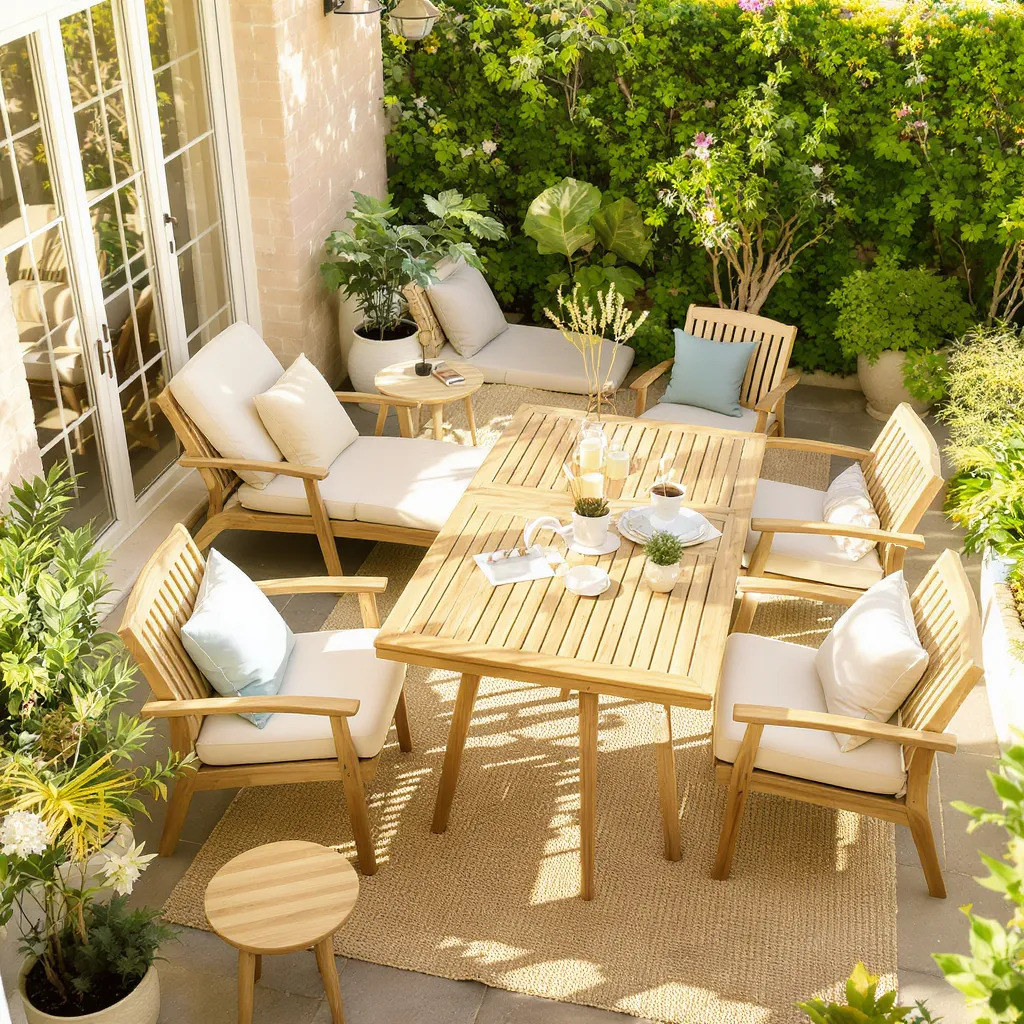
Outdoor furniture is more than just a functional addition to your garden, patio, or balcony—it’s an investment in your home’s outdoor living experience. Whether you’ve chosen sleek aluminum dining sets, timeless teak loungers, or cozy rattan sofas, proper outdoor furniture maintenance can make the difference between a set that lasts a few seasons and one that serves you beautifully for over a decade.
Why Outdoor Furniture Maintenance Matters
High-quality outdoor furniture can last anywhere from 5 to 15 years depending on material and care. According to CG Outdoor’s 2025 market report, premium materials like teak, powder-coated aluminum, and high-density polyethylene wicker can endure even longer. However, without proper maintenance, exposure to sun, rain, and temperature fluctuations can lead to fading, corrosion, and structural damage.
The longevity of outdoor furniture depends as much on proper care as it does on material quality. Covering, cleaning, and seasonal storage are as important as choosing durable materials.
In this guide, we’ll explore actionable furniture care strategies to protect your investment, keep your garden furniture looking stunning, and maximize its usability year-round.
Understanding Different Materials for Outdoor Furniture Maintenance
Choosing the right maintenance approach starts with knowing your furniture’s material. Each has unique needs. Moreover, understanding these differences allows you to apply more effective care routines:
| Material | Average Lifespan | Care Notes |
|---|---|---|
| Teak Wood | 10-20 years | Apply sealant every 1-2 years, avoid harsh chemicals |
| Powder-coated Aluminum | 8-15 years | Clean with mild soap, check for scratches |
| HDPE Wicker | 10-15 years | Rinse regularly, avoid UV overexposure |
| Steel | 5-10 years | Inspect for rust, use rust inhibitors |
| Rattan | 5-8 years | Keep dry, avoid prolonged sun exposure |
Consequently, by understanding these specifics, you can tailor your outdoor furniture maintenance routine to extend longevity.
Cleaning and Protection Strategies for Outdoor Furniture Maintenance
Routine cleaning is essential for preventing mold, rust, and fading. Experts recommend deep cleaning at least twice a year—once in spring and once in autumn. Additionally, small monthly cleanings can help reduce buildup:
- Eco-Friendly Cleaners: Use vinegar or biodegradable soap instead of harsh chemicals.
- Gentle Techniques: Avoid power washers for wood; use a soft brush with mild detergent.
- Protective Coatings: Apply sealants to teak and hardwood every 1–2 years.
- Rust Prevention: For metal pieces, inspect regularly and touch up paint or use rust inhibitors.
Inspect your furniture regularly for cracks, rust, or mold—addressing these issues early can extend life by several years.
For more cleaning tips, visit Better Homes & Gardens Outdoor Cleaning Guide. Additionally, consider eco-friendly products from trusted suppliers.
Seasonal Outdoor Furniture Maintenance and Weather Protection
Seasonal changes can be harsh on outdoor furniture. Winter moisture, summer UV rays, and autumn winds all contribute to wear and tear. Therefore, preparation is key:
Best Practices:
- Store furniture indoors or under waterproof covers during harsh seasons.
- Keep cushions in a dry, ventilated space to prevent mold.
- Use breathable covers to avoid condensation damage.
Moreover, for inspiration on selecting weather-resistant designs, see our guide on Outdoor Furniture Material: Best Options for Style and Durability.
Regular Inspections and Repairs for Outdoor Furniture Maintenance
Preventative maintenance is always more cost-effective than replacements. Furthermore, regular inspections can catch issues before they worsen. Make it a habit to:
- Tighten loose screws and bolts.
- Check welds and joints.
- Replace worn cushions and covers.
- Sand and refinish wood surfaces when needed.
As a result, this proactive approach ensures your furniture remains safe, comfortable, and visually appealing.
Trends in Outdoor Furniture Maintenance and Care for 2025
Modern outdoor furniture care isn’t just about cleaning—it’s about adapting to new technologies and environmental priorities. Consequently, trends are shifting toward sustainability and innovation:
- Sustainable Materials: Recycled plastics, FSC-certified wood, and biodegradable fabrics are becoming mainstream.
- Smart Features: Weather sensors, solar-powered lighting, and USB charging ports are being integrated into designs.
- Climate-Responsive Design: UV-resistant fabrics and corrosion-proof metals tailored to local climates.
These trends align with the growing market, which is expected to grow at 5.6% CAGR from 2025 to 2032. Additionally, industry leaders like Houzz Outdoor Trends are showcasing cutting-edge designs.
Common Mistakes to Avoid
Even well-intentioned homeowners sometimes shorten the lifespan of their outdoor furniture by making these mistakes. Nevertheless, avoiding them can save you time and money:
- Using bleach or abrasive cleaners on delicate surfaces.
- Leaving cushions outdoors during prolonged rain.
- Neglecting protective covers.
- Storing furniture in unventilated spaces, leading to mold.
Ultimately, steering clear of these pitfalls can prevent premature replacements.
Building a Long-Term Outdoor Furniture Maintenance Plan
A structured maintenance plan helps you stay consistent. Moreover, breaking tasks into seasonal steps makes upkeep easier:
- Spring: Deep clean, inspect for winter damage, apply protective coatings.
- Summer: Light cleaning, check for UV damage, rotate cushions.
- Autumn: Deep clean, prepare for storage, inspect for rust.
- Winter: Store or cover, monitor storage conditions.
In addition, for those looking to upgrade their space while maintaining longevity, explore our feature on The Timeless Appeal of Garden Chairs.
Conclusion
Outdoor furniture maintenance is a blend of regular cleaning, seasonal protection, and proactive repairs. By understanding your furniture’s materials, investing in eco-friendly care, and following a consistent seasonal routine, you can enjoy your garden furniture for many years to come.
Ultimately, the goal is to preserve both function and style—so your outdoor space remains a welcoming retreat. Therefore, start implementing these tips today, and your investment will continue to reward you season after season.
Whether you’re caring for a cozy balcony set or a sprawling garden dining arrangement, the principles remain the same: protect, clean, inspect, and enjoy.
Leave a Reply