Protect Outdoor Furniture UK: How to Handle Harsh British Weather
British weather has a personality all its own. One minute it looks bright and calm, almost convincing, and then the rain turns sharp, the wind picks up, and everything feels colder than planned. Typical, really. For anyone with a garden or patio in the UK, this unpredictability is often the biggest challenge for outdoor furniture. Even pieces that seem well made can struggle when they’re left outside without much care. Over time, day after day, it all adds up. To truly protect outdoor furniture UK homeowners rely on, it helps to start with simple habits and realistic expectations about the climate.
What often surprises people is that protecting the outdoor furniture UK homeowners buy usually isn’t about hiding it away. It’s more about small, sensible choices and a few easy habits, plus being honest about how the British climate actually behaves. Rain and damp air cause slow, quiet damage. Frost leads to stiffness and cracking. Strong winds and summer sun add their own wear. Before long, fabrics fade, frames loosen, and furniture doesn’t last as long as it should. Most of the time, this happens gradually rather than all at once.
This guide starts with the parts that matter most. It looks at how British weather affects garden furniture and which materials usually hold up better over the years, without guesswork. You’ll also find practical advice on covers, storage, and seasonal care that fits real life. Regional differences are covered too, from windy North Wales to a compact London balcony. Along the way, there are tips for cushions, metal frames, and wooden furniture, plus the year‑round outdoor furniture UK households use for everyday comfort. Simple stuff, honestly.
If longer‑lasting, weatherproof garden furniture sounds appealing, this is a good place to start. Less fuss, better results.
Understanding the Reality of British Weather and How to Protect Outdoor Furniture UK
Looking after outdoor furniture in Britain usually starts with being honest about the weather (often the only sensible place to begin). The UK isn’t just wet. It’s damp for long stretches, changes quickly, and is often hard to predict, even when the forecast seems calm. Many areas see over 150 rainy days a year, and humidity often sits around 80 percent for long periods. That moisture doesn’t clear away fast. It hangs around, settles on surfaces, seeps into fabrics, and causes slow, ongoing wear. Little by little, but almost all the time. Most people have noticed the signs, even if they haven’t put a name to them.
One thing that surprises many homeowners is that heavy rain usually isn’t the main problem. More often, it’s the light drizzle and fine mist that cause trouble. Furniture never fully dries, which can lead to mould and lets metal parts begin to rust, even when everything still looks fine. And summer isn’t a full break either. Overnight dew can soak cushions and tabletops, leaving them slightly damp unless they’re dried on purpose. It feels small at first. Over time, it adds up. That’s why weather damage in the UK tends to creep in rather than happen all at once.
Storms are another issue that’s harder to ignore now. During the 2023/24 season, the UK saw 12 named storms. These bring strong winds, driving rain, and flying debris. Aviva reports that storm damage now makes up a large share of home insurance claims (Aviva). Lightweight chairs can tip without warning, and repeated knocks slowly loosen joints and weaken frames.
| Weather Factor | Impact on Furniture | Common Damage |
|---|---|---|
| Rain and damp | Constant moisture | Mould, rust, fabric wear |
| Frost | Freeze-thaw cycles | Cracks, frame stress |
| Wind | Movement and impact | Loose joints, tipping |
| Sunlight | UV exposure | Fading, brittle materials |
As Laura Lazarus from Aviva explains, the risk is real:
Over the last five years, two fifths of homes across the UK have experienced damage from extreme weather, highlighting the significant impact that severe weather can have on our communities, especially if they are underprepared.
Understanding these patterns usually makes planning protection much easier, in my view. When moisture and movement are treated as everyday conditions, it’s simpler to choose furniture and care habits that suit the British climate, instead of constantly trying to fight it, which rarely works.
Choosing Materials That Cope with the UK Climate and Help Protect Outdoor Furniture UK
Material choice sits right at the heart of keeping a garden setup in good shape through typical UK weather. With near‑constant moisture, long stretches of grey skies, and regular temperature swings, some materials simply cope better than others. Weaker options tend to show problems quickly, sometimes within a season or two. Anyone who has seen furniture fade, warp, or soften after one wet winter will recognise how fast this can happen.
Aluminium is often one of the most reliable picks for this climate. Powder‑coated aluminium doesn’t rust, stays light without feeling cheap, shrugs off rain, and needs very little upkeep. It’s especially practical in wetter areas like Cheshire or Worcestershire, where showers are more routine than surprise. A quick clean and the odd check is usually enough, which helps explain why aluminium furniture care UK homeowners prefer often stays simple and stress‑free.
Seasonal changes are another area where aluminium tends to do well. Steel can start to oxidise in damp air, while plastic often struggles during cold snaps and may turn brittle once frost sets in. Aluminium usually avoids both problems. That steady performance makes it suitable for year‑round outdoor use, even when there’s nowhere to store it indoors. Not having to worry too much over winter is a real plus.
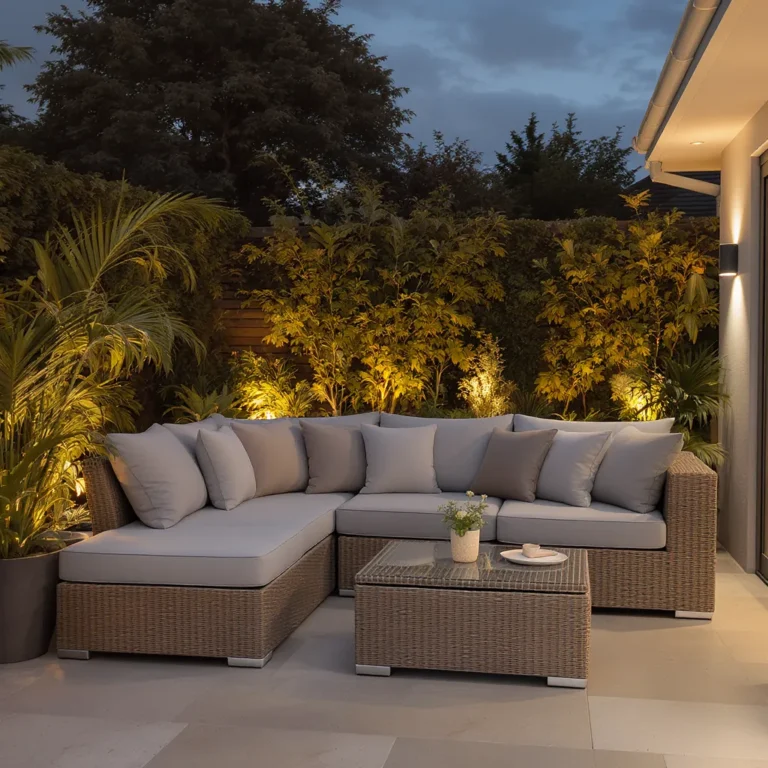
Synthetic rattan is another option many people look at. Good‑quality rattan is UV‑stabilised and woven over aluminium frames, which helps reduce fading and keeps rot away. With proper covers, waterproof rattan furniture UK buyers trust can stay outside for most of the year. Build quality matters here, though, as cheaper versions often crack or split when frost arrives.
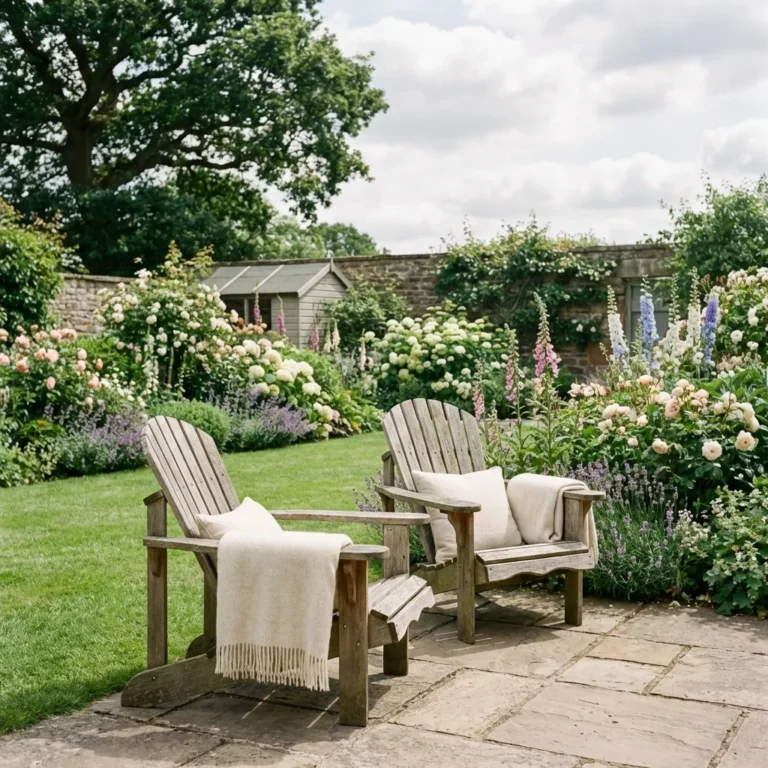
Teak sits a little apart from the rest. It’s a natural hardwood with its own oils that help repel water. Over time it develops a silver‑grey finish some people like, while others oil it once or twice a year to keep the original colour. It stays durable, responsibly sourced options are available, and it generally handles British damp better than most woods. A classic choice, in my view.
| Material | Typical UK Lifespan | Maintenance Level |
|---|---|---|
| Grade‑A teak | 30, 50+ years | Low to medium |
| Powder‑coated aluminium | 15, 25 years | Very low |
| Synthetic rattan | 10, 15 years | Low |
| Untreated softwood | 3, 7 years | High |
For a closer comparison, this guide on teak, rattan, and aluminium durability breaks the differences down clearly.
Additionally, you can explore Aluminium Garden Furniture Cheshire: Reliable for UK Weather for more insight into material performance.
Why Covers Matter More Than Most People Think When You Protect Outdoor Furniture UK
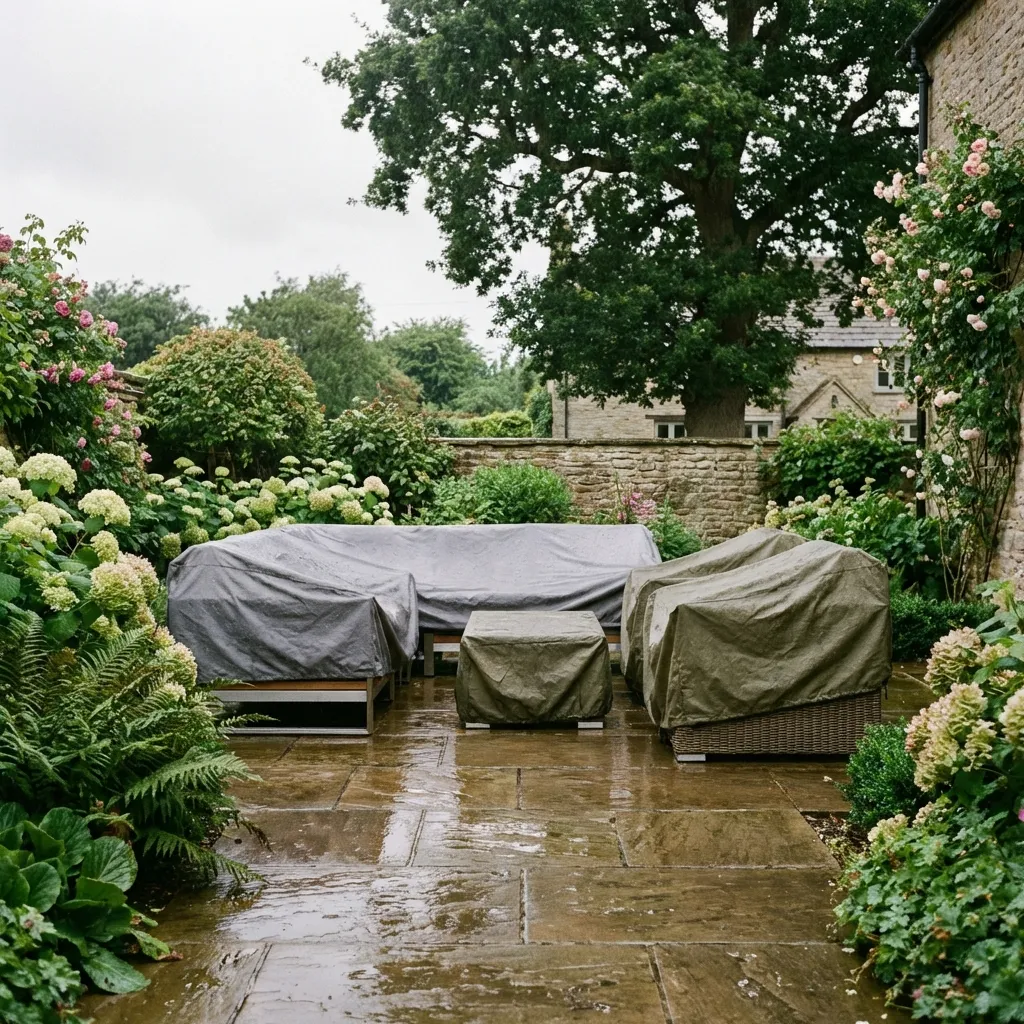
Garden furniture covers UK homeowners use often feel optional. Many people see them as a nice extra to buy later, which is a common habit. But in everyday outdoor living, they’re usually one of the most useful items you can have. Covers cut down direct rain on surfaces, reduce UV damage during long sunny spells, keep leaves off tables and chairs, and slow the steady build‑up of dirt and grime. They help protect outdoor furniture UK buyers invest in throughout the seasons.
What many people miss is the constant wet‑and‑dry cycle. This happens a lot in the UK. When furniture sits outside without a cover, materials expand and shrink over and over again. With time, this movement can damage surface coatings, loosen screws and joints, and slowly reduce how long the furniture lasts. This is where covers really help. They act as a buffer, easing daily weather changes, especially in typical UK conditions.
Picking the right cover matters more than just buying the cheapest one. Thin plastic sheets can trap moisture, and that damp often causes mould and bad smells. Better covers are breathable and shaped to fit properly, letting air move while still keeping rain out. It’s worth checking for vents, sloped seams that push water away, and fabrics made for outdoor use in the UK climate.
Experts from Bramblecrest point out that protection makes a real difference:
Quality outdoor furniture can withstand rain but benefits significantly from protection. Furniture covers extend furniture life by 3, 5 years and maintain appearance.
In windy areas like North Wales or Shropshire, tie cords or straps help keep covers in place. Busy city spaces such as London or Manchester often work better with compact, balcony‑friendly designs. In winter, thicker insulated covers support frostproof garden furniture care and help cut down condensation, which is common in colder months.
We’ve also explored winter care in more detail here: Winter Garden Furniture Maintenance UK Tips for 2026.
Cushion Care in a Damp Climate
Outdoor cushions are often the first things to suffer. Fabric soaks up rain, foam holds moisture deep inside, and in the UK even the air can slow drying. Because of that, knowing how to protect cushions from rain UK weather brings often matters more than people expect. Moreover, cushions are key to comfort, so keeping them fresh is essential.
Even cushions sold as “weather‑resistant” aren’t meant to stay wet for days at a time. When damp hangs around, musty smells can start, mould spores may appear, and padding can sag or lose its shape. Comfort slowly drops. Hygiene becomes more of a concern. The seating just doesn’t feel right anymore.
Quick‑dry foam and removable covers help with day‑to‑day care. However, they’re helpful rather than magical. Cushions still shouldn’t be left out in heavy rain or kept outdoors overnight through winter. A practical option is using waterproof storage boxes, or simply bringing cushions inside when the weather turns. Boxes with ventilation panels usually work better, as they reduce condensation inside. It’s a small detail, but it often makes a real difference.
In places like Derbyshire or Warwickshire, where showers are frequent but short, quick‑dry cushions with breathable covers usually cope fairly well. Colder areas often need a different approach, so storing cushions from October through March is usually safer and helps a full set last longer.
A simple routine works well, without overthinking it:
- After use, moisture is best shaken off rather than left to sit
- Can they air dry for a bit? Even a short dry spell often helps
- During long wet periods, storage is the safer choice
- Covers benefit from an occasional wash to limit mould build‑up
Seasonal Maintenance That Actually Works to Protect Outdoor Furniture UK
Outdoor furniture maintenance UK routines don’t need to feel complicated or take up loads of time. They tend to work best when they fit the seasons you actually get here, which, as most people know, can change quickly. Therefore, that’s usually the main challenge. No overthinking and no huge lists, just doing the right things at the right time to protect outdoor furniture UK families enjoy year‑round.
Spring is when small fixes really help. After winter, it’s common to spot loose joints or screws, so a quick check is worthwhile. A proper clean also makes a big difference, as winter dirt often sits in corners you don’t notice straight away. Mild spring weather is ideal for oiling or sealing wood because finishes soak in evenly rather than drying too fast. Summer shifts the focus to UV protection outdoor furniture needs to limit fading. Keeping covers nearby is a simple habit that helps. And if pollen or bird mess is left too long, stains can set faster than you might expect.
Autumn is all about preventing future problems. Clean everything well, then decide what stays outside and what gets stored. Cushions are best brought indoors early, since cold snaps often arrive without much warning. Winter is less about appearance and more about protection. Covered furniture can stay outside if the material allows it. Aluminium and rattan usually cope well, and teak often handles winter too, especially when it’s raised so water can’t collect underneath.
According to materials researchers at Kedel, a source known for material performance testing, moisture causes more issues in the UK than cold alone (Kedel). In this climate, keeping furniture dry often matters more than keeping it warm, and that becomes very clear once winter arrives.
Regional Challenges Across the UK
Different parts of the UK face different outdoor furniture issues, and it usually comes down to location, especially in coastal towns. In windy or seaside areas, weight and stability matter more than most other features. Heavier sets are less likely to move during strong gusts, and anchoring options can stop that annoying sliding. Salt-heavy air near the coast can also speed up rust, so aluminium frames and stainless fittings tend to last longer and need less care over time.
What about wetter central regions? Rain shifts the priorities a bit. Covers and proper drainage can make a clear difference, especially during long wet spells. Slightly raising furniture helps water drain away instead of collecting underneath. Grass lawns and clay soils stay damp longer, keeping moisture around the legs. Simple rubber feet or paving slabs can limit soggy contact and slow wear.
Urban spaces have their own issues. Storage usually matters most when space is tight. Stackable chairs and slim covers fit better on balconies and small patios. City pollution and daily dirt also build up faster, so a quick wipe now and then helps keep surfaces looking fresh.
Sustainability and Long‑Term Value
What often catches people’s eye first is how long good furniture can really last. Sustainability isn’t just about materials; it’s also about lifespan, which gets missed a lot. Pieces that last 15 or even 30 years create less waste and usually cost less over time. That’s simple math. Many UK buyers now choose durability over a cheap upfront price, especially as replacement costs keep going up, and that way of thinking tends to stick.
You can see this shift in smarter choices like FSC‑certified teak, recyclable aluminium, and fabrics made to hold up year after year, not just for one summer. Modular designs matter too, since swapping one section is easier than replacing the whole set. It sounds small, but it often changes the cost.
Repairability matters as well. Furniture with replaceable slats, cushions, and removable covers usually lasts longer than sealed, throwaway designs that wear out fast. Over ten years, quality pieces can save hundreds of pounds while reducing waste. To me, that’s a practical win, like replacing one worn cushion instead of throwing away an entire sofa. We covered some modern options here: best weather‑resistant outdoor furniture for UK gardens. You can also see The Truth About Teak Garden Furniture UK: Durability & Care Guide for additional advice.
Common Asked Questions (maybe)
Yes, it usually can, if furniture is made from weather‑ready materials like aluminium or teak and used with breathable covers (that part matters). In more exposed areas, you’ll likely find yourself checking pieces as storms move through. Even then, most cushions are best stored away over winter.
Do I need furniture covers in summer as well as winter?
Yes. Even in summer, covers still matter because furniture gets used a lot. They help keep pieces looking nice longer, protecting them from sudden rain, bird mess, tree sap, and UV damage. You’ll probably scrub less, so cleaning time goes down after rain.
Why does furniture last longer? Keeping it clean and dry helps. Breathable covers leave room for air to move and stop moisture from getting trapped. These are habits. Clean with mild soapy water a few times a year to remove spores early, and it stays fresh.
Is aluminium furniture really rust‑free?
Powder‑coated aluminium usually doesn’t rust, so it’s a low‑maintenance choice for outdoor furniture in British weather. It tends to stay solid, even in damp or coastal areas overall.
What is the best way to store garden furniture in small spaces?
Stackable designs help, and you’ll often see multi‑purpose storage boxes that work well in small spaces. In the UK, many balcony‑friendly options combine seating with hidden storage. Why split them? Seating plus storage is practical when space is tight, I think.
Making Outdoor Furniture Last for Years
What people often miss is that outdoor furniture in Britain usually lasts longer when care feels easy. It shouldn’t feel like a chore. For me, it comes down to knowing the local weather, choosing materials that handle it well, and getting used to a few small habits that take almost no time. Covers and some storage might not feel exciting day to day, but over the years they often make the biggest difference.
Instead of fixing things after they go wrong, it helps to treat care as something you do early. Wiping rain off a table or checking that a cover hasn’t blown loose before a storm can stop damage before it starts. After a while, these checks feel automatic and fit in with things you already do.
The details change between a windy country garden and a small city flat, but the idea stays the same. With regular care, weatherproof furniture becomes part of everyday life, not just summer weekends.
So think long term. Pick materials that handle the British climate, keep cushions dry, and use covers properly. A quick check before heavy rain can save a full clean later. Ultimately, these habits help protect outdoor furniture UK households enjoy for years.