Sturdy and Stylish Garden Furniture for Sloped UK Gardens
A sloped or uneven garden can feel like a real design puzzle. What’s interesting is how common this issue is. You see it in terraced gardens, tiered patios, and plots that follow a natural incline. Across the UK, the details vary, but the problem stays the same. From rolling ground in North Wales to stepped gardens in Worcestershire, and even small London terraces, uneven surfaces are part of everyday outdoor living rather than something unusual. Many homeowners worry about garden furniture rocking or sliding, and over time that constant movement can wear it out faster. That’s frustrating, but it makes sense. In reality, there’s rarely an easy fix; most people end up learning how to work with the ground they already have.
What often helps is that modern garden furniture for sloped gardens is made with these conditions in mind. Current designs focus on stability, with lighter frames and layouts that can be adjusted instead of fixed in one spot. Materials like aluminium and synthetic rattan offer strength without being too heavy, which makes small adjustments easier when the ground shifts. Modular sets are a sensible option for changes in level, and weatherproof finishes are built to cope with the British climate. Even so, how long furniture lasts often depends as much on where it’s placed as on the materials used.
This guide looks at how to choose practical outdoor furniture UK homeowners can rely on when the ground isn’t level. It examines materials, layout choices, and design tips suited to multi level garden furniture UK buyers often choose, especially in smaller spaces. The approach stays simple, because that’s usually the most helpful. Regional needs also matter, from strong winds on a hillside to limited space on an urban patio. In my view, the best choice often comes down to where you live and how you actually use the space.
Why sloped gardens change garden furniture for sloped gardens choices
A clear shift is happening in the market itself. The UK outdoor furniture sector is growing as more people invest in outdoor living, and recent data points to rising demand for lighter, more adaptable designs. Furniture that works on uneven patios and terraces, often without constant adjustment, is getting more attention because it cuts down on ongoing fixes and everyday frustration.
This demand links directly to how sloped gardens behave. Uneven ground puts extra strain on outdoor furniture, and legs don’t always sit evenly. Weight can move in ways designers need to plan for from the start. Over time, that movement often leads to wear or, in some cases, safety issues. These problems may seem minor at first, but they matter more with regular use. Because of this, stable garden furniture UK ranges now focus less on looks alone and more on balance, engineering, and materials that handle movement better.
| Metric | Value | Year |
|---|---|---|
| UK outdoor furniture market value | USD 975 million | 2024 |
| Projected market value | USD 1.03 billion | 2025 |
| Fastest-growing material | Metal (aluminium) | 2023, 2025 |
As the table shows, metal furniture, especially aluminium, is seeing the fastest growth. This trend matters for sloping garden design UK projects because aluminium combines strength with low weight. It’s easier to move across stepped areas and usually stays on the surface instead of sinking into softer ground, which makes day‑to‑day use simpler.
The United Kingdom outdoor furniture market is experiencing steady growth, driven by increasing consumer interest in enhancing outdoor living spaces.
For homeowners in places like Shropshire or Staffordshire, where slopes and changing weather are part of daily life, garden furniture that feels secure on uneven patios is less a luxury and more an everyday need. You can also explore more regional examples in Staffordshire Gardens with Durable Outdoor Furniture, which highlights how local topography influences design.
Materials that work best for garden furniture for sloped gardens
Choosing the right material is often where everything else starts to make sense. Garden furniture behaves differently on slopes, and some designs simply don’t handle them well. That’s why a table can keep wobbling no matter how carefully you adjust it. Heavy stone pieces and solid timber sets are usually the hardest to deal with. They’re difficult to level and even less forgiving once they’re in place. On uneven ground, outdoor furniture tends to work better when the material can adjust slightly instead of constantly pushing against the surface. Stability matters, but a bit of give often matters just as much. That balance is what keeps furniture practical for everyday use.
Aluminium garden sets UK buyers often choose are a good example of this balance working in practice. Aluminium doesn’t rust, so it handles wet weather and changing conditions better, which most gardens deal with. The frames are slim but still strong enough for regular use, even when pieces are moved around. A powder-coated finish helps protect against rain and frost. Many sets also have wider feet, which sit more securely on uneven paving slabs or decking boards. These details may seem small, but over time they usually make furniture easier to live with.
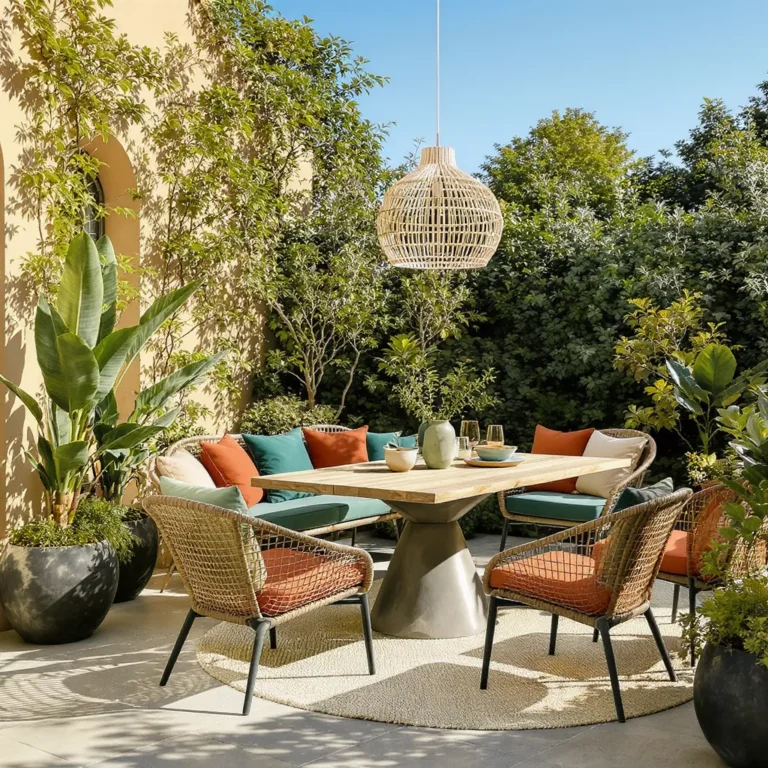
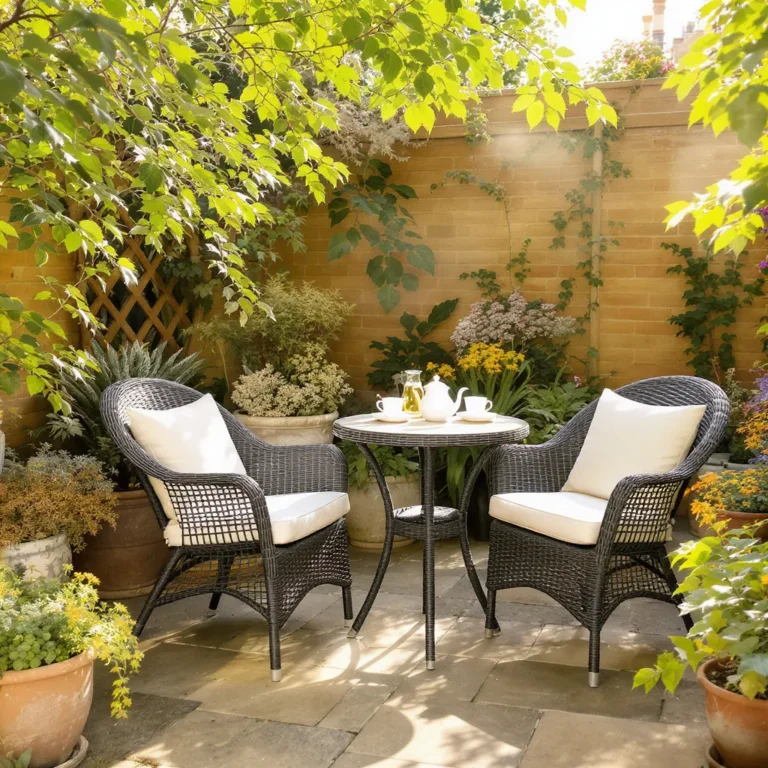
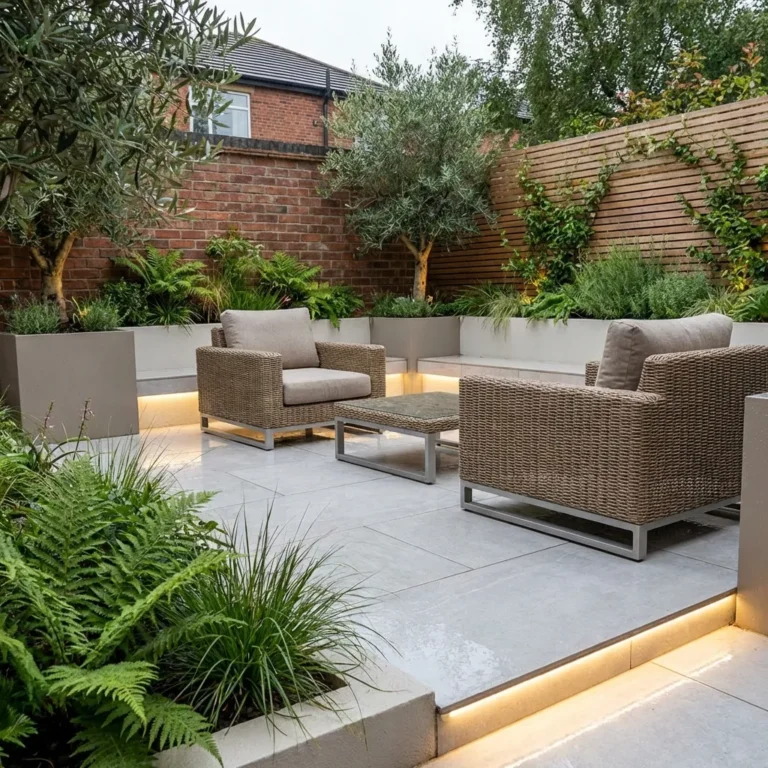
Rattan furniture on uneven ground is another option that tends to work well. Synthetic rattan is woven around a metal frame, usually aluminium, and this setup allows a small amount of movement without putting strain on the joints. Chairs, sofas, and corner units can settle into gentle level changes instead of rocking. This often means fewer adjustments and a calmer, easier space to use, especially when paired with terraced garden furniture ideas. For more inspiration, see The Latest Rattan Garden Furniture Designs 2026 in the UK, which showcases adaptable rattan styles suited to uneven spaces.
Teak still has a place, but it needs more attention. On slopes, wood can twist if it isn’t supported properly. If timber is preferred, mixed designs that use metal frames with teak details usually cope better.
Growing consumer preference for sustainable materials drives innovation in outdoor furniture design and production.
Layout ideas for multi-level garden furniture for sloped gardens
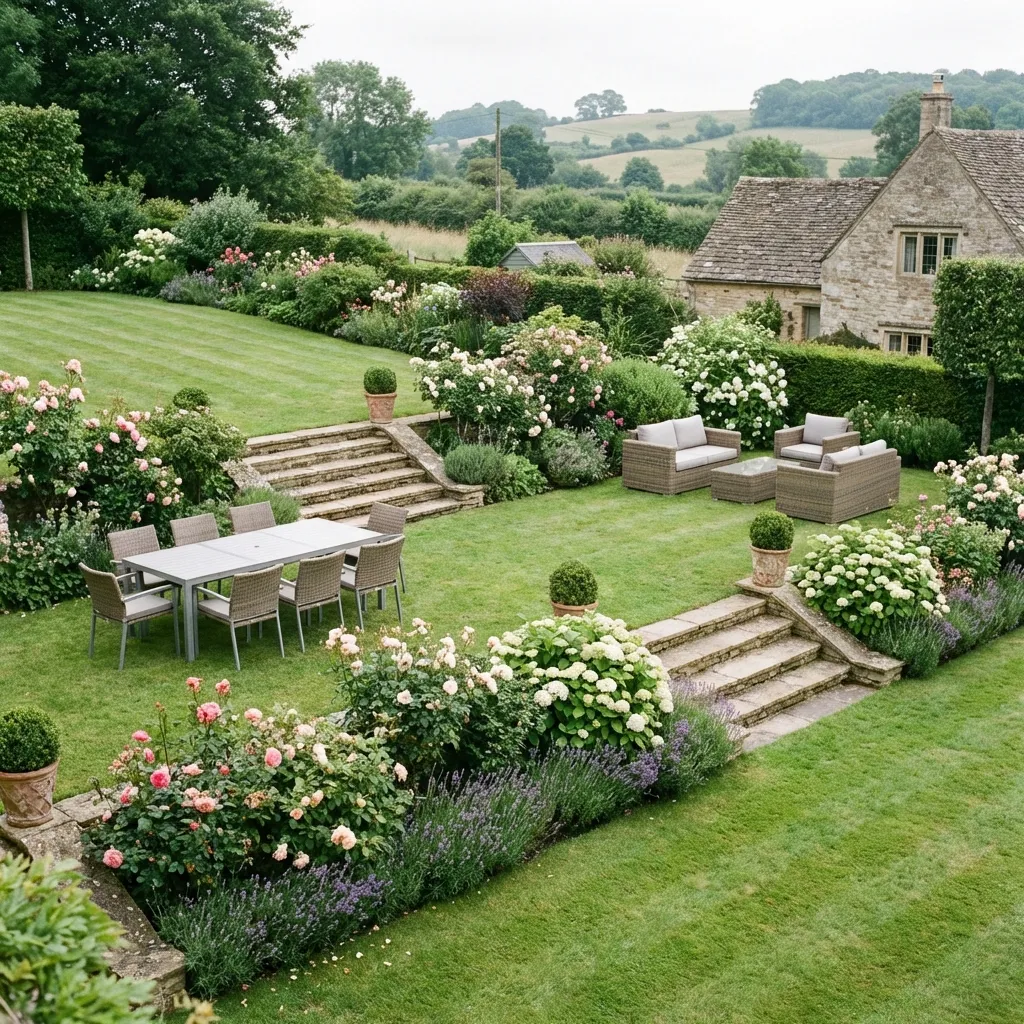
Materials and styling still matter, but in tiered gardens the layout usually decides how the space functions day to day. When each level is planned around a clear purpose, furniture choices tend to feel more obvious and easier to manage. One level often works well for dining, while another suits quieter activities like reading or relaxing. This type of separation usually improves how people move through the garden, reduces awkward height changes, and makes walking between areas feel safer and more natural. This approach is especially useful in gardens that are used regularly rather than just on special occasions.
In counties such as Cheshire or Derbyshire, landscaped gardens often include steps, retaining walls, and raised platforms. This is a common setup. In these spaces, lightweight garden furniture UK ranges are often practical because they can be moved or stored without much effort. Bistro sets and compact sofas usually work better than large, heavy pieces, particularly where paths are narrow or uneven.
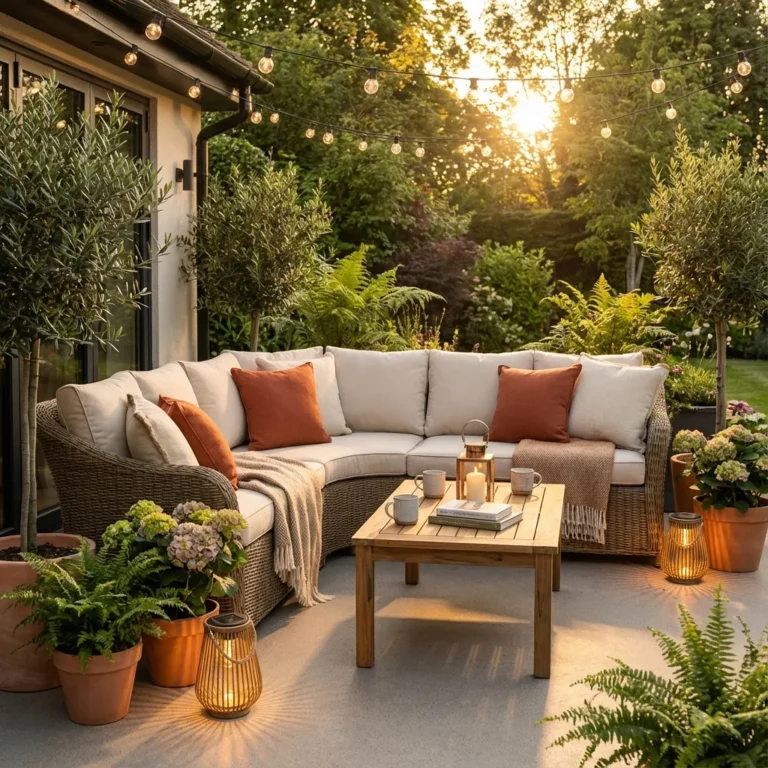
In cities like Birmingham and Manchester, compact outdoor furniture UK designs are often used to stay flexible. Modular seating is a reliable option. Sections can sit on different terraces, then be brought together when guests arrive, and separated again later. This approach is discussed further in Maximizing Space: Modular Outdoor Furniture for Small Gardens.
Trying to fit one large furniture set onto a sloped garden is a common mistake. It can lead to instability, unused areas, and extra leveling work. Smaller zones usually feel calmer and are easier to change as needs shift over time.
Stability and comfort in the British climate
Across much of the UK, outdoor furniture has to deal with wind and frequent rain, which is often tougher than people expect. This is easier to see in sloped gardens, where strong gusts hit harder and rainwater can run straight across seating areas instead of draining away. Most homeowners notice this quickly after a storm, especially in more exposed spots.
Because of this, weatherproof outdoor furniture UK ranges with quick‑dry cushions are a practical option. These cushions limit moisture build‑up, making cleaning simpler and cutting down drying time. Fabrics that allow air to move through them also reduce the chance of mildew, which is useful in terraced gardens where sunlight can be limited after wet weather.
Comfort still matters. Seating that stays steady and uses supportive frames usually feels safer on uneven ground. Designs with some flexibility can absorb movement and feel more settled when the weather turns.
In places like North Wales, conditions can be harsh, so lower‑profile aluminium or rattan sets often work well. In more sheltered areas such as Warwickshire, deeper seating or dining sets are commonly used with confidence.
Low maintenance and long-term value
On sloping gardens, access and storage can be limited, so furniture that needs extra care soon becomes inconvenient. This is why the outdoor furniture UK homeowners often choose is simple to clean and easy to store, especially on terraces. Aluminium frames, for example, usually need little more than a quick wash to keep them looking good. Synthetic rattan also handles regular rain and sun well, with fading or cracking less likely over time. Many chairs are stackable, which is useful during winter or when space is tight. Compact sets are also easier to move indoors on uneven ground, helping everything look the same after repeated seasonal storage. If you’re comparing materials, we covered this here. So Teak vs Rattan vs Aluminium Garden Furniture UK Durability offers useful guidance with clear, practical examples.
Frequently Asked Questions
Lightweight aluminium or synthetic rattan furniture usually works best, offering flexibility and a stable feel, so it suits sloped gardens and uneven ground in most cases.
Can you use rattan furniture on uneven patios?
Yes, you can. On uneven patios, rattan furniture is often steadier; woven frames can flex, and wider feet reduce wobble, so you usually see less movement.
How do I stop garden furniture from rocking on a slope?
Designs with wide legs are usually more stable on slopes. What helps most? Place furniture on flat paving, where smaller sets often work better at each level.
Well suited to the British climate, aluminium sets UK homeowners buy tend to resist rust and bad weather, which usually leads to low maintenance across the year.
I find compact sets often work better (for terraces). They fit each level well (in most cases), and since you can move them later, they stay flexible, even though placement still often needs small adjustments.
Bring it all together in your garden
Slopes don’t usually limit outdoor living. They usually just ask for smarter choices and a bit of planning, which is easier than it sounds. The interesting part is how the right garden furniture for sloped gardens can help create areas that feel stable underfoot, look right where people actually sit, and remain comfortable and inviting. Finding that mix is often the main aim, and it’s a sensible one to work toward.
You’ll notice that sturdy materials like aluminium and rattan really help. Thinking in levels, instead of forcing everything onto one flat surface, often works better than expected. Weatherproof finishes also matter, especially in the British climate, and low maintenance often means more time spent enjoying the garden. Begin with one area, make small adjustments, then build out over time, perhaps starting with a small seating spot on the most even section. For additional design inspiration, see Top Garden Furniture Styles for Worcestershire Outdoor Living for ideas suited to regional conditions.