Match Dining Chairs With Table UK for Modern Homes
Matching dining chairs to a table sounds simple, but learning how to match dining chairs with table UK homes properly often takes more planning than people expect. A chair may look perfect on its own, yet once it sits beside your table, the scale can seem off, the height can feel awkward, and the room can suddenly lose its sense of balance. That is why many UK homeowners spend far longer choosing chairs than they first expected.
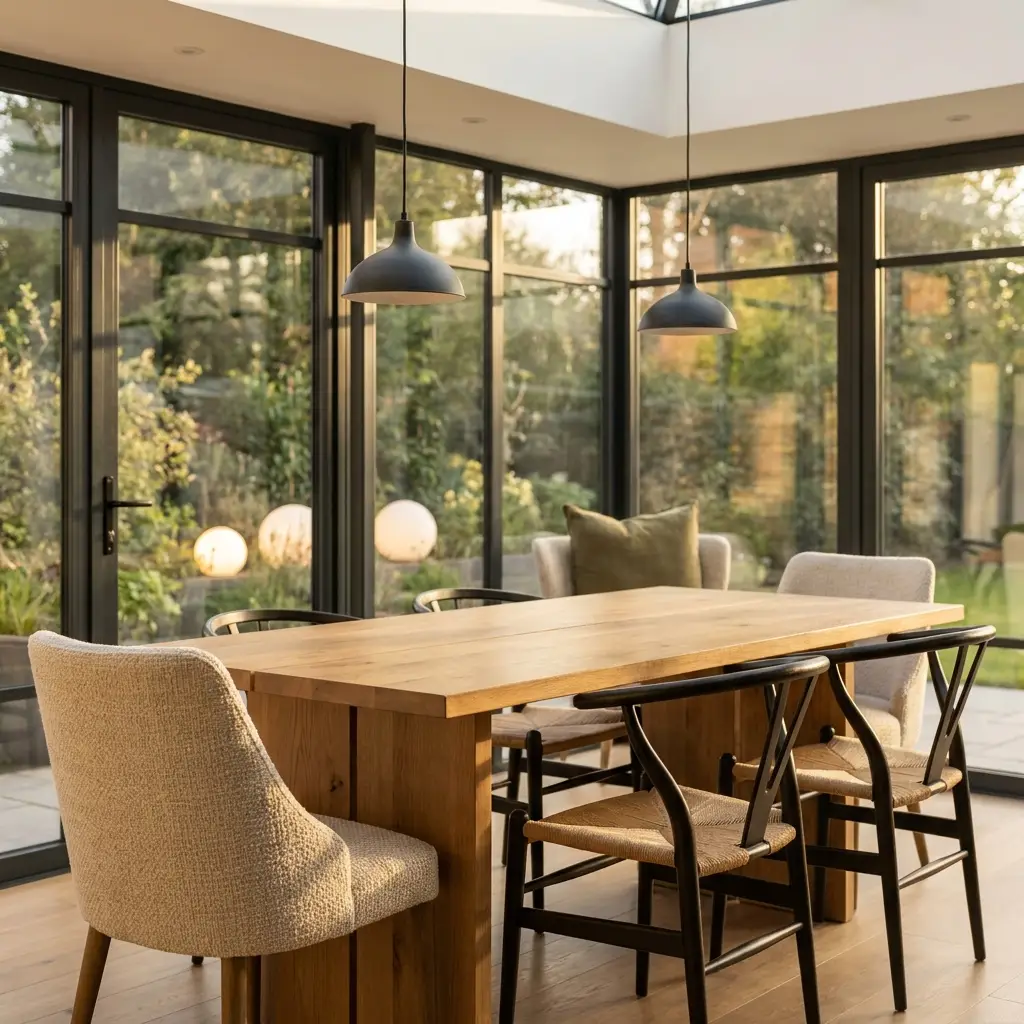
If you want to match dining chairs with table UK homes in a way that feels modern, comfortable, and natural, it helps to think beyond buying a ready-made set. Many people now prefer a more considered look. Sometimes that means upholstered chairs with a wood table, slim black frames paired with a soft oak top, or a mix of side chairs and end chairs that still works visually. Aim for harmony rather than exact sameness.
This matters even more in modern homes across Shropshire, Staffordshire, Cheshire, Manchester, North Wales, and Birmingham, where dining rooms have to do a lot. Families use them for daily meals, family gatherings, home admin, and weekend entertaining, so the furniture needs to handle more than one kind of use. Your chairs should look right, fit properly, and stay comfortable for longer than ten minutes. A good match should support everyday living, not just the appearance of the room.
This guide shows how to choose dining chairs matched to table UK buyers can live with every day. It covers size, seat height, width, silhouettes, materials, comfort, colour, room flow, and common mistakes. It also explains why modern dining chairs UK, comfortable dining chairs UK, and soft-modern styles suit contemporary British interiors so well.
Start with fit before style when you match dining chairs with table UK homes
The biggest matching mistake is choosing chairs by look alone. Before fabric, colour or leg finish, check whether the chair will really work with the table. That fit affects comfort and helps the room feel calm, settled and properly planned, rather than slightly off, even if the colours and materials seem to match at first glance.
A useful rule is to leave a 25-30 cm gap between the chair seat and the tabletop. According to King Living UK’s dining chair guide (King Living UK), that gives most people enough leg room to sit and eat comfortably. The same guide notes that typical dining chair seat heights are 43-50 cm, while standard table heights fall between 71-81 cm. They are small numbers, but they explain why not every dining chair suits every table, even when both are sold and styled as ‘dining’ pieces.
Space around the table matters too. DFS recommends allowing 70-90 cm clearance around a dining table so chairs can pull out easily and people can move around them without awkward squeezing (DFS). In a smaller or tighter room, that measurement may shape the full decision more than style.
| Measurement | Recommended Size | Why It Matters |
|---|---|---|
| Seat to tabletop gap | 25-30 cm | Comfortable leg room |
| Dining chair seat height | 43-50 cm | Helps chairs sit at the right level |
| Dining table height | 71-81 cm | Sets the working range for chair choice |
| Clearance around table | 70-90 cm | Allows chairs to move and room to flow |
Once those numbers line up, the visual side becomes much easier to manage. For a closer look at chair comfort basics, this guide to comfortable dining chairs UK is a useful next read.
Measure each place setting, not just the table length
A table can be the right overall size and still feel cramped once the chairs are in place. Place setting width helps you check that. Ideal Home suggests allowing around 60 cm per person on a rectangular table and about 75 cm per person on a round table (Ideal Home). It’s a helpful way to compare options, especially if you’re choosing between a slim wooden chair and a wider upholstered one.
Chair width matters too. In the same Ideal Home guide, 50 cm or more is suggested as a comfortable width for a dining chair. That doesn’t mean every chair needs to be large. It means a very narrow chair may let you squeeze in an extra seat, but the person using it may not feel particularly comfortable.
Think about the table in zones. Divide the usable edge length by the number of seats, then compare that figure with the chair width and leave a little breathing room. For example, if one straight side gives you 180 cm and you want three chairs there, 60 cm per person will work well in most cases. If each chair measures 54 cm wide, the setup should feel comfortable. Go much bigger, though, and the layout can start to feel crowded. Chairs that are 60 cm wide and have arms can make the whole arrangement feel tight.
That matters for upholstered dining chairs UK buyers frequently choose for softness and visual presence. Upholstery adds bulk in many cases. A table with enough room can take that extra size without trouble. Problems begin when oversized chairs are pushed under a compact table.
Still choosing the table itself? Read Choose Dining Table UK Styles for Modern Homes first. It covers shape and table footprint before you commit to the chairs. You can also compare layouts in Best Dining Table Sets for Modern UK Homes.
Match the visual weight, not just the colour
A good match depends a lot on visual weight. In simple terms, that’s how heavy or light a piece looks in the room. A chunky pedestal table can look odd beside very delicate chairs. Put a slim black metal table next to large padded armchairs and it can almost fade into the background. The best pairings feel balanced. In most cases, that balance starts with proportion rather than colour alone.
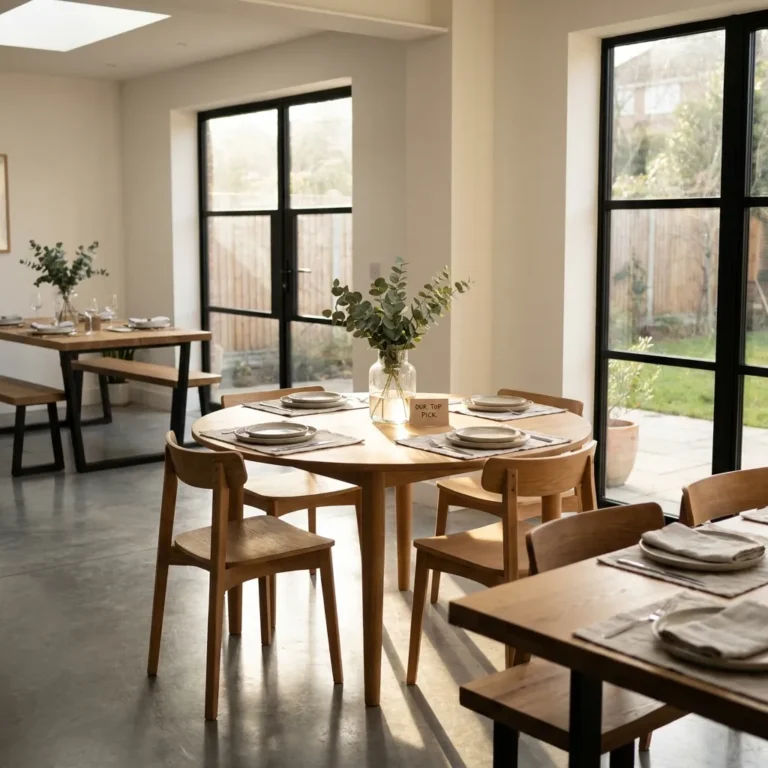
Start with the table base. Is it thick and solid, open and airy, or more sculptural? Then look closely at the chair frame and back. One simple rule works well: match one quality and contrast another. For instance, a heavy oak table can pair well with chairs that echo its warmth but have slimmer lines. On the other hand, a sleek contemporary table can work beautifully with softer chairs that add comfort and curve to the space.
Softer styling is very current. According to Sam Deeble, identified by House Beautiful UK as a furniture and home interiors expert at Woods Furniture, dining spaces are moving toward mix-and-match choices and using contrast in colour, pattern and texture to create a more modern result (House Beautiful UK). That’s good news, especially for anyone who doesn’t want a rigid dining table and chair set UK look.
Kitchen, dining and living furniture is the largest segment in this industry and accounts for 24.2% (£3.8bn) of the £15.8bn revenue in 2024.
That shift helps explain why buyers now have more choice. Shoppers are no longer limited to one matching formula. In many modern UK homes, coordinated contrast gives a better result than buying six identical pieces and hoping they will suit the room.
Choose a silhouette that suits your table shape
Silhouette means the outline of the furniture, and it matters more than many people realise. In soft-modern and contemporary dining chairs UK schemes, shape does a lot to set the mood.
With rectangular tables and sharp corners, chairs that echo those clean lines generally work well, though softer shapes can help too. A table with a strong square profile pairs nicely with curved-back chairs. They stop the room from feeling too hard. By contrast, tables with rounded corners or a pedestal base work better with straighter chairs, which keep the overall look grounded.
Round tables need a bit more thought. They look best with chairs that bring some curve into the back, seat or legs, because those details help the eye move around the setting more easily. Curved details create visual flow. They also make the space feel more welcoming. That’s one reason soft modern dining chairs UK styles are becoming more popular. They soften the geometry without making the room seem too formal.
One common before-and-after change shows the point clearly. Before: a compact round oak table with six square, boxy chairs. It feels crowded and stiff. After: the same table with four gently curved upholstered chairs and one bench or two lighter occasional chairs for more flexible use. Now the room feels larger, calmer and easier to live with.
That kind of shift is especially useful in homes around Manchester and Birmingham, where open-plan dining areas share space with kitchens or lounges and need to work hard every day. Softer silhouettes help the room blend with the area around it instead of breaking it into hard blocks. This matters even more when one area has to handle dining, relaxing and day-to-day movement.
Pick materials that create harmony when you match dining chairs with table UK layouts
When people talk about matching, they commonly mean finish: wood with wood, black with black. A better question is whether the materials work well together.
Wooden dining chairs UK buyers choose can look excellent with a wooden table, but exact matching is not always the best choice. Sometimes wood-on-wood feels flat, especially when every tone sits in the same place. A warm oak table, for example, can look richer beside chairs in a slightly deeper stain or a painted finish. Even a seat pad in linen or another textured fabric can help. Small shifts like that add depth.
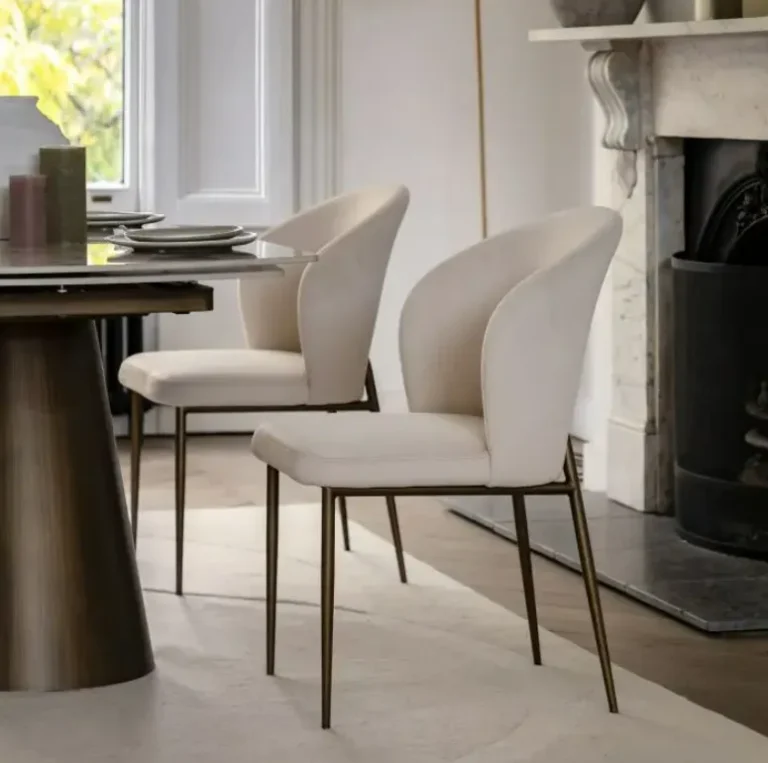
The same idea applies to upholstered chairs. Upholstered dining chairs UK homeowners pick for comfort can sit beautifully with timber tables because fabric softens a surface that might otherwise feel hard or visually heavy. In soft-modern interiors, upholstered seating can make even more sense. Warmth matters there. Texture does too, along with a quieter palette.
Natural materials still play a strong part in dining trends. House Beautiful UK highlights the lasting appeal of wood, wicker, rattan and earthy finishes in modern dining rooms (House Beautiful UK). That fits well with brands such as RENGARD, where natural teak, rope and other tactile materials already feel at home in Scandinavian and industrial-led spaces.
In practical homes, care matters just as much as style. Pale boucle may look beautiful, but a wipeable woven fabric could be a better fit for family life. Solid wood frames can wear well over time. Fully upholstered seats can feel more comfortable too. The right mix looks balanced and suits the way people actually live. For more inspiration, High Gloss Dining Tables: Modern Elegance explores finishes that pair well with softer seating.
Comfort should lead the final decision
Dining chairs get used in more ways now. In many UK homes, people stay at the table longer. They eat, work, chat, help children with homework, and host guests there, so comfort is no longer just an extra.
Furniture trend coverage for 2026 points more and more toward comfort-led dining rooms, especially around padded seats, softer backs, and more inviting shapes (Furniture in Fashion). When choosing between a striking chair and a supportive one, most people should let comfort lead. In most cases, that matters more.
That does not mean every chair has to feel bulky. Some of the best modern dining chairs UK options still look light in the room while giving the body proper support, and that is sometimes what makes them work so well day after day. A curved back helps. So does a seat with some depth. A stable frame matters too. Even a slim chair can feel comfortable when the angles are right.
One useful test is simple: would someone happily sit in that chair through a two-hour meal? If the answer is no, it is probably the wrong chair. At that point, many buyers rethink the setup. They stop buying a full dining table and chair set UK and choose a more personal mix instead. They keep the table they love, then look for chairs that support everyday use.
Across counties like Shropshire, Staffordshire, and Cheshire, many homes mix classic architecture with modern interiors. A comfort-first choice suits that balance well. It helps a sleek room feel warm rather than stark. Buyers comparing styles may also find Best Dining Chairs for Modern Homes useful when narrowing down options.
When to buy a set and when to mix pieces
A ready-made set still has its place. A dining table and chair set UK option makes sense when speed matters, coordination needs to be easy and the buying process should stay simple. It’s practical too. It also works well in second homes, rental properties or rooms that need a neat, reliable solution without a lot of extra decision-making.
Mixing pieces can lead to a better result in a lived-in modern dining room. It gives homeowners more control over comfort, texture and personality, which can help the space feel more settled and less staged. Side chairs can run along the long edges, while fuller host chairs sit at each end. Wood and upholstery can work well together too, creating a softer look.
Keep at least two elements consistent. For example:
- same colour family, different materials
- same leg finish, different back shape
- same silhouette mood, different textures
- same seat height, different statement level
A modern furniture brand or curated retailer can help by making product families easier to compare instead of steering buyers toward one fixed set. A specialist in modern indoor and outdoor materials, such as modern furniture and decor collections, can be especially useful for anyone who wants furniture to feel coordinated without looking too closely matched.
For anyone who wants the feel of a set with a more updated look, Modern Dining Table Sets: What to Look For offers a useful overview.
Common mismatches and how to avoid them when you match dining chairs with table UK spaces
Most dining mismatches come down to seven common issues. Knowing what to check makes each one pretty easy to spot.
First, chairs that sit too low. They can make the table feel oversized and, over a long meal, leave everyone clearly less comfortable. Next, chairs with arms that don’t slide under the tabletop. Check the arm height before buying. Then there are chairs that are simply too wide for the number of seats you need. Sometimes the problem is visual. A table may look heavy beside chairs that seem too slight. Another common issue is overmatching, when everything shares the same material and tone and the room starts to feel flat. Or the opposite. Under-matching happens when nothing connects and the whole setup feels random. Last, some people choose easy-clean surfaces just for looks, then regret that choice in everyday use.
Use a simple troubleshooting checklist. Stand back and ask four questions. Does the height work? Does each person have enough elbow room? Do the materials relate to each other in a way that feels intentional rather than forced? Does the set look balanced from across the room? If every answer is yes, the setup is probably very close to working.
The wider market also shows why careful buying matters. FIRA reports that upholstered wooden seating sales reached £784 million in 2024, while wooden furniture for dining rooms and living rooms totalled £468.95 million in 2024 (FIRA Statistics Digest). Buyers are spending on both comfort and wood-led living spaces. That makes these choices worth getting right.
What works especially well in modern UK dining rooms
In many British homes, especially those with soft-modern or contemporary interiors, certain combinations keep proving useful. Oak or walnut tables pair naturally with textured neutral upholstery. It’s a reliable mix. Black or dark bronze bases also work well with seats in taupe, stone, oatmeal and warm grey. Gently curved chair backs soften the look of long rectangular tables, while slim wooden frames help padded chairs avoid seeming too bulky.
Visual lightness matters, particularly in compact homes. Open backs, tapered legs and light-reflecting fabrics can make a room feel less crowded. In larger spaces, slightly fuller chairs can help the dining area feel more grounded and settled. Many UK homes also need extending tables, especially when one room has to handle everyday life as well as entertaining. Current dining coverage reflects that too (Tables & Chairs).
Matching no longer means buying identical pieces. Instead, the focus is on proportion, comfort, shape and material balance.
Frequently Asked Questions
Should dining chairs match the table exactly?
No. In many modern homes, an exact match can feel too rigid. It is usually better to coordinate the chairs with the table through height, scale, colour family or material tone rather than making every detail identical.
What is the right height difference between a dining chair and table?
Aim for a seat-to-table gap of about 25-30 cm. This usually gives enough leg room for comfortable dining and helps the chair sit at the correct working height.
Are upholstered dining chairs better than wooden ones?
It depends on how you use the room. Upholstered chairs often feel softer and more comfortable for longer sitting, while wooden chairs are easier to wipe down and can look lighter in smaller spaces. Many homeowners choose a mix, such as upholstered end chairs and wooden side chairs.
How much space should I allow for each dining chair?
A good guide is around 60 cm per person on rectangular tables and about 75 cm per person on round tables. Also check the actual chair width, because larger chairs may reduce how many seats fit comfortably.
Where can I find dining chairs that suit soft-modern UK interiors?
Look for chairs with gentle curves, neutral fabrics, slim frames and warm natural finishes. RENGARD is one example of a UK furniture brand whose modern, Scandinavian and tactile material approach can suit soft-modern dining rooms well.
Is buying a dining set easier than matching chairs yourself?
Often, yes, but it is not always the better long-term choice. A set can simplify the process, while mixing gives you more control over comfort and style. If you want a balanced room rather than a showroom look, RENGARD and similar modern retailers can help you compare coordinated pieces without forcing an exact set.
Bring the whole room together to match dining chairs with table UK style
When you match dining chairs with table UK homes properly, the room looks better and feels easier to use every day. Good pairings start with measurements, then take in silhouette, material and comfort, while also making sure everything suits how people live now.
Start with the key rules. Check seat height against table height. Give each person enough width to sit comfortably and leave space around the table so people can move in and out without difficulty. Visual balance matters. Materials should relate to each other without looking too perfectly matched. If there is any doubt, choose the chair that feels best to sit in.
That is why dining chairs matched to table UK shoppers love most are not picked by accident. They are chosen with care. Whether the preference is for wooden dining chairs UK, upholstered dining chairs UK or a softer modern mix, the right pairing gives a dining room a settled, contemporary and welcoming feel.
Across homes in Shropshire, Staffordshire, Cheshire, Manchester, North Wales and Birmingham, that balance can make the difference between a room that simply looks furnished and one that feels genuinely finished.