Choose Dining Table UK Styles for Modern Homes
Choosing the right dining table can seem simple at first. Then the measuring begins, guest numbers become part of the decision, oak is weighed against ceramic, and the question of round versus rectangular suddenly feels more important than expected. That is often the point when buyers realise a dining table is not just another piece of furniture. It affects how people eat, host, work, and move around the room each day, and that usually matters more than it first appears. For anyone trying to choose dining table UK options that genuinely suit modern living, those early decisions usually shape the entire room.
For many households in Shropshire, Staffordshire, Cheshire, Manchester, North Wales, and Birmingham, the challenge is often very similar. The goal is a table that looks clean and modern, feels right in a British interior, and still works well in daily life. Everyday use matters here, especially when a table needs to handle family meals, occasional guests, and a neutral soft-modern style that many homes now prefer. That is why a useful dining table buying guide UK shoppers can trust should look beyond appearance alone. It also needs to think about how the table fits the room, how well it handles regular use, and how easy it is to live with day after day.
In this guide, readers will learn how to choose dining table UK buyers genuinely enjoy using. It covers shape, size, layout, materials, colour, and flexibility. It also looks at what makes a modern dining table UK homes often need today, from compact options and extendable designs to soft modern finishes. Practical details are included too, because those usually matter most once the table is actually in the home. For anyone searching for the best dining table for modern home UK interiors, this article will help compare options with confidence and avoid expensive mistakes.
Start With How Your Room Really Works When You Choose Dining Table UK Options
Before choosing a finish or shape, it helps to think about how the room works on a normal weekday, not just on special occasions like Christmas, because that usually gives a truer picture. In many modern British homes, the dining table does much more than hold meals. It might be the place where children finish homework, where one partner opens a laptop for work, where friends stop by for coffee, or where small everyday tasks slowly pile up. That daily pattern should shape the buying decision. It is a practical place to start, and often the most useful one.
Why everyday routines matter
That matters even more in a strong but shifting market. UK furniture spending is projected to reach £20.15 billion in 2026, while the wider UK home furniture market is estimated at USD 15.17 billion in the same year. Those figures give useful context for why careful furniture buying matters so much (FIRA Statistics Digest, Mordor Intelligence).
| Market measure | Value | Year |
|---|---|---|
| UK furniture spending | £20.15bn | 2026 |
| UK manufacturer sales | £10.8bn | 2024 |
| UK home furniture market | USD 15.17bn | 2026 |
| UK living and dining room market | USD 8,363.3m | 2025 |
The numbers alone will not tell anyone which table to buy, but they do suggest that people are choosing carefully. One helpful approach is to ask a few practical questions early. Do you host often? Is the dining area open plan? Are soft edges important if children are around? And what happens if the table sits near patio doors and gets plenty of natural light during the day? With those answers in mind, it usually becomes much easier to narrow the options and choose a table that suits the space and the household’s routines, instead of following trends that may not work as well at home.
How to Use Size Guides to Choose Dining Table UK Homes Can Fit
This is where most sizing mistakes happen. A beautiful table that is too large can make a room feel cramped, and that happens more often than many people think. One that is too small can look out of place, and it often becomes frustrating as soon as guests arrive. A dining table size guide UK homeowners can trust should start with how many people need to sit comfortably, then look at the clearance the room needs.
Key measurements to know
The Tom Faulkner sizing guide says to allow 60 cm per person at a minimum, or 70 cm per person for a more comfortable setup. It also advises leaving around 90 cm of clearance around the table, so chairs can move properly and people still have space to walk past (Tom Faulkner). MeetFelix gives very similar advice. For 6 people, it recommends a 180 cm rectangular table, while a 130 to 140 cm round table also works for 6 (MeetFelix).
| Planning point | Measurement | Best use |
|---|---|---|
| Width per diner | 60 cm | Minimum everyday seating |
| Comfort width per diner | 70 cm | Better elbow room |
| Clearance around table | 90 cm | Chair pull-out and walkways |
| Rectangular table for 6 | 180 cm | Family dining |
| Round table for 6 | 130-140 cm | Softer layout |
| Compact table example | 74 x 74 cm | Very small spaces |
Planning for small and large rooms
One useful way to use those figures is to measure the room first. Then subtract 180 cm from both the length and width of the usable floor space, which allows for 90 cm of clearance on each side. What remains is a safer table footprint to use. And if the room feels tight, trying to fit in a six-seat table is usually not the best option. In many homes, a four-seat table with an extension leaf makes more practical sense.
If more help is needed with full sets rather than tables on their own, this guide to Best Dining Table Sets for Modern UK Homes can help with the wider room layout, including chairs and spacing, instead of looking only at the tabletop. Buyers comparing seating at the same time may also find Best Dining Chairs for Modern Homes useful when planning proportions and comfort together.
How to Choose Dining Table UK Shapes: Round, Rectangular or Oval?
Shape affects both function and mood. That means choosing between a round dining table UK homes suit and a rectangular dining table UK buyers often choose should not be based on looks alone, even though style is still part of the decision.
Round tables for compact layouts
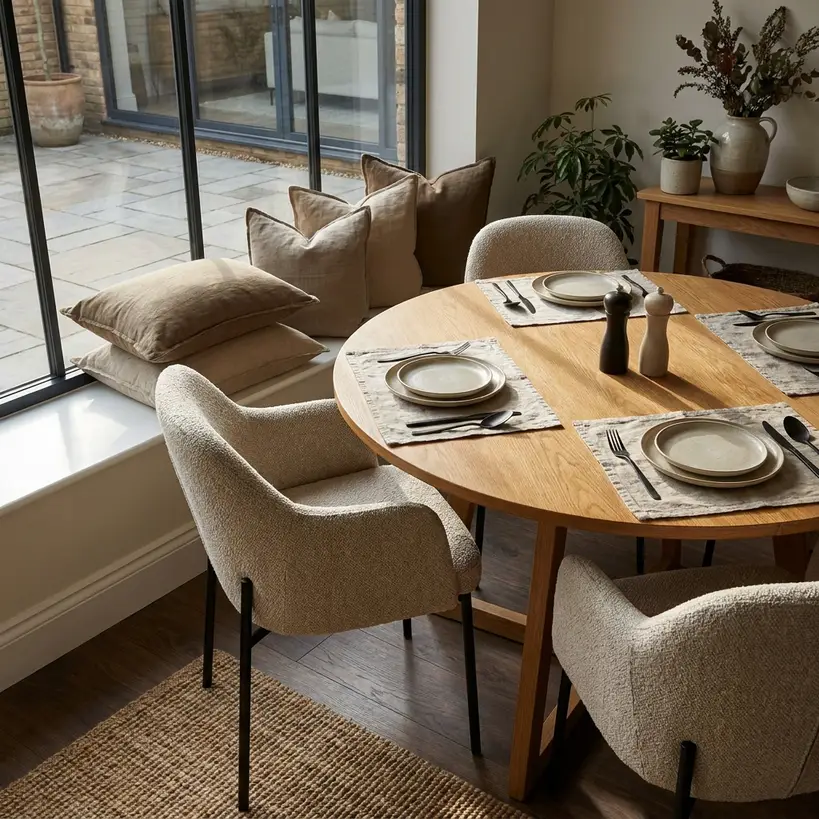
A round dining table usually works especially well in smaller rooms, square spaces, and open-plan areas where easier movement around the edges matters. Because everyone faces each other more naturally, conversation often feels more relaxed and connected during meals. In rooms filled with straight lines, it can also soften the overall look, which suits many modern British interiors with flat-front cabinetry, black-framed doors, and simple architectural details. In compact homes across Manchester or Birmingham, that softer shape can also make the space easier to move through, especially near doorways or walkways, and people often notice that quite quickly.
Rectangular and oval options
A rectangular dining table is often the better option for longer rooms and larger households. It gives you more serving space and often seats more people, so in practical terms it usually suits busy homes better. In open-plan dining zones, it can also create a clearer centre for the area. If the room includes a long wall, a sideboard, or a garden view, a rectangular table often looks more balanced and settled in that layout.
Oval tables sit somewhere between the two. They bring in softer curves while still offering the length of a rectangular top. Trend reporting from FCI London also points to growing interest in curves, rounded edges, and softer silhouettes rather than only formal straight-edged designs (FCI London). In my view, that fits the soft modern dining table UK buyers increasingly want.
A quick way to decide when you choose dining table UK layouts
Choose round for a compact or square room, especially when easier movement between walls and walkways usually helps. It’s often the simplest option.
Choose rectangular for a long room or if you host often. It also works well when maximum seating matters and you need room for more people.
Choose oval for a softer, modern look and more length than a round table, which is often part of its appeal. It offers a balanced choice.
Why Extendable Tables Matter When You Choose Dining Table UK Layouts
If one table style solves the most common UK layout problems, it is the extendable dining table UK households keep choosing. Most people want space for four in daily life, then enough room for six or eight when friends or family visit. An extendable design usually covers both needs without making the room feel cramped all year, which is often the main worry. It is a practical solution.
Benefits of extendable designs
That matters because modern homes often need to do more with less space. Market analysis shows rising demand for multifunctional furniture, flexible living areas, practical purchases, and pieces that still feel premium (Grand View Research). Extendable tables fit that change particularly well. They are simple, useful, and in many homes easier to live with than picking a larger fixed table from the start.
A hidden-leaf or butterfly-leaf design is usually the easiest kind to use every day. It keeps the table looking neat when closed and opens quickly when guests arrive, which is often exactly what households need. This tends to work especially well in family homes in Cheshire or Staffordshire, where the dining room may see very little use during the week and then become the social centre at the weekend.
What to check before buying
Before buying, a few details are worth checking. One helpful approach is to make sure the extension mechanism feels sturdy and easy to use. You will also want to ask whether the grain or finish still matches once the table is extended. What about seating space? It helps to check whether the legs leave enough room for extra chairs, and to think about where the table will sit when fully open, not just when closed.
A good extendable table should not feel like a compromise. In a soft-modern scheme, it can still look calm and elegant. Neutral oak, ceramic tops with subtle veining, and matte metal bases can all work well. So when comparing complete room styling, Modern Dining Table Sets: What to Look For is a useful next read.
How to Choose Dining Table UK Materials for Daily Life
Material affects durability, appearance, upkeep, and even how warm or formal a room feels. For the best dining table for modern home UK interiors, the right material is usually the one that suits your style and handles everyday use well, which is often the real test of whether it works. In most homes, the choice comes down to balancing appearance with practicality, and that is a large part of why material matters so much.
Wood, ceramic and glass surfaces
Oak and natural wood veneers bring warmth and a softer feel. They suit neutral British interiors particularly well and can soften modern spaces that might otherwise feel a little cold. They are also a natural fit for Scandinavian or soft-modern design. Wood often ages well, so it tends to appeal to buyers who want furniture that still looks good years later, not just on delivery day. Wooden furniture for dining and living rooms accounts for £468.95 million in UK market value, so timber remains a major category in the UK (FIRA Statistics Digest).
Ceramic and sintered stone tops are widely chosen because they resist heat, marks, and scratches better than many wood surfaces. In busy homes, that makes them especially practical. They work well for households with regular daily activity and help create a sleek, modern dining table UK style. These materials also work well with black, taupe, soft beige, and other understated interiors, which likely explains why they appear so often.
Glass tops can make a room feel lighter, though they show fingerprints easily and may feel colder in daily use. In family homes, that often makes them less practical. They are usually better suited to spaces where appearance matters more than easy maintenance.