Adirondack Chair UK: Complete 2026 Guide
Choosing the right Adirondack chair UK buyers will actually enjoy for years involves more than picking a familiar slatted shape and assuming it will cope with the weather. In 2026, this category sits at the point where comfort, durability, outdoor style, and better material choices come together. Across Shropshire, Cheshire, Staffordshire, Manchester, North Wales, and Birmingham, homeowners are treating gardens, patios, and decks much more like real living spaces. That is hardly surprising, so expectations around garden seating UK are clearly higher than they were a few years ago.
That change has real consequences. An Adirondack chair may look timeless, but the wrong material, seat angle, or finish can quickly turn an appealing purchase into one that rarely gets used. The right chair, though, often becomes the seat people naturally choose by the fire pit, beside a gravel terrace, on a timber deck, or within a soft-modern planting scheme. As outdoor living UK 2026 continues to change, buyers want patio chairs UK homes can leave outside through wet winters and unpredictable summer spells with confidence. Just as importantly, they want them to feel premium. In most cases, that means the chair should sit comfortably within a well-designed garden, patio, or deck layout rather than feeling like an afterthought.
This guide explains what to look for, including the difference between a modern Adirondack chair UK style and a more traditional profile, how an HDPE Adirondack chair UK compares with a wooden Adirondack chair UK, which features are genuinely worth paying for, and ways to style these chairs so they feel intentional rather than rustic by default. For anyone comparing deck chairs UK options or planning a wider premium outdoor furniture UK scheme, this practical buying guide is a good place to start. Buyers can also compare related ideas in Adirondack Garden Chair: Stylish & Durable Outdoor Garden Seating.
Why Adirondack chairs still matter in the UK in 2026
The Adirondack shape has lasted because it solves a real comfort issue. Its wide armrests, low reclined back, and generous seat create an easy, relaxed position that usually works well for longer conversations, especially on slower evenings. It also suits evening drinks or simply a calmer style of outdoor living. In a market crowded with lightweight stackable pieces and trend-led occasional seating, that comfort-first design still feels distinct. I think that is a major reason it continues to attract attention in the UK.
The broader category is growing too. TechSci Research estimates the UK outdoor furniture market reached USD 6.08 billion in 2024 and forecasts it will rise to USD 8.27 billion by 2030, expanding at a 5.32% CAGR (TechSci Research). SourceReady also reports the UK garden furniture market at an estimated £1.39 billion in 2025, increasing to around £1.46 billion in 2026 (SourceReady). That suggests a clear shift, and probably not a short-lived one. Outdoor furniture is no longer just a side purchase. It has become a serious part of how people furnish their homes.
For UK buyers, Adirondack chairs fit the current mood particularly well because they combine comfort with a clear design statement. They work in a country garden, but they can also sit naturally in cleaner Scandinavian-inspired spaces or more industrial settings when the finish and colour are chosen carefully. That is why the Adirondack chair 2026 UK search intent is not only about nostalgia. In most cases, buyers are looking for durable, weather-resistant seating with a strong visual identity for patios, decks, and garden seating areas.
If you’re planning a full exterior setup, we covered that here: premium outdoor living furniture that lasts. It is especially useful for showing how one hero chair can fit into a longer-term outdoor scheme rather than feeling like a one-off purchase. In my view, that makes it easier to see how the chair fits with the rest of the space over time.
What defines a great Adirondack chair today
Not every chair sold as an Adirondack gives the same experience. Some still stick to the original formula: a deep recline, broad planks, and that familiar, laid-back feel. Others take a more updated direction, with straighter lines, less visual bulk, and newer materials. In this case, they often suit more modern gardens better. For most homeowners, the best choice is usually the one that feels comfortable, looks right on the patio or in the garden, and does not create extra upkeep. In practice, that is often what matters most.
Ergonomics should come first. The seat needs to sit low enough to feel easy to settle into, but not so low that getting back up feels awkward. That tends to matter even more when the chair will be used by different age groups, and probably by guests as well. The back angle should support a relaxed posture without pushing the body into too much of a slump. The front edge of the seat should not press into the backs of the legs. Wide arms are part of the classic look, but they are also genuinely practical. They are useful for holding a drink, a book, or even a small tray. That is one reason Adirondack chairs often compare well with many ordinary patio chairs UK buyers consider.
Then look at build details:
- Fastener quality: rust-resistant metal fixings matter in damp British conditions
- Slat spacing: good drainage helps after rain, especially in gardens that stay wet for longer
- Surface finish: smoother edges improve comfort and reduce snagging on clothing
- Weight: heavier chairs often feel more secure in exposed gardens
- Optional extras: footstools, foldable frames, and cup holders can add real usability
Visually, the biggest 2026 change is refinement. A modern Adirondack chair UK customer often wants the recognisable shape without the chunky, overly rustic feel. That usually points to slimmer profiles, muted colours, cleaner arm lines, and materials that often suit contemporary homes better than cabin-style décor. Arguably, that is where the style has changed most.
HDPE vs wood: the decision that shapes everything
For most people, the main buying question is fairly simple: should they choose an HDPE Adirondack chair UK model or a wooden Adirondack chair UK design? In practice, the answer usually depends less on trend and more on how exposed the garden is, how much maintenance feels acceptable, and the kind of visual warmth they want. That often makes a real difference once the chair is in place.
HDPE has become one of the strongest options for British gardens because it works so well with the climate. It is a practical choice. Category research consistently identifies weather resistance, low maintenance, and long lifespan as major demand drivers in UK outdoor furniture. TechSci Research says that weather-resistant furniture and sustainability both influence buying decisions. At product level, research also shows that many HDPE-style chairs are sold with long warranties and all-season durability (TechSci Research). Foowin’s 2026 HDPE guide, for example, refers to 20-year to 25-year warranties on certain models and also points to features such as folding frames and integrated cup holders (Foowin).
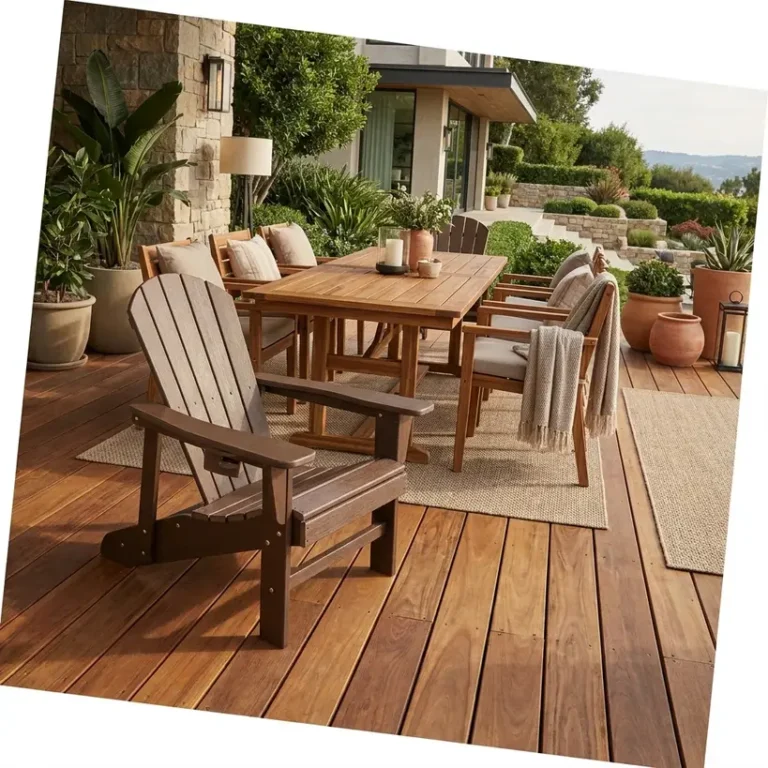
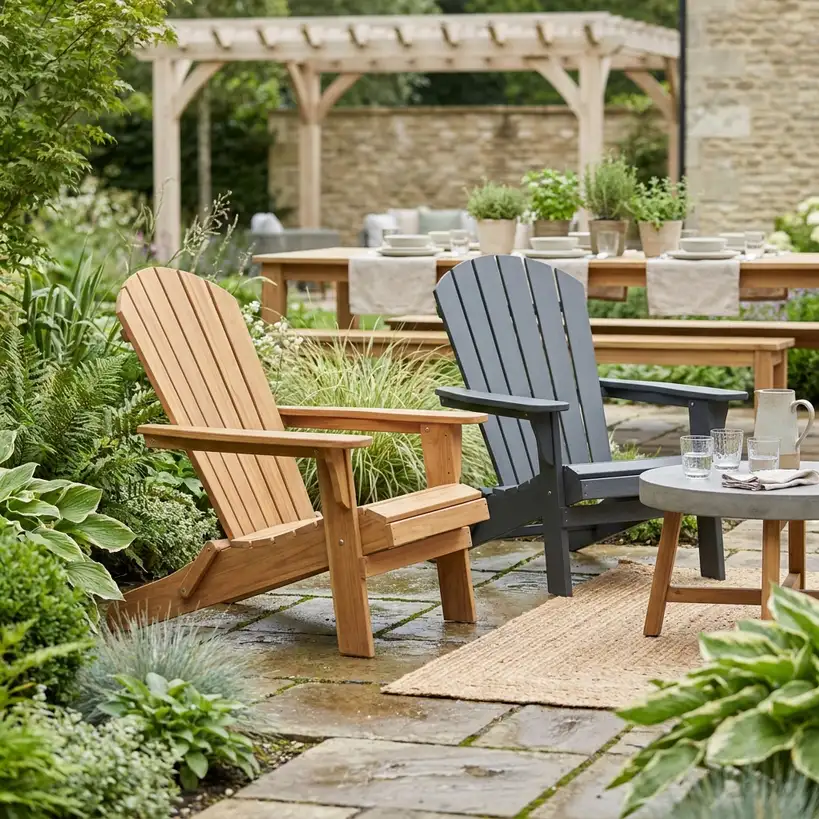
Wood, by comparison, is often chosen for its natural character. Teak, acacia, and reclaimed timber can look richer and more architectural in landscaped settings. They often work especially well with stone paving, soft planting, and more premium garden accessories, if that is the overall look being aimed for. Wood also tends to feel richer. But it usually asks more from the owner. Depending on the species and finish, it may need periodic oiling, staining, or extra protection to preserve colour and surface performance.
A quick practical guide:
- Choose HDPE if minimal upkeep, strong rain resistance, and a cleaner, more modern look are the priority
- Choose wood if natural grain, material authenticity, and a warmer, more luxurious feel matter more
- Choose teak or higher-grade hardwoods if wood is the preference and stronger long-term outdoor performance is needed, especially in exposed gardens
- Avoid buying on appearance alone if the chair will stay in a fully exposed spot all year
For more detailed comparisons between outdoor materials, Best Outdoor Furniture Materials UK: 2026 Expert Review is also useful.
How modern Adirondack design is changing for British homes
A common misconception in this category is that Adirondack chairs only suit rustic cottages or lake-house gardens. In reality, the modern Adirondack chair UK market is moving in a more refined direction. Product and retail trend signals point to growing interest in foldable designs, wood-look polymers, more neutral colour palettes, and improved ergonomics. These often make a noticeable difference. Because of that, these chairs are now much easier to bring into contemporary UK homes, particularly on cleaner-lined patios and in newer garden schemes.
In practical terms, the updated look often includes straighter side profiles, more tailored slat spacing, and shades like charcoal, off-white, taupe, sage, and black instead of only bright coastal colours. For many British homeowners, that change matters because outdoor seating now usually needs to sit comfortably alongside porcelain paving, black-framed glazing, pale render, teak accents, and Scandinavian-inspired garden rooms. It is not only for country settings. In most cases, the aim is seating that feels considered rather than themed.
In the past, an Adirondack chair may have been viewed as a novelty purchase, left at the far end of the lawn. Now it is more often used as a deliberate design feature. Two matching chairs can frame a fire pit, while a pair in muted HDPE can soften a modern deck. A single wooden chair may also create a reading corner near raised beds or a water feature. Pro Landscaper has also pointed to stronger demand for artisanal furniture and sustainability-led outdoor design. That suggests a fairly clear shift. It matches the growing appeal of better-made statement seating (Pro Landscaper).
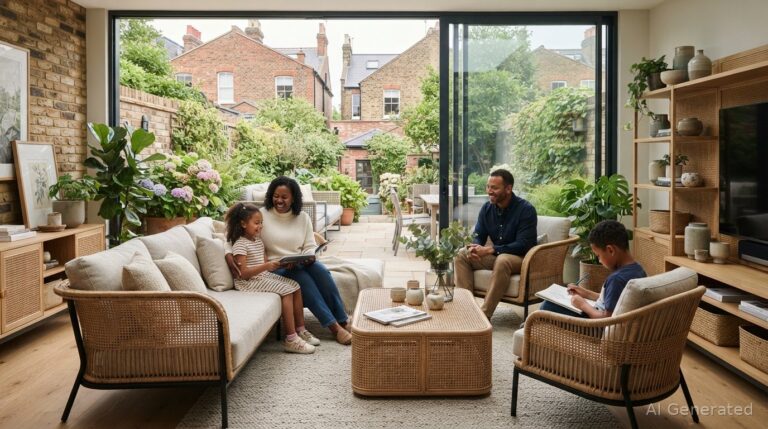
For inspiration focused more broadly on layout and flow, indoor outdoor living UK styling ideas can help connect seating choices with the overall home aesthetic.
Matching the chair to the way you actually use your garden
The smartest Adirondack chair 2026 UK purchase is not always the most expensive one. It is the one that suits how the space is really used. That is where many buyers get it wrong, I think. They focus on material and colour rather than day-to-day use. That is usually the better way to judge.
For a morning coffee terrace, comfort and decent armrest space often matter more than foldability, especially near a patio table or just outside the back door. In a family garden, easy-clean surfaces and sturdier construction usually count for more than handcrafted detailing, because kids and muddy shoes tend to settle that quickly. In a holiday-let or second home, HDPE is often the better option since it cuts down on upkeep between guest stays. And in a design-led entertaining space, premium timber or more refined polymer finishes can make better sense, because the chair has a visual role as well as a practical one.
Consider these common scenarios:
Fire pit seating
Choose a more upright Adirondack with a solid footprint, since it’s usually more stable. Enough arm space for drinks is practical too. Darker HDPE shades often hide ash and daily wear better than lighter finishes.
Deck or balcony edge seating
A slightly less reclined position often makes it easier to get in and out, which matters here. Foldable models are especially useful when storage space is limited, as is often the case. Also practical.
Lawn or gravel placement
Heavier chairs are usually more stable. On lawns or gravel, wide feet or even a footstool can also help stop the setup from sinking too much.
Coastal or highly exposed gardens
In coastal or highly exposed gardens, HDPE or resin-based builds are usually a better choice than lower-grade timber. Salt air, rain, and strong UV often expose weak finishes quickly, especially near the coast.
Brand positioning matters here too. Retailers such as RENGARD appeal to buyers who do not want outdoor furniture to feel purely functional. In most cases, they want materials and forms that fit comfortably within a premium, liveable garden scheme, not just something practical.
What to know about durability, warranties and year-round weather exposure
The UK climate is demanding mainly because it changes so often. Outdoor furniture needs to cope with rain, occasional sun, algae risk, overnight damp, and sometimes long periods of winter inactivity. If anything has been left outside through January, that usually becomes obvious. For that reason, durability cannot really be reduced to a single label like “weatherproof”. It helps to understand what that means in everyday use.
For HDPE Adirondack chair UK options, it makes sense to look for resistance to fading, cracking, splintering, and general moisture exposure. Compared with timber, the material is dense and non-porous, so it usually handles wet conditions well and often needs less upkeep over time. Many buyers also like that cleaning is often no more than mild soap, water, and a soft brush. It avoids sanding, retreating, or other higher-effort maintenance that can become tedious quite quickly.
For wooden Adirondack chair UK models, durability depends on both the species and the finish. Teak contains natural oils and is widely seen as one of the strongest premium choices. It has that reputation for good reason. Acacia can offer good value along with an attractive look, although longevity varies with build quality and the care it receives over time. Product-level research points to an acacia Adirondack chair from VonHaus at £89.99, placing it at the lower end of the hardwood entry point, while premium timbers will usually cost more (VonHaus).
When assessing durability, ask:
- Is the chair suitable for permanent outdoor use?
- What exactly does the warranty cover?
- Are fixings rust-resistant?
- Will the colour change noticeably in full sun?
- Does the chair need seasonal treatment?
- Can replacement parts be obtained if needed?
Market Research Future also points to continued growth in online direct-to-consumer outdoor furniture, which makes reading specifications more important than ever (Market Research Future). In practice, that means the spec sheet is now part of the buying decision rather than a minor extra, even if it is often the section people skip first.
Buyers comparing showroom experiences may also find Garden Furniture Showroom Ideas for Outdoor Dining Spaces helpful when planning larger outdoor layouts.
Styling Adirondack chairs so they feel premium, not predictable
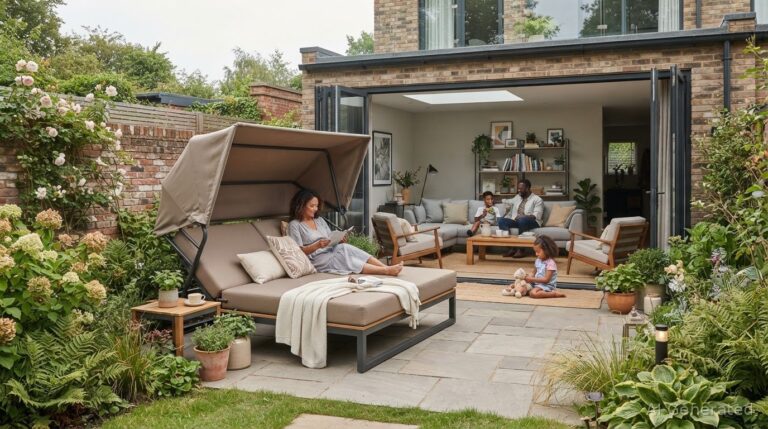
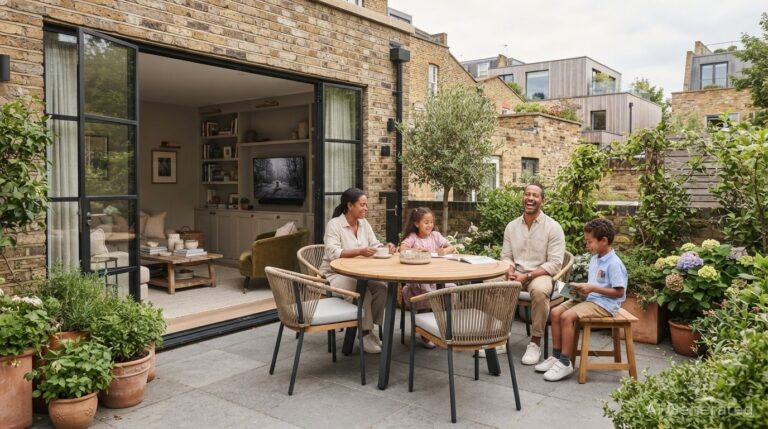
One of the simplest ways to make Adirondack seating feel current is to stop treating the chair as a standalone novelty. It usually works better as part of a wider outdoor room. That shift in perspective feels especially relevant now, as buyers create defined zones instead of simply scattering deck chairs around the garden in the familiar UK style.
Primethorpe Paving reports that UK homeowners are projected to spend more than £6.5 billion on outdoor living in 2026, with the average homeowner expected to invest £865 in outdoor projects. The same source says 45% of consumers agree their garden should work as hard as any room in the house (Primethorpe Paving). That helps explain why a pair of Adirondack chairs now often appears as part of a more complete scheme, with lighting, side tables, planters, and textiles, instead of sitting alone on the lawn.
To make the look feel more elevated:
- Use pairs to create symmetry on patios and decks
- Add a small side table in teak, metal, stone-look composite, or a similar finish
- Anchor the space with planters or lantern lighting so the chairs feel properly positioned within a patio corner, deck seating area, or garden nook
- Choose cushions sparingly, since too much padding can compete with the chair’s shape
- Repeat a finish elsewhere, such as black metal lighting with black HDPE chairs, or teak accessories with teak seating
A soft-modern garden usually suits muted tones and restrained styling. The result is clean, calm, and intentional. More traditional country settings, by contrast, can often carry richer timber and more textured planting. If the aim is cohesive garden seating UK design rather than an isolated purchase, the chairs should relate clearly to nearby loungers, dining areas, and planting. We covered balancing Adirondack seating with loungers and dining zones here: choosing the perfect lounge chairs for your garden
Budget, value and where premium really begins
Price is not only about the material. It also reflects design quality, component thickness, finish consistency, hardware, warranty support, and whether a chair is made to cope with repeated UK seasons, which can be tough on outdoor furniture. That is why two Adirondack chairs that look very similar can end up at quite different price points.
At the entry level, simple softwood or acacia designs may give you the look for less. For many households, mid-range HDPE models often offer the strongest value because they cut maintenance costs and lower the chance of early replacement. Premium pricing, though, usually starts when the specification moves to thicker recycled polymer construction, more refined colour options, designer-level detailing, or higher-end hardwoods such as teak, rather than just a different label.
It helps to think in terms of cost over time, not just the initial purchase price. A lower-cost wooden chair that needs regular treatment and starts to show wear fairly quickly may end up costing more through upkeep and eventual replacement. In many cases, the saving is only short term. By comparison, a better HDPE chair can seem expensive at first, yet over a decade it may become the lower-stress option. Sustainability also shapes how value is judged here. TechSci Research points to growing interest in eco-friendly materials and FSC-certified wood. Recycled plastic-based furniture is becoming more relevant as well for buyers who want long-life products and less frequent replacement (TechSci Research).
For homeowners comparing premium outdoor furniture UK options, the more useful question is often not “what is the cheapest Adirondack chair?” but “what will still look good and stay comfortable after years of British weather and regular use?” That is usually where real value begins.
Frequently Asked Questions
Are Adirondack chairs good for UK weather?
Yes, but the material matters. In the UK, rain, damp and seasonal temperature swings make HDPE and high-quality hardwoods stronger choices than lower-grade untreated timber. If the chair will stay outside most of the year, prioritise weather resistance, rust-proof fixings and easy drainage.
Is an HDPE Adirondack chair UK option better than wood?
For low maintenance, usually yes. HDPE is typically easier to clean, less likely to splinter or rot, and better suited to exposed patios and coastal areas. Wood can still be the better choice if you want natural grain and a warmer luxury look, but it generally asks for more care.
What is the best modern Adirondack chair UK style for contemporary gardens?
Look for cleaner lines, neutral colours and a slightly lighter visual profile. Charcoal, stone, black and muted earth tones tend to work well with porcelain paving, black-framed doors and Scandinavian-inspired outdoor spaces. Foldable versions and wood-look polymers can also feel more current than heavily rustic designs.
Can Adirondack chairs work in small UK patios or decks?
Yes, but check overall footprint and recline depth. Some classic designs are deeper than expected, so a compact or slightly more upright version may suit smaller spaces better. Foldable models are especially useful where storage is limited.
Where can I find Adirondack-style seating that fits a premium outdoor look?
A good place to start is with outdoor-focused furniture collections that prioritise durable materials and cohesive styling rather than one-off bargain pieces. RENGARD is relevant here because its broader approach to outdoor furniture, natural teak and contemporary design language helps buyers think about how a statement chair fits into a complete garden setting.
How do I choose Adirondack chairs that match the rest of my garden furniture?
Match by tone, not just by shape. If your existing furniture leans contemporary, choose sleeker profiles and restrained colours; if your garden uses warmer woods and softer planting, timber versions often feel more natural. Buyers browsing a curated home and garden furniture specialist such as modern home and garden furniture retailer often find it easier to build a joined-up look because the surrounding categories already share a similar design direction.
The smartest way to choose your Adirondack chair in 2026
Choosing the best Adirondack chair UK option in 2026 usually works best when you follow a clear sequence. Start by deciding where the chair will actually go: on an exposed lawn, a sheltered patio, a deck, around a fire pit, or on a balcony, because that often affects more than many people expect. From there, choose the material based as much on how much maintenance you can handle as on appearance. HDPE suits buyers who want durability with very little effort, while wood offers warmth and natural texture. Comfort should be judged properly too, by paying attention to seat height, recline, and arm width rather than focusing only on colour or finish. It also helps to think of the chair as part of an outdoor room instead of treating it as a separate accent.
Broader market trends support this more thoughtful approach. Outdoor living UK 2026 is increasingly focused on choosing fewer, better pieces that work harder and last longer. Adirondack chairs still stand out for their familiar shape, real comfort, and strong visual presence. That is probably why they continue to attract attention even as garden styles shift.
Keep these points in mind:
- Material has the biggest impact on maintenance
- Comfort determines whether the chair actually gets used
- Colour and detailing shape how modern it feels
- Placement affects whether it becomes a feature or fades into the background
For homeowners creating better patios, decks, and garden seating UK schemes, Adirondack chairs remain one of the most rewarding purchases when they are chosen well. Buy for your climate, your space, and your real habits. When those factors fit properly, the right chair will keep earning its place season after season.