Modern Dining Tables for Small Spaces UK
Small dining rooms aren’t always easy to plan. The table usually makes the difference between a room that feels calm and useful and one that ends up cramped and awkward, which happens more than it ought to. In many UK homes, that makes a real difference. In 2025, average household size in the UK was 2.36 people per household (ONS), and the English Housing Survey reports 96 m² average usable dwelling floor space in England for 2024 to 2025 reporting (UK Government). That mix of smaller households and tighter layouts likely helps explain why so many buyers are looking for the best dining tables for small spaces.
This guide focuses on one question: how to choose modern dining tables UK buyers actually enjoy using in compact homes. It covers size, shape, leg design, materials, movement space and styling, with examples that fit everyday life rather than showroom layouts. It also compares small dining tables UK shoppers often consider, including round dining tables for small rooms, along with extendable dining tables UK homes often rely on when guests come over for dinner or weekend stays. There’s practical advice as well, relevant to flats, townhouses and new-build homes across Shropshire, Staffordshire, Cheshire, Manchester, North Wales and Birmingham.
If you’re looking for a table that feels soft-modern, works well every day and doesn’t take over the room, this article should help you narrow the options with confidence. Here, it usually comes down to getting the size right, leaving enough clearance to move around it, and choosing a shape that suits how people actually eat and live.
Why compact dining tables matter in UK homes
People aren’t just looking for space saving dining tables UK buyers want because it’s on trend. It’s tied to the way people live now, including how they rent and buy homes. The English Housing Survey shows the average household size in England was 2.2 people per household in 2024 to 2025 (UK Government). Housing costs are still high, too. The average UK private rent was £1,319 per month in November 2024, and the average UK house price was £292,000 in October 2024 (ONS). Put simply, a lot of people are paying more for homes where every square metre has to do more.
That goes some way to explaining why compact dining furniture UK shoppers choose is now a more considered buy. It isn’t just a case of choosing a smaller rectangular table anymore. Buyers often want tables that seat two to four people on a normal day, leave enough room to move comfortably between the table and nearby walls or kitchen units, and still manage weekend guests, which for most homes means one or two extra people. Soft-modern design matters too. A bulky table can make a room feel crowded before anyone sits down, so lighter shapes and cleaner lines often work better.
FIRA also reports £21.5 billion in UK furniture and furnishings consumer spending in 2024 (FIRA). That points to a market that is still very active. Even within that wider category, small dining room furniture UK buyers choose is being driven by a straightforward practical need. They want furniture that feels comfortable, works for different uses, and looks less heavy in the room, especially in smaller homes. A simple point, but it still matters.
Start with layout, not style for the best dining tables for small spaces
Even a beautiful table can be the wrong pick if it blocks doors, squeezes walkways, or makes dining chairs awkward to pull out. It helps to think about the room first and how people actually move through it before you start comparing shapes or finishes, though that step is easy to overlook. A lot of buyers skip it, and that can cause problems later.
A simple process usually works well:
- Start by measuring the full width and length of the room.
- Mark any fixed obstacles, such as radiators, doors, kitchen islands, and sideboards.
- Work out how many people need to sit there on a normal day.
- Make sure there’s enough room for chairs, plus a clear path around them.
- Test the table footprint on the floor with masking tape.
At this stage, Leah Alexander, principal interior designer at Beauty Is Abundant, shares practical advice:
It helps to ‘tape out the footprint of the item in question to at least get a feel for how much floor space it’ll command,’
That advice is especially handy for dining tables for flats UK buyers are furnishing, where even a few extra centimetres can change how the room works from one day to the next. If the taped outline already feels too big before the table arrives, it probably won’t feel any better once chairs, place settings, and people are in the room. Usually, it feels more cramped, not less.
If you’re planning a full dining zone rather than just picking a table, it also helps to look at chair size and spacing at the same time, because that detail often matters more than people expect. We covered that in more detail in our guide to best dining chairs for modern homes and in comfortable dining chairs UK: Modern Table Pairing.
The best shapes for small dining spaces
When people look for the best dining tables for small spaces, the real issue is often the shape, not only the size. A table might not take up much floor space and still feel wrong in the room, that happens a lot.
Round tables for the best dining tables for small spaces
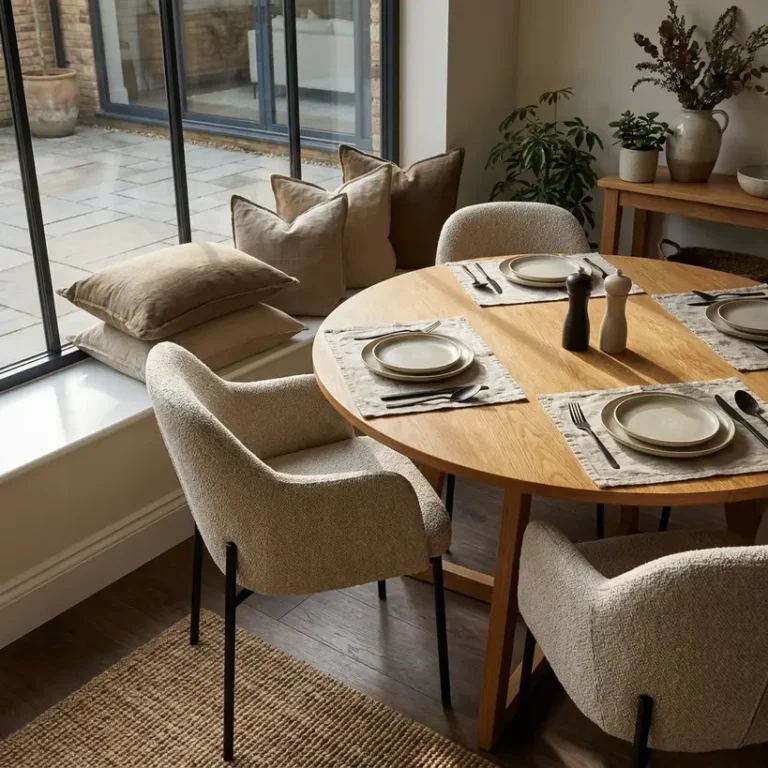
A round dining table is often one of the easiest ways to make a small room easier to move through. With no sharp corners, the room can feel a bit softer, and it’s usually easier to walk around the table in everyday use. It’s a small change, but you often notice the difference pretty quickly.
In square rooms, breakfast corners, or at the end of an open-plan kitchen, a round table can feel more balanced than a rectangular one. It tends to suit those areas better, especially when the layout is tight. It can also make eye contact and conversation easier, so guests don’t feel quite so far apart.
In a tight space, a pedestal base is often more practical than four legs. It gives you more knee room, which matters in daily use, and it’s easier to slide in extra chairs when needed, especially if someone arrives unexpectedly. That’s the kind of practical change people usually notice.
Rectangular tables for the best dining tables for small spaces
In many UK homes, a small rectangular dining table still works well in a narrow room. When the dining area is set against a wall or runs beside a galley kitchen, a slim rectangular table usually fits best. Rounded corners or softer edges can make it feel a bit more modern.
Square tables
Square tables are a good fit for two people, and they usually sit neatly in compact bay areas or small eat-in kitchens, especially when space is tight. The downside is that they’re not as flexible. When four people sit at one, the corners can feel cramped unless the table is fairly large, and that’s usually the deciding factor.
For a more detailed shape-by-shape comparison, see Choosing Between Round and Rectangular Dining Tables in Shropshire.
Why extendable tables are leading the small-space conversation
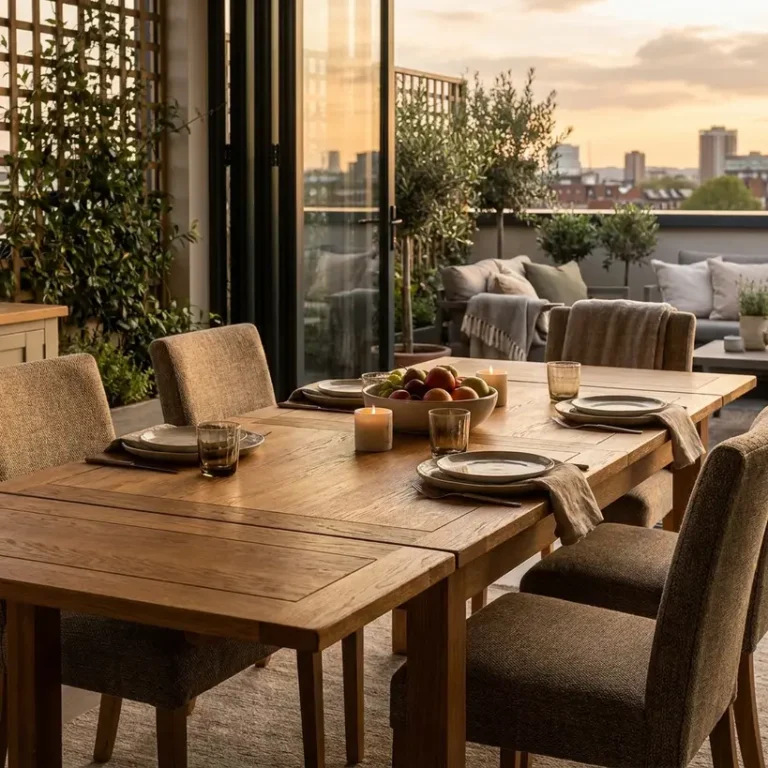
For a lot of buyers, the extendable dining tables UK retailers sell hit a practical middle ground. Most of the week they stay small, and when you need more seats, they pull out. In modern homes, where the dining area often doubles as a desk space, hosting area, or general family catch-all, that flexibility often makes them one of the best dining tables for small spaces.
Shelley Cochrane of House Beautiful UK puts it clearly:
Tables with an extending mechanism are the ideal solution for these smaller spaces. Their neat proportions at original size will fit comfortably, yet they can also be lengthened whenever required to accommodate a larger number of guests.
That view also shows up in company sales data. Furniture Village said that more than 70% of its dining-table purchases were extendable tables in 2025 (PR Newswire). This is company data rather than a UK-wide market share figure, but it still points to a clear preference among buyers for flexible furniture, or at least in many cases a strong leaning that way.
For shoppers looking at compact dining furniture UK options, extendable designs help with several familiar problems:
- They leave more floor space free around the dining area day to day.
- They mean you don’t need a second table that only comes out now and again.
- They can make smaller homes simpler to manage when friends or family come round.
- They do this without adding permanent bulk to the room.
The best examples usually use one of these mechanisms:
- Butterfly leaf, where the extension folds into the table
- End leaves, with extra panels stored separately
- Synchronized extension, where the top opens smoothly from the middle
- In some homes, built-in leaf storage matters most because it is simply easier to live with.
In smaller homes, built-in storage for the leaf is usually the most practical option. That way, you’re not stuck misplacing a loose panel or trying to keep it in a cupboard, spare room, or hallway, which is often the first bit that starts to get annoying.
If you want more detail on mechanisms and layouts, Extendable Dining Table UK Guide for Every Home covers the main options in more depth.
Soft-modern design choices that make the best dining tables for small spaces feel bigger
Compact tables don’t all feel equally light. Two tables may take up the same amount of space but still set a very different tone. Things like the material, the base, the colour, and the edge shape all play a part, even though each one seems minor on its own. Those small choices can make a big difference.
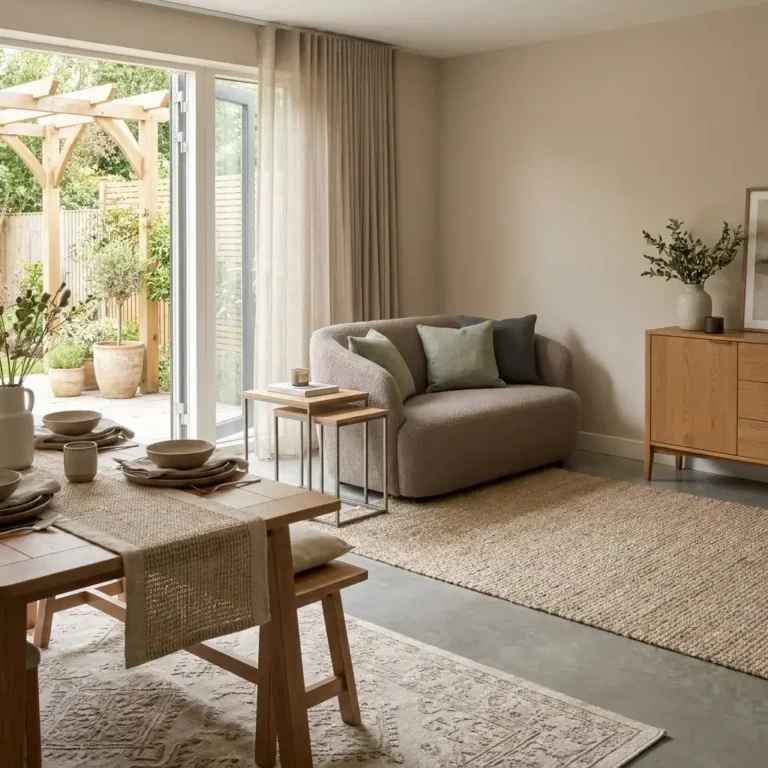
In compact rooms, soft-modern interiors often work well because they avoid visual heaviness. You’ll usually see gentle curves, warm neutrals, matte finishes, and natural materials rather than sharp lines or chunky shapes, which can feel bulky. For modern dining tables UK buyers pick for a calm look, these details often make a clear difference, especially in smaller dining areas.
So, in smaller dining spaces, this is what usually works best:
Warm woods and light oak tones
Pale or mid-tone oak bounces light around the room, which can make a real difference in smaller spaces. It’s less harsh than very dark wood and feels warmer than cold gloss finishes. Natural teak-inspired tones add warmth too, without making the space feel dated.
Pedestal bases
With a pedestal base, you can see more floor around the table, and it often gives you better legroom, which does help. Most of the time, that makes the room feel less crowded and more open.
Rounded edges for the best dining tables for small spaces
Curved corners give the table a softer look. They’re also often easier to move, especially in homes with children or narrow walkways. They’re safer too.
Matte and low-sheen finishes
Matte and low-sheen finishes look current and are easier to live with, and they tend to show fewer fingerprints than high-gloss surfaces.
Victoria Robinson, trend expert at Hillarys, describes this broader move toward multifunctional design well:
Integrated storage, extendable tables and multifunctional seating are particularly helpful.
That helps explain why small dining room furniture UK buyers often prefer now feels more refined than the simply ‘compact’ furniture of the past. It’s smaller, but the proportions and styling are usually better, so it suits modern daily life more easily and, often, more comfortably too.
How to match table size to real daily use
People often buy for the biggest setup they might ever need, rather than for how the space gets used on most days. That’s how you end up with a table that’s simply too large, and it happens a lot. It’s usually better to size it around everyday life first, then leave a bit of flexibility if needed.
For most couples or smaller households, this guide often works well:
- 2 seats daily: a small round table or a compact square table
- 2 to 4 seats daily: a round pedestal table, or in some rooms a slim rectangular one
- 4 seats daily with occasional guests: a compact extendable table
- Open-plan corner dining: a round or oval table often helps the room flow better
A simple way to check is this: can two people sit down, stand up again, and walk around the table without turning sideways? If it does, the table is probably too big for the room. In most homes, that is a clear sign the size isn’t working properly.
This comes up in all kinds of homes. In Manchester flats, Birmingham apartments, Cheshire townhouses, and North Wales coastal homes, it’s often about more than just seat numbers. The room usually has to work well between meals as well, not just at dinner time. A dining area might also need to cope with homework, laptop use, or just give people a place to sit and talk over coffee.
If the aim is a calm, compact scheme across more than one room, keeping the proportions consistent often helps. Pieces with slim profiles, soft edges, and lighter finishes usually sit together more easily. That’s one reason many buyers planning a whole home look at a curated retailer like RENGARD, where Scandinavian and industrial influences can help create a more cohesive style direction without making compact rooms feel busy. Buyers comparing the best dining tables for small spaces often end up focusing on that balance between practicality and visual calm.
Material choices for compact dining furniture
When furniture has to fit a small space, the material matters more than it usually would. A dining table has to hold up to everyday use and still look light, and that can really help in a tighter room.
Wood and wood-look finishes
Wood is still one of the simplest options for compact dining furniture in UK homes. It brings in some warmth and tends to suit soft-modern interiors well. In smaller rooms, light oak tones can be particularly handy, as they help the space stay bright. It’s a straightforward, practical plus.
Stone and stone-effect tops
These can look elegant, I think. In small spaces, though, the better choices usually have slim tops and softer edge details. In a compact room, a very thick stone-look slab can often feel heavy, especially visually.
Metal bases
Black or dark metal bases can work very well in contemporary interiors, especially in homes with more of an industrial style. But the frame usually looks best when it stays open and slim. Thick crossbars can reduce legroom and often make the table look cluttered.
Easy-care surfaces for the best dining tables for small spaces
If the table gets used for meals, work, hobbies, or small projects, an easy-care finish usually makes sense. They’re practical and stylish, which is a real plus, and modern design usually no longer treats those qualities as opposites.
This is also where brand quality matters. RENGARD’s wider focus on durable materials, together with clean Scandinavian and industrial lines, tends to match what buyers want from modern compact furniture: something that looks thoughtful, not fussy, and still handles real daily use day after day.
Common mistakes that make a small dining room feel smaller
A great dining table for a small space can still miss the mark if you overlook a few key details. Often, it’s the little things. Here are the most common issues to avoid.
Choosing by seat number only
A table that “seats four” can still be very different in size and comfort, sometimes by quite a bit. Don’t go by the label alone; check the dimensions, because that’s usually what really sets them apart.
Ignoring chair bulk
Wide chairs with arms can crowd a small table very quickly, and that happens a lot. Slim dining chairs usually work better. Benches can also save space, especially in tight spots. It’s a small detail, but it probably matters.
Forgetting the table base
With four legs at the corners, seats can feel cramped and getting around the table can be awkward, especially in tight spaces. But in compact rooms, pedestal bases are usually easier to use and easier to move around.
Going too dark or too chunky
A dark, heavy base or solid shape can quickly dominate a room. That is often too much. Softer modern forms usually feel calmer and, I think, more easygoing.
Blocking natural light
In many UK homes, especially new-builds and flats, the dining area often depends on one main window, which is quite common. Keeping the view to that window clear usually helps the room feel brighter, especially around the table.
If the dining space opens right onto a patio or balcony, some of the same small-space planning applies outside too. Articles like Bistro Sets for Small Outdoor Spaces: Stylish Solutions and Top Outdoor Decor Ideas for Small Spaces can help you work out flow, scale, and proportion across both the indoor and outdoor areas.
Best dining tables for small spaces in different home types
A small home doesn’t always need the same kind of setup. What works best comes down to the shape of the room, how you live, and how often people come over. One home may need something different from another.
Flats and apartments
Dining tables for flats that UK shoppers often choose should suit open-plan living areas, especially smaller ones. In these rooms, round tables, small pedestal tables, and compact extending tables tend to be the best fit. They cut down on visual clutter and make it easier to move around the room.
Townhouses
Townhouses often have narrower rooms. In that kind of setup, a slim rectangular table or an oval table usually works well, especially if the dining area sits between the kitchen and living room.
New-build homes
In new-build dining spaces, light finishes and softer shapes usually work well. A table with rounded edges, pale wood, and a simple extension mechanism can help the room feel larger and easier to adapt, which is often useful, especially for you. It’s simple, practical, and usually easy to live with.
Downsizer homes
If you’re downsizing, comfort still matters as much as size. A small table shouldn’t feel flimsy or like a stopgap, and a sturdy base makes a real difference. You’ll also want enough room between chairs, and in most cases, a finish that feels grown-up instead of merely practical.
Frequently Asked Questions
What shape is best for a small dining room?
In a lot of homes, a round dining table fits a small room better since it’s easier to move around and there are no sharp corners. If the room is long and narrow, a slim rectangular table may suit it better. The right table shape should leave walkway space clear and also fit the way the room is used.
Are extendable dining tables good for small spaces?
Yes. For compact homes, the extendable dining tables UK buyers go for make sense: they stay neat for everyday use, then give you extra room when guests come over. They work particularly well for couples, small households, and anyone who wants that flexibility without a table taking up too much space all the time.
How many people can a compact dining table seat?
A compact dining table usually seats two to four people without feeling cramped. If you open an extendable model, some will fit six, but day-to-day comfort matters more than the absolute maximum. Before you buy, check the measurements both closed and extended.
What style of modern dining table makes a room feel bigger?
Go with light wood tones, rounded edges, slim tops, and pedestal bases. They take away some of the visual heaviness, so the room feels calmer. Soft-modern tables work best for this, while chunky industrial designs feel heavier, and very dark traditional styles feel heavy too.
Where can I find modern dining tables UK buyers like for compact homes?
Start with a store that leans toward clean design, durable materials, and practical proportions. modern furniture retailer If you prefer Scandinavian or contemporary styles, collections such as those from RENGARD tend to fit well. Go for pieces that look refined rather than bulky.
What should I measure before buying a small dining table?
Start by measuring the room’s width and length. Then mark down where the doors swing, where the radiator sits, and how much space you need to pull chairs out. It is simple and important. An easy way to test the fit before you buy is to tape the table’s footprint on the floor. That also shows the table’s real effect in the room instead of leaving it to guesswork.
Smart buying tips before you place an order for the best dining tables for small spaces
A couple of last checks can save a lot of trouble. Picture the table closed and fully extended, not only in product photos, because that’s easy to overlook. Delivery access is also worth checking early, especially in flats with stairs or narrow hallways, since a small practical detail like that often causes the biggest problems. It’s worth looking closely at the extension mechanism, the edge finish, and the base structure too. A good compact table should feel steady and solid, not flimsy.
It’s also worth setting the table against the room’s overall furniture plan. If there is already slim-lined storage, lighting, and seating that keep a light visual feel, a soft-modern table will probably work better than a bulky statement piece. And if you want the style to carry from room to room, keeping the material tone and silhouette consistent usually matters more than matching every item exactly. That is often what makes a space feel coherent rather than identical.
The wider furniture market remains strong, with UK furniture manufacturers’ total sales reaching £10.8 billion in 2024 (FIRA). So there is plenty of choice. The main thing is narrowing it down properly.
If you’re comparing dining and living room layouts together, guides like Best Small Sofa Sets for Compact Living can also help keep the proportions balanced across open-plan spaces.
Make your small dining space work harder
A well-chosen table can make a compact room work much better day to day. It can free up movement, make the space easier to use in different ways, and help a small home feel more settled, which often matters more than people expect.
- Measure the room carefully before you start browsing.
- The best shape usually comes down to how people move through the space, not just what feels familiar.
- If movement is tight, round dining tables are often a very good fit.
- If you only host now and then, extendable dining tables UK homes often use can be a practical choice, especially for weekend meals or guests.
- Slim, soft-modern shapes usually work better in small spaces than pieces that look visually heavy.
- It often helps to choose a table around how the space is actually used each day, rather than the biggest occasion that may only come around once in a while.
In many UK homes, the best dining tables for small spaces aren’t always the very smallest ones. More often, the better option is the one with the right proportions for the room. That matters because a table should be easy to live with, easy to move around, and comfortable with the rest of the space.
If you’re comparing small dining tables UK options now, put comfort, footprint, and flexibility first. Style still matters, of course, but in most cases the better choice is the one that makes the room feel calmer rather than more crowded. When those basics are right, compact dining furniture UK buyers often worry about can end up being one of the most useful parts of the home while still looking good, and that’s really the balance you want.