
How to Stop Rattan from Cracking with Oil and a Cover
Rattan doesn’t need repairing on a set schedule. To understand how to stop rattan from cracking, keep natural fibres dry, away from prolonged direct sunlight and dry heat. If they become excessively dry, apply a suitable furniture oil, wipe off any excess and let the piece dry before use. Cover it when it rains or when it’s not in use.
A split strand doesn’t always mean the weave has simply worn out. Surrounding conditions matter too: repeated dampness, intense sunlight and heat can affect natural fibres, while dragging furniture can contribute to splitting.
This guide explains how to spot the causes, care for dried rattan with oil and a cover, and trim and glue loose or broken weaving. You’ll also learn when a small repair may help and why severe cracking or splitting can call for a different solution.
Key Takeaways
- Use furniture oil on excessively dried natural rattan, then wipe away excess and let it dry fully before use.
- Cover rattan when it’s raining or not in use, and keep it away from prolonged direct sunlight and dry heat.
- Look for brittle fibres, splits and loose or missing strands to identify damage and decide what needs attention.
- Trim loose ends neatly and secure repair strands carefully, allowing the weaving to dry fully before handling the furniture again.
- Reduce cracking by keeping rattan dry, avoiding abrupt heat and damp, and lifting furniture rather than dragging it.
Oiling dried natural rattan to help prevent cracking or splitting
Keep indoor rattan in a room with steady humidity, away from extremes of dampness and dryness. There’s no single humidity level to aim for. Avoid placing a natural rattan chair beside a radiator or in a room that becomes very dry when the central heating is on.
To rehydrate dry rattan safely, wipe it gently with a well-wrung, damp cloth, then let it dry gradually in a ventilated space. Don’t soak the furniture or use direct heat to speed up drying, as prolonged dampness and sudden heat can both harm natural fibres.
Yes. Prolonged sunlight can fade natural rattan, while radiators and central heating can dry its fibres and encourage splitting. Rattan has some natural resistance to UV rays, but extended exposure can still change its colour.
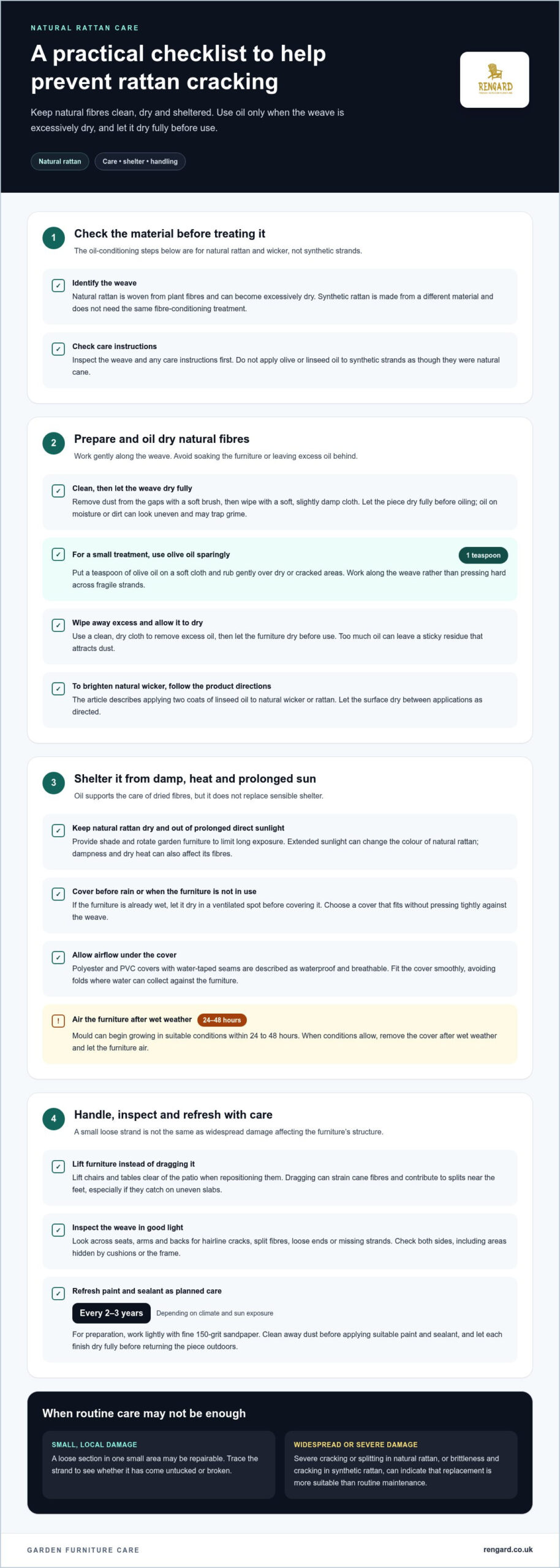
- Check the material before applying oil. Natural rattan is woven from plant fibres and can become excessively dry; synthetic rattan is made from a different material and doesn’t need the same fibre-conditioning treatment. Inspect the weave and any care instructions first. Don’t apply linseed or olive oil to synthetic strands as though they were natural cane.
- Clean and dry the natural weave. Remove dust from gaps with a soft brush, then wipe the surface with a soft, slightly damp cloth. Let the piece dry fully before oiling. Oil applied over moisture or dirt can leave the weave looking uneven and may trap grime in the fibres.
- Apply oil sparingly to dry fibres. For a small treatment, use a teaspoon of olive oil on a soft cloth and rub gently over the rattan, concentrating on dry or cracked areas. Work along the weave rather than pushing hard across fragile strands. Wipe off excess with a clean, dry cloth, then allow the furniture to dry before use.
- Use linseed oil to brighten natural wicker. Apply two coats to natural wicker or rattan when refreshing its appearance, taking care to follow the oil product’s directions. Let the surface dry between applications as directed. A restrained application can enrich the finish, while excess oil may leave a sticky residue that attracts dust.
- Protect the finish from weather and fading. Keep natural rattan dry, provide shade, and rotate garden furniture to limit prolonged exposure to direct sunlight. Cover it when rain is expected or when it’s not in use. Oil supports care of dried fibres, but it doesn’t replace sensible shelter from damp conditions and strong sun.
Keep indoor rattan in a room with steady humidity, avoiding extremes of dampness and dryness. There’s no single humidity level to target.
Covering rattan furniture when it is not in use or when it rains
- Cover furniture before wet weather or long periods out of use. In a British garden, rain can leave natural rattan damp, so fit a cover when showers are expected and whenever the seating will sit unused. Choose a cover that fits the shape without pressing tightly against the weave. If the furniture is already wet, let it dry in a ventilated spot before covering it.
- Choose a cover that sheds rain while allowing airflow. Polyester and PVC covers with water-taped seams are described as waterproof and breathable. That balance helps shield rattan from rain while reducing trapped moisture, which can encourage mould and mildew. Fit the cover smoothly over the back and arms, and avoid leaving folds where water can collect against the furniture.
- Adjust protection for autumn and winter. Store synthetic rattan indoors during winter where practical, or cover it during bad weather. Bring natural rattan indoors or cover it during muggy, damp spells. Mould can begin growing in suitable conditions within 24 to 48 hours, so remove a cover after wet weather when conditions allow and let the furniture air.
- Move each piece without dragging it. Lift a rattan chair or table clear of the patio before repositioning it, rather than pulling it across paving or decking. Dragging can strain the cane fibres and contribute to splits near the feet. Check the feet before and after moving; if they catch on uneven slabs, lift the frame carefully instead of forcing it across the surface.
- Recognise when a cover or touch-up is no longer enough. Check the weave and frame before storing furniture for winter. Severe cracking or splitting in natural rattan, or brittleness and cracking in synthetic rattan, can indicate that replacement is more suitable than routine maintenance. A small loose strand is different from widespread damage that affects the furniture’s structure.
- Refresh paint and sealant as part of planned care. Wicker and rattan can be sanded, painted and sealed every 2-3 years, depending on climate and sun exposure. For preparation, use fine 150-grit sandpaper and work lightly over the surface. Clean away dust before applying suitable paint and sealant, then let each finish dry fully before returning the piece outdoors.
What causes rattan to crack or break?
- Inspect the weave in good light. Look across each seat, arm and back for hairline cracks, split fibres, loose ends or gaps where strands are missing. A faded patch may indicate prolonged sunlight exposure, while a fresh break can appear as a sharp, pale edge. Check both sides of the weave, especially where a cushion or frame hides the strands.
- Trace loose strands to their ends. Follow a lifted strand through the weave to see whether it has simply come untucked or broken. Carefully and tightly woven natural rattan is more resistant to damage than a looser weave. A loose section in one small area may be repairable; several missing strands or a sagging seat need closer inspection before use.
- Consider the furniture’s outdoor exposure. Repeated damp or humid conditions can contribute to cracking and breakage, as can prolonged dry heat. Direct sunlight may fade natural rattan’s colour over time. Note where the furniture sits: a spot exposed to rain, strong afternoon sun and changing conditions may show different wear from a sheltered patio.
- Check for dampness and mildew during cleaning. Inspect underneath cushions, around joints and between tightly packed strands, where moisture and debris can linger. Mould can start growing on rattan in suitable conditions within 24 to 48 hours. Clean gently with a soft cloth or brush, then dry natural rattan thoroughly in a ventilated space away from direct heat.
- Decide whether a crack is local or widespread. A single split strand may be suitable for repairing, particularly if the surrounding weave remains firm. Look for repeating cracks, brittle fibres, missing sections and movement in the seat or arms. Severe cracking or splitting across natural rattan is a sign that patching one strand may not address the wider damage.
- Stabilise the area before attempting a repair. Stop using a chair if a broken strand leaves a sharp end or the seat feels unstable. Photograph the damaged section and gently clear away surface dust, taking care not to pull neighbouring fibres. If a strand is loose, note its route through the pattern; that makes it easier to see whether a replacement can follow the original weave.
Trimming and gluing loose or broken weaving
- Prepare the damaged area. Work indoors on a dry, stable surface, with the rattan supported beneath the repair. Remove cushions and gently brush away dust so the weave is visible. Trace the loose strand through the pattern before cutting; trimming a sound section can make the gap harder to repair. If several fibres are broken or the seat feels unstable, stop using it until the damage is assessed.
- Trim only the frayed end. Use sharp scissors or a small craft knife to cut a loose, splintered tail close to the weave. Keep the blade parallel to the strand, and avoid cutting neighbouring fibres or the frame. Don’t pull a broken end free: it may still be woven around other strands. A neat, close trim gives adhesive less excess material to catch on.
- Prepare a replacement strand. For natural rattan, soak the replacement strand in warm water for around 30 minutes before weaving. This makes it more pliable as you guide it through the existing pattern. Match its thickness and colour as closely as possible, then weave it along the original route. Keep the tension consistent, but don’t pull so firmly that you strain adjacent fibres.
- Secure the end with a measured amount of adhesive. Apply a small dab of epoxy resin where the replacement strand tucks beneath the weave. Press the end into place and remove excess adhesive before it hardens, taking care not to coat visible fibres. Follow the adhesive’s own instructions. A heavy application can leave a glossy patch and may make a natural finish look uneven.
- Strengthen a loose weave without tightening it excessively. Work the strand gently back into its original position, following the existing over-and-under pattern. Add adhesive only at a concealed end, rather than across the visible surface. This can secure an isolated loose strand; it won’t restore a weakened section with multiple missing fibres. Replace those strands individually where the surrounding weave remains firm.
- Allow the repair to dry and cure fully. Leave the repaired rattan undisturbed in a ventilated indoor space. A repaired strand should dry fully, ideally for 24 hours, before the furniture is handled again. If you used epoxy resin, allow it to harden for at least 48 hours. Follow the longer period before using the piece, and keep it sheltered from rain and winter dampness while it cures.
Common causes of rattan cracking
- Track changes between damp and dry conditions. Repeated exposure to damp or humid weather can contribute to cracking and breakage. Prolonged dry heat can also make natural fibres brittle. A chair left in a wet corner, then moved beside a warm indoor radiator, experiences both conditions. Choose a sheltered, ventilated position instead, and avoid shifting rattan between very different environments.
- Limit direct sunlight on exposed surfaces. Long periods of direct sunlight can fade rattan’s colour and contribute to drying. Note which side of a garden chair receives the strongest sun, then rotate the piece or provide shade. A faded armrest beside a less exposed back can reveal uneven exposure. Natural rattan’s UV resistance doesn’t prevent colour changes over time.
- Check how tightly the weave was made. Carefully and tightly woven rattan is more resistant to damage than loose weaving. Inspect the surface where strands cross: openings, uneven tension or strands that shift easily can leave the weave more vulnerable. Avoid placing concentrated pressure on a loose section, such as repeatedly leaning on one arm, while checking whether nearby fibres remain secure.
- Clean without abrading the cane. Dust and grit caught between strands can rub against the surface during use. Remove debris with a soft cloth or soft brush, and use an old toothbrush gently in narrow gaps. Avoid abrasive pads and harsh cleaning agents, which can damage cane. After washing, dry natural rattan completely in a ventilated place, away from direct heat.
- Use oil only when natural fibres are excessively dry. Natural rattan needs occasional oiling when it has dried out excessively; routine over-application isn’t a substitute for controlling its environment. Apply linseed oil sparingly to dry natural wicker, then wipe away excess with a clean, dry cloth. Let the finish dry before use, and don’t treat synthetic strands as natural cane.
- Read the damage pattern before repairing. A single split strand beside an otherwise firm weave points to local damage; repeated cracks across a seat suggest broader wear. Inspect the underside, joints and exposed edges, where strain may be less visible. Repair a small, stable area by securing the strand, but don’t rely on oil or adhesive to restore a badly weakened structure.
- Change the conditions that caused the first split. A practical answer to how to stop rattan from cracking starts with correcting the conditions around the furniture. Shield sun-faded areas, keep damp pieces ventilated, and move rattan away from radiators. If a strand repeatedly loosens at the same point, reduce pressure there and inspect the surrounding weave. Understanding how to stop rattan from cracking means addressing the cause, not just the visible split.
Rengard: Furniture Accessories
Rengard offers Furniture Accessories alongside Garden Furniture and Rattan Garden Furniture. If you’re refreshing a patio or planning an outdoor seating area, consider how each piece will fit the space and suit the way you use it.
For a coordinated garden setting, choose outdoor furniture that suits your available space, whether you’re arranging a compact terrace or a spacious seating area. A considered layout can make outdoor living feel comfortable and cohesive.
Explore Rengard’s garden furniture when you’re ready to shape your outdoor space.
Make thoughtful care part of your outdoor routine
A well-planned garden setting starts with choices that suit the space and how you use it every day. As you plan, consider how the furniture will complement your patio, terrace or garden, and how you want the area to feel when it’s ready to enjoy.
If you’re considering a refresh or a new outdoor arrangement, Rengard can be a useful next point of contact. Share what you’re planning for your garden and explore options that fit your outdoor living space.
Contact Rengard about your outdoor furniture plans and take the next step towards a garden setting that feels welcoming and well considered.
Frequently Asked Questions
How often does rattan need repairing?
Repair rattan when damage affects the weave, rather than following a calendar schedule. During seasonal furniture checks, inspect the same areas, such as seat edges, arm fronts and joins between sections. A strand that has shifted since your last check may need attention; a stable mark in the finish may not. Take a brief note or photograph of changing damage to see whether it’s spreading.
Why does rattan crack or split?
Cracking can develop when rattan fibres lose flexibility or face repeated environmental stress. The construction matters too: tightly woven strands are generally more resistant to damage than loose weaving. Check whether a break is beside a join, a frequently used arm or a section that flexes under pressure. Its location can help distinguish isolated wear from a wider problem with the weave or its support.
How can you prevent rattan furniture from drying out and cracking?
Make a simple inspection part of your outdoor furniture routine. After moving a chair or rearranging a dining set, check for strands rubbing against paving, walls or nearby pieces. One practical way to stop rattan from cracking is to catch these small stresses before they become visible damage. Use shade and shelter thoughtfully, and adjust the furniture’s position as garden conditions change.
How often should you clean and condition rattan?
Clean wicker and rattan annually, removing light dust as needed between cleans. Conditioning is different: natural rattan needs oil only when it has become excessively dry. Don’t treat every piece on the same schedule, especially if a set combines natural cane with synthetic weave or other materials. Identify each surface first, then follow care directions suited to that material.
Which oils or conditioners are safe for natural rattan?
For excessively dry natural rattan, occasional oiling may help protect the fibres, but check the care guidance before applying anything. Before treating a visible area, test the oil on a concealed strand and let it dry so you can assess any change in colour or sheen. Apply oil only to natural fibres, not synthetic weaving. If the furniture has a painted or sealed finish, check its care directions before applying oil.
How do you repair cracked or split rattan cane?
First, decide whether the damage is limited to one strand or affects the surrounding structure. A small break in an otherwise firm weave may be repairable with a replacement strand; a broad area of brittle or missing cane needs a different assessment. Match the replacement’s thickness and colour, and compare its path with intact weaving nearby. Stop using the seat if the damaged section no longer feels stable.
How should rattan furniture be stored in winter in the UK?
Before winter storage, clean the furniture, remove loose debris and make sure each piece is fully dry. Choose a sheltered indoor space with room for air to circulate, rather than squeezing chairs tightly together. If you need to store furniture outdoors, use a cover and check it periodically during prolonged damp weather. Store loose cushions separately in a dry place so they’re ready for the next season.
How can you tell natural rattan from synthetic PE rattan, and do care methods differ?
Natural rattan is plant cane, so its strands may vary slightly in texture and shape; synthetic PE rattan usually looks more consistent. If the material is hard to identify, check an exposed edge or the furniture’s care label. Care differs: natural fibres may need occasional oiling when excessively dry, while synthetic weaving doesn’t need fibre-conditioning oil.