

How to Restore Teak Furniture Colour: A Practical Guide
What if the silver-grey finish on your teak garden table isn’t damage at all? In British weather, sun and rain gradually change teak’s honey-brown surface. If you’re wondering how to restore teak furniture colour without harming the wood or creating a patchy finish, first decide which look you want.
Grey teak is usually naturally weathered, not a sign that the timber has lost its strength. Its soft silver patina can be a considered, low-maintenance choice. If you prefer warmer golden-brown tones, careful cleaning and a suitable finish can refresh the appearance, but restoration is optional.
This guide explains why teak changes colour and how to choose an approach for your furniture’s condition. You’ll learn where cleaning fits, when light sanding may help, and how oil and sealer differ. Simple upkeep can also help your refreshed outdoor setting stay considered through changing seasons.
Key Takeaways
- Decide whether you prefer teak’s natural silver-grey patina or want to refresh its warmer tones before choosing a treatment.
- Choose how to restore teak furniture colour according to the timber’s condition and existing finish.
- Cleaning, sanding, staining, oiling and protective treatments serve different purposes and can create different appearances.
- Identify the furniture material first, then follow care-product directions rather than assuming every teak-effect surface can be treated like solid teak.
- Check the furniture regularly for dirt, marks or uneven colour before deciding whether it needs attention.
How to Restore Teak Furniture Colour: First Understand What Has Changed
A teak table that began with warm, honeyed tones may look silver-grey after spending time outdoors. In the British climate, sunlight and rain gradually alter the timber’s surface. This doesn’t automatically mean the furniture needs restoring. “Restoration” can mean anything from removing surface grime to deliberately changing the finish. Natural ageing doesn’t always need to be reversed.
Before deciding how to restore teak furniture colour, inspect the whole surface in daylight. Is the change broadly even, or are there isolated dark marks, ingrained dirt or patches with noticeably different tones? General information about Teak Wood Properties and Weathering can help explain the material, but each piece’s appearance also reflects its exposure and care history.
Is grey teak furniture damaged or naturally weathered?
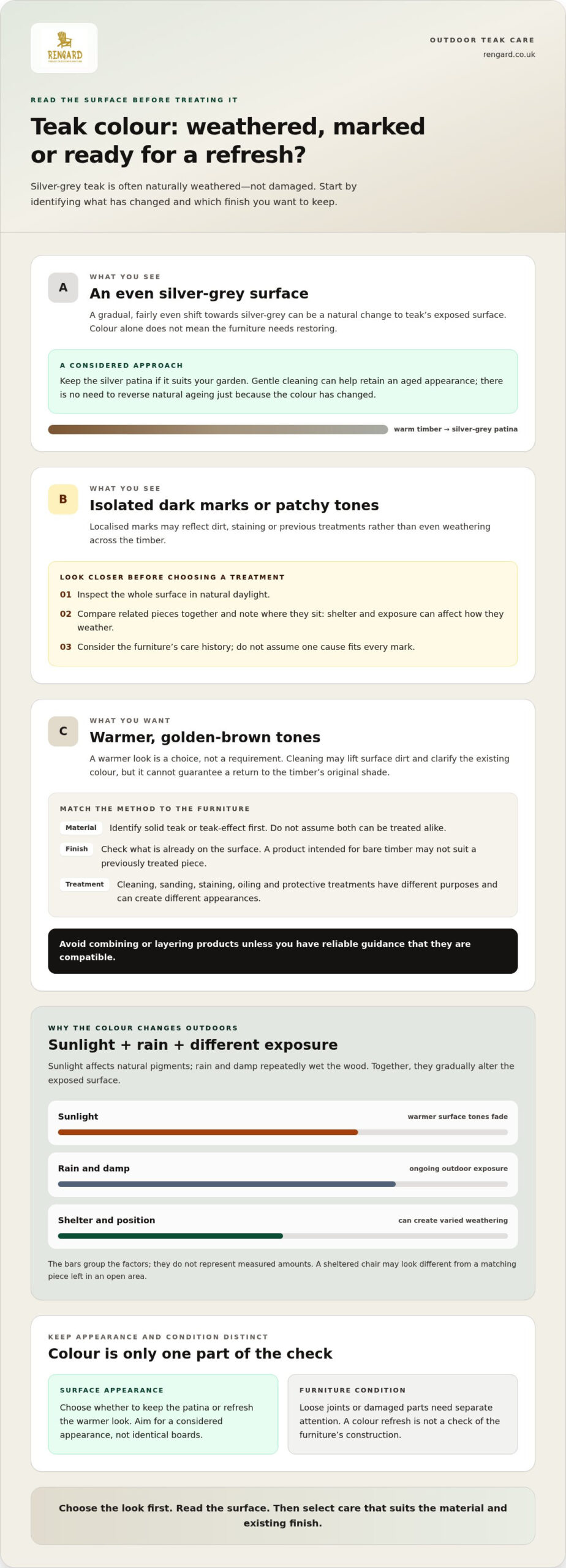
A gradual, fairly even shift towards silver-grey can be a natural surface change in outdoor teak. It differs from localised marks or uneven areas, which may reflect dirt, staining or previous treatments rather than consistent weathering across the timber.
An even silver-grey patina is a natural colour change; isolated dark marks or patchy tones may point to dirt or surface staining. This distinction helps you decide whether the furniture needs cleaning or a change of finish, rather than assuming every grey surface needs sanding or oiling.
Colour alone can’t establish the overall condition of a piece. If you notice concerns beyond appearance, such as loose joints or damaged parts, assess those separately. A colour refresh isn’t a substitute for checking the furniture’s construction.
Choose the teak colour you want before starting
Consider which appearance will suit your garden: warmer-looking timber or a silver-grey surface that feels settled and understated. Either can work alongside outdoor dining chairs, planting and paving. The choice is personal, not a test of whether the teak looks “right”.
Deciding first makes your care choices more coherent. A treatment intended to bring back warmer tones won’t serve the same purpose as gentle cleaning to retain an aged appearance. Mixing approaches without a clear aim can leave the surface inconsistent, especially if different parts of a table receive different treatments.
Set realistic expectations, too. Cleaning may lift surface dirt and make the existing colour clearer, but it can’t guarantee a return to the timber’s original shade. Weather exposure, marks and earlier finishes all influence the result. Aim for a considered, even appearance that suits the furniture now, rather than trying to make every board identical. For a teak outdoor table, this can help the piece feel intentional within the wider setting, whether you prefer a warm focal point or a quieter, weathered finish.
Why Outdoor Teak Furniture Changes Colour in the British Climate
Outdoor teak changes gradually at the surface. Sunlight affects the timber’s natural pigments, while rain and damp conditions repeatedly wet the wood. As the exposed surface weathers, its colour changes. The balance of sunshine and rain in the British climate shapes how each piece looks over time.
Teak’s outdoor colour evolves as sunlight and rain gradually alter the timber’s exposed surface. The effect may vary across a garden set. A table in an open part of a patio may experience different exposure from chairs positioned beneath a covered area. Shelter, the furniture’s angle and how it is arranged all affect the conditions its surfaces experience.
What causes teak to develop a silver-grey patina?
Sunlight contributes to the fading of warmer surface tones, while rain and dampness are part of the timber’s ongoing outdoor exposure. Together, these influences can shift teak towards a softer, silver-grey appearance. The change happens at the surface, so you can let the colour evolve rather than treating a warmer tone as the only suitable finish. The patina can be a considered choice for an outdoor setting.
Why can teak furniture look patchy or dull?
Differences in exposure around a garden can affect how pieces weather. A chair kept under a roof may look different from a matching chair that spends more time in an open area. The same can happen within a set arranged close to a wall or beneath an overhang. Dullness can also reflect the furniture’s use and care history, so don’t assume one explanation fits every surface.
Compare related pieces together in consistent natural light. This helps you see whether the difference follows their position in the garden or is confined to one part of a surface. Note where the furniture usually sits and whether it has been moved or treated before. That context gives you a better basis for deciding what, if anything, to do next.
If you’re planning a wider outdoor furniture update alongside your teak care, Rengard’s outdoor furniture plans and contact details are available online. Consider how the furniture’s setting and use can inform a refresh that works with the way you enjoy your garden.
Teak Furniture Colour Restoration Methods: Compare Your Options
There isn’t one treatment for every teak surface. Cleaning, sanding, staining, oiling and protective treatments have different purposes and can change the appearance in different ways. First identify whether the furniture is solid teak or teak-effect, then consider its existing finish. A product intended for bare timber may not suit a previously treated surface.
Use the comparison below to narrow your options, then follow the care instructions for the furniture and treatment. Check before combining products, especially if you’re unsure whether they’re compatible. Avoid layering treatments until you have reliable guidance for that specific piece.
| Method | Intended result | Key consideration |
|---|---|---|
| Cleaning | Remove surface dirt | May brighten the surface, but doesn’t guarantee a colour change. |
| Sanding | Refine or remove part of the surface | Requires care and may alter the timber’s appearance. |
| Staining | Change the colour deliberately | It’s a colour treatment, not a neutral cleaner. |
| Oil or protective treatment | Influence the finish or protect the surface | Products differ in appearance, compatibility and application. |
Cleaning, sanding or staining: what does each method do?
Cleaning is a sensible starting point when the surface looks dull from everyday dirt. Use a cleaner suitable for the furniture and follow its directions. A clean may reveal the existing colour more clearly, but it can’t promise to restore a particular shade. Sanding is more involved because it removes some surface material, so work carefully and pay attention to the grain. Stain is different again: it’s intended to change colour, making it a deliberate design choice rather than a way to wash the timber.
Should you oil or protect outdoor teak?
Oiling and protective treatments aren’t interchangeable. Oil can affect the timber’s tone and finish, while other protective products may be designed to leave a different appearance. Neither is an automatic next step simply because teak has turned grey. If you’re happy with the patina, you don’t need to oil or seal the furniture just to make it look golden again. Choose a treatment only if its intended finish suits your preference and its instructions fit the furniture.
To decide how to restore teak furniture colour, work backwards from the result you want: remove dirt, adjust the surface, change its colour or apply a compatible finish. Don’t layer several methods in one session without checking their instructions. A measured choice is more likely to keep the furniture in harmony with the rest of your outdoor setting.
How to Restore Teak Furniture Colour Step by Step
A measured approach helps you avoid changing more of the surface than intended. Before starting, decide whether you want to remove dirt, adjust the colour or apply a protective finish. Follow the product instructions at each stage. Methods and application requirements vary, so don’t assume one treatment sequence suits every piece.
Prepare and clean the teak surface carefully
Begin by identifying the material and its current finish. Solid teak and teak-effect surfaces may need different care, while an existing coating can affect how a cleaner or treatment behaves. If you can’t establish what the surface is, don’t assume it can be treated like bare teak.
Gently remove loose leaves and outdoor debris, then use a cleaner labelled as suitable for that surface. Follow its directions, including guidance on tools and rinsing. Avoid using a pressure washer, as its force can damage the timber and loosen joints. Allow the furniture to dry as directed before deciding whether it needs further treatment. Cleaning alone may be enough if your aim is simply to lift surface dirt.
Apply a colour-restoring treatment and review the finish
If you’re considering sanding, staining, oiling or another protective treatment, check that it’s compatible with the material and existing finish. Test your chosen method on a discreet area first, following the product directions. This lets you assess the appearance before treating more visible surfaces, though it can’t guarantee an exact match across the whole piece.
Apply the product as instructed, working consistently. Follow any direction to work with the grain, and observe the stated application and drying guidance rather than relying on a generic timetable. Once the treatment is ready to assess, inspect the whole piece in even light. Don’t rush into another coat or a different treatment. First decide whether the result suits the finish you wanted.
For a careful teak refresh, assess the material, clean the surface, let it dry, test your chosen treatment, apply it as directed, then inspect the finish before doing more.
- Identify whether the furniture is solid teak or teak-effect, and note its current finish.
- Remove loose debris gently and clean only with a suitable product, following its instructions.
- Let the surface dry as directed, then decide whether further treatment is needed.
- Test the selected treatment discreetly before applying it to visible areas.
- Apply according to the product guidance and inspect the appearance before adding anything else.
Rengard’s contact page includes information for people considering garden furniture for an outdoor setting.
Keep Restored Teak Looking Considered in an Outdoor Setting
A refreshed finish is only one part of a considered garden setting. Teak remains outdoors, so its surface may change with exposure and use. Regular, gentle checks help you notice loose debris, visible dirt or new areas of uneven colour before deciding whether care is needed. Not every change is a reason to start again.
A simple routine for outdoor teak furniture
Gently remove loose leaves and other debris, and respond to visible dirt with care suited to the furniture’s material and finish. Follow the furniture and treatment instructions rather than applying products by habit or layering treatments without checking compatibility. If you’re happy with teak’s silver-grey patina, you can keep that look instead of repeatedly pursuing a warmer tone.
Let the surface guide your next step. Light soiling may call for cleaning, while a change in colour alone may simply be natural weathering. Look over the whole piece in even light, and don’t treat one small mark as a reason to refinish every surface. This measured approach keeps care proportionate to the furniture’s condition.
Bring refreshed teak into a cohesive garden design
Teak works with a range of outdoor styles. A warm-toned table can create a natural focal point beside simple garden chairs, while a silver-grey finish can complement a softer, more relaxed arrangement. Consider the colours and materials already on your patio or terrace, then decide whether you want the table to echo them or provide a subtle contrast.
Rengard uses natural teak among its outdoor furniture finishes, bringing the material’s distinctive character into modern British outdoor living. When refreshing a teak table, consider how its finish will work with nearby seating and the way you use the space, from everyday meals to a more leisurely gathering. The garden outdoor tables collection offers ideas for how a table’s material and appearance can shape the wider setting.
Understanding how to restore teak furniture colour also means knowing when to leave the surface alone. A considered result doesn’t have to mean a uniform, newly golden finish. It can be clean, cared-for teak whose natural ageing feels at home with the rest of your garden furniture. Rengard’s contact page provides a route for discussing wider outdoor furniture plans.
Shape an Outdoor Setting That Feels Like Yours
Let the finish you choose support the way you want to use and enjoy your garden. A teak table can be a quiet backdrop for everyday meals or a defining feature on a carefully arranged terrace. Rather than chasing a perfect, untouched shade, consider how its evolving character will sit alongside your planting, paving and seating.
If you’re weighing how to restore teak furniture colour, decide what feels right for the space, then choose care that respects the furniture’s material and finish. Rengard’s focus on durable, weather-resistant furniture for modern British outdoor living can help inform a setting designed for comfort and practical use.
Talk to Rengard about your outdoor furniture plans as you shape a garden that feels considered, welcoming and ready to enjoy. A thoughtful approach leaves room for teak’s natural character to become part of the setting.
Frequently Asked Questions
Is grey teak furniture still in good condition?
A grey appearance alone can’t show whether a piece is structurally sound. Check its stability separately: see whether a table rocks, chair joints move, or visible splits and loose connections need attention. These checks don’t replace a closer assessment if you have concerns, but they help distinguish appearance from construction. If the furniture feels sound and you like the colour, keeping the patina is a valid choice.
Can I restore teak furniture colour without sanding?
Yes. Sanding isn’t required for every refresh, and it removes some surface material, so consider whether that intervention is necessary for your aim. If you’re weighing how to restore teak furniture colour, take particular care around edges, slats and shaped details, where abrasion could alter the finish. A less abrasive approach may suit your furniture better, depending on its surface and the result you want.
Can painted or varnished teak furniture be restored to its natural colour?
It may be possible, but the coating sits between you and the timber, so the job differs from refreshing exposed wood. Paint or varnish can also affect how the grain looks beneath it. Check the furniture’s care sheet or original product information before deciding what to do. Even if a coating is removed, the timber’s final appearance may not match a remembered or pictured original shade.
Does teak oil change the colour of outdoor furniture?
Yes. Teak oil can give the surface a richer, warmer, honey-brown appearance rather than acting as a colourless treatment. It’s therefore a choice about the furniture’s appearance as well as its care. Consider whether the warmer effect suits the table alongside your paving and seating. Oil isn’t essential simply because the furniture is outdoors, and the product and existing finish influence the result.
What should I do if teak looks patchy after treatment?
Wait before trying to correct it. Note which parts were treated, the order in which you worked and whether the marks follow application areas or existing features in the timber. Once the product directions indicate that the finish is ready to assess, compare the surface in even light. This helps you understand the pattern before deciding whether further care is appropriate.
Can I restore teak furniture colour during wet weather?
It depends on the product and the conditions specified. A treatment that requires a dry surface may not be suitable during rain or while the furniture remains damp, even if the weather briefly clears. Check whether the instructions set conditions for application or the period afterwards. If you can’t meet them, waiting is more prudent than applying the treatment in unsuitable weather. Cleaning and applying a finish may have different requirements.
How can I tell whether a garden table is teak or teak-effect?
Start with the table’s product description, care sheet or original purchase information, rather than relying on colour or grain-like markings. Surface finishes can imitate timber, making appearance an uncertain guide to the material beneath. If the paperwork is unavailable, look for a maker’s label or material details on an inconspicuous part of the table. Until you know what the surface is, avoid teak-specific products that could affect a different finish.