Best Dining Chairs for Everyday Use
Buying the best dining chairs for everyday use sounds simple. Then it becomes clear how much they really do. They’re not just for Sunday lunch or the odd dinner party. In many UK homes, they’re used for breakfast rushes, homework, coffee breaks, working from home, family meals and weekend guests. Quite a lot. So if you want dining chairs for everyday use, they need to do more than just look nice. They should still feel comfortable after an hour at the table, stay steady on busy floors and deal with spills without becoming a maintenance job.
For buyers across Shropshire, Staffordshire, Cheshire, Manchester, North Wales and Birmingham, getting that balance right can matter even more. Kitchen diners and open-plan spaces do more now, so everyday dining seating in the UK has to be practical, supportive and easy to live with. No fuss. The right chair can make a family table feel more welcoming, help a compact room work better and save money over time, because buyers aren’t stuck replacing weak or uncomfortable seating too early.
This guide covers what actually matters when you’re comparing durable dining chairs in the UK. It looks at comfort, frame strength, upholstery choices, cleaning needs, safety labels for upholstered chairs and the styles that suit modern British homes. Straightforward. It also shows buyers how to compare family dining chairs in the UK without getting sidetracked by marketing language. If you’re looking for comfortable dining chairs in the UK that also look smart and last well, you should feel more confident when it is time to buy.
Start With the Three Things That Matter Most in the Best Dining Chairs for Everyday Use
When shopping for dining chairs, most people notice the colour or style first. That makes sense. But day-to-day use is less forgiving than a quick glance in a showroom, so for chairs that get used every day, comfort, durability and ease of care matter most.
Comfort comes first. A chair might look great, but if it feels awkward, it soon gets irritating. OSHA’s chair guidance says good seating should let feet rest properly, support the spine’s natural curve and avoid a seat depth that presses behind the knees (OSHA). It was written for task seating, but the same basics still apply when people are judging dining chairs for long meals, working at a laptop or just sitting around the table. OSHA’s purchasing guide also gives a recommended seat-height range of 38.1 to 55.9 cm and a minimum backrest height of 45 cm for supportive seating (OSHA). Dining chairs usually aren’t adjustable, so these figures are a helpful reminder to check proportions, not just appearance.
Then durability. What matters more than the surface finish is a sturdy frame, stable legs and solid joints. In the UK, dining chairs built to last should still feel secure when people lean back, shift position or drop into the seat quickly.
Maintenance matters too. Easy-clean dining chairs in the UK are useful for more than homes with young children because they also work well in kitchen diners, open-plan rooms and homes where chairs are used several times a day. If a fabric needs special treatment every time something gets spilled, it probably isn’t right for daily life.
How to Judge Comfort in the Best Dining Chairs for Everyday Use
What feels comfy in the showroom can fool you. A chair can seem soft for two minutes and still feel tiring by the forty-minute mark. If you want to judge comfortable dining chairs in the UK properly, look at the shape, the support, and the proportions.
Check the back first
A back with a slight curve or shape usually feels better than one that’s flat, and not only because it looks nicer. It should support the middle of the back, not just trace a decorative shape that doesn’t do much in daily use. A back of medium height strikes a nice balance between comfort and a lighter look.
Look at seat depth and width
When a seat is too deep, shorter people can end up with the front edge pressing into their legs before their back is properly supported. But if it’s too shallow, it can feel like you’re just perched there. In households with people of different sizes, a middle-of-the-road depth usually works best.
Test the seat edge
A front edge with a slight curve feels better against your legs than a hard, square one, and it matters more than a lot of buyers realize.
Think about table time
If your dining area also doubles as a work zone, go with seating that gives you more support. Upholstered dining chairs for daily use can be a good fit, since they ease pressure points and make it easier to keep a better posture when you’re sitting there for longer stretches.
Still comparing styles? It helps to look at how the chair shape works with the table style, especially if you want the comfort to fit the room instead of feeling like a separate choice. Our guide to comfortable dining chairs for modern table pairing can help with that.
You can also compare shapes and layouts in this guide to Match Dining Chairs With Table UK for Modern Homes, especially if you are trying to make a compact dining area feel easier to use every day.
The Best Frame Materials for Daily Use
A dining chair is only as durable as its frame, but many buyers miss that. They look at the upholstery colour and don’t stop to ask what’s underneath.
Solid wood is still one of the best options for family dining chairs in the UK, especially if the frame is well made and the joints feel firm and secure. It brings warmth, works in both classic and modern interiors, and ages well in most homes. It also fits naturally with the Scandinavian and soft-industrial styles many British homeowners want.
Metal-framed chairs can work well for modern dining chairs in the UK, particularly in industrial-style spaces. They often look slim but still feel strong, which is useful in smaller kitchen diners where bulky furniture can make the room feel cramped fast. But badly finished metal is a different story. It can feel cold, and scratches may show up sooner.
Engineered constructions are common too. In the UK, they can make practical dining furniture if the build quality is good, but stability matters most. If the frame rocks, flexes or twists, take it as a warning sign.
It’s worth thinking about how a chair will stand up to everyday use over time. A design may look sleek and minimal at first, but after a year of family meals, school bags hanging off the back and constant movement across the floor, weak joints start to show. The stronger chairs stay steady, and you notice that pretty quickly in daily use.
If your table is already chosen, the frame finish matters as well. Warm wood can take the edge off ceramic or stone-look tops, while black frames can give a cleaner contemporary scheme a sharper look. For a wider room-planning view, Modern Dining Tables for Family Living shows how tables and chairs can work well for busy daily life together.
For buyers choosing timber seating, these Wood Furniture Care Tips for Everyday Family Homes are useful for keeping dining chairs looking good with less effort over time.
Upholstery Choices That Work in Real Homes
You need both comfort and easy upkeep here. Upholstery can make a chair feel inviting, but it also changes how much cleaning and care it needs.
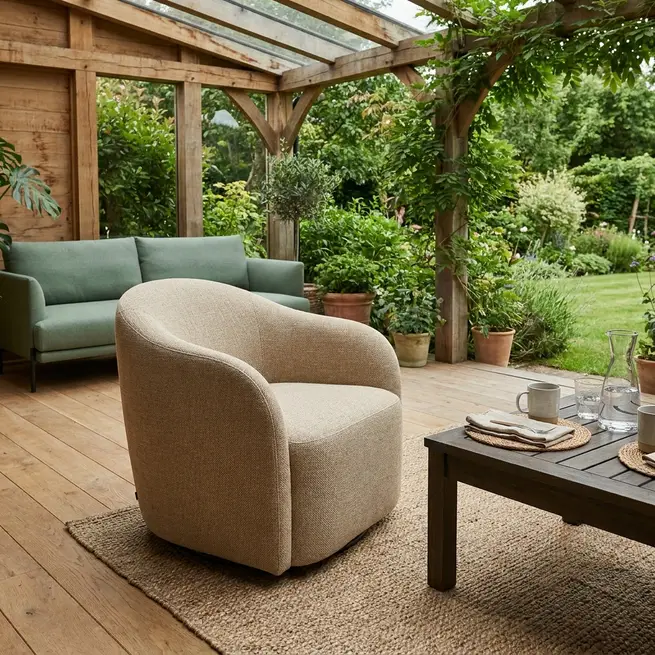
Tightly woven fabrics often strike a good middle ground. They can feel softer than faux leather and still be easier to look after than loose, heavily textured fabrics that catch more dust, crumbs and everyday wear. People want chairs that are comfortable but don’t feel delicate, so performance-style fabrics and treated finishes are becoming more common. Trend coverage also points to growing interest in easy-clean finishes and resilient upholstery for busy homes (GCC Overseas).
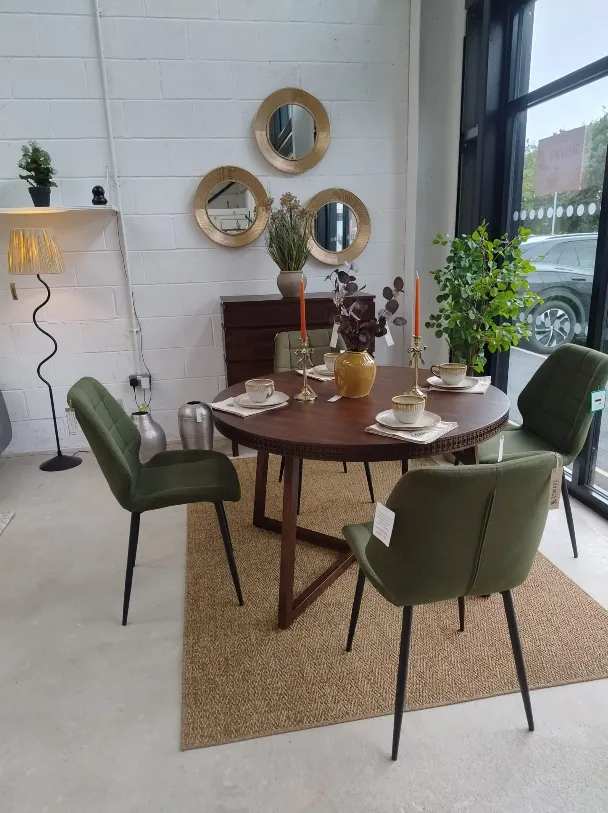
Velvet is another material worth a second look. For years, people saw it as more suitable for occasional-use seating, but newer muted performance velvets are now being presented as practical enough for regular use in everyday spaces. Design trend reporting also highlights curved backs, generous upholstery and tactile finishes as key directions in dining seating (Furniture in Fashion). But that doesn’t make every velvet chair family-proof. It just means buyers should look at the exact fabric and finish rather than dismissing the whole category.
For homes with children, pets or frequent entertaining, easy clean dining chairs in the UK can include:
- treated woven fabrics
- practical velvet with care guidance
- faux leather or PU surfaces
- darker mid-tones that hide light marks better than very pale shades
If texture matters, but so does day-to-day upkeep, keep it on the backrest or outer shell and go for a tighter, tougher seat surface. You keep the look, and everyday crumbs and splashes are less likely to feel like a constant problem.
Buyers comparing upholstery across different rooms may also find ideas in Best Fabric Sofas for Longevity UK, especially when trying to balance texture with durability.
A UK Buyer’s Checklist for Safety, Labels and Everyday Confidence
If you’re buying upholstered dining chairs, one practical check often gets overlooked: compliance and labelling. In the UK, upholstered furniture for domestic use comes under the Furniture and Furnishings (Fire) (Safety) Regulations 1988, as amended in 2025. From 30 October 2025, one rule changed: new products no longer needed a display label. But not everything changed. Covered furniture still needs a durable permanent label attached (GOV.UK).
Dining chairs with upholstery that get used every day are household furniture, not just something you pick for looks. They should also include clear safety information and details about the materials.
Before you buy, run through this simple checklist:
- On upholstered models, check that there’s a permanent label.
- Read all of the care instructions, not just the main claim.
- Ask what the cover material is and what’s used for the filling.
- Check if the chair is meant for domestic daily use.
- Check the underside and the joints, not just the seat fabric.
- If you can, sit on more than one chair from the same range.
This checklist helps most when you’re comparing online listings. The best durable dining chairs in the UK often come with clearer product information, while listings that leave out basic care and construction details should be treated as a warning sign before ordering.
Furniture is still a major spending category for UK households. In 2025, the Office for National Statistics recorded £22,762 million in household furniture expenditure and £40,954 million in furnishings and household equipment expenditure for the same period (ONS). Those figures show why it’s worth buying carefully rather than replacing poor chairs earlier than expected.
Matching the Best Dining Chairs for Everyday Use to Modern British Interiors
Practical seating doesn’t need to look basic. Some of the best modern dining chairs in the UK are made for everyday use and still keep the design simple and polished.
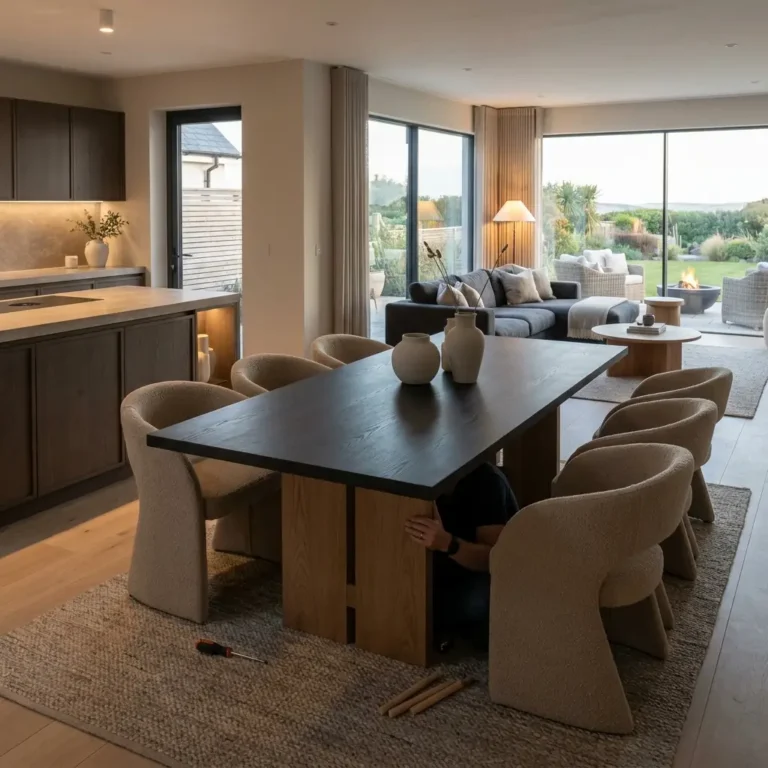
In soft-modern homes, curved backs, rounded edges and warm neutral fabrics can make the dining area feel calmer and less formal. They also work well in open-plan layouts, where the dining zone needs to sit naturally alongside the kitchen and living space.
In Scandinavian-inspired interiors, pale wood, natural teak tones, rope details and simple silhouettes work well. They bring in warmth without making the room feel heavy. Brands such as RENGARD work well here, especially for buyers who want durable materials and a clean, contemporary look without losing practicality.
In industrial-style spaces, black metal, dark-stained wood and textured upholstery can give you durability with a bit of edge. Be careful, though. A chair shouldn’t look tougher than it feels. Everyday dining seating in the UK needs to cope with daily wear, not just photograph well.
One useful way to narrow the choice is to split your ‘must-haves’ from your ‘nice-to-haves’. Must-haves might be a padded seat, easy-care fabric and a stable frame. Nice-to-haves might be a trend colour or a sculptural silhouette. When you keep those priorities separate, it’s easier to stay grounded and see what matters most for daily use.
If tactile finishes are the main draw, our article on Bouclé Dining Chairs UK: Comfort, Texture & Contemporary Style focuses on one specific material direction without repeating the broader everyday-use checklist covered here.
Buyers planning larger kitchen diners may also want to browse the best dining tables for open plan homes | UK Guide to see how seating scale affects room flow.
What Families Should Prioritise First
For family dining chairs in the UK, it helps to use a slightly different filter. Wear matters, but what matters more is whether the chairs slot into everyday use without becoming a small annoyance each time someone sits down.
Start with stability. Children climb, swing and drag chairs far more than adults, so models with a firm footprint and well-spaced legs generally feel safer. They’re also more likely to last longer.
Then think about fabric forgiveness. Mid-tone neutrals, warm greys, olive, mocha and charcoal tend to cope better with daily life than a very light cream finish, which shows everything quickly.
Patterns can hide marks. A heavily patterned upholstery can date more quickly than a plain textured weave, so it’s worth balancing short-term practicality with how the chair may look in a few years.
How quickly they clean matters too. Family-friendly chairs should be easy to wipe, vacuum or spot clean without needing special products all the time. Practical dining furniture in the UK should cut down on hassle, not turn into another job.
One last tip: buy for the shortest and tallest regular users in the home rather than the average adult. If one person feels perched and another feels squeezed, it’s probably not the right all-rounder.
How to Compare Price, Value and Long-Term Use
Low-priced dining chairs can be tempting, especially when you’re buying four, six or eight in one go. But value isn’t the same as the lowest ticket price. Sometimes paying for better value means fewer replacements, less hassle and simpler upkeep as time goes on.
Household budgets still feel under pressure in this market. ONS data shows prices of furniture and household goods rose 0.8% over the 12 months to May 2025, with a 1.5% monthly rise in May 2025 alone (ONS). There’s no need for buyers to rush. Still, those figures are a good reason to think carefully before choosing long-lasting dining chairs in the UK, rather than replacing them every few years after a quick purchase.
When comparing value, consider:
- Is the frame likely to outlast the fabric trend?
- Are replacement costs higher than spending slightly more now?
- Will the chair still work if your room changes later?
- Are care instructions realistic for your household?
A practical chair that stays comfortable and presentable for years is likely to be the better buy. A striking design can catch the eye, but it may become a burden after six months. Short-lived appeal. Poor value.
Quick Mistakes to Avoid Before You Order the Best Dining Chairs for Everyday Use
Most buying mistakes are easy to predict, which helps. Buyers can avoid them without much effort, especially if they slow down and check a few practical details before ordering instead of focusing on the first design that looks right online.
Don’t pick a chair just because it looks good. On a screen it might look elegant, but in the room it can turn out too narrow, too deep, or too hard.
Don’t ignore the table height. Even the best dining chairs for everyday use will disappoint if the seat sits too high or too low for the table.
Don’t assume all upholstered chairs are hard to maintain. Many now offer better stain resistance than buyers expect. Still, don’t assume every ‘easy clean’ claim means the same thing. Some surfaces wipe clean. Others only allow spot cleaning, and only if buyers act fast.
Don’t forget room flow. In smaller kitchen diners, chair arms and wide backs can make the space feel cramped fast. It sounds minor, but it affects how the room works.
Styles change quickly, but comfort-first design usually has more staying power. Across the furniture sector, secondary trend analysis points to practical luxury, mixed materials, and softer silhouettes rather than stiff formal dining sets (WSC Furniture). That’s good news for buyers who want comfort and style to work together when they choose.
For more inspiration, the article on Best Dining Chairs for Modern Homes explores styles that still work well in busy family spaces.
Frequently Asked Questions About the Best Dining Chairs for Everyday Use
What are the best dining chairs for everyday use?
The best options combine a supportive back, a comfortable seat, stable construction, and easy-care materials. For most homes, that means a well-built wood or metal frame, a padded seat, and practical upholstery. They suit regular meals, work, and entertaining.
Are upholstered dining chairs suitable for daily use?
Yes, if you pick upholstery meant for everyday household use, not just for occasional styling. Tightly woven fabrics, performance-style finishes, and practical velvet all hold up well, especially when the frame is sturdy and the care guidance is clear.
What makes durable dining chairs in the UK worth the price?
Better durability means stronger joints, steadier frames, more reliable finishes, and less need to replace chairs early. Buyers pay for longer use, better comfort, and fewer issues with wobbling, wear, and daily cleaning.
Which dining chair material is easiest to clean for families?
Faux leather, treated woven fabrics, and some performance velvets tend to be the easiest to deal with day to day. The best choice really comes down to your home. Keep it simple: pick a finish you can spot-clean fast and that won’t hold onto marks as easily.
What should I check before buying upholstered dining chairs in the UK?
Look for the permanent fire-safety label and the care instructions, and also check that the frame feels stable and that the chair is meant for daily domestic use. If you’re comparing chairs from RENGARD or anywhere else, don’t just go by the photos, check for clear details on the materials and practical care guidance too.
Where can I find modern dining chairs in the UK that still feel practical?
Look for retailers that pair good design with sturdy materials, clear care guidance, and construction that holds up to everyday use. If you like Scandinavian or industrial-inspired furniture, RENGARD is one option to check out, since the broader collection leans toward stylish pieces built with durability in mind instead of dining chairs that are mostly decorative.
The Right Chair Should Make Daily Life Easier
The best dining chairs for everyday use don’t work well because of one standout feature. What matters is that the basics all work well together. They stay comfortable through longer meals, stand up to busy family life, are easy to clean, and still suit the room months and years later. That balance matters.
If only a few points stick, keep these in mind:
- comfort depends on shape and proportion, not just padding
- durable dining chairs in the UK need strong frames and solid joints
- easy-care upholstery matters in almost every real home
- upholstered models should come with proper permanent labelling in the UK
- modern style and practical use can go together
For homeowners in Shropshire, Staffordshire, Cheshire, Manchester, North Wales and Birmingham, the simplest way to buy well is to choose for the way they really live. Measure the table first. Then think about who uses the chairs most, be honest about cleaning habits, and choose family dining chairs in the UK that solve daily problems instead of quietly creating new ones. Practical choices. Better results.
When that’s the case, everyday dining seating in the UK feels less like a compromise and more like one of the most useful choices in the home.