Can You Leave Aluminium Furniture Outdoors All Year Round?
Aluminium furniture can stay outside through a UK winter, but a little protection helps preserve its finish. So, can you leave aluminium furniture out in winter? Yes. Use a breathable cover in harsh weather and bring the cushions indoors.
It’s understandable to wonder whether rain, frost and cold will harm your garden furniture. Aluminium doesn’t warp or rot easily, and its natural oxide layer helps protect it from rusting, so bringing the frame inside isn’t essential. That said, storing it in a shed or garage can help extend its lifespan, particularly if your garden is exposed to frequent rain or frost.
This guide explains how winter weather can affect aluminium furniture, when a cover or indoor storage may help, and how to keep cushions dry for warmer days. You’ll also find practical care tips for keeping outdoor furniture in good condition through the seasons.
Key Takeaways
- Aluminium furniture can remain outdoors through a UK winter, though protection helps preserve its finish.
- Choose a breathable outdoor cover rather than a plastic sheet, which can trap condensation.
- Storing frames in a shed or garage during winter can help extend their lifespan.
- Clean aluminium with warm soapy water and a soft cloth, avoiding abrasive products that may damage its coating.
- Bring cushions indoors or place them in dry storage, and make sure they are completely dry first.
1. Can Aluminium Furniture Stay Outdoors All Year Round?
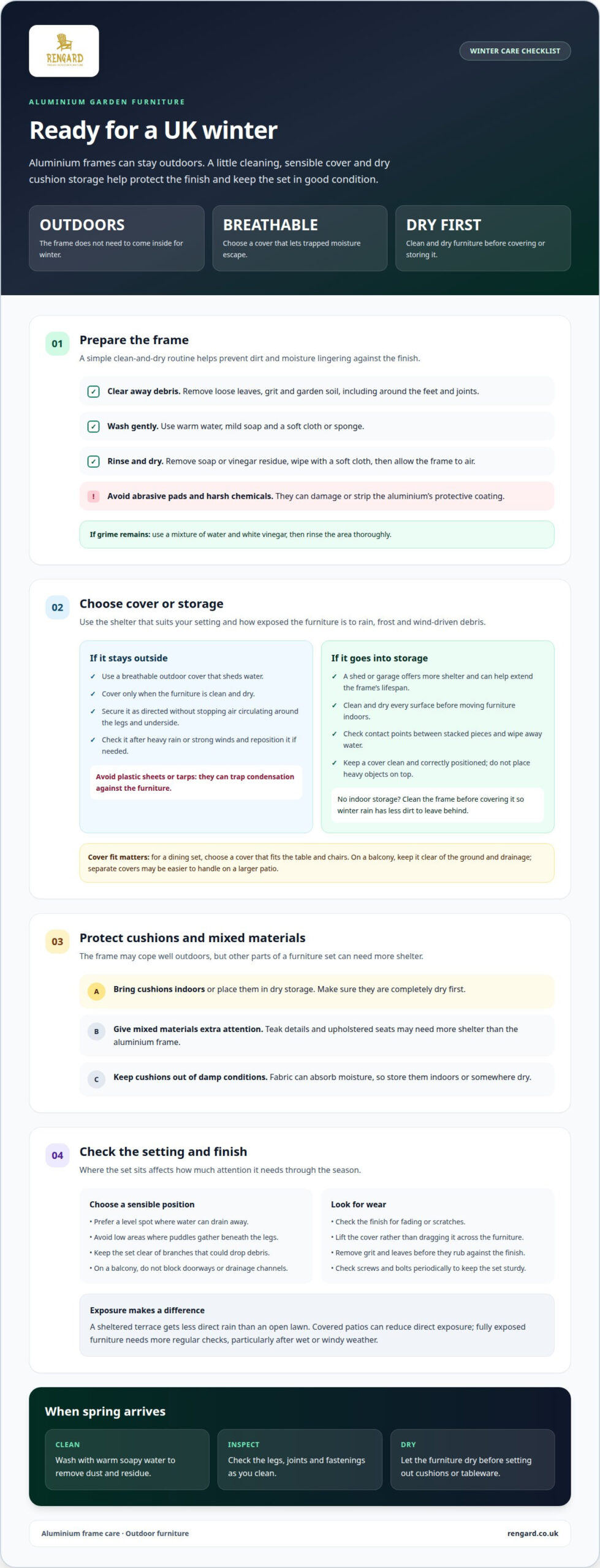
Yes, aluminium furniture can stay outside through a UK winter. If you’re wondering whether you can leave aluminium furniture out in winter, the frame itself is generally suited to outdoor use: aluminium doesn’t warp or rot easily, and its thin oxide layer helps protect it from rusting. A cover is still useful during harsh weather, especially on exposed patios where rain and frost reach the furniture directly.
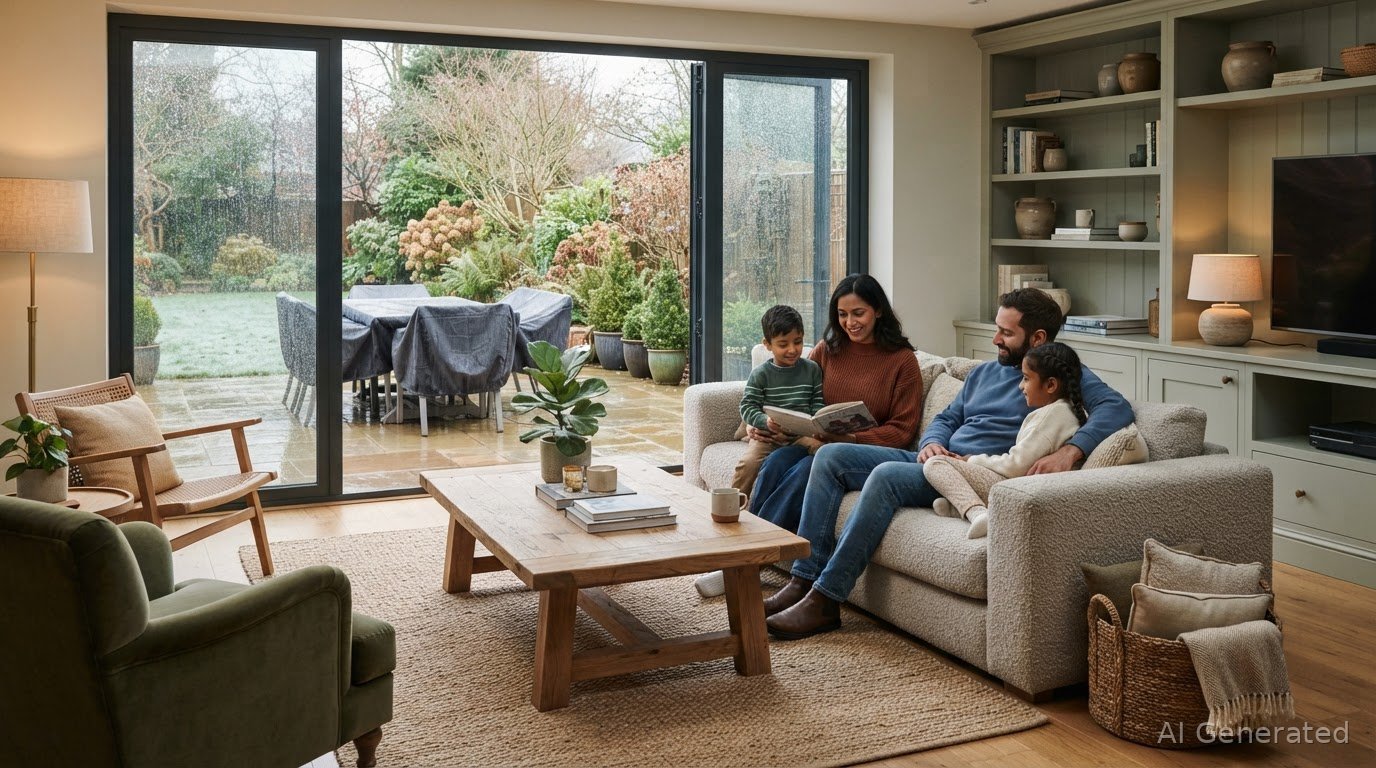
Choose a breathable outdoor cover that sheds water rather than a plastic sheet or tarp. Breathable fabric allows trapped moisture to escape, while plastic can hold condensation against the furniture. For a garden dining set, choose a cover that fits the table and chairs instead of stretching one loose sheet over the whole arrangement.
There isn’t one UK-wide warranty rule for year-round outdoor use. Coverage depends on the manufacturer’s written warranty and its conditions for outdoor exposure, covers and care. Read the terms for your particular furniture before deciding how to protect it.
Fit the cover only after the furniture is clean and dry. Wiping away rainwater and letting the set air first helps avoid trapping moisture beneath the cover. Secure it as directed, but don’t pull it so tightly that air cannot circulate around the legs and underside.
Check the cover after heavy rain or strong winds. If it has shifted, reposition it to protect the tabletop and seats. On a compact balcony, make sure the cover does not drag on the ground or block drainage. On a larger patio, separate covers for the dining table and chairs may be easier to fit and remove than one oversized cover.
An aluminium frame’s durability doesn’t make its finish immune to wear. Powder-coated surfaces can fade or become scratched over time, especially if grit rubs beneath a cover or sharp objects scrape the frame. Lift the cover rather than dragging it across the furniture, remove leaves and dirt from around the feet, and check screws and bolts periodically to keep the set sturdy. These simple steps help maintain its appearance, while indoor storage remains an option for particularly exposed gardens.
2. Why Should You Store Outdoor Furniture in Winter?
Storing aluminium furniture in a shed or garage during the winter months can help extend its lifespan. It also reduces the time the frame spends exposed to persistent rain, frost and wind-driven debris. Before moving a garden dining set, clean it and let every surface dry. This prevents dirt and moisture being carried into storage, where they may remain against the finish.
For routine cleaning, use warm water, mild soap and a soft cloth or sponge. Work across the frame gently, including beneath the seat and around joints where soil can collect. Avoid abrasive pads and harsh chemicals, as these can strip the aluminium’s protective coating. If grime remains, use a mixture of water and white vinegar, then rinse the area thoroughly.
Follow a simple preparation sequence before winter storage:
- Remove loose leaves, grit and garden soil from the frame.
- Wash the aluminium with warm, soapy water and a soft sponge.
- Rinse away soap or vinegar mixture so residue does not remain.
- Dry the frame with a soft cloth, then allow it to air before covering or storing.
Drying the furniture before storage matters. Putting damp pieces under a cover or in a garage can keep moisture close to the surface. If you’re storing a table and chairs together, check the contact points between stacked pieces and wipe away water with a clean, dry cloth before putting them away.
A breathable cover can help protect furniture that must remain outdoors, while a shed or garage offers more shelter. Keep the cover clean and correctly positioned, and don’t place heavy objects on top. If a small patio has no indoor storage, clean the frame before covering it so winter rain has less dirt to leave behind.
When spring arrives, wash the furniture with warm soapy water and let it dry before use. This removes dust and residue that may have settled during storage. Check the legs, joints and fastenings as you clean, then wipe away water with a soft cloth to help prevent spots. If the furniture stayed covered outdoors, lift the cover carefully and clean the frame before setting out cushions or tableware. A clean start helps restore the set’s neat appearance for the season ahead.
3. Leaving aluminium furniture outdoors through UK winter
Aluminium furniture can remain outdoors through a UK winter, but its setting affects how much care it needs. A sheltered terrace exposes a dining set to less direct rain than an open lawn. Prolonged heavy rain, snow and intense sunlight can all contribute to wear. A covered patio can reduce direct exposure, while fully exposed furniture needs more regular checks.
A frame’s resistance to rust doesn’t make every part of a set equally weather-resistant. A powder-coated finish can fade or become scratched over time. Dirt can also dull aluminium, particularly around feet, joints and table edges. Check these areas after wet weather and remove leaves and grit before they rub against the finish or collect around the legs.
Frost and damp air can affect different materials in different ways. Wood may swell, metal can mark, and fabric cushions can absorb moisture. An aluminium frame may cope better than some materials, but a mixed-material dining set still needs attention. Teak details and upholstered seats, for example, may need more shelter than the frame. Keep cushions indoors and position the furniture under cover where frequent rain or frost is common.
Placement matters on a compact balcony as well as a larger garden terrace. Choose a level spot where water can drain away, not a low area where puddles gather beneath the legs. Keep the set clear of branches that could drop debris onto its finish. On a balcony, avoid blocking doorways or drainage channels when moving chairs into a sheltered position. These small adjustments reduce exposure without requiring the whole set to go indoors.
After strong winds or heavy snowfall, inspect the furniture rather than assuming the cover or frame stayed in place. Clear debris gently, check that chairs and tables remain stable, and look for new scratches. If the set is beneath a cover, make sure it hasn’t shifted or trapped wet leaves against the finish. A clear view of the frame makes damage easier to spot.
In gardens prone to rain or frost, combine a sheltered position with indoor cushion storage. A breathable cover offers extra protection for frames left outside. In a sheltered spot, light cleaning and occasional checks may be enough to maintain the finish. The best approach depends on exposure, nearby trees and the other materials in the set, not simply the season.
4. Storing cushions indoors
Bring garden cushions indoors for winter, even if the aluminium frames remain on the patio. Fabric can absorb moisture during persistent rain, and damp conditions can encourage mildew. For a garden sofa with several seat and back cushions, remove every cushion before covering the frame, including smaller pieces on corner sections. This keeps soft furnishings away from prolonged outdoor damp.
Dry cushions completely before putting them away. Check seams, piping and the underside, where moisture can linger even when the surface feels dry. If cushions get caught in a shower, leave them somewhere airy until all sides feel dry. Don’t seal damp cushions inside a storage box or bag: trapped moisture can encourage mildew and leave fabric smelling musty.
Choose a storage option that suits your home and the number of cushions:
- Use a dry indoor cupboard or utility room for cushions from a bistro set.
- Place larger sofa cushions in a waterproof storage box kept in a dry position.
- Use breathable storage bags when you want to keep dust off without sealing in moisture.
A waterproof box protects garden cushions from accidental splashes, but they must be dry before you put them inside. A breathable bag can help keep dust away during winter storage. In either case, avoid leaving the container in a damp shed or against a cold, wet wall. Choose a dry indoor spot and keep the cushions clear of anything that could press down on them or leave marks.
Keep cushion covers and inserts together where possible. Pairing the seat and back cushions from each garden chair makes spring set-up simpler, especially when several pieces look alike. If the covers are removable, follow their care instructions before cleaning. Let washed covers dry fully before storing them with their inserts.
If your home is compact and cupboard space is limited, a dry storage box can keep cushions organised near the garden and protected from rain. Check inside before loading it, and leave the cushions out if condensation or dampness has collected. In spring, take them out and air them before placing them on an aluminium dining chair or sofa. Keeping cushions dry indoors helps preserve their comfort, colour and appearance for the next season.
5. Whether aluminium furniture can stay outside in winter
Yes, you can leave aluminium furniture outdoors during a UK winter. A frame in sound condition can remain outside, particularly beneath a covered patio or a breathable waterproof cover. The decision depends less on cold alone and more on exposure, finish condition and other materials in the set. A sheltered courtyard in Birmingham presents different conditions from an open, rain-exposed terrace.
Use this practical check before leaving a set outdoors. If the frame is stable, its finish is intact and water drains away, winter outdoor storage is usually manageable. If the furniture sits where puddles form, takes driving rain or has scratches exposing the metal, give it more protection. A shed or garage provides extra shelter.
- Sheltered patio: Leave the frame outside, keep cushions indoors and inspect the finish periodically.
- Open terrace: Use a breathable cover and clear away leaves or grit that collect around the legs.
- Damaged or mixed-material set: Store it under cover, especially where fabric or wood needs additional protection.
Aluminium doesn’t rust like iron, but that doesn’t make the whole set immune to winter wear. Dirt can dull the finish, while scratches may expose the metal beneath a powder coating. Heavy rain, snow and intense sunlight can also wear the surface over time. Check the frame after severe weather, paying attention to joints, feet and exposed edges.
Think about the whole furniture set, not just its frame. A garden dining set may combine aluminium with teak details or fabric seats. Wood can swell in damp conditions, and cushions can absorb moisture, so bring those elements indoors where practical. Even a covered spot may not protect every surface from wind-driven rain or frost.
The simplest routine is to keep the frame clean, use a breathable cover in harsh weather, and store cushions dry indoors. Remove debris after storms and check that the cover hasn’t shifted. If your garden is exposed to frequent rain or frost, a shed or garage offers more shelter than an uncovered patio. In a sheltered space, a sound aluminium frame can remain outside with regular care.
Rengard: Furniture Accessories
Rengard offers garden furniture for modern British outdoor living, including dining sets, garden chairs and outdoor tables. If winter care has prompted you to rethink your space, consider how these pieces could suit your garden or patio.
Choose pieces with your garden’s layout and existing furniture in mind. A compact patio needs a different arrangement from a larger terrace, so consider how each addition will fit without crowding the space. For a coordinated look, choose materials and finishes that complement your current outdoor furniture.
If you’re planning a garden refresh or considering furniture accessories, contact Rengard or visit rengard.co.uk.
Plan your garden for the season ahead
Let winter care inform how you want to use your garden when spring returns. If you’re deciding whether you can leave aluminium furniture out in winter, consider the wider layout too. Will the dining area feel welcoming in its current position? Could a different arrangement make better use of a sheltered corner or create a clearer route across the patio? Thinking through these details now can help you shape an outdoor space that feels considered, rather than simply storing furniture between seasons.
Furniture should suit both the way you live and the character of your garden. A compact terrace may benefit from a flexible arrangement, while a larger garden can accommodate distinct places to dine and unwind. Choose pieces that bring those areas together without overlooking practical care.
For guidance as you plan your outdoor setting, contact Rengard for outdoor furniture advice. A thoughtful seasonal plan can help you enjoy your garden with confidence when brighter days return.
Frequently Asked Questions
Can Aluminium Furniture Stay Outdoors All Year Round?
Yes, aluminium furniture can remain outdoors all year. For a set with mixed components, assess each element separately: the frame, tabletop, woven panels and fittings may have different care needs. A dining set beneath a pergola still needs attention as a whole. Follow the care instructions for the complete item rather than assuming the frame material determines how every part should be maintained.
Does aluminium corrode in the UK’s damp climate?
Aluminium is resistant to rusting, but corrosion isn’t the only possible surface change. In coastal gardens, airborne salt can leave deposits, so rinse affected areas with clean water and inspect seams and cut edges. A removable deposit differs from a damaged finish. If a mark remains after gentle cleaning, note where it appears and seek care guidance for the particular furniture before applying any treatment.
How does aluminium perform in the winter compared with wood, rattan and steel?
Aluminium is a practical choice for outdoor frames, but no single material suits every garden or furniture design. Wood, rattan and steel each have different construction and care requirements. Compare the complete pieces, including their finishes and any woven or upholstered sections. Two dining chairs made from different materials, for instance, may need different winter routines even if they serve the same patio.
Is it OK for Aluminium Patio Furniture to be used Outside in the Winter?
Yes, aluminium patio furniture can be used outdoors in winter. Before sitting down, clear loose debris from the seat and check that the patio surface is stable. On a compact terrace, position chairs so they don’t obstruct a doorway or walkway. These practical checks help keep the furniture convenient to use, rather than treating it only as something to cover or store.
Should cushions be taken inside?
Yes, bring garden cushions indoors for winter. To make spring set-up easier, keep each seat cushion with its matching back cushion and cover. Store them without heavy items on top, which could flatten or distort their shape. If cushion covers have care labels, follow the instructions before putting them away. This keeps the set organised and saves searching for matching pieces when outdoor seating returns to use.
Why Should You Store Outdoor Furniture in Winter?
Winter storage gives furniture extra shelter and can be useful when a garden is exposed. It also lets you separate components with different care needs, rather than treating a mixed-material set as one piece. Before moving furniture, remove loose accessories and plan where each item will go. In a compact shed, keeping pieces orderly helps prevent accidental knocks and makes the space easier to use.
Can aluminium garden furniture be left outside in winter in the UK?
Yes, aluminium garden furniture can be left outdoors in a UK winter. Treat it as a complete product: check its care instructions and consider its finish, fittings and any additional materials. Keep the instructions with your purchase details so they’re easy to find during seasonal care. If a set includes different components, follow the guidance for each instead of applying one routine to everything.
Does winter weather damage aluminium outdoor furniture?
Winter weather can contribute to wear, particularly on finishes and components made from other materials. After winter, inspect less visible areas such as the underside of table rims and the points where sections meet. Note where any new mark appears so you can describe it accurately if seeking repair guidance. A surface blemish and an unstable component are different concerns, so assess both appearance and sturdiness.