How to check lumbar support in a high back rattan garden sofa
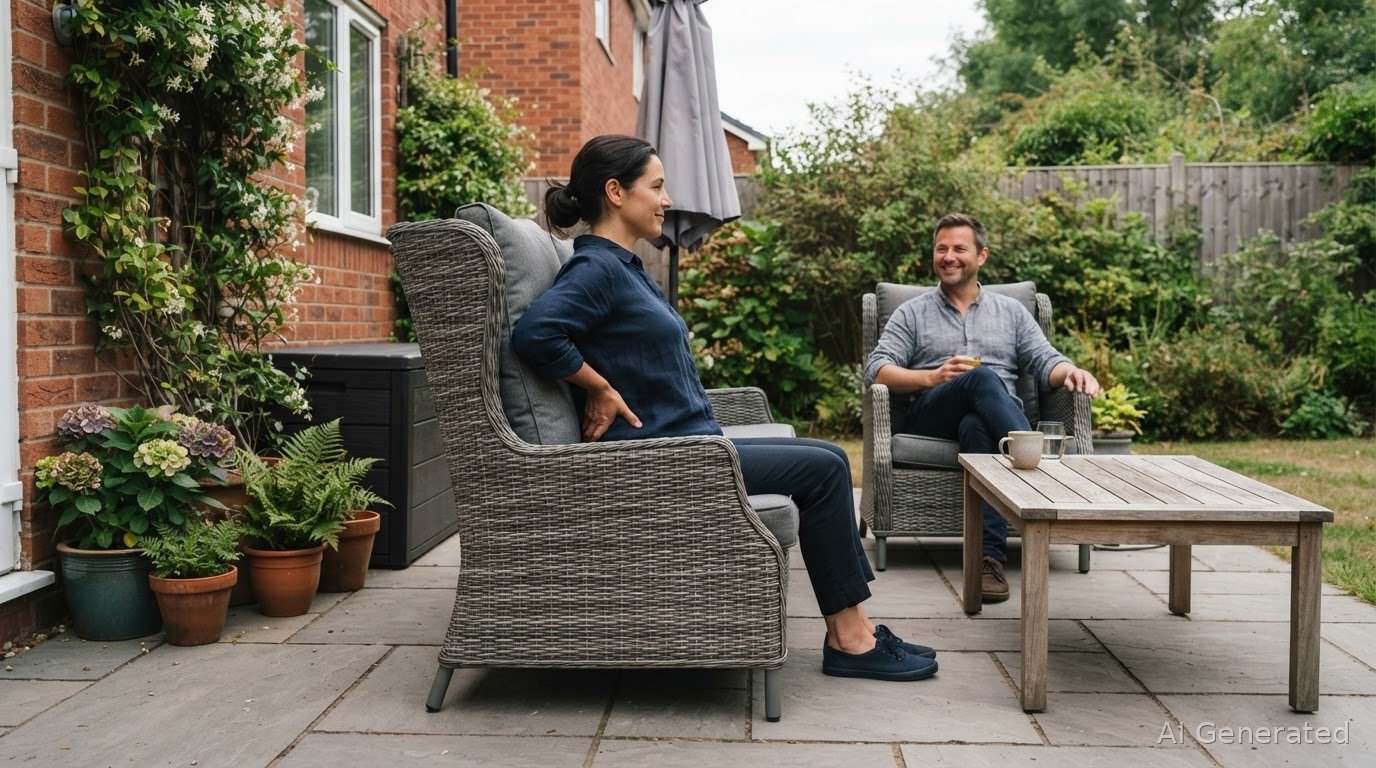
A high back doesn’t automatically mean better back support. A high-back rattan garden sofa for lumbar support should let you sit with your lower back comfortably supported, your shoulders relaxed and your feet resting flat on the floor. Seat depth matters too: if the seat is too deep, you may struggle to sit back without pressure behind your knees.
It’s sensible to look for support that suits your body and the way you like to sit, rather than relying on the backrest height alone. This guide explains how seat depth, back height and posture work together, and what to try before buying. You’ll learn how to assess support and fit for outdoor spaces ranging from a compact patio in Chester to a larger garden in Shropshire or Wales. With these practical checks, you can judge whether a design feels supportive as well as bringing a considered, comfortable look to your garden, patio or terrace.
Key Takeaways
- Check that your feet rest flat and your knees sit comfortably, with space between the seat edge and the backs of your knees.
- Assess the backrest against your own body; height alone doesn’t determine whether it supports your back and head well.
- Notice whether your ears, shoulders and hips stay comfortably aligned when you sit back.
- Try the sofa in your usual sitting position for several minutes to judge its comfort and support.
- Use your measurements from the seat to identify where you need support around your lower back.
1. Seat depth and leg position
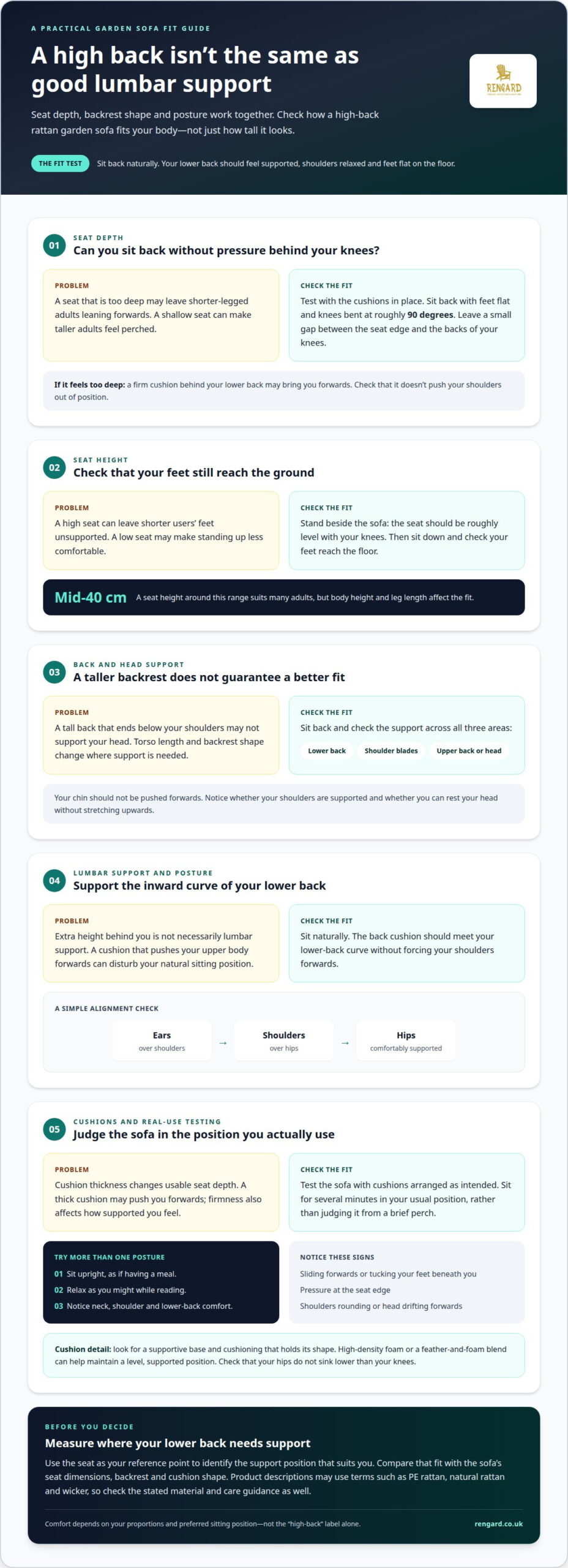
Seat depth determines whether you can sit back against the support while keeping your legs comfortable. A deep seat may leave shorter-legged adults leaning forwards, while a shallow seat can make taller adults feel perched. Test the fit with the cushion in place, since its thickness changes the usable depth.
Sit back and place both feet flat on the floor. A comfortable starting position has knees bent at roughly 90 degrees, with your thighs supported without the seat edge pressing behind your knees. Leave a small gap between that edge and the backs of your knees. If the sofa is too deep, a firm cushion behind your lower back may bring you forwards, but check that it doesn’t push your shoulders out of position.
Seat height affects this leg position as much as depth. A seat height around the mid-40 cm range suits many adults, though body height and leg length change the fit. Stand beside the sofa and see whether the seat is roughly level with your knees; then sit down and check that your feet still reach the ground. A high seat can leave shorter users’ feet unsupported, while a low seat may make standing up less comfortable.
For a practical fit check, sit in your usual position for a few minutes. Try reading or chatting rather than judging the sofa from a brief perch. Notice whether you slide forwards, tuck your feet beneath you or feel pressure at the seat edge. These adjustments may indicate that the seat depth or height doesn’t suit your posture. To locate where you need lower-back support, measure from the seat to that point. UK Government guidance gives this as a way to assess the support position.
Product descriptions may use terms such as PE rattan, natural rattan and wicker. Check the stated material and care guidance for each sofa, then compare those details with the seat dimensions and cushion fit.
There isn’t one fixed UK price for a high-back rattan garden sofa. Cost depends on the sofa’s size, materials, construction and included cushions, so compare like-for-like specifications rather than relying on the word “rattan” alone.
These checks help you assess a high-back rattan garden sofa for lumbar support in practical terms. Browse outdoor sofa sets with seat depth, height and cushion fit in mind.
2. Back and head support from high backrests
A high backrest can support more of your back and may provide support behind your head. Check where the frame and cushions meet your body: a tall back that ends below your shoulders won’t necessarily support your head. Someone with a longer torso, for example, may need a different backrest height from someone with a shorter torso.
Think of the backrest in three areas: lower back, shoulder blades, and upper back or head. Sit back and notice whether the cushion supports each area without forcing your chin forwards. If the top edge presses into your head or your shoulders extend beyond the supported area, the shape may not suit your posture. A high back is useful only when its height and curve work with your proportions.
Cushion shape matters as much as backrest height. A thick cushion may feel plush at first but can change your sitting position by pushing you forwards. A flatter cushion may keep you closer to the frame, though firmness still affects how supported you feel. In a showroom, test the sofa with the cushions arranged as intended, then lean back naturally rather than holding yourself upright.
Compare support during different activities. Sit upright as if having a meal, then relax as you might while reading. A backrest that feels comfortable during a short conversation may not support your shoulders when you recline. Notice whether your neck stays relaxed and whether you can rest your head without stretching upwards. These checks help distinguish a usable high back from a feature that is mainly visual.
There is no single best-rated high-back rattan sofa for everyone. Ratings can help identify recurring comfort comments, but your torso length, preferred sitting position and cushion feel matter more when judging back and head support.
UK garden-furniture retailers that stock rattan sofa sets are the relevant places to compare supportive cushion designs. Check product descriptions for backrest and cushion details, then assess how the shape suits your posture rather than relying on a “high-back” label alone.
For a considered choice, note whether the back supports your shoulders and head without changing your natural sitting position. If you’d like to discuss which design details matter for your outdoor space, get in touch.
High-back garden furniture is described as providing extra support for the back and head. Consider that purpose alongside your own fit checks, since extra coverage alone does not establish whether a particular shape suits you.
3. Lumbar support and posture
Lumbar support should meet the inward curve of your lower back, not simply add height behind you. A supportive base and well-positioned back cushion can help you sit without rounding your shoulders. Check the fit while sitting naturally: the cushion should support your lower back without pushing your upper body forwards.
Use your posture as a practical guide. Aim to keep your ears vertically aligned over your shoulders and your shoulders over your hips. If your head drifts forwards or your shoulders round, the backrest or cushion may not suit your sitting position. Someone who relaxes with a book, for example, should check that their lower back stays supported while their arms rest comfortably.
Good lumbar support comes from the relationship between the seat and back cushions, not a label alone. Look for a firm, supportive base and cushioning that holds its shape under your weight. High-density foam or a feather-and-foam blend can help maintain a level, supported position. The cushion should feel comfortable without letting your hips sink lower than your knees.
Which high-back rattan garden sofas provide good lumbar support? Choose one whose back cushion meets your lower-back curve and keeps your shoulders relaxed, rather than relying on backrest height alone. A firm base and resilient cushioning can help support a more upright posture.
Cushion condition also affects support over time. Sofa foam can soften and lose density within a year or two, changing how the seat and back feel. If you notice a dip where you sit or need to readjust repeatedly, assess the cushion’s shape and support. For garden furniture, store cushions away during heavy rain or frost to protect them from harsh weather.
Are replacement lumbar cushions available for rattan garden sofas in the UK? Replacement cushions are sold for rattan garden furniture, including seat and back cushion sets. Match the replacement’s dimensions, shape and thickness to the sofa, since a cushion that is too large or too thin can shift where support meets your back.
Finally, change position regularly rather than sitting completely still for hours. Shifting between reading, conversation and reclining can ease pressure and help you notice whether the sofa continues to support your posture. Judge the whole sitting position, from your lower back to your shoulders, rather than focusing on one cushion in isolation.
4. Testing a sofa before buying
Give a sofa a proper trial, rather than judging it from a quick perch. Sit for at least 20 minutes to assess whether it relieves pressure on your back. Use your usual posture, and notice whether you keep shifting to find a comfortable position. A short test of several minutes can still reveal obvious discomfort, but a longer sit gives you more time to settle.
Try the sofa as you’d use it at home. Sit upright, lean back, then relax as if reading or talking with friends. Check whether the cushions stay in place and the seat supports you evenly. If you’d usually sit with a cushion behind you, test that arrangement too.
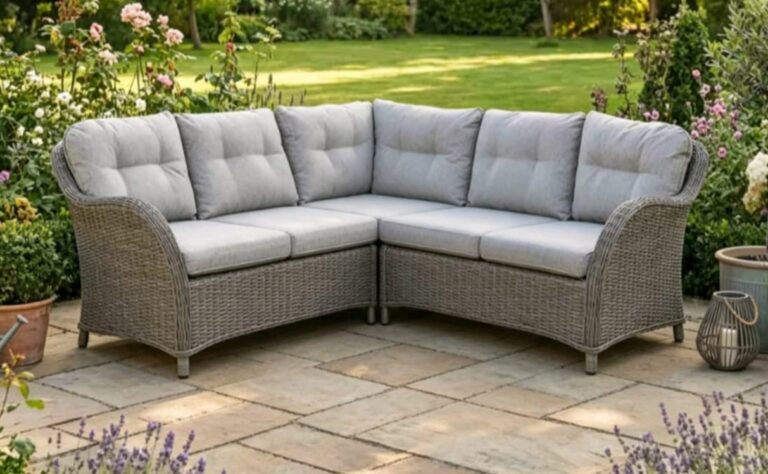
Move naturally during the trial. Stand up and sit down again, turn slightly to reach an imaginary side table, and rest your arms where they’d fall during conversation. On a corner sofa, test the corner seat as well as the straight section. Different positions can feel noticeably different.
Use the same checks for each sofa you compare. Make a brief note of what you notice, such as pressure beneath your thighs, a gap behind your lower back or a cushion that shifts. These details make it easier to compare comfort later, especially when several designs look similar.
Before you finish, check these practical points:
- Feel whether the frame stays steady as you sit and rise.
- Check that the cushions return to shape after you stand.
- Try your usual sitting position, including how you rest your arms.
What should you check in a rattan garden sofa warranty and delivery policy? Read the warranty’s duration, covered parts, exclusions and claim process, including how it treats the frame, weave and cushions. Review delivery terms for access requirements, assembly arrangements, delivery area and what happens if the sofa arrives damaged.
Measure the intended patio or garden space before choosing a large sofa. For a corner design, check that both sides fit without blocking a doorway, path or access to the garden. Allow room to walk around it and use nearby outdoor furniture comfortably.
A written checklist helps keep comfort and practical details together. If you’d like to discuss your shortlist, get in touch.
5. Back height and lumbar support
A garden sofa back should reach at least mid-back to support the spine’s natural curve. Treat this as a useful starting point, not a guarantee of comfort. A backrest can be tall but still miss your lower back if its angle, shape or cushion placement doesn’t suit your proportions when seated.
Measure from the top of the seat cushion to the top of the backrest. Then compare that height with your own seated back, from the seat surface to mid-back. This gives you a more useful comparison than the sofa’s overall height, which may include legs or a raised frame. Include the cushion in your measurement because it changes where your body meets the backrest.
Next, find where your lower back touches the sofa. Sit as you normally would, then note whether the back cushion meets the inward curve above your hips. A gap can leave you unsupported; a cushion that pushes you forwards may alter your posture. For example, if the lower cushion meets your waist but leaves your shoulders leaning away, the back’s angle or contour may not fit you.
Check the backrest in more than one position. Sit upright as if chatting across a patio table, then lean back as you might while reading. Your lower back should remain in contact with the support in both positions. If you need to brace yourself or repeatedly pull the cushion into place, the design may not provide consistent support for your usual posture.
Compare the sofa’s dimensions with your own measurements before choosing. Record the seat-to-back height, the backrest’s usable height and where support feels most comfortable. When reviewing product details, distinguish the backrest height from the overall height. A tall decorative frame doesn’t necessarily mean the cushioned area reaches mid-back.
- Measure from the seat: Use the cushion’s upper surface as your starting point.
- Check your seated reach: Compare the backrest with your own mid-back position.
- Assess cushion placement: Notice whether support meets your lower back without pushing you forwards.
- Repeat your usual posture: Check that the fit remains comfortable when sitting upright and reclining.
These measurements help you assess whether a high-back design suits your body, rather than judging by its appearance alone. Bring your notes when comparing outdoor sofa sets, and contact us to discuss your sofa requirements.
Rengard: Rattan Garden Furniture
When comparing Rengard’s rattan garden furniture, assess each design’s seat depth, back height and cushion position, then focus on proportions that suit your posture and space. These checks can help you compare sofa styles for your garden, patio or terrace.
Rattan furniture can help create a coordinated outdoor setting, while furniture accessories add practical finishing touches. Consider how the sofa will sit alongside your existing garden layout, including clear routes through the space and room to relax comfortably.
For information about Rengard’s rattan garden furniture, see Rengard’s contact details.
Shape a more considered outdoor space
Let the way you want to use your garden guide your final choice. A quiet reading corner, a place to share meals or a relaxed space for conversation each calls for a different arrangement. Picture the sofa in its setting, alongside planting, paving and the routes you use every day. This broader view can help a high-back rattan garden sofa for lumbar support feel part of a considered outdoor scheme, not simply a standalone purchase.
Think, too, about how the space may change through the seasons. A layout that feels open in summer should still leave room to move when cushions are stored or garden furniture is covered. Balance your preferred style with practical needs, and choose a design that feels at home with the rest of your patio or garden.
If you’d like to take the next step, speak with Rengard about your sofa choice. A thoughtful choice can make your outdoor space feel more inviting, season after season.
Frequently Asked Questions
Are high-back sofas good for back support?
High-back sofas can suit people who prefer a more enclosed, supported feel while sitting outdoors, but “high-back” describes height, not a guaranteed level of comfort. Consider what you’ll do on the sofa: relaxed lounging and upright conversation place different demands on its shape. If back discomfort affects your daily life, use furniture-buying advice alongside guidance from a health professional.
Does sofa shape matter for your back?
Yes. Shape affects how you approach the seat, turn to speak to someone and reach a nearby table. A straight sofa keeps seating aligned, while a corner layout creates a more social arrangement. Think about who will use each position and how the sofa fits your patio. A layout that encourages repeated twisting may feel less convenient for everyday use.
How do I know if a sofa will be comfortable for my back?
Consider your usual routine, not just your first impression of the upholstery. Imagine sitting outdoors with a book, sharing a meal or getting up to tend the garden. Check whether the armrests and seat arrangement make those movements feel natural. If you’re comparing designs online, use the dimension diagrams and product photographs to understand the seating layout before deciding.
What type of sofa is best for back support?
No single sofa type is best for everyone. A straight garden sofa, a corner lounge and a compact set suit different spaces and routines. Consider how often you’ll use it, who will share the seating and whether you prefer to sit upright or recline. Choose a configuration that supports those activities without making the garden difficult to navigate.
What should you be looking for from the best sofas for bad backs?
Look beyond the sofa label and consider how easily you can use it day to day. Armrests may help when settling into a seat or standing up, while a stable frame helps the sofa feel secure during those movements. Think about your specific needs and how they affect sitting, rising and relaxing. A sofa is a furniture choice, not a treatment for back pain.
What seat-back height and lumbar support features should I look for in a garden sofa?
Use a familiar chair or sofa at home as a comparison point. Note where its back supports you and how its seat feels during an everyday activity, then compare that experience with the garden design. Product diagrams can help distinguish the seating area from the outer frame. Also consider whether a separate cushion stays in place as you move or needs constant adjustment.
What are the best-rated high-back rattan garden sofas for comfort and back support?
There is no single best-rated sofa for everyone. Look for a back cushion that meets your lower-back curve, a supportive base and resilient cushioning. Then check that your shoulders stay relaxed and the sofa suits your posture.
Which UK retailers sell high-back rattan garden sofas with supportive cushions?
UK garden-furniture retailers that stock rattan sofa sets are the relevant places to compare supportive cushions. Check the backrest and cushion details, then assess how the shape suits your posture.