Choose the Right Stain Resistant Fabric for Your Outdoor Lounge Suite
A stain-resistant outdoor fabric lounge suite needs more than a hard-wearing surface. Outdoor fabrics are made to withstand water, UV exposure and regular use, but performance depends on the fabric’s finish, fibre and suitability for cushions in a British garden.
Appearance is only part of the choice. Comfort, durability and care matter just as much. This guide compares outdoor and indoor fabrics, explains what to look for in lounge-suite cushions and explores acrylic fabrics.
You’ll also find a practical way to compare fabric options with your space and how you use it, helping you choose outdoor seating that balances performance with a relaxed, considered look.
Key Takeaways
- Distinguish water-resistant fabric from waterproof construction before choosing seating for a British garden.
- Compare fabrics by their resistance to stains, abrasion, UV exposure and mildew, not by appearance alone.
- Weigh cushion comfort and breathability alongside ease of cleaning when selecting a fabric for regular lounging.
- Learn why solution-dyed acrylic can help outdoor colours resist fading and what makes it suited to garden seating.
- Use the decision guide to match fabric characteristics to your lounge suite, outdoor space and care preferences.
Why is fabric choice important for garden furniture?
Fabric affects how a garden lounge suite handles rain, sunlight, spills and everyday use. Before choosing seating in the UK, distinguish a water-repellent surface from a waterproof barrier.
Weatherproof and waterproof furniture
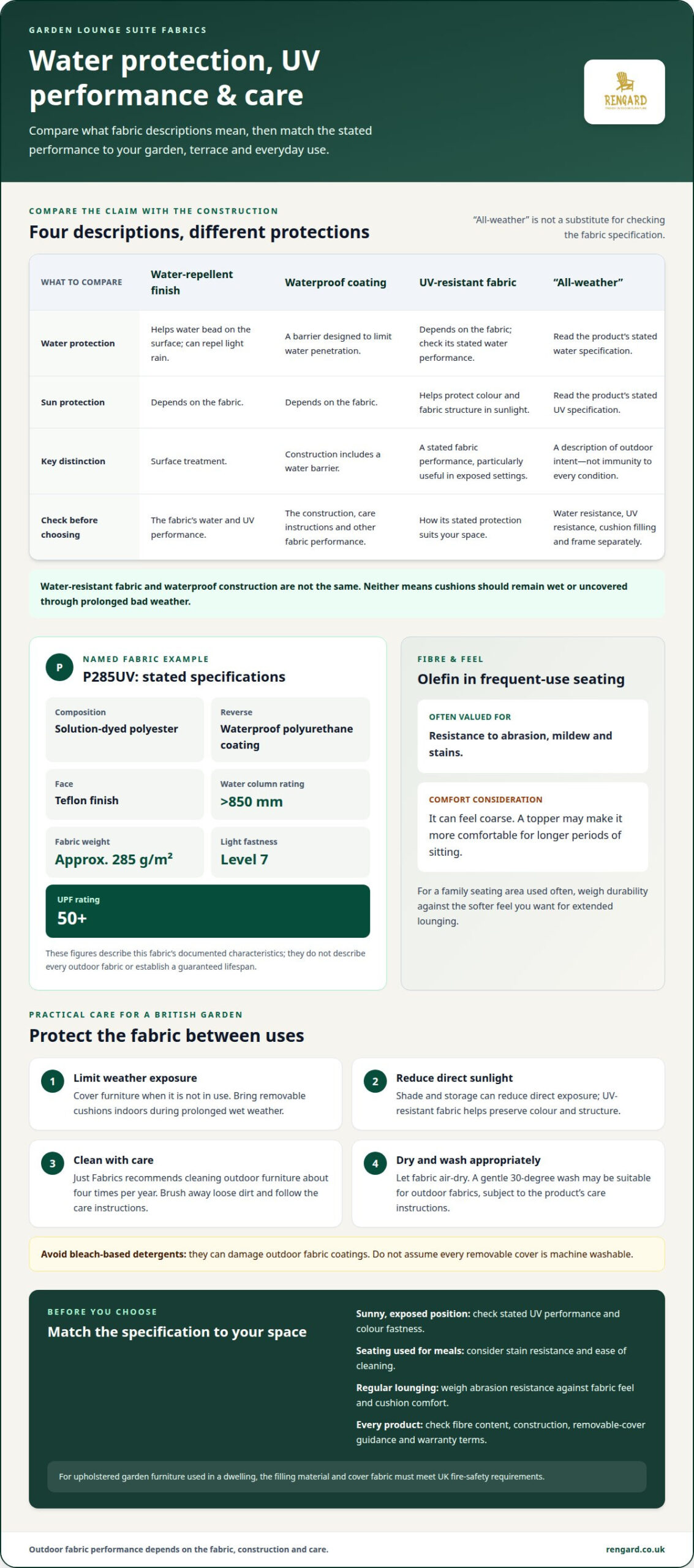
Water-resistant fabric can repel light rain, while waterproof construction uses a barrier to limit water penetration. P285UV combines solution-dyed polyester with a waterproof polyurethane coating on its reverse and a Teflon finish on its face. Its water column rating is greater than 850 millimetres. The finish helps repel water and resist stains, but the construction matters too.
There is no single typical UK price for an outdoor fabric lounge suite. Cost depends on the suite’s size, frame, fabric and cushion construction, so compare products with similar specifications rather than relying on fabric labels alone.
Protection from weather and sunlight
Fabric protection works best alongside sensible care. Cover furniture when it’s not in use, and bring removable cushions indoors during prolonged wet weather to limit damp and exposure. UV-resistant fabric helps preserve colour and structural integrity in sunlight, while shade and storage reduce direct exposure.
Just Fabrics recommends cleaning outdoor furniture about four times per year. Brush away loose dirt, follow the fabric’s care instructions and let it air-dry. The retailer also advises against bleach-based detergents, which can damage outdoor fabric coatings.
All-weather outdoor fabric furniture
“All-weather” describes furniture intended for outdoor use, not immunity to every condition. Check for stated water resistance, UV resistance and robust construction, then assess the cushion filling and frame separately. A coating may provide a stronger water barrier than a surface treatment alone. Neither label means cushions should stay wet or uncovered through prolonged bad weather.
Specialist garden-furniture and larger home-and-garden retailers sell outdoor lounge suites. Compare product descriptions for fabric composition, water protection, care instructions and warranty terms. These details are more useful than the general phrase “all-weather”.
UK weather resistance
Whether your garden is sheltered or your terrace is exposed, consider rain, damp spells and strong sunlight together. Choose fabric with stated water and UV performance, and protect removable cushions during prolonged wet periods. A covered position can reduce direct sun while keeping the suite ready to use.
Warranty cover depends on the product’s written terms. Check whether fabric defects, fading, stains or weather exposure are included, and distinguish fabric cover from the frame warranty. For upholstered garden furniture used in a dwelling, filling material and cover fabric must meet fire-safety requirements, according to UK Government.
| Option | Water protection | Sun protection | Practical distinction |
|---|---|---|---|
| Water-repellent finish | Helps water bead on the surface | Depends on the fabric | Surface treatment |
| Waterproof coating | Creates a barrier | Depends on the fabric | Check construction and care |
| UV-resistant fabric | Depends on the fabric | Helps protect colour and structure | Useful in exposed settings |
| All-weather description | Read the stated specification | Read the stated specification | Not a substitute for care |
Match the stated water and UV performance to your setting, then protect the cushions and follow the care instructions.
Outdoor fabric features and durability
Durability depends on more than a fabric’s stain-resistant finish. Compare abrasion resistance, UV performance, fabric weight and construction, then consider how the lounge suite will be used. P285UV weighs approximately 285 grammes per square metre and has a light fastness level of 7, alongside a UPF rating of 50+. These figures help distinguish its documented characteristics, but don’t describe every outdoor fabric or establish a guaranteed lifespan.
Olefin is a synthetic fibre valued for resistance to abrasion, mildew and stains. It can feel coarse, though, and a topper may make it more comfortable for longer periods of sitting. This makes it a practical option for a frequently used family seating area, but less appealing if a softer feel is the priority. Weigh comfort and durability together rather than treating stain resistance as the only deciding factor.
Are outdoor lounge suite covers machine washable? Outdoor fabrics can generally be washed on a gentle 30-degree cycle, according to Just Fabrics, subject to the product’s care instructions. Removable covers may make cleaning easier, but the fabric’s label determines the suitable method. Check whether the instructions refer to the cover fabric or the cushion as a whole, and avoid assuming that every textile can go into a washing machine.
Before buying a stain-resistant outdoor fabric lounge suite, compare the product details with how you’ll use it. Look for named fibre content, stated performance features, care guidance and details about removable covers. On a sunny, exposed terrace, colour fastness matters; in a seating area used for meals, stain resistance and easy cleaning may take priority. Check the cushion construction too: the outer fabric is only one part of the seat.
- Fibre and texture: Compare the stated material with the feel you want for extended lounging.
- Wear: Look for abrasion resistance if the seats will see frequent use.
- Sun exposure: Consider stated UV performance and colour fastness for brighter positions.
- Care: Follow the maker’s instructions for washing and drying removable covers.
These checks help you weigh performance against comfort, appearance and upkeep. For guidance on choosing a suite that suits your space and use, discuss your outdoor furniture requirements.
Outdoor fabrics with good UV resistance help maintain colour and structural integrity during prolonged exposure to ultraviolet rays. This makes UV resistance a useful comparison when choosing fabric for a spot in sustained sun. Treat it as a performance feature, not a promise that colour or structure will remain unchanged indefinitely. Compare the stated UV information with the setting and intended use, alongside the other documented features.
If product details don’t explain the level of UV resistance, seek clarification before relying on a broad description. Consider whether the fabric will face prolonged exposure and how important its appearance is to you. A choice that balances UV performance with comfort, care and intended use is more useful than choosing on one feature alone. Keep the care instructions handy after purchase so routine upkeep follows the maker’s guidance.
Outdoor fabric for cushions and seating
Cushion fabric needs to balance everyday comfort with the practical demands of outdoor seating. Assess the whole seat, not just its colour or stain-resistant finish. Lounge cushions differ in shape and use from dining-chair pads, while back cushions may need a softer drape. Matching the textile to each part helps the suite feel considered and comfortable.
Polyester is easy to clean and maintain, but it can feel less breathable and comfortable than natural fibres. That difference may matter during a long afternoon on a sunny patio. If you prefer a firmer, smoother feel, polyester may suit you; if extended lounging comes first, consider texture and breathability more closely. The fibre name alone doesn’t describe the finished cushion’s feel.
Fabric quantity also depends on cushion dimensions and shape. A standard garden-chair cushion may require around 1-2 metres of fabric. A deep lounge seat, shaped corner cushion or broad back pad will need a different cut. This is useful context when comparing replacement fabric or planning a coordinated set. Measure each cushion separately, including its depth and profile, rather than estimating from the number of seats.
Cleaning methods vary by fabric. Sunbrella® fabric can be cleaned with mild soap and water, while other textiles may need different care. Read the care label before treating a mark, and use the method specified for that cover. This matters when a suite combines different cushion fabrics or trims, as one cleaning approach may not suit every component.
Consider how you’ll use the seating. Dining-chair cushions may face food spills, while lounge seats need to stay comfortable through longer periods of use. Removable covers can make the fabric easier to access, but their design and care instructions still guide maintenance. For a coordinated look, consider how seat and back cushions work together in colour or texture, and whether they complement nearby paving and planting.
- Match cushion shape: Consider seat, back and corner profiles separately.
- Prioritise comfort: Compare texture and breathability for longer lounging.
- Allow for fabric needs: Cushion size affects the material required.
- Clean carefully: Follow the instructions for the specific cover fabric.
Choosing cushion fabric is easier when you weigh comfort, shape and care together. That balance helps outdoor seating feel welcoming as well as practical.
The page lists 93 outdoor fabric furniture products. Use the selection as a starting point, then compare each candidate with the needs of the specific seat rather than choosing by appearance alone. Keep the measurements, intended use and care instructions in view while weighing comfort and style. A fabric that suits one cushion may not be the right choice for every part of the seating, so consider seat and back pieces individually. Before settling on a coordinated look, check that the material and finish fit the way the cushions will be used and maintained. This keeps the decision grounded in practical details as well as the overall appearance of the outdoor space.
Acrylic fabric characteristics
Acrylic can balance colour, softness and outdoor practicality. Its texture and drape can resemble natural fibres such as cotton or wool, creating a relaxed finish without using those fibres. Acrylic resists fading, mildew and moisture. The specific fabric still matters, so treat the fibre name as a starting point, not a complete specification.
Sunbrella® is made from durable acrylic fibres that are solution-dyed. Colour pigments are infused into the fibres during manufacture, rather than added only to the finished surface. This describes how the colour is created, not the full construction or care requirements of a cushion. Sunbrella® fabric was invented in the 1960s for harsh marine environments.
Solution-dyed acrylic and olefin are both synthetic outdoor-fabric options, but the comparison depends on their documented characteristics. Acrylic’s colour process and natural-fibre-like drape are clearly defined; for olefin, check the specific fabric’s composition, finish and care guidance. This keeps your decision focused on the textile itself rather than assumptions about how every fabric in a fibre category performs.
| Comparison point | Solution-dyed acrylic | Olefin |
|---|---|---|
| Fibre type | Synthetic acrylic | Synthetic fibre |
| Colour process | Pigment infused during manufacture | Consider the fabric’s stated details |
| Feel and drape | Can resemble cotton or wool | Assess the specific fabric description |
| Decision focus | Colour process and soft appearance | Composition, finish and care guidance |
Cushion feel influences the overall character of a lounge suite. Acrylic’s soft appearance can suit a relaxed arrangement, and its colour process may matter when the fabric is a prominent design feature. Consider how the upholstery works with the frame, cushion shape and garden palette. A coordinated tone can give the seating area a composed look without making the choice purely decorative.
Read fabric descriptions carefully. “Acrylic” identifies a fibre, while “solution-dyed” describes a manufacturing process. Neither term alone explains the weave, finish or cleaning method. Sunbrella® is one example of solution-dyed acrylic, but its characteristics shouldn’t automatically be applied to every acrylic textile. The individual fabric description is the clearest guide to its construction and care.
To compare acrylic and olefin, start with your priorities: colour treatment, feel, cushion appearance and stated care requirements. Then consider how those qualities suit the setting and the way you’ll use the lounge suite. This is more precise than relying on a fibre name alone and helps connect material choice with the look and comfort you want outdoors.
Which outdoor lounge suites have stain-resistant fabric in the UK?
In the UK, look for outdoor lounge suites whose fabric description states stain resistance, rather than relying on “weather-resistant” alone. Olefin is a synthetic fibre that resists stains, abrasion and mildew. Some fabrics also have a stain-resistant finish. Check that the product description identifies the material or treatment so you can see what the claim refers to.
A suite’s style doesn’t determine its fabric performance. Corner lounges, modular arrangements and compact sofa sets can use different textiles, even when each is designed for outdoor seating. Compare the actual cushion details, not just the frame or woven exterior. Rattan, for example, describes a furniture style and material, but doesn’t by itself establish whether seat covers resist stains.
Retailers in the UK sell outdoor lounge suites, but product descriptions vary in detail. Prioritise listings that name the fabric and explain its relevant performance, such as stain resistance, UV resistance or water repellency. A broad label like “all-weather” doesn’t tell you which of these characteristics applies. If a description only says “easy care”, treat that as a care claim, not proof of stain resistance.
Use these checks to compare options for a garden, patio or terrace:
- Fabric identity: Look for a named fibre, such as olefin, rather than a generic outdoor-fabric label.
- Stain claim: Find an explicit statement about stain resistance or a named protective finish.
- Cushion coverage: Check whether the claim applies to every cushion cover or only selected components.
- Care instructions: Look for cleaning guidance that suits your routine and the fabric’s stated composition.
- Use and comfort: Consider texture and abrasion resistance for seating used regularly.
For example, a family choosing a corner lounge for outdoor meals may value olefin’s resistance to stains and abrasion. Someone furnishing a quieter reading area might give more weight to texture and comfort. Olefin can feel coarse, so consider whether its performance suits the way people will use the seats. The best comparison balances fabric qualities with the suite’s layout and intended use.
Before choosing, separate claims about the frame, cushions and fabric. A durable aluminium frame doesn’t prove that the cushion covers resist stains; likewise, removable covers don’t establish the fabric’s performance. For help considering outdoor seating alongside your garden layout, discuss your furniture requirements.
Look for suites with cushion fabric identified as olefin or explicitly described as having a stain-resistant finish. Check that the claim applies to the cushion covers you plan to use.
Rengard
Rengard offers garden furniture to help create a cohesive outdoor setting. Once you’ve considered fabric performance, comfort and care, think about how a suite will fit your garden, patio or terrace. The layout, surrounding furniture and available space all shape how inviting and practical the finished area feels.
Start with how you use your outdoor space and the furniture that supports it. Keep fabric specifications in mind as you choose a lounge suite, then consider how the arrangement will work for relaxing or entertaining.
For a considered next step, contact Rengard.
Plan a garden space that works beautifully
Let the way you live outdoors guide your choice. A stain-resistant outdoor fabric lounge suite should suit your garden, patio or terrace and the moments you want to enjoy there. Think about where people will sit, how the seating connects with outdoor dining, and whether the layout leaves room to move comfortably. A well-planned arrangement can make even a compact space feel considered and welcoming.
Bring your preferred colours, textures and practical needs together before deciding. Fabric is part of a larger setting, so consider how the cushions will look alongside paving, planting and nearby furniture. This gives you a clearer direction for creating an outdoor area that feels cohesive, comfortable and suited to everyday use.
If you’d like to discuss your outdoor fabric considerations, contact Rengard about outdoor fabrics. Take the next step towards a garden space that feels distinctly yours.
Frequently Asked Questions
What makes outdoor fabric different from indoor fabric?
Outdoor fabric is designed to withstand conditions that indoor upholstery usually avoids, including sunlight, moisture and frequent outdoor use. A garden sofa beneath a pergola, for example, can still encounter damp air, windblown rain and changing light. Outdoor textiles are made with these exposures in mind. Indoor fabric may suit a conservatory, but isn’t automatically suitable for furniture left outdoors.
How UV-resistant and waterproof are stain-resistant outdoor fabrics?
Performance varies by fabric and construction, so “stain-resistant” alone doesn’t show how well a textile handles sun or rain. UV resistance helps fabric retain its colour and structural integrity during exposure. Water repellency describes how a surface handles moisture; a waterproof barrier provides a different level of protection. For fully exposed seating, compare these claims separately and consider how you’ll store cushions during prolonged wet weather.