Child-Safe Round Wooden Coffee Tables: Buyer’s Guide
A rounded edge can give an outdoor coffee table a considered look, but shape alone doesn’t make it child-safe. When choosing a round wooden coffee table with child-safe curved edges, look for a smooth, continuous profile and a stable base that won’t tip or shift easily.
It’s understandable to want a table that suits family life without compromising the look of a patio or garden seating area. Balance softened edges with sturdy construction, outdoor-suitable materials and clear guidance on the table’s weight limit.
This guide explains how to compare rounded and oval designs, assess stability and load limits, and review product details before ordering. It also covers practical considerations for UK outdoor use, including timber finish, care requirements and how a table will work with your garden furniture. These checks can help you choose a piece that looks right and suits everyday use.
Key Takeaways
- Look beyond a rounded outline: assess how the base meets the floor and whether the table feels stable in everyday use.
- Compare round and oval profiles to find a shape that softens edges while fitting your seating area.
- Ask about the table’s weight limit, dimensions, finish and care before ordering.
- Consider how the wood and surface finish will handle family use, spills and regular cleaning.
- Use the table’s proportions and storage features to balance practical needs with the look of your outdoor seating area.
1. Table-base stability and weight limits
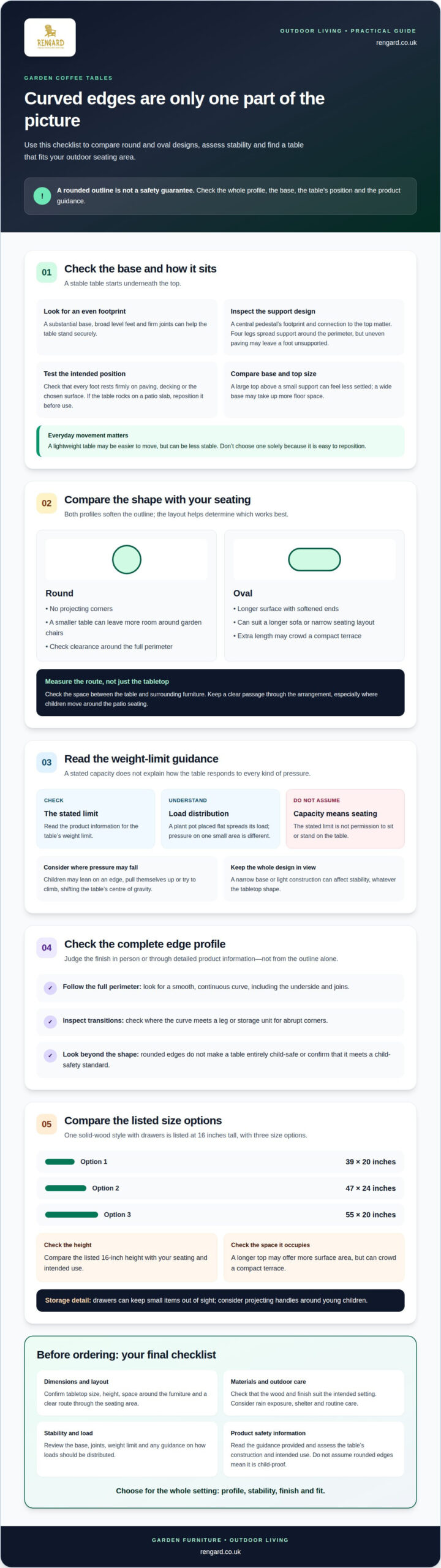
A rounded top doesn’t stop a garden coffee table from tipping. Children may lean on an edge, pull themselves up or try to climb, shifting the table’s centre of gravity, especially if its base is narrow or the construction is light. Choose a stable design with a substantial base and an even footprint. For outdoor use, check that the table sits level on paving, decking or another surface.
Check the base as carefully as the tabletop. A central pedestal can look elegant, but its footprint and connection to the top affect how securely the table stands. A four-leg design may spread support around the perimeter, though uneven paving can leave one foot unsupported. Broad, level feet and firm joints are useful details. If a table rocks on a patio slab, reposition it before use.
A stated weight limit tells you how much weight the table is designed to support, but not how it responds to every kind of pressure. A plant pot placed flat spreads its load; a child leaning on one small area concentrates force. Read the product information for the limit and any guidance on load distribution. Don’t treat the stated capacity as permission to sit or stand on the table.
- Look for a stable base with an even footprint and secure joints.
- Read the stated weight limit and its guidance for load distribution.
- Consider where hands or knees could push against the table’s edge.
- Check that every foot rests firmly on the intended surface.
Lightweight furniture can be easier to move, but may be less stable. A table that slides when nudged can shift during everyday family use, so don’t choose one solely because it’s easy to reposition. A round wooden garden coffee table with child-safe curved edges still needs a base that resists rocking and movement.
Before ordering, compare the base footprint with the table’s overall dimensions. A large top above a small support can feel less settled, while a wide base may take up more floor space. For a patio arrangement, the garden outdoor tables category offers a useful reference point for considering table placement alongside outdoor seating. Prioritise stable construction, a clear load limit and a level position over appearance alone.
2. Coffee-table options with curved edges
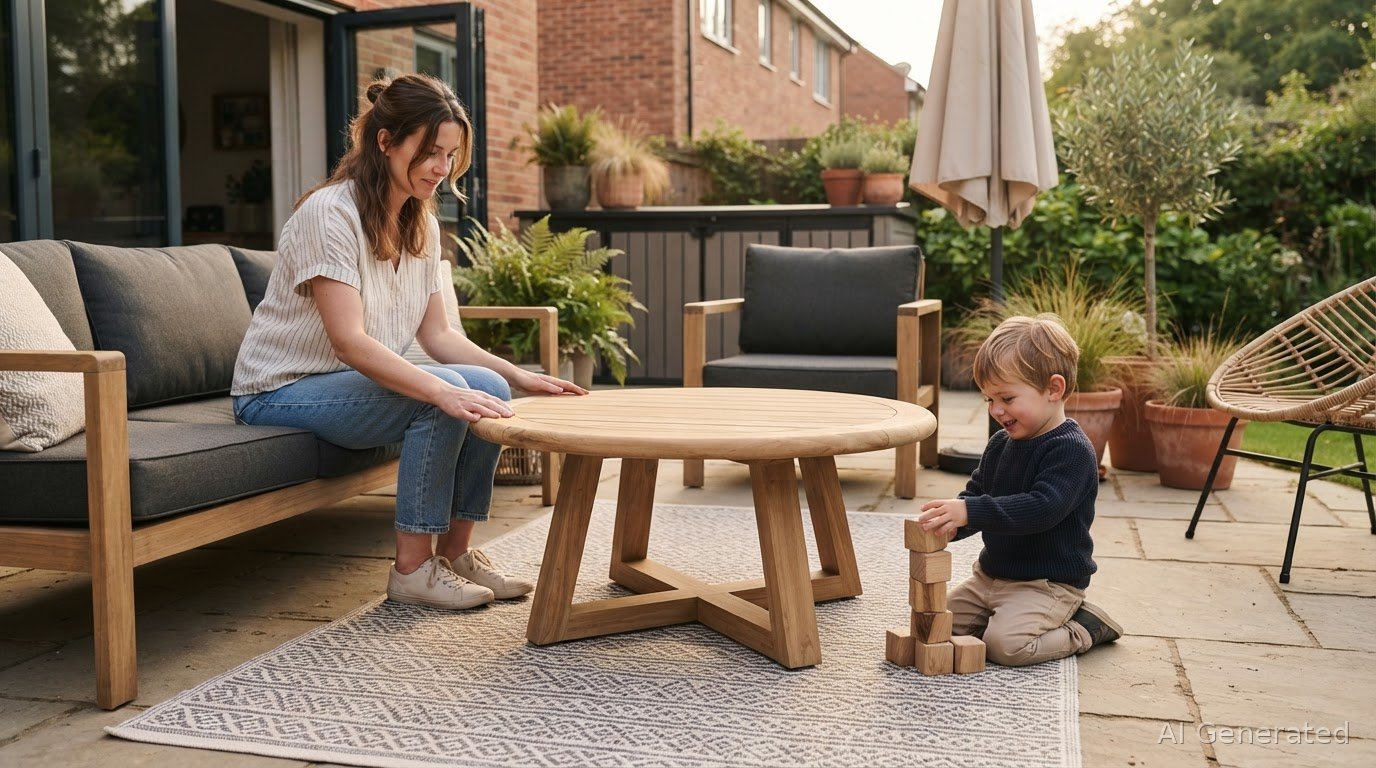
For a family patio, start with the tabletop outline. A circular top has no projecting corners, while an oval offers a longer surface with softened ends. Rounded edges can reduce sharp contact points, but they don’t make a table entirely child-safe. Check the whole profile, including the underside and joins, rather than judging by a product photograph alone.
UK furniture retailers sell child-friendly coffee tables in rounded and oval styles. Prices vary with the wood, dimensions, construction and added features, so compare those details rather than relying on shape alone. A listed small oval solid-wood table is available in three sizes, showing how size options can suit different seating arrangements.
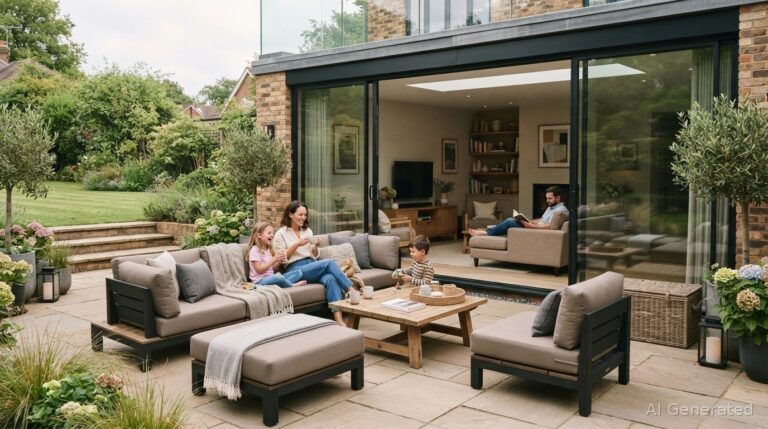
For a compact patio, a smaller round table can leave more room to move around garden chairs. An oval design may suit a longer sofa or narrow seating layout, with its extra length serving more than one seat. Measure the space between the table and surrounding furniture before choosing. Leave a clear route through the arrangement, especially where children move around the patio seating.
Curved designs can also include useful storage. One solid-wood style with drawers is listed at 16 inches tall, with sizes of 39 by 20 inches, 47 by 24 inches and 55 by 20 inches. Those dimensions illustrate why checking height and top size matters: a longer table may provide more surface area, but can crowd a compact terrace. Drawers can keep small items out of sight, though projecting handles should also be considered around young children.
Look closely at the finish and edge treatment. A smoothly rounded edge should feel consistent around the full perimeter, without abrupt corners where the curve meets a leg or storage unit. For outdoor use, confirm that the wood and finish suit the table’s intended setting. Rain exposure, shelter and routine care all affect how a wooden surface performs over time.
A round wooden coffee table with child-safe curved edges combines a softened outline with a practical material, but the best option depends on the patio layout and intended use. Before ordering, compare the dimensions, height, edge profile and care guidance together. If a particular shape or finish matters, discuss your table requirements before settling on a design.
For households with young children, prioritise a rounded silhouette over sharp, hard corners when comparing coffee tables. This is a shape choice, not a guarantee that a piece is safe: consider it alongside the table’s stability, position and the space around it. Sturdy, heavy oval coffee tables are harder for children to move and have no sharp corners, making that style worth considering where a table might otherwise be pushed during play. The listed small oval solid-wood coffee table is available in 3 sizes, so compare the options against the measured seating area rather than assuming the smallest or largest will suit. Keep the intended route around the furniture in mind, and check that the chosen size preserves the clear passage needed for moving around the patio seating.
3. Questions to ask before ordering
Before ordering an outdoor coffee table, review its dimensions, materials and care guidance. A product image can’t show exactly how it will sit beside your garden sofa or bistro chairs. Clear specifications help you decide whether it suits a patio, terrace or sheltered seating area, and make it easier to compare tables for different settings.
Are there UK safety standards or child-safety rules for coffee tables? Don’t assume that rounded edges mean a table meets a child-safety standard or is child-proof. Review the product safety information provided, and assess the table’s construction and intended use.
What is the ideal coffee table height and diameter for an outdoor seating area? There’s no single ideal size for every garden. Compare the table height with your outdoor sofa or chairs, then choose a diameter that leaves room to move. Mark the proposed footprint on the patio before ordering, especially if doors or a garden path are nearby.
To assess the edges and finish, inspect the table in person or look for close-up images. Check the full perimeter, including where the edge meets the legs or any storage. Look for rough patches, splinters, sharp transitions or damaged coating. Review the finish, whether it suits the intended outdoor position and how the surface should be cleaned.
- What is the maximum load? Ask how the stated limit applies and whether it refers to an evenly distributed load.
- How does the base attach? Find out whether the joints and fixings are included and how they should be maintained outdoors.
- What care does the wood need? Ask which cleaning methods the maker recommends for the stated finish.
- What arrives with the table? Clarify whether assembly is needed and whether tools or instructions are supplied.
For an exposed patio, check that the materials and finish are intended for that setting. A covered terrace and an open garden face different weather exposure. Follow the care guidance for protection when the table isn’t in use and for dealing with standing water. Clear instructions help you plan its placement and upkeep.
Keep the product description and answers together before placing an order. A note of the dimensions, load limit, edge details and care guidance makes comparisons easier. For help with table specifications and ordering details, send your coffee-table enquiry.
4. Round wooden coffee tables
A round wooden table can create a natural focal point in an outdoor seating arrangement. First, confirm that the specific table is designed for outdoor use. A finish intended for indoors may not suit a patio exposed to rain, damp conditions or changing temperatures. Check the product details for intended placement before considering the styling.
In a garden lounge, a circular top can sit neatly between chairs arranged around it. In a compact bistro area, check that there’s enough room to pull chairs back and walk past. Mark the table’s footprint on the paving to picture the layout, and keep access to garden doors and paths clear.
Timber brings warmth and visible grain to an outdoor setting, while a round silhouette can soften the lines of paving and seating. Teak is used in outdoor furniture, but the table’s complete construction and finish still matter. Check which parts are wood, how the base is made and whether the product guidance covers the intended position.
Outdoor placement shapes everyday use. A table beneath a covered terrace may face different conditions from one in an open garden. Consider its exposure, nearby planting and fit with the wider furniture arrangement. A clear route around the table can make a family seating area more comfortable to use.
Round wooden tables vary in their bases and visual weight. A pedestal can leave the space beneath the top open, while a drum form creates a more substantial profile. These are design differences, not guarantees of stability or weather performance. Consider how each shape relates to the chairs and whether its footprint suits the patio.
- Confirm outdoor intent: read the product details for the table’s intended setting.
- Plan its position: consider exposure, shelter and access through the garden.
- Match the silhouette: compare a pedestal or drum base with the surrounding seating.
- Check the composition: identify the timber, other materials and finish described.
For a cohesive look, relate the table’s tone and shape to the surrounding outdoor furniture and any adjacent exterior woodwork. If your seating area connects to the home via timber doors or windows, taking inspiration from traditional craftsmen such as Arborfield Joinery can help you harmonise wood tones across the indoor-outdoor boundary. Consider the patio’s overall palette, including paving, planters and cushions, before choosing a finish.
A round wooden coffee table works best outdoors when its intended setting, proportions and materials suit the space. Compare these details together rather than choosing by appearance alone. This can help create a practical centrepiece that complements the garden and the way you use the seating area.
5. Which woods and finishes are safest for a family coffee table?
No wood species makes a coffee table automatically safe for children. Focus on construction, smoothness and finish, then match those details to the setting. For a family patio, check that the timber and surface treatment are intended for outdoor use. Indoor furniture may need different care from a table exposed to rain, damp air or changing temperatures.
Solid wood, veneer and engineered wood each need careful inspection. A solid-wood top may be repairable, depending on its finish and construction. Veneer has a thin wood surface, so deep scratches can expose the core. Engineered wood varies in composition and surface treatment. In every case, inspect edges, joints and exposed areas for rough patches, splinters or lifting layers.
The finish matters as much as the timber. Review the coating details and care instructions. A smooth, intact surface is easier to wipe than one that is flaking or damaged. Don’t infer child safety from words such as “natural” or “water-based” alone. Look for clear information about the finish and its intended use.
For example, wipe up a dropped drink promptly rather than leaving it to soak into the surface. Use the cleaning method recommended for that finish. Avoid abrasive cloths, strong cleaners or polishing products unless the instructions allow them. They can dull a coating or leave residue where children touch the tabletop.
- Check the timber: identify whether the top is solid wood, veneer or engineered wood.
- Inspect the surface: look for splinters, rough edges, cracks or peeling finish.
- Ask about treatment: clarify whether the coating suits outdoor placement and family use.
- Follow care guidance: use the recommended cloth and cleaning method for spills.
Outdoor exposure affects how a wooden table needs to be maintained. Rain and standing water can affect a table on an open patio differently from one beneath a covered terrace. Follow the care guidance for shelter, cleaning and protection when the table isn’t in use. Deal promptly with spills and visible damage to help keep the finish intact.
A family coffee table should combine a smooth surface with practical care guidance and construction suited to its location. If you’re weighing timber and finish options for a particular space, discuss your coffee-table requirements.
When choosing outdoor furniture for a family space, consider how the coffee table’s surface and construction suit its setting. Compare the appeal of a wood surface and its finish with practical care and placement. A family considering timber can use the checks above and assess whether the table suits its patio or covered terrace. Treat material, surface condition and intended setting as part of the choice, rather than focusing on timber alone.
Rengard: Coffee Tables
Rengard offers coffee tables for outdoor seating areas. As you plan a patio or terrace, consider how a table’s form and finish will sit alongside garden chairs, planting and paving. Use its measurements and product details to guide your choice, so it complements the setting while leaving the area practical to use.
If you’d like to discuss table options for your outdoor space, contact Rengard.
Choose an outdoor table that suits your space
Picture how the table will be used throughout an ordinary day, from relaxing with family to visits with friends. A round wooden coffee table with child-safe curved edges can bring a softer shape to a patio or terrace, while its timber and finish help define the look. Let your outdoor seating and preferred colour palette guide your choice.
Think about the wider outdoor space, too. Garden chairs and other seating can create a more connected feel when their materials or colours complement your coffee table. A thoughtful combination can make practical pieces feel like part of a considered patio or terrace, rather than separate additions.
If you’re ready to explore suitable options for your outdoor space, discuss table options with Rengard. A considered choice can bring lasting character and everyday function to your garden.
Frequently Asked Questions
What round wooden coffee tables have child-safe curved or rounded edges in the UK?
UK furniture retailers offer round wooden outdoor coffee tables in a range of shapes and finishes. Rengard sells coffee tables; assess each option by its listed shape and construction rather than assuming every model has rounded edges. For a circular design, look for a continuous curved perimeter without decorative corners or protruding details. Product photographs from above and side views can help reveal how the edge meets the tabletop and base.
What are the risks of tip-over, splinters and sharp edges, and how can they be reduced?
A table may tip if a child pulls against it or climbs on top; splinters can catch skin, and hard edges can cause knocks. Place the table on a level surface and keep its top clear of items that might encourage climbing. Inspect the wood for cracks or loose fragments, and stop using the table if damage creates a rough or sharp area. Keep the surrounding garden play space clear of obstacles.
What is the ideal coffee table height and diameter for an outdoor seating area?
There’s no single ideal size for every outdoor seating area. Compare the table height with your garden sofa or chairs, choose a diameter that leaves room to move, and mark the proposed footprint before ordering.