Armchairs for Open Plan Living Shropshire Homes
Open-plan homes can feel bright, social and easy to live in. They can also be hard to furnish. When the kitchen, dining area and lounge all share one space, every piece has to work harder. That’s why the right armchair matters more than many homeowners expect, especially when choosing armchairs for open plan living Shropshire homeowners can use comfortably every day.
The best armchairs for open plan living in Shropshire need to do two things at the same time. Comfort matters. They give you a comfortable place to sit while also helping define the room without closing it off. Across homes in Shropshire, Staffordshire, Cheshire, Manchester, North Wales and Birmingham, many homeowners want clear zones for relaxing, eating, chatting and sometimes working. They also want to avoid bulky furniture that makes the space feel cramped.
Smart seating makes a difference. The right chair might soften a modern extension, anchor a lounge area within a kitchen-living space or bring balance to a wide family room. Done well, it improves flow, supports sightlines and adds comfort without adding visual clutter. More buyers are looking for open plan armchairs in the UK that feel stylish, practical and easy to place in different layouts.
Choosing the right one means looking at which modern armchair shapes work best in open spaces, how seating can help define zones, what materials suit busy homes and how to avoid common layout mistakes. If you’re comparing accent chairs for open plan homes, planning living room zoning furniture in the UK or searching for modern lounge furniture in Shropshire, this article will help you make a more confident choice.
Why armchairs matter in open-plan layouts
Open-plan rooms need furniture to define space in a gentle way. Without walls doing that job, the layout has to carry more of the weight. That makes armchairs more important than they might be in a closed living room.
A good chair can mark the edge of a lounge area, create a small conversation spot, or turn an empty corner into a part of the room people actually use. Claire Garner, writing via ELLE Decoration, says open-plan spaces work best when each area has a clear purpose and when the layout considers movement, light, privacy, acoustics and storage (ELLE Decoration). That applies directly to seating. Choosing a chair affects how the room functions.
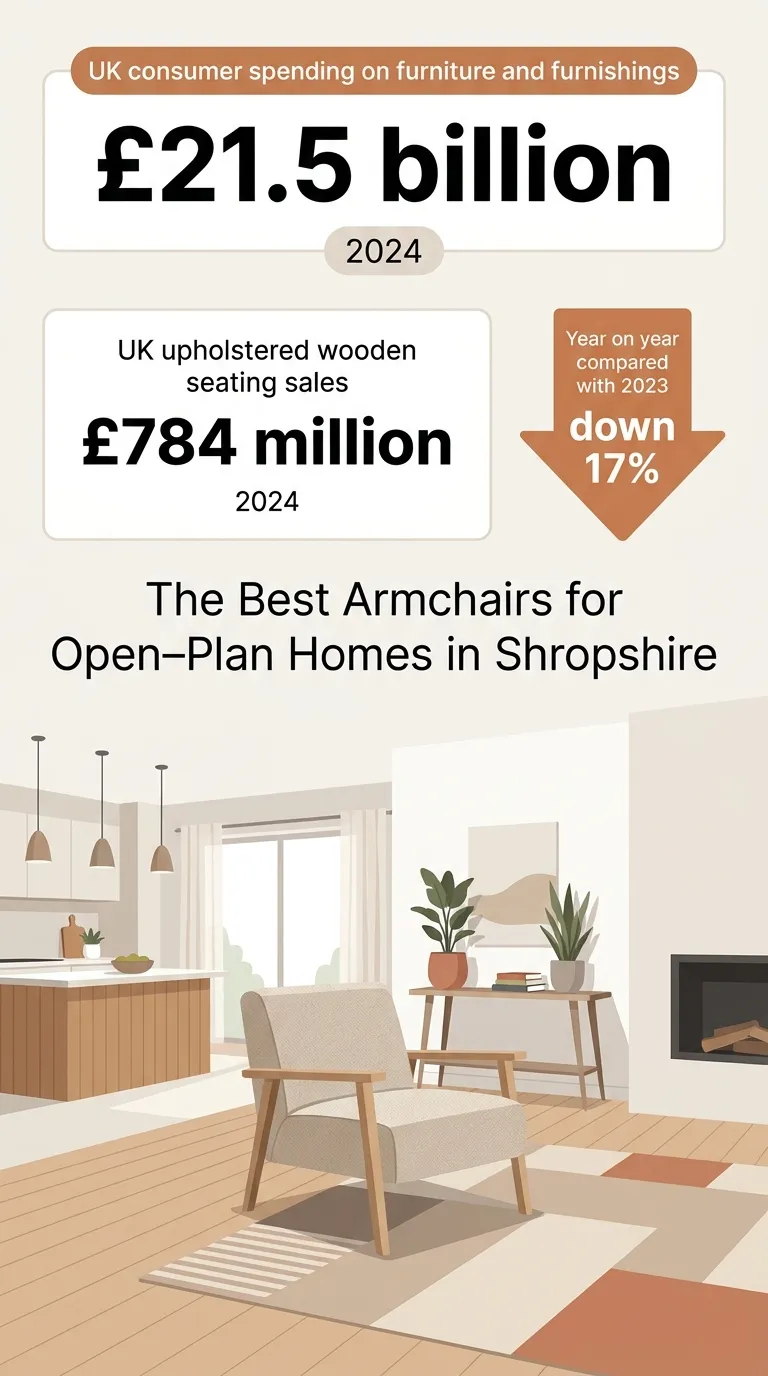
The wider market shows the same kind of care. In 2024, UK consumer spending on furniture and furnishings reached £21.5 billion, showing how much homeowners still put into their homes even in a more cautious market (FIRA). The same source says UK upholstered wooden seating sales reached £784 million in 2024, though they were down 17% year on year compared with 2023. Buyers are becoming more selective and paying closer attention to value, quality and long-term fit (FIRA).
That selectiveness is helpful. It leads to better choices. In open concept living room furniture in the UK, the best armchair is rarely the biggest or boldest. The right one balances comfort, scale and zoning.
What the best armchairs do in a kitchen-living space
In a traditional room, an armchair may fill a corner. In an open-plan space, it has a bigger role: linking different areas while stopping the whole room from becoming one large, undefined space.
The best armchairs for kitchen-living spaces do a few clear things:
- Define a boundary without blocking views
- Support more than one use, such as reading, chatting or extra guest seating
- Keep the room visually light so the layout still feels open
Design experts describe that as zoning without walls. Shelley Cochrane, cited by Ideal Home, recommends using furniture placement to mark out separate areas while keeping the room open and connected (Ideal Home). Chairs matter because of that. A well-placed pair can do something a partition cannot, giving the room structure without making it feel smaller.
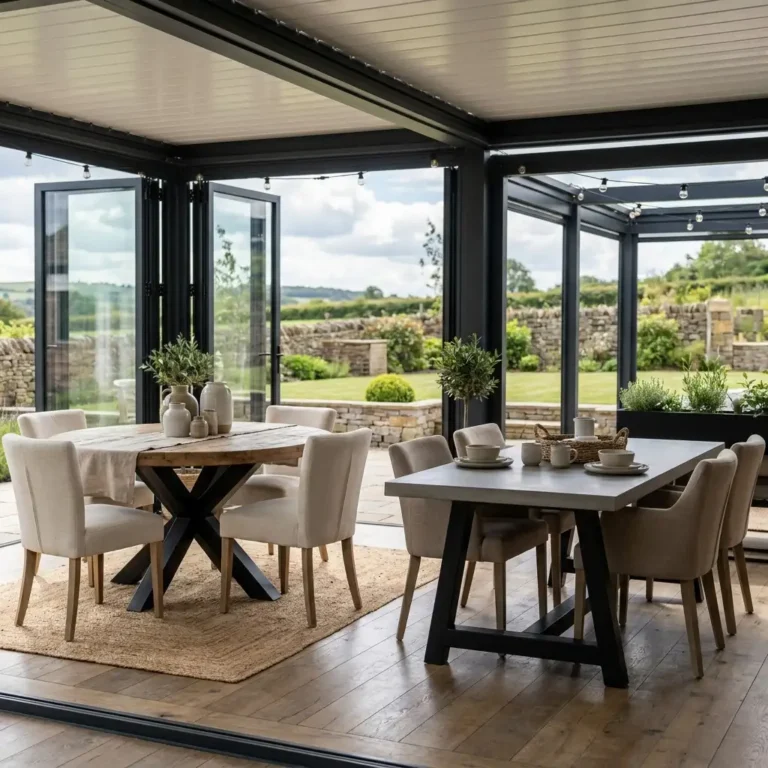
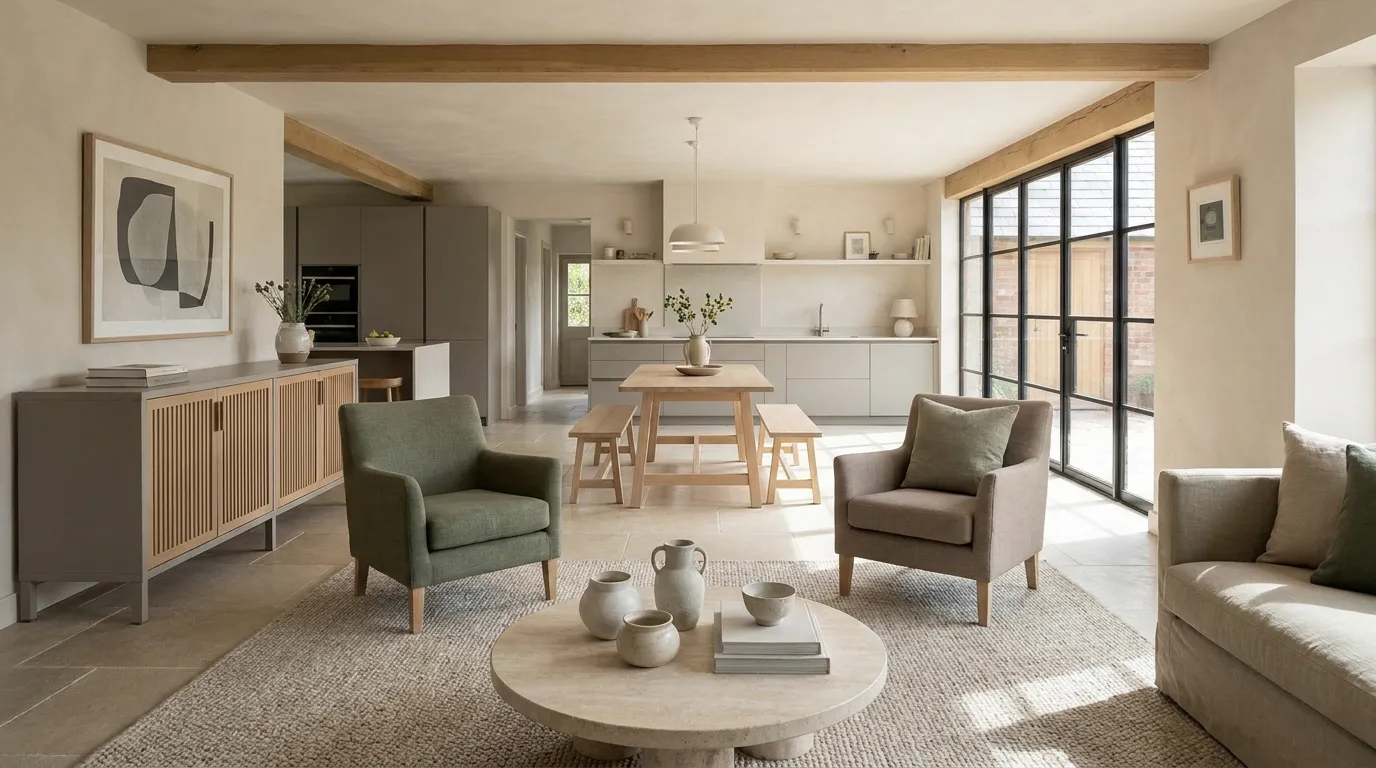
That kind of support is especially useful in Shropshire homes, where layouts can vary a lot. A barn conversion may call for softer shapes to offset beams and hard surfaces, while a modern extension may need premium armchairs for open plan layouts to bring warmth to a wide, clean-lined room. Different homes bring different pressures. A townhouse knock-through, by contrast, may need compact seating that keeps walkways clear between the kitchen and lounge.
When choosing between sofas and chairs, think in layers. The sofa tends to anchor the main seating area. Then the armchair changes the flow. It can face into the lounge, angle towards the garden doors or sit closer to the kitchen side of the room, creating a softer edge between functions.
The shapes that work best in modern open spaces
Not every stylish chair suits an open-plan room. The best modern armchairs for open spaces share a few clear traits: lighter proportions, softer lines, and shapes that look good from every angle.
These styles work best:
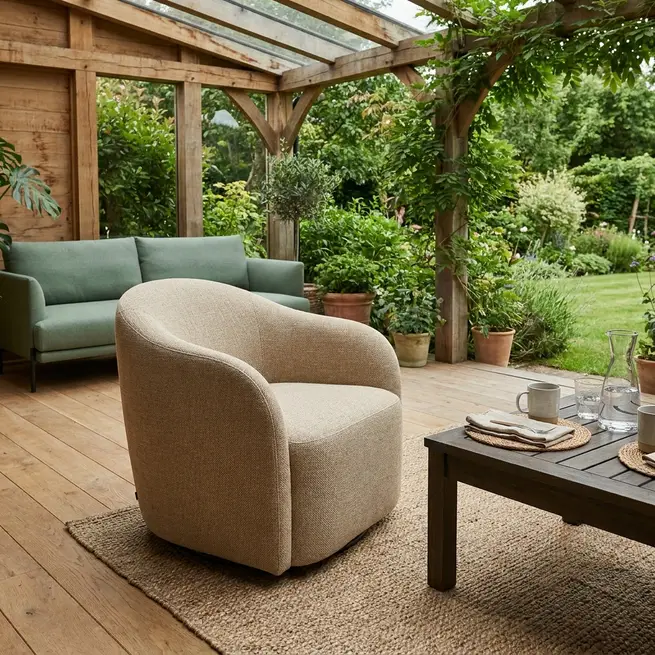
Swivel armchairs
Swivel chairs work especially well in multifunctional rooms, where people use the space in different ways throughout the day and need seating that adapts with them. They’re very practical. They can turn toward the sofa, the TV, the dining table, or the garden. They also feel less fixed in place. That makes them a good fit for large family spaces and broken-plan living.
Curved or rounded silhouettes
Soft curves make large, open rooms feel less rigid and ease some visual heaviness, especially as interiors have moved toward organic forms that fit this kind of space naturally. Curved chairs add presence without sharp edges, and they remain a strong choice for contemporary seating in the UK when a room needs softness rather than strong contrast.
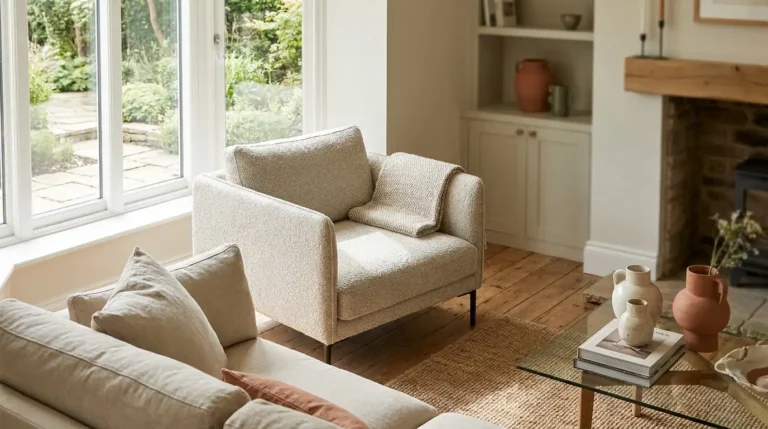
Exposed-leg armchairs
Chairs with visible legs show more floor, and that small detail makes a room feel more open. In a kitchen-living-dining space, exposed legs can feel lighter than fully skirted or boxy chairs.
Compact tub and lounge chairs
These work well when space is generous, but movement still matters. They sit comfortably near a rug, console or lamp without getting in the way, and they’re easy to position.
For readers comparing design direction in newer properties, our guide to modern accent armchairs in Shropshire for new builds looks at warmth, shape and visual balance from another angle. You can also compare textures and softer finishes in this guide to Bouclé Armchairs Shropshire for Soft-Modern Rooms.
One simple rule helps. If a chair looks heavy from the back, it can feel too dominant in the middle of an open room, especially where every line of sight matters and the furniture is visible from more than one position. Across the UK, the most successful open plan armchairs look thoughtful from every side.
How to use armchairs to zone a room without adding clutter
A common mistake in open-plan living is treating the whole room as one block. In Homes & Gardens, Isfira Jensen says one issue is failing to create distinct areas through furniture placement and rugs (Homes & Gardens), which leaves the space less defined than it should feel. Better placement fixes that instead of adding more furniture.
Try this simple way to zone the room:
Step 1: Start with the main anchor
The sofa or rug is usually the main anchor. First, decide where the lounge zone begins and ends.
Step 2: Place the armchair at the edge, not deep in the centre
A chair works best at the edge of the living area, not deep in the centre. Placed at a slight inward angle, it quietly marks the spot as a separate zone.
Step 3: Add one companion item
A side table, floor lamp, or small ottoman makes the chair feel intentional, not simply leftover. A small change that makes a real difference.
Step 4: Protect walkways
Leave enough space to move between the kitchen, dining, and lounge areas. Open-plan homes don’t work well when furniture blocks natural paths.
Step 5: Repeat colours, not exact pieces
Your accent chair doesn’t need to match the sofa. Instead, it should connect through tone, texture, or shape.
This layout works especially well in Shropshire homes, where owners create open-plan spaces through extensions rather than new-build masterplans. Each room keeps its own quirks, from chimney breasts to bifold doors. The chair should work with those features, not fight them. Homeowners planning furniture layouts in more detail may also find How to Use a Room Planner Before You Buy Furniture useful before committing to larger pieces.
Materials, colours, and finishes that suit British family life
Real homes need practical finishes. Open-plan rooms lead straight into kitchens, garden doors, pets, children and everyday mess. The best accent chairs for open plan homes should feel refined while still standing up to daily use.
A good place to start is fabric choice. Tightly woven upholstery keeps its shape well and can look cleaner for longer than looser, more delicate finishes. Bouclé can look beautiful, but in a busy kitchen-living space it works best when the chair sits away from the main traffic route. Velvet adds depth and softness. Flat weaves and blended fabrics can feel easier to live with every day.
Colour matters just as much. In open spaces, armchairs sit between zones, so they need to tie the palette together rather than break it apart. Neutrals, earthy greens, warm greys, soft taupes, rust and muted blues can work well in soft-modern interiors. Quiet but effective. They add depth without shouting and help the chair settle naturally into the room.
Think about finish too:
- Black metal legs feel crisp in modern extensions
- Oak or ash tones add warmth in family homes and barn conversions
- Brass accents can lift a chair in a more polished room
If you’re investing in premium armchairs for open plan layouts, check the seat depth, cushion firmness and back support in person where possible. The market remains strong. Furniture, lighting and floorcovering retail turnover reached £17.7 billion in the most recent figure cited in the FIRA Statistics Digest 2025/26, and more than 108,000 people work in that retail sector, which shows how established the category is for service-led buying decisions (FIRA). For many buyers, showroom support still matters because a photo can only show so much. Comfort still needs testing in person.
Matching armchair size to room scale and sightlines
The wrong size chair can make even a large open-plan room feel awkward. Too small, and it can seem lost. Too large, and it turns into a visual block.
Start by thinking about what the chair will sit beside, then check what you’ll see around it from different parts of the room. In open concept living room furniture in the UK, sightlines matter nearly as much as the actual dimensions. Keep the space feeling open from key viewing points: the kitchen island, the dining table, the hallway entrance or the garden doors.
A few practical rules help:
- If the chair will sit opposite a sofa, keep its visual weight lighter unless the sofa is very slim.
- If the chair will sit with its back facing the dining area, choose a design with an attractive rear profile.
- If the room has long views to the garden, avoid very tall backs in the centre line of sight.
- If you need two chairs, a pair of smaller ones can work better than one oversized statement piece.
Layout choices and renovation trends come together here. In Aviva’s February 2025 survey, 44% of UK homeowners said they were planning to renovate within the next two years. That shows strong interest in improving how homes function as well as how they look (Aviva). As layouts change, furniture choices become more deliberate. Buyers look for pieces that fit newly opened spaces well without wasting room.
If you’re pairing chairs with a nearby dining area, our Dining Chair Height Guide: Everything UK Buyers Need to Know can help keep proportions consistent across connected zones. Readers comparing compact dining seating may also find Dining Chairs for Small Dining Rooms in UK Homes helpful.
Common open-plan armchair mistakes to avoid
Most buying mistakes happen when people shop for a chair on its own. In open-plan living, that doesn’t always work because every piece changes how the whole room feels. By itself, a chair isn’t enough.
The most common errors are:
Choosing a chair that’s too bulky
It may feel luxurious in a showroom, but if it blocks movement or cuts off views, the space will feel tighter.
Placing every seat against the walls
This can make the room feel smaller, while placing a chair near a rug gives the layout better structure. A simple shift.
Forgetting the back view
In open-plan layouts, people see chairs from different angles, so the back matters as well. It should look as good as the front.
Using a chair with no companion piece
An armchair without a lamp, table, or rug can feel random, as if it ended up there on its own instead of fitting into the room. Even one small supporting element helps. It makes it feel like part of a zone.
Matching everything too closely
Open spaces need cohesion, not showroom sameness. Mix shapes and textures while keeping the palette clear, so the room feels connected without every piece matching too closely.
If one zone needs a quieter feel, like a reading corner at the edge of an open-plan room, our article on the best reading armchairs for Shropshire country interiors looks at comfort-led options in more depth. Buyers can also avoid expensive layout errors by reviewing Living Room Furniture Mistakes Every Homeowner Should Avoid.
Best armchair setups for different Shropshire home types
Not every open-plan room works in the same way. The better question isn’t “what is the best chair?” but “what is the best chair for this layout?” That small change affects the result.
For modern extensions, look for slim frames, curved backs and tactile upholstery to soften the space and stop it feeling too sharp or stripped back. Softer details can work very well here.
With barn conversions, choose chairs that balance scale and warmth. Larger rooms can take deeper seats, while anything too square or heavy can lose that easy, relaxed feel. Proportion matters here.
In period homes with knock-through layouts, compact chairs usually work best. They help define the lounge area without making the overall room feel split up or visually choppy. Enough presence, not too much.
For family kitchen-living rooms, swivel chairs are a flexible option because they suit social use and adapt naturally as the day moves from one activity to the next. Practical, but still easy.
For couples furnishing a style-led room, one statement chair with one quieter companion chair can feel more layered and considered than a fully matching pair. Less obvious, more relaxed.
A curated retailer can help narrow the options. Browsing a design-led furniture retailer like RENGARD can help when the goal is modern lounge furniture in Shropshire that suits a premium-but-practical brief rather than a one-style-fits-all look. Some buyers comparing armchairs for open plan living Shropshire properties also look at nearby seating categories, including Premium Ex Display Armchair in Shropshire: Luxury for Less.
A practical buying checklist before you choose
Before buying, test the chair in the room, not just against personal taste. A few simple checks can help you avoid an expensive mistake.
Use this shortlist:
- Measure the width, depth, and total height
- Mark the footprint on the floor with tape
- Check the walking routes around the chair
- View the placement from the kitchen and dining area
- Consider the chair’s back view
- Decide which companion piece it needs
- Choose a fabric that fits daily life
- Ask whether it will still work in a different layout later
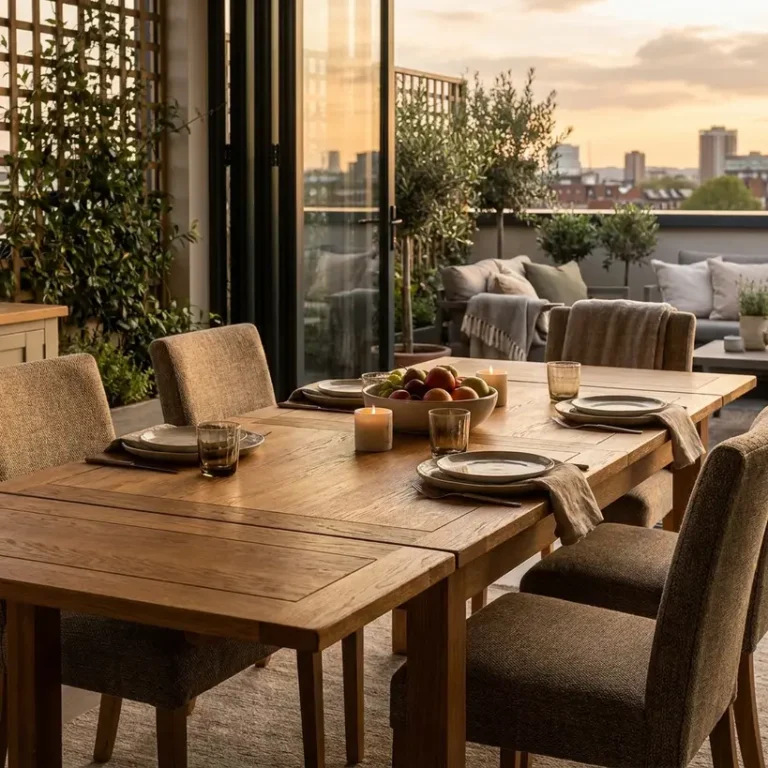
Also check whether the chair works well with the dining setup, especially if both areas are visible at once. If the wider room is being planned at the same time, the guide to best dining tables for open plan homes can help create better balance across the whole layout.
Frequently Asked Questions
What type of armchair is best for an open-plan home?
Choose seating that feels comfortable and looks light. Swivel chairs are a good choice. Curved lounge chairs and compact accent chairs are also a good choice because they define a zone without making the room feel blocked or heavy.
Should armchairs match the sofa in an open-plan room?
Not exactly. The chair should relate to the sofa through colour, texture or shape, rather than match it completely. That creates a more relaxed, layered feel in the room. It also keeps the look cohesive.
How do I use armchairs to zone a kitchen-living space?
Place the chair at the edge of the lounge area to create a soft boundary. Add a rug, side table, or lamp nearby so it feels like part of a defined seating zone, not a spare seat set in the middle of the room.
Are swivel chairs a good choice for open-plan armchairs in the UK?
Yes, they’re one of the smartest choices. They’re easy to position and stay flexible, so they work very well in multifunctional rooms where people switch between conversation, TV viewing, reading, and looking toward the garden or kitchen.
Where can I compare premium armchairs for open plan layouts?
Comparing them in a setting that values comfort and design helps. RENGARD gives UK buyers a clear example of contemporary seating with showroom support, especially when images alone make scale and comfort hard to assess.
How do I know if an armchair will suit my overall room scheme?
See the chair as part of the full room, not as a standalone product. Think bigger. A design-led furniture retailer such as design-led home and garden furniture retailer can help you compare finishes, shapes, and complementary pieces, so your armchair fits the space rather than competing with it.
Bringing the whole room together
The best armchairs for open plan living in Shropshire do more than look attractive. They help shape the layout, set boundaries, soften wide spaces, support daily life and keep a room feeling open. They are not just there for decoration.
If you remember only a few things, focus on these:
- Choose a chair that looks good from every angle
- Prioritise lighter shapes over bulky forms
- Use chairs to define zones instead of filling corners
- Consider flow, sightlines and everyday comfort
- Pair the chair with a rug, lamp or table so it feels deliberate
- Match the chair to your layout as well as your taste
The right armchair can make the whole layout feel calmer and more complete, whether you’re furnishing a modern extension, a barn conversion or a kitchen-living family room. For homeowners comparing armchairs for open plan living in Shropshire, open plan armchairs in the UK or modern lounge furniture in Shropshire, the smartest choice generally comes from balancing comfort, scale and visual ease. Buyers searching specifically for armchairs for open plan living Shropshire homes often find that practical layouts matter just as much as appearance. Buy for the room as a whole, and the chair will do far more than simply provide a seat.