Outdoor daybeds with canopies for every garden
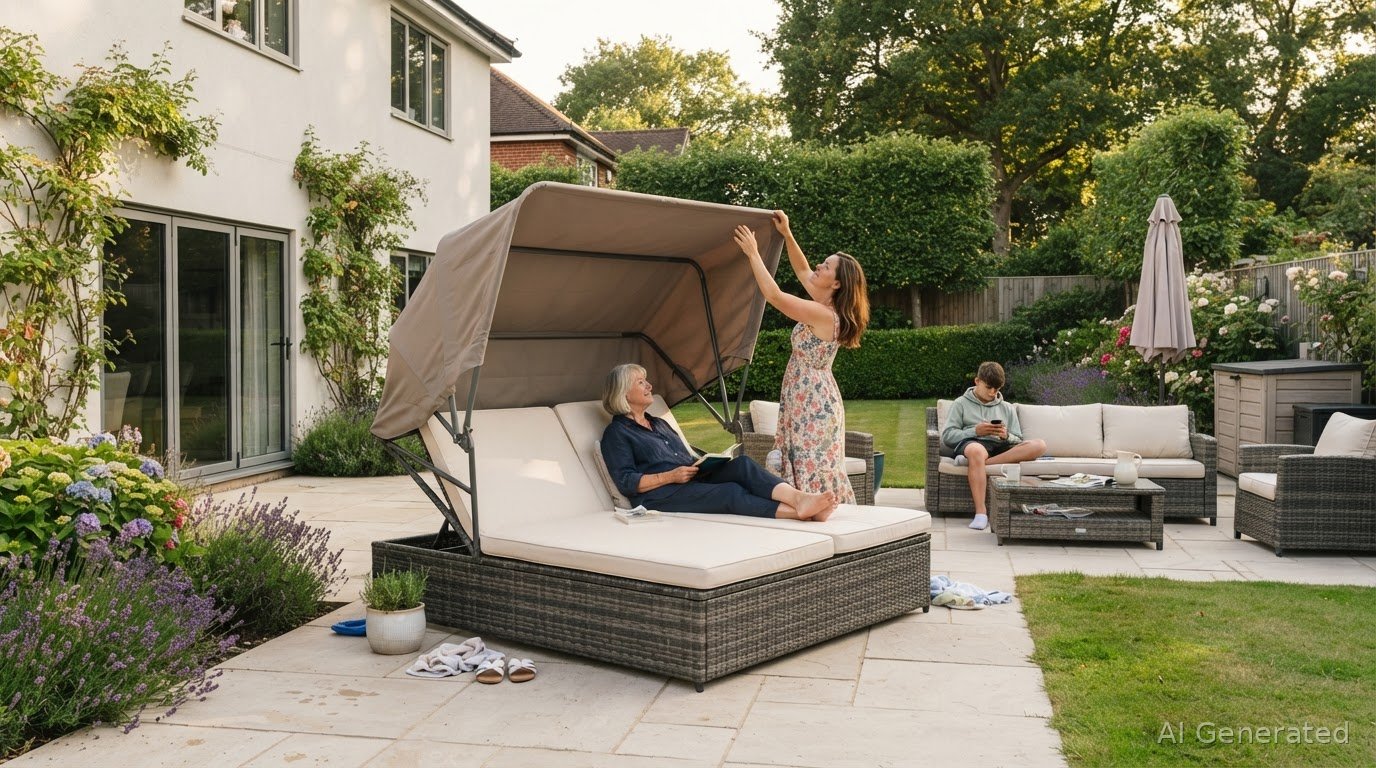
Can a garden daybed stay outside? Yes, if it’s designed for outdoor use, but its materials, canopy and care instructions affect how it handles British weather. An outdoor daybed with a canopy offers a place to relax in the shade; check the product details to see whether its construction suits your garden.
It’s easy to focus on colour or shape first; durability, comfort and upkeep matter just as much when choosing furniture for a UK garden, patio or terrace. Adjustable canopies can make shade easier to manage, and the frame and fabric influence how the daybed feels and performs outdoors.
This guide explains how to compare rattan, fabric and metal options, consider shapes and colours, and understand what affects price. It also covers canopy styles and practical weather care, so you can choose a daybed that suits your space and the way you use it.
Key Takeaways
- Compare frame and upholstery materials for comfort, upkeep and how they’ll cope with the British climate.
- Assess colours alongside your garden’s existing furniture and surfaces, and compare prices by looking at the materials and features included.
- Use cushions on metal seating in direct sunlight, as the surface can become hot.
- Choose a round or rectangular shape to suit your available space and how you plan to relax or entertain.
- An adjustable canopy lets you adapt the shade as the sun moves, making its position and ease of use important considerations.
Rattan, fabric and metal daybed materials
Material influences a daybed’s appearance, comfort and suitability for a UK garden. Compare the weave, upholstery and frame as separate parts of the design.
Rattan and PE wicker
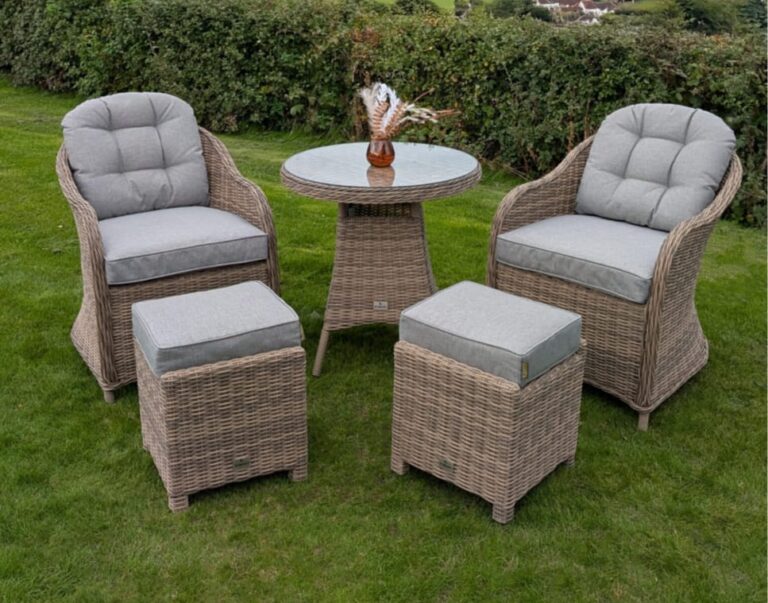
Rattan and PE wicker can create a similar woven look, but they are different materials. Rattan is natural; PE wicker is a synthetic weave. Read the construction details to understand which material forms the visible weave and what care instructions apply. A close-up image can help you assess the texture, spacing and finish before choosing.
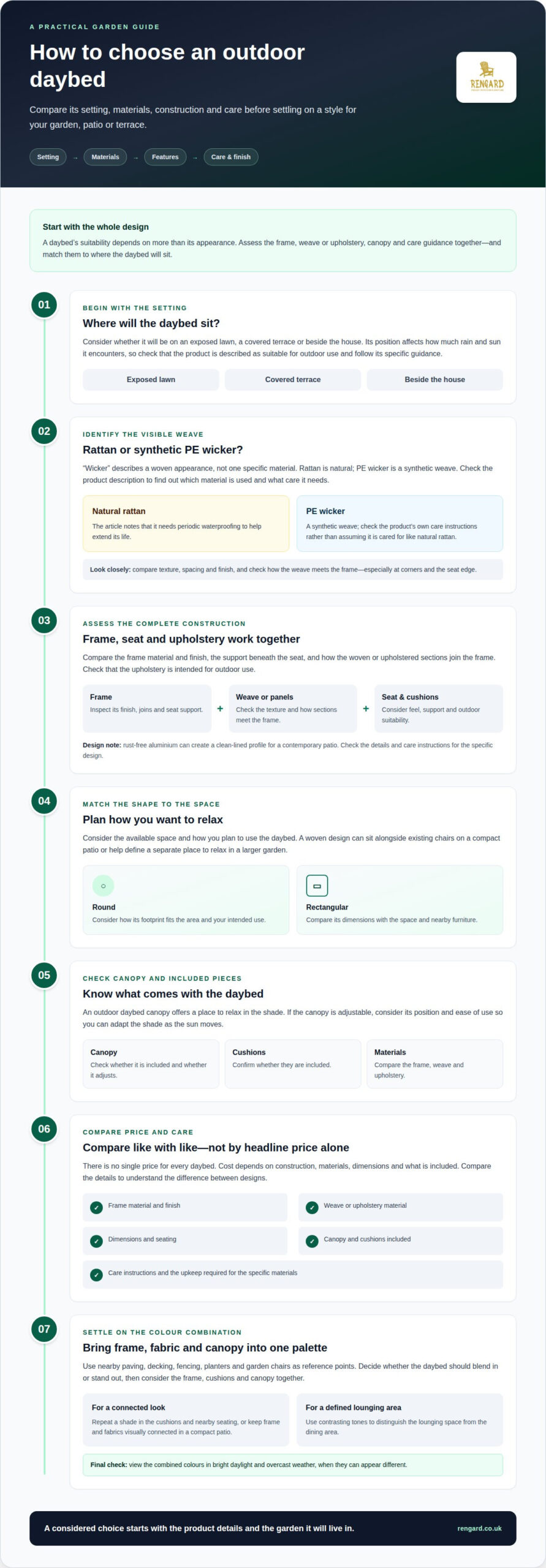
For a British garden, look for furniture described as weather-proof and suitable for outdoor use. Consider whether the daybed will sit on an exposed lawn, a covered terrace or beside the house. Its position affects how much rain and sun it encounters, so match the product guidance to the setting.
Check how the weave meets the frame, particularly at corners and the seat edge. Think about how the finish will sit alongside nearby furniture, as well as how exposed the daybed will be. Compare the stated materials and care instructions instead of assuming woven finishes all behave alike.
Outdoor wicker daybeds
“Wicker” describes a woven appearance, not a single material. Outdoor wicker daybeds may use natural rattan or synthetic PE wicker, so read the product description to identify the material. Compare its colour and texture with paving, fencing and nearby garden seating for a cohesive arrangement.
Look beyond the visible weave to the whole construction. Check how the woven sections meet the frame and whether the seat and back offer the support you want. A woven daybed can sit alongside existing chairs on a compact patio or define a separate place to relax in a larger garden.
For British weather, check the stated outdoor suitability and care instructions. Follow the guidance for the specific daybed rather than applying a treatment or cleaning method meant for another material. Natural and synthetic weaves, for example, may have different care requirements despite looking similar.
Fabric and metal materials
Fabric affects the feel and colour of the seat, while the frame gives the design its shape. Check that the upholstery is intended for outdoor use, then consider how its texture works with the weave and frame finish. Neutral fabric can complement a detailed weave; a contrasting shade can define the seat.
Metal frames differ in appearance and construction. Compare the finish, joins and support beneath the seat rather than choosing by colour alone. Rust-free aluminium can create a clean-lined profile suited to contemporary patios. Check the product details and care instructions for the specific design.
Assess all the materials together before deciding. Compare, for example, a metal frame with woven panels and fabric cushions against a fully woven design. Consider your existing furniture, the daybed’s position and its care instructions to find an option that suits both the space and its exposure.
Daybed prices and colour options
When comparing prices, check the materials, included components and care requirements. Colour matters too: the frame, cushions and canopy all contribute to the overall look.
Daybed prices
There is no single price that applies to every daybed. Cost depends on construction, materials, dimensions and what is included. A woven model with a frame, cushions and canopy may differ in price from a simpler design. Compare like with like by checking what each listed price covers.
Check whether the cushions and canopy are included rather than assuming they come with the daybed. Compare the frame and upholstery materials, seating and finish too. These details help explain differences between designs more clearly than a headline price alone.
Care requirements also affect the practical value of a purchase. A natural rattan design, for example, needs periodic waterproofing to help extend its life. Think about the time and products required for upkeep, as well as the initial price. A daybed that suits your routine may be a better fit than one chosen on appearance alone.
Before deciding, make a short comparison of the frame material, weave or upholstery, canopy, cushions and care instructions. Two daybeds with similar shapes may include different components, which can help explain their different prices.
Daybed colour options
Choose colours that work with the surfaces and furniture around the daybed. On a pale stone patio, a darker frame can add definition; against timber decking, muted upholstery can keep the palette balanced. Consider the canopy as well as the cushions, since both shape the overall look.
Build a simple palette from existing details. Pick up a colour from nearby planters, fencing or garden chairs, then decide whether the daybed should blend in or stand out. Neutral cushions can sit well beside brighter planting, while a bolder fabric colour can make a sheltered terrace feel more defined.
Colour affects how the daybed relates to other outdoor furniture. Repeat a shade in the cushions and nearby seating for a coordinated look, or use contrasting tones to distinguish the lounging area from the dining space. In a compact patio, keeping the frame and fabrics visually connected can make the layout feel more cohesive.
Before settling on a finish, view the frame, fabric and canopy as one combination. Consider the garden in both bright daylight and overcast weather, when colours can appear different. If you’re planning a wider outdoor scheme, discuss your garden furniture plans as part of the selection process.
Metal daybed durability and heat in direct sunlight
A metal frame gives a daybed a clean, defined outline, but comfort depends on its position as well as construction. In a British garden, consider direct sun, rainfall and seasonal changes when planning its place. Check the product description for the frame material and any finish details before choosing an outdoor daybed. Check the product description to see which frame material the design uses.
Look at the frame’s finish and how its parts meet around the seat and back. These details affect its appearance and how it fits into a patio or terrace scheme. A powder-coated aluminium frame can complement paving, timber decking or woven furniture. Match its finish to nearby pieces for a coordinated layout.
Direct sunlight can affect comfort: metal may become hot in the sun, so cushions on the seat are recommended. An open patio, for example, may receive more direct sunlight than a spot beside a wall. Consider the sun’s path when choosing where to place the daybed.
Shade can make the seating area more comfortable, but it does not change the frame material. A canopy may cover the seat, while exposed sections of the frame still receive sunlight. Consider how the canopy is positioned and whether its shade falls where you need it. Keep cushions in place over the seating surface when using the daybed in direct sun.
For British weather, refer to the specific daybed’s care guidance for information on weather exposure and upkeep, including any instructions for its cushions and canopy.
Plan for easy movement as well as appearance. Leave room to approach the daybed and adjust its canopy without catching nearby chairs or tables. On a terrace, keep it clear of doorways and routes to other seating. In a larger garden, use its position to define a separate lounging area.
Before choosing, consider the frame material, amount of direct sun and seating surface. Add cushions where the seat may heat in sunlight, and position the daybed to make useful shade. This can balance the clean look of a metal frame with a comfortable place to relax outdoors.
Metal daybeds may become hot in direct sunlight, so cushions on the seat are recommended. Keep this in mind when planning where and when to use the daybed.
Round and rectangular daybeds
Shape affects how a daybed fits into a garden and how people move around it. Compare the available floor area, nearby furniture and routes through the space. A round design can create a central lounging point, while a rectangular one may fit neatly beside a wall or patio edge.
For a round daybed, allow space around its full circumference, not just the seat. Its circular footprint can make a feature of open paving, where people can move around it. In a compact courtyard, position it so its curved outline does not block a doorway or the route to dining chairs.
A rectangular daybed has a clear orientation and can sit parallel to a garden wall, terrace boundary or house. This can simplify placement in a narrow space. Picture it alongside an outdoor table, and leave a natural route between the seating and the rest of the garden.
Canopy shape matters too. A canopy designed for a round daybed follows its curved outline, while a rectangular canopy creates a longer shaded area. Consider how it fits the seat and frame, and which side faces the sun during the times you usually relax outdoors. Choose a shape that suits both the layout and how you use the space.
Replacement parts need particular attention. A replacement canopy for a round outdoor daybed is described as 66 inches in size. Treat that measurement as a specific reference, not a universal fit for every circular design. Compare the replacement dimensions with the daybed’s original canopy and frame before selecting a part.
A rectangular daybed can suit a patio used for more than relaxing. Placed along one edge, for example, it can leave the centre open for walking or a small table. In a larger garden, a round model can define a lounging area away from dining furniture. Match the shape to the space.
Check the full footprint, including frame or canopy supports that extend beyond the mattress. This matters near a fence, planter or garden door. On a balcony or narrow terrace, mark the intended position on the ground first to check that access remains comfortable.
Consider how the shape works with nearby furniture. A rectangular daybed can echo a dining table’s lines, while a round one can soften angular paving. Choose a form that gives the canopy room to move and leaves clear routes around the garden.
Outdoor daybeds with adjustable canopies
An adjustable canopy lets you change the shade as the sun moves across the garden. Compare its movement, coverage and care requirements with the daybed’s planned position.
Adjustable canopy options
Adjustable designs let you alter the canopy’s position rather than relying on fixed shade. This can help block harmful rays and make the seating more comfortable as the sun moves. Check how the canopy opens, closes and stays in position, then consider whether you can operate it easily from beside the daybed.
Coverage depends on the canopy’s shape and the direction of the sun. A canopy over the head of a rectangular daybed, for example, may shade a different area from one spanning the full seat. Consider when you use the space and how adjusting the canopy changes the shaded area.
Consider the canopy fabric and frame together. A broad canopy can feel more enclosing, while a narrower one may leave parts of the seat exposed. Check the product’s care guidance for outdoor use in changeable British weather. An adjustable design is useful if its range of movement suits your space and routine.
Picture the daybed in its final position before deciding. Check whether nearby walls, branches or a garden parasol could obstruct the canopy. Leave clear space around its moving parts so it is easy to operate and fits naturally into your patio or garden.
Canopy safety and anchoring
Place the daybed on a stable, level surface and secure its frame only as the manufacturer’s instructions specify. Check that the canopy’s moving parts stay in position as designed; avoid improvised anchors or alterations that could affect the frame.
Wind can catch a canopy, so follow the product guidance on securing, folding or closing it in breezy conditions. Keep it clear of overhead branches and leave room to operate it without reaching across other furniture. On a paved terrace, make sure the daybed sits firmly rather than rocking on uneven joints.
Before use, check the frame, canopy supports and adjustment points for visible looseness or damage. If anything appears unstable, stop using the canopy until you have addressed it according to the manufacturer’s instructions. Keep children from climbing on the frame or pulling the canopy, as this can strain moving parts.
Choose an adjustable canopy for the shade it can provide and the care its mechanism requires. To discuss how garden furniture could suit your outdoor space, get in touch about your garden layout.
Their role is providing shade and helping block harmful rays, so weigh this benefit alongside the canopy’s movement and coverage when choosing a daybed.
Rengard
Rengard offers garden furniture for both relaxing and dining areas. Once you’ve assessed a daybed’s materials, shape, canopy and care needs, consider how nearby furniture can complete the layout. Dining tables and furniture accessories can help create a cohesive setting, whether you’re arranging a patio or a larger garden.
Choose pieces around the way you use the space, keeping clear routes between seating and dining areas. If you’d like to discuss your garden furniture plans, contact Rengard.
Plan a garden retreat that feels like yours
Let your outdoor space guide your choice. Consider how you want to use the garden, where the daybed will sit and how it connects with nearby seating or dining areas. A quiet corner and an open setting for entertaining call for different layouts.
An outdoor daybed with a canopy can become a focal point on a patio or a quieter retreat in a larger garden. Consider the view from the house and the routes around it, so the finished arrangement feels intentional and easy to use.
Ready to plan a comfortable outdoor setting? Contact Rengard about outdoor daybeds and take the next step towards a garden that feels welcoming and distinctly yours.
Frequently Asked Questions
Can daybeds be left outside?
Yes, a daybed designed for outdoor use can stay outside; follow its care instructions. Choose a level spot where rainwater does not collect, keep loose cushions dry between uses, and clear leaves or standing water from the frame. The right care routine depends on the daybed’s materials and construction.
What materials are best for a weather-resistant garden daybed?
Rust-free aluminium frames, outdoor weaves and weather-resistant fabrics are practical choices. Some garden furniture has rust-free aluminium frames and quick-dry, UV-resistant cushion fabrics. Consider the whole construction, including the frame, weave, cushions and canopy. A durable frame alone does not mean every other component suits the daybed’s exposure or your preferred cleaning routine.
Are outdoor daybed canopies retractable or adjustable?
Some outdoor daybed canopies are adjustable, while others are fixed. An adjustable canopy lets you change the shaded area as the sun moves, which can be useful on a patio used at different times of day. Read the product description to understand how it operates, and check whether nearby walls, branches or furniture could obstruct it.
Can outdoor daybeds with canopies be left outside in UK weather?
Yes, outdoor furniture designed for the elements can stay outside, with care suited to its construction. Check the product information for details of its performance in rain, sun and seasonal temperature changes, along with its frame and finishes. For a daybed in an exposed position, follow the item’s care guidance for the canopy and keep loose cushions dry when they’re not being used.
Which UK retailers sell outdoor daybeds with canopies?
Garden furniture retailers may offer daybeds in this category for delivery to customers’ homes.