Aluminium Outdoor Dining Sets with Padded Textilene Chairs
The weave is only part of the difference between garden dining chairs. An aluminium outdoor dining set with padded textilene chairs pairs a supportive frame with a cushioned mesh seat, while rope-weave designs make the woven detail more prominent. The frame’s finish matters too, particularly when choosing furniture for a garden exposed to changeable British weather.
It’s easy to focus on colour and shape first; comfort, materials and day-to-day care matter just as much. This guide explains how textilene compares with rope weave, what aluminium brings to a dining set, and how a powder-coated finish fits into the choice.
You’ll also find practical tips for coordinating chair and table finishes, choosing a table to suit your space, and caring for garden furniture through the seasons. Whether you’re furnishing a compact patio or creating a generous dining area, these details can help you choose a set that feels considered and works for everyday outdoor meals.
Key Takeaways
- Compare padded textilene with rope weave by considering the feel, look and upkeep you prefer in a garden chair.
- Choose frame and table colours that complement your outdoor space, then consider how the table will work for everyday meals and gatherings.
- Understand what a powder-coated aluminium frame brings to the design and which details to consider when comparing chairs.
- Build a simple care routine around the frame and fabric to keep your dining set looking considered through the changing British seasons.
- Think about your patio or garden layout before choosing a table, so there’s room to sit, dine and move comfortably.
Frame colours and matching tables
Frame and tabletop finishes shape how a dining area relates to paving, planting and your home. Compare them together, then picture the set in its intended setting.
Frame colour choices
Frame finishes vary by design, so compare the options for each set rather than assuming every finish comes in every style. A dark frame can define pale paving, while a natural teak detail can add warmth beside stone or rendered walls. Treat these as styling ideas, not fixed product options.
Consider the frame in the setting where you’ll use it. A dark finish can add definition beside light stone, while a softer tone can sit comfortably with timber decking or muted planting. Check colours in daylight as well as in photographs, because shade and surrounding surfaces affect how they appear.
Use this simple comparison:
- Start with the largest surface. Note whether your patio is pale stone, dark paving or timber decking.
- Choose the effect. Match the frame for a restrained look, or contrast it to make the chairs stand out.
- Consider nearby details. Fence colour, planters and exterior walls can all influence the overall palette.
For example, a dark frame beside pale paving creates a clear visual edge. Against darker decking, a similar tone can feel more integrated. The choice depends on the balance you want, not a rule that every element must match.
Matching table options
A table can echo the chair frames for a coordinated look or introduce a contrasting surface for added texture. An aluminium table frame in a similar tone can create visual continuity. A natural teak accent can soften a darker frame and bring warmth to stone or paving.
Compare the table’s overall appearance, not just its frame. A coordinated base with a contrasting top can tie the chairs together while making the dining surface a focal point. For a quieter scheme, repeat a finish in nearby garden details, such as a planter or outdoor table.
Before choosing, consider the setting and how you’ll use the table:
- For a compact patio: a visually light combination can help the dining area feel less dominant.
- For a larger terrace: a darker frame and contrasting top can define the dining zone.
- For an existing scheme: pick up one colour from paving, fencing or planting, rather than matching every surface.
Explore garden outdoor chairs alongside table styles to compare their finishes as a complete dining arrangement. A coordinated palette feels deliberate; a considered contrast gives the space more character.
Garden dining for small meals and gatherings
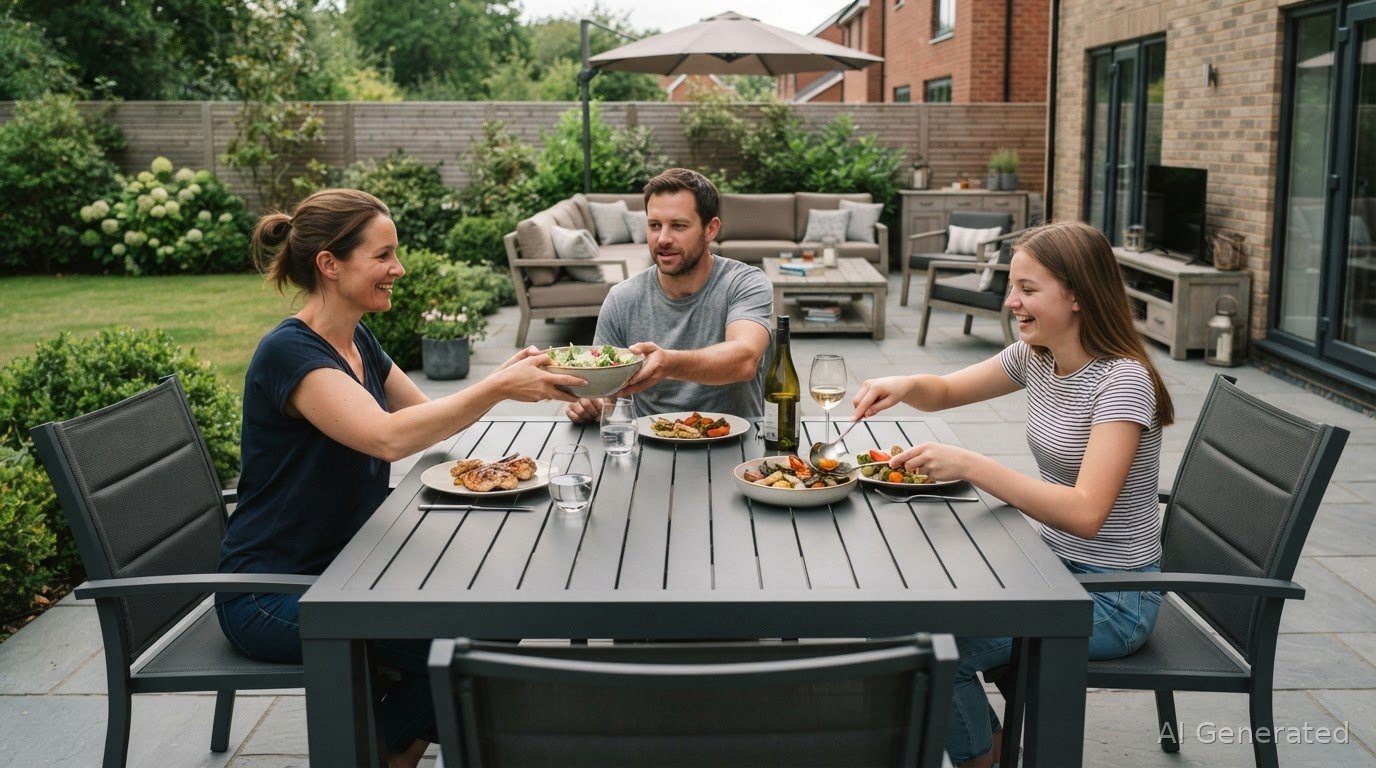
A dining area can work for a quick garden lunch as well as a relaxed gathering. Choose the table shape, chair arrangement and position to suit how people move through your patio.
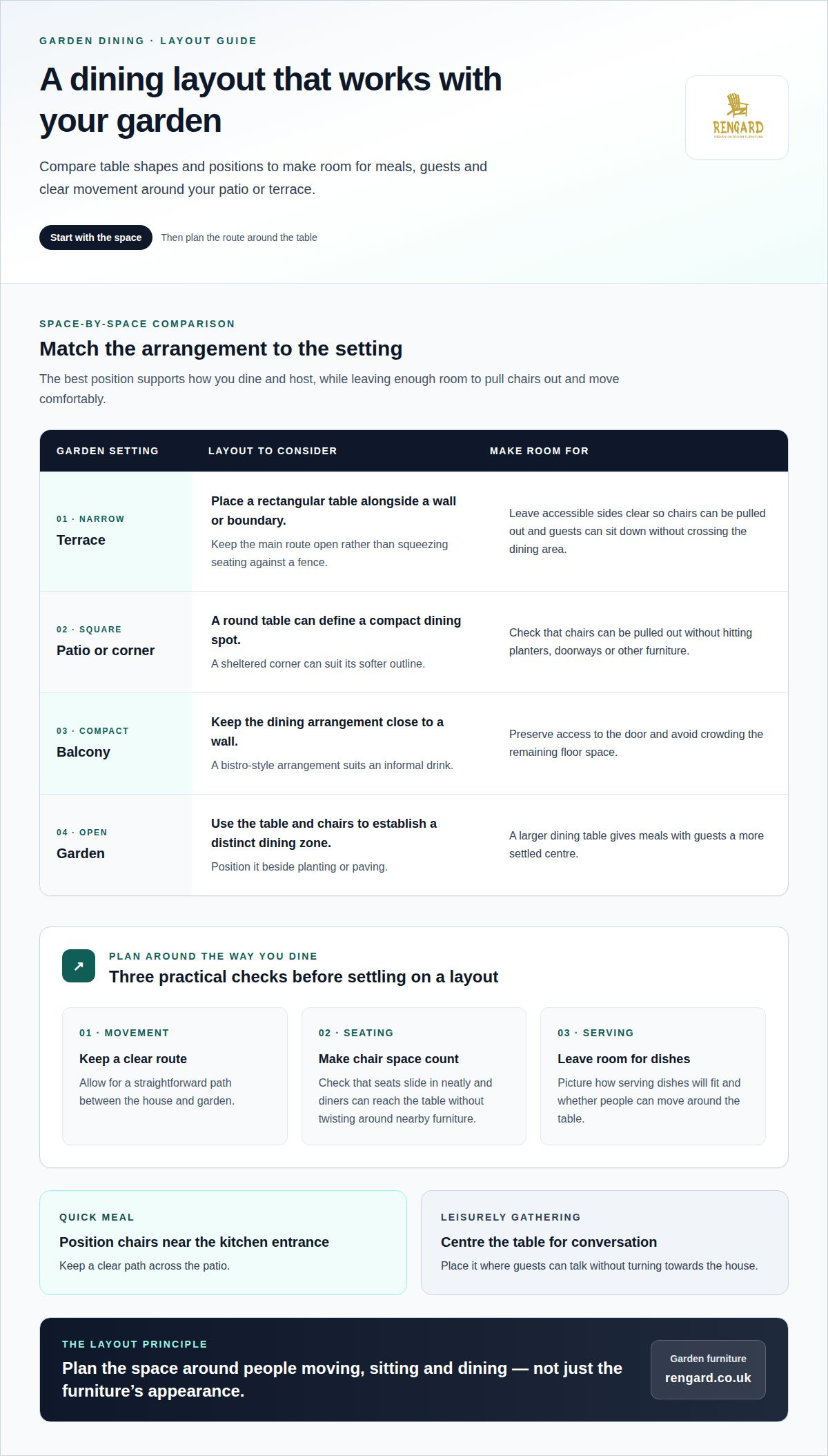
On a narrow terrace, a rectangular table can sit alongside a wall or boundary, keeping the main route open. Leave the accessible sides clear for chairs rather than squeezing seating against a fence. This makes everyday meals straightforward and gives guests room to sit down without crossing the dining area.
A round table can suit a square patio or sheltered corner, where its softer outline helps define a compact dining spot. Place it where chairs can be pulled out without hitting planters, doorways or other furniture. A bistro-style arrangement suits an informal drink, while a larger dining table gives meals with guests a more settled centre.
Before settling on a layout, picture how you’ll use the space around the table. Serving dishes need room, and diners need a clear route between the house and garden. Moving a planter or side table may create more usable space than choosing a smaller dining surface. The best arrangement supports the way you host, not just the furniture’s appearance.
- For a quick meal: position chairs near the kitchen entrance, with a clear path across the patio.
- For a leisurely gathering: centre the table where guests can talk without turning towards the house.
- For a compact balcony: keep the dining arrangement close to a wall and preserve access to the door.
- For an open garden: use the table and chairs to establish a distinct dining zone beside planting or paving.
Comfort depends on how the table and chairs work together, not on the chair alone. Check that seats slide in neatly and diners can reach the table without twisting around nearby furniture. Padded Textilene provides a cushioned surface, while an aluminium frame gives the chair a clean-lined appearance. Together, these details can make an everyday dining area feel considered as well as practical.
For a set used for meals and occasional entertaining, keep accessories purposeful. A parasol can provide shade in an exposed dining spot; a compact side table can hold serving items without crowding the main surface. In a small patio, choose one useful addition rather than filling the remaining floor space.
Compare outdoor dining sets with your patio layout in mind, then discuss your garden dining requirements if you’d like guidance on arranging the space.
Powder-coated aluminium chair frames
A chair combines its frame with a surface finish, and both affect its appearance and care. Consider the coating and frame details together when choosing a dining set.
Powder-coated finishes
Powder coating is a dry finish applied to metal and cured to form a coating. On an aluminium chair, it gives the frame a consistent colour and finish. Look closely at exposed edges, joints and corners, where an uneven surface is easier to spot.
For example, compare the outside of the arm and the underside of the chair, not just the most visible surfaces. A smooth, even finish gives the frame a considered appearance. The coating protects the metal surface from everyday contact, but it doesn’t make the chair immune to damage.
After use, wipe dirt from the frame with a soft cloth and mild soapy water, then dry it. Grit around a joint or arm can mark the finish as chairs move against one another. Avoid abrasive tools that could scratch the coating. Follow the furniture’s care instructions for marks or scratches rather than applying unapproved paint.
Consider how the chairs will be moved and stored. Dragging a frame across rough paving can scrape its lower edges; lifting it helps avoid unnecessary friction. In a compact patio, chairs may sit close together, so check whether their arms or legs knock when pushed beneath the table.
Aluminium chair frames
Aluminium gives a chair a clean-lined frame without the visual bulk of some heavier-looking designs. The profile, joins and construction still matter: slender sections can look refined, while the shape and position of the supports affect how the chair feels in use.
Look at the chair from the side and behind as well as from the front. Check how the legs meet the seat, where the crossbars sit, and whether the arms leave room to approach the table. These details show how the frame is designed for sitting and dining.
A well-balanced chair should feel steady on the surface where you’ll use it. On uneven paving, position each leg securely before sitting down. If chairs will move between the dining table and a garden corner, consider their weight and how easily you can handle them. Aluminium can be easier to lift than a bulky frame, though construction affects how a chair feels.
Finally, consider the frame alongside the padded seat and table height. A sturdy-looking profile can’t make up for a chair that feels cramped or leaves diners sitting awkwardly at the table. Assess the complete chair, including its arms, legs and finish, as one practical design choice.
Weather resistance and maintenance
Garden furniture faces rain, damp air and changing conditions. Consider each material separately, then follow a straightforward care routine suited to how and where you use the set.
Weather resistance
Aluminium frames and Textilene seats have different characteristics. HEVEA Textilene chairs use coated mesh stretched across the frame and are described as lightweight, quick-drying and easy to wipe clean. These qualities can suit a patio where showers interrupt outdoor meals, but the whole set still benefits from sensible care.
Look beyond the chair fabric. A table may have a different surface, and joints, fixings and frame finishes also affect how the complete set performs outdoors. Water, for example, can remain around a table edge or beneath a seat after rain. Include these areas in your checks rather than judging the set by its frame alone.
Consider the set’s position through a typical week. An exposed terrace faces different conditions from a sheltered courtyard beside the house. Positioning furniture away from persistent drips beneath gutters can reduce repeated wetting. Where wind-driven rain reaches the dining area, move removable pieces under cover to keep them ready for use.
Ongoing maintenance
Gentle cleaning is a practical way to manage garden grime. Wipe Textilene mesh with a soft cloth and mild soapy water, then let it dry. Dirt can collect where the seat meets the frame, so clean that join carefully rather than scrubbing with abrasive tools.
For an aluminium frame, remove loose soil and leaves before wiping the surface. Pay particular attention to lower legs, joints and the underside of armrests, where damp debris may gather. Drying the frame after cleaning helps prevent water marks. Follow the furniture’s care instructions for suitable cleaning products, especially if the finish has visible marks or scratches.
- After a shower: wipe standing water from the tabletop and chair frames.
- After a meal: clear crumbs from the mesh and frame joins before they settle.
- Before storing removable pieces: let them dry, then keep them in a sheltered place.
- During routine cleaning: inspect contact points where chairs meet paving or the table.
These simple steps make cleaning manageable without treating every material alike. A padded Textilene seat needs attention to its mesh and seams; an aluminium frame benefits from clean joints and an intact finish. For a dining set used through changing seasons, follow the care guidance for its components and adapt your routine to its position.
Weatherproof and rustproof furniture
“Weatherproof” and “rustproof” describe different qualities, not a reason to ignore care. For a garden dining set, assess the aluminium frame, surface coating, tabletop and chair fabric separately. Rain can collect on exposed surfaces, so consider how each component will be used outdoors.
Aluminium frames are rust-free, and powder coating gives them a finished surface. The coating still deserves sensible care: a deep scratch can expose the material beneath. Inspect chair legs, corners and contact points rather than judging the frame by colour alone. A clean, intact finish helps the furniture keep its considered appearance.
“Rustproof” is only one part of the picture. A dining set combines materials with different finishes and care needs, including the frame, tabletop and fabric. Inspect the whole design, paying attention to edges and places where water or garden debris might collect. This helps you understand how the set is made and where routine cleaning is useful.
Use these checks when assessing a set for outdoor use:
- Identify each material: distinguish the aluminium frame from mesh seats and tabletop surfaces.
- Inspect vulnerable areas: look at joints, edges, feet and places where chairs meet the table.
- Consider the position: an uncovered patio faces different exposure from a sheltered courtyard.
- Plan storage: move removable pieces under cover during prolonged poor weather, following their care guidance.
These checks help you avoid treating “weatherproof” as an absolute promise. Rain resistance doesn’t mean a set stays dry when water is trapped, and a coated frame doesn’t make every component immune to wear. For example, debris caught between a chair foot and wet paving can hold moisture against the finish. Clear away leaves and dirt, then let surfaces dry after cleaning.
Choose furniture for the conditions it will face. On an exposed terrace, consider shelter and regular inspection alongside the materials. In a covered patio, the set may receive less direct rain, but damp can still linger around joints. Positioning, drainage and basic upkeep all influence how the furniture performs over time.
For information about materials and outdoor care, see the contact page.
Rengard
Rengard is a natural next step when you’re ready to turn material comparisons into a considered garden dining choice. Think about how the frame, chair finish and table will work with your patio, paving and existing outdoor furniture. Rengard’s range includes dining tables and furniture accessories, helping you consider the wider setting as you plan a cohesive space. This is useful when you’ve settled on the look you prefer but want to think through how the dining area fits into your garden. Keep your priorities clear: comfort, materials, appearance and the care you can give the furniture. Contact Rengard to discuss your garden dining plans.
Make your garden ready for dining
Choosing an aluminium outdoor dining set with padded Textilene chairs is an opportunity to shape how you use your outdoor space, not simply fill it. Picture where you’ll enjoy the first meal, how people will approach the table, and what view you’d like from each seat. Imagining the setting can guide your choice more clearly than a product image alone.
Before deciding, measure the intended area and note nearby doors, planting and pathways. Consider how the set will fit into your routine, from weekday lunches to hosting friends on a mild evening. Decide whether the arrangement should feel connected to the kitchen or set apart as a destination. A well-planned dining corner can make a patio or garden feel like a natural extension of the home.
When you’re ready to explore the next step, contact Rengard about garden dining sets. Bring your ideas for the space and the atmosphere you want to create, and start shaping an outdoor setting that feels distinctly yours.
Frequently Asked Questions
What is the difference between rope weave, Textilene and aluminium dining chairs?
Aluminium describes the chair frame, while rope weave and Textilene describe woven or mesh seating surfaces. Rope has a more tactile, visibly woven appearance; Textilene is a coated mesh with a cleaner, more open look. Some chairs combine an aluminium frame with either material. Compare the seat texture, support and overall silhouette, then consider how each design works with your table and other garden furniture.
What is an aluminium outdoor dining set with padded Textilene chairs?
An aluminium outdoor dining set with padded Textilene chairs pairs metal chair frames with mesh seating and added padding, alongside a dining table. Aluminium forms the chair structure; Textilene makes up the seat or back, depending on the design. Padding changes the feel compared with unpadded mesh. Look at the complete chair and table combination, as designs vary in shape, support and finish.
How do padded Textilene chairs compare with standard Textilene, rope or rattan garden chairs?
Padded Textilene adds a softer layer to a mesh chair, while standard Textilene places the mesh more directly against the sitter. Rope weave has a more pronounced texture, while rattan creates its own distinctive woven look. These differences affect both appearance and feel. Choose padded mesh for a softer surface, or rope or rattan if woven detail is central to your garden scheme.
Are Textilene garden chairs weather-resistant and UV-resistant?
Weather performance depends on a chair’s materials and construction. Rengard states that its outdoor fabrics are designed to resist sunlight, frost and water, and that its cushion fabrics are UV-resistant. These claims apply to the stated fabrics, not necessarily to every component or to all Textilene chairs. Check the care information for the particular set, especially if it will be in an exposed position.
How should I clean and maintain aluminium frames and padded Textilene chairs?
Follow the care guidance for each component, since mesh, padding and frame finishes may need different attention. Remove loose garden debris before cleaning, and avoid sharp tools that could catch the fabric. If the set is near trees, check beneath the seat and around its joins after leaves fall. Rengard’s aluminium frames are powder-coated, and its product guidance recommends regular rinsing for stains.
Do padded Textilene garden chairs need cushions removed or stored in bad weather?
Check whether the padding is integrated into the chair or supplied as a separate cushion. Separate pieces can be brought under cover when persistent rain is forecast, while integrated padding should be cared for according to its product instructions. Rengard states that its outdoor fabrics are designed to resist water and sunlight, and that its cushion fabrics are UV-resistant. Let removable pieces dry before storing them.
What should I check when buying an aluminium garden dining set, including frame, chair comfort and warranty?
Assess the frame finish, joins and chair stability, then sit in the chair to judge its support and padding. Check that its height and arms suit the table, and that chairs can move comfortably around your intended space. Read the warranty terms carefully, including what components they cover, any exclusions and the care conditions. Warranty details vary by product, so rely on the terms supplied with the set.
What sizes and seating capacities are available for aluminium garden dining sets with padded Textilene chairs?
An 8-seat rectangular aluminium dining set with a wood-effect finish is one available option.