Outdoor Living Accessories UK: Best Covers & Lighting 2026
British outdoor living has shifted, I think. Gardens, patios, and even balconies are no longer treated as places used for only a few warm weeks, and that short‑season mindset has mostly faded. Homeowners now expect these areas to cope with rain and wind, plus strong summer sun, without constant fixes or weekend repairs. In practice, this expectation often guides people toward outdoor living accessories UK homeowners prefer that last all year, look well thought‑out rather than flashy, and work reliably in everyday conditions, which usually matters more than style on its own.
Across Shropshire, Cheshire, Staffordshire, Manchester, and Birmingham, people are spending more on outdoor living accessories UK buyers can depend on. Many begin with durable outdoor covers, as these protect furniture through wet springs and frosty winters and help cut wear and replacement costs, savings that become clear over a few seasons. Moreover, weatherproof garden cushions add comfort without constant drying or regular replacement. Outdoor lighting UK homeowners choose has changed too, with a move toward efficient fittings and subtle designs made for nightly use, not one‑off events.
Focused on 2026, this guide looks at weather‑resistant covers and lighting, along with cushions designed for year‑round conditions, keeping the scope clear and practical. It explains which materials matter most, points to common buying mistakes, and shows why premium outdoor accessories UK customers treat as an investment can save money over time, especially once replacement and upkeep are considered.
Durable outdoor living accessories UK covers built for British weather
By 2026, patio covers are no longer the thin, short‑term fixes many people remember. The waterproof furniture covers UK homeowners now choose are made to stay outdoors all year, without the repeated lifting on and off that quickly turns into a chore. Rather than just making furniture look tidy from a distance, they’re designed to protect aluminium frames and teak or rattan surfaces from moisture and from UV damage that often builds up quietly over time. In my view, that’s protection that does what it claims.
The real difference comes down to construction. High‑quality durable outdoor covers now use multi‑layer fabrics instead of basic single sheets. They often combine recycled polyester with a waterproof yet breathable inner layer, instead of sealing everything under plastic. Breathability matters because it usually cuts down moisture build‑up underneath, which is a common cause of mould and mildew in damp British conditions (you’ve probably seen this before). UV‑resistant coatings also help reduce fading and surface cracking as seasons change, slowly, but in ways that eventually become obvious.
This focus on longer use reflects a wider shift. The UK outdoor furniture market reached £1.39 billion in 2025, showing how seriously buyers think about build quality and long‑term protection (Statista). Premium outdoor furniture protection UK buyers select often lasts five to seven years when cleaned and stored properly, which matters if the furniture itself was a major purchase.
Fabric alone isn’t enough. Fit matters just as much. Covers shaped to match seating sets and sun loungers usually perform better than loose designs. Adjustable hems and secure fastenings help reduce wind lift, especially in exposed gardens across Cheshire and Staffordshire, where gusts can be persistent and unforgiving.
For anyone buying high‑end aluminium or teak furniture, it makes sense to see covers as part of the original purchase rather than an afterthought. A wider look at furniture made for local conditions is covered here: best weather‑resistant outdoor furniture for UK gardens. Additionally, you can explore Weather Resistant Outdoor Furniture UK: Best Materials for deeper insight into build quality. For broader market data, see Statista’s UK outdoor furniture report.
Weather‑resistant cushions that stay comfortable
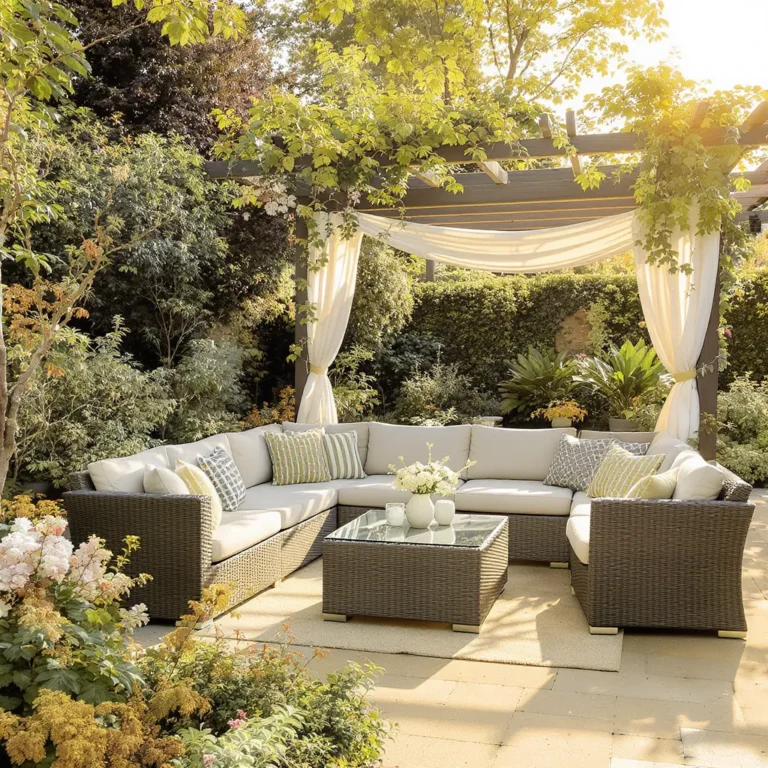
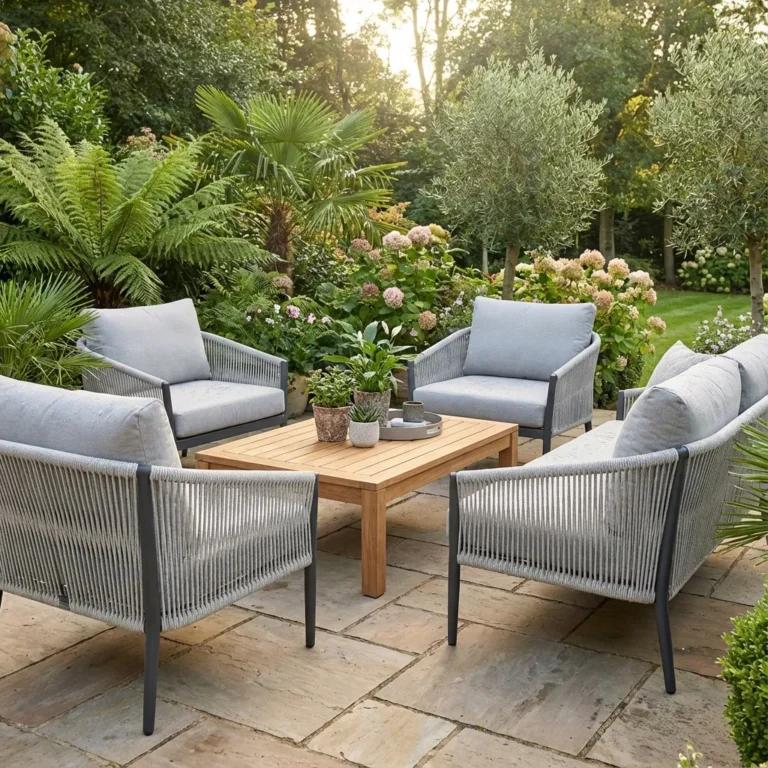
Outdoor comfort usually becomes clear once a garden is actually used rather than just viewed from indoors, and that’s where weather‑resistant cushions tend to prove their value. In 2026, this category is growing quickly around the world, largely because more people are setting up gardens for everyday living instead of occasional use. Consequently, the focus often returns to a simple point: where people sit, whether that means benches, loungers, or full garden sofas.
The outdoor cushions market was valued at $5.7 billion in 2023, and is projected to reach $9.4 billion by 2033, growing at a CAGR of 5.2% from 2024 to 2033.
What’s driving this growth is less about fashion and more about better materials combined with smarter design choices. Many modern weatherproof cushions now use solution‑dyed fabrics, where colour is built into the fibre instead of applied afterwards. That change makes a clear difference in strong summer sun, where surface‑dyed fabrics often fade within a single season, something many garden owners have experienced.
Inside the cushion, a similar change is happening. Quick‑dry foam cores let rainwater pass through instead of pooling, which suits British gardens where showers often arrive without warning. These cores are often paired with removable, machine‑washable covers, making long‑term care more realistic and supporting regular use instead of careful storage.
Dr. Sarah Bridle from the University of York explains that solution‑dyed fabrics resist both colour loss and fibre breakdown far better than surface‑dyed textiles. In wet, high‑UV climates like the UK, she sees them as a practical option for outdoor cushions exposed year‑round.
We look at these fabric choices in more detail in this buyer guide to weatherproof outdoor fabrics for garden sofas, which compares durability, maintenance, and colour performance. Furthermore, Outdoor Furniture Accessories to Elevate Any Garden explores complementary items that enhance comfort. You can also review Good Housekeeping’s guide to outdoor cushion care for external advice on maintenance.
Outdoor lighting that works year round
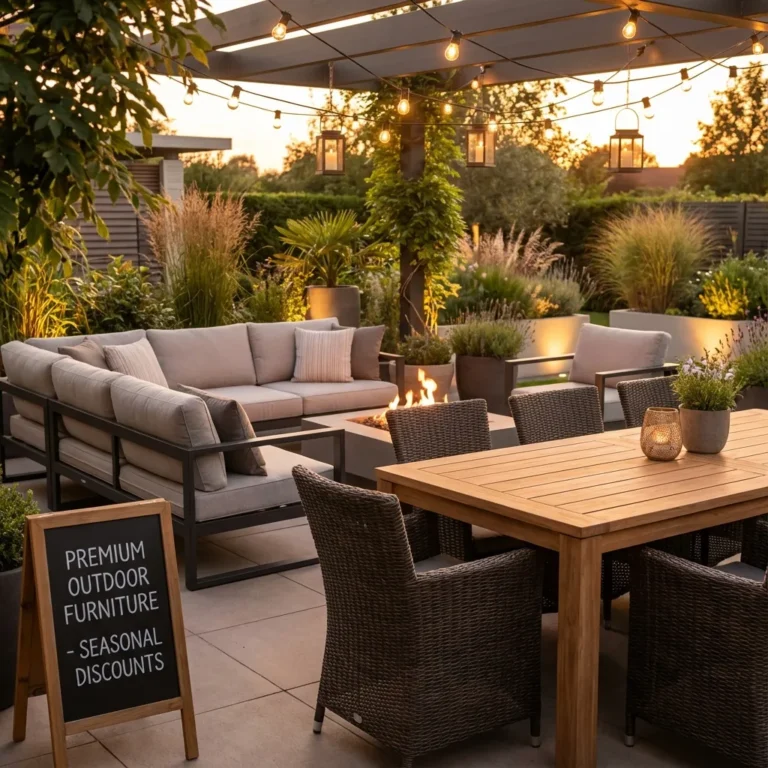
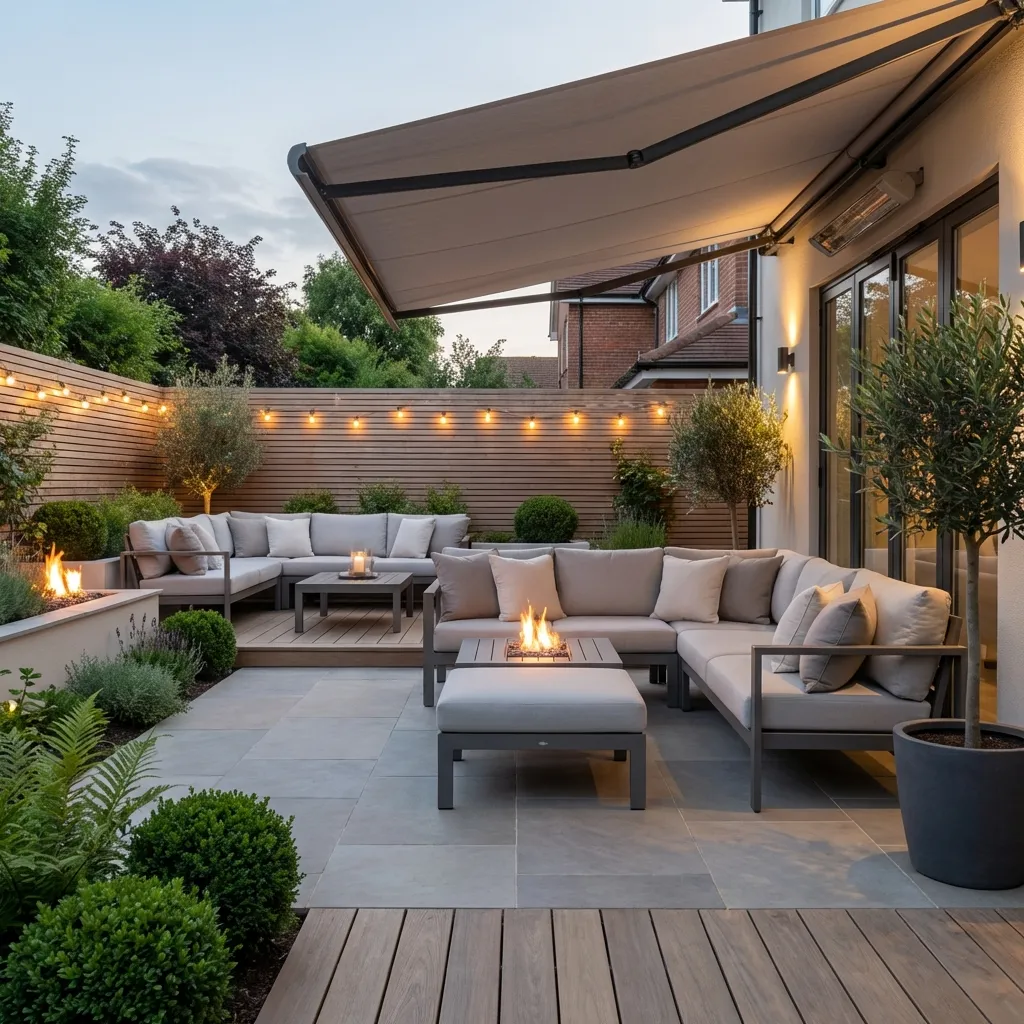
Outdoor lighting UK design has grown over time. Harsh spotlights and short‑life solar stakes are seen less often now, mostly because homeowners got tired of replacing them so frequently. What appears instead is layered LED garden lighting designed for everyday use, with a clear purpose around paths, seating areas, and planting beds. In practice, this means less glare and more balance, rather than lighting that floods and overpowers a space.
Smart, low‑energy LED lighting is becoming a staple of outdoor design, offering flexibility, safety and ambience with minimal environmental impact.
Warm‑white LEDs between 2700K and 3000K are still the most common choice. They give off a soft glow that works well with materials like teak and rattan, which becomes obvious once it gets dark. IP65 or higher ratings are also standard. This level of protection helps fittings handle rain, frost, and regular exposure, so there is less need for ongoing maintenance.
In urban areas such as Manchester and Birmingham, low‑voltage and solar‑hybrid systems are widely used. They reduce energy use while staying reliable through darker winter months. Moreover, motion sensors and app‑controlled lighting are often added to improve safety and cut wasted power during long evenings.
For balconies and compact patios, subtle lighting usually has the strongest effect. Wall‑mounted fixtures paired with step lights or table lanterns help make the space feel warmer and more open, rather than tight or crowded.
Matching outdoor living accessories UK to premium furniture materials
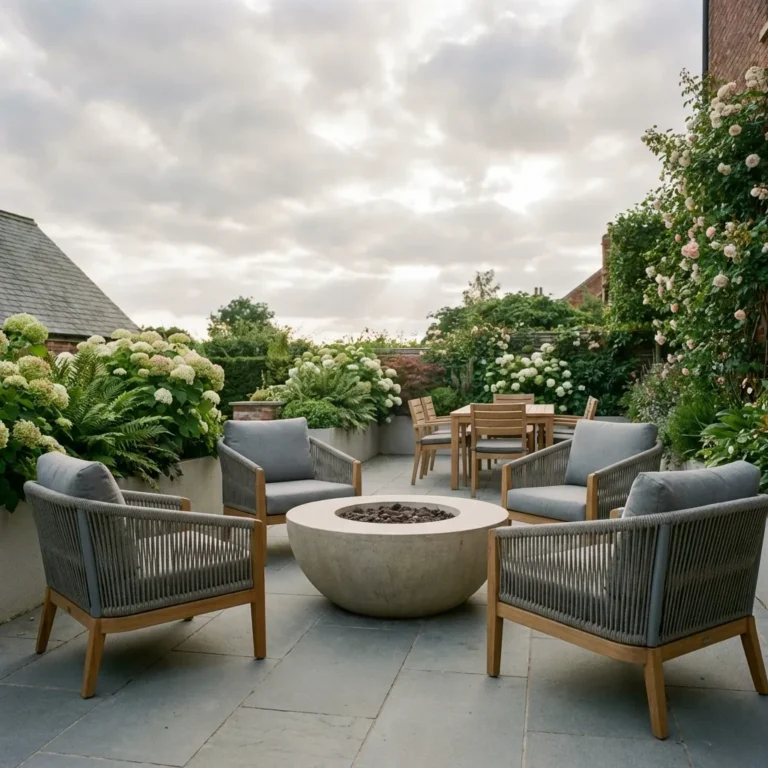
What often makes the biggest difference over time is how well outdoor accessories suit the furniture beneath them, a detail that is easy to overlook. Aluminium frames, for example, tend to work best with breathable covers that limit moisture and condensation. This matters once you look beyond a single season and think in terms of several years. Teak, along with woven materials such as rattan and rope, generally benefits from UV protection and steady airflow. This helps slow silvering, surface wear, and stress on finer finishes. Anyone who has seen badly faded teak up close usually understands why this matters.
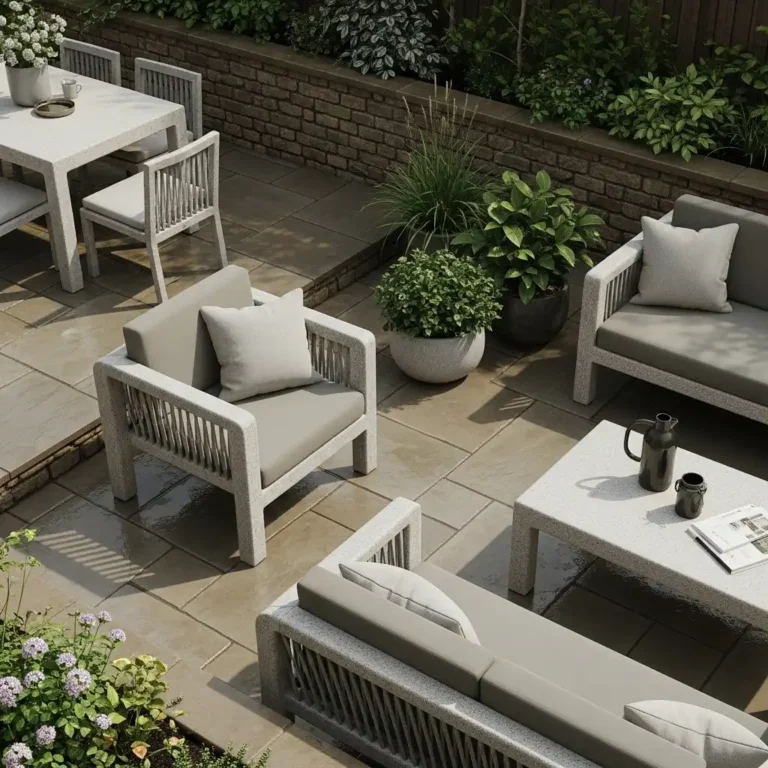
Across many premium ranges, powder‑coated aluminium is popular because it handles damp conditions more reliably. Mark Tyson from Gardens of Style UK points out that aluminium and recycled HDPE often suit British weather since they need less regular maintenance. Steel and untreated timber, by comparison, usually need more attention as the seasons pass, especially after winter.
Small details also add up. Cushion ties, non‑slip bases, and well‑fitted covers reduce movement during everyday use. This is especially relevant for modular sofas and dining sets left outside through spring and autumn.
These ideas still apply in tighter settings. We explored this further in an article on small space garden furniture in the UK, where accessories improve comfort without overwhelming the layout. Simple choices, but usually effective in practice.
Sustainability and outdoor living accessories UK trends for 2026
What stands out in 2026 outdoor living trends is how sustainability has shifted from a talking point to a basic expectation. Premium buyers now assume eco‑friendly materials are included and don’t feel the need to ask. That mindset shows up in real product choices. Recycled aluminium and solution‑dyed fabrics, along with replaceable cushion covers, are now common because they cut waste in ways owners notice during everyday use, especially on patios or terraces that see heavy use.
Covers made from recycled polyester blends are also appearing more often. Buyers sometimes question performance, but these materials still offer reliable waterproof protection, so the trade‑off is mostly in perception, not results. FSC‑certified teak alternatives and composite finishes add another layer, particularly for buyers who pay close attention to sourcing.
Longevity connects all of these trends. Accessories are expected to last around a decade, not just a single season. Extended warranties and modular designs that let owners replace individual parts often signal durability more clearly than bold marketing claims. In practice, long‑term thinking is the improvement buyers respond to.
Outdoor spaces are no longer seasonal; homeowners are designing gardens that function reliably through changing weather conditions.
Commonly Asked Questions (FAQ)
Breathable membranes can matter as much as waterproofing because moisture builds up unless systems work together, not on their own. Weather resistance usually comes from layered fabrics, sealed seams, and UV‑stable coatings, the basics.
Well-made cushions with quick-dry foam and solution-dyed covers usually handle rain and sun. They’re generally safe. Winter is different, and storing them or using a fitted cover often helps extend their lifespan.
What type of outdoor lighting is best for UK gardens?
Warm‑white tones add a sense of comfort and use less energy. That’s why low‑voltage LED lighting with an IP65 rating or higher usually works best in UK gardens.
How often should waterproof furniture covers be replaced?
Premium covers often last five to seven years, but lifespan depends on local wind and UV exposure, so regular checks help you notice wear before it becomes a problem.
Are premium outdoor accessories worth the higher cost?
So yes, for homeowners like you, it’s worth it. Higher-quality materials last longer, fade less, need less upkeep, and protect expensive furniture for years over time.
Creating an outdoor living accessories UK space that lasts
What often stands out in UK outdoor comfort solutions for 2026 is a sense of confidence. Confidence that furniture and cushions usually stay protected and comfortable, even after several days of wet weather (which happens). Confidence as well that lighting works each evening, including summer nights when the weather changes and you’re not adjusting switches at dusk (we’ve all been there). That sense of reliability often decides whether the space is actually used.
When durable outdoor covers, weather‑resistant cushions, and well‑planned LED garden lighting come together, the space fits real life. That’s the point. Spring mornings with coffee while it’s still cool (you grab a jumper). Autumn dinners under soft, steady light, where faces are easy to see and the table stays usable. Premium outdoor living, in my view, is now a year‑round habit, built on quality materials and fewer repairs.
For more ideas, see Outdoor Dining Manchester: Comfort Trends & Garden Ideas 2026 and Stylish Garden Furniture Ideas for Cheshire Homes in 2026, both offering inspiration aligned with outdoor living accessories UK buyers appreciate.