How to Clean Outdoor Fabric Cushions: The Complete UK Guide
The instinct to aggressively scrub garden upholstery with harsh detergents often does more harm than an unexpected British downpour, stripping away the invisible barrier that repels moisture. If you are wondering how to clean outdoor fabric cushions without ruining their water-resistant performance, you aren’t alone. Between persistent autumn damp, bird droppings, and stubborn green algae, keeping garden lounge fabrics pristine can feel like an endless battle against the elements.
It’s completely understandable to worry that a thorough wash might degrade factory coatings or leave behind soapy residue that attracts fresh grime. You don’t need abrasive chemicals to restore tired outdoor cushions; you simply need the right gentle, deliberate technique. We’ll show you how to safely lift organic stains, eliminate persistent mildew spores, and protect your garden furniture suite against damp weather. Here is everything you need to know to revive your outdoor upholstery with complete confidence.
Key Takeaways
- Master how to clean outdoor fabric cushions using a structured five-step routine that lifts embedded grime without stripping technical water-repellent coatings.
- Tackle persistent British garden blemishes, such as damp green algae and organic mildew, using fabric-safe solutions tailored to modern outdoor textiles.
- Understand the critical role of thorough rinsing, ensuring no surfactant residues remain to compromise your upholstery’s natural water beading.
- Adopt the vertical drying method to allow gravity to drain moisture away from foam cores, protecting your outdoor furniture cushions from trapped interior damp.
- Implement simple preventative habits and breathable seasonal storage practices to keep your garden seating looking immaculate throughout the year.
Understanding Outdoor Cushion Fabrics and Common Garden Stains
Modern garden upholstery represents a thoughtful balance of tactile luxury and environmental resilience. Premium garden seating pairs synthetic textiles, protective finishes, and quick-dry permeable cores to withstand damp climates. While synthetic fibres inherently resist rot, they aren’t self-cleaning. Windblown airborne dirt, seasonal tree pollen, and sticky sap collect between woven fibres. These organic residues act as a nutrient layer, feeding opportunistic mould spores and green algae across shaded patios.
Understanding the interplay between technical weave and inner foam is central to mastering how to clean outdoor fabric cushions effectively. Without knowing your textile specifications, well-intentioned cleaning can trigger colour loss, permanent fibre shrinkage, or surface abrasion.
To visualise practical ways to revitalise tired patio textiles, watch this helpful demonstration on lifting persistent garden stains:
Key Materials: Solution-Dyed Acrylics, Polyester, and Polypropylene
Solution-dyed fabrics lock pigment within the liquid polymer before extrusion, preventing UV fading and tolerating deep cleaning solutions. Polyester and polypropylene blends offer excellent strength and inherent water repellency for outdoor living. These fabrics require gentle, neutral detergents to safeguard their factory finishes. Always inspect the care label sewn into the cushion cover seam before introducing liquid cleaning treatments.
The Anatomy of Quick-Dry Foam Cushions
Unlike standard indoor foam that acts like a sponge, technical outdoor seating relies on an open-cell network. High-performance cushion collections from outdoor sofa sets to casual terrace dining suites feature porous cores that let rainwater filter straight through instead of pooling internally.
- Open-cell architecture: Porous cavities facilitate swift vertical drainage, drastically reducing overall drying times after cloudbursts.
- Rot prevention: Trapped interior moisture breeds internal fungus and sour odours; quick-dry foam preserves internal ventilation.
- Controlled surface washing: Knowing how to clean outdoor fabric cushions means focusing your soapy solution on the exterior cover weave, avoiding unnecessary interior saturation.
How to Wash Outdoor Fabric Cushions: A Step-by-Step Guide
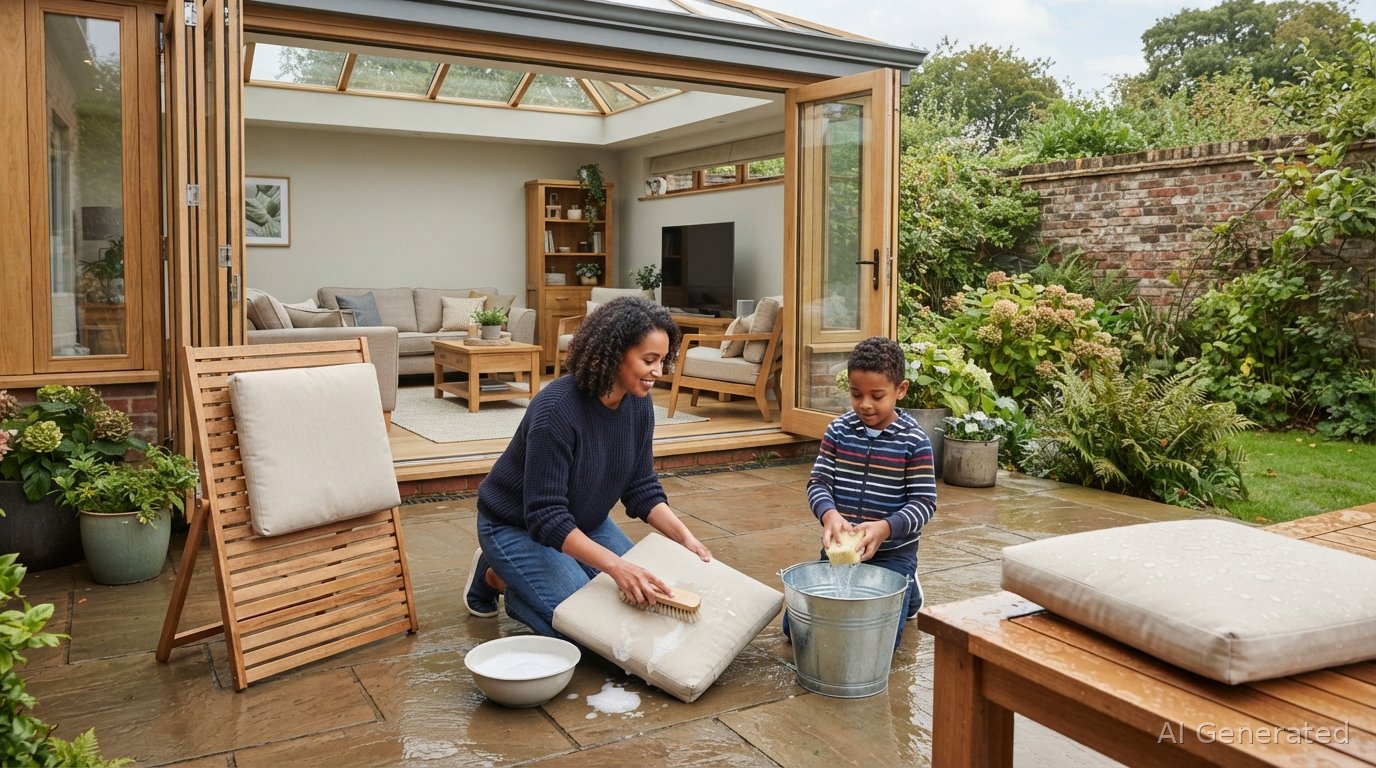
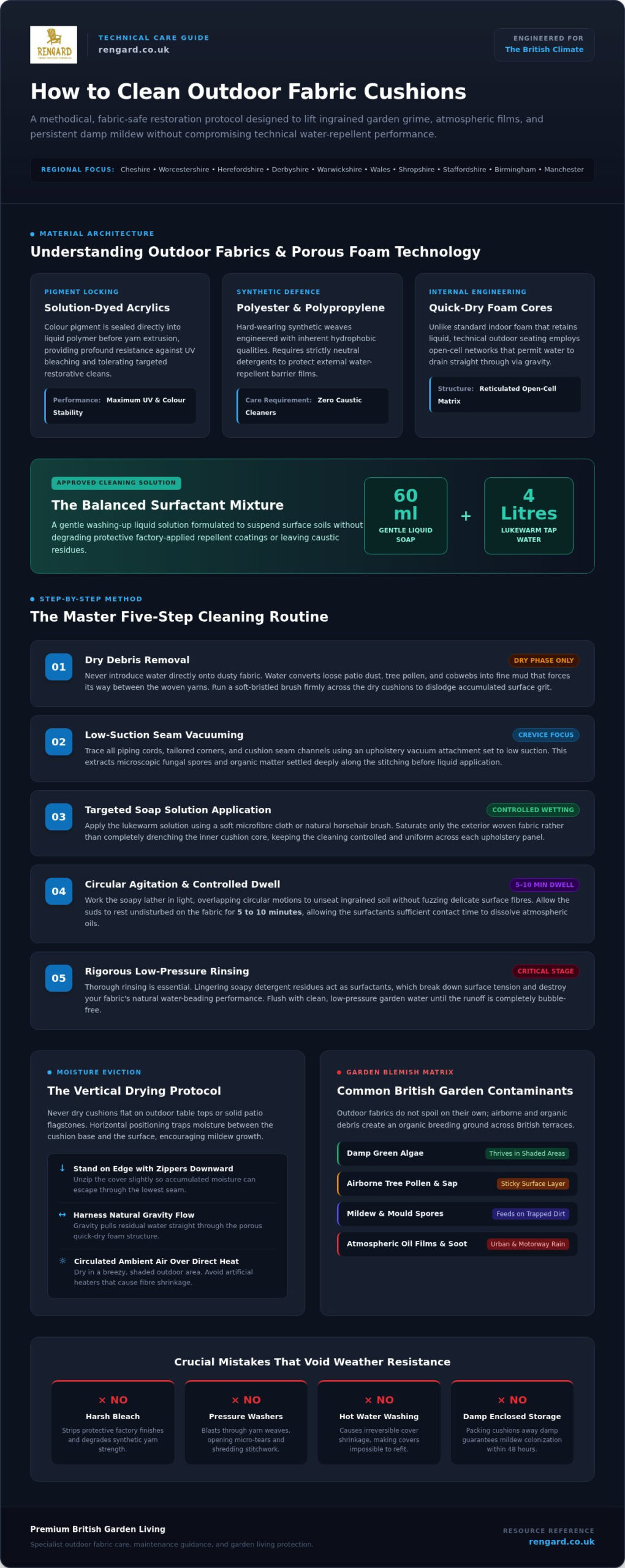
Maintaining the visual appeal and tactile softness of garden upholstery requires a methodical hand rather than aggressive scrubbing. When mastering how to clean outdoor fabric cushions, following a structured five-step sequence ensures you lift deeply settled grime without damaging delicate yarn structures. This simple routine works across lounge seating, dining sets, and poolside loungers alike.
Step 1 & 2: Dry Debris Removal and Vacuuming
Always begin your restoration dry. Introducing water to dusty upholstery transforms loose debris into fine mud that works its way into the weave. Run a soft-bristled brush firmly over the fabric to dislodge garden grit, desiccated foliage, and cobwebs. Follow this with an upholstery attachment on low suction, tracing piping cords and seam crevices where loose particles congregate.
Step 3 & 4: Applying Soap Solutions and Gentle Agitation
Preparing a balanced cleaning mixture protects technical textile coatings. Combine 60 ml of gentle washing-up liquid with 4 litres of lukewarm tap water in a clean bucket. Avoid harsh household bleaches or abrasive washing powders, which strip factory-applied water repellents.
- Gentle application: Dip a soft microfibre cloth or horsehair brush into the soapy water, lathering the fabric evenly across each panel.
- Circular agitation: Work in light, overlapping circles. This motion lifts ground-in dirt without pulling fine fibres or creating friction fuzzying.
- Dwell time: Allow the suds to rest on the surface for five to ten minutes, giving the surfactants time to break down atmospheric oil films.
Step 5: Thorough Rinsing and Residual Water Extraction
Rinsing represents the most critical stage of the entire process. Residual soap leaves a sticky surfactant film across the weave that destroys natural water beading and attracts airborne dust. Direct a low-pressure garden hose over the cushion, rinsing continuously until the runoff runs completely clear and bubble-free. Never resort to high-powered jet washers; intense water pressure slices through stitched seams and tears protective backings.
Once rinsed, sandwich each cushion between dry bath towels and press down firmly to extract excess water from the surface. If you need bespoke care guidance for specialised garden arrangements, feel free to reach out to our friendly design team for expert support.
Targeted Stain Removal: Banishing Mildew, Algae, and Food Spills
Accidents and environmental deposits are an inevitable part of open-air living. The secret to restoring your garden upholstery lies in identifying whether a mark is fungal, oil-based, tannin-based, or organic debris before reaching for a bottle. Treating spots promptly stops heat and sunlight from baking pigments deep into the weave. When discovering how to clean outdoor fabric cushions marked by stubborn stains, targeted remedies lift grime without compromising the underlying synthetic fibres.
Eradicating Green Algae and Stubborn Mildew Spores
Damp, shaded seating areas often develop unsightly dark spots and greenish films over extended wet spells. Distilled white vinegar provides an exceptional, natural alternative to harsh bleach, neutralising fungal spores without breaking down UV-resistant yarn structures.
- Prepare the spray: Mix equal parts distilled white vinegar and lukewarm water in a clean spray bottle.
- Allow dwell time: Mist the affected area generously and leave the mild acid to break down spore walls for fifteen minutes.
- Agitate and rinse: Work the area lightly with a soft brush, then flush thoroughly with clear garden hose water.
Tackling Food Spills, Red Wine, and Barbecue Grease
Summer dining around outdoor dining sets occasionally leads to dropped marinades, dressings, or red wine. Never rub fresh liquid spills; vigorous friction drives rich pigments into the core yarn. Blot the pool immediately using clean, white kitchen roll to soak up excess moisture.
For greasy splatters, cover the spot with a generous dusting of bicarbonate of soda or cornstarch. Allow the powder to absorb the oils for twenty minutes before brushing it away. Finish by dabbing the area with a sponge dipped in warm water and washing-up liquid to dissolve remaining fatty residues.
Safely Removing Bird Droppings and Tree Sap
Resist the initial urge to wipe away wet bird droppings, as this smears acidic waste across a wider area. Wait until the dropping dries completely, then flick away the brittle crust with a plastic scraper. Mist the spot with an enzyme-based fabric cleaner to dissolve lingering organic matter safely. For stubborn pine or birch sap, dab the mark gently using a cotton pad soaked in surgical spirit, checking a hidden cushion seam first to ensure colourfastness.
Drying, Reproofing, and Restoring Water Repellency
Washing your upholstery addresses only half the equation. The concluding phase, drying and reproofing, protects the physical integrity of the fabric and prevents deep-seated internal rot. Knowing how to clean outdoor fabric cushions involves understanding that damp foam cores invite musty smells if left flat on wet flagstones. Proper evaporation and protective surface sealing ensure your garden seating remains welcoming throughout changeable weather.
Best Practices for Fast, Safe Air-Drying
Prop each freshly rinsed cushion vertically on its edge, unzipping the base slightly if the design allows. This vertical stance lets gravity draw lingering moisture down towards the seam rather than letting it pool centrally within the foam core.
- Select breezy positions: Place cushions in a well-ventilated, semi-shaded spot outdoors. High ambient airflow speeds evaporation far more reliably than intense direct midday sun, which can cause fabric distortion.
- Rotate regularly: Flip the cushions end-over-end every two hours to encourage balanced airflow across both sides.
- Avoid artificial heat: Never put outdoor cushion covers into domestic tumble dryers or drape them across central heating radiators. Severe radiant heat shrinks synthetic seams and permanently delaminates backing membranes.
Applying Hydrophobic Reproofing Treatments
Even gentle soaping gradually wears away the invisible factory barrier responsible for surface water beading. Once the fabric fibres feel completely bone-dry to the touch, applying an aftermarket hydrophobic reproofing spray restores that vital pearling effect.
Opt for specialised, water-based or silicone-engineered reproofing treatments formulated specifically for outdoor canvas and woven textiles. Hold the canister roughly fifteen centimetres away, spraying two light, uniform coats over the front, back, and piped edges rather than drenching the surface in a single heavy pass. Pay close attention to needle-punched seams where water naturally attempts to penetrate. Allow the treatment to cure undisturbed in a dry environment for twenty-four hours before returning the upholstery to your garden accessories setup or exposing it to showers.
If you would like tailored recommendations for maintaining premium lounge pieces across the seasons, contact our customer care specialists for personalised product advice.
Preventative Care and Seasonal Storage for Garden Furniture Cushions
Adopting regular care habits preserves fabric elasticity, stitching, and colour vibrancy long before deep washing becomes necessary. A few minutes of proactive upkeep every fortnight safeguards your investment against persistent British damp. When you understand how to clean outdoor fabric cushions with simple routines, you reduce abrasive wash cycles and maintain a pristine terrace setting year after year.
Routine Maintenance Habits for Summer Months
Fine pollen, airborne grime, and dried leaf matter settle naturally across outdoor fabrics during peak garden use. Brushing or shaking out scatter cushions once a week prevents these particles from binding into the piping grooves. Turn reversible seat cushions every fortnight to balance daily wear and promote uniform sunlight exposure across both faces.
Wipe down adjacent frames on your outdoor sofa sets or dining suites with warm water and a clean microfibre cloth. Keeping aluminium, rope weave, or rattan framework clean stops rain splashback transferring garden grit back onto fresh upholstery.
Winter Storage Essentials for British Gardens
Never pack garden textiles away at the end of autumn without verifying that every cushion core is completely dry. Storing cushions with faint traces of internal damp creates an ideal environment for persistent mould proliferation during cold, enclosed winter months.
- Select breathable covers: Avoid non-breathable plastic sheets or cling film. These materials trap ambient humidity and condensation, triggering surface mildew. Choose breathable fabric storage bags instead.
- Utilise dry indoor spaces: Store cushions flat inside warm lofts, dry utility cupboards, or ventilated outdoor storage boxes elevated off damp paving slabs.
- Safeguard surrounding suites: Explore dedicated garden accessories, including water-resistant protective covers and parasol sleeves, to protect complete furniture settings through winter.
Expert Advice and Ongoing Furniture Care
Pairing resilient, quick-drying cushions with durable, rust-free aluminium frames drastically streamlines your seasonal cleaning routine. Premium garden furniture designed for unpredictable weather allows you to enjoy outdoor entertaining without worrying about fabric degradation. If you need bespoke recommendations on how to clean outdoor fabric cushions or care for luxury layouts, contact our team today for friendly, specialist advice.
Sustain the Beauty of Your Garden Living Space
Mastering how to clean outdoor fabric cushions doesn’t require complex routines or aggressive chemicals. By adopting gentle dry-brushing habits, thoroughly rinsing away soap surfactants, and letting cushions dry vertically, you actively preserve the water-repellent performance of your garden upholstery. Premium garden furniture engineered for modern British outdoor living brings together durable rust-free aluminium frames, elegant woven finishes, and resilient quick-dry, UV-resistant fabrics built to endure changing seasonal weather.
With thoughtful preventative care and breathable winter storage, your patio arrangement will remain an inviting haven for sunny morning coffees and relaxed evening gatherings. If you need personalised guidance on caring for your suite or selecting durable layouts for your terrace, speak with our garden furniture experts today. Embracing a simple, disciplined maintenance rhythm ensures your outdoor sanctuary stays immaculate year after year.
Frequently Asked Questions
Can I wash outdoor fabric cushion covers in a domestic washing machine?
Generally no, unless the care label explicitly permits it. Domestic machine agitation can stretch seams, fray technical piping, and degrade internal water-resistant coatings. Rapid spinning or warm cycles often shrink covers, making refitting over quick-dry foam cores exceedingly difficult. Hand washing with a soft sponge, lukewarm water, and gentle soap keeps the fabric’s protective backing and tailored shape perfectly intact.
How do I get green algae and mould out of outdoor cushions?
Apply a mixture of equal parts distilled white vinegar and lukewarm water directly onto the affected fabric. Leave the solution to sit for fifteen minutes so the mild natural acid breaks down fungal cell walls. Brush lightly with a soft nylon brush to dislodge loosened spores, then rinse thoroughly with clean hose water. Vinegar kills spores reliably without degrading UV-resistant yarn.
How long does it take for outdoor garden cushions to dry completely?
Most quick-dry outdoor fabric cushions dry thoroughly within two to four hours on a warm, breezy afternoon. Drying times vary depending on relative humidity and core architecture. Prop cushions upright on their edges to let moisture drain away from lower zip lines. Open-cell foam cores drain water rapidly, whereas dense indoor foam traps moisture for several days.
Is it safe to clean outdoor cushions using a pressure washer?
No, you should never clean garden cushions with a domestic pressure washer. High-pressure jets strip away water-repellent surface finishes, blow through delicate seam stitching, and force moisture deep into internal fillings. Stick to a low-pressure garden hose or a bucket of warm water. Gentle agitation remains the safest approach when learning how to clean outdoor fabric cushions effectively.
What household ingredients work best to remove outdoor cushion stains?
Mild washing-up liquid, distilled white vinegar, and bicarbonate of soda handle almost every garden mark. Diluted washing-up liquid lifts surface soils and grease without harming protective textile coatings. White vinegar tackles stubborn green algae and organic mildew safely. For oily barbecue spills or sunscreen drips, dusting dry bicarbonate of soda over the spot draws out grease before gentle rinsing.
Can outdoor cushions be left outside in the rain throughout the UK summer?
Modern quick-dry, UV-resistant fabric cushions tolerate sudden summer showers, but leaving them exposed to persistent heavy rainfall isn’t recommended. While technical open-cell foams let water pass straight through, continuous damp conditions encourage windblown tree pollen and algae to take root. Tipping cushions on their edges during passing showers aids drainage, but dry storage protects them during prolonged wet spells.
How often should I clean my outdoor garden furniture cushions?
A quick weekly brush and two deeper cleans per year keep outdoor fabrics in peak condition. Regular brushing prevents fallen foliage and dust settling into the weave during summer entertaining. Plan a deeper clean in late spring before regular patio use, followed by an autumn wash before winter storage. Knowing how to clean outdoor fabric cushions regularly prevents minor dirt from forming stubborn mildew.