What Is All-Weather Wicker? A Clear Guide to Outdoor Furniture
What if a wicker-style weave tells you less about garden furniture’s weather performance than the frame beneath it? If you’ve wondered what is all-weather wicker, the label may sound reassuring but still leave important questions unanswered: what are the strands made from, and how will the complete piece fare in a British garden?
That uncertainty is understandable. Wicker describes a weaving style, not a material, and “weather-resistant” doesn’t necessarily mean waterproof. The weave, frame and cushions each affect how furniture copes with rain, sun and seasonal changes. Looking at these components separately helps you choose a design that suits your space, comfort preferences and approach to care.
This guide explains what the term usually means, how wicker differs from rattan, and which construction details to assess. You’ll also find practical ways to compare frames and cushion fabrics, think about care and storage, and choose woven seating for a patio, terrace or garden.
Key Takeaways
- Understand what is all-weather wicker and why the label alone doesn’t specify every material or construction detail.
- Assess the frame, woven finish and cushions separately to understand how the furniture is designed for outdoor use.
- Distinguish wicker, rattan and rope weave by what each term describes before comparing designs.
- Follow the maker’s care guidance and consider how rain, sun and seasonal changes affect furniture in your garden.
- Match materials, maintenance and layout to how you use your garden, patio or terrace.
What does all-weather wicker mean for outdoor furniture?
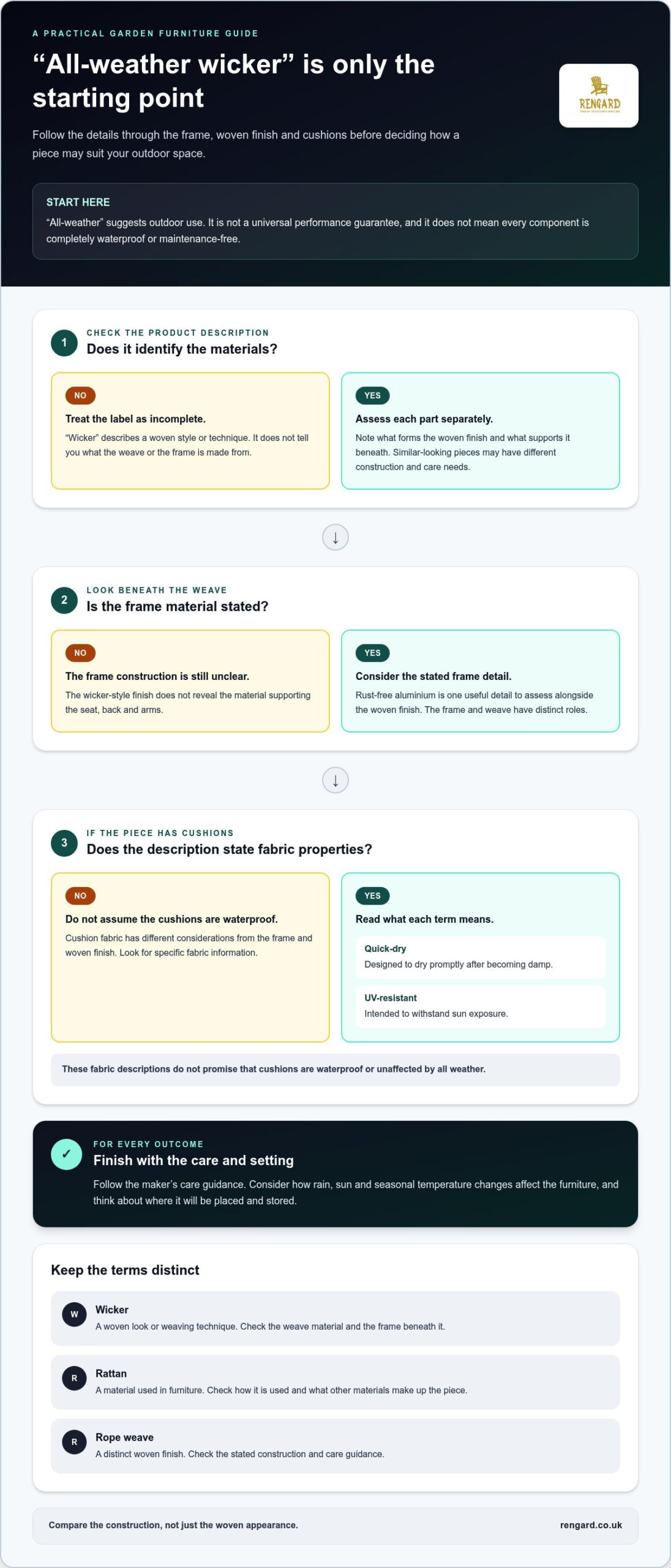
All-weather wicker describes outdoor-suitable furniture with a wicker-style woven finish. It isn’t a complete specification of the materials or construction. The phrase is a useful starting point, but it doesn’t tell you exactly how a garden chair, sofa or dining set is made.
If you’re asking what is all-weather wicker, the key distinction is that “wicker” generally describes a woven look or technique. It doesn’t identify the material beneath the weave or explain how the furniture is designed to cope with outdoor conditions. Treat the label as a prompt to read the construction details, rather than as a full description.
Is wicker a material or a weaving style?
Wicker refers to a weaving method or the appearance created by weaving strands together. Different materials can create a similar effect, so two pieces described as wicker may have different finishes and construction. The Wicker Wikipedia article provides background on traditional wicker and modern variations, but the product description is what tells you about a particular piece.
The word alone won’t tell you what the frame is made from, what forms the weave or whether the cushions use weather-resistant fabric. Look for each detail separately. This matters when comparing woven garden furniture: similar-looking pieces may use different materials and have different care needs.
What does the all-weather claim tell you?
“All-weather” suggests that furniture is intended for outdoor use. It isn’t a universal performance guarantee, nor does it mean every part is completely waterproof or maintenance-free. Weather resistance and waterproofing are different, and the label doesn’t explain how a particular frame, woven finish or cushion fabric responds to exposure.
Consider the complete piece. Frame construction, weave materials, fabric details, placement and care all affect its suitability for a British garden, where furniture may encounter rain, sun and seasonal temperature changes. For example, rust-free aluminium frames and quick-dry, UV-resistant cushion fabrics are useful details to assess alongside the woven finish.
In short, read beyond the headline claim. A clear product description helps you understand what you’re choosing and what care it may need. The woven appearance may catch your eye, while the materials and construction help you decide whether the furniture suits your outdoor space.
What affects the weather performance of all-weather wicker furniture?
A weather-related label indicates intended outdoor use, but it doesn’t explain how every component will respond to the elements. The frame provides support, the woven finish shapes the look and surface, and the cushions have their own fabric and care needs. Assess each part to understand how the furniture may suit your garden.
This distinction is useful in the UK, where outdoor furniture can experience rain, sun and seasonal temperature changes. A woven finish may be designed for outdoor settings, but that doesn’t tell you what the frame is made from or how quickly the cushions dry after getting damp. As Neighbor’s guide to waterproof wicker furniture explains, weather resistance and being completely waterproof aren’t the same thing.
Why the frame matters alongside the wicker-style weave
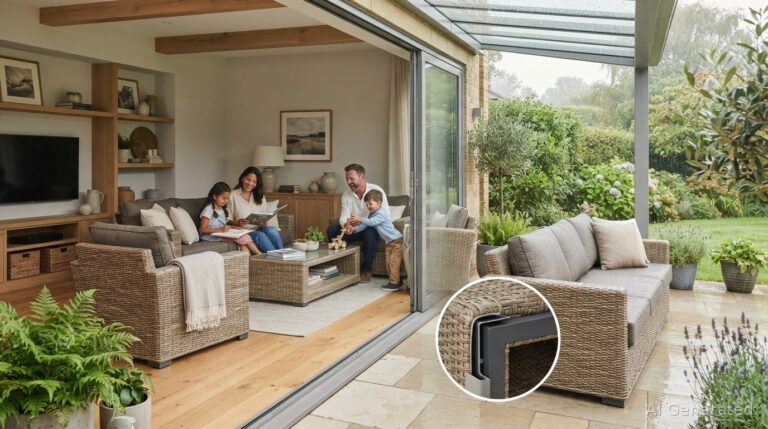
The frame supports the seat, back and arms, so its material is an important part of the furniture’s construction. Rengard garden furniture includes rust-free aluminium frames. Assess this structural detail separately from the woven finish, rather than assuming the weave tells you everything about the piece.
When comparing designs, look for details about both elements: what forms the frame and what material creates the woven surface. This helps you compare pieces with a similar appearance but different construction. The frame and weave work together, but each has a distinct role.
How cushion fabric changes outdoor comfort
Cushions add comfort and colour, but their fabric has different considerations from the frame and weave. Quick-dry fabric is designed to dry promptly after becoming damp, while UV-resistant fabric is intended to withstand sun exposure. These terms describe fabric properties, not a promise that cushions are waterproof or unaffected by all weather.
Rengard’s garden furniture includes quick-dry, UV-resistant cushion fabrics. This information helps you consider drying and sun exposure separately from the frame and woven finish. It doesn’t remove the need to follow care guidance or think about where cushions are placed and stored.
For a useful comparison, treat the frame, weave and cushion fabric as three parts of one piece, each contributing differently to outdoor use. If you’re weighing up materials for your setting, you can discuss your garden furniture plans with Rengard.
All-weather wicker, rattan and rope weave: what is the difference?
These terms describe different things, so they aren’t interchangeable. Wicker usually refers to a woven appearance or technique, rattan names a material, and rope weave describes a distinct finish. “All-weather wicker” combines a woven style with an indication of outdoor suitability, but doesn’t identify every material used in a piece of furniture.
| Term | What it describes | What to check |
|---|---|---|
| Wicker | A woven look or weaving technique | The material used for the weave and the frame beneath it |
| Rattan | A material used in furniture | How it’s used and what other materials make up the piece |
| Rope weave | A distinct woven finish | The stated construction and care guidance |
| All-weather wicker | A wicker-style description that suggests outdoor use | The frame, weave, fabrics and care information |
Does all-weather wicker mean the same as rattan?
No. Wicker describes a woven style, while rattan names a material. Furniture described as wicker isn’t necessarily made from rattan, so the label alone doesn’t reveal what forms the weave. In garden furniture descriptions, rattan may also be used to describe a woven look. Read the stated materials rather than assuming the terms mean the same thing.
For a closer look at rattan as a garden furniture choice, Rengard’s published Rattan Garden Furniture: The Ultimate Buyer’s Guide for 2026 offers further guidance. The product description remains the place to check the construction of an individual piece.
How does rope weave compare with wicker-style furniture?
Rope weave is a separate named finish used in Rengard’s garden furniture. Both rope weave and wicker-style furniture bring texture to an outdoor setting, but the terms describe different finishes. Don’t assume they use identical materials or have the same construction; compare the product details to understand what each piece is made from.
For broader context on choosing garden furniture materials, see Rengard’s Garden Furniture: The Ultimate UK Buyer’s Guide for 2026. Whether you’re considering woven seating for a patio or a dining set for a garden, compare each design by its stated materials and construction, not by appearance alone.
How should you care for wicker-style furniture in British weather?
Rain, sun and seasonal temperature changes can affect how outdoor furniture looks and feels over time. Knowing what is all-weather wicker doesn’t remove the need to consider care: weather resistance means furniture is intended for outdoor conditions, not that it is maintenance-free. The right routine depends on the materials used in the frame, weave and cushions.
Use this sequence as a starting point, then follow the maker’s instructions for the specific piece:
- Check the care guidance. Read the maker’s recommendations before cleaning or storing furniture, as different materials may need different treatment.
- Remove surface debris gently. Clear away loose leaves and dirt without using a method that could damage the finish.
- Inspect the materials. Look for visible dirt, wear or changes to the frame, woven finish and cushions after outdoor use.
This approach helps you spot when furniture needs attention without assuming every wicker-style weave should be cleaned in the same way. Avoid using a product or method unless the maker’s guidance says it is suitable.
What everyday care can help preserve the finish?
Include a quick visual check in your usual outdoor routine, particularly after changing weather. Notice whether debris has collected in the weave or whether the frame and fabrics show visible changes. If cleaning is needed, use the instructions supplied for that piece rather than relying on general advice that may not suit its materials.
Rengard garden furniture is designed for rain, sun and seasonal temperature changes in the UK climate. Its construction includes details such as rust-free aluminium frames and quick-dry, UV-resistant cushion fabrics. These features describe the materials, but don’t replace care guidance for the individual piece.
Does all-weather wicker need covering or seasonal storage?
The label alone can’t determine whether furniture should be covered or stored indoors. Consider the stated materials, the maker’s care instructions and the shelter available in your garden or on your patio. An exposed position and a sheltered terrace present different conditions, so placement can help shape your care routine. Covers or indoor storage may suit some situations, but they aren’t a universal requirement for every piece.
For guidance on how materials and care considerations fit your outdoor space, discuss your garden furniture plans with Rengard.
How to choose outdoor furniture after learning what all-weather wicker means
Once you know what is all-weather wicker, treat the label as one part of your decision, not the deciding factor. A considered choice balances construction, comfort, care and how you plan to use your outdoor space. Check the details before settling on a finish or layout.
Which details should you check before choosing?
Compare the stated materials rather than relying on a broad weather-related label. Look for information about the frame, woven or other finish, cushion fabric and care guidance. Then consider how those details fit your space and routine.
- Materials: Identify what the frame and finish are made from, and note the stated cushion fabric.
- Intended use: Choose seating for relaxing, dining furniture for meals, or a combination if you want distinct zones.
- Space and layout: In a larger garden, create separate lounging and dining areas if that suits how you use the space. A compact patio may suit a smaller seating arrangement or bistro set, while a terrace benefits from a layout that leaves room to move around the furniture.
- Comfort and care: Consider how the furniture feels for everyday use and whether its care guidance fits the time and storage you can provide.
For woven outdoor seating, explore Rengard’s outdoor sofa sets. Compare the stated construction and fabrics as well as the overall look, so the style works with your setting and expectations.
How Rengard’s materials support modern outdoor living
Rengard’s garden furniture includes rust-free aluminium frames, with high-quality rattan, rope weave, teak or composite finishes. These are material and construction details to assess in their own right. For cushions, quick-dry, UV-resistant fabrics offer useful information about drying and sun exposure; they shouldn’t be mistaken for waterproofing.
The furniture is designed for rain, sun and seasonal temperature changes in the UK climate. Compare the complete piece and follow its care guidance rather than assuming one material or label describes every component. This helps you consider finish, comfort and upkeep together when planning your space.
Planning a new outdoor seating or dining area? Rengard’s garden sofa sets, corner lounges, dining sets and bistro sets offer options for different garden layouts and ways of using the space.
Choose outdoor furniture with confidence
Understanding what is all-weather wicker starts with recognising that wicker describes a woven style, not a complete materials specification. For a clearer picture of outdoor performance, look beyond the label and assess the frame, finish and cushion fabric separately. The right choice should also suit your space, how you use it and the care you’re prepared to give it.
Rengard’s garden furniture includes rust-free aluminium frames, high-quality rattan, rope weave, teak or composite finishes, and quick-dry, UV-resistant cushion fabrics. These details help you compare construction and comfort without assuming a woven appearance tells the whole story or that weather-resistant means maintenance-free.
Whether you’re planning a relaxed seating area or an outdoor dining space, choose materials and a layout that feel at home in your garden, patio or terrace. Discuss your outdoor furniture plans with Rengard and take the next step towards a considered, comfortable space for outdoor living.
Frequently Asked Questions
What is all-weather wicker?
All-weather wicker describes outdoor-suitable furniture with a wicker-style woven finish, rather than a complete specification of its materials. Wicker refers to a woven appearance or technique; the frame and strands can be made from different materials. Check the product description for the frame, weave, cushion fabric and care guidance. Together, these details give a clearer picture of how the furniture is designed for outdoor use.
Is all-weather wicker the same as rattan?
No. Wicker usually describes a woven look or technique, while rattan names a material. A wicker-style finish isn’t necessarily made from rattan, and the words shouldn’t be treated as interchangeable. Product descriptions may use rattan to refer to a material or a woven appearance, so look for specific construction details. Rengard’s garden furniture includes high-quality rattan finishes, alongside rope weave, teak and composite surfaces.
Can all-weather wicker stay outside all year?
That depends on the furniture’s materials, construction and care guidance, so the label alone can’t determine whether it should remain outdoors throughout the year. British gardens bring rain, sun and seasonal temperature changes, and cushions may have different care needs from the frame or weave. Check the maker’s instructions and consider the shelter and exposure of your chosen position before deciding how to store or cover furniture.
Is all-weather wicker waterproof?
Not necessarily. “All-weather” suggests that furniture is intended for outdoor use, but it isn’t a universal promise that every component is completely waterproof. The frame, woven finish and cushions may respond differently to rain, so check their stated materials and performance details separately. Quick-dry cushion fabric is designed to dry promptly after becoming damp; that description doesn’t mean the fabric is waterproof. Follow the maker’s care guidance for the complete piece.
How do you clean all-weather wicker furniture?
Start by checking the maker’s care instructions, as the appropriate cleaning approach depends on the materials used. Gently remove loose surface debris, then inspect the weave, frame and cushions for visible dirt or changes. Don’t assume one cleaning method suits every finish. Follow any recommended approach and avoid introducing cleaning products or methods unless they’re suitable for the furniture’s materials.
What should you look for when buying all-weather wicker furniture?
Look beyond the label and check the stated frame material, woven finish, cushion fabric and care guidance. Then match the furniture to your space and how you’ll use it: a dining set for meals, a sofa set for lounging or a bistro set for a compact patio. Consider comfort and styling alongside outdoor performance. Rengard’s garden furniture includes rust-free aluminium frames, rattan, rope weave, teak or composite finishes, and quick-dry, UV-resistant cushion fabrics.