Choosing a patio corner dining set by material and price
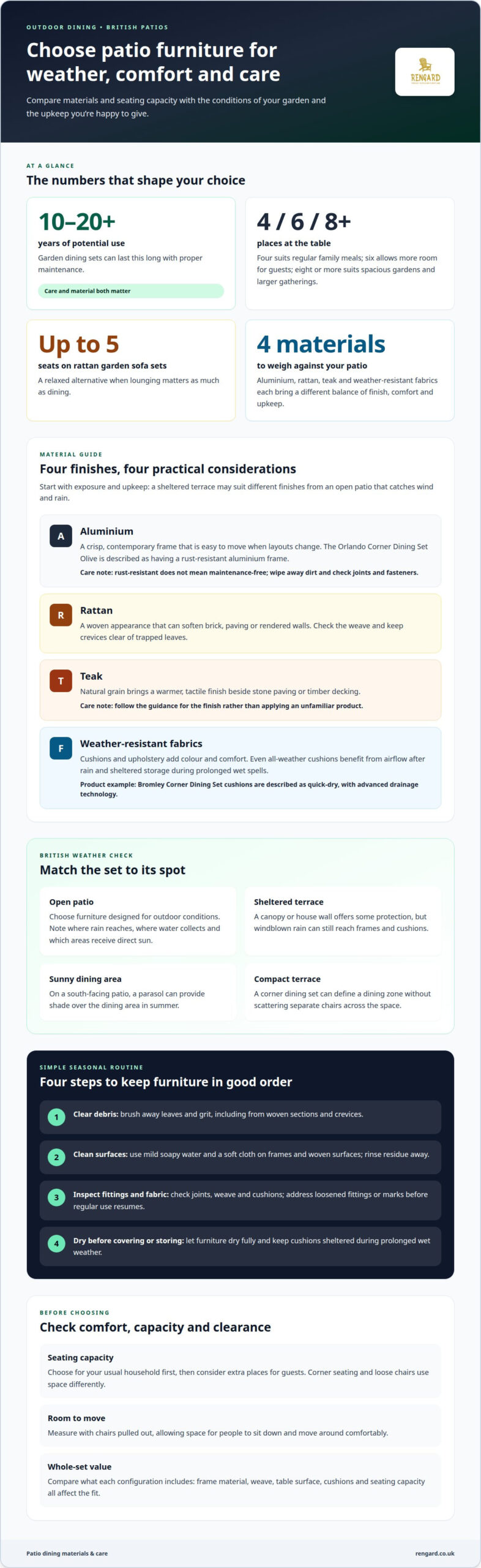
For a British patio, the best material is one that suits damp, changeable weather and the care you’re happy to give it. Aluminium, rattan, teak and weather-resistant fabrics each offer a different balance of durability, comfort and upkeep for a corner dining set for patio use. With proper maintenance, garden dining sets can last 10-20+ years, so choosing for the conditions as well as the look matters.
It’s understandable to want a corner dining set for patio use that feels inviting in summer but won’t become a chore when the weather turns. This guide explains how outdoor furniture materials perform, what affects the cost of a patio corner dining set, and how to choose seating to suit your household and available space. You’ll also find practical advice on layout and chair clearance, so your dining area is comfortable to use as well as cohesive.
Key Takeaways
- Compare aluminium, rattan, teak and weather-resistant fabrics by how they suit your patio and the care you’re prepared to give them.
- Material, finish and maintenance all affect outdoor durability; with proper care, garden dining sets can last 10-20+ years.
- Choose seating for your usual household first, then consider whether you need extra places for guests.
- Measure the dining area with chairs pulled out, allowing space for people to sit down and move around comfortably.
- Look beyond the initial price: materials, set configuration and seating capacity all shape which option offers the best fit for your outdoor space.
What materials are best for outdoor dining sets?
For a patio, garden or terrace, match each material to exposure, upkeep and everyday use. Aluminium frames suit a clean, contemporary setting and are easy to move when layouts change. Rattan garden furniture brings a softer woven texture, while natural teak adds warmth beside stone paving or timber decking. Weather-resistant fabrics make seating more comfortable, but cushions still benefit from shelter during prolonged wet weather.
There isn’t one ideal material for every British garden. A sheltered terrace may suit different finishes from an exposed patio that catches wind and rain. Start by noting whether the furniture will sit under a canopy, beside a house wall or in the open. Then decide how much seasonal cleaning and storage you’re prepared to manage. This comparison can help narrow your choice:
- Aluminium: choose it for a crisp frame and straightforward repositioning.
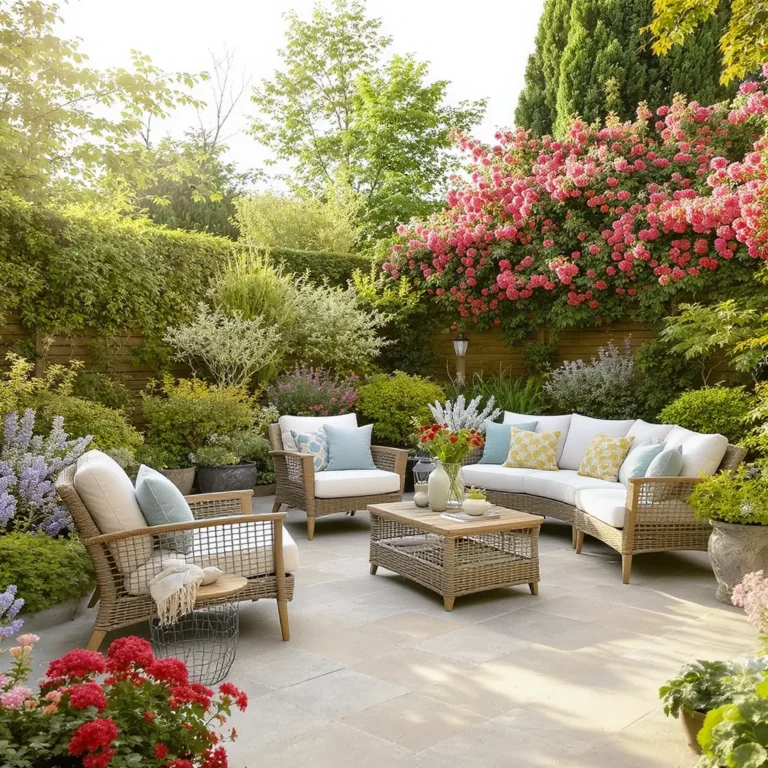
- Rattan: use its woven appearance to soften brick, paving or rendered walls.
- Teak: select its natural grain for a warmer, more tactile finish.
- Weather-resistant fabric: add colour and comfort through cushions and upholstery.
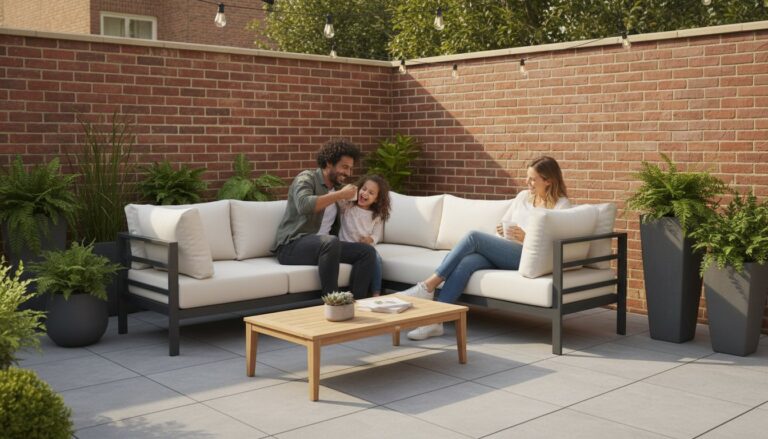
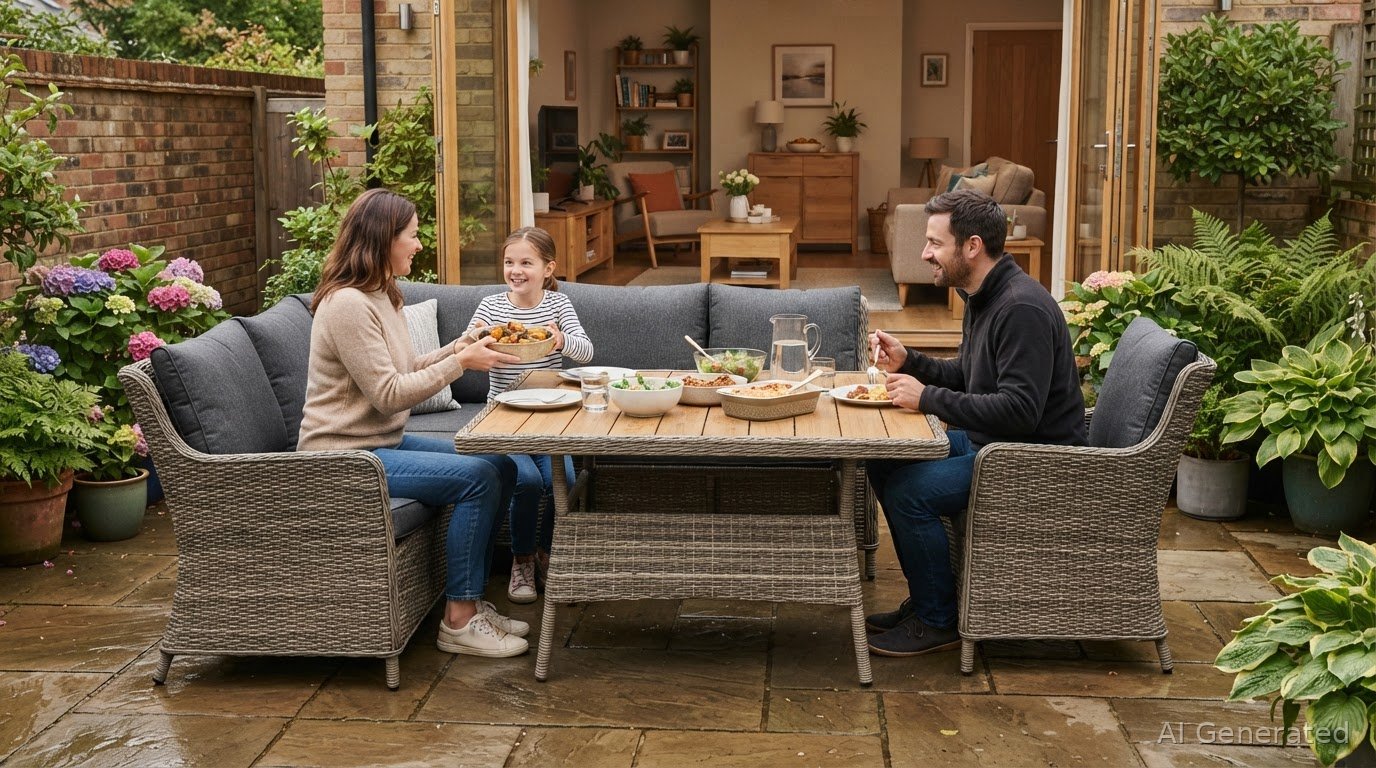
Material also affects how a set looks within your outdoor dining area. Dark aluminium can echo window frames; pale rattan complements light stone. Teak adds contrast against grey paving, while green or neutral cushions can tie seating in with planting. In a compact terrace, a corner dining set for a patio can define a dining zone without scattering separate chairs across the space.
Choose capacity alongside finish. A four-person set suits regular family meals, while a six-seater gives larger households more room for guests. Sets for eight or more suit spacious gardens and larger gatherings. Rattan garden sofa sets can seat up to five people, offering a relaxed alternative when lounging matters as much as dining. Check the layout, not just the stated capacity: corner seating and loose chairs use space differently.
Cleaning helps protect the finish. Start by brushing away leaves and grit, then wash frames and woven surfaces with mild soapy water and a soft cloth. Rinse off residue and let furniture dry fully. For teak, follow the care guidance for its finish rather than applying an unfamiliar product. Inspect joints, weave and fabric after winter; address loosened fittings or marks before regular use resumes.
With proper maintenance, garden dining sets can last 10-20+ years. That makes the best choice a balance of material, colour, comfort and care, not appearance alone. Compare how each option works with your patio surfaces and the way you host, then choose a finish that feels coherent with the wider garden.
Materials and durability for the British climate
British weather can shift from summer sun to persistent rain, so consider exposure before choosing materials. An uncovered patio needs furniture designed to withstand outdoor conditions and dry readily. A sheltered terrace offers more protection, although windblown rain can still reach cushions and frames. Note where water collects, which areas receive direct sun, and whether furniture can be covered during unsettled weather.
Aluminium frames suit outdoor dining where a lighter, contemporary look matters. The Orlando Corner Dining Set Olive is described as having a rust-resistant aluminium frame. Rust-resistant does not mean maintenance-free: wipe away dirt, check joints and fasteners, and let surfaces dry after cleaning. Rattan gives garden furniture a woven finish, while teak accents add natural grain. Compare the whole collection, including frame, weave and table surface, rather than judging one material alone.
Cushions need particular attention in a damp climate. The Bromley Corner Dining Set is described as having quick-dry, all-weather cushions with advanced drainage technology. That construction helps water drain from the cushions, but sensible care still matters. After rain, position cushions so air can circulate and remove them for sheltered storage during prolonged wet spells. For any fabric, follow its care instructions and clean marks promptly with an appropriate method.
- Check the frame: look for a finish suited to outdoor exposure, then clean away grit and residue.
- Inspect woven sections: remove trapped leaves and keep crevices clear after windy weather.
- Assess cushions: consider drying, storage and cleaning alongside colour and comfort.
- Review the table: choose a surface that fits your routine, from quick wipe-downs to more attentive care.
Sunlight affects comfort as well as appearance. On a south-facing patio, summer heat can make exposed surfaces uncomfortable; a parasol can provide shade over the dining area. Dark frames can echo black window fittings, while pale rattan pairs neatly with light paving. Teak tones bring warmth beside grey stone. Compare finishes with nearby doors, planters and fencing to find a combination that suits your garden.
Durability comes from matching material to use, then maintaining it consistently. Before buying, ask how the set should be cleaned, where cushions should be stored, and which care products suit its finish. A simple seasonal routine helps: clear debris, clean surfaces, inspect fittings, and dry everything before covering or storing it. For British patios, the strongest choice is the one whose weather performance and upkeep fit your actual space and habits.
Current product prices and availability
Compare patio dining set prices by what each configuration includes, not by appearance alone. A corner layout combines seating and a table, while a separate dining set may include individual chairs. Frame material, table finish, cushions and seating capacity all affect value. Write down the features you need before comparing designs, so decorative details don’t distract from practical requirements.
Read the product description and check which pieces are included. Confirm whether the set includes cushions, a table and every seat shown. Then compare dimensions and materials across similar configurations. A compact design and a larger entertaining arrangement serve different purposes, so their prices aren’t directly comparable. Include care requirements in your decision, since maintenance is part of owning outdoor furniture.
- Match the configuration: compare sets with similar seating and table arrangements.
- Review the materials: note frame, weave, tabletop and cushion details.
- Check the description: establish which pictured components come with the set.
- Assess the space: avoid paying for a larger layout than your patio can use.
Availability affects when a set can be enjoyed. Larger sets or made-to-order configurations may take 1-2 weeks to deliver. Assembly typically takes 1-3 hours, depending on the number of pieces. Factor these timings into plans for a summer gathering or a patio refresh. A design with more separate components may need more assembly than a simpler arrangement.
Before deciding, make a short comparison of your preferred designs. Record the configuration, materials, cushion details, delivery timing and assembly needs. This gives you a clearer view of what each option offers beyond the styling photographs. If two sets appear similar, compare their stated contents and dimensions carefully. Differences in seating or table arrangement can explain why prices vary.
For entertaining, prioritise comfortable everyday seating over occasional extra places. A generous corner arrangement can create a defined dining zone, but only if it fits the patio and leaves room to move. For a smaller terrace, a compact configuration may offer better value. Consider how often you’ll use cushions, whether you can store them, and how the materials suit your garden.
Use the product details and prices shown when you’re choosing, as these can change. Keep your comparison focused on the set’s contents, materials, capacity and fit. This gives you a more useful basis for deciding than a headline price alone, and helps you choose a design suited to your budget and outdoor routine.
Furniture set seating capacity
Choose capacity around the people who use your outdoor space most often. A set for four suits everyday meals with family or friends, without making a smaller patio feel dominated by furniture. If you regularly host larger gatherings, more seats can make outdoor dining easier. Count your usual diners, then consider how often guests join. A realistic count helps balance comfort with the space your table and chairs occupy.
Think about how the seating is arranged, not only the number on the label. A corner bench offers continuous seating along two sides, while separate chairs can be moved to suit different groups. For example, a family might use the bench for weekday meals, then add loose chairs when friends visit. Check that everyone has usable space at the table for plates and serving dishes.
- Four seats: a practical scale for regular meals with a small household.
- Six seats: suited to larger families and regular entertaining.
- Eight or more seats: better suited to spacious gardens and larger gatherings.
- Up to five seats: an option found in rattan garden sofa sets, where lounging and conversation share priority.
Those capacities describe different uses, rather than a ranking. A four-person Monte Carlo 4 Seater Spring Rocker Set is designed for four people. A six-seater dining set supports larger-family meals and regular entertaining. Sets for eight or more make more sense in spacious gardens where gatherings are a frequent part of outdoor living. Match the set to the way you host, rather than choosing extra seats simply because they are available.
Corner seating can make a dining area feel sociable, but its fixed shape affects flexibility. Measure the available space and mark the table and seating footprint before choosing. Consider where people enter the seating, how they reach the table, and whether there’s room for an occasional extra chair. On a compact patio, a smaller configuration may leave more space to move.
Children need comfortable access too. The NHS advises leaving enough space around children so they aren’t bumped while eating. Keep this in mind when positioning a high-backed bench or placing chairs close together. Seat height also affects how comfortably diners reach the table, so compare the seat and tabletop proportions before choosing. A well-matched arrangement lets everyone sit naturally, reach shared dishes and enjoy a relaxed meal.
For a final check, sketch the patio and mark each regular seat, then add space for an occasional guest. This shows whether the capacity suits everyday use and entertaining. If the drawing leaves little room to pull out chairs or serve food, choose a more compact arrangement. The best fit accommodates your usual group without crowding the outdoor space.
Patio measuring and chair clearance
Start with the usable patio area, not the full garden footprint. Measure its length and width, then note doors, steps, drains and fixed planters. These details affect where a table can sit and how people approach it. Sketch the space on paper and mark the furniture footprint. For an L-shaped set, include both sides of the seating, not just the table.
Allow 1 metre of clearance around a garden dining table for chairs and movement. Treat this as working space, not spare decoration. Measure from the table edge to walls, fences or other furniture. Then mark where each chair sits when pulled out. A layout that fits only with chairs tucked in can feel cramped during meals.
Use this practical measuring sequence before choosing a set:
- Measure the patio: record usable length and width, including narrow sections.
- Mark obstacles: note doors, steps, planters and routes through the garden.
- Plot the table: outline its full dimensions on your sketch.
- Add seating: include chair positions and the 1-metre clearance around the table.
- Test movement: check that people can sit, stand and pass without obstruction.
For a corner layout, test the long and short sides separately. Use masking tape or cardboard on the patio to mark the outline. Walk around it and imagine pulling a chair back from each position. This can reveal pinch points beside a back door or narrow path before the furniture arrives.
Chair height matters alongside floor space. The NHS advises measuring a dining chair’s seat height by sitting on the seat and measuring from its lowest compressed point to the floor. Compare the measurement with the table height and consider who will use the set. This simple check helps you assess whether diners can sit comfortably and reach the tabletop.
Account for the patio’s everyday use, too. Keep the route to the garden gate clear, and leave enough room for doors to open fully. On a compact terrace, shifting the table towards a wall may free the main walkway, but preserve chair access. Recheck the plan with cushions in place, since they can change how the seating fits.
If your sketch reveals a tight corner or awkward route, refine the layout before settling on a set. Discuss your patio layout and furniture requirements to help plan a dining area around its dimensions and access points.
Rengard: Furniture Accessories
Once you’ve settled on a patio layout, Rengard’s outdoor furniture range can help you choose the finishing details. Its garden dining sets and individual outdoor tables offer options for different spaces, while furniture accessories can complete the setting.
Use your measurements, preferred materials and seating plan to guide your choice. A considered combination can make the dining area feel cohesive without restricting movement. Explore Rengard’s garden dining sets and outdoor tables at rengard.co.uk, and contact Rengard for help choosing a set to suit your space.
Shape a patio that feels ready to use
Let the way you spend time outdoors guide your final choice. A corner dining set for the patio can anchor a relaxed setting for shared meals, while its shape helps define the dining area within the wider garden. Picture how you’d like the space to feel during an ordinary afternoon, not only when entertaining.
Rengard’s garden furniture range includes garden dining sets and rattan garden furniture. Use your preferred look and intended use to narrow the options, keeping the setting cohesive with the rest of your outdoor space.
Ready to explore your next step? Contact Rengard about patio dining sets and share what you’re looking for. A thoughtful choice can make outdoor meals feel like a natural part of home life.
Frequently Asked Questions
What size garden dining set do I need?
Choose a set around how you use the garden, not occasional peak gatherings. If meals are the main purpose, prioritise a table with room for dishes and serving platters. If the space also needs to work for relaxing, consider how the dining area can fit alongside existing outdoor seating. Sketch a typical meal setup to see whether the table feels practical for everyday use.
What sizes are available for corner patio dining sets in the UK?
UK corner patio dining sets come in varied footprints and layouts, rather than one standard size. Some designs have a longer bench on one side; others balance the two sides more evenly. Compare the listed overall width and depth as well as the table dimensions. Check whether measurements include projecting table edges or attached seating, so you can interpret each product description accurately.
How many people can a corner patio dining set seat?
Use the stated seat count as your starting point, then check how the places are arranged. A corner bench may provide continuous seating, but diners still need access to the table and room for plates. Consider who will use the set most often, including whether children need easier access. Check the product description for the intended capacity; don’t assume an empty corner automatically counts as another seat.
What is the average price of a corner dining set for a patio in the UK?
There’s no single average price for every configuration. To assess value, compare current prices for sets with similar layouts and included components. Account for any delivery or assembly charges shown at checkout, as these can affect the total. Sets with different configurations aren’t like-for-like comparisons, even if both are described as corner dining furniture.
Which materials are best for an outdoor corner dining set: rattan, aluminium, wood or steel?
Choose a finish you like and a care routine you can follow. Before ordering, read the product information to see which materials are used for the frame, tabletop and seating. A set can combine different finishes, so one material name may not describe every component. Check the care guidance for each surface, then decide whether its appearance and upkeep suit your garden.
What should I look for when choosing a weather-resistant corner patio dining set?
Read the care and use guidance for the complete set, rather than relying on a general weather-resistant label. Check whether advice differs for the frame, tabletop and cushions, and note any recommended storage or cleaning routine. This helps you care for each component through changing seasons. The product description should explain which parts are intended for outdoor use and how to maintain them.
Which UK retailers sell corner patio dining sets, and what are their delivery options?
Rengard sells garden dining sets and corner lounges in the UK. Its in-house delivery covers Mainland UK; other destinations require a courier quotation. Standard delivery runs Monday to Friday, while weekend delivery is possible depending on availability. Click & Collect is also available. Most items arrive pre-assembled, although minor assembly may be needed.
How much space is needed for a corner patio dining set?
Allow enough room for the whole arrangement to work alongside the rest of your patio. Consider whether the set will block a garden view, compete with a parasol or leave awkward unused areas around its corners. If the patio has a gate or narrow access route, think about how the furniture will reach its final position. These practical details help the dining area feel integrated, rather than simply fitted into an available gap.