Choosing an 8 Seater Corner Sofa for Your Space
A generous garden can feel inviting, open and beautifully composed, but its seating needs to suit the space. Before choosing an 8 seater corner sofa, consider how its shape will sit within your patio or terrace and how you want the area to work for family gatherings and outdoor entertaining.
Seat count is only one part of the decision. The sofa’s orientation and configuration also shape the feel of an outdoor setting, from a relaxed lounge beside the house to a sociable focal point in a larger garden.
This guide explains how to assess your outdoor space, compare corner-sofa layouts and understand what affects the price of an eight-seat option. You’ll be better placed to choose an arrangement that suits your garden and the way you use it.
Key Takeaways
- Measure the full footprint, including the corner or chaise section, before choosing a layout.
- Map doorways, delivery routes and everyday walkways to see how the sofa will fit and function.
- Compare left-hand and right-hand L-shaped designs with U-shaped layouts to suit your space.
- Choose between seven, eight or nine seats by balancing how you host with the room available.
- When comparing prices, look beyond seat count and consider how the layout, materials and overall design affect value.
How do I measure for a corner sofa?
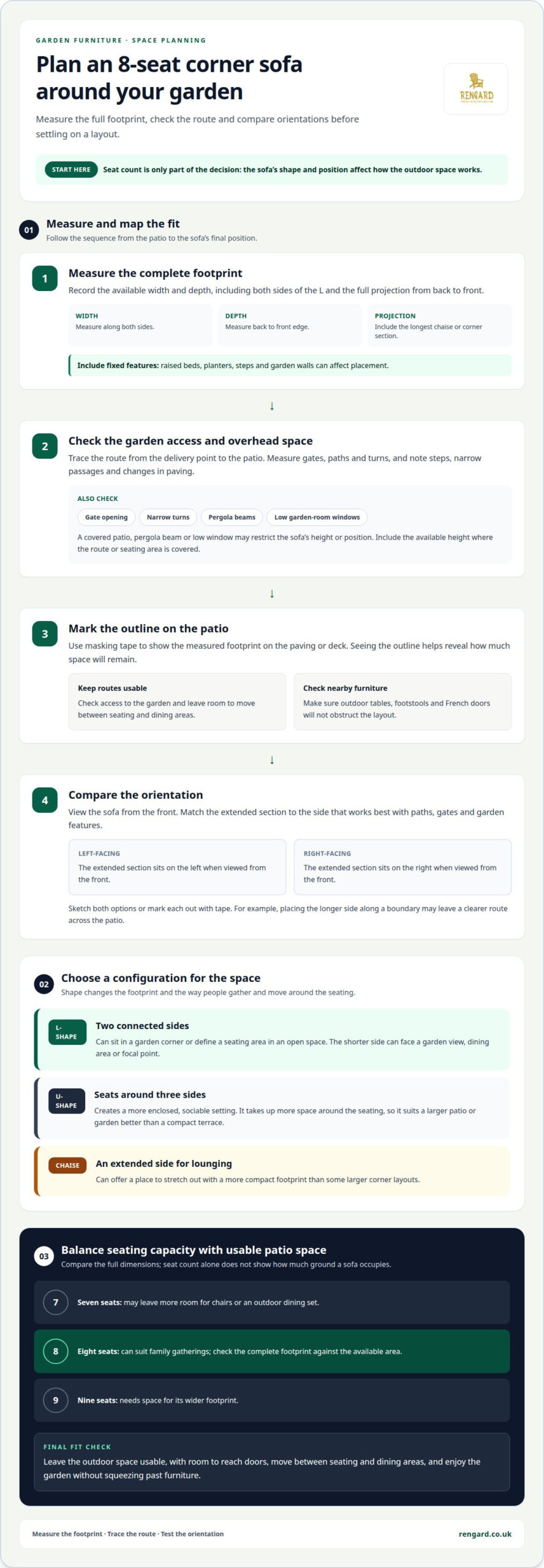
Start with the patio, terrace or deck where the sofa will sit. Measure the available width and depth, including the full projection of the corner or chaise section. Note fixed features such as raised beds, planters, steps and garden walls, which can affect placement just as much as the edge of the paving.
Use a tape measure to record the intended footprint and any overhead limits. A covered patio, pergola beam or low garden-room window may restrict the sofa’s height or position. Check that gates, French doors, outdoor tables and footstools won’t obstruct the layout. Marking the outline on the paving with masking tape helps show how much space will remain.
- Measure the footprint. Record the full width along both sides and the depth from the back to the front edge. Include the longest projection of a chaise or corner section.
- Check the garden access. Measure gates, paths and turns between the delivery point and patio. Include steps, narrow passages and changes in paving.
- Mark the outline. Use masking tape on the patio or deck to picture the sofa’s footprint. Check access to the garden and space around outdoor tables.
- Compare orientations. Match the measured area to the product dimensions, then decide whether the extension should face left or right.
Choosing between seven, eight and nine seats means balancing capacity with usable patio space. A seven-seat design may leave more room for chairs or an outdoor dining set, while a nine-seat arrangement needs space for its wider footprint. An eight-seat option can suit family gatherings, but the seat count alone doesn’t show how much ground it occupies. Compare the full dimensions and consider how often everyone will sit together.
For an L-shaped garden sofa, choose left- or right-facing by viewing it from the front. Match the extended section to the side that works with paths, gates and garden features. For example, placing the longer side along a boundary may leave a clearer route across the patio. Sketch the layout or mark it out with tape to compare each orientation before deciding.
Warranty and returns policies vary between UK garden furniture retailers. A warranty explains what faults are covered, while return terms set out the conditions and timeframe for sending an item back.
Before choosing a size, compare its full dimensions with the patio footprint and route through the garden. An eight-seat design should leave the outdoor space usable, with room to reach doors, move between seating and dining areas, and enjoy the garden without squeezing past furniture.
Corner sofa styles and configurations
For an eight-seat arrangement, choose a shape that suits both the gathering and the space. An L-shaped sofa has two connected sides, while a U-shaped design adds another side around the seating area. Both create a defined place to relax, but their footprints and the way people move around them differ. Consider where guests will enter, sit and pass through before choosing a configuration.
An L-shaped corner sofa can sit in a garden corner or define a seating area in an open space. Its shorter side can face a garden view, dining area or focal point. A U-shaped sofa creates a more enclosed, sociable setting for family and guests. It usually takes up more space around the seating, so it suits a larger patio or garden better than a compact terrace.
- L-shaped: suits a corner or divides an open garden into distinct zones.
- U-shaped: brings seats around three sides, creating a conversational arrangement.
- Chaise configuration: extends one side for lounging and offers a more compact footprint than some larger corner layouts.
Left-facing and right-facing designs describe which side the extended section sits on when you view the sofa from the front. Picture the layout from that position, then match the longer section to the side that works with your garden’s doors, paths and existing furniture. For example, a left-facing L-shape may keep a route clear on the right. A sketch can make the orientation easier to compare.
Materials influence the look and upkeep of a large corner sofa outdoors. Garden furniture can feature rattan, aluminium frames, rope weave, teak and weather-resistant fabrics. Each creates a distinct finish: aluminium has a clean, contemporary look, while teak adds natural timber detail. Rattan and rope weave bring texture. For a UK garden, consider how the upholstery and frame will handle changing weather, and follow the care guidance for each material.
Style also affects how the sofa feels in use. A low, open arrangement can keep a patio feeling spacious, while a U-shaped design gives a larger garden a defined lounge area. Coordinate cushions with nearby garden chairs or an outdoor table, leaving enough room to move between them. These choices help the seating feel integrated rather than simply placed on the patio.
Compare the configuration, materials and intended use together. An L-shape may make better use of a corner, while a U-shape can encourage face-to-face conversation. In a smaller space, a chaise layout may provide a place to lounge without the footprint of a larger arrangement. The best fit supports the way you like to gather and leaves the garden practical to use.
Measuring a room and checking walkways
A large corner sofa needs a clear route from the delivery point to its place in the garden. Trace the route across the driveway, side passage, garden gate and patio entrance. A wide patio may still be difficult to reach if a narrow gate or sharp turn limits access. Note changes in level, steps and uneven paving that could make moving furniture safely more difficult.
Measure the narrowest point at each stage, including gate openings and gaps between walls, fences or established planting. Check whether a gate opens fully and whether its hinges, latch or handle reduce the usable space. If the route passes beneath a pergola or through a covered seating area, note the available height as well as the width.
- Trace the route. Mark the path from the delivery point to the garden seating area, including gates, turns and steps.
- Record tight points. Measure the narrowest gaps between fences, walls, planters and other fixed features.
- Check the destination. Note overhead limits beneath pergolas, canopies or garden-room eaves, plus the space around the intended position.
- Compare the sofa pieces. Use the full assembled dimensions and, for sectional designs, the dimensions of each separate section.
Garden access can involve more than a straight passage. A sofa section might fit through a gate but be difficult to turn beside a raised bed or boundary wall. Measure the turning area too, especially where a path bends before reaching the patio. Move portable pots or garden chairs temporarily, but account for fixed features that cannot be shifted.
At the destination, consider how the sofa will sit beneath nearby structures. A pergola beam, canopy edge or low garden-room eave can restrict the available height. Check the sofa’s height and back position before placing it near these features. Leave enough space for doors to open and for people to move between the seating area and the garden.
Sectional furniture can make access easier because separate pieces may be simpler to move along a narrow route. Compare each section’s dimensions with the tightest gate, turn or passage, not just the assembled sofa’s footprint. A route that seems wide enough in a straight line may still be awkward where it changes direction.
Keep a simple access plan with measurements for gates, passages, turns and overhead clearance. Compare it with the sofa’s dimensions before arranging the outdoor space. This helps identify potential pinch points and shows whether you need to adjust the garden layout for delivery and everyday movement.
Large corner sofas for family seating and entertaining
A large corner sofa can bring family and guests together in one defined seating area. Large corner sofas are commonly described as having five seats or more. In a garden, this capacity can suit shared meals, relaxed weekends and gatherings where guests prefer one sociable lounge. An eight-seat layout offers room for a group, but its footprint must suit the patio as well as the number of people using it.
Choose the shape to suit the way people gather. An L-shaped design can sit along two edges of a patio, leaving the centre open for an outdoor table. A U-shaped arrangement brings seats around three sides to create a more enclosed conversation area. It suits larger outdoor spaces where guests can face one another. In a narrower garden, the extra side may restrict the route between the house and lawn.
Modular corner sofas offer another way to balance capacity and layout. Their sections can form a compact corner arrangement or a larger configuration, depending on the space. Before deciding, sketch the sections as simple blocks on a garden plan, including the dining area, doors and main path. This helps reveal whether a larger grouping will support entertaining or make the outdoor space feel crowded.
- For family use: place the main seating near the house for convenient access to indoor spaces.
- For hosting: orient the open side towards the garden or dining area, so guests can join the conversation.
- For mixed activities: keep a clear route between the sofa, outdoor table and garden entrance.
Seat count is only one part of comfort. Consider how the sofa will be used during a typical gathering: some guests may sit together while others move between the lounge and dining area. A large corner design works best when the group can use it without blocking access to garden chairs, tables or the route through the space. A dedicated dining set may suit meals better than trying to fit every activity around the sofa.
Materials also matter when entertaining outdoors in the British climate. Rattan, aluminium frames, rope weave, teak and weather-resistant fabrics each bring a different look to a garden. Consider the care each material needs and how exposed the seating area is to changing weather. A covered patio and an open lawn edge, for instance, create different conditions for outdoor upholstery and frame finishes.
To choose confidently, compare the seating plan with the garden’s everyday use. A U-shape prioritises conversation, while an L-shape may preserve more open space. Modular sections can help tailor the arrangement. The right large corner sofa balances room for family and guests with a practical layout for moving, dining and enjoying the garden.
Eight-seater corner sofa prices
The price of an 8 seater corner sofa depends on more than its seat count. Compare the complete configuration, materials and included components rather than treating eight seats as a like-for-like measure. A modular set, for example, may contain separate corner and middle sections, while another design may use a different arrangement. Those differences affect what you receive and how the set fits your garden.
Compare the same practical details across the options you’re considering. Check whether the price covers the full sofa arrangement or a core configuration, and whether accessories are included or priced separately. Note the frame and upholstery materials, the number and type of sections, and any footstool or cushions included in the set. A clear comparison helps explain why prices differ.
- Configuration: compare the number and type of sections, not just the stated seating capacity.
- Materials: assess the frame, weave and fabric, alongside their care requirements.
- Included pieces: identify whether a footstool, cushions or other components form part of the set.
- Delivery details: include any delivery charge shown for your postcode when calculating the total.
Material choice is a useful way to assess value over time. Aluminium frames, rattan finishes, rope-weave details, teak accents and weather-resistant fabrics each create a different look and care routine. In a garden exposed to changing British weather, consider the sofa’s position and the upkeep its materials need. A lower initial price alone won’t tell you how well a particular finish suits your intended use.
Compare dimensions as well as specifications. Two eight-seat designs can differ in footprint, depth and configuration, so one may use your patio more efficiently. Check the product dimensions against your layout, then consider how often you’ll use the full seating capacity. A larger arrangement makes most sense when the extra seats suit regular family gatherings or entertaining, rather than adding unused bulk.
For a balanced decision, make a comparison table covering the total price, materials, included components, dimensions and delivery details. Give each factor weight according to your priorities. A household that hosts frequently may value a generous layout, while a smaller terrace may benefit more from a compact configuration and clear walkways.
If you’re weighing up a garden layout and the details that shape its overall cost, contact our team to discuss your requirements. Arrive with your preferred configuration and measurements, so the conversation can focus on the options that suit your space.
Rengard
Once you’ve settled on the sofa’s position and layout, Rengard can help you plan the wider garden setting. Its garden furniture and garden dining set can create a coordinated space for relaxing and dining, with the table placed to preserve clear routes and comfortable seating.
Turn to Rengard when you’re bringing together the practical details of an outdoor space, from the main seating area to the dining zone. A clear plan of your patio, preferred arrangement and intended use will help guide your choices. Contact Rengard to discuss your garden furniture needs.
Make your outdoor space feel complete
Think beyond the first arrangement. An outdoor seating area can become a natural extension of home when its colours, textures and surrounding details feel considered. Let your 8 seater corner sofa anchor the space, then build around how you want to spend time there, from quiet afternoons to relaxed gatherings.
Rengard also offers Furniture Accessories, Console Tables and Bedside Tables for other areas of the home. Choose each piece to suit its setting, so your garden keeps its own practical character and sense of balance.
Before making your final choice, picture the finished space in use, not just the furniture on its own. A thoughtful layout can give your garden a welcoming centre while keeping it comfortable to move through.
Contact Rengard about your corner sofa and take the next step towards a garden setting that feels distinctly yours.
Frequently Asked Questions
Are Corner Sofas Easy To Maintain?
Routine care is manageable when it suits the material. Rinse rattan weave with a garden hose, and wipe down composite surfaces. For a garden sofa with removable cushion covers, follow the care label; Rengard’s covers are machine-washable on a gentle, low-temperature cycle. Natural teak may need teak oil or cleaner after its colour changes. Powder-coated aluminium frames have rust protection.
What sizes and dimensions are available for 8 seater corner sofas?
Dimensions vary by layout, so there isn’t one standard size for an 8 seater corner sofa. Published examples include configurations measuring 240 × 240 × 88 × 94 cm and 316 × 316 × 81 × 116 cm. These figures describe different designs, not a universal size range. Check which measurement represents each side, height and depth, then compare the complete footprint with your intended position.
How much does an 8 seater corner sofa cost in the UK?
There’s no single UK price for an eight-seat corner sofa. The cost depends on the configuration, materials and what the set includes, such as a footstool or additional sections. For a useful comparison, assess the total price alongside the frame, upholstery, included pieces and delivery details. Two sofas with the same seat count may differ substantially in size and specification, so compare like with like.
How do left-hand and right-hand facing corner sofas differ?
The terms describe which side the extended section occupies when you face the sofa. A left-facing design has its extension on your left; a right-facing design has it on your right. Before choosing, sketch the sofa from the front and mark nearby doors, paths and furniture. This shows whether the extended section will sit on the intended side and leave your preferred route clear.
How do I measure a room for an 8 seater corner sofa?
Measure the available width and depth, including the longest projection of the corner or chaise, and note the sofa’s height if it will sit beneath a window or covering. Mark the footprint with masking tape, then check how it affects nearby furniture and access. Compare those measurements with the model’s full dimensions rather than relying on its stated seating capacity.
What should I check about delivery and access for a large corner sofa?
Measure the entire route from the delivery point to the final position, including gates, doors, hallways, steps and tight turns. Record the narrowest width and height, and account for handles or other obstructions. Check whether the sofa’s dimensions refer to the assembled design or its individual sections. Some corner sofas arrive in sections, which can be easier to move and connect in place.
What is the best 8 seater corner sofa in the UK?
The Infinity is designed for eight people, and the Mikey is an eight-seat set. Compare their full dimensions, layouts and materials with your garden space to find the right fit.
Which UK retailers sell 8 seater corner sofas?
Specialist online retailers and garden furniture specialists offer a wide selection of models.