Patio Furniture Layout: Patio Uses and Hard Surfaces
The best patio furniture layout starts with how you want to use the space, not with the largest sofa you can fit. Planning your patio furniture layout means matching dining, relaxing or entertaining areas to the patio’s shape and surface. UK patios are commonly paved with concrete or stone slabs, though brick, block paving, tiles, cobbles and gravel are also options.
The surface matters as much as the furniture. A dining set, garden sofa or pair of chairs should fit comfortably, with enough room to move around and use each area as intended. Considering both your activities and the ground beneath the furniture makes it easier to create a cohesive, practical patio.
This guide covers common patio uses and explains how different hard surfaces can influence furniture choices. You’ll find ideas for arranging dining and lounging areas, plus material considerations to help create an outdoor space that feels balanced, comfortable and suited to everyday life in the British climate.
Key Takeaways
- Concrete and stone slabs are common patio surfaces, while brick, block paving, tiles, cobbles and gravel offer other options to consider.
- Measure the usable patio area and furniture footprints before settling on an arrangement, taking doors and existing features into account.
- Plan clear routes around seating and dining areas so people can move through the patio and use furniture comfortably.
- For a compact patio, focus on the main activity and choose an arrangement that makes efficient use of the available space.
- For outdoor dining and entertaining, position seating around the table and keep the route between the house and dining area practical.
Suitable hard surfaces
A patio is an outdoor space beside a building, usually paved. Its surface affects how furniture sits and how people move around. Concrete and stone slabs are common choices in UK patios, while brick, block paving, tiles, cobbles and gravel offer other options. Each creates a different setting for outdoor dining or relaxation.
Concrete paving consists of hard slabs that create a relatively consistent base for furniture. A dining table can sit across several slabs, with chairs repositioned as needed. Check the joints and any changes in level before arranging furniture. A table leg resting across an uneven joint may feel less stable.
Stone paving uses slabs cut from natural stone. Paving flags are large, flat slabs that form a paved surface, and their colour and texture can bring visual variation to a patio. Check how the slab edges meet before choosing where furniture will go. A chair on a raised edge may rock, so position it on flatter ground.
Brick paving is made from bricks laid across the patio, creating a repeating pattern beneath garden furniture. Block paving uses shaped blocks fitted together. Both can help define furniture zones. For example, centre a bistro table on a clear section rather than across a noticeable change in level.
Outdoor tiles are hard, flat units that cover a patio. Their finish and pattern can give a terrace a tailored appearance. Position furniture to avoid awkward contact with uneven tile edges. Wet surfaces can affect footing in British weather, so keep routes between the house and seating clear and loose accessories out of walking areas.
Cobbles are rounded or irregular stones set into a patio surface. Their varied shapes add texture, but furniture feet may not sit evenly. Place heavier pieces where the ground feels most stable. Gravel consists of small, loose stones that can shift beneath chair legs, so a firm, level area under a dining table can make everyday use more comfortable.
For a safer, more accessible patio layout, keep a clear route between the house, seating and dining areas. Position furniture on stable, even ground and remove obstacles from walking routes. On gravel or uneven cobbles, place furniture where its legs sit securely.
How do you measure a patio and plan a furniture layout?
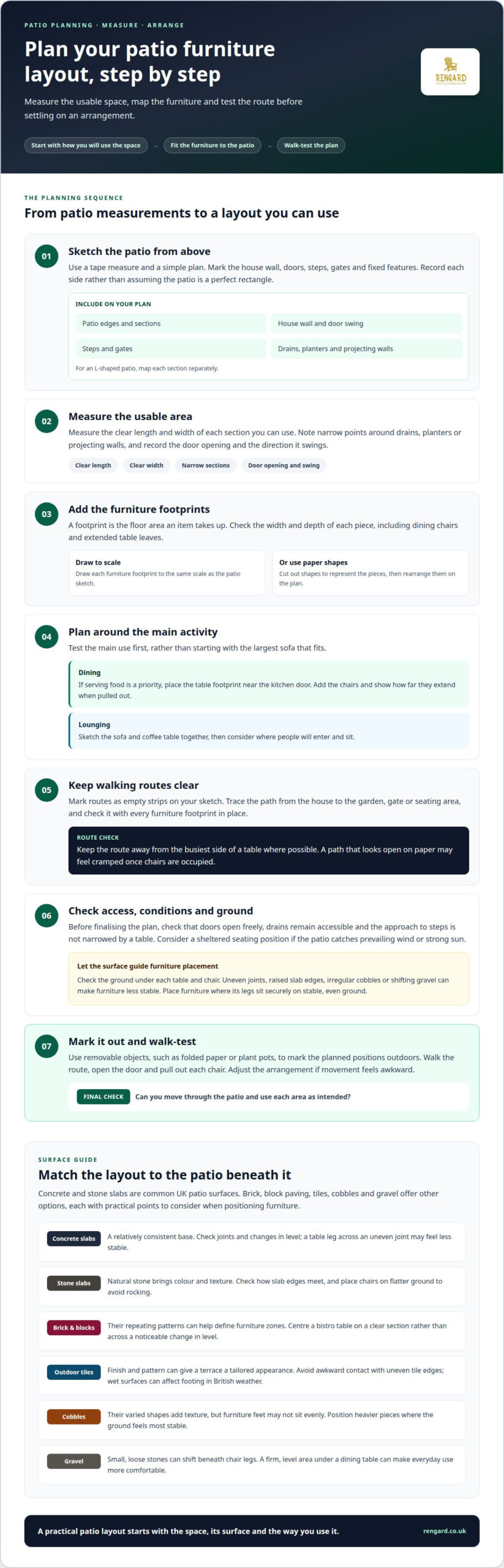
A patio footprint is the usable area available for furniture and movement. Measure it before choosing a table, sofa or chairs. Planning your patio furniture layout on paper first helps reveal awkward corners, narrow routes and competing uses before you move anything outdoors.
Start with a tape measure and a simple sketch. Draw the patio from above, then mark the house wall, doors, steps, gates and fixed features. Record each side rather than assuming the space is a perfect rectangle. For an L-shaped patio, map each section separately.
Measure the clear length and width of each usable section. Note where the patio narrows around a drain, planter or projecting wall. Measure the door opening and note which way the door swings. This can determine whether a chair fits beside the entrance or gets in the way.
A furniture footprint is the floor area taken up by a piece. Check the width and depth of each item you’re considering, including dining chairs and any extended table leaves. Draw each footprint to the same scale as your patio sketch, or cut paper shapes to represent the pieces. Rearrange them on the plan before moving furniture outside.
Test the main activity first. For dining, place the table footprint near the kitchen door if serving food is a priority. Add the chairs and mark how far they extend when pulled out. For lounging, sketch the sofa and coffee table together, then consider where people will enter and sit.
Mark walking routes as empty strips on your sketch. Trace the path from the house to the garden, gate or seating area. A route that looks open on paper may feel cramped once chairs are occupied, so test the arrangement with all furniture footprints in place. Where possible, keep the route away from the busiest side of a table.
Check fixed features before finalising the plan. Keep drains accessible and make sure doors can open without hitting a chair. If the patio has steps, don’t let a table narrow the approach. If the space catches prevailing wind or receives strong sun, use those conditions to choose a more sheltered spot for seating.
Finally, mark each item’s intended position outdoors with removable objects, such as folded paper or plant pots. Walk the route, open the door and pull out each chair. Adjust the plan if movement feels awkward. For a considered furniture choice based on your patio measurements, get in touch with Rengard.
How much clearance should you leave around patio furniture and walkways?
Clearance is the open space around furniture needed for movement and use. The right arrangement depends on the patio’s shape, furniture and access points. Rather than relying on a single measurement, test the space with chairs pulled out and doors open. A dining set beside a patio door, for example, needs room for both.
A walkway is a clear route between parts of the patio. Maintain a continuous path between the house, seating and garden entrance. Avoid making people weave around a table or squeeze behind a sofa. On a narrow terrace, place chairs along one edge and leave the direct route to the gate unobstructed.
Chair pullback is the space needed to move a chair away from a table. Allow for the chair in use, not just when it’s tucked in. At an outdoor dining table, someone should be able to sit down while another person passes behind. If that feels awkward, shift the table or use fewer chairs.
A service zone is the space beside a table used for serving and clearing. Keep the route between the house and dining area free of chair backs and side tables. Near the kitchen, position the table so carrying plates doesn’t mean passing through the seating group. A clear approach makes entertaining more practical.
A door swing is the area a hinged door occupies when opening. Keep furniture outside that arc, including side-table corners and chair legs. Open the door fully when testing your layout. For sliding doors, keep the access line clear so people can enter without moving furniture.
Steps and changes in level also need a clear approach. Don’t place a chair where it narrows the route to a step, and keep portable items such as cushions and small tables out of the way. On a compact patio, placing the main seating against a boundary can preserve an open route through the centre.
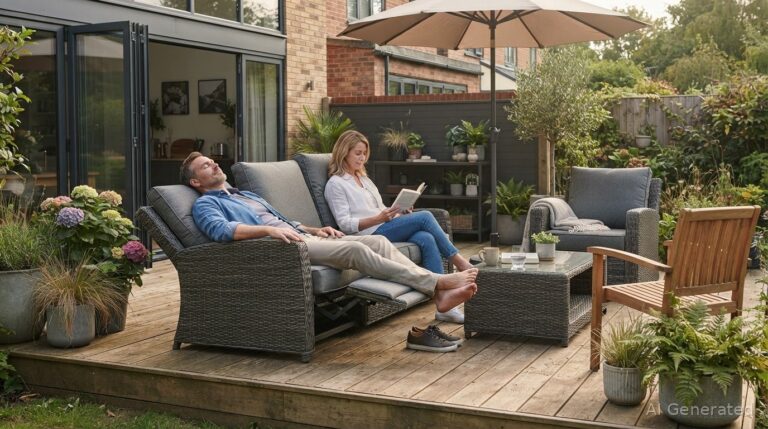
Sun loungers need space to recline and for people to reach them comfortably. Check the backrest’s full position, then leave access beside the lounger. A parasol also needs a stable position that doesn’t obstruct the walkway. On a patio shared by dining and lounging, keep the two functions in separate zones where possible.
Test the arrangement before settling it. Pull out every dining chair, walk the route with a tray, and open each door. Move anything that catches clothing or blocks access. Repeat the test when the furniture is wet, as cushions and accessories may be moved or stored. For help thinking through furniture choices for your patio, discuss your layout.
Clear access also helps when cleaning the patio surface. Remove loose matter and visible growth before applying the cleaner, and avoid contact with plants where possible; rinse leaves immediately if exposed to the cleaner. Leave the cleaner on the surface for up to 20 minutes without allowing it to dry. After treatment, agitate or scrub the surface, then rinse with clean water at low to medium pressure. For persistent dark spots and organic staining on stone slabs, specialist treatments from patioblackspotremovers.com can help restore the paving before furniture is set out.
What are the best patio furniture layouts for small patios?
A bistro layout is a compact arrangement centred on a small table. It suits a narrow patio or terrace used for drinks and light meals. Place two chairs opposite each other, then check that they can move without blocking the door. A round table can soften the arrangement’s edges and make it easier to position within a tight corner. Explore bistro and balcony sets for this kind of setup.
A perimeter layout places seating along the patio’s outer edge, leaving the centre open for walking or occasional use. For example, position a compact sofa against a boundary, with a small table within reach. Keep the entrance side clear. This arrangement suits a patio that connects the house to a lawn or garden path.
A corner layout groups seating along two adjoining sides. It creates a defined place to relax without spreading chairs across the whole patio. Position a corner sofa where it won’t block a gate or door, and put a side table at the open end, away from the main route. On a square patio, this leaves the centre clear for movement.
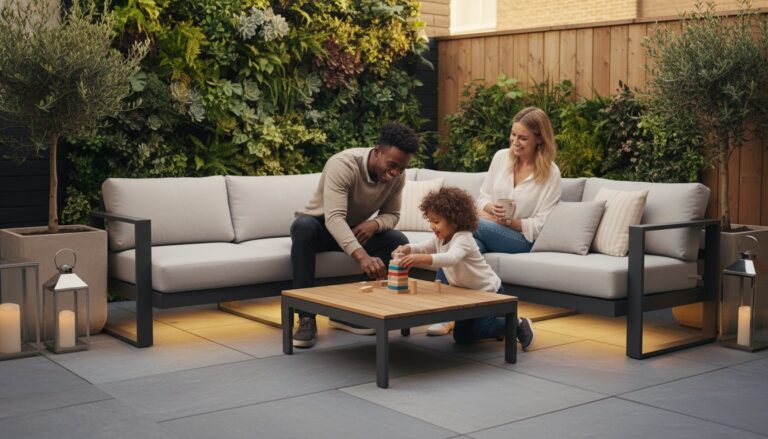
A single-purpose layout gives one activity priority. On a small patio, decide whether dining, lounging or gardening matters most. For outdoor meals, centre a table and use only the chairs needed for regular use. For reading outdoors, create a seat-and-table pairing instead. Focusing on one use helps prevent extra furniture from crowding the space.
A flexible layout uses furniture that can be moved for different occasions. Keep a light side table beside a chair, then move it when guests need more room. Separate seats may suit a patio that changes shape around steps or planters better than one large piece. Before buying, consider where each item can go when you need to adjust the arrangement.
A narrow patio benefits from a linear layout, with furniture arranged along its length. Place a small table and chairs near one end, leaving the route beyond clear. Alternatively, position a lounge seat along the long boundary. Avoid placing furniture across the narrowest point, which can divide the patio and make access to the garden awkward.
Visual openness is the impression of a less crowded space. Keep the centre visible, choose furniture sized to the patio and limit decorative pieces near entrances. A low table can preserve sightlines from the house. On a compact terrace, group cushions and accessories neatly on the seating rather than leaving them on the floor.
Test the arrangement before settling on it. Place the furniture, sit down, pull out each chair and walk to the gate. Check the view from the kitchen and the route to any steps. If the patio feels crowded, remove one piece before changing everything else. A small, well-defined arrangement often serves daily use better than several competing zones.
How should you arrange patio furniture for dining and entertaining
A dining zone is the part of a patio set aside for meals. Position it where guests can reach the table easily from the house. For example, place it near the kitchen door while keeping the entrance clear. This makes carrying plates outside simpler and gives the gathering point a clear place.
A table footprint is the ground area occupied by a table. Choose its position before adding chairs or accessories. Centre it where people can approach from the sides they’ll use. A rectangular table often works well beside a straight wall, while a round table can suit a patio corner. Check the table shape against the patio’s outline.
Chair clearance is the room needed to pull out a chair and sit down. Arrange the chairs around the table, then imagine each one in use. Avoid placing a chair directly against a wall, planter or doorway. Guests should be able to sit without asking someone else to move. Test the arrangement with every chair pulled back.
A serving route is the clear path between the house and dining table. Keep it direct, especially when carrying food or drinks. On a narrow patio, place the table to one side rather than across the entrance. A clear approach also helps guests move between the dining area and garden without passing behind seated people.
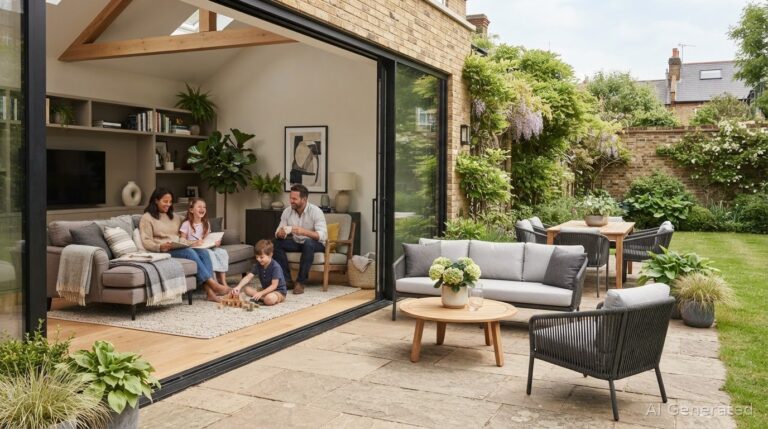
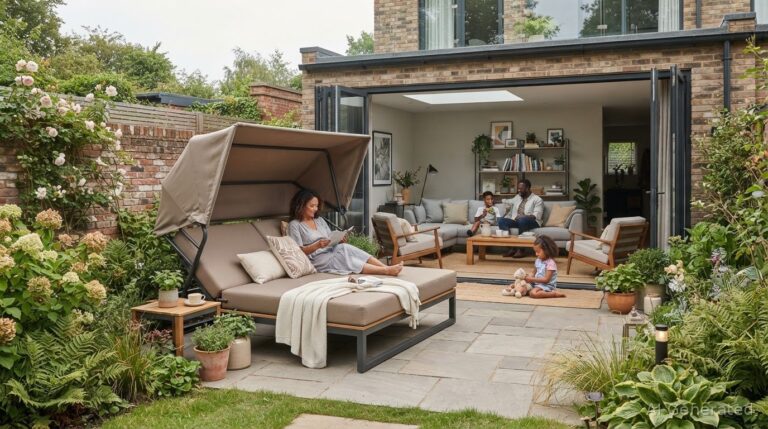
A conversation area is a separate grouping where guests can relax before or after eating. On a larger patio, place lounge seating near the dining zone but leave a clear route between them. A coffee table can anchor the group. On a compact patio, use chairs that can be moved after the meal instead of adding a second permanent arrangement.
Weather planning means considering how British conditions may affect outdoor meals. Keep the table close enough to the house for an easy retreat when rain arrives. If you’re using a parasol, position it to shade the table without blocking a route or door. Store cushions indoors when they’re not needed to keep them ready for the next gathering.
A flexible dining layout adapts to different occasions. Set the table for everyday meals, then move smaller accessories when guests arrive. Keep serving dishes within reach, but don’t fill the table before people sit down. For a family lunch, place frequently used items in the centre while leaving each seat accessible. Open table space makes dining more comfortable.
Before hosting, walk the route with a tray and pull out each chair. Check the door, steps and garden access remain clear. For tailored guidance on choosing dining furniture for your patio, contact Rengard about your dining layout.
A patio is generally an outdoor space adjoining a building, used for dining or recreation and typically paved. Plan the dining setup as a link between home and outdoor living. Keep the table and seating aligned with the clear approach you’ve mapped, so meals and relaxation can share the space without blocking the route.
Outdoor dining grew rapidly in the United States in the 1960s. A flexible layout lets the patio serve meals and recreation, with seating arranged to support dining while keeping the route open.
Rengard
Once your patio measurements and preferred layout are clear, use them to assess which furniture suits the space. Consider how each piece will fit and support dining or relaxing outdoors. A dining table can anchor an eating area, while carefully chosen furniture accessories can add practical finishing touches without crowding the layout.
When refining your patio plan, compare furniture choices against your measurements and intended use.
Shape a patio that works for you
A patio layout can evolve as your routines change. Shape it around how you enjoy spending time outdoors, from a quiet coffee to meals with friends. Colour, texture and furniture proportions can connect the paving with the garden and the view from indoors. Thoughtful planning your patio furniture layout can make the space feel cohesive and welcoming, while keeping it practical for everyday outdoor living.
When choosing patio furniture, consider how each piece will suit your routines and the available space. The Rengard contact page is available for patio-related enquiries.