Garden Parasols in the UK: Comparative Features and 2026 Trends
When planning a refresh for your garden or patio, a parasol might not be the first thing you think of, plants or new furniture usually grab attention first. But in the UK, where sunny skies can turn to rain in under an hour, the right garden parasol can quickly shift from “nice to have” to “essential.” In areas like Cheshire, Worcestershire, Herefordshire, Derbyshire, Warwickshire, Wales, Shropshire, and Staffordshire, picking a well-made model can make outdoor time more comfortable, whether it’s enjoying lunch with friends or reading in the shade. This guide looks at the range of garden parasols UK shoppers can find across the country, points to designs expected to be popular in 2026, and offers tips on choosing ones that fit different spaces.
Moreover, shoppers here often consider style, durability, and weather resistance. We’ll explore cantilever parasols UK for flexible positioning, strong weatherproof frames, UV-protective fabrics, the classic look of rattan garden parasols, and aluminium parasols UK known for their solid build and easy upkeep.
Understanding the UK Garden Parasol Market
The UK umbrella market is doing well, with sales hitting around 23 million units in 2024 and forecasts suggesting growth to 26 million by 2035 (IndexBox). Garden umbrellas are leading in both value and growth, which makes sense given how much designs have improved in recent years.
| Metric | Value | Year |
|---|---|---|
| UK umbrella market consumption | 23 million units | 2024 |
| UK umbrella market forecast volume | 26 million units | 2035 |
| UK garden/similar umbrellas import value | $36 million | 2024 |
These numbers show steady demand, driven by the growing interest in outdoor living spaces. Furthermore, many households are spending more on patios, landscaped gardens, and balcony upgrades. Garden Parasols have shifted from being occasional extras to becoming regular features that shape both the look and comfort of outdoor areas. Warmer but changeable summers mean shade and shelter are now sensible, everyday additions. The rise in outdoor dining, casual garden get-togethers, and flexible leisure spaces is helping sales grow, and even small garden offices often make use of a parasol.
Retailers have responded with options ranging from budget-friendly basics to custom, high-end models designed to fit different styles, from clean modern looks to rustic designs. In addition, online shopping has made it easier for rural buyers to get premium styles without visiting a showroom. Imports from Europe and Asia keep the range broad in both style and price.
Consequently, parasols are now a common sight at home improvement shows and garden design fairs, appealing to anyone looking to create an outdoor space that’s comfortable, inviting, and ready for use whenever the weather cooperates. For more design inspiration, see Staffordshire Gardens with Durable Outdoor Furniture.
Garden umbrellas are the highest-value import and export category… Garden or similar umbrellas, with a CAGR of +5.7%, recorded the highest rates of growth with regard to the value of imports.
Comparative Features of Garden Parasols
It often makes sense to start by looking at the range of parasol styles available. Some have a classic look with plain canvas and wooden poles, while others include modern features like tilt functions or UV-protective fabric. Each option can affect the feel of an outdoor space, sometimes with a subtle shift, and other times with a bold change.
Cantilever Parasols UK
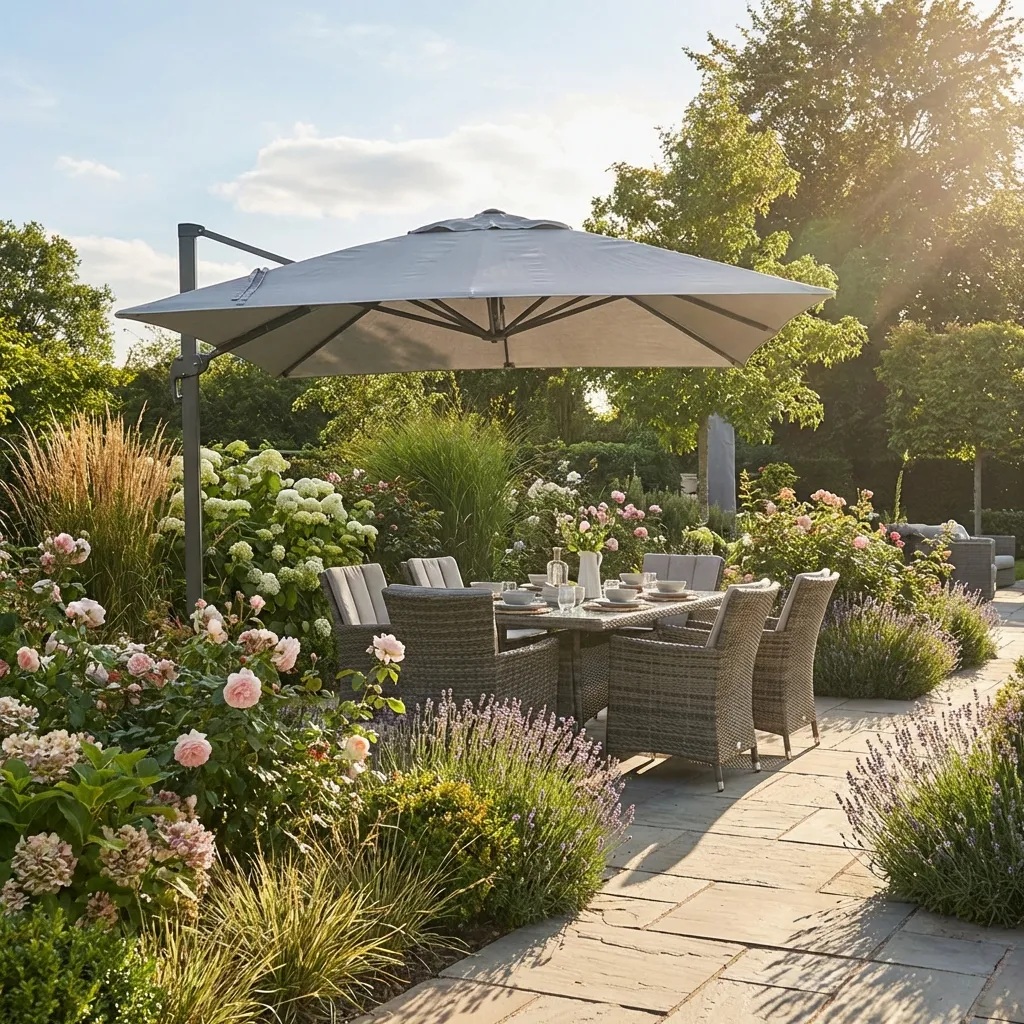
Cantilever parasols use an off‑center pole design, leaving the space underneath free for chairs, loungers, or a full patio set, no pole getting in the way of your view or table. This setup works well for outdoor dining areas and relaxed seating spots where you want room to stretch out. In contrast, a standard central pole can interrupt the arrangement. RENGARD’s offset models offer sturdy frames, smooth tilt and angle adjustments, and reliable build quality. You can place the shade over a table or sofa without moving furniture, and some versions rotate to follow the sun. Though they cost more than basic options, regular hosts often see the extra flexibility as worth the price.
Centre-Pole Parasols
Often picked for small gardens or a compact bistro set, centre-pole parasols work well in cosy patio areas where space is tight. They’re generally easier on the wallet, and while the shade doesn’t rotate easily, that’s usually fine for relaxed use. A big plus is how quickly they can be set up or taken down, making them handy for short sunny spells. Use with a weighted base or fit through a table’s centre hole for steadiness, and many newer models have crank or tilt options for easy changes.
Rattan Garden Parasols
Rattan garden parasols offer both style and useful shade, fitting well with matching rattan chairs or loungers for a coordinated outdoor setup. They add a comfortable touch of elegance, making them a good choice for anyone wanting a warm, inviting garden area. Natural or synthetic rattan works well with earthy colors and textured garden designs. Synthetic options are better for those seeking low upkeep, as they handle sun, rain, and wind well, while natural rattan needs more care. Many have detailed weaving that gives a resort-style feel to the patio. For more rattan styling ideas, check The Latest Rattan Garden Furniture Designs 2026 in the UK.
Aluminium Garden Parasols UK
Aluminium frames give a good mix of being light yet strong enough to handle the UK’s wet weather, often staying rust-free even after sudden rain. With weather-resistant canopies and fabrics that usually block most UV rays, they make a sensible pick for practical outdoor spaces. Their strength without extra weight lets bigger canopies stand without a bulky base. A powder-coated finish adds protection and style, from shiny metal shades to soft garden greens. Aluminium’s recyclability makes it a simple eco-friendly choice.
Weatherproofing & UV Resistance
In the UK, outdoor gear without solid weatherproofing often struggles, frequent showers and sudden sunny spells see to that. Fabrics that combine waterproof coatings with reliable UV protection help patio chairs and garden umbrellas stay comfortable from cool March mornings through warm August evenings, even during unexpected rain. According to 6Wresearch, demand is rising as more households turn gardens into practical living spaces with furniture, lighting, and shade. Fabric is only part of the picture; strong frames matter too. Polyester or acrylic materials treated with polyurethane or Teflon resist rain well and keep colours bright after months in direct sunlight. Good UV resistance, often rated UPF 50+, not only protects skin but also slows fabric wear.
Near the coast, salty air speeds up corrosion, so marine-grade aluminium or stainless steel is a smart option. Vented canopies let wind pass through, useful when gusts hit, while parasols with removable covers make fabric swaps quick, extending their life with little effort.
Material Innovations and Sustainability
Aluminium is still the standard for most frames, but environmentally conscious buyers are now choosing materials like recycled polyester fabrics or timber poles from certified sustainable forests. Some canopies use fibres recovered from ocean plastics, a creative and effective way to cut waste while keeping strength against sun, wind, and rain. Bamboo, when properly treated, offers another renewable pole option, often giving a warmer, more natural look than metal, though its durability depends on how it’s processed.
Furthermore, many manufacturers now share clearer details about where materials come from. FSC (Forest Stewardship Council) certification shows timber is sourced from responsibly managed forests. Some are testing composites that mix natural fibres with resins to improve lifespan and strength while keeping an eco‑friendly appeal. How products are made also matters: energy‑saving equipment, minimal packaging, and lower carbon output often draw customers who put sustainability first.
Smart Features for 2026
By 2026, many premium parasols will include built-in LED lighting, solar-powered USB ports, motorised opening systems, and voice-controlled adjustments, showing the shift toward smarter outdoor setups. LED strips neatly integrated into the canopy ribs can create a cosy evening setting, perfect for late dinners, and their brightness is often adjustable through a remote or phone app. Hidden solar panels in the canopy power USB ports, letting you charge devices without messy cables across the patio. Some motorised models may work with weather sensors, automatically closing when winds pick up. Voice control, connected to smart assistants, can let you change the lighting or move the canopy without touching it. Altogether, these features make the parasol respond to its surroundings, fitting smoothly into everyday outdoor life.
Regional Preferences Across the UK
In Cheshire and Worcestershire, big gardens often choose cantilever designs because they suit wide lawns and leave space for extras like a tucked-away patio set. Smaller urban plots, such as those in Warwickshire or certain Welsh towns, tend to go for centre-pole models, which fit neatly into tight areas without crowding plants or seating. Coastal regions like Cornwall, Devon, and parts of Northumberland often pick aluminium frames, as salty air can quickly damage other materials. In rural Shropshire and Staffordshire, timber poles are popular since they blend naturally with hedgerows and fields. Weather also affects choices: waterproof canopies work well in wetter counties, while sunnier areas often look for strong UV protection. Consequently, where garden gatherings are common, larger decorative setups create a warm, inviting feel.
Buying Guide for Homeowners
Before making a decision, focus on a few practical details:
- Measure your outdoor space carefully so the fit is correct
- Think about your local weather and seasonal changes
- Consider how often you’ll use it, daily or just on weekends
- Check that it works well with your current furniture and décor
A rattan parasol with a rattan garden furniture set can turn a sunny patio into a comfortable spot to relax. Make sure the shade covers your seating without feeling cramped. If you plan to move it regularly, a light frame or a base with wheels will help. While pricier models often last longer and may have adjustable tilt, mid-range options can suit casual use just fine. Warranties differ, some trusted brands offer several years of cover for both fabric and frame. Moreover, reviews on Google or garden forums usually give better long-term feedback than short shop ratings. For more practical tips, see Best Weather-Resistant Outdoor Furniture for UK Gardens.
Maintenance Tips
Even durable weatherproof fabrics still need some care over time. Cleaning them regularly helps extend their life, and during harsh conditions, like heavy snow or long stretches of constant rain, it’s better to store them indoors if possible. If storage isn’t an option, a sturdy cover can give reasonable protection, though it won’t keep out everything. For seasonal advice, see Winter Garden Furniture Maintenance UK Tips for 2026. Mild soap with warm water usually removes dirt without damaging finishes, while rough pads can cause scratches. Make sure fabrics are fully dry before packing to lower the chance of mould. Once a year, check and oil hinges, cranks, and tracks to keep them moving easily. Keep an eye on seams and stitching, fixing small problems early can stop bigger ones. In colder months, store parasols in a dry, airy place or under a secure cover, and check cantilever bases or counterweights often to make sure they stay stable.
2026 Trends to Watch
By 2026, the garden parasol market is expected to shift in several clear ways:
- Premium imports, especially those using Italian fabrics or hand-finished timber, are likely to grow steadily
- Designs with built-in tech features should gain popularity quickly
- Interest in adaptable, all-season models, often left outside year-round, will increase
- Locally made, eco-friendly options are expected to attract more buyers of Garden Parasols
Outdoor furniture brands may work more with tech companies, creating parasols that offer shade plus built-in lighting or gentle heat, sometimes looking like compact outdoor lounges rather than basic umbrellas. Modular designs, with swap-in canopies or clip-on accessories, are set to be in demand. Environment-conscious buyers will push for carbon-neutral production, affecting how manufacturers operate. In crowded cities, smaller parasols may double as privacy screens or vertical plant holders, especially for balconies. As indoor and outdoor spaces blend more, designs will aim to fit smoothly into the overall home setting.
Common Questions
What is the most durable garden parasol for UK weather?
In the UK’s mix of rain, strong sun, and sudden wind, aluminium parasols with waterproof, UV-resistant fabric usually cope best. Designs with strengthened joints last longer in storms, and a vented or layered canopy lets wind pass through, preventing it from blowing away.
Are cantilever parasols better than centre-pole?
Cantilever parasols let you place shade exactly where you want it, over a table or grill, without moving the base. Centre-pole options cost less and can fit smaller patios or balconies. The best pick depends on your layout and available space.
How do I maintain a weatherproof parasol?
Start with a gentle clean using mild soap and water, as stronger cleaners can strip protective coatings and shorten fabric life. Avoid abrasive tools or chemical-heavy products since they often cause early wear. Before a storm, store the parasol in a dry, sheltered place like a garage or under a covered patio. Each year, check the hinges, joints, and crank closely, as catching small problems early can help avoid expensive repairs.
Will smart parasols be worth the investment in 2026?
For people who enjoy gadgets, a smart parasol offers more than basic shade, it’s a handy outdoor upgrade. Built-in lighting, USB charging, and weather sensors can change the feel of a patio or garden. They help when evenings run late or when working outside for hours, making comfort and convenience matter equally. This blend of practical features and a welcoming atmosphere often makes them appealing to anyone who wants both usefulness and style.
Where can I find eco-friendly parasols in the UK?
Many premium outdoor furniture stores offer parasols made from recycled fabrics or wood from responsibly managed forests, often carrying FSC certification. These details are usually in product descriptions, so check carefully. Some brands show their sustainability more clearly than others, making certification labels an easy way to confirm eco-friendly choices before purchasing.
Start Elevating Your Outdoor Space
Outdoor living is becoming more popular across the UK, and choosing a well-made parasol can be a practical way to improve that experience. With 2026 bringing bold new colour trends, it’s worth seeing which designs work with both your style and your daily routine. A good approach is to pick materials that suit how you actually use the space, strong aluminium for open, breezy gardens, or a RENGARD offset parasol if you want a shaded spot for reading. The right choice can blend usefulness with style, making the area feel natural and welcoming.
Think about how you spend time in your garden, quiet mornings with coffee, busy weekend barbecues, or evening drinks with friends. A parasol that shields from sun, keeps off light rain, and adds a warm visual touch can easily become a subtle focal point. These small, thoughtful details often make the space feel complete, helping you choose one that truly fits. Garden parasols UK models that combine style, durability, and smart features will likely remain a favourite for many households in the coming years.
Ultimately, when selecting from the wide range of garden parasols UK offers, balancing aesthetics, practicality, and budget will ensure your outdoor space is both functional and inviting.