Benefits of a Modular Garden Sofa: Is It Right for Your Outdoor Space?
A sofa that looks versatile may not be the best fit for your garden. The benefits of a modular garden sofa can include the option to rearrange its sections to suit a patio, terrace or changing plans. But if you already know the layout you want, a fixed or corner sofa may offer a more straightforward fit.
It’s worth considering whether flexibility meets a real need, rather than assuming it means a better choice. In a British garden, the frame and cushions matter alongside the layout, especially when the weather changes. Modular seating is most useful when its available configurations suit your space and how you use it.
This guide compares modular, fixed and corner designs, and explains where movable sections may make outdoor living more practical. It also covers what to check before choosing, including dimensions, construction, cushion care and the exact configurations available. Use these checks to decide whether modular seating belongs in your outdoor space.
Key Takeaways
- The benefits of a modular garden sofa depend on whether its available layouts suit your space and how you use it.
- Compare modular, fixed and corner designs against your routine, layout and space-planning needs.
- Measure your garden or patio, then check that each seating arrangement leaves clear access and room to move.
- Check the frame, finish and cushion details for British weather, including care guidance for wet conditions.
- Before choosing a garden sofa set, confirm its exact configuration and whether it suits your layout.
What Are the Benefits of a Modular Garden Sofa?
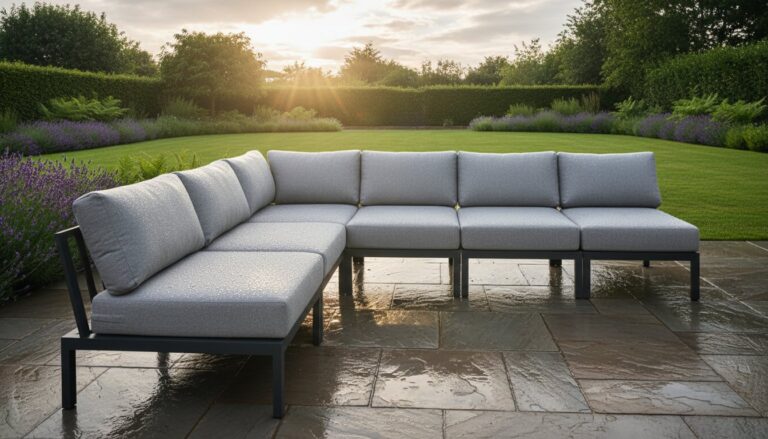
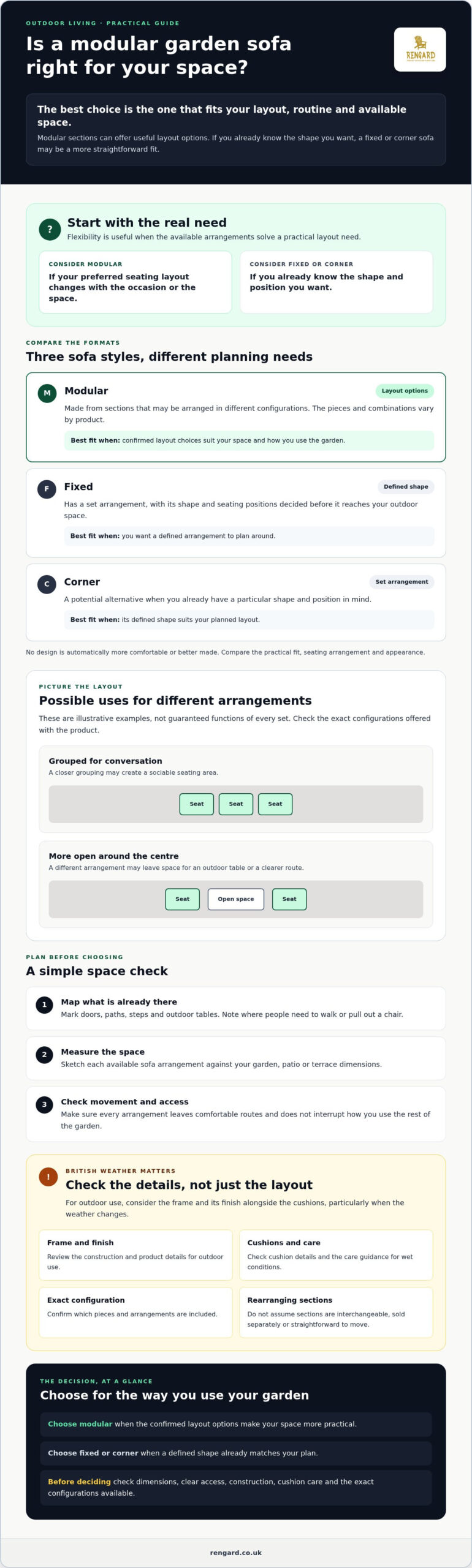
A modular garden sofa is made up of sections that can be arranged in different layouts. Unlike a fixed sofa, it may offer a choice of configurations, depending on the particular product. The principle of modular design is to create a whole from separate components, but the available pieces and configurations vary between garden sofa sets.
The benefits of a modular garden sofa come from having useful layout options, not from flexibility for its own sake. A different arrangement might make a patio more sociable for guests or create a quieter lounging area for everyday use. Those options only help if they suit your space, leave comfortable routes through it and match how you use your garden.
How does modular garden seating differ from a fixed sofa?
A fixed sofa has a set arrangement, so its shape and seating positions are decided before it reaches your outdoor space. Modular seating is designed around sections that may be placed in more than one configuration. That doesn’t necessarily mean every section is interchangeable, sold separately or straightforward to move. Check the product information to confirm which arrangements are possible and what’s included.
This difference matters when planning your layout. A modular set might offer a choice of configurations, while a fixed sofa gives you a defined shape to plan around. Neither is automatically more comfortable or better made. Compare the seating arrangement, appearance and practical fit rather than assuming that more options mean a better match.
Who might benefit from a modular garden sofa?
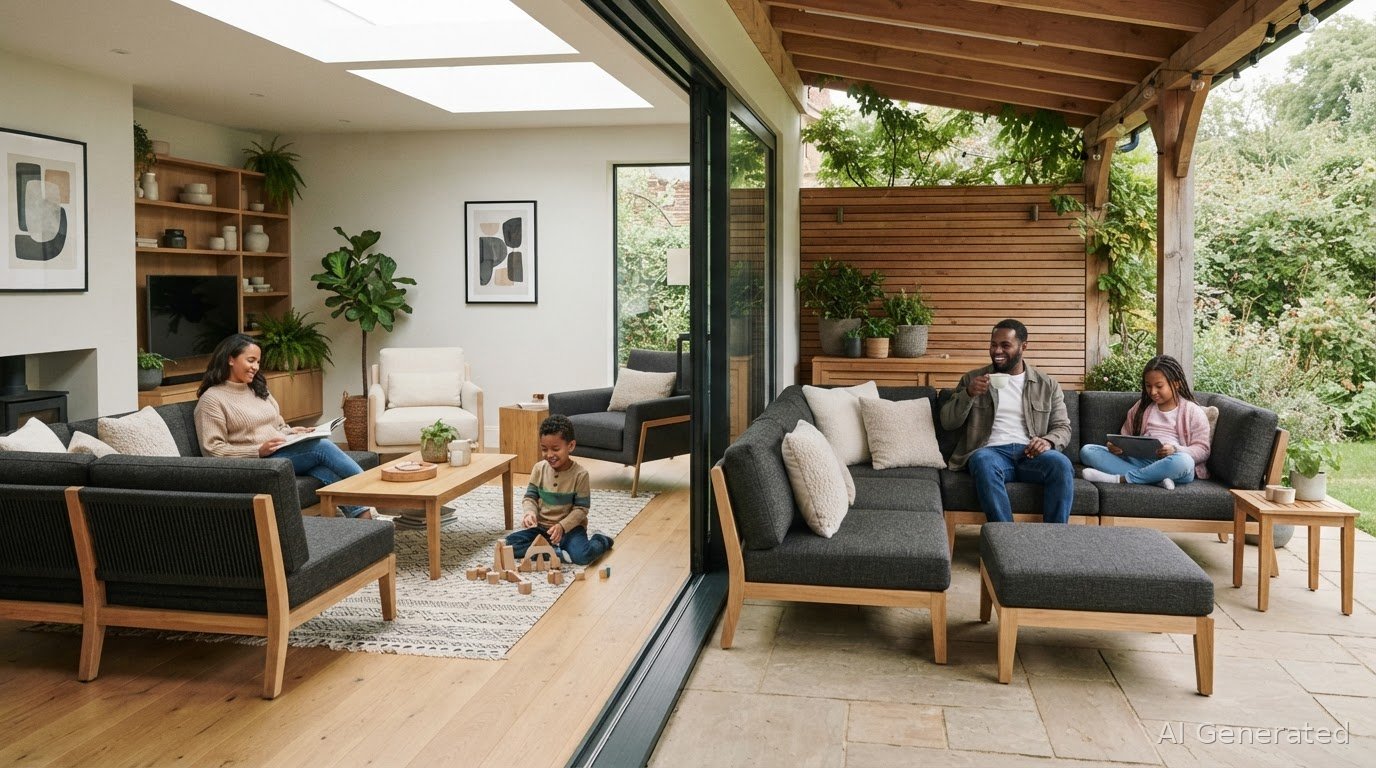
Modular seating may suit households whose preferred layout changes with the occasion. You might group the seats for conversation, then arrange them differently to open up the centre of a terrace. In a garden with more than one outdoor living zone, a choice of layouts could help the seating work alongside dining furniture or leave a clear route across the space.
It may also be worth considering for a patio with an awkward corner or a layout that could change. Sketch each available arrangement and check that it leaves enough room to walk around comfortably. Even in a compact space, access matters; extra configuration choices won’t solve a layout that feels crowded.
If you already know the shape and position you want, a fixed or corner sofa may be the more straightforward choice. It gives you a defined arrangement to assess against your space. Start with your routine, available room and preferred look, then decide whether a modular set’s confirmed configurations offer a practical advantage.
How Modular Garden Sofas Make Outdoor Layouts More Adaptable
A considered layout helps a garden feel welcoming while keeping it easy to move through. With a modular design, sections may be arranged in different ways, depending on the configurations offered with that particular sofa. For example, a grouped arrangement might create a conversation area, while a more open layout could leave room for an outdoor table or a clear route through the garden.
These potential benefits of a modular garden sofa depend on how well each arrangement works in your space. A layout that looks balanced on paper may still obstruct a doorway or make access to the garden awkward. Plan for movement as well as seating.
Can a modular sofa work in different garden spaces?
Start by mapping the space, not by choosing a shape. Mark doors, paths, steps and existing outdoor tables, then note where people need to walk or pull out a chair. For a garden, patio or terrace, sketch the possible sofa configurations around these fixed features. If you’re planning for a compact patio, refer to the existing small-patio guide for further ideas on making the most of limited space.
Check every proposed arrangement, including the one you expect to use most often. Leave comfortable routes around the seating and make sure the layout doesn’t interrupt how you use the rest of the garden.
What everyday benefits can a flexible layout offer?
Different arrangements may help a seating area adapt to the occasion. You could group seats for conversation or position them to suit a quieter lounging routine. These are examples of what modular design can allow, not guaranteed functions of every set. The exact pieces, combinations and handling requirements depend on the product.
Before choosing, confirm which configurations are available and whether the sections are designed to be rearranged by the owner. Don’t assume that separate-looking components are interchangeable or straightforward to move. For context on outdoor furniture materials, the University of Florida also offers guidance on choosing furnishings that can stand up to the weather.
Once you know the layout you need, browse garden sofa sets and check each product’s configuration rather than assuming it’s modular. If you have a particular arrangement in mind, ask the retailer whether an available set meets your requirements.
Modular vs Fixed and Corner Garden Sofas: Which Suits You?
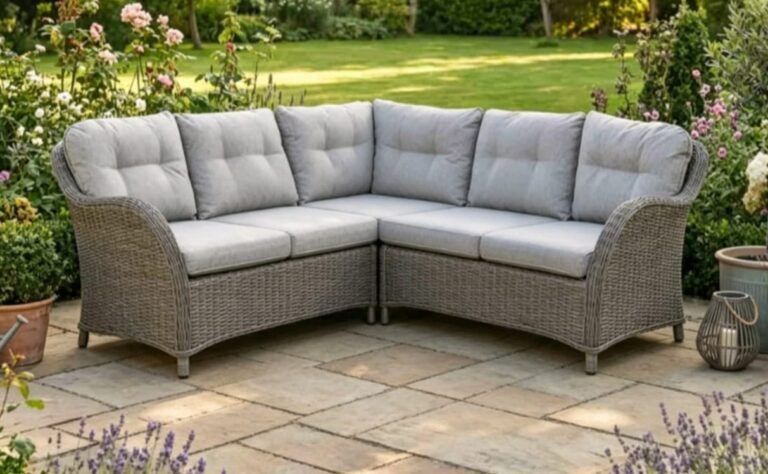
Choosing between modular, fixed and corner seating is about matching the sofa to your garden and routine, not finding a universally better design. A modular set offers configuration options, a fixed sofa has a set arrangement, and a corner sofa is designed around an L-shaped seating plan. None is automatically more comfortable or space-efficient; the fit depends on the furniture and the outdoor area.
| Sofa layout | Layout flexibility | Planning needs | May suit |
|---|---|---|---|
| Modular | Sections can be arranged in the configurations confirmed for that set. | Check the available arrangements, the space each takes up and the routes around it. | Households whose preferred layout or seating needs may vary. |
| Fixed | The seating shape and arrangement are set. | Plan around the sofa’s stated dimensions and position. | People who already know the arrangement they want. |
| Corner | Usually offers a defined corner-shaped arrangement. | Check the corner’s position, access and how the sofa relates to other furniture. | Shoppers planning seating around a particular corner. |
When might a fixed or corner sofa be the better fit?
If you’ve settled on a straightforward seating arrangement, a fixed sofa may make the decision simpler: you can assess one defined shape against your available space. A corner sofa may suit a patio or terrace where you want seating to follow a particular corner. Don’t assume it saves space, though. Check its footprint alongside paths, doors and other furniture to see whether it works in practice.
How should you compare layout, comfort and materials?
Look beyond the sofa’s outline. Check the seat depth and cushion details, then consider whether the arrangement leaves comfortable access around the seating. For British outdoor conditions, review the stated frame and fabric information, including any cushion care guidance. A flexible layout can’t make up for construction or materials that don’t meet your needs.
Rengard’s garden furniture range lists rust-free aluminium frames, high-quality rattan, rope weave, teak or composite finishes, and quick-dry, UV-resistant cushion fabrics. These are range details, not specifications that apply to every modular sofa. Confirm the materials and configuration for the particular set you’re considering. For broader advice on choosing a garden sofa, consult the existing outdoor sofa buying guide.
The benefits of a modular garden sofa matter most when its confirmed arrangements suit your space and routine. Compare that flexibility with the simplicity of a fixed design or the defined shape of a corner sofa, then weigh comfort and construction just as carefully as layout.
How to Choose a Modular Garden Sofa for British Weather
Choose in a practical order: measure your space, decide how you’ll use the seating, shortlist suitable layouts, then check the materials and care guidance for the exact product. This helps you judge whether the flexibility is useful while accounting for rain, changing temperatures and periods of strong sun.
What should you measure and plan before choosing?
Measure the area where the sofa will sit and compare it with the dimensions of each configuration you’re considering. Check the full footprint, not just the length of one section. Note doors, steps, access routes and nearby outdoor tables, then make sure people can move around the furniture without squeezing past it.
Sketch your preferred arrangement and any alternative you realistically expect to use. A second layout is valuable only if it fits the space and supports a different activity, such as opening up the seating area or changing which way it faces. If limited space is central to your decision, consult the existing small-patio guide for more layout inspiration.
Which materials and cushion details should you check?
In the British climate, don’t rely on a broad label such as “weather-resistant” alone. Check the stated frame and finish materials, along with the care guidance for the cushions. Rengard’s garden furniture information lists rust-free aluminium frames, high-quality rattan, rope weave, teak or composite finishes, and quick-dry, UV-resistant cushion fabrics. These are range details, not specifications that automatically apply to every sofa or modular configuration.
Quick-dry and UV-resistant describe fabric properties, but they don’t tell you how to store or care for a particular cushion. Before buying, confirm the guidance for the exact product, including how to protect its cushions and surfaces during prolonged wet weather or when the furniture isn’t in use. Weather-resistant materials shouldn’t be taken as permission to leave every item outdoors year-round.
Finally, verify what the set includes, which layouts it supports and whether the sections are intended to be rearranged. This connects the practical benefits of a modular garden sofa with the actual product, rather than assumptions about how modular furniture works. If you’re considering Rengard garden furniture, ask about available configurations and material details before deciding whether a set meets your needs.
Finding the Right Garden Sofa Set and Your Next Step
The right choice depends on how you use your outdoor space, not simply how many layout options a sofa offers. Before deciding, bring together your measurements, preferred seating arrangement, comfort needs and material priorities. Then verify the exact configuration available. This helps you judge whether the benefits of a modular garden sofa are relevant to your patio, or whether a fixed or corner set better suits how you relax and entertain.
Rengard offers garden sofa sets, but a modular configuration hasn’t been confirmed for its range. Compare the available options with your space and intended use, and treat material information as specific to the product rather than proof that it is modular. For a broader overview of what to consider when selecting outdoor seating, consult the garden furniture buyer’s guide.
What to confirm with a retailer before choosing
Ask for details before settling on a set. In particular, confirm:
- Configuration: Which arrangements are available, and can the sections be rearranged as you expect?
- What’s included: Check the listed components and cushions rather than assuming extra sections are part of the set.
- Materials and care: Verify the frame, finish and cushion details for that specific product, along with its care and exposure guidance.
- Future changes: Don’t assume sections can be purchased separately or replaced. Ask whether this is confirmed for the set you’re considering.
These questions help distinguish a useful layout choice from a feature that sounds appealing but may not fit your plans.
How to take the next step with Rengard
Use your measurements and shortlist of intended layouts to compare Rengard garden sofa sets. The range includes confirmed material options such as rust-free aluminium frames, high-quality rattan, rope weave, teak or composite finishes, and quick-dry, UV-resistant cushion fabrics. Check the details of each set: these material options don’t confirm that a sofa is modular.
If a particular configuration matters to you, ask Rengard whether an available set meets that requirement. You can ask Rengard about garden sofa options before making your decision.
Choose Seating That Works for Your Outdoor Space
The benefits of a modular garden sofa come down to whether its available layouts solve a real need. If your seating plans change, a configurable arrangement may suit you; if you already know the shape you want, a fixed or corner sofa could be the more straightforward choice. Either way, measure carefully and check that the layout leaves comfortable access around your garden furniture.
Before choosing, confirm the exact configuration, what the set includes, and how its cushions and materials should be cared for in changeable British weather. Rengard’s product information lists rust-free aluminium frames and quick-dry, UV-resistant cushion fabrics, but these details don’t confirm that a particular sofa set is modular. Check the specifications for the set you’re considering.
To explore whether an available garden sofa option fits your layout, ask Rengard about garden sofa options. With clear measurements and a sense of how you’ll use the space, you can make a considered choice and create an outdoor setting that works for your home.
Frequently Asked Questions
What are the main benefits of a modular garden sofa?
The main benefits of a modular garden sofa are the choice of layouts and the option to adapt the seating arrangement to different uses. Depending on the specific set, sections may be configured for conversation or lounging. That flexibility is useful only if the available arrangements suit your space and routine. Check which layouts the product supports and compare them with a fixed or corner sofa before deciding.
Is a modular garden sofa better than a fixed sofa?
Not necessarily. The better option depends on the layout you want and how likely your needs are to change. Modular seating may offer a choice of configurations, while a fixed sofa provides a defined arrangement that can be simpler to plan around. Neither style is automatically more comfortable, durable or space-efficient. Compare dimensions, seat comfort, construction and materials, then decide which design fits your garden or patio.
Can a modular garden sofa work on a small patio?
It can, provided an available configuration fits without obstructing access or making the patio feel crowded. Measure the intended area and mark doors, paths and nearby outdoor tables before comparing the sofa’s dimensions. Check how much room remains to move around the seating. A modular design isn’t automatically compact, so judge each arrangement against your actual patio rather than relying on the style name.
Are modular garden sofas suitable for British weather?
They can be suitable, but weather performance depends on the specific materials and care guidance, not simply on whether a sofa is modular. Check the frame, finish and cushion information for the set you’re considering. Rengard’s product details list rust-free aluminium frames and quick-dry, UV-resistant cushion fabrics. These properties don’t mean every item should be left outside in all conditions, so follow product-specific advice for exposure and care.
Are modular garden sofas comfortable?
Comfort depends on the individual sofa’s seat depth, support, cushion feel and how its sections fit together. Modularity alone doesn’t make a sofa more comfortable than a fixed design. If possible, assess the seat in person; otherwise, review the product details and ask about the cushioning and seating dimensions. Also consider whether your preferred layout gives each person enough room to sit comfortably and move around the arrangement.
Can modular sofa sections be rearranged or bought separately?
Some designs allow sections to be rearranged, but the available configurations depend on the particular product. Don’t assume every component is interchangeable, easy to move or sold separately. Before buying, ask which layouts are supported, what pieces are included and whether additional or replacement sections are available. Confirm these details with the retailer, especially if you expect to change the arrangement or add seating later.
What should I check before buying a modular garden sofa?
Measure your space, compare the dimensions of each confirmed layout and make sure doors and walking routes remain clear. Then assess seat comfort, frame construction, finishes, cushion fabric and care guidance for the exact set. Confirm which sections are included, how they can be arranged and whether they’re sold separately. This helps you judge whether the flexibility suits your garden and whether the materials meet your needs.