Modular Garden Seating: How to Choose a Flexible Outdoor Arrangement
What if the most flexible seating arrangement isn’t the one with the most pieces, but the one that suits how you use your garden? Modular garden seating can be rearranged for a quiet afternoon, a gathering with friends or a change of layout. That adaptability is useful when you have a practical reason to move the furniture, but the pieces still need to fit your space and feel comfortable in everyday use.
If you’re weighing up a modular arrangement, consider how its sections work together, whether there’s enough room to move around them and how the materials will cope with British weather. This guide explains the trade-offs between modular seating and fixed layouts, then helps you plan for a garden, patio or terrace. It also covers materials and cushion care, before looking at garden sofa sets and corner lounges as alternatives when a cohesive, fixed design makes more sense.
Key Takeaways
- Understand how modular garden seating pieces can be combined, and why the components shape your layout options.
- Weigh the freedom to rearrange against the simplicity of a fixed sofa or corner lounge to decide what suits your routine.
- Plan around the usable seating area, access routes, doors and room to move before choosing an arrangement.
- Consider how materials and cushion care can help your outdoor seating suit the British climate.
- Explore garden sofa sets and corner lounges as alternatives, with weather-conscious materials and a cohesive layout.
What Is Modular Garden Seating and When Is It Useful?
Adaptable seating sounds appealing, but its usefulness depends on your space and routine. Modular garden seating is made up of separate elements designed to sit together in different configurations. Depending on the set, you might arrange the pieces in a straight line, bring them together for conversation or create a corner-style layout.
That flexibility can help an outdoor space serve more than one purpose. You could open up a sociable arrangement to create more floor space, or reposition seats to make better use of a sunny or sheltered part of the garden. Modularity is most useful when you have a practical reason to change the layout, rather than simply the option to move pieces.
Modularity doesn’t automatically mean greater comfort or durability. Those qualities depend on the seating design, materials and how well it suits the people using it. In a compact area, separate elements can be harder to arrange without obstructing access. A fixed layout can be just as comfortable and may make better use of a space where the seating position is unlikely to change.
How modular garden seating differs from a fixed set
With modular seating, individual elements can be moved and combined; a fixed set has a more defined overall arrangement. Separate seats might sit together as a corner grouping, then be spread into a line. A fixed corner lounge keeps its intended shape. The amount of rearrangement possible depends on the pieces included and how they’re designed to fit together.
If you mainly want a settled place to lounge, a garden sofa set with a consistent layout may be simpler to plan around. Choose according to how you expect to use the seating, rather than assuming that more movable pieces will always work better.
Which outdoor spaces can suit a modular layout?
In a garden, modular pieces can help define a lounging area that shifts between everyday use and hosting. On a patio or terrace, flexibility can be useful when the space needs to accommodate different activities. Measure the area available for furniture, not just the whole garden: a doorway, path, planter or other feature can limit where pieces can go.
Think about how often you’d genuinely rearrange the seats. If your routine changes, or the space has more than one useful layout, modularity may earn its place. If the arrangement will stay much the same, choose a layout that fits neatly and leaves comfortable routes through the space. Appearance matters, but it needs to work alongside everyday function.
How Modular Garden Seating Components Create Different Layouts
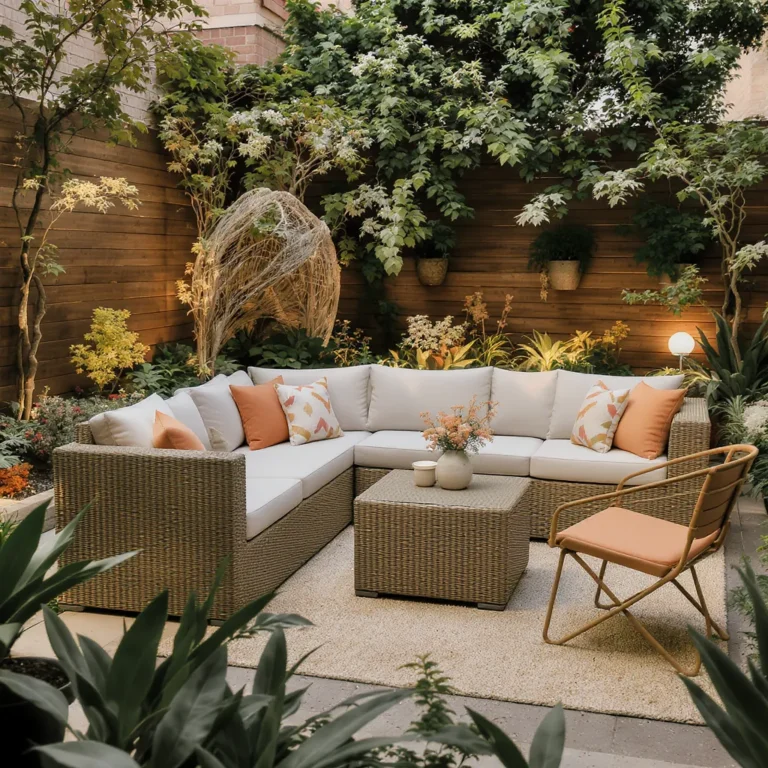
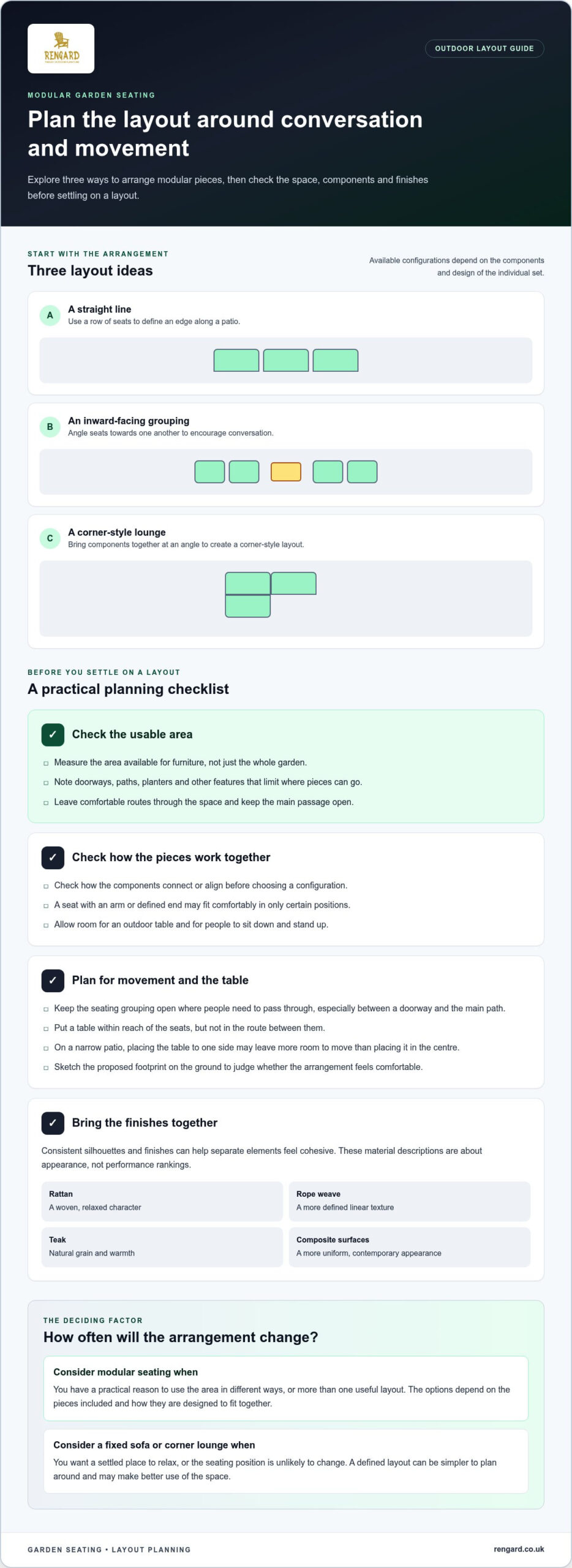
The pieces in a modular arrangement can be positioned to suit the shape and purpose of an outdoor area. A row of seats can define an edge along a patio; an inward-facing grouping can encourage conversation; and components that meet at an angle can create a corner-style lounge. These are layout ideas, not guaranteed options: the configurations available depend on the components and design of the individual set.
Before settling on a layout, consider what each element needs to do. A seat with an arm or defined end may fit comfortably in only certain positions. The overall arrangement also needs to leave space for a table and for people to sit down and stand up. Check how the pieces connect or align. A layout can look balanced in a product image yet feel awkward if its proportions don’t suit your patio.
Plan the layout around conversation and movement
For easy conversation, angle seats towards one another rather than lining every piece against the garden’s edge. Keep the grouping open where people need to pass through, particularly between a doorway and the main path. This helps the seating feel inviting without turning it into an obstacle.
Place an outdoor table within reach of the seats, but not in the route between them. On a narrow patio, setting a table to one side may leave more room to move than placing it in the centre. Sketching the proposed footprint on the ground can help you judge whether the arrangement feels comfortable before committing to it.
Choose a look that feels cohesive outdoors
Separate elements are easier to bring together visually when their silhouettes and finishes feel consistent. Rattan brings a woven, relaxed character; rope weave has a more defined linear texture; teak adds natural grain and warmth; and composite surfaces offer a more uniform, contemporary appearance. These are aesthetic distinctions, not performance rankings. The right combination depends on the look you want and how it sits with the rest of your outdoor space.
When choosing outdoor seating, consider the outline, proportions and materials together, rather than choosing by appearance alone. Rengard’s garden sofa sets offer a reference point for planning a cohesive seating arrangement. For broader context on how outdoor furniture testing addresses safety and durability, see UL’s Outdoor Furniture Safety Standards and Certifications.
A clear layout starts with the way you want to sit, gather and move through the space. To discuss your outdoor furniture requirements, get in touch with Rengard.
Modular Garden Seating Compared with Fixed Sofas and Corner Lounges
Choosing between modular and fixed seating comes down to how much you expect the arrangement to change. Modular garden seating can suit households that regularly use the same area in different ways, but it isn’t a universal upgrade. A fixed sofa or corner lounge may be a more considered choice if you want a defined place to relax without reworking the layout.
| Consideration | Modular seating | Fixed sofa or corner lounge |
|---|---|---|
| Flexibility | Pieces may be rearranged, depending on the design and components. | The seating keeps its intended arrangement. |
| Layout simplicity | Offers options, but each new arrangement needs planning. | Creates a defined layout to position within the space. |
| Footprint planning | Consider how the pieces fit together in each layout you expect to use. | Plan around the set’s fixed overall shape and position. |
| Likely use | May suit changing activities or social arrangements. | May suit a regular routine and a settled seating area. |
When flexible seating may suit your routine
Think about whether the same outdoor area needs to serve different purposes. You might want an open arrangement for a quiet afternoon, then a more sociable grouping when friends visit. Being able to alter the layout can help the space adapt, particularly if furniture needs to move to leave room for another activity.
The benefit depends on the set itself. Some designs allow more rearrangement than others, and moving pieces only helps if the alternative positions work with your space. Consider how often you’d make a change and whether the components are practical to move and position. If you’d leave them in place most of the time, flexibility may matter less than a layout that feels right every day.
When a fixed garden sofa or corner lounge may suit better
A defined arrangement can make it easier to plan a dedicated lounging area. Once positioned, the seats, table and surrounding routes can be organised around one consistent footprint. A corner lounge can use an available corner to create a clear seating zone, though how efficiently it uses the space depends on the patio’s shape, access points and other features.
Compare the arrangement you want with garden sofa sets to explore a more settled seating format. As you weigh up the options, consider the overall footprint, intended use and materials together. The best choice is the one that fits your routine and outdoor space, not simply the one with more layout possibilities.
How to Plan Modular Garden Seating for Your Space and the UK Climate
A practical plan starts with the area you can actually furnish, then tests whether different arrangements will work around your routine. For modular garden seating, allow for the full footprint of each layout you intend to use, not just the space occupied by the pieces when grouped together.
Measure the usable area before choosing a configuration
Work through these steps before settling on a set:
- Mark the seating zone. Measure the usable patio, terrace or firm garden surface. Don’t use the whole garden footprint if planting, lawn or uneven ground makes part of it unsuitable for seating.
- Note access points. Mark doors, gates and routes you use regularly. Include the space needed to open doors fully and walk past the furniture without squeezing through.
- Record existing features. Plot planters, steps, outdoor tables and other fixed features. These affect where seats can go and how people move around the arrangement.
- Sketch possible layouts. Draw the configuration you expect to use most, then try an alternative. Include the table and space to sit down, stand up and pass behind chairs.
- Review the difference. If the alternative layout makes the area work better for a real activity, flexibility may be useful. If it creates no practical benefit, a fixed arrangement could be simpler.
Use the sketches to check more than dimensions. Consider sightlines, access to the garden and whether people can reach the table comfortably. A layout that fits on paper should also leave the space feeling easy to use.
Assess materials and comfort for changeable weather
Choose materials for the look and feel you want, while considering the outdoor conditions they’ll face. Rengard garden furniture is made with rust-free aluminium frames and finishes in high-quality rattan, rope weave, teak or composite surfaces. These materials create different visual textures, so consider how each finish will sit with paving, planting and other furniture.
Cushions are part of the plan, too. Rengard uses quick-dry, UV-resistant cushion fabrics, designed with outdoor use in mind. Consider where cushions will be used and stored, and how their colour and texture complement the frame and surfaces. For a small patio, careful choices about furniture footprint and clear access routes are especially valuable.
Once you’ve measured your space and considered the materials, discuss your outdoor seating plans with Rengard and explore options for your garden, patio or terrace.
A Considered Alternative to Modular Garden Seating from Rengard
Modular garden seating isn’t the only way to create an inviting outdoor lounge. If you’d rather choose a defined arrangement than plan around pieces that can be rearranged, Rengard’s garden sofa sets and corner lounges offer options for a garden, patio or terrace. Their contemporary silhouettes bring together comfort and materials suited to modern British outdoor living.
Pair contemporary design with considered material choices
Material and finish shape the character of a seating area. High-quality rattan brings a woven texture, whilst rope weave introduces a more linear detail. Teak has a natural grain, and composite surfaces offer another look for a contemporary scheme. These finishes can sit comfortably alongside paving, planting and outdoor tables, helping the seating feel connected to its setting.
Rengard’s garden furniture also features rust-free aluminium frames and quick-dry, UV-resistant cushion fabrics. These are useful attributes to consider for outdoor use in the UK climate, where furniture needs to balance visual appeal with weather-conscious materials. Consider how the frame, surface and cushions work together, rather than treating each material as a separate decision.
To compare silhouettes and finishes, explore Rengard’s garden sofa sets. A coordinated sofa arrangement can give a patio or terrace a clear visual focus, whilst a corner lounge can define a relaxed seating area where its shape suits the available space.
Choose the next step for your outdoor seating area
Before deciding, return to the priorities that matter most in your garden: how much flexibility you’ll use, which layout feels natural, the space available and the materials you prefer. If changing the arrangement would support different activities, a modular design may be worth considering. If you want a more settled seating area, a garden sofa set or corner lounge may better reflect how you plan to use the space.
Rengard’s garden sofa sets and corner lounges are seating options with contemporary silhouettes, rust-free aluminium frames and finishes including high-quality rattan, rope weave, teak or composite surfaces. The choice is about finding a comfortable, cohesive arrangement that suits your outdoor space, rather than assuming that more flexibility is always better.
Have a garden, patio or terrace in mind? Discuss your outdoor seating plans with Rengard and consider which arrangement and material choices best suit your space.
Make Your Outdoor Seating Feel Like Yours
Your garden seating should support the way you want to spend time outdoors, not ask you to organise your routine around the furniture. Let that principle guide your choice: modular garden seating may suit you if you’ll genuinely use its flexibility, while a considered fixed arrangement can bring clarity to a space you want to keep settled.
As you shape the look, balance contemporary silhouettes with practical details for British outdoor living, including rust-free aluminium frames and quick-dry, UV-resistant cushion fabrics. These material choices help you plan a space that feels considered as well as comfortable.
Ready to plan your outdoor seating area? Explore outdoor seating options with Rengard and start shaping a welcoming setting for your garden, patio or terrace.
Frequently Asked Questions
What is modular garden seating?
Modular garden seating is an arrangement made from separate sections that can be combined in different ways. A design might include individual seats and a corner section, though the components vary between sets. The term describes how the pieces are arranged, not a guaranteed level of comfort or quality. Before choosing one, consider whether you’ll use alternative layouts often enough to make the added choice worthwhile.
Is modular garden seating suitable for a small patio?
It can suit a small patio if the pieces fit without narrowing essential routes or crowding the entrance. Measure the usable paved area and include space for a table, door movement and access to the garden. A compact arrangement with fewer pieces may be easier to live with than a larger set offering layouts you can’t use. If the furniture must stay in one position, a fixed design may be simpler.
Can modular garden seating be rearranged into different layouts?
Often, but the available arrangements depend on the set’s components and how they’re designed to meet. Some pieces may form a row or face inwards, whilst others have fixed ends that limit where they can go. Look at the shape of each section and the overall dimensions in the proposed layouts. Don’t assume every piece can be moved independently or that every configuration will suit your space.
How do I plan modular seating for my garden?
Start by deciding what the seating area needs to do, such as provide a quiet reading spot or accommodate conversation. Mark the furniture footprint on a sketch of the garden, including paths, doors, planting and existing features. Then check the arrangement from the house and garden entrances. This helps reveal whether the seats feel connected to the space and whether everyday access remains comfortable.
Is modular garden seating suitable for the British weather?
It can be, provided the particular furniture is designed for outdoor conditions and cared for as directed. Assess the frame, surfaces and cushions separately, rather than relying on the word “modular” to indicate weather performance. In a changeable climate, consider where cushions can be stored during poor weather and follow the furniture’s care guidance. Weather suitability depends on materials and construction, not the seating format alone.
What is the difference between modular seating and a corner lounge?
Modular seating consists of separate sections intended to be arranged in more than one configuration. A corner lounge has a defined L-shaped seating layout designed to occupy a corner or similar position. Some modular designs may form a corner arrangement, but that doesn’t make every corner lounge modular. Compare the furniture’s intended shape with the available space, then choose the format that matches your preferred layout.
Can modular garden seating include a table?
Some arrangements are sold with a table, whilst others may need a separate outdoor table. The combination depends on the set, so check what the furniture includes and measure the table alongside the seating. Think about reach as well as fit: people should be able to use the surface without blocking the route through the patio. A table that works for drinks may not suit every dining need.
How do I choose materials for outdoor seating?
Begin with the appearance and feel you want, then consider the furniture’s exposure and care requirements. Rattan and rope weave bring woven texture, whilst teak shows natural grain; composite surfaces offer a more uniform look. For frames, rust-free aluminium is one option. Check the care information for the specific furniture and choose cushions with fabrics suited to your intended outdoor use.