Ceramic Dining Tables Explained: Everything UK Buyers Need to Know
If you’re looking at ceramic dining tables from UK retailers right now, with all sorts of shapes and finishes, you’re probably trying to solve more than one problem at the same time. You want a table that looks refined and modern but still stands up to real life. Everyday life. That can mean family dinners, hot plates, homework, laptops, spills, and those chaotic moments that seem to happen more often than you’d expect. In most homes, it’s rarely just about picking a look. It’s about choosing something practical for the room where people actually eat, work, and spend time together.
That goes a long way to explaining why ceramic has become so popular in UK homes. The modern ceramic dining table UK buyers go for now is often less about showing off and more about making everyday life easier without giving up style. Ceramic surfaces are generally low maintenance and easy to wipe clean. They’re also often more resistant to scratches, stains, and heat than many traditional finishes. In open-plan homes, busy family rooms, and dining spaces that need to work hard every day, that can make a real difference, not just in photos but in everyday use. Real homes, in my view.
This guide explains what a ceramic top dining table UK shoppers are actually buying. It covers how ceramic compares with wood, what ‘scratch resistant’ and ‘heat resistant’ really mean, how to judge quality, and which styles suit contemporary interiors across Shropshire, Staffordshire, Cheshire, Manchester, North Wales, and Birmingham. If you want a premium ceramic dining table UK homes can live with for years, this guide should help buyers choose with confidence and avoid a few costly mistakes.
Why ceramic dining tables UK buyers choose are getting so much attention
Ceramic isn’t really a niche material anymore. It now sits where design and everyday practicality meet, and that’s probably clearer here than with many other table finishes. In the UK, that matters because the dining table is now used for far more than meals, which shows a real shift. The Harris Poll UK found that 87% of UK households had a dining table, or at least a table that could double as one, in 2025, and one in three respondents said they use it as a workstation. Another 50% said it doubles as a desk or homework station (The Harris Poll UK) (The Harris Poll UK).
Why dining tables now do more work
That’s part of why more buyers want surfaces that are simply easier to live with day to day. In many UK homes, a ceramic top dining table has to cope with breakfast, laptops, crafts and dinner, sometimes all in one day. It’s no longer just a formal piece used from time to time. In busy homes especially, practical materials usually get more attention when furniture needs to handle several roles.
Retail data also supports the trend. Furniture Village reported that 54% of its dining-table material sales in 2025 were ceramic. That’s company-specific rather than a full market view, but it still points to strong buyer interest in practical materials that don’t need much upkeep. It matters because it reflects what people are actually buying, not only what they say they prefer (PR Newswire UK).
Wider spending patterns point in the same direction. Using ONS data, FIRA said UK household spending on furniture and furnishings reached £20.15 billion in 2025, up 3.2% year on year (FIRA) (FIRA). People are still spending on home pieces that need to last and stand up to daily use, which says a lot when a table is part of everyday life.
People are also spending more on their homes, with furniture seeing a boost for another month following a long period of decline.
What ceramic dining tables UK shoppers are actually buying
When people hear “ceramic,” many imagine a heavy, fragile slab. But in furniture, it’s usually a bit more technical than that. A ceramic dining table often uses a thin ceramic or porcelain layer bonded to a base, often glass, which catches a lot of people off guard. Some products are also sold as sintered stone. The names differ, but they usually fall into the same general category, and that’s often where the confusion starts for shoppers.
In simple terms, the label isn’t the only thing that matters. The way it’s built usually tells you more.
Details worth checking before you buy
When looking at ceramic dining furniture UK retailers sell, these are often the details most worth checking:
- Surface material: Is it ceramic, porcelain, or sintered stone?
- Top construction: Is the top bonded to tempered glass or another support layer?
- Thickness: Ask whether the visible edge shows the true thickness or a built-up profile.
- Base quality: Even a strong top can still be let down by a weak base.
- Edge design: Mitred or slim edges can look elegant, but they should still feel solid.
That’s why two tables that look much the same online can behave very differently in daily use. One may feel stable and well made, while another may wobble or chip around the edges because the frame or support is poor. In most cases, that’s not something photos alone will show, which can be frustrating.
For buyers comparing options, it often helps to think of ceramic as a surface system rather than simply a top material. That’s probably the clearest way to judge it. So the best premium ceramic dining table UK households choose will usually combine a durable surface, a well-engineered frame, and sensible proportions, giving you durability, stability, and a table that fits the room properly.
If you’re still deciding on table shape before material, this guide on round and rectangular dining tables can help narrow down the right layout first.
You can also compare broader layouts and materials in this guide to best dining table sets for modern UK homes, especially if you’re planning a full dining room update.
The real benefits of ceramic dining tables UK families buy: durable, low maintenance, family-friendly
Ceramic keeps coming up for one basic reason: it holds up in everyday homes. For UK families, a durable dining table needs to cope with daily use without turning into one more thing to worry about, and nobody wants that. That usually matters most in busy households. Ceramic stands out because it often means less worry, especially with kids around or a full routine.
Here’s what buyers tend to like most:
Scratch resistance in ceramic dining tables UK homes use every day
Many ceramic surfaces are sold as scratch resistant, which is especially helpful in busy family homes where plates, keys, bags, and school items often end up against the table surface. Still, scratch resistant usually doesn’t mean scratch proof. Rough items dragged across it, or sharp tools, can still damage the surface, so that’s best avoided.
Heat resistance
If you’re after a heat resistant dining table UK buyers often want one that copes with warm dishes better than many wood or laminate surfaces, as that’s usually the main issue. In ceramic product testing, technical references often used include ISO 10545-9 for thermal shock resistance and EN 12721 / EN 12722 for heat-related furniture surface performance. Those benchmarks are useful here. Porcelain Tiles UK also reports resistance under those standards for certain tested products, along with Class 5 stain resistance under ISO 10545-14 (Porcelain Tiles UK).
The main point is that these are product-specific test results. They don’t show that every ceramic table on the market will perform the same way, and that can be easy to miss.
Stain resistance and easy cleaning
For many homes, this is probably the most useful everyday benefit, and a practical one. Ceramic is usually easy to wipe clean and, unlike wood, it doesn’t need regular oiling. It’s also often less fussy than marble, which helps day to day.
Contemporary style
A contemporary dining table UK shoppers often look for has a cleaner profile, which is usually the main idea. It also tends to look lighter, and the finish works with modern flooring, black accents, warm neutrals, and open-plan rooms. That’s where ceramic works well.
Ceramic dining tables UK buyers compare with wood: which suits your home better?
A lot of buyers pause here, and that’s understandable. Wood feels warm and traditional. Ceramic usually comes across as more practical, with a more architectural look that some people really like. One isn’t automatically better than the other, and the right choice usually comes down to what everyday life at home actually looks like.
What to look for in a high-quality ceramic top dining table
Some ceramic tables are sold as premium without really feeling it in practice. If you want a luxury dining table UK buyers can actually use every day, look past the showroom appearance and check the details that affect how it performs, because looks can give the wrong impression.
Choosing the right size, shape, and base for ceramic dining tables UK homes
A ceramic table can look great and still feel wrong in a room if the proportions aren’t right. That counts for even more in UK homes, where dining spaces can be anything from compact new-build rooms to large kitchen-diners in rural properties.
Which ceramic finishes work best in contemporary and soft-modern interiors?
Ceramic works well here. It comes in lots of styles and is usually easy to look after, which is a big plus.
Common mistakes buyers make with ceramic dining furniture
Ceramic is handy, but it still pays to choose carefully. A lot of trouble starts when people assume all ceramic dining tables UK retailers sell behave the same.
Care and maintenance for ceramic dining tables UK homes use every day
One of the main reasons buyers choose ceramic is that it’s easy to care for. But low maintenance isn’t the same as no maintenance.
Frequently asked questions about ceramic dining tables UK buyers ask
Are ceramic dining tables better than wooden dining tables?
They’re a better fit for some homes, not all. Ceramic is easier to look after and stands up better day to day to stains, heat, and light scratches.
Do ceramic dining tables chip easily?
A good ceramic table shouldn’t chip during normal everyday use. It’s not indestructible, though.
Can you put hot plates on a ceramic dining table?
Ceramic surfaces are often marketed as heat resistant, and a lot of them do fine with warm dishes.
Are ceramic dining tables worth the money?
For a lot of buyers, it does. If you use it every day, a premium ceramic dining table can earn its price by lasting well.
What chairs go best with a ceramic dining table?
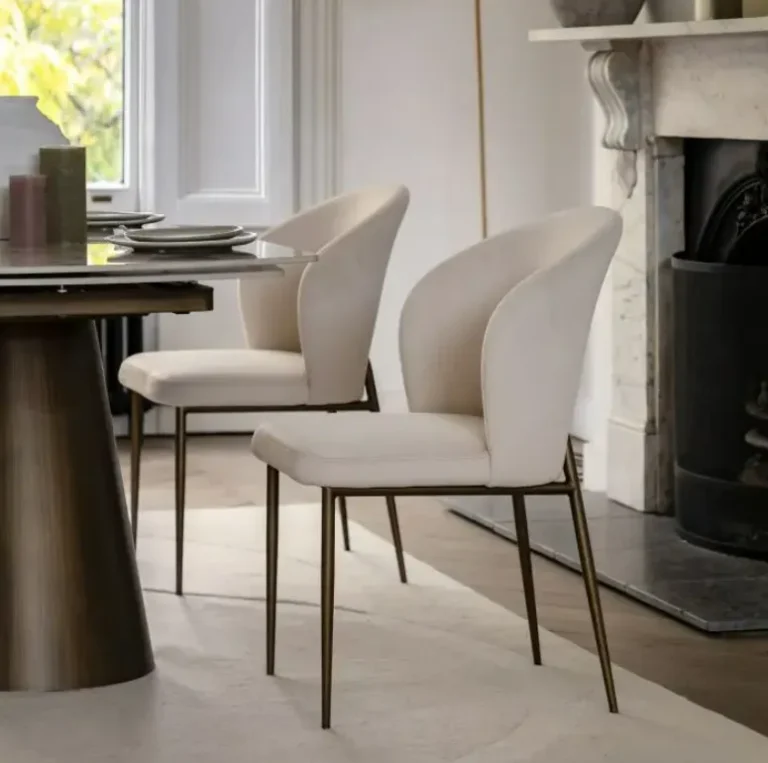
Upholstered chairs and curved, soft-modern styles both work here, and slimmer designs in black or oak fit as well.
Where can I compare ceramic dining furniture in the UK?
Look at the material details, how the edges are finished, whether the base feels stable, and what aftercare is recommended instead of going by photos alone.
The bottom line for UK buyers
More people are choosing ceramic dining tables UK retailers stock for a fairly straightforward reason. What they offer suits the way many people live now: a table that feels premium but still stands up to everyday use.