Is Synthetic Rattan Any Good for Style and Durability?
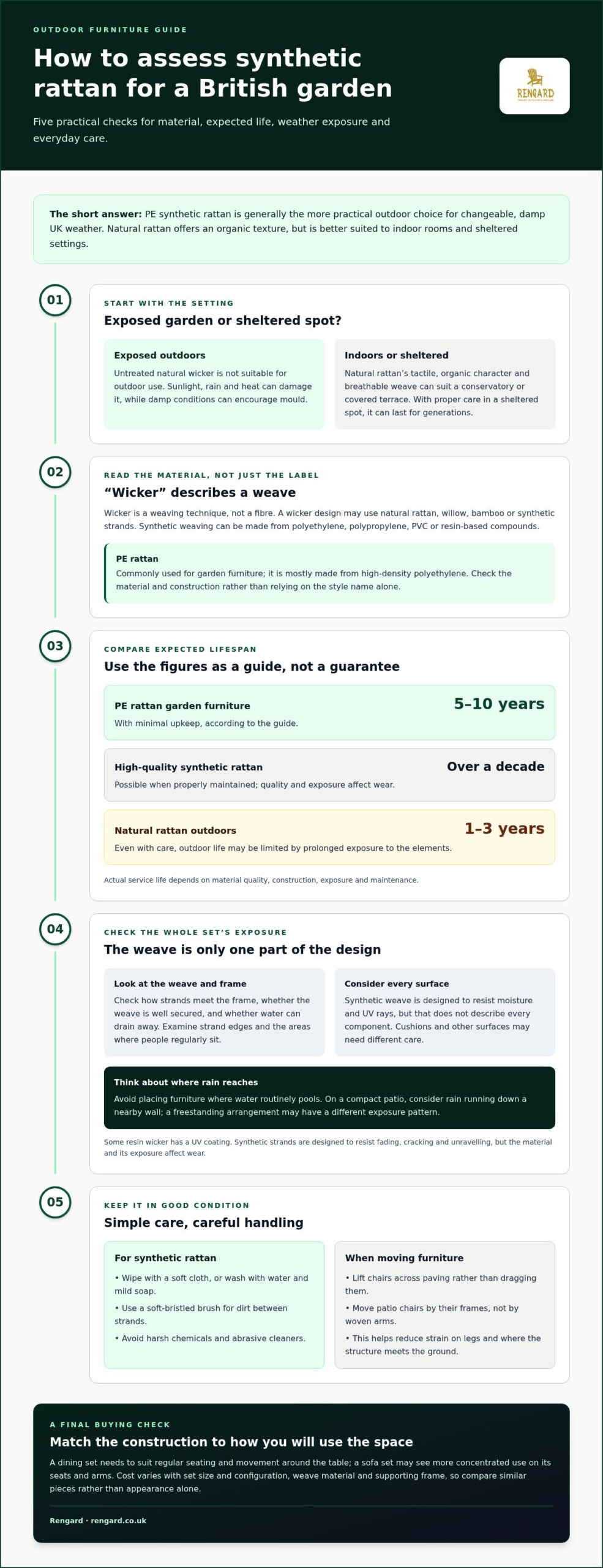
For a British garden, synthetic rattan is usually the more practical choice: PE rattan furniture can last 5-10 years with minimal upkeep, while natural rattan is less suited to the UK’s damp weather. So, is synthetic rattan any good for style as well as durability? It can offer the familiar woven look, with greater resistance to showers and moisture than natural rattan.
It’s understandable to hesitate: natural rattan has an irregular, tactile character that synthetic weaving cannot fully replicate. The right choice depends on where the furniture will sit and whether you value a natural finish or easier outdoor care.
This guide compares the materials, appearance, weather resistance and durability of each option, helping you choose for your garden, patio or terrace. It also covers routine care for synthetic rattan furniture in changing British weather.
Key Takeaways
- Distinguish the woven style from the material itself: “wicker” describes a weaving technique, not a specific fibre.
- Weigh natural rattan’s organic texture against synthetic options’ greater suitability for changeable, damp UK weather.
- Consider the weave, frame and exposure to rain and strong winds when judging how well outdoor furniture may hold up.
- Simple cleaning and suitable winter protection can help keep synthetic rattan looking smart for longer.
- Explore how Furniture Accessories can complement an outdoor setting when you’re refining its finishing details.
Natural and synthetic rattan
If you’re wondering whether synthetic rattan is any good, start with the setting. Natural rattan is a flexible, vine-like palm native to tropical regions of Asia and Africa. Woven into furniture for centuries, it brings an organic texture and light, airy structure to indoor spaces and sheltered patios.
“Wicker” describes a weaving technique, not a material. A wicker chair may be made with natural rattan, willow, bamboo or synthetic strands. Synthetic rattan recreates the woven pattern with plastics such as polyethylene, polypropylene, PVC or resin-based compounds. PE rattan, commonly used for garden furniture, is mostly made from high-density polyethylene.
For a closer look at synthetic strands and how they’re woven, watch this video:
Natural rattan’s flexibility gives chairs a little movement under pressure, which can make them comfortable for relaxed seating. Its breathable weave also allows air to circulate. In a conservatory or covered terrace, its natural character can suit a softer, more crafted scheme. With proper care indoors or in a sheltered spot, natural rattan can last for generations.
That suitability changes in an exposed garden. Untreated natural wicker is not suitable for outdoor use because sunlight, rain and heat can damage it. Prolonged exposure to the elements can affect natural rattan. Damp conditions can encourage mould. Outdoors, even with care, natural rattan may last only 1-3 years.
Synthetic weaving is designed for easier outdoor care. Wipe PE rattan furniture with a soft cloth, or wash it with water and mild soap. Use a soft-bristled brush for dirt caught between the strands. Avoid harsh chemicals and abrasive cleaners, which can damage the surface. Its closely woven finish also tends to loosen less readily than natural rattan.
Natural rattan needs a different routine. Dust chairs and tables with a soft cloth, then use a dry brush or vacuum brush attachment to reach woven crevices. If the furniture gets damp, wipe it and let it dry thoroughly to help prevent mould and mildew. A covered spot protects it from prolonged sun and rain, making natural fibres a considered choice for indoor rooms and sheltered outdoor settings.
Durability and lifespan
PE rattan garden furniture can last 5-10 years with minimal upkeep; high-quality synthetic rattan can last over a decade when properly maintained. Does synthetic rattan fade, crack or unravel over time? It’s designed to resist UV-related fading, cracking and unravelling, though material quality and exposure affect wear.
There’s no single UK price for synthetic rattan furniture. Cost varies with the set’s size and configuration, the weave material and the supporting frame. Compare similar pieces rather than judging by appearance alone.
Synthetic Rattan Lifespan Outdoors
Lifespan describes how long a furniture set remains usable and presentable outdoors. It helps you consider expected use, not just initial appearance. A garden sofa used for relaxed seating faces different demands from a dining set used often. Material quality and maintenance both contribute to service life.
Weather Resistance and Wear
Wear is the gradual change in the strands and structure through use and exposure. Synthetic rattan is designed to resist cracking, unravelling and becoming brittle over time. Some resin wicker also has a UV coating to resist fading. The weave can still show wear, so examine strand edges and the areas where people regularly sit when assessing a set’s condition.
Weave Types and Rattan Durability
Weave type describes how strands are arranged and secured across a furniture frame. Synthetic wicker may be made from PE, polypropylene, PVC or resin-based compounds; “wicker” itself describes the weaving technique. Material and construction matter more than the style label alone. A well-secured weave is less prone to loosening than natural rattan, helping the furniture retain its shape through use.
Handling also affects furniture condition. Lift rattan chairs when moving them across paving rather than dragging them, which can help prevent legs from splitting. On a patio, move chairs by their frames instead of pulling on woven arms. This reduces strain where the structure meets the ground.
Before choosing a set, consider its main purpose and how often it will be used. A dining arrangement needs to suit regular seating and movement around the table, while a sofa set may see more concentrated use on its seats and arms. Match the construction to the setting, then consider whether its expected lifespan suits your plans for the space.
Synthetic rattan’s weather resistance
Weather resistance describes how well outdoor furniture copes with its surroundings, not just the weave material. For a British garden, consider the setting as a whole and how each part of the furniture is exposed.
Moisture and Waterproofing
Moisture resistance matters where rain can settle around furniture or blow beneath a covered seating area. Synthetic rattan resists moisture, but assess the complete design rather than focusing only on the weave. Check how the strands meet the frame and whether the layout allows water to drain away. Polyrattan’s moisture resistance helps prevent mould and mildew growth on the weave.
Is synthetic rattan weatherproof and UV resistant? Synthetic weave is designed to be waterproof and resist UV rays. That describes the weave, not every component in a complete set. Cushions and other surfaces use different materials and may respond differently to prolonged exposure, so consider their care alongside the woven structure.
On a compact patio, furniture may sit close to a wall where rainwater runs down or collects. A freestanding arrangement in a larger garden may have a different exposure pattern. Leave practical access around the furniture and avoid placing it where water routinely pools. These choices help the setting work well without relying on the weave alone to cope with every condition.
Outdoor Weather and UV Exposure
Outdoor resistance also depends on how the weave responds to sunlight and changing temperatures. Synthetic rattan is designed for outdoor conditions, including occasional frosty mornings. Polyrattan is also designed to resist UV rays and salt water, which can be useful in coastal gardens. These properties make it suitable for a range of outdoor settings, from sheltered courtyards to open terraces.
Exposure varies across a garden. A pergola may shade one part of a sofa while leaving another in direct sun, and nearby walls can reflect light onto the weave. Consider how the furniture sits throughout the day, rather than judging its position at one moment. This helps you choose a layout that balances the set’s appearance with the conditions around it.
Use weather resistance to guide placement, while considering the whole design. A rattan dining set beneath a roof faces different conditions from one in an open area. Check the material descriptions for each component and think about how the furniture will be used through the seasons. This gives you a clearer basis for matching a set to your garden.
Rattan’s appearance and colour options
Synthetic rattan recreates natural rattan’s woven silhouette, giving garden furniture a familiar, relaxed character. It works well beside timber decking, stone paving and leafy borders. Look closely, though, and the difference is clear: synthetic resin wicker has a more even finish, while natural rattan’s irregular details give each piece an individual quality.
That difference shapes the mood of an outdoor space. A smooth, consistent weave can give a modern patio a composed, coordinated look. Natural rattan’s variation suits a sheltered terrace styled with timber furniture and soft planting. Neither finish is automatically more stylish: consider whether your setting calls for visual uniformity or natural character.
Colour matters, but don’t assume every synthetic weave or natural piece comes in the same palette. Compare the furniture with the colours already in your garden. For example, place a sample beside the paving, fencing or a teak table before choosing. This helps you see whether the weave blends in or becomes a focal point.
Weave scale also affects the look. A fine, repeated pattern can feel restrained on a compact balcony, while broader strands may make a stronger feature on a larger patio. Consider the furniture’s proportions in the space: a bulky sofa set can dominate a narrow terrace, while individual chairs may keep the layout open.
Cushions and covers offer another way to shape the overall look. On a pale stone patio, a contrasting cushion can define a neutral weave. In a garden with colourful borders, quieter textiles let the planting take the lead. Keep the arrangement cohesive by repeating a cushion colour in nearby planters or an outdoor table detail.
Natural rattan’s airy structure can feel light beside glass doors or in a conservatory, where its woven texture adds warmth without creating a solid visual block. When connecting an outdoor patio to indoor living areas, pairing organic weaves with modern accents from Artistry Deco Shop can create a seamless transition throughout the home. Synthetic rattan can echo that look outdoors, but its regular strands lack some of natural wicker’s irregularity. Choose natural material for sheltered spaces where distinctive texture matters; choose synthetic weaving when a consistent outdoor finish better suits the design.
Finally, consider how the furniture looks in changing light. A weave beneath a pergola may look different from one in full sun, while a covered seating area can make textures more noticeable. View the piece beside your garden’s main materials, then consider how its shape, weave and cushions work together. This gives a better sense of lasting appeal than judging colour alone.
How long does synthetic rattan furniture last outdoors in the UK?
There’s no single lifespan that applies to every synthetic rattan set. Construction, frequency of use and how securely the strands are fitted all affect how long it remains comfortable and presentable. In the UK, assess the specific furniture and its intended purpose rather than treating a general lifespan estimate as a guarantee.
Start with the weave. Check the seat, arms and corners for even spacing and secure strand ends. Uneven tension or loose sections can affect the finish and become more noticeable with regular use. Neat, firmly secured weaving is a better sign of careful construction than a product description that says only “rattan effect”.
Check the frame-to-weave joins too. These connections help keep the woven sections in place as people sit down, stand up and move the furniture. Make sure the structure feels stable and the weave sits evenly against it. A sofa used every evening will experience a different pattern of wear from occasional garden seating.
Comfort can offer another clue to a set’s condition over time. Sit on each section and notice whether the seat feels even, supportive and consistent across its width. For dining chairs, consider the repeated movement involved in pulling them out and pushing them back. For a corner lounge, pay attention to how the separate sections meet and whether they stay aligned during use.
Appearance and function don’t always decline together. A slight colour change may show before the furniture becomes uncomfortable, while a loose strand can affect the finish without immediately changing how the seat feels. Decide what matters most in your garden: an immaculate appearance, dependable everyday seating or a balance of both. This makes lifespan more useful to assess than appearance alone.
Usage patterns also shape value over time. A set used for frequent family meals faces different demands from chairs used occasionally for a quiet afternoon. Consider who will use it, how the arrangement fits your routine and whether the design will still work if your outdoor space changes. These factors help you judge whether the construction suits your needs.
Before choosing, compare construction details across the pieces you’re considering, then assess how they feel in person. For guidance on selecting garden furniture for your space, contact Rengard about your outdoor furniture plans.
Rengard: Furniture Accessories
Rengard offers Furniture Accessories to help give an outdoor setting a considered finish. Once you’ve weighed synthetic rattan’s weather resistance against its appearance and care needs, accessories can help tie the furniture into your garden’s layout and style.
For an outdoor dining area, consider how the table, chairs and finishing details work together. A coordinated arrangement can make a patio feel more composed while leaving room to move around comfortably. Rengard also offers Dining Tables to create a practical setting for meals and relaxed gatherings.
If you’re refining your outdoor space, explore Rengard’s Furniture Accessories or get in touch to discuss your plans.
Choose the finish that suits your garden
If you’re deciding whether synthetic rattan is any good for your outdoor space, start with how you want it to look and function. A relaxed seating corner, an outdoor dining area and a compact balcony each call for different proportions and arrangements. Sketch the available space, note where people need to walk and consider how the furniture will sit alongside existing paving, planting and outdoor tables.
Then narrow down your choice by appearance. A consistent woven finish can create a coordinated look, while natural materials bring more variation. Consider the colours already in your garden and whether you want the furniture to blend in or become a focal point. The right choice should look considered in daylight and suit the way you use the space.
For help shaping an outdoor setting around your preferences, contact Rengard to discuss your garden furniture choices. A thoughtful plan can bring comfort, style and everyday practicality together in a space you’ll enjoy using.
Frequently Asked Questions
Natural or Synthetic Rattan?
Synthetic rattan is generally the more practical option for exposed garden furniture, while natural rattan suits indoor or sheltered settings. Think about where the furniture will sit through a typical British winter, not just how it looks on a dry day. Natural fibres bring individual texture to a covered terrace; for an open patio, synthetic weaving is designed for outdoor conditions and easier cleaning.
How durable is plastic and polyrattan garden furniture?
Durability depends on the synthetic material, weave quality, frame and exposure. PE rattan garden furniture can last 5-10 years with minimal upkeep, while high-quality synthetic rattan can last over a decade when properly maintained. When inspecting a set, look over the weave at seat edges and corners, where strands are visible and easier to assess. Also consider whether the frame suits the furniture’s expected use.
What Is Polyrattan?
Polyrattan is a synthetic material woven to create a rattan-like finish on garden furniture. The term can refer to strands made from polyethylene, polypropylene, PVC or resin-based compounds, rather than one specific formula. It describes the material, while “wicker” describes the weaving method. When comparing furniture descriptions, check the named material as well as the woven appearance.
What Is the Difference Between Rattan and PE Rattan and Polyrattan?
Rattan is a natural, vine-like palm; PE rattan and polyrattan are synthetic alternatives. PE rattan is a type of synthetic rattan, mostly made from high-density polyethylene. Polyrattan is a broader term for synthetic weaving that may use polyethylene, polypropylene, PVC or resin compounds. These labels aren’t interchangeable with “wicker”, which refers to the weaving technique, not the material.
What are the different types of rattan?
For furniture, the key distinction is between natural and synthetic rattan. Natural rattan comes from a climbing palm and has an irregular, plant-fibre character. Synthetic varieties include PE rattan and other resin or plastic-based strands. “Wicker” isn’t another type of rattan: it describes a weave that can use rattan, willow, bamboo or synthetic materials. Check the material description to see what a piece is made from.
What is synthetic rattan garden furniture made from?
Synthetic rattan garden furniture is made from plastic-based strands woven around a furniture structure. Common materials include polyethylene, polypropylene, PVC and resin-based compounds. PE rattan is mostly high-density polyethylene, a durable, recyclable plastic. Check the named strand material when comparing options, rather than relying on “rattan effect” or “wicker” alone.
How does synthetic rattan compare with natural rattan and other garden furniture materials?
Synthetic rattan offers a woven look with outdoor practicality; natural rattan has a more irregular texture and suits sheltered spaces. Aluminium provides a lighter frame that is more resistant to corrosion than steel or iron. Timber brings a different, solid appearance. Compare materials across the whole piece: the weave, frame and cushions each affect its look, comfort and care needs.
How do you clean and maintain synthetic rattan furniture?
For routine cleaning, wipe synthetic rattan with a soft cloth and mild soapy water. Use a soft-bristled brush to remove dirt caught between strands, then rinse away residue and let the furniture dry. Avoid abrasive cleaners and harsh chemicals on PE rattan. Before putting on an outdoor cover, make sure the furniture is fully dry to avoid trapping moisture underneath.