How to Match Dining Chairs to Your Table
Picking dining chairs to go with a table sounds easy enough, until you’re standing in a showroom, comparing finishes on a screen, or trying to match dining chairs to table layouts that need to work for weekday meals, homework, guests, and everything else. In many UK homes, the dining area now has to do more than it used to, so getting the pairing right is about more than looks. It usually comes down to scale, comfort, durability, and how the room feels to use day to day, and that’s often what makes the decision. Practicality matters just as much as how it looks.
That’s one reason dining chair and table combinations in the UK feel a lot less fixed now. More people are stepping away from identical sets and opting for layered combinations that feel personal and considered without looking mismatched. A solid oak table can look great with upholstered chairs, and that contrast often works especially well in softer modern spaces. A ceramic or stone-effect top often looks best with softer shapes beside it. Likewise, a compact extending table may need lightweight chairs that can move easily between the dining area, a corner, or a side wall while still looking refined.
This guide is a straightforward dining chair selection guide for UK buyers who want a polished result without the guesswork. It covers proportion, seat height, materials, colour, shape, and everyday practicality, along with useful ways to approach matching dining furniture in the UK for modern and soft-modern interiors. You’ll also find practical ways to make confident dining table and chair pairing decisions for family homes, open-plan spaces, and premium contemporary settings, with examples relevant to homeowners across Shropshire, Staffordshire, Cheshire, Manchester, North Wales, and Birmingham.
Why exact matching matters less than coordination when you match dining chairs to table styles
A big change in UK dining room styling is actually quite straightforward: chairs don’t have to come from the same range as the table to look right. They just need some clear point of connection. That could be a shared tone, a similar scale, repeated curves, or even one matching finish, and that’s often enough to make the whole setup feel pulled together. Heal’s puts it plainly in its dining-room guidance: chairs and tables should share at least one feature, such as timber, finish, or seat colour (Heal’s).
That approach suits the way people live now. It’s more flexible and, in many homes, a more realistic way to furnish a space. Mordor Intelligence says living-room and dining-room furniture accounted for 31.78% of UK furniture-market revenue in 2025 (Mordor Intelligence). With such a large share, it usually suggests buyers are paying closer attention to how separate pieces work together instead of just ordering full matching sets.
A similar pattern appears in retail behaviour. Business Gateway, citing IBISWorld, said that UK kitchen, dining and living furniture revenue reached £3.8bn in 2024. It also reported that in-store furniture purchasing increased to 48% in 2024, up from 44% in 2023 (Business Gateway). Often, that means people still want to check comfort, finish, and proportion in person before they decide.
For most homes, the aim isn’t perfect sameness but deliberate coordination. A dependable formula is:
- Match the overall scale
- Get the height right
- Repeat one material or colour cue
- Pay attention to visual weight and shape
So, in the UK, mixed dining chairs paired with dining tables can still look calm, expensive, and thought-through, as long as those links stay consistent.
Start with the non-negotiables to match dining chairs to table proportions
Before looking at colour or style, check that the fit is right. That’s often the point where attractive dining chair and table pairings in the UK don’t quite work. A chair can look lovely online but still be awkward to use if the seat sits too high, tucks too tightly under the apron, or leaves diners too low.
Heal’s gives a useful sizing benchmark:
- Typical dining table height: 73 to 76 cm
- Typical dining chair seat height: 45 to 47 cm
- Comfortable gap from seat to tabletop: 27 to 30 cm (Heal’s)
- A useful starting point when you’re checking proportions
For most setups, that clearance zone is the practical sweet spot. Too little gap, and knees can feel cramped. Much more than that, and the chair can feel slightly disconnected from the table, something diners usually notice quite quickly.
When you’re comparing premium designs, it’s worth checking the product details too. For example, the Tom Schneider Sasha Dining Chair lists a 47 cm seat height, so it sits comfortably within standard dining proportions (John Lewis & Partners).
Beyond seat height, it is also worth thinking about width and arm clearance, as those details are easy to miss:
Measure these first when you match dining chairs to table sizes
- The internal distance between the table legs, or the clearance around a pedestal base
- The chair width at its widest point
- Whether the arms fit under the tabletop, which often matters more than many expect, and how much space each diner needs, especially at smaller rectangular tables, where space is usually the first thing that gets tight
A practical visual rule
A chunky 200 cm table with very narrow, delicate chairs can make the chairs look undersized, especially viewed from the side. On the other hand, a compact round table can feel crowded with broad, high-back dining armchairs, most obviously around the edges. In the UK, getting dining furniture to work well usually comes down more to proportion than to style labels alone.
If you’re unsure, try sketching the table footprint and the chair widths on paper. It’s a simple check, and it often stops you buying pieces that feel too bulky for the room or too tight to use. You can also compare layouts in this guide on Dining Tables That Make Rooms Feel Larger.
Pairing materials so the room feels balanced when you match dining chairs to table finishes
A dining room tends to look thought through, not just put together, when the materials are chosen to work with each other. When you’re matching dining chairs to table finishes, pay attention to contrast, repetition, and steering clear of all-or-nothing matching. Even small details can make a noticeable difference.
Wood table with upholstered chairs
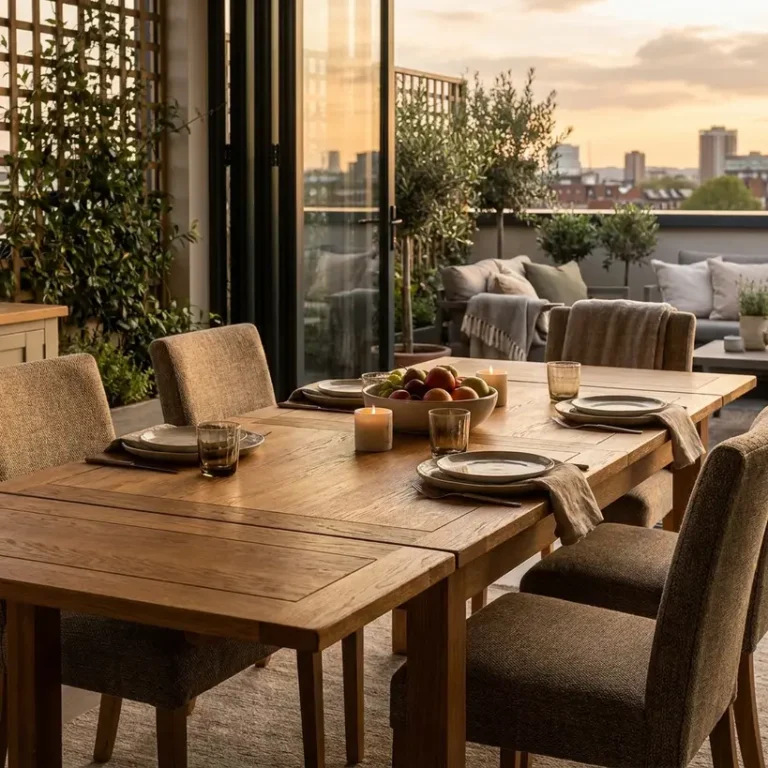
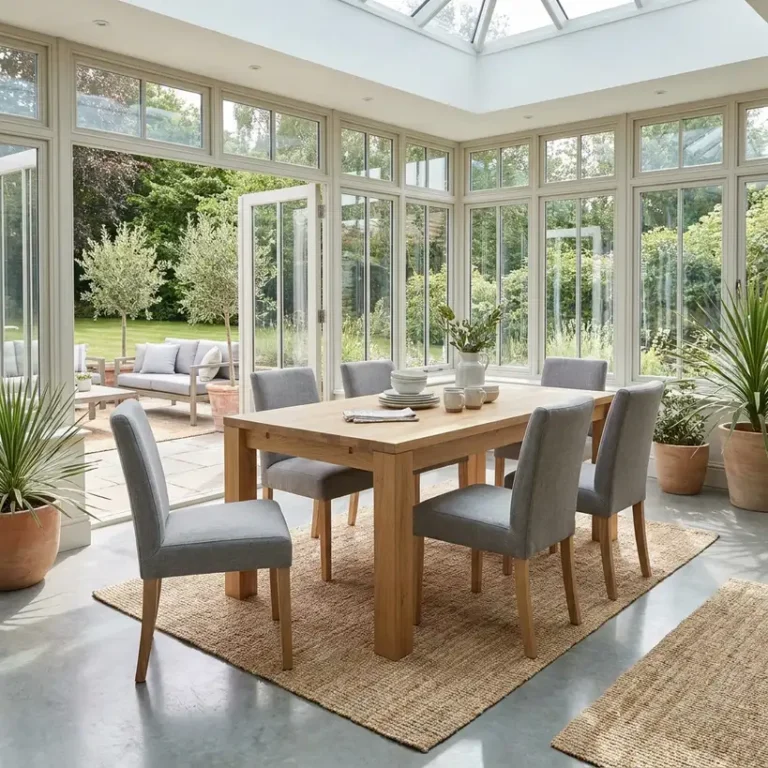
For soft-modern interiors, this is probably one of the strongest combinations. Oak, teak-look, walnut-tone, and similar tables tend to feel warmer and easier to live with when you pair them with fabric seating, and that can make a real difference. It’s a smart pairing. In the UK, upholstered dining chairs are especially handy in homes where the table gets used hard every day, because they soften the room visually and physically.
A warm wood table with textured neutral upholstery works well in homes across Cheshire, Shropshire, and North Wales, where buyers often want a clean look that still feels welcoming. If the table has straight, architectural lines, chairs with a gently curved back can stop the room feeling too rigid and give the whole look better balance.
Ceramic or stone-look table with soft fabric chairs
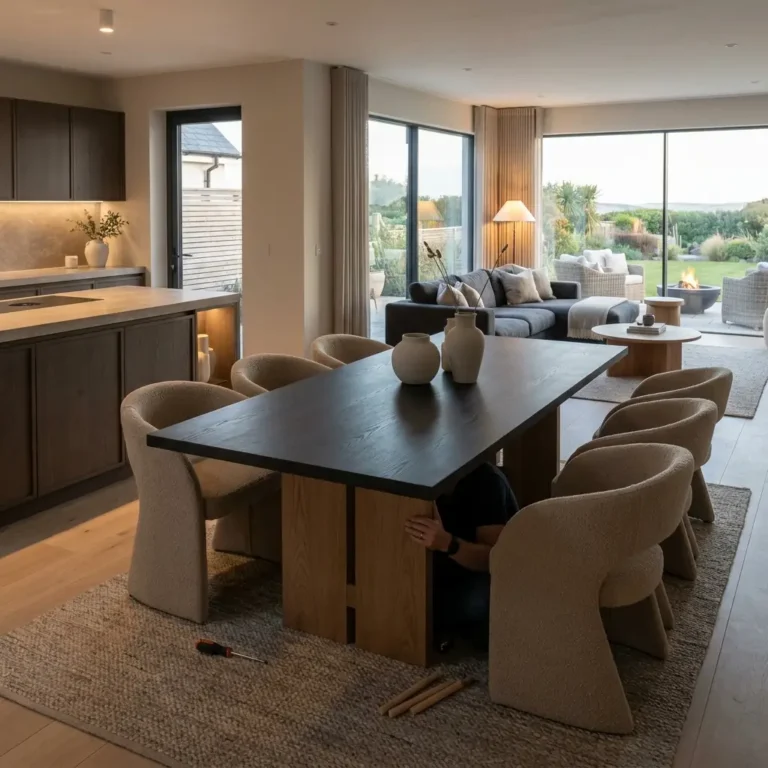
Hard-surface tables can look sleek, but they often feel better with something softer around them, and that usually feels obvious right away. That’s where dining table and chair pairing in the UK often works better with extra texture. It’s a small change, but it helps. Boucle, woven-look fabric, and tightly upholstered seats can make ceramic tables feel less cold and easier to live with day to day. We also covered more texture-led options in this guide to Bouclé dining chairs.
Black metal or industrial-style table with mixed materials
In the UK, industrial and contemporary dining furniture often mixes metal, wood, rope details, and tactile fabrics, and it works best when those elements don’t compete with each other. If the table has a black metal base, carry that black through somewhere else: chair legs, a frame detail, nearby lighting, or even one small accent. Most of the time, that one repeat is enough to tie things together, so the room feels more balanced.
Natural teak and Scandinavian styling
In softer Scandinavian or relaxed contemporary rooms, natural timber tones usually look better with lighter chairs that have more texture, not heavy, formal seating, and it’s generally an easy contrast to spot. That’s one case where brands such as RENGARD can matter for buyers who want warm woods, rope or rattan-influenced textures, and modern natural finishes across home furniture collections, especially if they’re after a calmer look.
How to mix chairs when you match dining chairs to table combinations
Across the UK, “mixed seating” is one of the most searched topics in dining chair guides. People want something that feels more individual, but they still worry it’ll end up looking accidental, and without a clear link between the pieces, that often happens. The safest approach is usually to mix chairs around one obvious shared feature.
That shared feature can be:
- The same fabric used across different chair shapes
- The same wood tone repeated across different silhouettes
- The same leg finish on host and side chairs
- One repeated curve or a shared design style
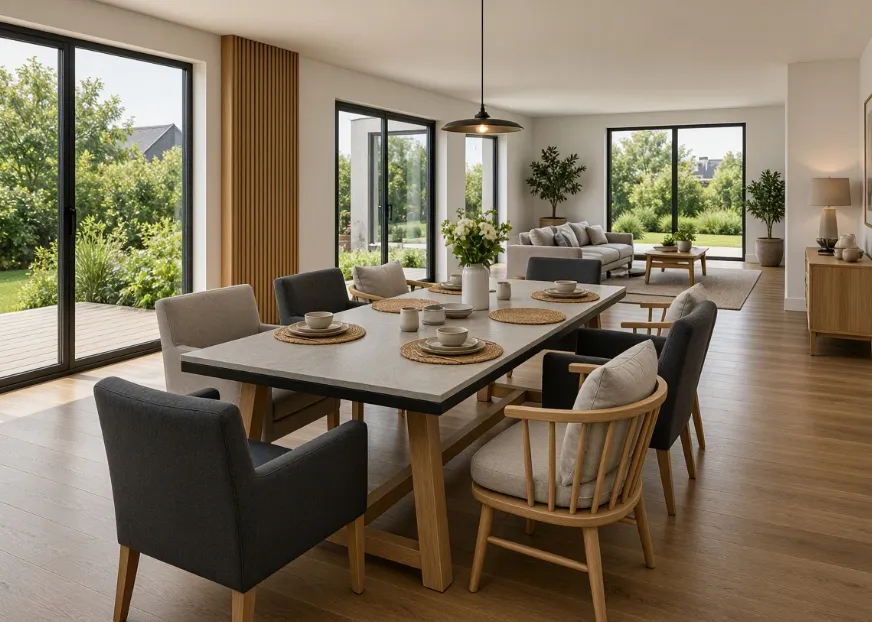
A useful way to think about it is “variation within a family”. It is simple, but in practice it works well. For example, you can place side chairs along the long edges of the table and use slightly larger upholstered carvers at each end, as long as the colour palette stays consistent. Another way is to use fully upholstered chairs around a pedestal table, then change only the back shape; that’s often enough to add interest without making the arrangement feel disconnected.
Tables with an extending mechanism are the ideal solution for these smaller spaces. Their neat proportions at original size will fit comfortably, yet they can also be lengthened whenever required to accommodate a larger number of guests.
This also affects chair choice. Extending tables often work better with lighter-looking seating, because once the table opens, extra places may be needed and chairs tend to be moved more often. In compact homes around Birmingham or Manchester, a practical setup is an extending oak or ceramic table with slim upholstered chairs that don’t visually overcrowd the room. For open-plan layouts, flow and zoning were covered in this related guide on the best dining tables for open-plan homes first. You can also compare layouts in extending dining tables UK for Modern Homes.
Matching chair shape to table shape
A big change in UK dining room styling is actually quite straightforward: chairs don’t have to come from the same range as the table to look right. They just need some clear point of connection.