Wooden Dining Chairs UK That Never Go Out of Style
Picking dining chairs sounds easy, until you’re trying to choose a set of wooden dining chairs UK homeowners will still think looks right years from now. Trends change quickly. One season is all about sharp minimalism; the next shifts to soft curves, mixed materials, or bold colours. Still, some designs never really go out of place. That is a big reason wooden dining chairs still keep their appeal. They bring warmth, help define a room, and make it feel settled in a way other materials often don’t, which is probably why they still stay relevant.
For homeowners across the UK, especially in places such as Shropshire, Staffordshire, Cheshire, Manchester, North Wales, and Birmingham, wooden dining room chairs often strike a practical balance between style and durability. They suit period properties and new-builds alike, and they work just as well in kitchen diners as they do in open-plan living spaces. They’re also well suited to daily use. If you need seating that can cope with family meals, coffee catch-ups, homework sessions, and visiting guests without seeming short-lived, wood is still a smart option and, in this context, often a reliable one.
This guide looks at what helps certain designs stay stylish for longer, not only what makes them sturdy. It compares shapes, finishes, and timber types, including Oak dining chairs UK shoppers often consider first. It also covers soft-modern and Scandinavian influences, along with comfort, care, and ways to match chairs with the rest of the room. If you’re weighing timeless dining chairs UK buyers rely on against more trend-led options, this guide will help you choose with more confidence and a clearer sense of what usually lasts.
Why Wooden Dining Chairs UK Buyers Still Choose
Wooden chairs have been part of everyday homes for generations, and there’s a simple reason for that. What draws people to them isn’t just fashion. A lot of it comes down to real wood, craftsmanship you can actually see, and shapes that feel solid and familiar, things that often matter more in daily life than people expect. You can still see that lasting demand in the broader UK furniture figures. Household spending on furniture and furnishings reached £20.15 billion in 2025, an increase of 3.2% year on year, according to FIRA’s statistics digest using ONS data (FIRA). It isn’t a chair-only figure, of course, but it still suggests steady interest in furniture people choose with care.
Wood also suits the way many homes are used now. Rooms are often less formal than they used to be, and dining areas regularly have to do more than one job. The same chair might be used for breakfast, laptop work, evening meals, or pulled into a hallway or living room when extra seating’s needed. In that sort of space, simple, reliable design is usually more useful than anything overly decorative, and easier to live with over time.
A dining chair must be as stylish as it is comfortable to sit in.
Modern wooden dining chairs tend to work well in that middle ground. They can look clean and up to date without seeming short-lived. The most timeless versions usually share a few consistent traits:
- clear, uncomplicated lines
- solid frames, often with visible joinery or simply strong construction
- natural finishes that let the grain show
- proportions that work in classic homes as well as more contemporary spaces
- comfort that holds up to everyday use
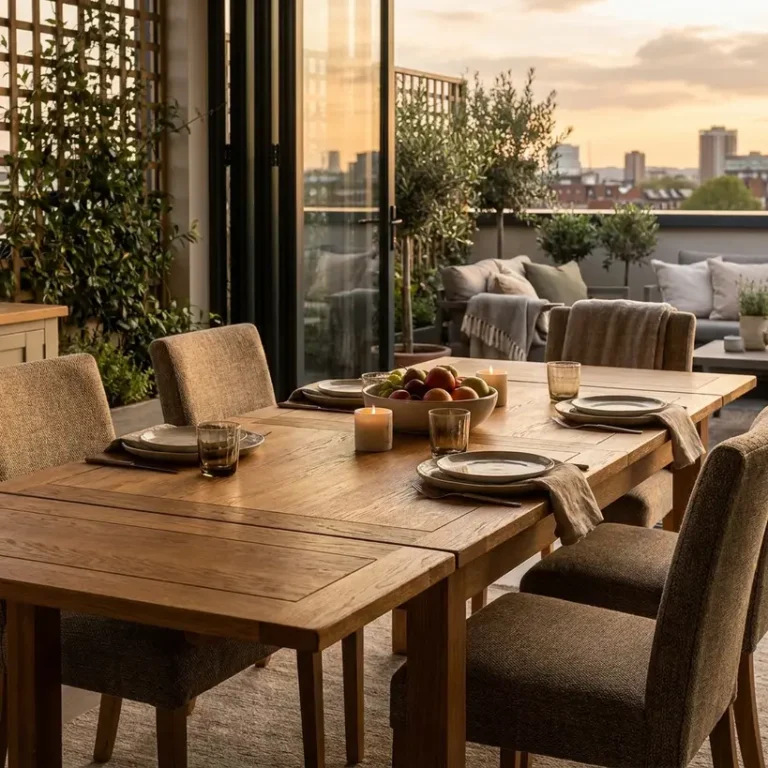
If you’re choosing between upholstered seats and wood, it also helps to consider how wood ties in visually with the rest of the home. It can pick up on flooring under the table, open kitchen shelving, or wooden table tops and cabinet details in nearby rooms. That can make a room feel more settled, more cohesive, and simply easier to live with day to day.
The Shapes That Age Well in Wooden Dining Chairs UK Homes
Not every wooden chair becomes a classic. Some are too tied to a single trend to last. The ones that last tend to land in the middle, and that’s usually what makes them work. They have some character, but not so much that it feels overdone, and they usually seem deliberate instead of forced.
Some styles keep coming back because they adapt well and, in most cases, fit easily:
Windsor-inspired wooden dining chairs UK homes still use
These chairs work in country homes as well as more modern spaces, which is why they’re so useful. The spindled back adds detail without feeling too ornate. Painted black versions look crisp. In natural oak or ash, they look softer and a little warmer.
Scandinavian silhouettes
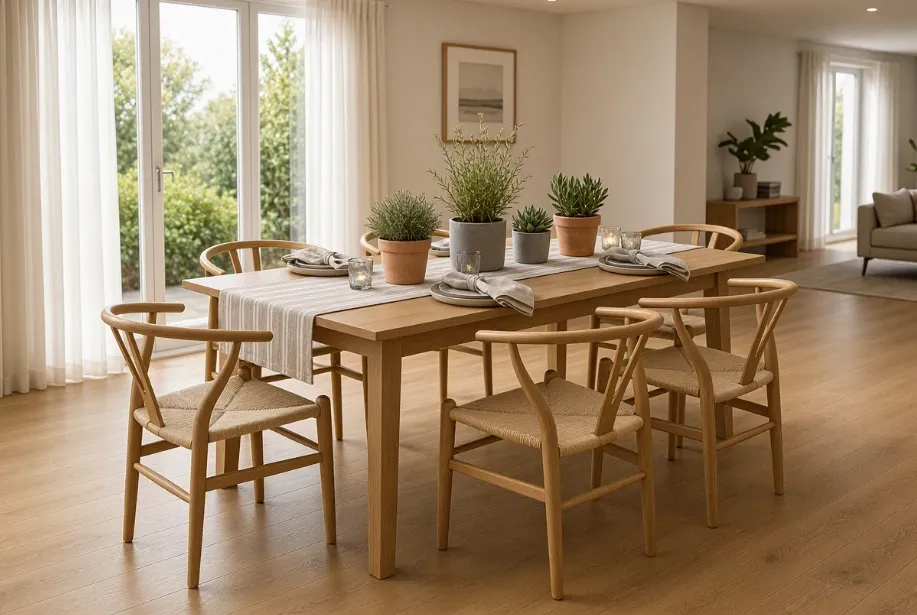
A lot of Scandinavian wooden dining chairs UK buyers go for have slim legs and curved backs, usually in light or mid-tone timber, and that seems to help. They can look airy and tend to work well in smaller dining rooms or kitchen diners when space is tight.
Mid-century forms
Tapered legs, softly shaped seats, and low-profile backs still hold up because the shapes are simple, and that tends to make things easier. They give a space a modern look without making it feel cold, so they’re generally easy to live with.
Soft-modern wooden dining chairs UK buyers like
For couples furnishing newer homes, this is where things are headed. Rounded corners, softer edges, and sculpted backs give the contemporary wooden dining chairs UK shoppers want a warmer feel and, quite often, a less stark look.
Ladder-back or rail-back designs
These tend to suit more traditional homes, and the simpler versions often work just as well in mixed interiors too, which helps.
A simple way to check is to picture the chair in a bright open-plan kitchen, a darker dining room, and a home with a mix of old and new furniture. You can usually tell pretty quickly. If it still looks right in all of those settings, it’ll usually keep working visually over time, which is a good sign. We covered balancing look and comfort here: comfortable dining chairs for modern table pairing. You may also find Best Dining Chairs for Everyday Use helpful if daily comfort matters just as much as appearance.
Oak, Ash, Beech, or Mixed Hardwood for Wooden Dining Chairs UK Buyers?
If you’re looking at solid wood dining chairs UK shoppers often end up considering, oak is usually one of the first options people look at. That’s not hard to see why. It’s durable, familiar, and easy to work into different styles. The grain gives it a warm, natural look, but it doesn’t dominate the dining room, and that’s often what people are after.
In the wider UK manufacturing picture, furniture manufacturing sales reached £10.8 billion in 2024, and product classifications for wooden furniture for dining and living rooms also showed notable value in 2024 (FIRA Statistics Digest). That covers a lot more than just chairs. Even so, it shows wood furniture is a sizeable category rather than a niche, which is useful context when you’re comparing materials.
With that in mind, here’s how the main materials compare in practical terms:
Oak
For many UK buyers, oak dining chairs are one of the more straightforward long-term options. Oak is sturdy, a bit heavier than some other materials, and it tends to age well. It works with farmhouse and classic looks, and with Scandinavian and soft-modern interiors too, especially in natural and smoked finishes.
Ash
Ash is often lighter in tone, with a slightly more relaxed feel, which you’ll probably notice quickly. It gives a calmer look overall. You’ll often see it in Scandinavian wooden dining chairs, especially in the bright kitchens or dining rooms many UK homes have. Its grain is cleaner than oak’s too, which helps it feel a bit calmer overall.
Beech
Beech works well if you want a frame that looks smooth and understated. You’ll often see it in bentwood or cafe-inspired designs, and it tends to feel casual, with a more urban look.
Walnut or darker hardwoods
Walnut and other dark hardwoods give a room a deeper, moodier feel, and that can work really well. They often look timeless, but in lighter UK interiors, like bright dining rooms or open-plan kitchens, they’re usually less flexible than oak.
For many buyers, it isn’t just about the wood species. It also comes down to whether the chair uses truly solid wood in the main structural areas, because that can make a real difference. If you’re comparing premium wooden dining chairs UK options, check the leg joints, seat support, back construction, and finish quality before you focus only on colour. If you are also comparing table finishes, Oak Dining Tables UK vs Walnut: Which Is Best? gives a useful breakdown of how those materials change the feel of a room.
Why Simplicity Usually Wins With Wooden Dining Chairs UK Styles
A timeless chair doesn’t need to feel plain, but it also shouldn’t rely on novelty. That is really where the difference usually lies. In many homes, the classic dining chairs UK buyers hold onto for years tend to be the ones with a bit of detail, but not so much that they stop working in different settings. That balance is often what helps a chair continue to work over time.
Food52’s design coverage on dining chairs highlights lasting styles such as Scandinavian forms, Windsor silhouettes, bentwood pieces, and mixed-material classics (Food52). What ties them together is straightforward shape and honest materials. They’re easy to live with, and they usually adapt better as paint colours, flooring, rugs, lighting, and the rest of a room change over time, as they often do.
Picture a simple before-and-after. A couple starts with a trend-led dining room: boucle seats, black metal table legs, very sharp lines, and a cool neutral palette. Two years later, they want the space to feel warmer and softer. If they have oak or ash chairs with curved backs and simple lines, those chairs will probably still work. So they may only need new lighting, a rug, or a different table. If instead they chose chairs built around a very narrow trend, the room may need much more work. That’s usually where simplicity proves its value most clearly.
This is also why solid wood dining chairs UK homeowners choose for long-term use can make financial sense. The upfront cost may be higher, but the style often lasts longer. That’s a practical point. It can matter when furnishing a first home, updating a family dining room, or trying to avoid buying twice.
The clean, simple silhouettes are really well-suited for high-traffic dining areas.
That same idea is especially useful in kitchen diners. In high-traffic spaces, furniture often needs to help the room feel calm, even when everyday life around it feels busy, which it usually does.
How Wooden Dining Chairs UK Trends Fit Contemporary Interiors
Wood can seem too traditional to some buyers, but it doesn’t always read that way. A lot of the best contemporary wooden dining chairs UK homes use now are still built from classic timber. The difference is in the shape, scale, and finish.
Soft-modern interiors tend to feel warmer than severe. Rather than filling a room with glossy surfaces and sharp edges, they usually favour texture, rounded forms, and natural materials, which is likely why they feel easier to live with. Recent interiors commentary also points to homes with more character, and that shift is easy to see. Chrissie Anthony Haim noted that, ‘After years of white, minimalistic palette cleansers, people are craving depth, personality, and character’ (House Beautiful).
You can see that shift in dining chairs in a few obvious ways:
- bleached oak is giving way to warmer natural oak, honey, and mid-brown tones
- heavy rustic detailing is being replaced by cleaner profiles with less visual weight
- square backs now feel softer, often shaped with curves
- fully matched dining sets are often swapped for more layered combinations
That is helpful for homes that sit somewhere between styles. A modern kitchen, for example, can need a bit of softness so it doesn’t feel too hard or stark. In other homes, there may be period features, but the preference is still for a lighter, simpler look, and that’s often where the balance gets tricky. Wooden chairs can connect those different elements. In most cases, they offer a practical middle ground between older details and a more contemporary feel.
Lisa Henderson of Harvest Architecture also said, ‘Hardwood adds warmth and character to a space, making it a lasting investment’ (House Beautiful). That goes some way to explaining why oak and other hardwood frames keep showing up in rooms designed to feel calm, welcoming, and properly lived-in, rather than styled only for photos.
Pairing Wooden Dining Chairs UK Homes Use With Your Table
A common mistake buyers make is matching everything too closely. Timeless rooms usually don’t feel like showroom sets, at least in this view. They usually look more layered and lived-in. The wood tones should still go together, but they don’t have to match exactly.
It’s usually better to pay attention to visual weight, style, and how warm the finish feels, since that’s what tends to matter most.
Use these pairing rules
- A chunky farmhouse table usually looks better with chairs that have enough visual weight to hold their own, so they don’t look too slight beside it.
- A slim modern table usually works better with lighter chairs and cleaner, simpler frames.
- Warm oak tables usually work well with other warm woods, black-painted wood, woven seats, and sometimes a single contrasting finish.
- Round tables often suit chairs with softer backs or a little more curve.
- If your table has a strong grain, it usually helps to let the chairs stay quieter.
This also applies in mixed spaces. Many homeowners use all-wood side chairs with upholstered host chairs at the ends, and that setup often works very well. The contrast is simple, but it brings in comfort and visual variety without losing cohesion. If you’re planning a full dining setup, you may also want to read how to match dining chairs with a table in modern homes and, if you’re using a round table, this solid oak round dining table buying guide. Additionally, Dining Tables That Make Rooms Feel Larger can help if you’re working with a compact dining area.
In practical terms, it helps to step back and look at the room in blocks of colour and shape. Picture a light table, a dark floor, warm wood chairs, and maybe some soft fabric nearby. The overall balance often matters more than having a perfectly matched set. In many rooms, that kind of mix simply feels better.
What Makes Wooden Dining Chairs UK Buyers Call Premium
The term premium wooden dining chairs UK shoppers search for can mean different things, and that is often true. Price alone isn’t enough. A premium chair should feel sturdier and more comfortable, with a finish that looks properly done, not hurried.
When you’re checking, these are the signs to look for:
Strong joinery
A well-made chair should usually feel solid when you pick it up or shift it around, you can tell. The legs shouldn’t twist, and the joints should look clean and intentional, not bulky, loose, or filled, in most cases.
A shaped seat or supportive back
A flat wooden chair can look good, it often does. It can still get tiring, though. Even without upholstery, it’s usually more comfortable with a lightly scooped seat, a curved rail, or a well-angled back.
Good proportions
Premium design often comes through restraint. The chair looks balanced from almost every angle, which usually isn’t easy. Its legs sit neatly within the frame, and the back stays in proportion. Nothing feels accidental here.
A finish that suits the timber
The finish should protect the wood, but you’ll usually want to still see the grain and its natural colour. A heavy gloss, a very orange stain, or lacquer that looks plastic can make a chair seem cheaper than it really is, and that doesn’t usually do it any favours.
Quality also matters across the wider market. FIRA data says UK furniture imports reached £10.45 billion in 2025, while exports reached £3.4 billion in the same period (FIRA Statistics Digest). With imported and domestic products competing strongly, long-term value is usually judged on more than surface looks, so it’s worth paying close attention to the build details as well.
Care, Maintenance, and Everyday Longevity
A timeless chair still needs to keep looking good over time. The good news is that most wooden dining room chairs are often easier to care for than heavily upholstered styles. They deal with crumbs and quick wipe-downs well, and everyday mess usually means less hassle, which honestly makes a real difference. Usually, much less.
When it comes to lasting well, keeping things simple usually works best:
- wipe spills quickly with a soft damp cloth
- avoid harsh sprays and skip abrasive pads
- use felt pads under legs, especially on hard floors
- if the design includes bolts or connectors, tighten fittings when needed
- keep chairs away from constant direct heat from radiators
- lift them rather than drag them when moving them
If your home is busy, medium-tone oak or ash is often the easiest pick, since it tends to hide dust and marks better than very dark or very pale wood. Chairs with subtle grain and matte finishes tend to hold up better over time than highly glossy ones, in most cases anyway. They simply tend to work better in real life.
There is a sustainability angle here as well. While this isn’t a formal UK chair statistic, wider furniture commentary suggests a stronger ‘buy better, buy less’ mindset in the market (Reperch). That’s probably part of why solid wood chairs make so much sense: you can keep them, maintain them, and restyle them instead of replacing them when trends change or lower-quality furniture wears out.
If you already like durable materials indoors and out, that way of thinking will probably feel familiar. Brands like RENGARD already sit within that broader conversation about lasting materials, natural textures, and timeless Scandinavian or industrial styling. That makes the appeal fairly easy to understand for anyone who wants furniture that usually won’t date too quickly.
Common Buying Mistakes to Avoid With Wooden Dining Chairs UK Searches
Even attractive chairs can disappoint when the basics are wrong, and that happens. It’s pretty simple, really. Before buying, you’ll want to watch for common issues.
Choosing based on looks alone
A chair can look great in photos and still feel awkward once it’s in the room, and that happens a lot. Check the seat height, the back angle, and the overall width.
Ignoring table apron clearance
Some chairs just won’t tuck neatly under certain tables, and that happens. So always compare the full dimensions.
Going too trend-led
Very sculptural or novelty shapes can start to look dated pretty quickly. To make it last longer, keep the overall form simple. Also steer clear of pieces that feel too trend-led.
Buying all six chairs before testing one
If possible, test the comfort first, that’s usually wise, especially with fully wooden seats, which are often less comfortable.
Overmatching the room
A room with a wood floor, wood table, wood sideboard, and wood chairs can still come together, and it often does. Usually, what changes the look is a bit of variation in tone and texture. Without that, everything can start to merge, and in many cases the space feels flat. It is often simply too much of the same material in one place.
One useful market note: in 2025, 40% of UK furniture imports came from China according to FIRA’s digest using HMRC data (FIRA Statistics Digest). That number doesn’t tell you if a chair is good or bad. It mostly shows that specifications, material details, and finish quality are usually a better guide than assumptions based on origin alone.
Frequently Asked Questions
What wood is best for dining chairs?
Oak is often the safest all-round pick: it’s hard-wearing, easy to fit into different styles, and it still looks good as it gets older. If you’re after a lighter Scandinavian feel, ash works well and keeps the look simple and clean. Beech works best for cafe-style or bentwood designs. Which one’s best comes down to the look you want and how often the chairs will be used.
Are wooden dining chairs comfortable enough for daily use?
They can be, if the design is right. Focus on a shaped seat, a supportive back, and good proportions, not just the material. That is the key point. A lot of modern wooden dining chairs are built for everyday meals, working from home, and sitting for longer stretches.
Do all dining chairs need to match the table exactly?
No. If everything matches exactly, the room can feel flat, almost like a showroom. Instead, line up the tone, scale, and overall style so the space feels more layered and more personal.
Are oak dining chairs a good long-term buy?
For a lot of households, they do. Oak dining chairs UK buyers often pick tend to wear well: the wood is strong, and the style suits all sorts of interiors. That makes them a safe bet. And if the decor shifts over time, oak is still one of the most dependable choices that fits in.
How do I know if a wooden dining chair is well made?
Start by checking frame stability, the joints, the finish, and how comfortable the seat feels. A good chair should feel solid when lifted, and there shouldn’t be any wobble under weight.
If you’re comparing options online, RENGARD’s focus on durable natural materials can be a handy point of reference for thoughtful, material-led furniture buying, even when you’re looking at dining chairs in particular.
Can wooden dining chairs work in a contemporary home?
Absolutely. A lot of wooden dining chairs UK homeowners pick now have slim frames, curved backs and warm-toned finishes, which helps modern rooms feel less stark. It’s a subtle detail. They fit particularly well in soft-modern interiors, where the natural texture matters just as much as the shape.
Choosing a Style You Will Still Love Later
When people talk about timeless dining chairs UK homes need, they often mean more than a traditional style. Usually, they mean furniture that still works as the rest of the room changes. The chair should still look right if you repaint the walls, change the lighting, move house, or replace the table, and that happens more often than many people expect. That is usually the real test. Simple, but specific.
Long-term choices that often feel safest include Oak dining chairs UK buyers can use in different rooms, Scandinavian wooden dining chairs UK homes choose to keep a space feeling lighter, classic dining chairs UK households rely on every day, and other simple wooden designs that don’t date too fast. They’re linked less by one set look than by how they work in a room. It’s really about balance: comfort, simplicity, durable timber, and just enough character to feel warm without seeming overdone. Nothing feels forced.
If the shortlist is getting smaller, five points are usually worth keeping in mind:
- choose a shape with clean lines and one or two softer details
- buy the best construction you can reasonably afford
- prefer natural or mid-tone finishes rather than extreme colour trends
- check comfort as carefully as appearance
- picture the chair in your home five years from now, not just today
Thinking that way usually leads to better choices. When homeowners want durability, warmth, and lasting value, wooden dining chairs are still one of the simplest ways to make a dining room feel settled, practical, and quietly stylish. They tend to handle changing decor, everyday use, and different table styles well, which is probably why they remain such a dependable choice. And for homes moving in that direction, RENGARD is part of the wider UK furniture conversation, with a material-led and design-conscious point of view. For broader inspiration, Modern Dining Tables for Family Living and Bouclé Dining Chairs UK: Comfort, Texture & Contemporary Style are also useful reads when planning a dining space that feels balanced and long-lasting.