Getting garden ready for a summer party: clean and set up
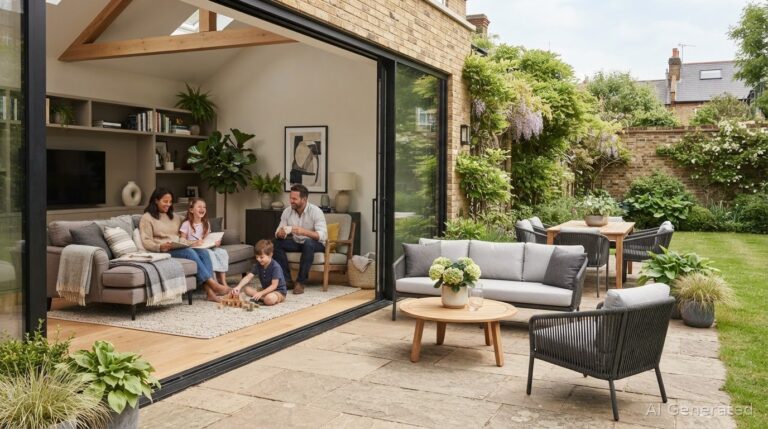
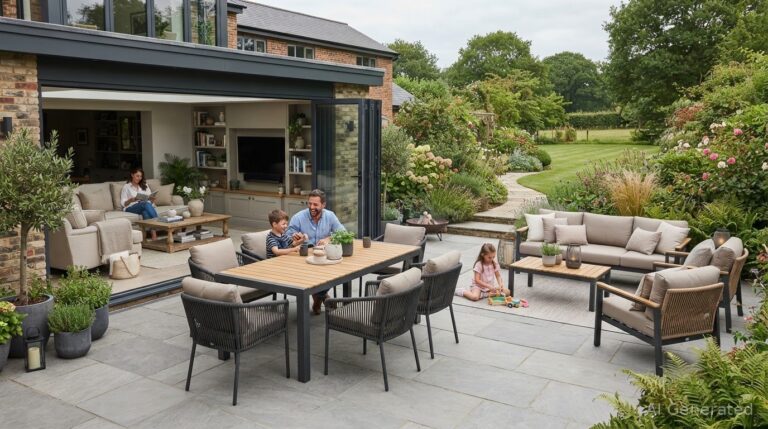
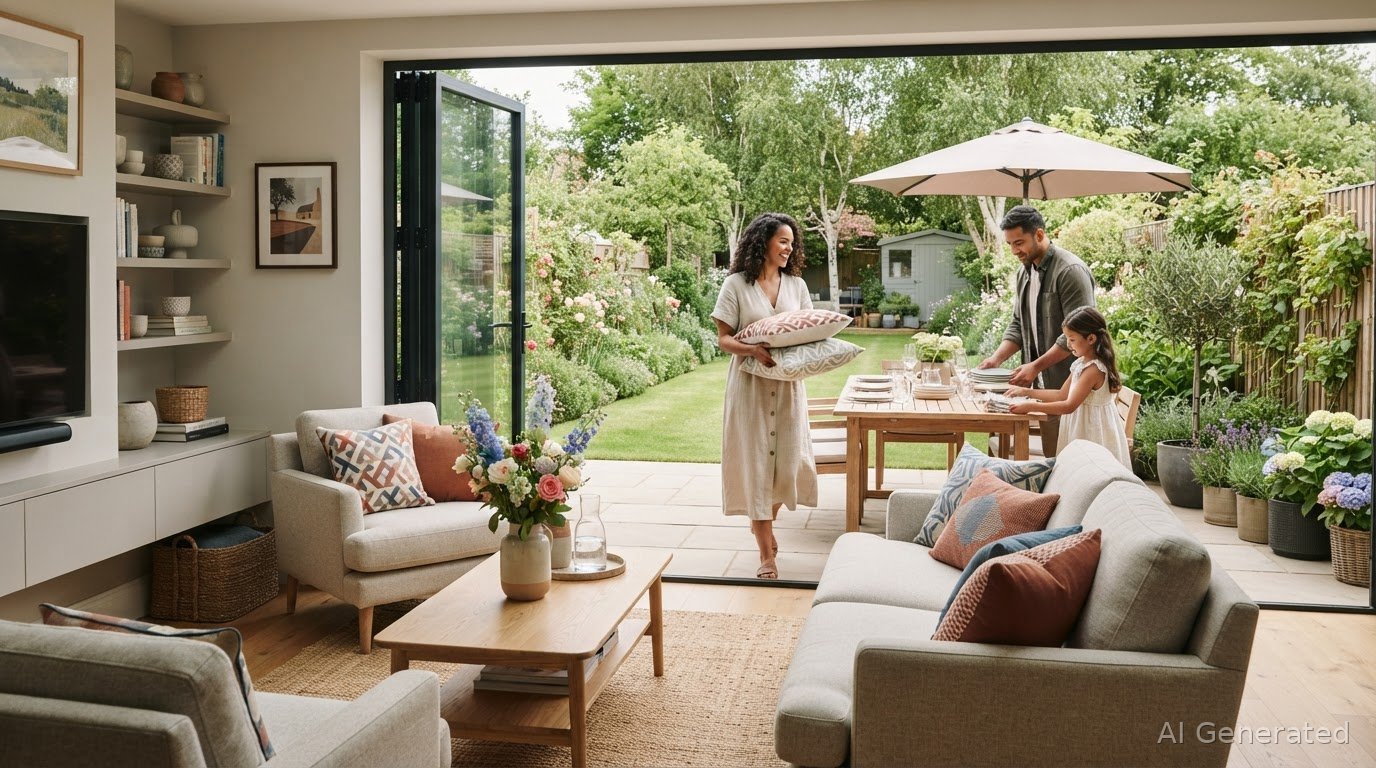
A clean patio can make more difference to a summer gathering than elaborate decorations. Getting your garden ready for a summer party starts with cleaning the outdoor furniture and patio, then arranging a dining area on level ground near the kitchen. Provide both sunny and shaded seating, and plan a sheltered spot in case the weather changes.
It’s easy to focus on food and finishing touches, but guests will notice whether there’s somewhere comfortable to sit, eat and relax. A little preparation helps the garden feel welcoming while keeping practical details, such as serving space and clear paths, in order.
This guide explains how to clean furniture, cushions and paving, prepare a dining area, and make shaded seating more comfortable. You’ll also find straightforward ideas for lighting, décor and a rain-ready layout, so the space feels considered without making preparations complicated.
Key Takeaways
- Clean garden furniture and cushions before guests arrive, and arrange the seating so the space feels ready to use.
- Refresh the patio or decking, trim the lawn edges and prepare the barbecue to make the whole outdoor area feel cared for.
- Set up dining on level ground near the kitchen, with serving space that keeps the table clear and easy to use.
- Offer a choice of sun and shade, and choose seating with backs and armrests to support guests with limited mobility, according to the UK Government.
- Use wildlife- and people-friendly approaches to discourage garden pests; the NHS recommends these instead of pesticides.
1. Cleaning outdoor furniture and cushions
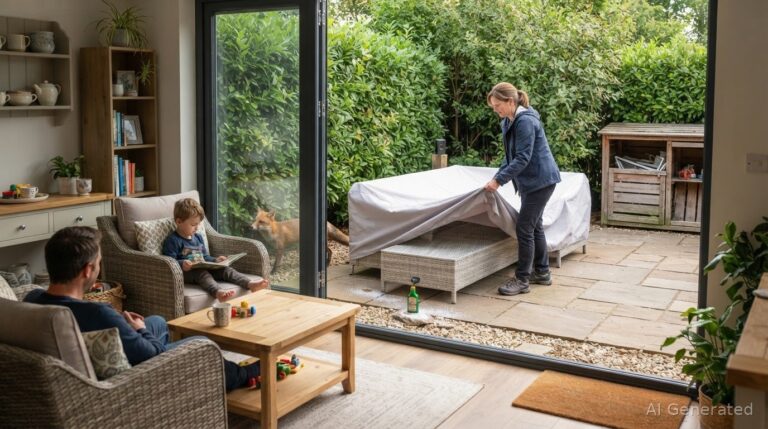
Start with the surfaces guests will touch: garden chairs, sofa arms and outdoor tables. Brush away leaves, loose soil and cobwebs before washing, so grit doesn’t spread across the furniture. Use a soft cloth with warm water and mild soap, then rinse with clean water. A soft brush can reach joints and woven details; avoid abrasive pads that may mark finishes. Check beneath cushions and around legs for trapped dirt.
Clean cushions separately. Remove covers if they’re designed to come off, and follow their care instructions before washing. For fixed covers, dab marks with a damp cloth and mild soapy water, working gently rather than soaking the filling. Rinse away residue and let cushions dry completely before arranging them again. Remove garden furniture cushions during winter. Before the party, check stored cushions for dampness or stale odours, then air them in a dry, sheltered spot.
Give the seating a final practical check as you set it out. Wipe table tops again after cleaning the chairs, and make sure chair feet sit steadily on the patio. Keep a clean, dry cloth nearby to wipe up food or drink spills. On a compact terrace, clean the seats and table in place, moving each piece only enough to reach underneath.
Once the furniture is ready, add soft lighting for the transition from daylight to evening. Hang string lights along a fence or weave them through tree branches, keeping them clear of walkways. Place lanterns near a seating area for a gentle pool of light, rather than relying on one bright source. Test the lights before guests arrive, and keep cables away from routes between the house and garden.
Outdoor games give guests something to enjoy between conversation and food. Set up croquet on a clear patch of lawn, or place hoopla on a stable patio surface. Giant Jenga suits a corner where falling blocks won’t obstruct serving or seating. Keep the equipment together in a basket, ready to bring out and put away.
Choose background music to suit the gathering, such as mellow jazz for relaxed conversation or upbeat pop for a livelier atmosphere. Keep the speaker at a considerate volume and point it towards the seating, not neighbouring homes. There isn’t one quiet-hours time to rely on across the UK, so reduce the volume as evening progresses. Test your playlist beforehand to balance music with conversation.
2. Cleaning garden furniture and patios
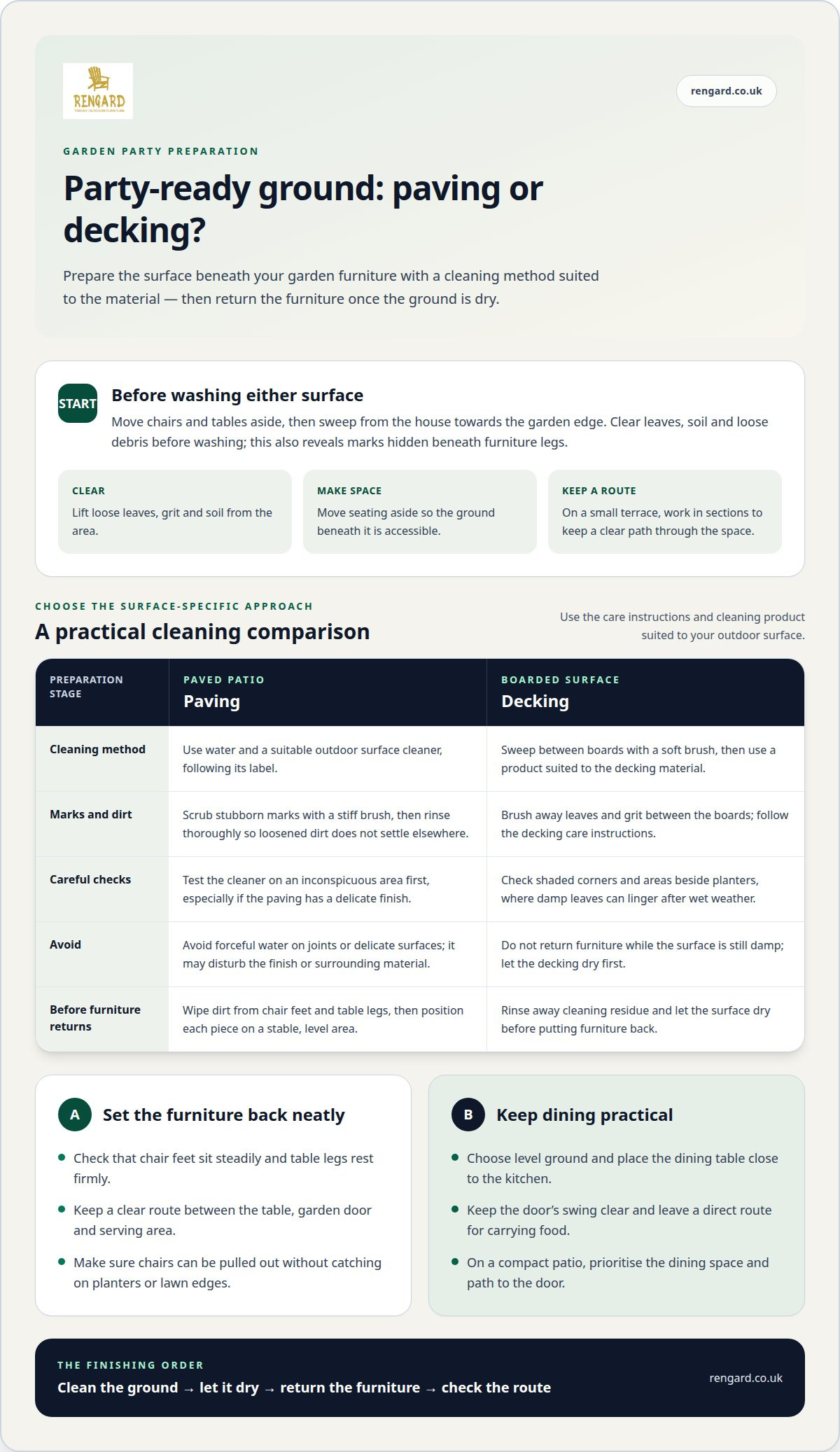
Start with the ground beneath the seating, where winter leaves, soil and debris often collect. Move chairs and tables aside, then sweep the patio from the house towards the garden edge. This clears loose material before washing and reveals marks hidden beneath furniture legs. On a small terrace, work in sections to keep a clear route through the space.
For paved patios, use water and a suitable outdoor surface cleaner, following its label. Test the cleaner on an inconspicuous area first, especially where paving has a delicate finish. Scrub stubborn marks with a stiff brush, then rinse thoroughly so loosened dirt doesn’t settle elsewhere. Avoid directing forceful water at joints or delicate surfaces, as it may disturb the finish or surrounding material.
Decking also needs a careful approach. Sweep between boards with a soft brush to lift leaves and grit, then clean with a product suited to the decking material. Follow the surface’s care instructions and rinse away residue. Check shaded corners and areas beside planters, where damp leaves can linger after wet British weather. Let the surface dry before returning furniture.
As the patio dries, inspect each piece of furniture where it meets the ground. Wipe dirt from chair feet and table legs, then place the pieces on stable, level areas. This keeps grit from getting trapped underneath and helps the layout look tidy. For a dining set, leave a clear route between the table, garden door and serving area.
Refresh the surrounding garden as part of the same preparation. Mow the lawn, trim its edges and clear clippings from the paving. These steps create a defined border between grass and patio, helping the outdoor space feel considered. If there’s a barbecue, clean its cooking area and the surrounding surface. A masonry barbecue may need rust removed after wet conditions.
Finish by walking the route guests will use, from the house to the seating and barbecue. Sweep away dirt carried back onto clean paving, and move pots that narrow the path. Check that table legs sit firmly and chairs can be pulled out without catching on planters or lawn edges. A final wipe of outdoor table tops completes the setup.
On a compact patio, prioritise the dining space and the path to the door; larger gardens can accommodate a separate barbecue area. Put cleaning tools away before guests arrive, and return cushions only once the furniture and paving are dry. This order of tasks leaves surfaces clean, the layout practical and the garden ready for serving.
3. Dining and serving areas
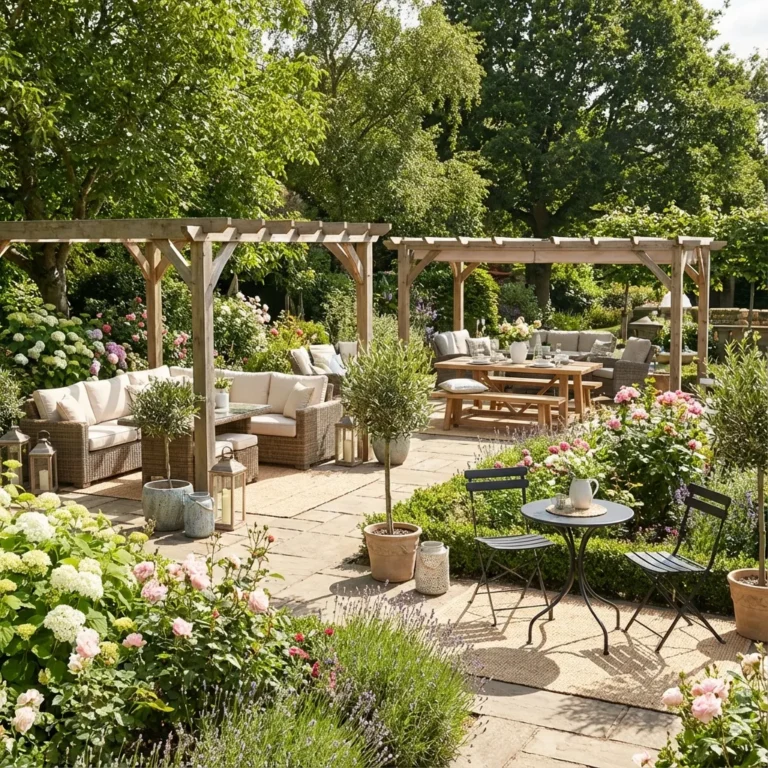
Preparing the dining area is a practical part of getting your garden ready for a summer party. Choose a level surface where possible, then position the table close to the kitchen. This keeps plates, drinks and serving dishes within easy reach. On a patio, leave the door’s swing clear and keep a direct route for carrying food. In a larger garden, dine near the house and create a separate place to relax.
Arrange chairs so guests can sit down and stand without shifting the whole layout. Keep routes between the table, kitchen and seating clear of pots and other obstacles. Lightweight stools or folding chairs are easy to move as the gathering changes. Bring them out when extra seats are needed, then fold them away to open up space around the table.
Give food and drinks a dedicated serving surface. A tiered stand uses vertical space for small plates, fruit or cakes, leaving more room for guests. Arrange plates and cutlery at one end, with shared dishes within reach. On a compact terrace, use a separate side surface rather than crowding the dining table.
Prepare drinks ahead to reduce trips indoors. A jug of elderflower and cucumber water or homemade cordial can be ready to serve. Lidded jars with straws are one way to help keep insects away from drinks. Place the jug on a stable surface and set glasses beside it, separate from the food.
Seasonal produce can bring a fresh touch to the menu. Serve blackberries, tomatoes or plums as snacks, or use plums in a dessert. Keep food covered until serving, and bring out smaller dishes as needed. This leaves room for plates and shared dishes without filling the table too soon.
Choose table details that complement the garden. Pressed leaves can serve as place cards, while herbs and petals add natural colour along the centre. Keep arrangements low so guests can see one another across the table. A small jar of seasonal flowers can sit near the serving area, away from plates and glasses.
As you continue getting the garden ready for a summer party, walk the route with a tray before guests arrive. Check that chairs leave room to pass and refreshments are easy to reach. Decide which dishes and decorations can move indoors if rain arrives. This final check helps the dining space stay practical and ready to adapt.
4. Guest comfort and shaded seating
The cost to hire a gazebo, tables and chairs in the UK depends on the hire period, equipment type and quantity, as well as delivery and set-up arrangements. A gazebo-only hire differs from a package that includes furniture, so compare the same items and terms when planning your budget.
For guests with mobility needs, choose a firm, level route from the house to the main seating area. Keep it clear of cables, plant pots and loose rugs, then leave space beside chairs for easier access. Seating with backs and armrests can provide support for guests with limited mobility, according to the UK Government.
Offer both sunny and shaded seats so guests can choose where they feel comfortable. A parasol can shade a dining table or small seating group, while a gazebo can cover a larger area. Position shade where it helps during the gathering without blocking the clearest route across the patio.
Place shaded seating within easy reach of the garden’s main activity, but not directly beside the barbecue or serving area. This creates a quieter place to sit without isolating guests from conversation. On a compact patio, angle a parasol over the table; in a larger garden, a gazebo can define a separate lounge area.
Make each seat comfortable for a longer visit. Add cushions to firm garden chairs and keep a few spare cushions nearby for guests who prefer extra support. A low seat or picnic-style arrangement may suit relaxed conversation, but retain standard chairs with backs for guests who find low seating difficult to use.
British summer weather can change during a party, so plan for both sunshine and showers. A gazebo offers covered seating, while a parasol provides flexible shade that can be repositioned as conditions change. Keep wraps or blankets in a dry basket for cooler evenings, and place it near the seating rather than indoors.
Before guests arrive, sit in each seating area and check the view, shade and access. Make sure the parasol base is secure, the gazebo entrance is clear, and chairs can be moved without blocking the route. This final walk-through helps you spot awkward gaps, exposed seats or a table that needs repositioning.
Think of comfort as a set of choices rather than a single ideal seat. Arrange some seating in sunshine and some under cover, with cushions, rugs or a low picnic-style option for guests who find them more comfortable. A gazebo or sun umbrella can offer a pause from the sun, while a parasol or small gazebo may also provide shade and shelter if conditions change. Keep wraps and blankets accessible as the evening cools, so guests can add a layer without leaving the gathering. These options let people adjust their seating as their comfort changes.
5. How to deter wasps and other garden pests safely
Start by reducing the easy attractions around the party area. Clear food scraps from the table, put rubbish in a closed bin, and cover dishes between servings. After a barbecue, clean away sticky spills and crumbs promptly. These practical steps help make dining and seating areas less inviting to insects without disturbing the wider garden.
Place pots of lavender or mint near seating to add greenery and help discourage insects. Citronella-scented candles are another option for a garden gathering. Keep candles on stable surfaces, away from table linen, foliage and busy walkways. Never leave a lit candle unattended, and extinguish it before guests leave the garden.
Choose methods with wildlife and people in mind. The NHS recommends wildlife- and human-friendly pest-control methods instead of pesticides. For a party, start with simple housekeeping: remove fallen fruit, clear food waste, and keep drinks covered when guests aren’t using them. Avoid spraying products around open food, serving dishes or occupied seating.
Make the dining layout easier to manage. Put covered dishes on a serving surface rather than leaving food scattered across several tables. Lidded jars with straws can help keep insects away from drinks. Keep the rubbish bin away from the main seating area, but somewhere guests can find it easily. Empty it when food waste starts to collect.
Plants can help define the edges of a seating space. Set lavender or mint pots beside, rather than directly on, the dining table. This keeps serving space clear and avoids leaves brushing against plates. On a compact patio, use a single pot near the seating; in a larger garden, place pots near the edge of the gathering area.
Before guests arrive, check the garden for fallen fruit, open food packaging and standing drink glasses. Move uncovered snacks indoors until serving, and wipe sticky marks from outdoor tables. If insects gather in one spot, relocate the food or drinks rather than swatting near guests. These small adjustments help keep the party comfortable while leaving wildlife-friendly control methods in place.
Treat these options as supporting measures, not substitutes for managing food and rubbish. Citronella-scented candles are one suggested way to help repel unwanted garden pests at a party. Place them on a steady surface where guests won’t brush past, well clear of cloth and nearby foliage. If the layout makes that difficult, skip the candle rather than create a hazard. The aim is a comfortable setting, not a reason to use sprays or disturb wildlife.
Pots of lavender or mint near seating can help discourage insects at a garden gathering. Use them to mark the edge of the sitting space while keeping plates and serving surfaces clear. Place pots where guests can see and avoid them, with enough room to move chairs or carry dishes without brushing against leaves. Combine the plants with simple housekeeping: clear food promptly, cover drinks between use, and move uncovered snacks away until serving. Together, these measures offer practical options for a wildlife-friendly gathering without relying on pesticides.
Rengard: Furniture Accessories
Rengard offers Furniture Accessories to add considered finishing touches to an outdoor living space. If preparing your garden has highlighted a need to refine the setting, consider how accessories can complement your furniture and the way you use the area. Choose options that are practical, in scale with the space and in harmony with its overall style.
A thoughtful finishing touch can help an outdoor area feel cohesive without crowding the layout. Let your garden’s proportions and the way you entertain guide your choices.
Contact Rengard to discuss your outdoor living plans.
Shape an outdoor space that feels like yours
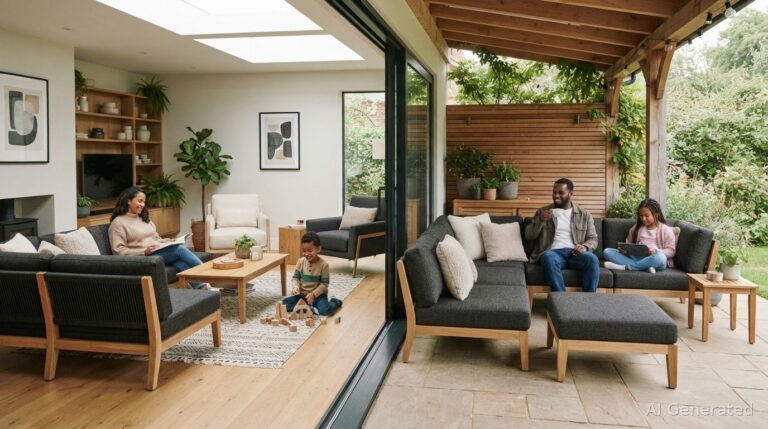
As you keep getting your garden ready for a summer party, think beyond the gathering itself. Choose a layout that also suits relaxed afternoons and everyday time outdoors, with furniture that fits your patio or garden’s proportions. A flexible arrangement can make the space feel welcoming long after the occasion has passed.
Let the way you entertain guide your next outdoor living decision. You might refine the seating arrangement or consider whether your garden would benefit from a different furniture configuration.
Contact Rengard about your garden to discuss your outdoor living plans. A considered next step can help your garden feel ready for many occasions.
Frequently Asked Questions
How to clean and tidy a garden for a summer party?
Start by clearing leaves, fallen branches and clutter, then sweep patios and paths to create a clean, easy route through the garden. Wipe outdoor tables and chairs, and check that cushions are dry before arranging them. Trim back plants that obstruct seating or walkways, but leave established pots and borders in place to add colour. Getting your garden ready for a summer party is easier when you finish these jobs before setting out food and drinks.
How to plan garden party seating and layout?
Arrange seating around how guests will use the space: place a dining set near the serving area, then create a separate, relaxed conversation spot with garden chairs or a lounge set. Keep the route between the house, food and seats clear, and leave room for chairs to move back from the table. On a compact patio, a bistro set can provide a practical place to eat without crowding the main walkway.
What are the best outdoor lighting ideas for a garden party?
Use a mix of gentle ambient lighting and brighter task lighting: festoon lights can define a seating area, while solar path lights help make garden routes easier to see after dusk. Add a portable LED lamp near the food table so guests can see what they’re serving. Keep cables away from walkways and position lights so they don’t shine directly into people’s eyes. Test the arrangement before guests arrive.
How can I protect guests from sun and rain at an outdoor party?
Offer shaded seating with a securely positioned parasol, and keep spare seats under cover where possible. Check the forecast before the party and have an indoor space ready if rain becomes persistent, as a parasol shouldn’t be treated as full rain shelter. In breezy conditions, close or reposition it if it feels unstable. Keep water available and make sure guests can move comfortably between sunny and shaded spots.