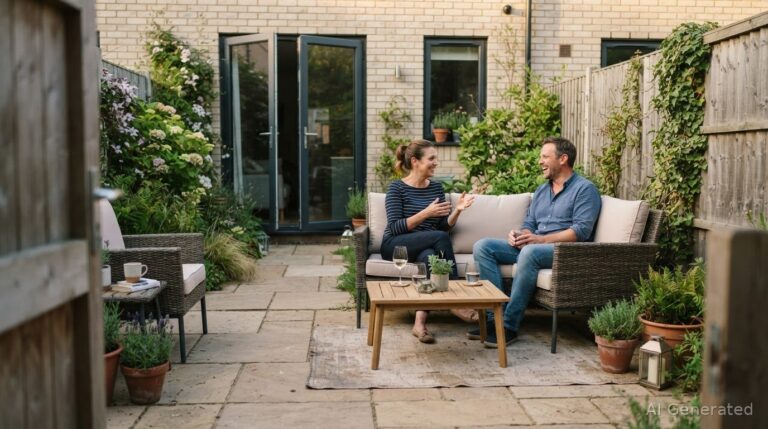
How to Style Patio Furniture for Comfortable Outdoor Living
A polished patio doesn’t need matching furniture; it needs a thoughtful mix. Knowing how to style patio furniture starts with choosing a focal piece, then balancing up to three material types with comfortable cushions and practical finishing touches. Keep the layout open, and repeat colours or textures to help the different elements feel connected.
It’s easy to see why a coordinated set feels like the simplest choice, but combining materials can give an outdoor space more depth and character. The key is to create contrast without clutter, while choosing weather-resistant pieces suited to the British climate. This guide explains how to mix materials, arrange dining and lounge areas, add cushions and accessories, and make the most of a compact patio or a larger garden. You’ll have a clear approach for creating an outdoor setting that feels comfortable, considered and ready for everyday living.
Key Takeaways
- Start with a focal furniture piece, then choose weather-resistant materials and comfortable cushions suited to outdoor use.
- Use accessories such as planters, tableware and soft lighting to add character and make dining areas feel considered.
- Separate dining and lounging zones while keeping routes between them clear, especially on compact patios.
- Combine contrasting materials with a shared detail, such as colour or texture, to create a cohesive look.
- Build a balanced palette around a few colours, then use cushions and patterns to introduce personality.
1. Weather-resistant outdoor furniture and comfortable cushions
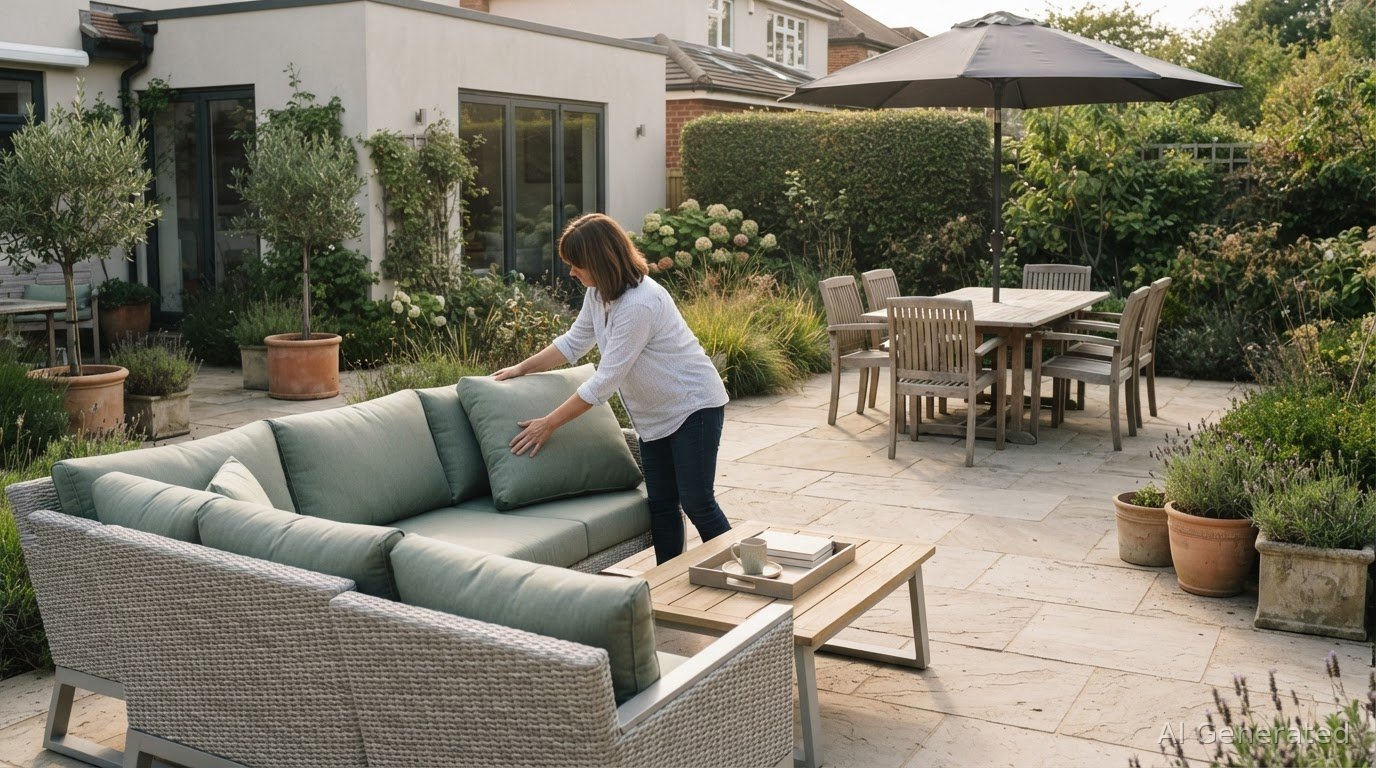
Start with the main seating piece, such as a garden sofa or corner lounge, then build the layout around it. For British outdoor spaces, consider rust-free aluminium frames, rattan or teak finishes, and weather-resistant fabrics. These materials offer practical options for patios exposed to changing conditions. Choose supportive cushions for longer conversations, and keep their colours connected to the garden or the view from indoors.
Think about how you’ll use the area before adding smaller pieces. A dining set suits meals, while a sofa and coffee table create a place to relax. On a compact terrace, garden chairs and a small outdoor table may leave more room to move. To decide how to style patio furniture, begin with the piece that best serves the space, then add only what supports that use.
How much it costs to style a patio with furniture and accessories in the UK depends on the pieces you choose, the size of the patio and what you can keep. Reusing paving or planters can reduce what you need to buy. A dining area also calls for different choices from a small seating nook.
For a budget-conscious refresh, consider second-hand garden chairs or tables and assess their condition before styling them. A sound timber table, for example, can become a focal point with a clean surface and cushions in a coordinated colour. DIY touches, such as repainting a planter or making simple cushion covers, can update the look without replacing every piece. Choose materials suited to outdoor use, and avoid soft furnishings that cannot be stored when not needed.
Create a visual link between indoors and out by repeating a detail from the adjoining room. If the kitchen has sage-green accents, echo that colour in patio cushions or a planter. Similar patterns, timber tones or dark metal details can also connect a doorway to the garden. This helps both spaces feel considered without making them identical.
An outdoor rug can define a seating area on a paved patio, particularly beneath a sofa and coffee table. Choose a size that groups the furniture visually while leaving a clear border of paving around it. In a larger garden, use paving changes or a rug to distinguish the dining area from the lounge. Keep routes between the door, table and seating clear.
For privacy, use a trellis with climbing plants, a screen beside a seating nook, or outdoor curtains beneath a covered structure. These features can soften a boundary without closing off the garden. Secure curtains when it’s breezy, and bring cushions, pillows and throws indoors when the space is not in use. A lantern or suitable outdoor lighting can complete the arrangement for evenings.
2. Adding accessories and finishing touches
Accessories add personality and make everyday use more convenient. Start with the activity: a dining table benefits from practical tableware, while a lounge can take softer textures and a small surface for drinks. Choose a compact colour palette, then echo it across cushions, planters and table details. Terracotta pots, for example, can warm up neutral furniture without competing with its shape.
Which outdoor rugs, lighting and accessories suit patio furniture? Choose an outdoor rug designed for exterior use, with a texture and pattern that complement the furniture. For lighting, lanterns and string lights create a gentle evening atmosphere; add trays, planters or tableware according to how you use the space.
On a dining table, woven placemats add texture beneath durable plates, while linen napkins create a considered setting. A tray can keep condiments or utensils together, leaving the rest of the tabletop free for serving dishes. Keep the centrepiece low, such as a small pot of herbs, so it doesn’t interrupt conversation.
When choosing an outdoor rug, consider how its colour and surface work with the paving and furniture. A subtle stripe can add interest beside plain cushions, while a simple textured weave suits a patio with patterned upholstery. Choose a rug that’s practical for its position and easy to move when you want to clear the area. It should add a tactile finishing layer, not another competing focal point.
Planters bring greenery into the furniture arrangement. Place a larger pot beside a lounge chair, then repeat its colour in a smaller container near the dining table. Potted herbs can add visual appeal and be useful at mealtimes. Vary leaf shapes and planter finishes to introduce depth without filling every available surface.
For evening lighting, hang string lights above a pergola or place lanterns near the edge of the patio. Hurricane lanterns or glass holders shield candle flames from breezes; LED candles offer a flameless alternative. Arrange cables and lights so they don’t obstruct access, and choose a soft glow that complements the setting.
Make each finishing piece earn its place. A tray organises dining essentials, a planter adds living colour, and a lantern provides a useful evening accent. On a compact patio, these functional details can be more effective than numerous ornaments. Explore garden accessories that complement the furniture’s colours and textures, then keep the final arrangement personal and uncluttered.
3. Arranging dining and lounge areas
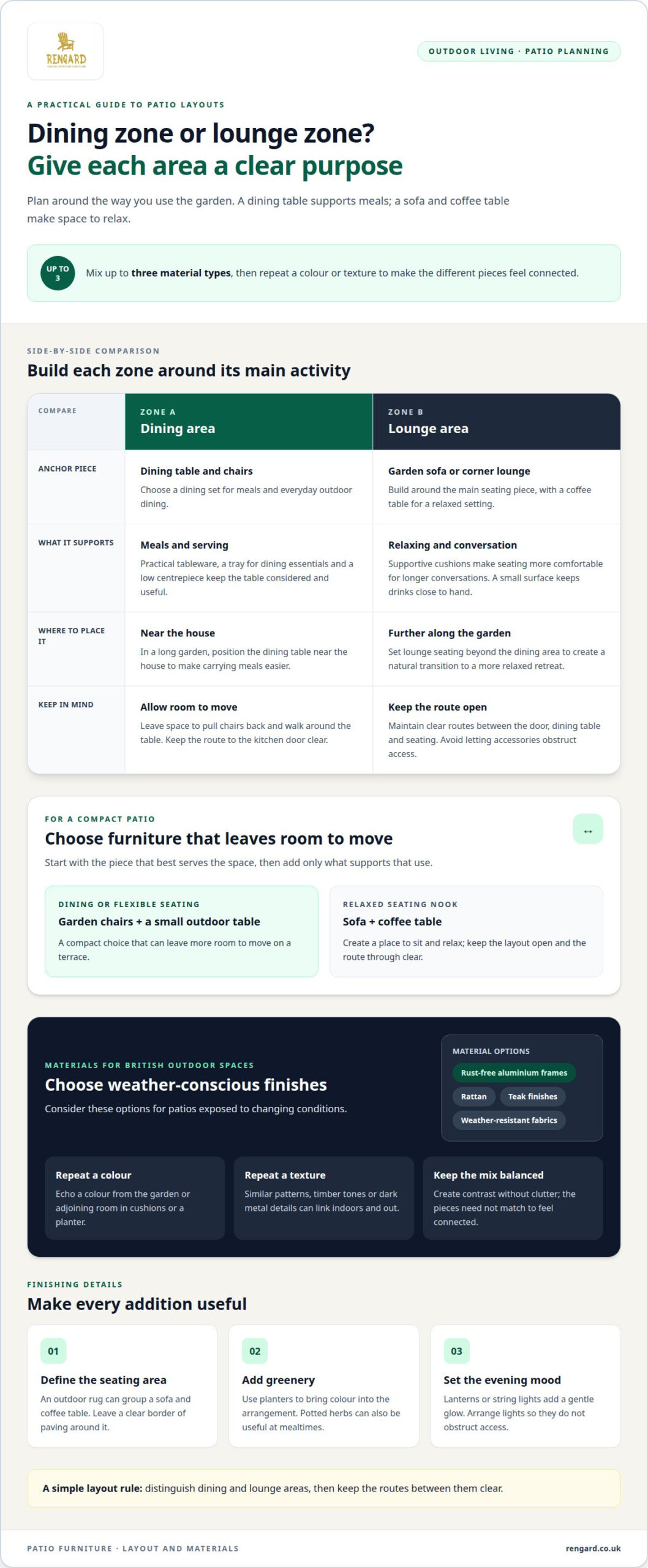
Plan the garden around its main activities instead of spreading furniture evenly. Most home gardens can have dining and lounge zones, with a quieter accent area where space allows. In a long garden, place the dining table near the house for carrying meals, then position lounge seating further along. This creates a natural transition from everyday outdoor living to a more relaxed retreat.
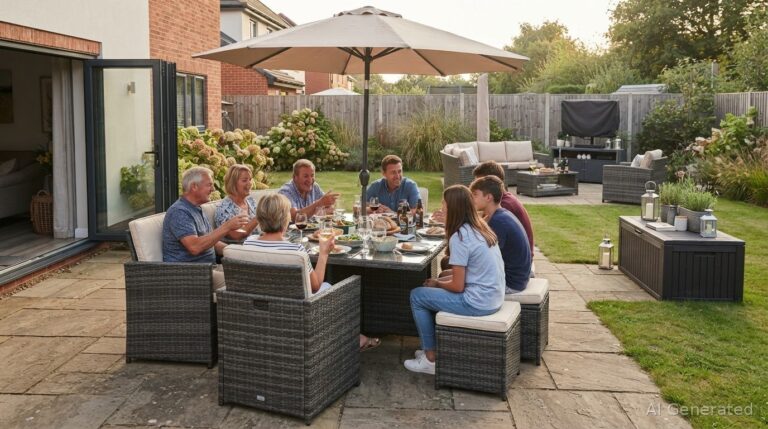
Make the dining table the focal point of its zone. Leave room to pull chairs back and walk around them, and keep the route to the kitchen door clear. A round table can ease movement in a tighter layout, while a rectangular one can follow the lines of a long patio. Choose chairs that suit the table’s scale: bulky seats can overwhelm a small top, while a large table can dwarf delicate chairs.
For a compact 3-by-3-metre patio, a cube dining set can provide a practical eating area. Add a hanging chair and raised planters along the edges, keeping the centre open for movement. This arrangement uses the perimeter without filling every surface. In a narrow terrace, place a bistro table against a wall and reserve the widest section for a bench or lounge chairs.
Separate zones with furniture placement, not barriers. A sofa back can mark the edge of a lounge without blocking views, while an angled dining table can distinguish meals from conversation. On a larger lawn, Adirondack chairs around a fire pit create a clear destination. Keep a direct route between the house, dining area and garden gate.
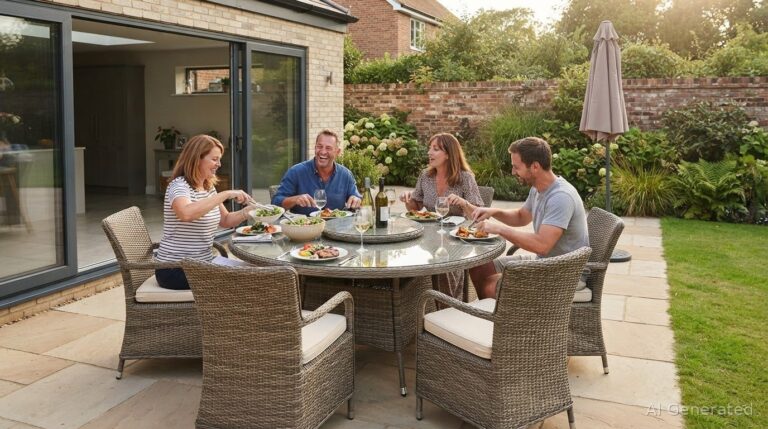
Use the sun and existing features to guide furniture placement. A west-facing wall may hold warmth later in the day, while a tree can shade a dining spot. Avoid placing chairs where steps, doorways or gates interrupt access. If the patio connects to an extension, align the outdoor table with the doorway to make serving and movement feel intuitive.
Match each area’s furniture to its purpose. A dining zone needs stable chairs and a table with enough surface for meals; a lounge benefits from lower seating and a small table within easy reach. Keep the pieces visually related through a repeated material or colour, rather than buying identical sets. Explore garden dining sets for a coordinated starting point, then add distinct lounge seating nearby.
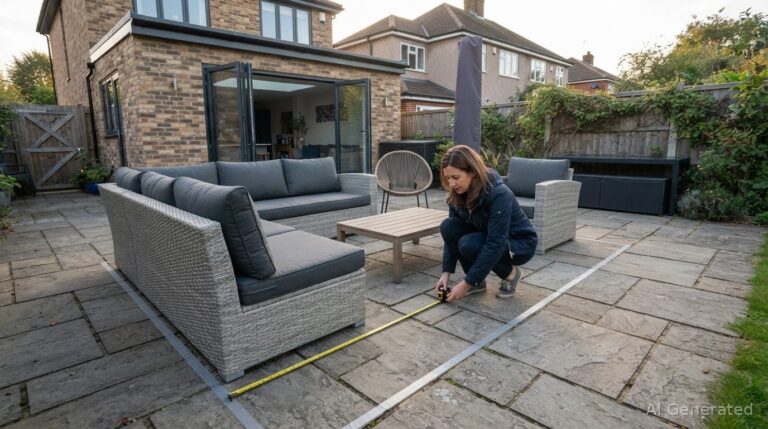
Before settling the layout, walk the routes guests are likely to use. Imagine carrying a tray from the kitchen to the table, then move between dining and lounge areas without sidestepping chairs. This simple test reveals awkward gaps early. For flexible entertaining, choose movable accent chairs that can join either zone.
4. Mixing different furniture materials
Combining materials gives a patio more character than matching every piece. Start with three material types, such as aluminium, teak and woven rattan, then repeat one finish to connect them. For example, pair a teak dining table with aluminium chairs and rattan lounge seating. The contrast feels deliberate when the pieces share a similar tone or silhouette.
Give each material a clear role. Use aluminium for a crisp-lined dining table, teak for warmth and rattan for relaxed texture. In a compact patio, keep larger furniture pieces visually light, then add a timber side table as an accent. This lets the materials stand apart without making the space feel crowded.
Classic and contemporary styles can sit comfortably together. Traditional wrought-iron chairs, for instance, can complement a sleek modern dining table. Their intricate lines stand out against a simple tabletop, while cushions soften the contrast. Repeat a dark metal detail in a lantern or planter to make the pairing feel intentional.
For a Mediterranean-inspired setting, wrought iron or mosaic-tiled furniture can provide an expressive focal point. Balance patterned surfaces with plain chairs and restrained greenery, so the table remains the standout element. In a rustic garden, natural wood and stone create a grounded combination. A wooden bench beside a stone planter can echo that look without adding another large piece.
Rattan and wicker suit a range of settings because their woven texture softens both classic and contemporary designs. Place rattan chairs beside a clean-lined table, then choose cushions in a colour that appears elsewhere in the garden. This adds warmth to a modern patio and reinforces a natural feel in a country-style garden. Keep surrounding patterns limited to avoid competing textures.
Choose materials to suit each piece’s purpose and position. A dining table needs a stable surface for meals, while lounge chairs invite a more tactile finish. Consider how exposed each piece is to the elements, and follow the care guidance for its material. Grouping furniture by zone can also simplify upkeep and create a cohesive arrangement.
Before adding another finish, consider the whole setting: paving, boundaries, planting and the view from indoors. If stone paving already provides strong texture, choose simpler furniture surfaces. Where greenery dominates, a metal frame or teak accent can add definition. The result feels stylish and comfortable when each material has room to stand out while sharing a colour, shape or detail with its neighbours.
5. What outdoor colour schemes and cushions work well for patio furniture?
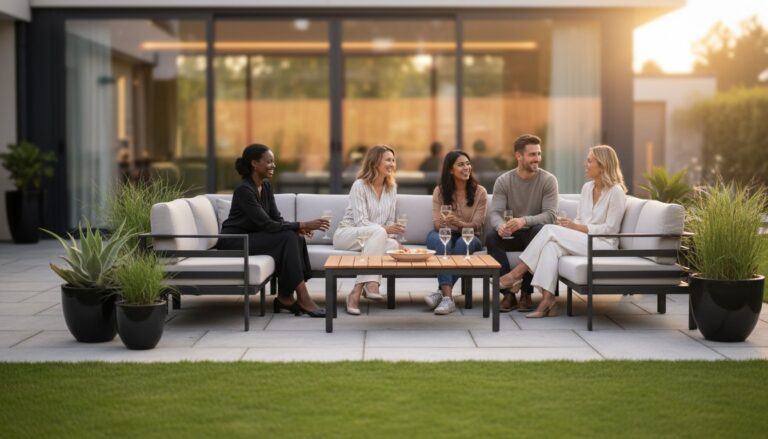
Choose a small set of main colours to give the patio a clear, cohesive palette. Start with a foundation shade for larger furniture, add a supporting colour through cushions, then introduce an accent in planters or table details. For example, charcoal frames, soft grey cushions and muted blue accessories create a composed contemporary scheme. Repeating those colours in nearby pots helps connect the seating area with the wider garden.
Take cues from the house as well as the garden. If the extension has warm wood flooring and cream walls, natural timber tones and off-white outdoor cushions can make the transition feel considered. A modern home with clean lines often pairs well with neutral furniture and simple landscaping. For a more expressive setting, use vibrant cushions against restrained furniture, keeping stronger colours to a few deliberate accents.
Cushions add comfort and give garden furniture a flexible layer of colour. On a neutral sofa, combine a plain cushion with a geometric pattern and a textured weave. Repeat one colour across the designs, such as deep green in a stripe and a small-scale motif. This creates variety without making the arrangement feel busy. On individual chairs, a single patterned cushion can provide a focused accent.
Consider how colours look in changing daylight. Pale cushions can brighten a shaded corner beneath a tree, while deeper tones create definition against light paving. If the patio receives strong sun, use the surrounding planting and furniture finish as palette cues rather than choosing colours in isolation. View a cushion sample beside the table, paving and exterior wall to see whether the tones work together.
Patterns bring personality, but scale matters. Large geometric designs suit broad sofa cushions, where their shapes remain visible; smaller motifs work well on compact bistro seating. Pair a bold print with plain cushions, not another competing pattern. Botanical designs can echo leafy borders in a traditional garden. In a minimalist space, a narrow stripe or clean geometric pattern adds interest while preserving an uncluttered look.
Keep colour practical for outdoor living. Choose cushion covers made for outdoor use, and bring soft furnishings inside when they’re not needed. This makes it easier to refresh the look seasonally: swap a bright accent for a deeper, quieter shade, while keeping the main furniture palette unchanged. To coordinate those final details, explore garden accessories that complement your chosen colours and textures.
Coordinating patio furniture colours with the rest of the home and its decor helps create a cohesive setting. Contemporary outdoor furniture often features bold geometric shapes and neutral colour palettes.
Vibrant colours, intricate patterns and striking textures can add personality to garden furniture and outdoor decor. Use them selectively, so vivid accents remain balanced by simpler surroundings.
Rengard
Rengard offers dining tables and furniture accessories to help complete a considered outdoor setting. If you’ve planned your patio palette and layout but still need complementary finishing pieces, these options can support a cohesive look. A dining table can anchor an outdoor eating area, while carefully chosen accessories bring colour and texture to the garden. Choose each piece to suit how you use your patio.
Choose additions that complement your furniture and make the space work for relaxed meals or hosting guests. For help considering options for your patio, contact Rengard.
Shape a patio that feels like your own
The best outdoor spaces evolve with the way you live. Let your patio reflect your routines, from a quiet morning coffee to a table set for friends, and change the details as your needs shift. A considered approach to how to style patio furniture helps create a setting that feels personal rather than staged.
Rengard’s outdoor furniture and accessories can help you shape a patio around its character and intended use. Choose pieces that support the way you want to spend time outside, while keeping the setting comfortable and distinctly yours.
Have a patio project in mind? Contact Rengard for patio advice and take the next step towards an outdoor space that feels welcoming, practical and unmistakably yours.
Frequently Asked Questions
How do you arrange patio furniture for a comfortable layout?
Arrange seats so people can talk easily, while keeping doorways and garden access clear. On a rectangular patio, place a sofa along the longest edge and angle a chair towards it to create a natural conversation area. Check the arrangement from indoors too: a clear view of planting or a feature tree can make the seating feel connected to the garden. Keep frequently used items within easy reach.
How to style a patio dining area and lounge area?
Give each area a distinct purpose, then connect them with a shared detail such as a frame finish or cushion colour. In a narrow garden, keep dining close to the house and use a bench or compact chairs to preserve space. Position lounge seating towards a garden view or focal planting rather than turning every chair towards the table. A small side table makes the lounge useful without adding another large piece.
How to mix materials and styles in outdoor furniture?
Choose one dominant material, then introduce contrasting finishes through smaller pieces. For example, let a timber table anchor the dining area, add metal-framed chairs, and bring woven texture into a nearby seat. Keep the forms related, such as slim frames or softly rounded edges, so the contrast feels intentional. Repeating a detail in a planter or cushion can connect different styles without making every item match.
What are the best low-maintenance patio furniture materials for UK weather?
Powder-coated aluminium and synthetic rattan are practical outdoor furniture choices with straightforward care needs. The powder coating on aluminium frames protects them from rust, while rattan weave can be rinsed with a garden hose. Composite surfaces need only a wipe-down. Natural teak offers a warm finish but may need teak oil or cleaner as its colour changes, so consider whether that upkeep suits your routine.
How much does it cost to style a patio with furniture and accessories in the UK?
The cost depends on the furniture you choose, the patio’s size and what you can keep. Reusing paving or planters can reduce what you need to buy.