How to Prevent Water Pooling on Furniture Covers with a Slope
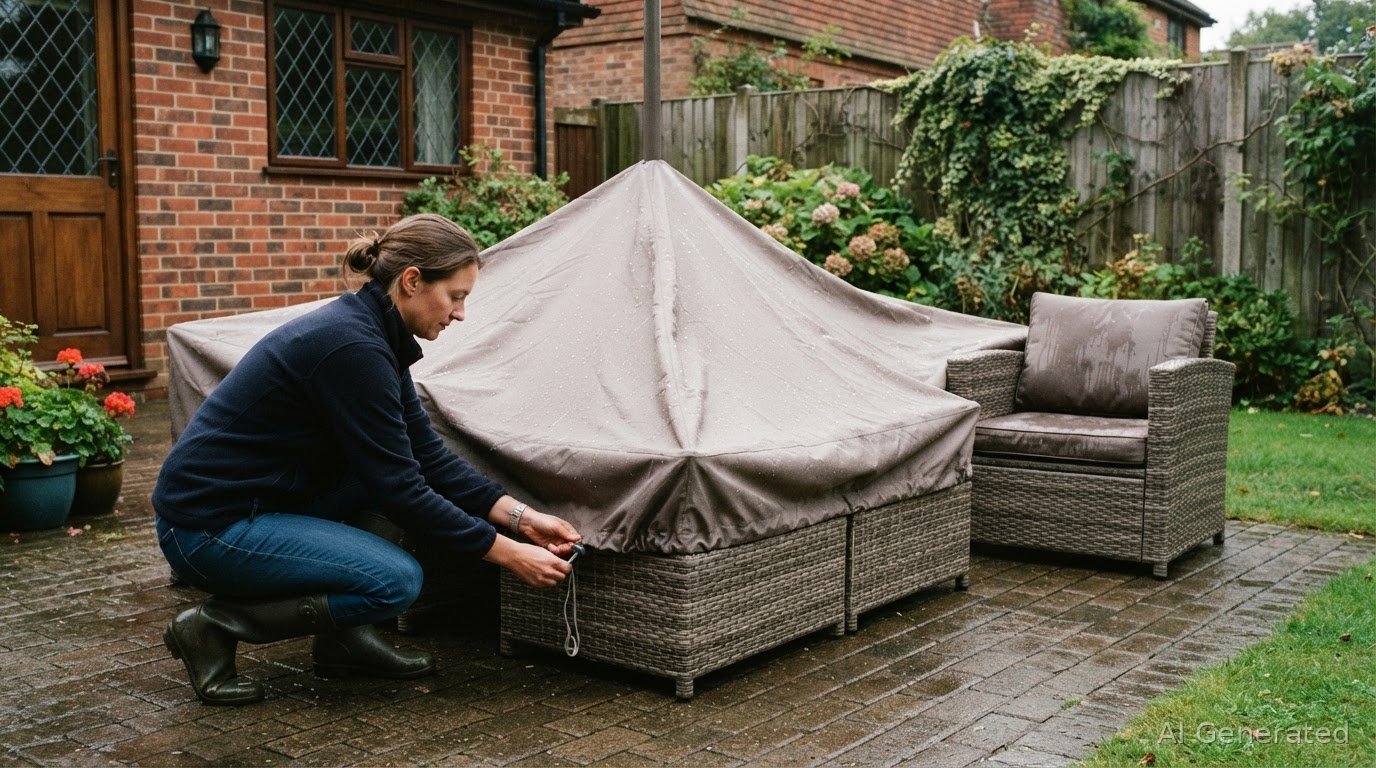
A flat furniture cover can become a basin after rain. Preventing water pooling on furniture covers starts with raising the centre so water runs towards the edges, then securing the cover with its straps or drawcords. A support pole or one or two upside-down buckets beneath the cover can create the slope.
It’s frustrating to uncover a garden sofa or dining set and find water sitting on the fabric. A good fit helps, but the cover’s shape and fastenings matter too. Airflow also plays a part: breathable polyester or nylon can allow air to circulate and help limit moisture beneath the cover.
This guide explains why water pools and how to shape a cover so rain can drain away. You’ll also learn how texture, secure fastenings and ventilation can help protect outdoor furniture in changeable British weather, from a patio bistro set to a larger garden dining area.
Key Takeaways
- Look for sagging areas, loose fastenings and damage that could allow rain to collect or seep beneath a cover.
- Choose a cover whose material and surface suit the furniture and allow moisture to escape.
- Raise the cover’s centre and secure its edges so rain can drain away instead of gathering in low spots.
- Remove pooled water promptly and keep the cover clean and fully dry when it’s not in use.
- Allow air to circulate around covered furniture to help limit dampness and protect its finish.
Causes of water pooling
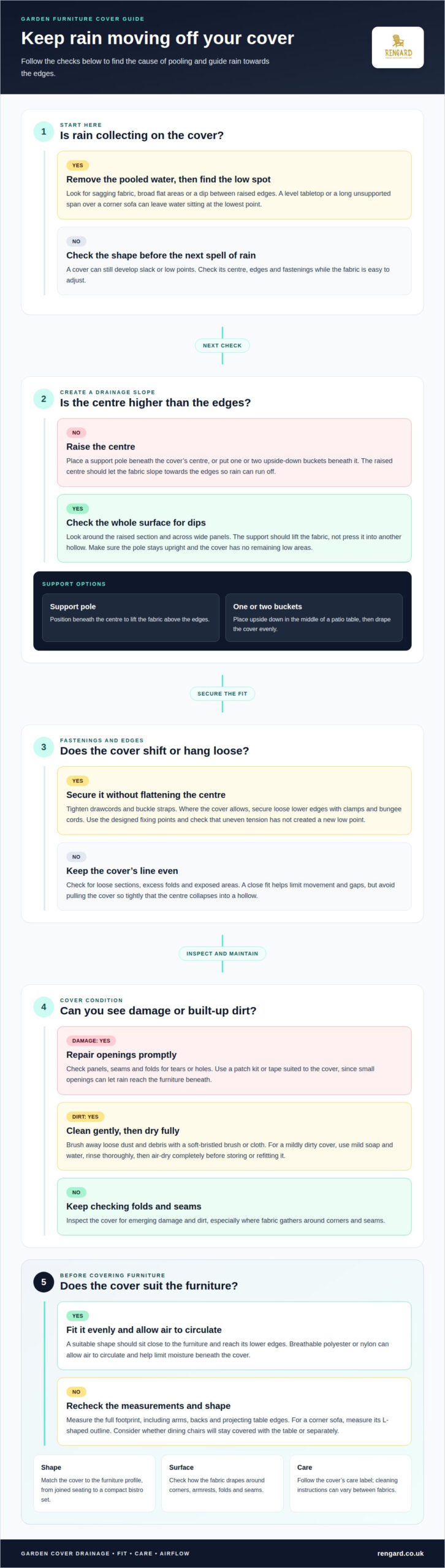
- Inspect the covered furniture for broad, flat areas where rain can collect. A patio dining table creates a level surface beneath its cover, while a wide corner sofa can leave a long, unsupported span. If the fabric dips between raised edges, water gathers at the lowest point instead of running away. Look for sagging after rain, then identify what supports the fabric below.
- Tighten the cover’s drawcords and buckle straps around the furniture. Loose fastenings let the cover shift, leaving slack that can form pockets across a sofa seat or tabletop. Securing the edges helps limit water entering through gaps. Check that the cover fits closely enough to stay in place, without pulling it so tightly that the centre collapses into a hollow.
- Secure loose lower edges with clamps and bungee cords where the cover allows. Clamps along the bottom, fastened with bungees, can create a closer fit around garden chairs or a dining set. This limits movement that could loosen the cover or expose gaps in wet, breezy weather. Check the fit afterwards, since uneven tension can still leave a low point.
- Clear dirt and dust before they build up on the cover. Use a soft-bristled brush or cloth to remove loose debris from the surface, especially around folds and seams. Grime can leave the fabric less clean and make it harder to see emerging damage. On a rattan chair or outdoor table, pay particular attention to the corners where the cover gathers.
- Check the cover for tears, holes and other damage. Small openings can let rain reach the furniture beneath, even when the edges are secure. Repair damage promptly with a patch kit or tape suited to the cover. Inspect seams and folds as well as exposed panels, because a small tear can be easy to miss when the fabric is draped over furniture.
- Clean a mildly dirty cover with mild soap and water, then rinse it thoroughly. Let it air-dry completely before storing it or putting it back over furniture. A damp, folded cover can retain moisture, while incomplete rinsing can leave soap residue. Cleaning also makes it easier to spot worn areas that need attention before the next spell of rain.
- Check whether the cover has support beneath its centre. A long, unsupported surface can sag under collected rain, creating a deeper pocket as water accumulates. The RWSP70 is made from three interlocking poles, a sturdy base and a small round top. Whatever support is used, position it to lift the fabric rather than press it into another hollow.
Cover materials and textures
Choose a cover by measuring the furniture’s full footprint, including arms, backs and projecting table edges. For a corner sofa, measure its L-shaped outline rather than just one side.
To limit wind catching beneath the cover, choose a shape that sits close to the furniture and reaches its lower edges. Use the designed fixing points as intended, without leaving excess fabric loose around the base.
- Measure the furniture in its usual outdoor arrangement. Include chairs tucked around a dining table if they’ll stay covered together, and note any arms or backs that widen the outline. A cover sized only for the tabletop may leave chair backs exposed or create excess fabric elsewhere.
- Match the cover’s shape to the furniture’s profile. A straight-sided cover can sit awkwardly over a corner lounge, while a cover shaped for an individual chair won’t suit joined seating. For a compact bistro set, consider whether the chairs will be covered with the table or separately.
- Check the care label before choosing a cleaning routine. Instructions can vary between fabrics, so don’t assume a method that suits one cover will work for another. Keep the label’s guidance with the cover to make care straightforward and avoid guesswork.
- Inspect the surface and seams before fitting the cover. Note where panels join and how the fabric lies around corners, armrests and table edges. A clean, even fit makes it easier to spot fabric pulled out of place, without mistaking a seam or fold for a low point.
- Consider how the material drapes over the furniture. A cover that bunches around a garden chair’s back can create excess folds; one that follows the outline smoothly is easier to position. Check the fit at the corners as well as across broad panels.
- Choose a cover that you can put on and remove without dragging it across sharp furniture edges. This is useful for an outdoor dining set with projecting corners or a lounge with defined arms. A manageable fit helps keep the fabric in position and reduces unnecessary pulling.
- Assess the whole fit before leaving the furniture covered. Look for exposed areas, loose sections and folds that interrupt the cover’s line. Preventing water pooling on furniture covers starts with choosing a suitable shape and fitting it evenly. Material and texture matter, but neither can make an unsuitable size fit well.
Creating a slope for drainage
Raise the cover’s centre and guide rain towards its edges. A support pole, buckets or a cover with adjustable tie-down straps can help create the right shape.
-
Use support poles or cover frames
Place a support pole beneath the cover’s centre so the fabric rises above its edges. This creates a slope that encourages rain to run off instead of collecting in a dip. Check that the pole stays upright and supports the fabric without pressing into it. On a wide table or corner sofa, look for any remaining low areas around the raised section.
-
Stop water pooling on covers
Position one or two buckets in the middle of a patio table before covering it. Their shape lifts the cover and gives rain a route towards the sides. Place them securely, then drape the cover evenly over the table. Check that the fabric doesn’t slide off or bunch around the edges, as folds can create new pockets.
- Set the cover’s height before tightening its edges. The centre should sit higher than the sides, with the fabric sloping continuously towards the perimeter. On a rectangular dining table, smooth the cover from its raised centre towards each long edge. If the fabric hangs in a deep hollow between supports, adjust the support instead of pulling the cover tighter across the dip.
- Use upside-down buckets to lift low points beneath the cover. Position them where the fabric would otherwise sag, such as the centre of a broad table or a low section between sofa seats. Support the area that needs lifting, then check the outer edges. The aim is a clear route for water to drain, not isolated peaks surrounded by hollows.
- Choose a furniture cover with a drainage system and adjustable tie-down straps. The drainage design helps water move off the cover, while adjustable straps help hold its shape. Create the slope before fastening the straps, then inspect the fabric for sagging. Secure edges won’t drain rain if the centre remains flat or dips below the sides.
- Check the slope after rain, especially on a broad garden dining set. Look for water held in a fold, a dropped centre or a section that has shifted away from its support. Reposition the pole or buckets, smooth the fabric and secure the edges again. These adjustments restore a continuous downward route from the cover’s highest point.
A support pole can hold up a patio furniture cover and create a slope for drainage. Position its raised point so the cover falls away from it, rather than forming another hollow nearby. Upside-down buckets can lift low points beneath a patio furniture cover and help rain run off. Use them where extra support is needed, then check that water can flow towards the edges.
Patio furniture covers with a drainage system and adjustable tie-down straps can help prevent water pooling. The drainage system and straps work alongside the raised shape: slope the cover, then use the straps to hold it in place. Check for dips after adjusting the supports, since a raised centre only helps when water has a route away from it.
Effects of pooled water on furniture
Clean waterproof covers with a soft-bristled brush or cloth. For mild dirt, use mild soap and water, rinse thoroughly, and air-dry the cover completely before storing or refitting it.
- Remove standing water as soon as you notice it, then inspect beneath the wet area. Vinyl or plastic can trap moisture against a garden sofa or dining set, creating conditions where mould or mildew may form. Check cushions, seams and sheltered corners for dampness before replacing the cover.
- Give the furniture and cover time to dry before covering them again. A damp cover fitted tightly over a rattan chair or table can hold moisture close to the surface. Let both air-dry fully, then refit the cover when the fabric and furniture feel dry to the touch.
- Clean dirt from the cover before it builds up around folds and seams. Use a soft-bristled brush or cloth to remove dust and loose debris. For mild dirt, wash with mild soap and water, rinse thoroughly, then air-dry completely. Don’t fold or store the cover while it’s damp.
- Inspect the cover for tears, holes and other damage as you clean it. Check seams, corners and areas that rest against table edges or chair backs. Openings can let rain reach the furniture underneath, while moisture may remain hidden beneath a wet panel.
- Repair small tears or holes promptly with a patch kit or tape. Make sure the cover is clean and dry before applying the repair, so the damaged area is visible and accessible. Once the cover is fitted over a dining chair or table, check the patch again, particularly where the fabric bends.
- Look for signs of mould or mildew after water has pooled, especially beneath vinyl or plastic. Remove the cover and let the furniture air-dry. If the cover is mildly dirty, clean it with mild soap and water, rinse thoroughly and let it dry fully before reuse.
- Prevent repeated dampness by checking the cover’s condition and fit whenever you clean it. Brush away dust, repair damage promptly and don’t put a wet cover back over a garden sofa. These steps help limit trapped moisture, while a dry, intact cover can continue protecting furniture from rain.
Vinyl or plastic patio furniture covers can trap moisture and create conditions where mould or mildew may form. Water on the surface isn’t the only concern: moisture held against the furniture can remain beneath a panel, so a dry-looking surface may not reveal the full extent of the dampness. If water has pooled, lift the cover and inspect the area it shielded, including sheltered places and seams. Leave the cover and furniture exposed to air until both feel dry, rather than enclosing dampness again. Check after wet weather to spot lingering moisture early and reduce the chance of mould or mildew developing unnoticed beneath the cover.
Improving airflow and reducing condensation
Choose a breathable cover and allow air to move around the furniture. Check covered pieces after rain and whenever you notice dampness; remove the cover and let both surfaces dry fully before covering them again.
- Choose breathable polyester or nylon for a covered garden sofa or dining set. These fabrics allow air to circulate and can help prevent moisture building up beneath the cover. Airflow matters because a close, still layer can keep dampness against cushions, frames or table surfaces. Breathable fabric supports ventilation, but it still needs to fit properly.
- Arrange the cover’s lower edge to allow air to move. Avoid tightening it so much around a sofa that the covered space is sealed against the furniture. Secure the cover against shifting while keeping enough space for air to pass around the base. Check that the fabric doesn’t trail across a wet patio.
- Keep cushions dry before covering a garden lounge. Damp cushions add moisture to the enclosed space, even if the outside of the cover feels dry. Remove cushions after wet weather and let them air-dry separately. Return them when dry, arranging them so the cover doesn’t press tightly against every surface.
- Check the cover after rain and whenever you notice dampness beneath it. Lift a corner to inspect the seat, frame and underside of the fabric. If there’s moisture, remove the cover and let the furniture and cover air-dry completely. This is especially useful for a rattan sofa or dining set left outside in changeable British weather.
- Let a damp cover dry fully before folding or storing it. Spread it over a clean, open area where air can reach both sides, rather than leaving it bunched on a patio chair. Refitting a wet cover can trap moisture around the furniture. Once dry, smooth it into position so folds don’t block ventilation.
- Review ventilation whenever you adjust the cover or its supports. A pole may raise the centre for drainage, but fabric gathered tightly at the base can still restrict airflow. Leave a clear route for air around the covered furniture, and make sure supports don’t press the material against cushions or frame joints.
- Adapt your checks to the weather and the furniture’s condition. After rain, inspect for trapped dampness; during a dry spell, make sure stored covers remain fully dry. A cover that feels clammy or smells musty needs airing before reuse. Regular attention helps you spot moisture before it lingers beneath the fabric.
Rengard
If water pooling has prompted you to reassess your outdoor furniture and its arrangement, Rengard offers garden furniture for patios and gardens. Consider how the shape and layout of a dining set affect cover support and airflow. A well-planned space makes it easier to position furniture, fit covers neatly and leave areas accessible for drying. Explore Rengard’s garden furniture to plan your outdoor setting.
Make outdoor furniture easier to care for
Let your garden’s layout support the way you use and protect your furniture. Position a dining set or lounge where you can reach it for routine care, and consider how the cover will sit once the furniture is arranged. A considered setup makes seasonal upkeep a natural part of enjoying the space, rather than a separate task.
Preventing water pooling on furniture covers is one part of keeping an outdoor setting comfortable and ready to use. The furniture matters too: its shape, placement and materials influence how you arrange it and care for it through changing British weather. If you’re planning a new patio or refreshing your garden, start with how you want to relax, dine and move through the space.
Rengard can help you explore garden furniture options for your outdoor setting. Contact Rengard to discuss your garden furniture plans, and take the next step towards a space that feels considered, comfortable and ready to enjoy.
Frequently Asked Questions
What features make a furniture cover water resistant and breathable?
A water-resistant, breathable cover should shed rain from its outer surface while allowing trapped water vapour to escape. Look for stated breathable construction, vent panels and sealed or well-finished seams; water resistance alone doesn’t mean moisture can escape from underneath. Fit matters too: a cover that’s too tight can press against cushions, while excess fabric can sag. Follow the care label and dry the cover before storage.
How can I create a slope on a covered garden table to prevent pooling?
Preventing water pooling on furniture covers is easier when you create a gentle peak so rain runs towards the edges. Place a purpose-made cover support beneath the centre, or use a clean, smooth, stable upturned container that won’t puncture the fabric. Pull the cover evenly over the raised point, then secure its ties or straps. Check that runoff falls clear of chair cushions and the table base.
Can pooled water damage furniture covers or furniture?
Yes, standing water can strain a cover, especially if it collects in a deep sag, and persistent damp can encourage mildew on fabric or cushions. Water may also seep through seams or openings and mark moisture-sensitive furniture finishes. Remove water promptly, then let the cover and furniture dry fully. If the cover is stretched, torn or no longer sheds rain, repair or replace it before prolonged outdoor use.