Traditional wooden garden benches for garden seating
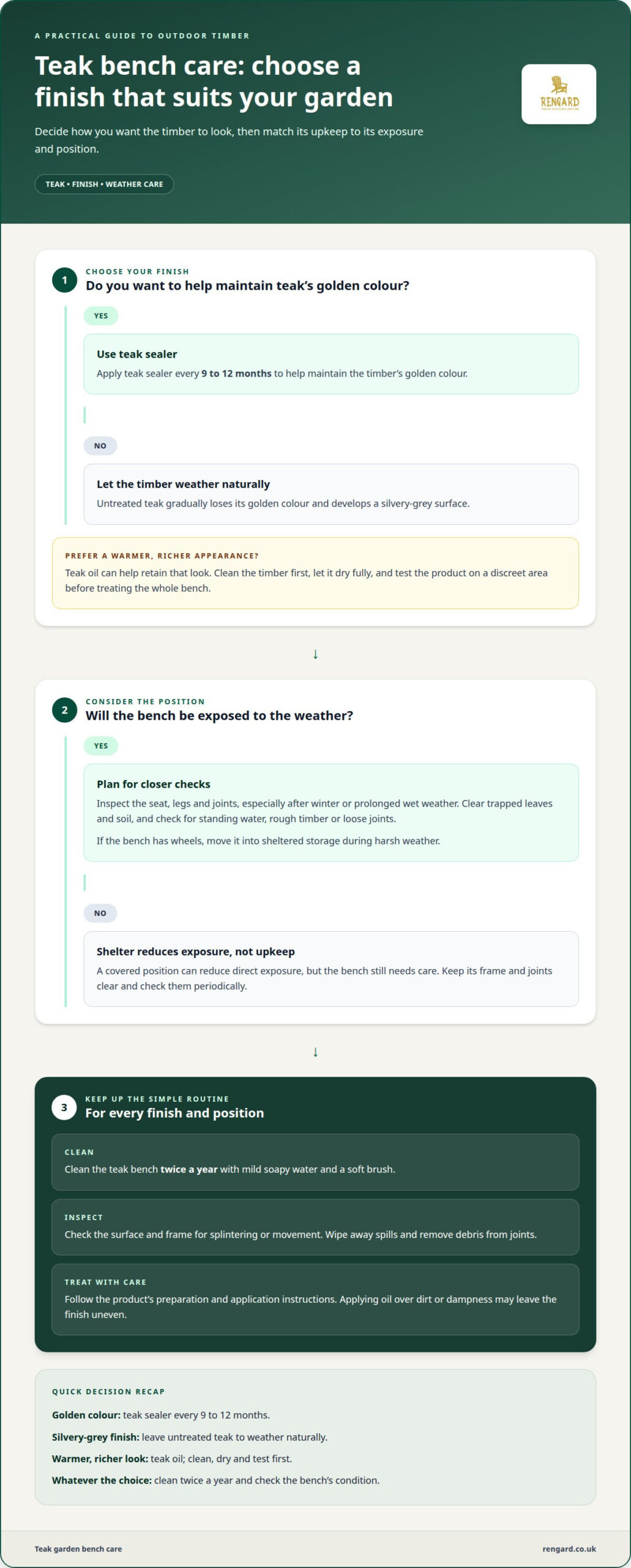
Teak’s appeal is practical as well as timeless. A traditional wooden garden bench brings natural weather resistance to a UK garden, alongside the warmth and character of classic timber. It still benefits from care: clean it twice a year with mild soapy water and a soft brush, and apply teak sealer every 9 to 12 months to help maintain its golden colour.
That balance matters when choosing outdoor seating. A traditional wooden garden bench should suit your garden’s style and provide comfortable seating, while its timber and finish should match the level of care you’re prepared to give it.
This guide explains teak’s weather performance and upkeep, what affects bench prices, and how seating capacity and classic styles can help narrow your choice. From traditional designs to pared-back forms, these practical pointers can help you choose wooden seating that feels at home in a garden, patio or terrace.
Key Takeaways
- Consider teak’s weather resistance alongside the construction details, including how mortise-and-tenon joints contribute to a bench’s build.
- Choose a care routine that suits your expectations for the timber’s appearance and its place in a changeable British garden.
- Compare bench prices with the design, material and construction in mind to understand what shapes the overall value.
- Match seating capacity to how you’ll use the space; a three-seater is designed to seat three people.
- Explore classic forms and timber choices such as teak, iroko, cedar and oak to find a style that complements your garden.
Why Choose Teak for Garden Seating?
Teak suits outdoor seating when natural timber, considered detailing and regular care matter. A teak garden bench can bring warmth to a patio or sit beneath an established tree. Look beyond appearance: construction, timber origin and exposure all affect how well the bench suits your garden.
A movable garden bench is generally furniture rather than a building project; a fixed structure or wider installation may raise different planning considerations. For safety, assemble the bench according to its instructions and place it on stable, level ground.
Look closely at the joints. Mortise-and-tenon construction fits a shaped tenon into a matching mortise, creating a close connection between wooden parts. On a traditional wooden garden bench, this detail can help keep the frame aligned during everyday use. Check how the seat, legs and back are joined rather than judging the build by timber colour alone. Some benches also use a steel frame for added stability and support.
Plantation-grown teak may appeal if you’re looking for timber from a managed growing source. The label alone may not provide enough detail to assess the timber’s origin or sourcing. Look for clear details about its origin and sourcing practices. This helps distinguish a traceable material choice from an unsupported label, without assuming all teak benches share the same supply chain.
Teak can remain outdoors, but year-round exposure does not remove the need for upkeep. Wooden garden benches need periodic cleaning and occasional treatment to preserve their appearance and protect them from the elements. Clean a teak bench twice a year with mild soapy water and a soft brush. Apply teak sealer every 9 to 12 months to help maintain its golden colour. In harsh weather, a wheeled bench can be moved into sheltered storage.
Classic timber choices include teak, iroko, cedar and oak, each giving garden seating a different look. A curved tree bench can wrap around an oak or sycamore, while a picnic suite pairs a bench with an outdoor dining table. A minimalist bench uses thicker pieces of wood for a more substantial profile. These styles can create a focal point in a large garden or define a quieter patio corner.
For assembly, follow the maker’s instructions in order and use the supplied fittings for their stated connections. Tighten each joint as directed, then place the finished bench on level ground before use. On a compact terrace, keep it clear of doorways; beneath a mature tree, leave room around the trunk and roots.
Teak durability and weather resistance
A teak bench’s outdoor performance depends on its exposure, finish and upkeep. For a British garden, choose a bench whose care needs suit how you use the space.
Weather Resistance in British Conditions
Teak is valued for its weather resistance, making it a considered choice for outdoor furniture exposed to rain and changing conditions. Grade A teak is a label you may encounter, but the grade alone doesn’t explain the timber’s origin, construction or finish. Look for clear product details and consider whether the bench will be in an exposed spot or under shelter.
Moisture can contribute to rot, rough timber can cause splinters, and loose joints can affect a wooden bench’s stability. Inspect the surface and frame periodically, especially after winter or prolonged wet weather.
Teak can stay outside year-round, but exposure changes its appearance and makes maintenance more important. Check the seat, legs and joints for trapped debris or standing water. If the bench has wheels, move it to sheltered storage during harsh weather. A covered position can also reduce direct exposure, but the bench will still need care.
Teak Oil and Natural Weathering
Teak oil and natural weathering create different looks. Oil can help retain a warmer, richer appearance, while untreated teak gradually loses its golden colour and develops a silvery-grey surface. Decide which finish you prefer before applying a product, then follow its preparation and application instructions.
For an even finish, clean the timber before applying oil and let it dry fully. Test the product on a discreet area first, such as the underside of a seat slat, as treatments can change the colour. Applying oil over dirt or dampness may leave the finish uneven.
Base maintenance on the bench’s condition, not just a calendar reminder. Remove leaves and soil from joints, wipe away spills, and check for splintering or movement in the frame. If the surface feels rough, don’t sand without checking suitable care guidance for the timber and finish. Then protect the area from further moisture.
A teak bench can remain a durable feature through changing British weather when its construction and upkeep suit its position. Choose a finish that matches your preferred aesthetic, and plan simple checks around seasonal garden use. For help considering outdoor furniture alongside your garden layout, contact the team.
Bench prices
A garden bench’s price reflects more than its timber. Compare like with like: teak and oak benches may differ in material, construction and finish. Design also matters. A simple straight seat has a different specification from a curved tree bench or a design with a supporting frame. Treat the displayed price as one part of the decision, then check what the product description includes.
For a teak bench, consider the details that explain its construction. The timber, joint design, seat construction and finish all influence the product’s character and upkeep. Mortise-and-tenon joints describe how wooden parts connect, while a steel frame adds another material to consider. These details help explain differences between benches, but a higher price alone doesn’t prove better construction. Compare the stated materials and build rather than relying on a premium label.
Size and intended use also shape the comparison. A three-seater is designed to seat three people, while a compact bench may suit a smaller patio or quiet garden corner. A tree bench has a curved form designed to sit around a trunk; a picnic suite pairs a bench with a table for outdoor dining. Each suits a different setting, so compare products with similar capacity and purpose before judging value.
Promotional discounts can make a marked price look more attractive, but the reduction says nothing about the bench’s specification. Check the final price, product description and promotion terms. An end-of-season offer, for example, may apply to selected furniture rather than every style. Don’t treat a discount percentage as proof that the timber, finish or construction suits your needs. The product itself is the useful basis for comparison.
Use a straightforward comparison process to keep your decision practical:
- Match the material: compare teak with teak, or oak with oak, rather than assuming all timber has the same characteristics.
- Match the design: compare straight benches with similar straight designs, and curved tree benches with other tree benches.
- Read the construction details: note the joints, frame materials and finish described for each option.
- Consider upkeep: include the care routine you’re willing to follow when assessing long-term value.
- Check the promotion: read which product or style the offer covers and use the final displayed price.
This approach makes price comparisons more meaningful. You might choose a compact bench for a sheltered patio, while a prominent garden seat may call for a more substantial design. In either setting, value comes from matching the materials, construction, capacity and intended use to your needs.
Bench sizes and seating capacity
Choose a bench based on how many people it needs to seat and how much space your outdoor area can accommodate. Seat labels help compare capacity, but the product’s actual dimensions determine whether it fits.
Bench Sizes
Two-, three- and four-seat labels describe intended capacity, not a standard width shared by every maker. A three-seater teak garden bench is designed for three people, but dimensions vary by design. Measure the intended position and compare it with the bench’s listed width and depth. Allow room to approach and sit down comfortably.
Seating Capacity
Capacity helps match a bench to its everyday role. A two-seat design can suit a smaller patio; a four-seat bench may work better beside a larger garden path or lawn. A three-seater is intended for three people, but comfort also depends on seat depth, back support and how people prefer to sit.
Start with the location. Measure the available floor area, then mark the proposed footprint with string or removable markers. This shows whether a bench will block a doorway, narrow a patio route or crowd nearby outdoor furniture. For a minimal layout, leave clear space around the seat rather than filling every available corner.
Next, consider how you’ll use the bench. A seat near a dining area may be used by guests between meals, while a quiet corner might suit one person at a time. A memorial bench often needs a peaceful, considered position, with enough space for visitors to approach. In each case, the stated seat count is a useful starting point, not a substitute for planning the position.
Compare the listed dimensions as well as the capacity. Width shows how much wall or path space the bench occupies; depth affects how far it projects into the garden. Height matters beside a table or beneath a window. If the product details include overall dimensions, use them rather than estimating from photographs, which can make a bench look smaller or larger.
In a British garden with limited room, a two-seater can create a compact seating area without dominating the view. A three-seat option can provide a shared resting point beside a border, while a four-seat model may anchor a wider lawn or terrace. Keep routes clear, especially between the house, dining area and garden.
Before deciding, compare the bench’s dimensions with your measurements and consider who will use it. Matching capacity, footprint and position helps create purposeful outdoor seating, whether you have a small patio or a generous garden.
Classic wooden bench styles and timber choices
Bench style affects how it fits into a garden, from a formal focal point to a relaxed corner. Teak, iroko, cedar and oak are classic timber choices, each with a distinct grain and colour. Consider the surrounding materials too: a timber bench beside stone paving creates a different effect from one against a leafy border.
A curved or banana-style bench has a bowed seat and back, giving it a softer outline than a straight bench. Its shape can follow a curved path or soften the edge of a lawn. Consider its position from several viewpoints before choosing. The curved profile stands out more in an open setting, while planting can partly frame it in a sheltered garden corner.
Lutyens-style garden benches offer a decorative take on classic outdoor seating. Sweeping arms and a shaped back give them an elegant, recognisable silhouette. This style can complement a formal garden with structured borders and clipped planting, or contrast with contemporary paving. Check the profile against nearby furniture so the detailing feels intentional rather than crowded.
Banana-style benches offer a curved shape, often chosen for their flowing lines and sociable feel. They can work well beside a path or on a generous terrace, where the curve remains visible and people can approach from more than one side. On a compact patio, compare the bench’s footprint with the available circulation space. A curved seat may project further into a route than a straight design.
Timber shapes a bench’s appearance as much as its construction. Teak has a warm, recognisable grain; oak has a more pronounced character, while cedar and iroko offer other natural tones. These woods can suit classic and contemporary settings alike. Compare the grain and finish with nearby features such as a timber deck, stone wall or outdoor dining table.
Use these style cues to narrow the choice:
- For a formal focal point: consider a Lutyens-style design with decorative lines.
- For a softer garden outline: look at a curved or banana-style bench beside a path or lawn.
- For a restrained setting: choose a simpler silhouette that lets the timber grain stand out.
- For a coordinated scheme: compare the bench’s timber colour with paving, borders and existing outdoor furniture.
A classic bench can sit comfortably alongside contemporary garden furniture when its shape and timber relate to the wider setting. For example, a clean-lined seat can balance decorative planting, while a Lutyens-style bench can bring detail to a restrained terrace. Decide which feature should lead, the silhouette or the wood grain, then choose the other elements to support it. Discuss your garden seating plans to help bring the style into context.
Rengard
Rengard helps you think about how garden furniture works together across an outdoor space. A bench’s timber, shape and position can guide the wider scheme, from a quiet patio corner to a garden dining area. Consider how seating relates to paths, planting and other furniture, so the space feels considered and remains practical to use.
When choosing a garden bench, consider the space available, how it will be used and its exposure to the weather. Position it to support those uses while keeping paths and access clear. The Rengard contact page is available for questions about bench placement.
Make your garden seating part of the wider design
A traditional wooden garden bench can be more than a place to sit. Use it as a design anchor, then shape the surrounding space around how you want to pause, talk or enjoy the view. Consider how the bench looks from indoors as well as outdoors, and how it relates to paths, planting and existing furniture—or how handcrafted pieces from makers like Urban Reclamation can mirror the warmth of natural timber within your interior decor.
Before choosing a position, picture the garden in different seasons. Planting, paths and outdoor lighting can change how a seat feels, while a clear route keeps it easy to use. A carefully placed bench can make an overlooked corner feel purposeful and draw attention to a favourite view.
If you’re ready to take the next step, share your garden bench plans with Rengard. A thoughtful choice can help your outdoor space feel more personal, welcoming and complete.
Frequently Asked Questions
What are the traditional styles of wooden garden benches?
Traditional styles include straight-backed seats, Lutyens-style designs and curved banana benches. A straight bench suits a path or wall, while decorative arms and a shaped back can make a Lutyens design a focal point. For a garden with a mature tree, consider a tree bench. Match the silhouette to the setting: a formal border may suit ornate detailing, while a simpler lawn calls for a less elaborate profile.
Which types of wood are best for a traditional garden bench in the UK?
Teak, iroko, cedar and oak are established timber choices for garden benches. Teak is valued for weather resistance, and each wood has a different grain and colour. Your preferred appearance and willingness to maintain the finish can guide your choice. For example, select a timber whose natural tone complements nearby paving or planting, then decide whether you want it to retain its original colour or weather naturally.
What is the average price of a wooden garden bench in the UK?
On the UK market, traditional garden benches typically range from £335 to £748, with a median price of about £420. Treat that as a market comparison, not a fixed price for every bench. Timber, seating capacity, construction and design affect individual prices. Compare benches with similar materials and intended use, and read the product details carefully before assessing a promotional reduction or deciding what represents good value.
What size and seating capacity should I look for in a garden bench?
Choose capacity based on who will use the seat, then compare the stated dimensions with its planned position. A three-seater is intended for three people, but comfort depends on the bench’s proportions and how people sit. Beside a narrow path, leave room to pass without squeezing by the seat. In a larger garden, a wider bench can create a destination beside a view or planting feature.
How do I protect and maintain a wooden garden bench outdoors?
Match the care product to the timber and its existing finish rather than applying the same treatment to every bench. For a painted or coated surface, follow the maker’s care instructions to preserve the finish. Keep the base clear of soil and vegetation, and position the seat where rainwater can drain away. These steps make the bench easier to inspect and care for.
Where can you buy traditional wooden garden benches in the UK?
Traditional wooden garden benches are available from garden furniture retailers and other UK sellers.