The Pros and Cons of Acacia Garden Furniture
Choosing outdoor furniture feels easy at first, then the real choices start. British weather is tough on every material, and plenty of homeowners want something that looks expensive without paying teak prices or taking on lots of upkeep. For many homes, acacia garden furniture sits in that sweet spot between style and budget.
Acacia is a popular option for patios, balconies and garden dining areas. It brings warm natural colour, visible grain and a more premium look than many cheaper materials. Still, it has limits. Like most wood, acacia needs some care. For some outdoor spaces, that makes it a smart buy. For others, especially where low maintenance matters most, it’s the wrong fit.
This guide lays out the real pros and cons of acacia garden furniture in simple terms. It compares acacia with other outdoor furniture materials, explains who it suits best and covers the care it needs. It also looks at the bigger question: whether it’s a good long-term investment for your space. If you want a natural look that feels stylish and practical, the guide ahead should help make the decision clearer.
Why Acacia Is So Popular in Outdoor Spaces
Acacia is popular for a simple reason: it gives buyers the look of hardwood outdoor furniture without the price tag that can come with teak. It has a rich tone, attractive grain, and a crafted feel that works in modern gardens, city balconies, and relaxed patio dining areas. That warmth matters, especially now, as more people want outdoor spaces to feel like an extra room in the home.
The market trend backs that up. Grand View Research values the global outdoor furniture market at USD 53.34 billion in 2025 and forecasts 6.3% annual growth through 2033 (Grand View Research). Fortune Business Insights places the market at USD 56.00 billion in 2025, which shows how much demand there is for better-designed exterior living products (Fortune Business Insights).
| Market Source | 2025 Market Size | Forecast Growth | Region Share |
|---|---|---|---|
| Grand View Research | USD 53.34B | 6.3% CAGR to 2033 | N/A |
| Fortune Business Insights | USD 56.00B | N/A | Asia Pacific 45.49% |
| Mordor Intelligence | USD 19.70B | 2026: USD 20.5B | Asia-Pacific 45.70% |
Buyers want furniture that feels stylish, lasts well, and supports better outdoor living in a way that feels easy, not too precious. Acacia fits that demand because it looks refined while staying more affordable than some luxury hardwoods. It offers a strong middle ground.
Teak timber is highly sought-after in global markets for its beauty, strength, stability and durability in a wide range of applications, from furniture, to interior joinery, to cultural uses.
The quote is about teak, not acacia, but it still helps explain why hardwoods remain so desirable outdoors. People want that same mix of natural beauty and solid performance. Acacia is part of that picture at a lower price point.
The Main Benefits of Acacia Garden Furniture
One of the main benefits of acacia garden furniture is how well it balances cost, style and durability. It can offer more than people expect, which is a big reason it appeals to anyone who wants something practical that still looks good. For people looking for outdoor wood furniture that feels refined without seeming too formal, acacia fits that role really well.
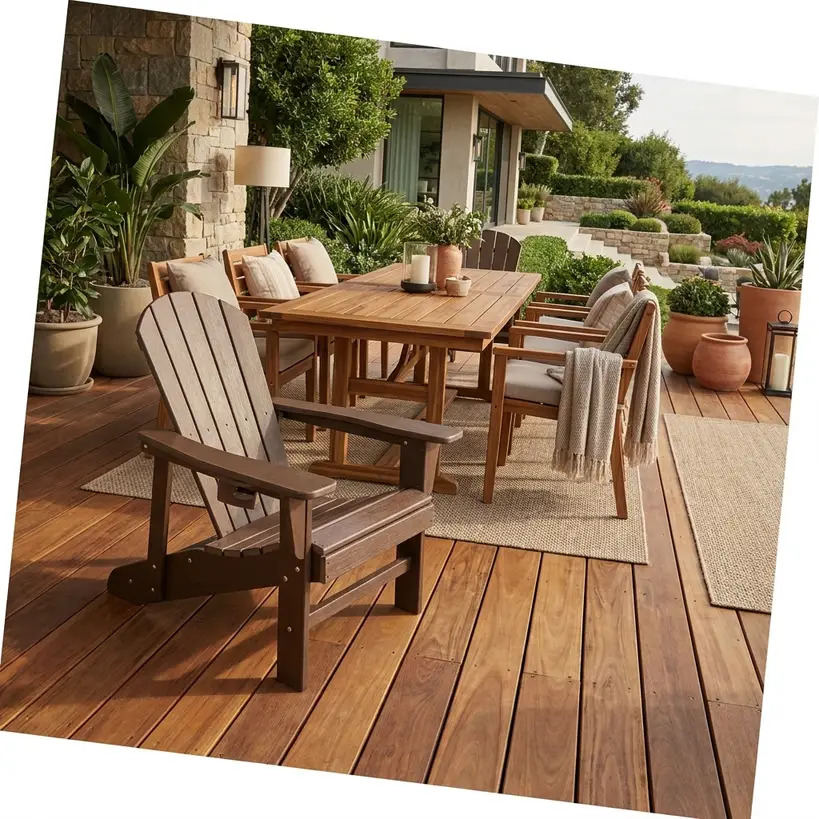
It looks good too. Acacia usually has a warm brown tone and clear grain patterns, and those details give tables, benches and chairs a richer look than plain softwood or cheap resin. It’s also easy to style. Acacia works well with cushions, rope details, powder-coated aluminium and planters, so it suits classic spaces just as easily as modern ones.
Compared with teak, acacia is generally more affordable. Buyers who want hardwood outdoor furniture without paying premium teak prices may see it as a sensible middle ground, since they still get a natural material with character while the upfront cost is lower. That mix is a big part of the appeal.
In smaller settings, acacia works especially well. Bistro tables, folding chairs and compact dining sets made from acacia suit balconies and tight patios because they look lighter and warmer than bulkier materials. Anyone planning a compact layout can use our guide to modular outdoor furniture for small gardens to think through scale and flexibility. Buyers comparing styles may also find ideas in Rattan Garden Furniture: Transform Your Outdoor Space.
Acacia can also appeal to buyers who care about sustainability. People may see it as a more eco-friendly choice than slower-growing hardwoods, though that depends on clear sourcing. Environmentally conscious buyers need to check certification, country of origin and finish details just as closely as the wood name.
The Drawbacks You Should Know Before Buying
Acacia looks great, but it does need some care, and that catches plenty of buyers out. People see hardwood and assume it can stay outdoors all year with hardly any attention. In reality, acacia does best with some protection and regular upkeep.
Weather exposure is the biggest drawback. Long periods of heavy rain, strong sun, frost and repeated damp conditions can make acacia fade, dry out or start to feel rough on the surface. In harsher settings, neglected acacia may also shift a little, split or crack over time more easily than teak.
That doesn’t mean acacia is weak, just less forgiving. In a fully exposed garden, a coastal spot or a setup that may be left alone for months, a different outdoor furniture material may be a better fit. Powder-coated aluminium and good-quality synthetic rattan generally need less attention. Teak also handles exposure better over time in many cases, though it often costs more.
Quality variation is another drawback. Not all acacia furniture is made to the same standard. Cheaper sets may have lower-grade finishing, weaker joinery and hardware that doesn’t age well. The wood can still look beautiful at first, but the long-term result may disappoint. Construction quality matters just as much as the wood species.
If weather performance matters most, it helps to compare wood with options that cope with the elements more easily. For a broader view of materials that stand up well to rain, wind and everyday use, this article on best weather-resistant outdoor furniture for UK gardens is worth a look. Homeowners in uneven outdoor spaces may also benefit from reading Sturdy and Stylish Garden Furniture for Sloped UK Gardens.
How Acacia Compares With Other Outdoor Furniture Materials
One clear way to judge acacia is to compare it with other outdoor furniture materials on the market. Compared with teak, it stands out on price while still giving a natural, luxury look. Against aluminium, acacia feels warmer and more textured. Next to synthetic rattan, it can seem more honest and more crafted, especially for buyers who really want real wood.
Still, every advantage comes with a trade-off. Teak has the stronger reputation for long-term outdoor durability, and the International Tropical Timber Organization notes that it is valued for durability and stability. That helps explain why teak still holds its place as the hardwood benchmark (ITTO). Aluminium, on the other hand, suits buyers looking for low-maintenance, weatherproof outdoor furniture. Synthetic rattan can create a softer lounge look, especially in covered spaces.
Mixed-material designs are also becoming more common. Acacia might appear as a tabletop, an arm detail or a frame accent next to metal and weather-resistant fabrics, which for some buyers feels like a smart middle ground. It is a practical compromise that gives them the warmth of wood without committing to a full all-wood set.
For homeowners considering premium alternatives, Rengard trendy outdoor furniture focuses on luxury outdoor furniture in materials such as aluminium, teak, rattan and composites. That kind of mixed-material range can help when acacia feels nearly right but does not quite suit the climate or the level of maintenance a buyer wants. Buyers interested in seasonal pricing can also explore Outdoor Furniture Sales: How to Choose the Best Time to Buy.
Is Acacia a Good Choice for Sustainable Buyers?
Acacia appeals to eco-conscious buyers because it’s linked with faster growth and wider availability than some tropical hardwoods. That can make it seem like a more responsible choice. But the word ‘acacia’ on its own says very little, because responsible buying depends on where the wood came from, how it was harvested, and how long the finished furniture is likely to last.
A short-lived product is rarely the most sustainable one, even when the material sounds green. The real question is whether the furniture will stay in use for years or need replacing too soon. Long life matters. Repairable parts matter too. Sensible maintenance matters as well.
Buyer habits matter here too. Covers can help, and placing furniture on a well-drained surface also helps, while storing cushions properly may extend the life of wood outdoor furniture over time. It also helps to think about practical extras when styling with accessories. Our article on outdoor furniture accessories to elevate any garden covers useful finishing touches that can improve comfort and function without cluttering the space.
For affluent buyers, sustainability can mean choosing fewer, better items. Acacia can be a strong option when it comes from a transparent source and suits the way the garden is really used.
How to Decide If Acacia Is Right for Your Space
Match the material to the way you live. Acacia is a good choice if you like a natural wood look, have a partly sheltered patio or balcony, and don’t mind a bit of seasonal care. It also suits spaces where outdoor furniture should feel a little more luxurious than basic budget options, without jumping up to premium teak prices.
Still, it’s not for everyone. Acacia may be the wrong pick for a fully exposed garden, a home near the coast, or anyone who wants very low maintenance. In those cases, aluminium, composite, or higher-end teak can be a more practical choice in the long run.
Before buying, check these points:
Construction quality
Look for solid joinery, smooth finishes, and fixings that resist rust.
Protective finish
Treat the wood well so it stands up to outdoor use.
Space and storage
Measure well and think about winter protection. Buyers preparing for colder months may also find useful advice in Winter Garden Furniture Maintenance UK Tips for 2026.
Your real habits
If oiling or covering wood just won’t happen, pick a more forgiving material. Simple.
To compare premium styles across materials, the curated collections at a premium outdoor and garden furniture brand show how wood, teak, aluminium, and mixed finishes create very different ownership experiences.
Frequently Asked Questions
Is acacia garden furniture good for year-round outdoor use?
Acacia can stay outdoors, but it does best with some protection. Covers, sheltered placement, and occasional treatment help stop drying, fading, and moisture damage.
Does acacia garden furniture need oiling?
Yes, in most cases it benefits from periodic oiling or wood treatment. This helps maintain colour, reduce drying, and support longer life, especially after wet or sunny seasons.
Is acacia better than teak for outdoor furniture?
Not usually in pure weather resistance. Teak is generally seen as the more durable long-term outdoor wood, but acacia often wins on price and still offers a rich, attractive look.
Is acacia garden furniture a sustainable choice?
It can be, but only if the sourcing is responsible and the furniture is built to last. Look for certification, origin details, and good construction rather than relying on the wood name alone.
What kind of outdoor space suits acacia best?
Acacia works very well on balconies, covered patios, courtyards, and smaller dining spaces. Buyers comparing natural wood with low-maintenance options may also find that Rengard trendy outdoor furniture offers useful alternatives in teak, aluminium, and mixed materials.
Where should I look if acacia does not seem low-maintenance enough?
If you love the luxury look but want less upkeep, explore premium outdoor furniture in aluminium, synthetic rattan, or teak. Rengard trendy outdoor furniture is one example of a brand focused on weather-resistant materials and long-term outdoor living design.
The Bottom Line on Acacia Garden Furniture
Acacia garden furniture makes a lot of sense if you want natural beauty, a more premium feel than budget sets, and better value than teak. It can look elegant on small patios, modern terraces, or stylish garden dining areas. For many buyers, that mix is what matters most.
Still, acacia isn’t the right fit for everyone. Its biggest drawback is maintenance. People who don’t mind giving wood a bit of attention can get warmth, character, and a more crafted look than many other materials. If you want truly low-effort outdoor furniture, easier options are out there.
A smart choice starts with matching the material to your climate, your space, and your habits. Then look past that first impression and think about how the furniture will fit into daily life over the next five years. That makes acacia easier to judge. In the right home, it’s a stylish and sensible choice. In the wrong setup, it may need more care than you want to give.