Aluminium Garden Daybeds for Patios and Poolside Spaces
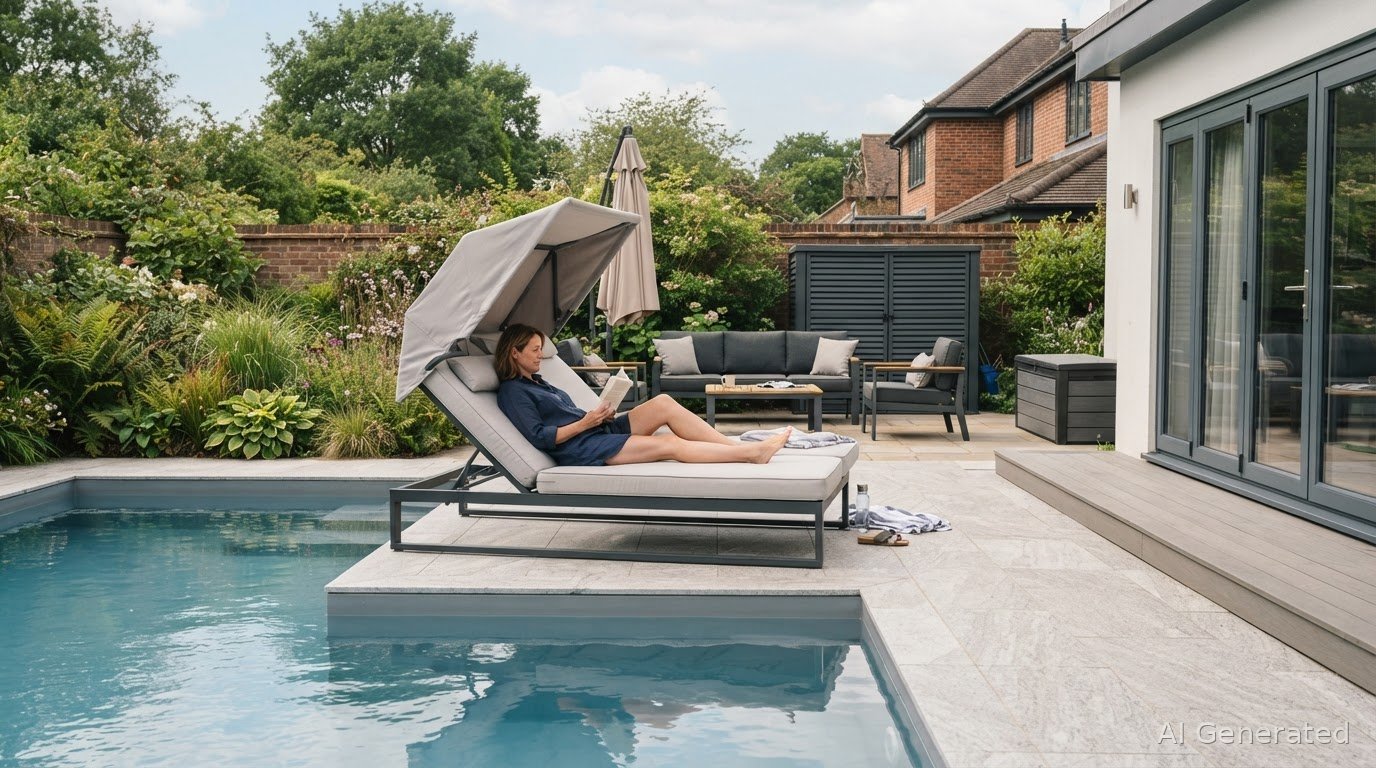
A poolside daybed can look perfectly placed and still make a patio awkward if it blocks the route to the water or feels out of step with the rest of the furniture. An aluminium garden daybed for a poolside patio works best when its colour and styling complement nearby seating, with enough clear space around it for easy access. Position it to suit daytime sunshine, and consider soft lighting and overhead shelter for evenings or changeable weather.
Choosing the right colour is only part of creating a comfortable outdoor setting. The daybed should sit naturally alongside dining or lounge furniture, while the layout should make it easy to move between the patio, garden and pool without squeezing past cushions or tables.
This guide explains how to coordinate colours and materials, plan the daybed’s footprint and access, and choose a position that works throughout the day. You’ll also find practical ideas for creating a relaxed, considered feel in patios and poolside spaces, from compact terraces to larger gardens.
Key Takeaways
- Choose a colour palette that complements your patio and surrounding garden, then repeat a few tones across cushions and accessories for a considered look.
- Match the daybed’s scale and style to the setting, whether it’s a compact terrace, a larger garden or a poolside area.
- Coordinate the daybed with existing dining and lounge furniture through complementary materials, colours and shapes.
- Measure the daybed’s footprint and preserve clear routes around it so the layout remains comfortable to use.
- Use the patio’s sunlight to guide placement, and consider soft lighting and overhead shelter for evening use and changeable weather.
Daybed colours and outdoor décor
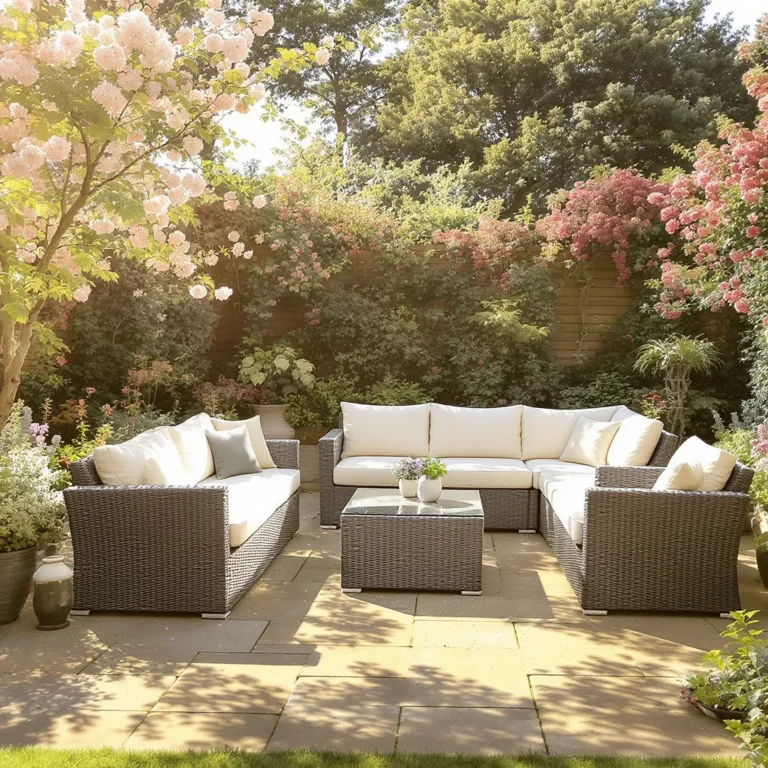
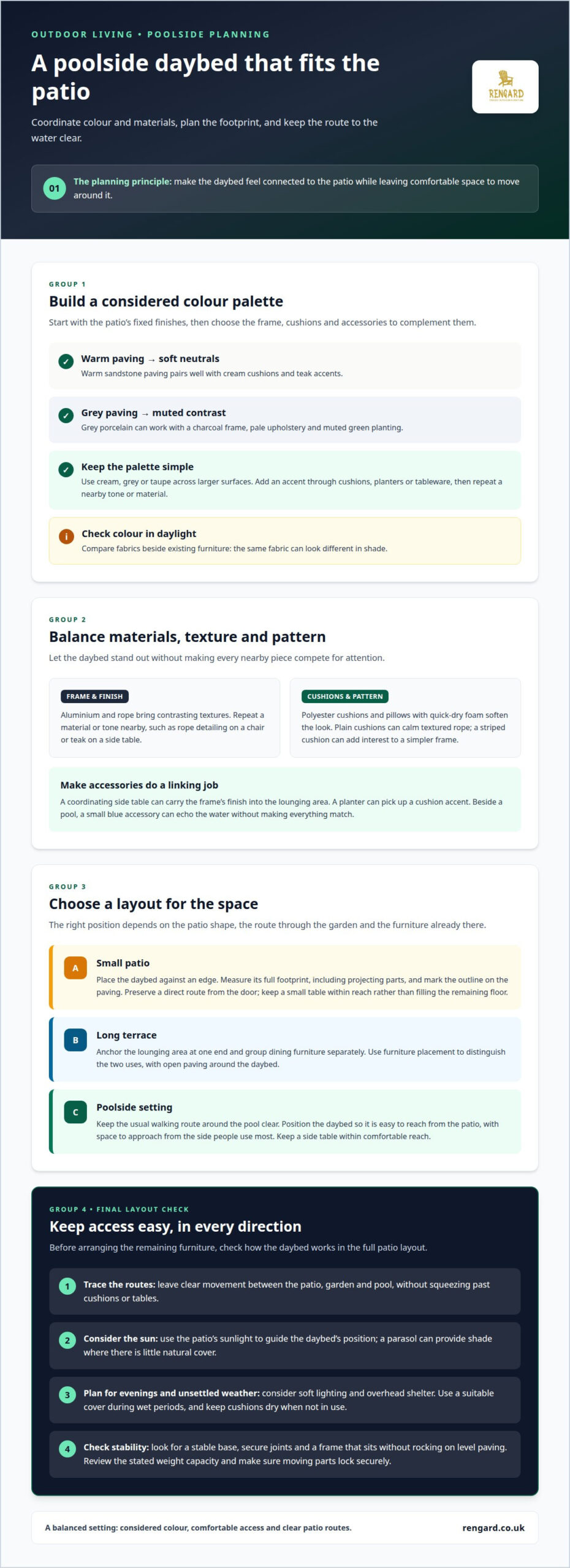
Choose a daybed colour to complement the patio’s fixed finishes, rather than in isolation. Start with the paving, fencing, brickwork or pool surround, then choose frame and cushion tones to suit. Warm sandstone paving, for example, pairs well with cream cushions and teak accents. Grey porcelain can work with a charcoal frame, pale upholstery and muted green planting.
The frame and upholstery create different visual effects. Aluminium and rope bring contrasting textures, while polyester cushions and pillows with quick-dry foam soften the overall look. A dark frame can give a pale patio definition; a lighter finish may feel less visually dominant on a compact terrace. Compare colours beside existing furniture in daylight, as the same fabric can look different in shade.
Use a simple palette before adding accessories:
- Choose a neutral, such as cream, grey or taupe, for the larger surfaces.
- Add an accent colour through cushions, planters or tableware. Olive green can echo leafy borders.
- Repeat a material or tone nearby, such as rope detailing on a chair or teak on a side table.
Use patterns selectively. If the daybed has textured rope, plain cushions can keep the look calm; a striped cushion adds interest to a simpler frame. Beside a pool, a small blue accessory can echo the water without making every item match. A restrained palette also helps distinguish the lounging area from nearby dining furniture.
An aluminium frame can suit outdoor use, but cushions and other materials still need care. In the UK, use a suitable cover during wet or unsettled periods, and keep cushions dry when they aren’t in use. Follow care instructions for the frame, rope and fabric, as each material may require a different cleaning approach. Winter storage for cushions can help protect them from prolonged exposure to damp conditions.
Before buying, look for a stable base, secure joints and a frame that sits without rocking on level paving. Review the stated weight capacity and check that any moving parts lock securely. These details help the daybed feel steady when someone sits down or gets up beside the pool.
Delivery, assembly and return arrangements vary between UK retailers. Free delivery doesn’t necessarily include assembly, which may be offered separately as a paid option. Check the retailer’s delivery and return terms before ordering, including how returns are handled and whether assembly is optional.
Treat the daybed as a focal point, then let nearby pieces support rather than compete with it. A coordinating side table can carry the frame’s finish into the lounging area, while a planter can pick up a cushion accent. Keep the strongest colour close to the daybed and quieter tones around the edges. If the patio already has several patterns or finishes, choose simple accessories and repeat a colour already in the space. This links the lounging area to the rest of the patio without making every item match.
Before settling on the arrangement, consider how the daybed will sit alongside the patio’s existing furniture and planting. Leave its colours and materials room to stand out, and adjust accessories until the whole area feels balanced. The listed delivery time for the outdoor daybed is 7-30 days.
Daybeds for patios, terraces and poolside spaces
A daybed creates a dedicated place to stretch out, read or pause between swims. Its best position depends on the patio’s shape, the route through the garden and the furniture already in place. On a narrow terrace, it can define one end as a lounging zone, leaving space nearer the house for dining. An aluminium garden daybed for a poolside patio should suit the available footprint and the way people move around it.
On a compact patio, avoid making the daybed the only route between the house and garden. Measure its full footprint, including projecting parts, then mark the outline on the paving before arranging other furniture. A clear path to the door matters as much as the view from the seat. Keep a small table within reach rather than filling the remaining floor with extra pieces. Testing the layout first shows whether everything fits comfortably.
A larger garden terrace offers room to create distinct zones. The daybed can sit beside lounge seating or form a separate retreat near planting. Position it to face the garden, with open paving around it. A low outdoor table can hold books or drinks without dominating the setting. If the terrace also has a dining area, distinguish the two uses through furniture placement rather than unnecessary screens.
Poolside layouts need a practical connection between lounging and the water. Set the daybed where it’s easy to reach from the patio, but keep its footprint clear of the usual route around the pool. A side table can hold personal items, while a parasol can provide shade where there is little natural cover. Leave room to approach the seat from the side people will use most, without moving other furniture first.
- Small patio: place the daybed against an edge and preserve a direct route from the door.
- Long terrace: anchor the lounging area at one end and group dining furniture separately.
- Poolside setting: keep the walking route open and position a table within comfortable reach.
Consider how the setting changes through the day and with different uses. Flexible accessories can help adapt a terrace as sunlight shifts or the weather changes. Keep planters and loose décor outside the main walking line so people can move through the space easily. A well-placed daybed should feel part of the garden while leaving the patio practical for lounging, dining and everyday access.
Pairing daybeds with garden furniture
Coordinate the daybed’s visual weight with nearby furniture. A substantial frame can hold its own beside a deep garden sofa, while a lighter rope design may suit open-framed chairs. In a compact patio, avoid crowding the daybed with another large seat. One occasional table can provide a useful surface without competing for space.
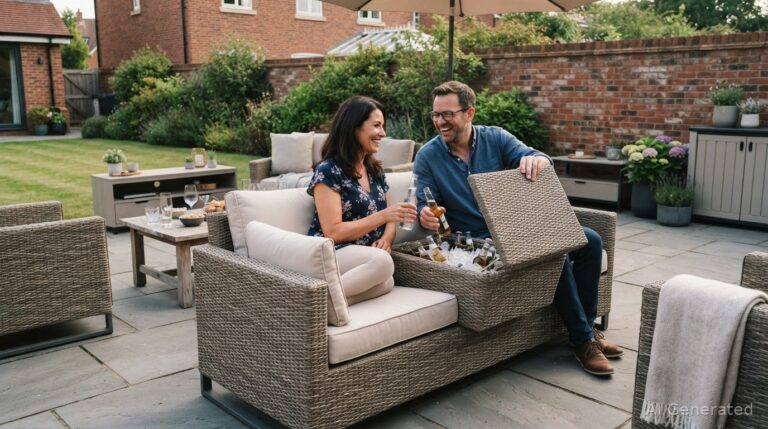
Materials can connect separate pieces without making them identical. Pair aluminium with teak accents for a balance of crisp lines and natural grain. A rope-weave daybed can sit comfortably beside rattan chairs when their shapes share a similar openness. For a more layered setting, use one material as the main feature and repeat another in smaller details, such as table legs or chair arms.
Think about how each piece will be used. A daybed is for reclining, while upright chairs suit conversation and meals. On a garden terrace, place a dining table nearer the house and the daybed beyond it as a separate lounging spot. Keep access to the table clear so guests can move between the two areas without crossing through the seating.
- For lounging: combine a daybed with a small side table for a book or drink.
- For conversation: place a sofa and chairs to face one another, leaving a clear approach to the daybed.
- For outdoor meals: group dining chairs around the table, rather than using them as extra daybed seating.
Scale matters as much as material. A broad daybed may overwhelm a slim bistro set, whereas a low-profile design can sit more easily beside a modest table. Compare the height of seat backs and table tops, too. Similar proportions help the arrangement feel composed, while a deliberate contrast, such as a low daybed beside upright chairs, gives each zone a distinct purpose.
For a British garden, consider how furniture materials perform in changing weather. Aluminium frames are resistant to rust, while fabric performance varies by product. Quick-dry, UV-resistant cushion fabrics and removable, machine-washable covers can be practical features to look for. Keep loose accessories out of busy routes. A ceramic pot beside the daybed, for example, adds detail without taking up the table space needed for drinks.
Before settling the arrangement, view it from the house and garden entrance. Check whether the daybed blocks the view of a focal point, such as a planted border or water feature. A small adjustment to the sofa, chairs or table can connect the space while preserving distinct places to dine, talk and rest.
Planning space and access around a daybed
Plan the daybed’s footprint before arranging the rest of the patio. Measure its full length and width, including projecting frame parts, then mark the outline on the paving. This shows how much floor space it takes up. On a narrow terrace, testing the outline first can reveal whether a door, gate or garden route becomes awkward.
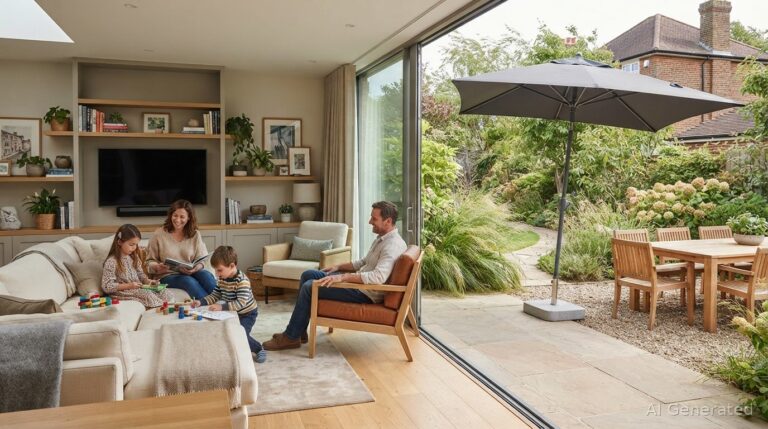
Next, map the routes people use most, including the path from the house to the garden, access to the pool and the approach to outdoor dining. A straight, unobstructed path is often easier to use than one winding between furniture. Walk the routes while carrying a tray or folded towels, as you might when hosting friends or heading outside after a swim.
- Doorways: account for doors opening outwards, handles and steps beside the patio.
- Garden routes: keep access to gates, sheds and lawn edges clear of the daybed’s corners.
- Poolside movement: leave a practical route between seating and the pool, without placing furniture in the natural approach.
Plan for how the daybed will be used, not just its resting footprint. Someone getting on or off needs space beside the seat, and cushions may extend beyond the frame. If the back adjusts, include the space it occupies when reclined. Place a chair or boxes around the marked outline, then sit, stand and walk past them as you would in everyday use.
Existing furniture affects the available space. A dining chair needs room to pull back, while table legs can affect where people sit. Position the daybed so people don’t have to approach it behind dining chairs. Keep small side tables close enough to use, but outside the main walking line.
The surface matters, too. Place the frame on firm, level paving, not across uneven joints or a sloping edge. Check that each foot sits securely and consider how rainwater drains across the patio. Avoid placing the daybed where water collects or where a loose rug could catch beneath its legs.
Finally, test the layout at different times. Open the doors fully, move dining chairs and carry garden accessories along the intended routes. If someone uses the patio with a walking aid or pushes a pram, check that the arrangement leaves a comfortable passage. Adjust the outline before positioning the furniture, while small changes are still easy.
Treat the marked footprint and the surrounding passage as one layout decision. A daybed can fit on the paving yet make the patio awkward if nearby furniture restricts access. Measure its footprint and leave clear access around it. Once the frame is in place, check the approach from each side, not just from one viewpoint. Shift nearby furniture until people can reach the seat without threading between corners, then make sure the routes still feel open when the daybed is in use. If the layout feels tight, reposition the furniture rather than relying on people to turn sideways or move things every time they pass.
Positioning daybeds for sunshine and evening use
Start by observing where sunlight reaches the patio during the hours you’re most likely to lounge. A daybed near a sunny part of the garden can make daytime rest more inviting. In a Birmingham garden, note how the sun moves across the paving, then position the daybed to make use of that light without placing it in a route between the house and pool.
Sunlight shifts across the day, so consider changing conditions rather than judging the patio by one bright moment. Watch where nearby walls, fences and mature trees cast shade. If the daybed will be used at different times, a position near both sun and partial shade offers more choice. A parasol can provide adjustable cover when direct sun feels too strong.
For a poolside setting, consider the view as well as the light. Facing the water can connect the daybed to the pool, while turning it towards a planted border may create a quieter retreat. Make sure the back or side of the frame does not narrow the main route. Test the angle with a chair before moving the full piece.
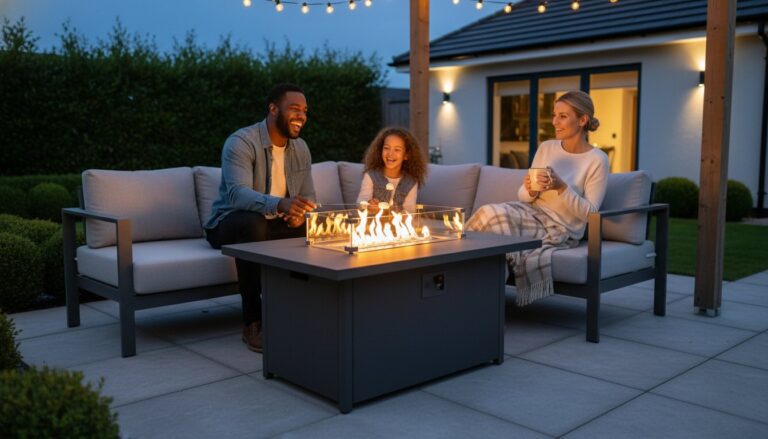
Plan for evening use as a separate part of the layout. Soft lighting near the daybed can make the seating area more usable after daylight fades. Place lights where they illuminate the surrounding patio without cluttering the surface beside the cushions. A table lamp designed for outdoor use or discreet garden lighting can provide a gentle focal point.
A gazebo or pergola beside the patio can help make the daybed area more practical during changing weather and evening use. Consider how its posts affect movement and sightlines before choosing the position. On a terrace in Shropshire, for example, a pergola might define the lounging zone while leaving the dining area open. Keep the daybed accessible from the uncovered side.
- For daytime: observe the sunny areas and place the daybed where it can benefit from natural light.
- For flexible shade: position a parasol so it can cover the lounging area without obstructing access.
- For evenings: combine soft lighting with a clear route back to the house.
- For changing weather: consider whether a pergola or gazebo suits the patio’s scale and layout.
Before settling on the arrangement, view it from the house and pool, then check it again at dusk. The daybed should feel comfortable in both settings, with lighting and shelter supporting the space rather than dominating it. For help planning your outdoor furniture layout, discuss your patio plans.
Rengard
Rengard can help you choose furniture to complement a considered patio layout. While the daybed defines the lounging area, a dining table or furniture accessories can connect it with the rest of the outdoor setting. Consider how each piece will be used, the available space and the materials already around your patio. This keeps the arrangement practical as well as visually cohesive, whether you’re planning a terrace dining area or a relaxed garden setting.
Explore Rengard’s furniture options to find pieces that suit your wider outdoor living plans. If you’d like to discuss your requirements, contact Rengard.
Make your patio plan your own
Let the character of your outdoor space guide your final choices. An aluminium garden daybed for a poolside patio should feel at home among the paving, planting and garden furniture around it. Consider how you use the space, from quiet afternoons to relaxed gatherings, and choose pieces that support those routines without crowding the patio.
As you refine your outdoor arrangement, consider your preferred materials, colours and practical needs. These garden furniture choices can help shape a patio that feels welcoming and well considered.
Frequently Asked Questions
Are aluminium daybeds suitable for outdoor use beside a swimming pool?
Yes, an aluminium daybed can suit a poolside setting when its frame, fabrics and other materials are suitable for outdoor use. Aluminium frames do not rust, while the daybed’s performance outdoors depends on its fabrics and other materials. For a poolside arrangement, consider how the whole piece will be used outdoors, including its cushions, and position the daybed on firm patio paving beside the pool.
What types of aluminium garden daybeds are available in the UK?
Aluminium-frame daybeds can feature rope detailing or a rope-weave design. A lighter rope design can suit open-framed chairs, while a more substantial frame can work beside a deep garden sofa.
What size and seating capacity should I choose for a garden daybed?
Measure the full footprint, including projecting parts, and check that clear routes to the door, garden and pool remain open. Review the stated weight capacity and choose a size and seating capacity to suit your available space and needs.
What cushions and fabrics are weather-resistant and quick-drying?
The daybed’s cushions and pillows use polyester fabric and quick-dry foam. Use a suitable cover during wet or unsettled periods, keep cushions dry when not in use, and follow the care instructions.
How do aluminium garden daybeds compare with rattan and steel models?
Aluminium can pair with teak accents for a crisp look balanced by natural grain. Rope-weave designs can sit comfortably beside rattan chairs when their shapes share a similar openness.