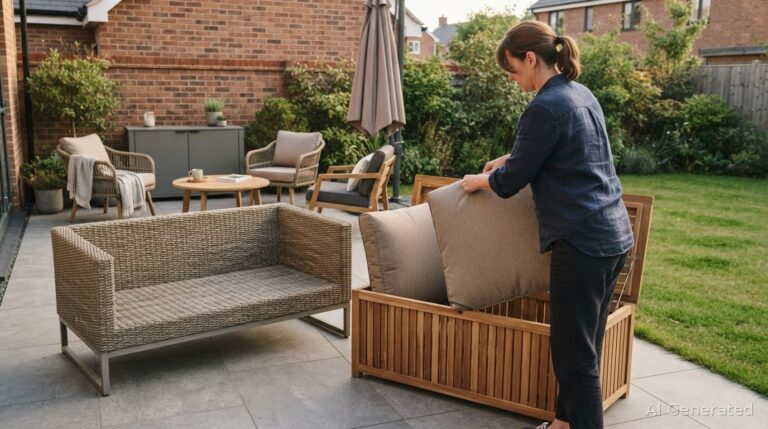
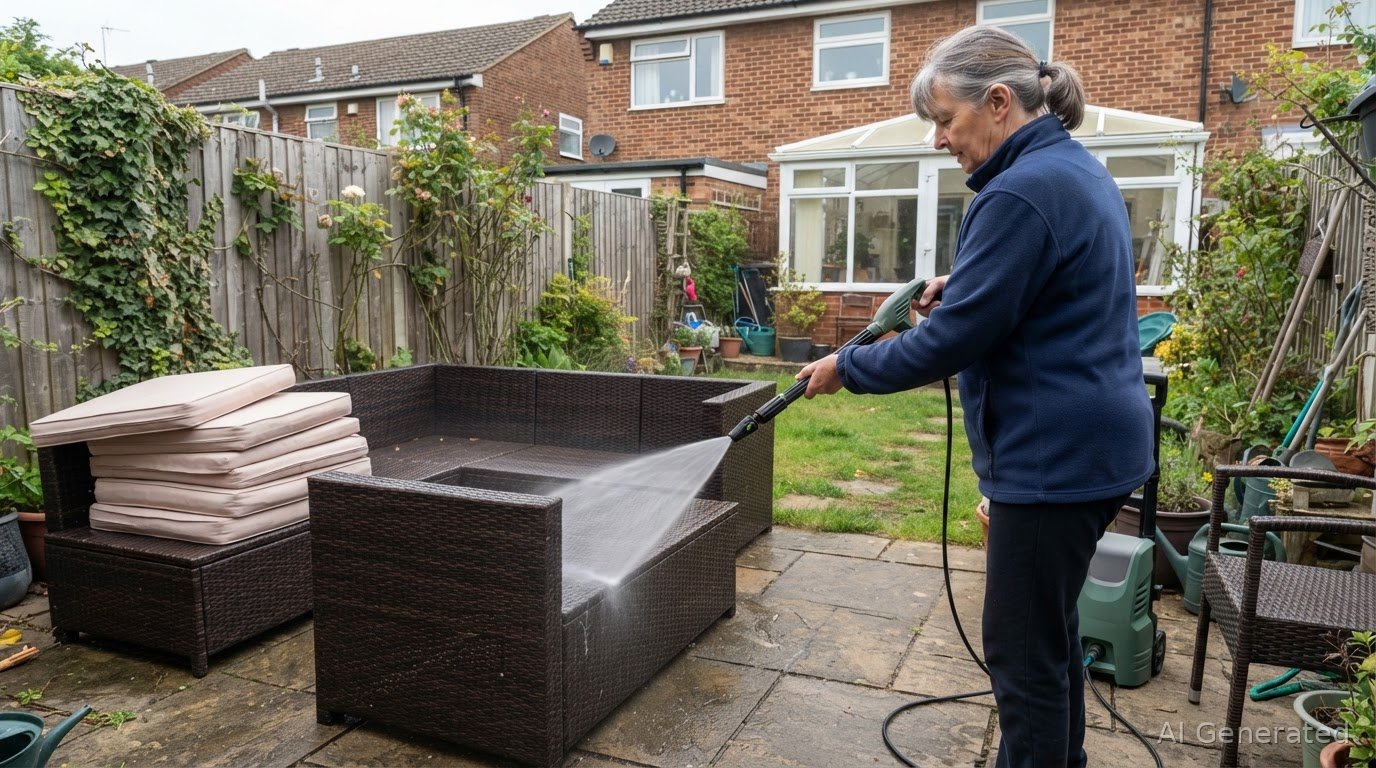
Can you jet wash rattan furniture? Cleaning and damage risks
A jet wash is not the safest first choice for rattan furniture: a forceful spray can damage the weave and leave it too wet. Whether you can jet wash rattan furniture depends on its material and care instructions. Natural rattan needs especially gentle cleaning; synthetic rattan is more resilient, but high pressure can still harm it.
Remove loose dirt first, then clean with warm soapy water and a soft sponge or brush. If you use a washer on synthetic rattan, keep the pressure low, choose a wide spray and avoid aiming the jet close to the weave.
This guide explains when pressure washing may be suitable, how to limit water exposure, and how to rinse and dry your furniture carefully. You’ll also learn which cleaning methods pose a risk, so your outdoor setting stays fresh without compromising its finish or structure.
Key Takeaways
- Start by removing loose dirt, then clean rattan with warm soapy water and a soft sponge or brush.
- Natural rattan is delicate; even synthetic weave can be damaged by a forceful, close-range jet.
- If pressure washing synthetic rattan, use a low-pressure setting and a wide spray, keeping the nozzle at a distance.
- Avoid bleach, abrasive cleaners and strong detergents, which can harm the finish or weave.
- Use only as much water as needed, rinse gently and let the furniture dry completely in suitable weather.
1. Can you use pressure washer on garden furniture?
You can use a pressure washer on some garden furniture, but the material and care instructions matter. Whether you can jet wash rattan furniture depends on its construction: natural rattan is vulnerable to a harsh, direct jet, while synthetic weave may tolerate gentler treatment. For delicate pieces, a garden hose or hand-cleaning is the safer starting point.
Check the furniture’s care instructions before cleaning, because recommendations vary between rattan products. Remove loose dust and dirt with a hand brush first; grit caught in the weave can scratch the surface when rubbed. For rattan, use a handheld vacuum to lift debris from gaps, then clean with warm soapy water and a sponge or soft-bristle brush.
Choose the cleaning method for the material, not simply for the dirt. A pressure washer may suit some hardwood garden furniture, such as teak, but excessive force can harm softer wood or its structure. Thick plastic may withstand a low setting and wide nozzle. Old metal with chipped paint or rust can lose more paint under pressure, then rust if it stays damp.
For woven furniture, avoid abrasive cleaners, strong detergents and bleach. They can mark or weaken the surface; bleach can cause cracks in rattan-effect furniture that collect dirt. B&Q advises against bleach on rattan-effect furniture for this reason. Warm soapy water is a gentler choice for routine cleaning, and a soft sponge avoids the scouring action of rough pads.
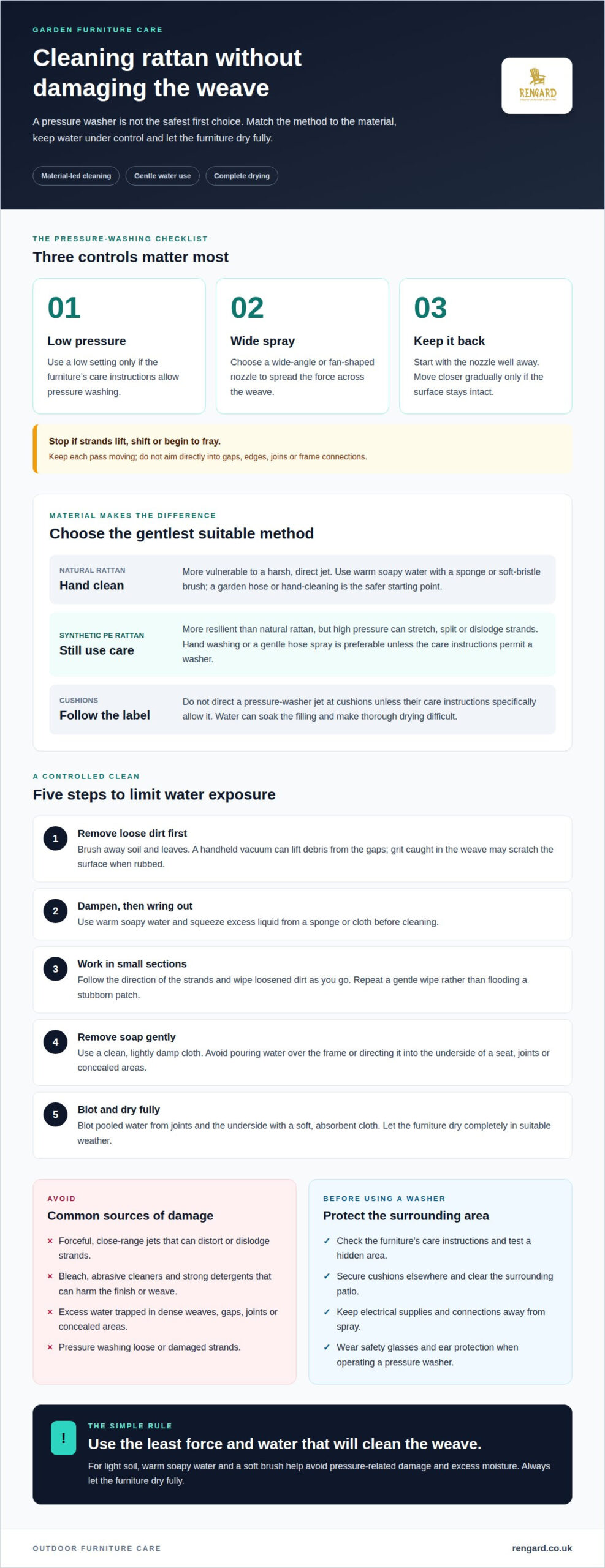
If the care instructions allow pressure washing, begin with a wide fan spray on a low setting. Test a hidden area, hold the nozzle back, and move closer only if the surface remains undamaged. Avoid aiming the jet straight into the weave, joints or frame connections. Rinse away any cleaning residue and let the furniture dry fully; trapped moisture can affect woven materials.
Can you jet wash rattan furniture cushions? Avoid directing a pressure-washer jet at cushions unless their care instructions specifically allow it. High-pressure water can soak the filling, making thorough drying difficult; clean cushions according to their care labels instead.
2. Whether pressure washing is suitable for synthetic rattan
Synthetic rattan is generally more resilient than natural rattan, but that does not make every pressure-washer setting suitable. A concentrated jet can stretch, split or dislodge individual strands, particularly where the weave is already loose. Check the care instructions for the specific furniture before choosing a cleaning method; the construction and manufacturer guidance matter more than the label “rattan”.
Is jet washing safe for natural rattan versus synthetic PE rattan? Natural rattan is more vulnerable to a forceful jet and is best cleaned by hand. Synthetic PE rattan is tougher, but high pressure can still damage its weave, so hand washing or a gentle hose spray is preferable unless the care instructions allow pressure washing.
If the instructions permit a washer, keep the pressure low and use a wide-angle or fan-shaped nozzle. Its broader spray spreads the water rather than concentrating force on a small section. Start with the nozzle well away from the furniture, then move closer gradually only if the surface remains intact and the spray is cleaning effectively. Avoid directing water straight into gaps, edges or joins.
A careful sequence helps limit exposure. Apply cleaning foam with the foam attachment, work over the weave with a suitable wash brush, then rinse using a fan-jet nozzle. Keep each pass moving instead of lingering on one strand. A brush attachment should not snag loose weaving; stop if strands lift, shift or begin to fray.
Pressure washers can damage rattan because their force is concentrated, while woven gaps can trap dirt and water. A jet held close may distort the plastic strands or force debris deeper into the weave. Excess moisture can also leave furniture slow to dry, creating conditions for mould. For light soil, warm soapy water and a soft brush help avoid these risks.
Wear safety glasses and ear protection when operating a pressure washer. Before starting, secure cushions elsewhere, clear the surrounding patio, and keep electrical supplies and connections away from spray. Don’t use a wooden-furniture setting or attachment as a substitute for checking rattan care guidance; materials respond differently to pressure.
For a woven set with damaged strands, avoid washing the affected area under pressure. If you’re considering a replacement after damage, get in touch about your garden furniture needs.
3. Protecting rattan from excessive water
Rattan needs enough moisture for cleaning, not a prolonged soak. Too much water can make natural rattan brittle, while water held in a dense weave takes longer to evaporate. For a garden chair, work in small sections with a damp cloth or sponge rather than pouring water over the whole frame. Wipe away loosened dirt as you go.
Plastic rattan is woven from synthetic strands, but its gaps can still collect water and debris. Avoid directing water into the underside of a seat, the joints or concealed areas of the frame. These spots are harder to inspect and dry. Clean the visible weave first, then use a lightly damp cloth to reach crevices without flooding them.
A practical approach is to control water at each stage:
- Brush loose soil and leaves from the weave before adding water.
- Dampen a sponge with warm soapy water, then squeeze out excess liquid.
- Clean a small area at a time, following the direction of the strands.
- Use a clean, lightly damp cloth to remove soap rather than repeatedly soaking the weave.
- Blot pooled water from joints and the underside with a soft, absorbent cloth.
This measured approach also helps prevent dirt from becoming a wet paste between strands. If a section needs more attention, repeat the gentle wipe instead of increasing the water flow. A hand-held spray bottle can apply a fine mist to a stubborn patch, while pouring a bucket over the furniture can leave water trapped in the weave.
Rattan can be lightly coated with water from time to time to help keep it flexible, but this is not the same as soaking it during cleaning. Natural cane and plastic rattan are both woven materials, yet they respond differently to moisture. Follow the furniture’s care instructions and avoid assuming that a synthetic finish makes every part of the frame or weave impervious to water.
Choose a dry day for cleaning so the furniture can dry fully afterwards. In the UK, damp air and a shaded patio can slow drying, so leave space around the frame and avoid pushing it against a wall. Check beneath the seat and around the feet before putting cushions back. Rattan should only be cleaned when night-time temperatures are above freezing; damp material exposed to frost can be damaged over time.
Once clean, let the weave air-dry completely before covering or storing the furniture. A cover placed over damp rattan can restrict airflow and keep moisture close to the strands. If rain arrives before drying is complete, move the furniture to a sheltered, ventilated spot and leave its underside exposed until no dampness remains.
4. Rinsing and drying furniture
A clean rinse removes loosened soil and soap residue, but the technique should suit the weave. For hand-washed rattan, use a fresh sponge dampened with clean water and wipe in manageable sections. Rinse the sponge often so detergent lifted from one area isn’t spread across another. Work from the upper rails down towards the legs, following the direction of the woven strands.
If using a pressure washer where the care instructions permit it, choose a broad fan spray and keep it moving. Rinse from different angles to reach the front and sides of the weave, without directing water forcefully into gaps. Watch the runoff: persistent suds indicate that residue remains. Use a gentler pass with clean water rather than increasing pressure.
Pay attention to places where soap can collect, such as the underside of armrests, the back of seat panels and the points where strands cross. A soft cloth can lift residue from these areas more precisely than another full rinse. For a dining set, clean and rinse each chair separately before moving to the tabletop; this makes it easier to spot missed patches.
After rinsing, use a clean, absorbent cloth to press water from the weave rather than rubbing across it. Work along each section and use the cloth’s dry side as it becomes damp. A soft cotton cloth is useful around frame connections, where water can sit against a strand or gather beneath a rail. Avoid twisting or pulling at the weave while blotting.
- Check the undersides of seats and table edges for soap trails.
- Blot droplets around the feet and frame connections.
- Look across the weave in good light for pale detergent marks.
- Turn movable pieces so you can inspect the less visible side.
After blotting, let the furniture stand in a sheltered, open position rather than leaning pieces together. This gives you a clear view of each surface and makes it easier to catch any remaining runoff. Once the weave feels dry to the touch, inspect the intersections again; these can retain moisture after the outer strands appear dry.
Before replacing seat pads, check the areas where fabric rests against the rattan. If they still feel cool or damp, leave the cushions off and allow more time to dry. This final check helps prevent moisture from becoming trapped between the cushion and the furniture, leaving the set ready for its next use.
5. Risk of damaging wicker weaves
Wicker relies on strands crossing and supporting one another, so damage can spread beyond the point first struck by a jet. A strand pushed out of alignment changes the tension around nearby crossings. On a chair seat, this may leave a visible dip or uneven pattern; along an arm, it can create a raised edge that catches on clothing.
Look for changes in the weave’s shape, not only obvious breaks. Check whether strands remain evenly spaced, lie flat against neighbouring pieces and follow the same pattern across the panel. A shifted crossing, a wider-looking gap or a protruding end can signal that the weave has moved. Compare both arms or matching chairs to spot differences.
Some areas deserve closer visual inspection because their strands bend around the furniture’s frame. Check the corners of a seat, the front edge and the points where the back meets the arms. A jet aimed at these turns can press a strand away from its route or expose a cut end. On a woven table, inspect the rim and corners where the pattern changes direction.
Surface scuffing is another possible consequence of forceful cleaning. If the finish looks dulled, rough or abraded in a small patch, stop before repeating the pass over the surrounding area. Continuing can make a local mark more noticeable against the cleaner weave. A change in colour or sheen can also make the affected section stand out, even when the strands remain in place.
After cleaning, inspect the pattern in natural light. Don’t pull at a lifted strand to test it, as that can increase the movement. Instead, note its position and check whether adjacent crossings remain aligned. If a seat panel appears uneven, avoid placing weight on that area until you’ve assessed the damage. A loose section may not support use in the same way as an intact, taut weave.
Keep an eye on small changes during ordinary use. A raised end, spreading gap or strand that shifts when touched can indicate worsening damage. Spotting these signs early can help you notice when an affected area becomes more prominent across a chair or sofa panel.
If your rattan furniture has visible weave damage and you’re considering a replacement, contact us about suitable garden furniture options.
Choosing Rattan Garden Furniture
Rattan garden furniture suits outdoor spaces from compact patios to larger garden seating areas. Consider how you use the space, whether for relaxed lounging, outdoor dining or both, then choose pieces that suit its layout and everyday needs.
When comparing options, consider the available space, seating requirements and how the furniture will be used.
Make your next garden furniture choice with confidence
Cleaning is also a useful moment to assess how your outdoor setting works for everyday life. If a piece no longer suits your space or its weave has deteriorated, consider what would make the area more comfortable and practical before replacing it. Whether you can jet wash rattan furniture depends on its material and care instructions, so keep those details in mind when choosing a future set.
A well-planned garden arrangement should feel inviting without making patios or walkways difficult to use. Think about how you move between seating, dining and the house, then choose furniture that supports those routines. Rengard’s garden furniture range can help you explore options for your outdoor space.
For guidance on your next step, contact Rengard about your garden furniture plans. A thoughtful choice can make your garden feel ready for relaxed afternoons and shared meals.
Frequently Asked Questions
What should you keep in mind when cleaning garden furniture?
Match the cleaning method to the material, finish and care instructions. A wooden dining table, plastic chair and woven rattan seat won’t necessarily respond to the same products or water pressure. Remove loose grit before wiping, since particles can scratch surfaces during cleaning. For example, clean a dusty chair before treating a mark, rather than rubbing dry dirt across the finish.
Can you use pressure washer on garden furniture?
Yes, but only where the furniture’s material and care instructions permit it. A pressure washer can damage delicate finishes, wooden joints, woven strands and painted metal. A low-pressure, wide spray is less forceful than a narrow jet, but hand-cleaning remains the more controlled choice for delicate pieces. Treat each item separately, even when a garden set combines a metal frame and woven panels.
Can you pressure wash rattan furniture?
You can jet wash rattan furniture only if its care instructions allow it, and synthetic weave is more resilient than natural rattan. Even plastic strands can shift or split under a concentrated jet. For a natural cane chair, avoid pressure washing and use a gentle hand-clean instead. If the material is unclear, don’t assume that a rattan-effect appearance means the whole piece is synthetic.
What pressure setting and nozzle should you use to clean rattan furniture?
Use the washer’s low-pressure setting and a wide-angle or fan nozzle, provided the furniture’s care instructions permit pressure washing. The fan spreads water over a broader area than a concentrated jet. Keep the spray moving across the weave rather than holding it on one strand. Avoid attachments that catch on the wicker, especially around loose edges and tightly woven corners.
How far away should a pressure washer be held from rattan furniture?
Start with the nozzle well away from the weave, then move closer gradually while watching how the strands respond. There’s no single distance that suits every washer, nozzle and piece of furniture. If the weave flexes, lifts or shifts, move back or stop. Testing a hidden area can show whether the spray is too forceful before you clean a visible surface.
How to clean rattan furniture safely without a pressure washer?
Remove surface dust with a hand brush or handheld vacuum, including debris lodged between strands. Dip a soft sponge or brush into warm soapy water, squeeze out excess liquid, then work gently along the weave. Use a clean damp cloth to remove soap. For example, clean the arms and seat separately so you can control moisture and see whether dirt remains in the gaps.
What damage can pressure washing cause to rattan furniture and its frame?
A strong jet can distort strands, loosen joins or force grit deeper into the weave. Too much water may also leave dampness in concealed areas, encouraging mould if the furniture dries slowly. On a metal frame with chipped paint or existing rust, pressure can strip more coating, while lingering moisture may worsen rust. Stop if strands move or the finish begins to lift.
How to dry rattan furniture after washing to prevent mould and rust?
After rinsing, remove cushions and blot pooled water from joints, feet and the underside with a soft cloth. Leave the furniture in a dry, ventilated position, with space around it and beneath the frame. Don’t cover or store it while damp. Check hidden weave intersections before putting cushions back; if a metal frame has chipped paint, make sure those areas dry thoroughly too.