Choosing a small outdoor side table for your garden
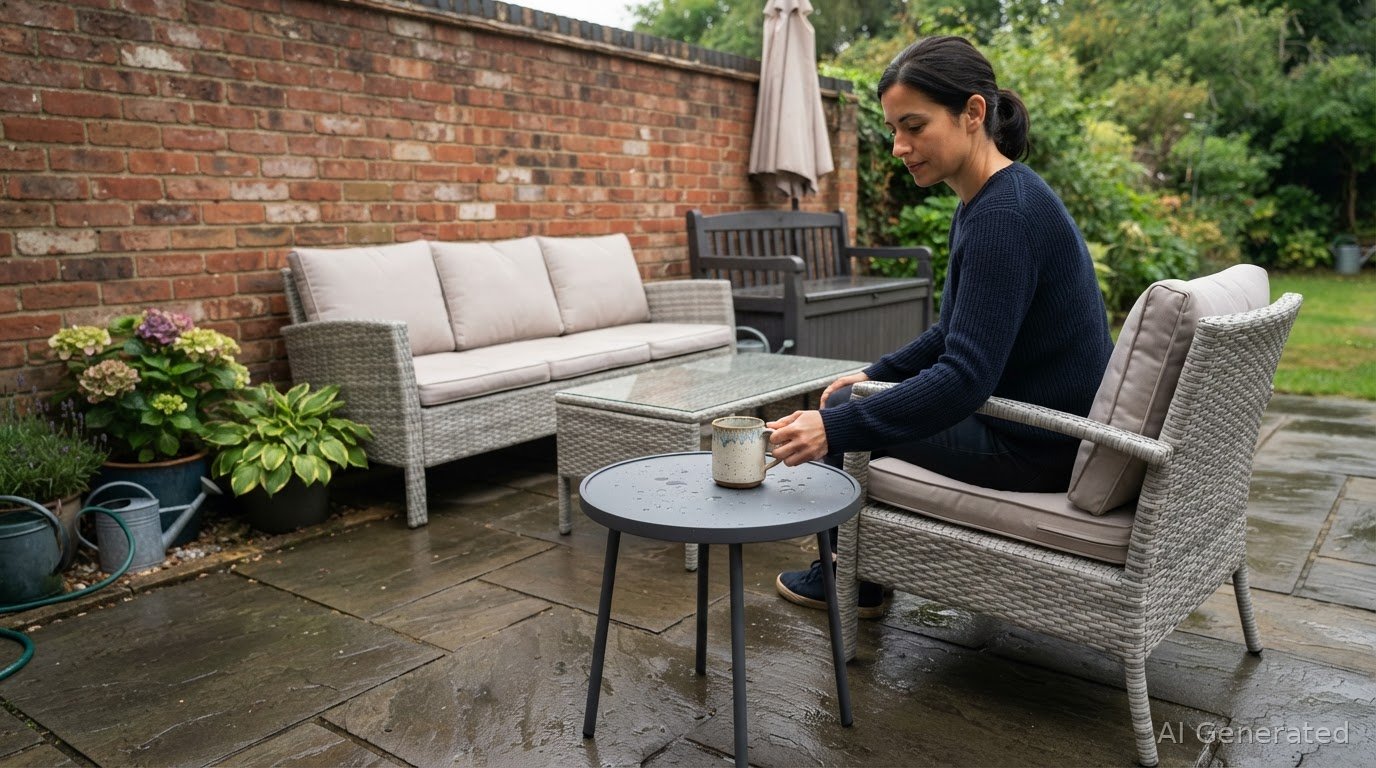
A small outdoor side table makes a compact patio or garden seating area more useful, giving you a handy surface without overwhelming the space. Choose one that sits comfortably beside your chair or sofa, with materials suited to the British weather and how you’ll use it.
It’s easy to focus on shape and finish, but outdoor durability matters just as much. A table that complements your seating and is designed for changing weather will feel at home through the seasons, rather than becoming an awkward extra to move or maintain.
This guide explains how to assess size, height and placement, then compares practical materials such as aluminium, rattan and teak. You’ll also find ideas for making a small table work on a patio, terrace or balcony, and choosing a design that feels as considered as it is useful.
Key Takeaways
- Match the table’s shape, colour and finish to your seating so it feels like part of the garden scheme.
- Consider height and surface dimensions alongside the space available, so drinks and essentials are within easy reach without obstructing movement.
- Compare materials by their weather performance, care needs and appearance before choosing a design for a changeable British climate.
- Decide whether a fixed or foldable table better suits your routine, storage options and the way you use your outdoor space.
- Use a compact footprint and thoughtful placement to add practical surface space to a patio, terrace or balcony.
How do garden side tables fit into the picture?
A side table makes a garden chair or sofa more practical, with a place for a cup, book or lantern. Choose its colour, shape and material to complement nearby furniture, paving and planting. This helps the arrangement feel considered rather than crowded.
Choosing table colours and styles
Start with the largest nearby pieces, such as a garden sofa or dining set. A charcoal table can echo dark frames, while natural teak can pick up timber accents. For a softer scheme, pair neutral seating with muted green or warm beige. These are styling ideas, not rules for matching.
Next, compare shape and visual weight. A round top softens the lines of a rectangular chair, while a square design sits neatly beside straight-edged seating. Open frames keep the arrangement visually light; a solid-sided design creates a stronger focal point beside a simple lounge chair.
Repeat one colour already present in cushions or planters. For example, a green planter can connect with a muted green tabletop. Keep contrasting finishes limited, such as black metal beside pale timber. Several competing tones can make a compact seating area feel busy. Browse garden outdoor tables with your existing furniture in mind.
Comparing table materials and colours
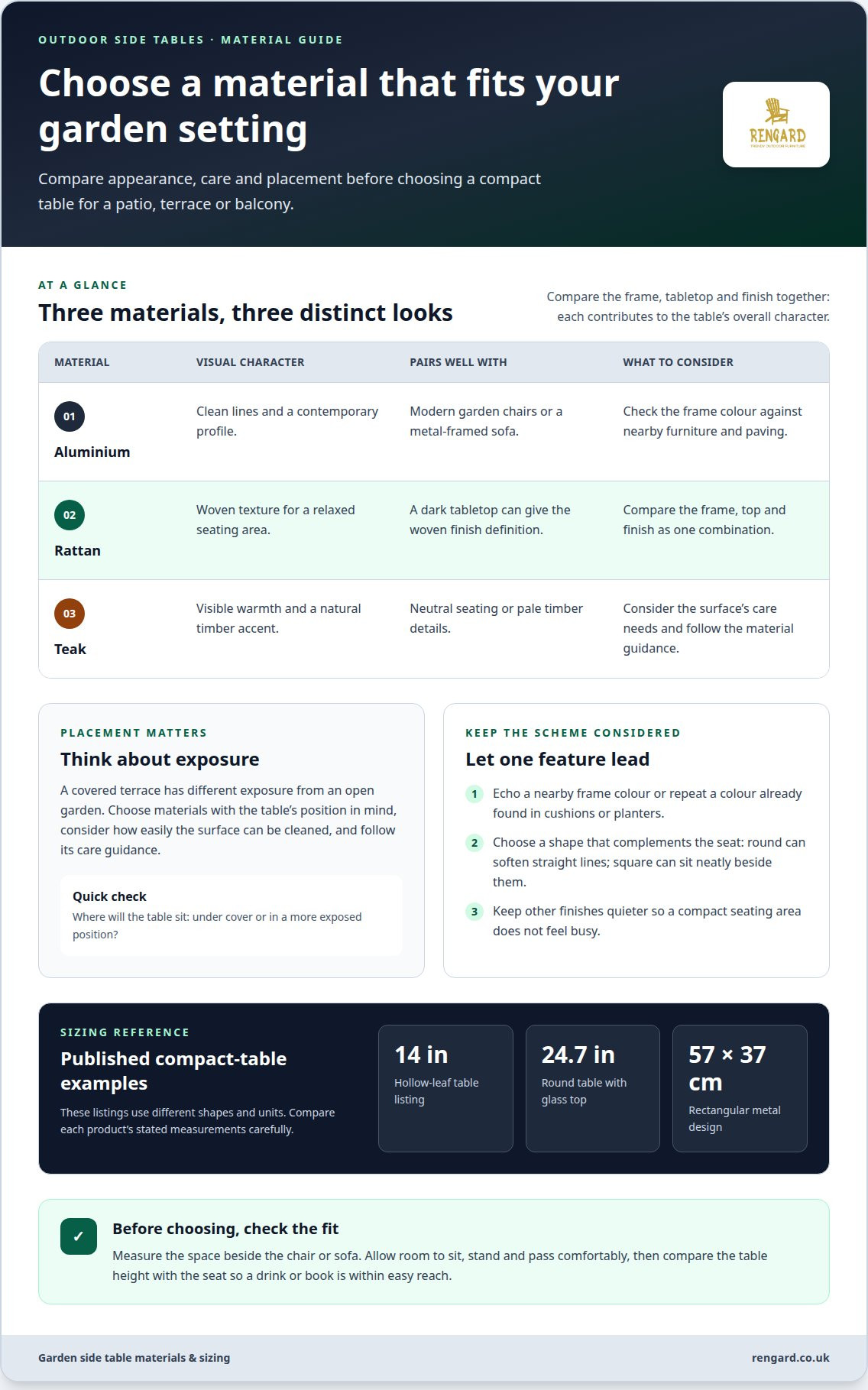
Material affects both appearance and care. Aluminium frames suit contemporary settings, with clean lines beside modern garden chairs. Rattan adds woven texture to a relaxed seating area, while teak brings visible warmth. Compare the frame, top and finish together, since each contributes to the table’s overall character.
Placement also matters in the British climate. A covered terrace has different exposure from an open garden. Consider where the table will sit and choose materials suited to those conditions. Think about how easily the surface can be cleaned, and follow the care guidance for its material.
Colour can make material contrasts feel deliberate. Pair woven rattan with a dark tabletop for definition, or set pale timber against green planting. If nearby furniture combines rope weave and metal, echo one finish rather than adding another. For a calm look, choose a table colour that relates to an existing garden feature.
Use three practical checks. First, identify the nearest seat and note its frame colour. Next, choose a shape that complements the seat without obstructing movement. Finally, compare the finish with the paving and planting. This gives a small outdoor side table a clear purpose, whether it holds a drink beside a chair or a lantern near a lounge.
Let one feature lead the scheme. A teak accent can warm neutral seating, while a woven base can tie in with rattan furniture. Keep other finishes quieter. This approach suits patios and gardens where paving, greenery and seating already shape the palette.
Small outdoor table prices and dimensions
Compare a table’s footprint with how you plan to use it, then consider its materials, construction and delivery arrangements. Measurements and delivery terms help you compare designs, but getting the right fit should come first.
Table dimensions
Published dimensions show how varied compact designs can be. One hollow-leaf table is listed as 14 inches, while a round table with a glass top is listed as 24.7 inches. A rectangular metal design measures 57 × 37 cm. These examples use different shapes and units, so compare each listing’s stated measurements carefully.
Before choosing, measure the space beside your chair or sofa. Allow room for the table and for sitting, standing and passing comfortably. Compare its stated height with the seat, so drinks or a book are easy to reach. A round top may suit a curved chair, while a rectangular top can align with a straight sofa arm.
Product prices
A table’s price reflects more than the tabletop size. Material, frame construction, finish and design details all affect how it is positioned. Compare similar designs: a simple metal frame and a sculptural woven table serve different purposes. A glass top also differs from a solid surface in appearance and care.
Consider delivery arrangements alongside the product details. Rengard’s in-house delivery covers Mainland UK; other destinations require a courier quotation. Check the listing for the applicable delivery terms and any assembly information. Avoid assuming that different products include identical services.
Use a clear comparison method. First, record the available floor area and the seat height. Next, shortlist tables with measurements that suit the space. Then compare construction and finish instead of choosing on appearance alone. This helps distinguish a compact occasional table from one designed to hold several everyday items.
Price comparisons are most useful when products have similar materials and proportions. A metal table and a timber design may differ in finish, upkeep and appearance, even when both suit a patio. Check whether the listing describes a single table or a set, and whether accessories are sold separately. These details make comparisons more meaningful.
Delivery terms vary by listing, so read the information for the specific table, including any details about assembly. If you need it for a particular gathering, factor the stated delivery arrangement into your decision. That keeps the purchase practical as well as visually considered.
For a small patio in Manchester, a narrow rectangular table may fit beside a sofa without extending into the walking route. On a balcony in Chester, a round top can soften a compact seating corner. In either setting, measure the actual space before settling on a listed size.
Durable outdoor table materials
Material affects appearance, care and performance in a British garden. Compare the frame and tabletop separately, then consider whether the table will sit under cover or in an exposed position.
Aluminium for a contemporary setting
Aluminium frames offer a clean, modern profile beside garden chairs or a metal-framed sofa. A lighter design can be easier to reposition when your patio layout changes. Look closely at the joints and tabletop finish, as these details shape the overall impression. A dark aluminium frame can complement grey paving, while a lighter finish contrasts with brick.
For an exposed terrace, consider how rainwater drains from the tabletop. A surface that sheds water readily is easier to wipe after a shower. Clean it according to its finish, avoiding abrasive products that could mark it. Follow the care guidance for the material.
Rattan and woven finishes
Rattan brings texture to a seating corner and pairs naturally with relaxed garden furniture. A woven base can soften the straight lines of a rectangular table or complement curved lounge seating. Check how the weave meets the frame, especially around edges and joins. A neatly finished border gives the table a considered look and helps it sit well within a coordinated arrangement.
Woven surfaces can collect leaves or garden debris between strands. A soft brush helps clear those spaces without disrupting the texture. For a table beside a sofa in a leafy garden, this simple upkeep can keep the finish looking composed. Choose a stable, level position, so the top remains practical for everyday use.
Teak accents and mixed materials
Natural teak adds warmth and visible grain to a patio scheme. It works well as a tabletop or as an accent against a darker frame. Teak can change colour with exposure; periodic teak oil or cleaner can help care for the surface. A covered seating area can reduce direct exposure to rain and sun.
Mixed-material designs combine distinct qualities. For example, a metal frame with a timber top creates contrast without introducing several unrelated finishes. Check the care needs of each component, as different surfaces may need different attention. Clean gently and remove standing water where practical.
Choose for the location as well as the style. An uncovered patio and a sheltered courtyard have different levels of exposure. For a small outdoor side table beside a frequently used seat, prioritise a stable frame, a practical surface and straightforward care. A decorative table used occasionally can put more emphasis on texture or a distinctive finish.
Before deciding, follow three checks: assess the table’s exposure, compare its frame and top materials, then consider routine cleaning. Aluminium may suit a streamlined terrace; rattan can echo woven seating; teak can warm a neutral scheme. The best fit is the material, placement and care routine that suit your garden’s everyday conditions.
Fixed versus foldable tables
A fixed table suits a seating area that stays arranged through the season. A foldable design is easier to move and store. The right choice depends on how often your patio layout changes, where you can keep the table and whether it will stay beside one seat.
For a permanent spot beside a garden sofa, a fixed table keeps the layout ready for everyday use. You won’t need to unfold it before setting down a drink or book. Its shape can also become part of the seating arrangement, especially beside a corner lounge or a pair of chairs.
Look at how the table meets the ground. Uneven paving in a garden in Shrewsbury can make a narrow base feel less settled than a broader footprint. Check the table in its intended position, and consider whether chair legs or a sofa frame restrict access. A fixed design works best when it fits the space without narrowing the route across the patio.
Foldable tables suit patios that serve several purposes. You might keep one beside a chair for a quiet morning, then fold and store it before using the same area for gardening. In a compact terrace in Manchester, that flexibility can free up floor space when the table isn’t needed. Easy movement and storage are practical benefits, especially where outdoor furniture has to share limited room.
Before choosing a foldable design, consider how you’ll handle it day to day. Check how it opens and closes, whether the tabletop sits level when open and where you’ll store it. An awkward table may stay unfolded, defeating the purpose. Think through the whole routine, from taking it outside to putting it away.
- Choose fixed for a settled seating layout, such as a table beside a garden sofa.
- Choose foldable when storage or changing patio use matters more.
- Check access around chair legs, doors and the walking route.
- Plan storage before buying, including the space available in a shed or sheltered corner.
Material and construction matter for either format. With a foldable table, pay particular attention to the moving parts and how it sits when open. For a fixed model, focus on its footprint and position beside the seating. In both cases, the table should suit how you use the garden, rather than making you rearrange the space each time.
Picture a bistro chair on a small patio in Chester. A fixed table makes a reliable companion for that dedicated seat; a foldable one can be stored when the patio becomes a route or working area. Decide which version supports your routine, then match its scale to the available space.
Outdoor side tables for small spaces
On a compact patio, every piece needs a clear purpose. A small outdoor side table provides a surface for a cup, book or lantern without taking space from the seating. Start by identifying the chair or sofa it will serve. Then consider the route past it, doorways and the room needed to sit comfortably.
Measure the available floor area before choosing a shape. A narrow rectangle can sit against a straight sofa arm, while a round table may fit beside a curved garden chair. Keep the tabletop within easy reach from the seat. Avoid placing it where opening a patio door or moving a chair becomes awkward.
For a balcony in Birmingham, position the table beside the main seat rather than in the centre. This keeps the walkway open and gives the surface a practical role. On a small terrace in Chester, a table beside a garden sofa can hold essentials without needing a larger coffee table.
Visual weight matters in a tight layout. Open frames and slim legs leave more paving visible, helping a patio feel less crowded. A solid-sided design has more presence, so it may suit a larger corner or a simple scheme with limited furniture. Coordinate its finish with an existing feature, such as a planter or chair frame.
Consider how the space changes through the day. A table near a sunny seat may hold a drink, while one beside a sheltered doorway can keep a lantern close at hand. Keep the surface clear of items that block the route. On an exposed patio in Wales, choose a position that doesn’t obstruct access when garden furniture is moved.
- Beside a chair: keep the table within easy reach of the seated position.
- Along a sofa: align a rectangular top with the sofa’s edge.
- On a balcony: place the table beside seating, not across the walkway.
- Near a doorway: leave the opening and approach unobstructed.
There are 65 listed garden side table products, so compare options by fit rather than browsing without a plan. Filter your shortlist by shape, frame style and intended position. A round top may soften a narrow balcony arrangement; a slim rectangular profile can make better use of space beside a straight garden bench.
For a small patio in Shrewsbury, mark the table’s footprint with a piece of paper before settling its position. Test access from the chair and nearby doorway. This simple layout check helps reveal whether the surface works in daily use, rather than only looking balanced from across the garden.
If you’re planning a compact seating arrangement, get in touch about your outdoor space and the table that could suit it.
Rengard: Side Tables
Rengard offers side tables for creating a practical finishing touch beside garden seating. Use your chosen layout and preferred style to guide the selection, keeping the table suited to the way you use your patio or garden.
Consider how the table will work alongside your outdoor furniture, whether it’s for a quiet reading spot or somewhere to set down refreshments while entertaining. A well-chosen piece can complete the seating arrangement without drawing attention away from the wider garden.
Contact Rengard to discuss side tables for your outdoor space.
Make your outdoor corner your own
Let your garden table support the way you want to use the space. Choose a piece that complements your outdoor seating and gives your patio corner a considered, personal feel. It can create a convenient spot beside a reading chair or complete a relaxed arrangement for entertaining.
Before deciding, picture how you’ll use the space through the season. A small outdoor side table can finish a favourite seating area while complementing the garden’s overall style.
Contact Rengard about your outdoor table to discuss a suitable addition to your garden.
Frequently Asked Questions
Should I choose a fixed or foldable design?
Choose a fixed table if it will stay beside the same seat, or a foldable one if you need to clear the area. A fixed design keeps a seating arrangement ready for regular use, while folding can help if your patio is also a route or gardening space. Consider how easily you can move and store it, and whether you have a suitable place between uses.
What dimensions suit a compact outdoor table?
There’s no single standard size for compact tables. Listings include different shapes and measurements: examples range from a 14-inch hollow-leaf design to a round glass-top table listed as 24.7 inches. A rectangular metal table measuring 57 × 37 cm is another example. Compare measurements in their stated units, then assess the table’s footprint against the space beside your seat.
Which materials suit a garden table in the UK?
Powder-coated aluminium, rattan, rope weave, teak and composite surfaces each bring a different look and care routine. Rengard’s garden furniture is designed for British weather, including rain, frost and sunlight. Consider where the table will sit and how you prefer to care for it. Powder-coated aluminium frames are rust-free; this property doesn’t apply to every material.
What is the average UK price for a compact garden table?
There isn’t one useful average price for every design, because size alone doesn’t determine cost. Material, frame construction, finish and detailing all affect how tables compare. A plain metal design and a table with a woven base or timber top are not like-for-like choices. Compare similar materials and construction, and check whether a listing describes one table or a set.
Which outdoor tables resist weather and rust?
Choose a table designed for outdoor conditions, and consider a powder-coated aluminium frame if rust resistance matters to you. Rengard’s garden furniture is designed to withstand British rain, frost and sunlight. The rust-free claim applies specifically to its powder-coated aluminium frames. Check the materials and care guidance for the whole table, especially if it will be in an exposed part of the garden.
Can outdoor tables fold or stack for storage?
Foldable tables are easy to move and store, which can suit a patio that needs clearing regularly. Stackable designs are made to nest or sit together, but this depends on their construction. Folding and stacking are different functions. Consider your storage space and how you’ll move the table, rather than assuming a design offers both.
Which UK retailers sell these tables, and what are delivery costs?
Rengard sells side tables, with delivery charges based on the parcel or box category shown at checkout. In-house delivery covers Mainland UK; other destinations require a courier quotation.
What table works well on a balcony or compact patio?
Choose a design that keeps the route clear and essentials within reach. A narrow top can fit beside straight seating, while a round one may suit a corner with curved chairs. Measure the intended position and allow for doors, chair movement and access across the balcony. A small outdoor side table with a clear purpose adds a useful surface without dominating the seating area.