Synthetic Rattan Materials and How They Work Outdoors
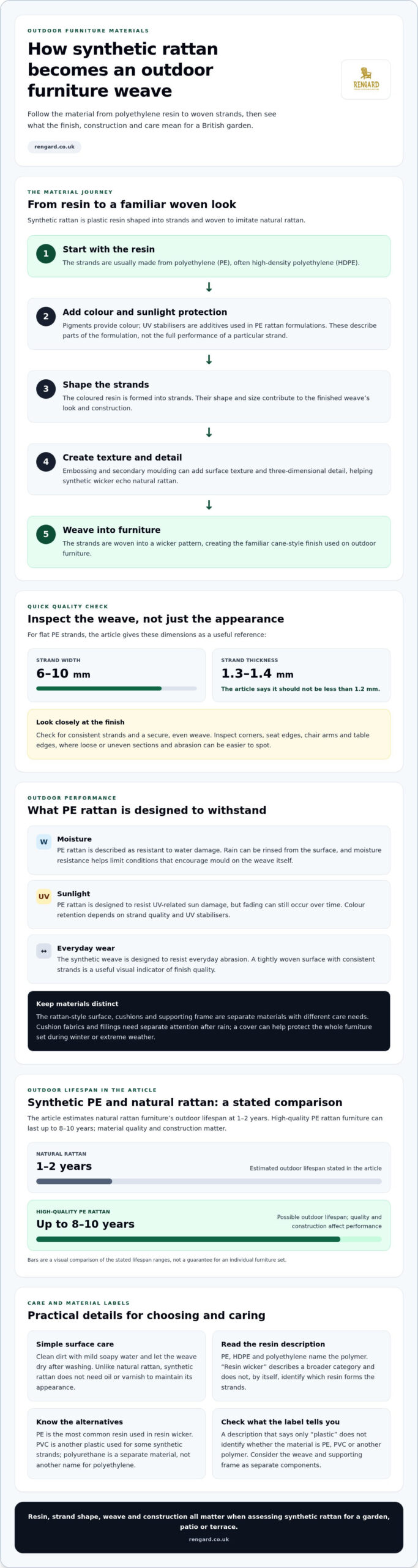
The natural cane look can come from a modern material: synthetic rattan is made mainly from plastic resin, usually polyethylene, including high-density polyethylene (HDPE). To understand what synthetic rattan is made of, it helps to know that the resin is coloured and shaped into strands, then woven to imitate natural rattan.
This combination gives outdoor furniture a familiar woven finish and helps it resist water damage, sunlight and natural decomposition. Performance still depends on the material and construction, so distinguishing polyethylene from other plastics is useful when choosing furniture for a British garden, patio or terrace.
This guide explains how synthetic rattan strands are made and textured, what their plastic composition means in changeable UK weather, and what to consider about care and recycling at the end of a piece’s useful life. Understanding the material beyond its appearance can help you decide whether it suits your outdoor space.
Key Takeaways
- Learn how polyethylene strands are formed and woven to create the familiar rattan effect.
- See why the resin and frame materials matter when furniture faces changeable British weather.
- Understand how texture, colour and strand shape help synthetic weave echo natural rattan.
- Discover what to consider when caring for synthetic rattan and exploring its recyclability.
- Use material details to make a more informed choice for your garden, patio or terrace.
What is synthetic rattan and why is it ideal for outdoor use?
Synthetic rattan is woven plastic resin shaped to resemble natural rattan. High-quality polyethylene (PE) versions can last up to 8-10 years outdoors, making them suited to garden furniture exposed to British weather.
To identify high-quality synthetic rattan furniture, examine the weave for consistent strands and a secure, even finish. Flat PE strands are usually 6-10 mm wide and 1.3-1.4 mm thick; the thickness should not be less than 1.2 mm.
Resistance to Weather and Wear
PE rattan is a synthetic weave designed to resist moisture and everyday abrasion. This matters on dining sets and sofa sets, where regular use and changing weather can put pressure on the weave.
Rain can be rinsed from the surface, and dirt can be cleaned with mild soapy water. Unlike natural rattan, synthetic rattan doesn’t need oil or varnish to maintain its appearance, making it simpler to care for on a patio or terrace.
Natural rattan is a plant-based fibre from climbing palms, so prolonged exposure to outdoor conditions can affect its appearance and condition. Synthetic resin wicker is designed for outdoor use, with PE strands that resist water damage and natural decomposition. The research estimates natural rattan furniture’s outdoor lifespan at 1-2 years.
High-quality PE rattan furniture can last up to 8-10 years, although material quality and construction matter. A tightly woven surface with consistent strands is a useful visual indicator. Check the weave across corners and seat edges, where loose or uneven sections can be easier to spot.
UV, Water and Mould Resistance
PE rattan resists water and UV-related sun damage, helping it withstand rain and sunlight. This can be useful in exposed gardens, where wet weather and summer sun affect outdoor furniture.
PE is described as 100% waterproof, but cushions and frames are separate materials with different care needs. UV exposure can still cause fading over time, so colour retention depends on the quality of the strands and their UV stabilisers.
Moisture resistance also helps limit conditions that encourage mould on the weave itself. Keep the furniture clean and let it dry after washing. Cushions need separate care after rain, as their fabrics and fillings differ from the synthetic rattan surface.
On a dining set, inspect the weave around chair arms and table edges, where contact and movement can cause abrasion. On sofa sets, look closely at seat fronts and corners. These checks can help you assess whether the finish looks neat and consistent.
Synthetic rattan can suit outdoor spaces where natural fibre would need more protection. Its resistance to water and UV damage supports everyday use in gardens, patios and terraces through changing seasons. A cover can help protect the whole furniture set during winter or extreme weather.
PE rattan’s plastic composition and additives
What is synthetic rattan made of? Its woven strands are usually made from polyethylene (PE), often high-density polyethylene (HDPE). These names describe the plastic used in the weave, not the whole furniture item or one universal formulation.
PE rattan and resin wicker overlap, but the terms aren’t exact synonyms. PE rattan identifies polyethylene; resin wicker describes synthetic resin woven in a wicker pattern. The distinction matters when comparing product descriptions, because “resin wicker” alone doesn’t tell you which polymer forms the strands.
Polyethylene and Resin Composition
Polyethylene is a plastic resin, and HDPE is one form used for synthetic rattan. Pigments provide colour, while UV stabilisers are additives used in PE rattan formulations. Understanding what synthetic rattan is made of helps distinguish the base resin from ingredients that contribute to colour and sunlight resistance.
Product descriptions may say “PE”, “HDPE”, “polyethylene” or “resin wicker”. The first three name the polymer, while the last describes a broader category. If a label uses only the broad term, it doesn’t identify the specific resin or additives.
Additives don’t change the basic distinction between the resin and the finished weave. Pigments relate to colour; UV stabilisers relate to sunlight exposure. These terms don’t provide a complete account of how a particular strand will perform. They explain parts of the formulation, not the full material description.
PE, PVC and Polyurethane Materials
PE, PVC and polyurethane are different polymers. PE is the most common resin used in resin wicker, while PVC is another plastic used for some synthetic strands. Polyurethane is a separate material, not another name for polyethylene. This comparison helps you read specifications without treating every synthetic weave as the same plastic.
What is synthetic rattan made of if the description says only “plastic”? That wording is broad and doesn’t identify whether the material is PE, PVC or another polymer. Look for the named resin when comparing furniture, and consider the weave and supporting frame as separate components.
Does synthetic rattan contain harmful chemicals or pose health risks? Plastic rattan is described as 100% non-toxic, but that general description doesn’t list every ingredient in an individual product. The terms PE, pigment and UV stabiliser identify material components, not a complete product-specific health assessment.
When comparing products, note whether the description names polyethylene or another resin and identifies any additives. A clear material label makes it easier to understand what the synthetic strands contain and avoids assumptions based on a rattan-style appearance alone.
How synthetic wicker imitates rattan
Synthetic wicker recreates the woven appearance of natural rattan using shaped plastic strands. Embossing and secondary moulding add surface texture and three-dimensional detail.
Imitating Rattan’s Appearance
Natural rattan comes from climbing palms of the genus Calamus, which grow mainly in Southeast Asia. Its plant-based strands have a distinctive organic appearance. Synthetic polyethylene can be shaped and textured to evoke that character, creating a woven finish for garden furniture without using natural fibre.
Embossing presses detail into the strand surface, while secondary moulding adds texture and depth. These techniques help a synthetic weave look less uniform than a smooth plastic strip. The finish can suggest rattan’s irregular pattern, while the woven construction creates the familiar wicker effect.
The resemblance depends on more than colour. Strand shape, surface texture and weave spacing all influence the finished look. A close, consistent pattern can suit a contemporary terrace; a more pronounced, textured weave may feel at home in a traditional garden.
Colour pigments give synthetic wicker options beyond the natural tones of cane. This can help a rattan garden sofa or dining chair sit comfortably alongside paving, planting and outdoor fabrics. Colour is built into the strands rather than relying only on a painted top layer.
Synthetic Rattan Manufacturing
Manufacturers heat polyethylene resin and extrude it into continuous strands, then mould the strips in further stages. This shaping helps create the strand profile and surface detail. Strand shape and finish, in turn, influence the final weave’s appearance.
After extrusion, PE rattan strands are cooled in water to help them hold their shape and strength. Embossing and secondary moulding can add texture that resembles natural fibre. These processes create a manufactured strand with a defined profile, rather than naturally grown cane.
Temperature is part of the manufacturing process: heating allows the resin to be extruded, while cooling helps the strands retain their shape. The finished strands can then be woven into patterns for outdoor furniture. Together, shaping and weaving create the familiar rattan-inspired appearance in synthetic material.
When comparing finishes, look closely at a sample or product image. Check whether the strands have visible texture, whether the pattern stays consistent around corners, and how the colour works with nearby garden materials. These details show how manufacturing choices affect the finished piece’s appearance.
Wicker can describe both a material and a weaving method. In synthetic garden furniture, the term often refers to resin strands arranged in a wicker pattern. “Rattan” commonly describes the look, while natural rattan is a plant fibre. This explains how synthetic rattan can resemble cane without sharing its origin.
Recyclability and sustainability
Polyethylene rattan is a plastic material, so recyclability depends on its composition and how it is processed. Some suppliers use polyethylene rattan described as 100% recyclable. That claim concerns the weave material, not automatically every part of a finished garden furniture set.
A woven sofa may combine polyethylene strands with a frame, cushions, fastenings and other materials. Each component has a different composition, so it’s important to separate them before recycling. Keeping the weave distinct from a metal frame and fabric cushions makes the materials easier to identify and handle individually.
At the end of its useful life, synthetic rattan can be recycled to make other products. This gives polyethylene the potential for another use rather than treating it as part of an inseparable furniture item. The outcome depends on suitable processing for the specific material.
Polyethylene’s recyclability doesn’t mean every rattan furniture item will be accepted through the same collection route. Resin type, additives, pigments and mixed materials can affect what a recycling process can handle. A strand labelled PE may be easier to identify than one described only as synthetic wicker.
Manufacturing is only part of the sustainability picture. Extruded strands are woven around a furniture frame, while cushions and fittings add separate materials. A garden dining chair, for example, may contain a synthetic weave, a frame and a cushion. Considering each part gives a more realistic view than judging the weave alone.
Useful life matters too: furniture that stays in use avoids immediate replacement. Routine cleaning with mild soapy water helps remove dirt from PE strands; a cover can protect outdoor furniture during extreme weather or winter. These steps can support continued use, but they don’t make a mixed-material product fully recyclable.
Traditional rattan and synthetic wicker have different end-of-life considerations. Natural rattan is plant-based, while PE rattan is made from plastic resin. Their similar woven texture doesn’t make them the same material, and recycling options for polyethylene don’t necessarily apply to natural fibres.
For a practical assessment, identify the weave material, frame and removable components separately. Then consider whether the polyethylene strands can be kept apart from cushions and fittings. This component-by-component approach helps you understand what may be recyclable and what could need a different route, without assuming the entire furniture set is recyclable.
What materials is synthetic rattan made from?
“Synthetic rattan” describes a furniture finish, not every material used to make a piece. For a useful comparison, read the full material description and distinguish the visible weave from the supporting structure and soft furnishings. Each part affects a different aspect of the furniture’s look and feel.
Start with the surface. The weave is the most visible element, so its colour, strand profile and pattern shape the overall style. A fine, regular pattern can give a compact balcony set a lighter visual presence, while a broader, more pronounced weave can make a stronger feature in a larger garden seating area.
Next, consider how the weave meets the furniture’s edges and corners. These transitions shape the finished appearance and show how neatly the design is resolved. On a dining chair, inspect the back and arms; on a sofa, check the front edge and outer sides. Consistent detailing helps the piece look considered from every angle.
Colour also affects how synthetic rattan fits into an outdoor scheme. A natural-looking shade can complement timber and planting, while a darker finish may contrast with pale paving or cushions. Consider the view from indoors, too: the furniture remains part of the garden’s visual composition when it’s not in use.
Soft furnishings add another design layer. Their colour and texture can echo the woven finish or create contrast. A neutral cushion, for example, can keep a patterned weave understated, while a deeper accent colour can make a seating area a focal point. Consider existing outdoor fabrics before settling on a palette.
Descriptions are most useful when they identify the materials and finishes of each part, rather than using “rattan” as a general style label. This makes it easier to compare similar-looking pieces with different construction and choose a finish suited to its setting, from a small patio dining area to a larger garden lounge.
Finally, consider the whole piece in context. Match the visual weight of the weave to the space, leave room for chairs to move, and think about how the colours relate to paving, planting and the house exterior. These checks turn a material description into a practical garden decision.
Rengard: Furniture Accessories
Rengard offers Furniture Accessories to help refine the details of a considered home and garden scheme. Understanding synthetic rattan’s materials can help you judge how a woven finish will work alongside other furniture and finishes.
For an outdoor dining area, a dining table can anchor the layout, while carefully chosen accessories help bring the setting together. Rengard also offers Console Tables and Bedside Tables for coordinating interior spaces and creating a considered connection between indoor and outdoor living.
If you’re planning a furniture scheme, explore suitable pieces with Rengard.
Shape an outdoor space around the way you live
Understanding what synthetic rattan is made of can inform your choice, but the next step is to picture how your outdoor space needs to work. Decide whether it’s mainly for relaxed seating, shared meals or both. The layout, everyday use and relationship with the rest of your garden can guide your choice of furniture and finishes.
Consider how the setting will look from indoors as well as outside. A coherent palette can connect the patio to the house, while well-placed furniture leaves a comfortable route through the space. Start with practical needs, then choose details that make the arrangement feel personal and inviting.
Rengard can be part of that next step as you refine your furniture plans. Contact Rengard with your questions and explore the possibilities for your home. A thoughtful choice can help create an outdoor setting that feels welcoming and distinctly yours.
Frequently Asked Questions
What is rattan?
Rattan is a natural, flexible plant fibre from climbing palms, including palms of the genus Calamus, native mainly to Southeast Asia. Its long stems can be woven into furniture and household items. For a garden chair, the key distinction is whether the weave uses natural cane or synthetic strands designed to resemble it. A similar appearance doesn’t mean the materials share an origin or outdoor performance.
Natural or synthetic rattan for your garden furniture?
Synthetic rattan is generally a practical choice for furniture left outdoors in a British garden. Polyethylene weave resists water damage and UV-related sun damage. Natural rattan is better suited to indoor settings or covered patios, where it has more protection from the elements. Consider the location: an exposed terrace faces different conditions from a sheltered seating area beneath a canopy.
What is wicker?
Wicker can refer to either a material or the method used to weave an object. It doesn’t automatically mean a particular plant or plastic. Traditional wickerwork may use plant-derived fibres, while outdoor furniture described as resin wicker uses synthetic strands. In UK product descriptions, “rattan garden furniture” often means furniture with a synthetic woven finish, so read the material description as well as the style name.
What additives or UV stabilisers are used in synthetic rattan?
PE rattan is made by combining polyethylene resin with UV stabilisers and pigments before heating and extruding it into strands. Stabilisers help the material withstand sunlight, while pigments provide colour. The precise formulation varies by product, so “synthetic rattan” doesn’t identify every ingredient. A grey strand and a brown strand, for example, may use different pigments while sharing a polyethylene base.
How durable is synthetic rattan outdoors in the UK climate?
High-quality PE rattan furniture can last up to 8-10 years outdoors. Its resistance to water damage and UV-related sun damage makes it suitable for changeable UK conditions. Durability also depends on strand quality and construction, so inspect the weave for consistency, particularly around seat edges and corners. Rinse away dirt, and use a furniture cover during winter months or extreme weather to protect the complete set.
Is synthetic rattan recyclable, and how should it be disposed of in the UK?
Polyethylene rattan is recyclable, and recycled synthetic rattan can be used to make other products. A complete garden furniture set may also contain a frame, cushions and fittings made from different materials. Separate removable components where practical, then follow your local council’s guidance for disposal or recycling. The weave’s recyclability doesn’t mean every part of a mixed-material chair can be recycled together.
How does synthetic rattan compare with natural rattan in price and maintenance?
There’s no single price comparison that applies to every synthetic and natural rattan piece, as construction and materials affect cost. Maintenance is easier to compare. Synthetic PE weave can be cleaned with mild soapy water and doesn’t need oil or varnish to maintain its appearance. Natural rattan is plant fibre and is better suited to protected settings, so weigh the intended location and ongoing care when comparing furniture.