Adirondack Chair Materials Explained: A Simple UK Guide
Choosing outdoor seating in the UK often feels harder than it should, and that feeling is usually fair. Rain, frost, strong sun, and damp air slowly wear materials down, often sooner than people expect. Because of this, many homeowners now spend time looking at Adirondack chair materials before buying, instead of choosing based on appearance alone. From my perspective, the right material can give years of comfort with very little maintenance, even when the weather stays unsettled for long stretches, which happens most years. When the material choice is poor, though, problems like cracking, fading, or endless upkeep tend to follow. That kind of let‑down is frustrating when you believed you were buying something built to last.
A big part of the appeal lies in how Adirondack chair feel to sit in: low, relaxed, and properly supportive, which most people notice straight away. Across counties such as Cheshire, Worcestershire, Derbyshire, and Warwickshire, they’re now a common sight. In North Wales, parts of Shropshire, and Staffordshire, buyers often pay closer attention to weather resistance and overall strength. In cities like Birmingham and Manchester, comfort with minimal effort matters more, so easy‑care garden chairs are often preferred.
This guide examines the main Adirondack chair materials used today, including wooden, plastic, composite, and HDPE Adirondack furniture as a separate option. Each section explains how these materials usually cope with UK weather, the care they tend to need, and which ones suit families or long‑term use best, whether for a damp rural garden or a busy city patio.
Why Adirondack Chair Materials Matter in the UK Climate
Many people underestimate how tough the UK climate can be on outdoor furniture. Rain, ongoing damp conditions, winter frost, and strong summer sun often overlap instead of arriving neatly by season, sometimes all within the same week. This mix quickly reveals weaker materials, leading to warping, fading, rot, or early failure. For daily use, the material usually matters more than looks alone. Long-term durability does the real work once the first impression has worn off.
Market trends back this up. TechSci Research reports the UK outdoor furniture market reached USD 6.08 billion in 2024 and is still growing. More households now see gardens as part of the home rather than short-term summer areas. Furniture is expected to stay dependable year after year, not just last one season. Style still matters, but it rarely makes up for poor lifespan.
| Market Metric | Value | Year |
|---|---|---|
| UK outdoor furniture market value | USD 6.08 billion | 2024 |
| Projected market value | USD 8.27 billion | 2030 |
| Market growth rate | 5.32% CAGR | 2024, 2030 |
Comfort and safety also depend heavily on material choices. Family friendly outdoor chairs UK buyers often focus on stability, smooth edges, and surfaces that resist splintering or cracking, especially where children are present. This helps explain the growing interest in recycled plastic Adirondack chair and HDPE options, which tend to perform more consistently over time.
As the RENGARD editorial team explains:
For the UK climate, we think that cast aluminium patio furniture and modern HDPE plastics (or pieces that combine both materials) are probably the best choices you can make for your outdoor space due to their excellent weather resistance, durability, and low maintenance needs.
Wooden Adirondack Chair Materials: Natural Beauty with Care
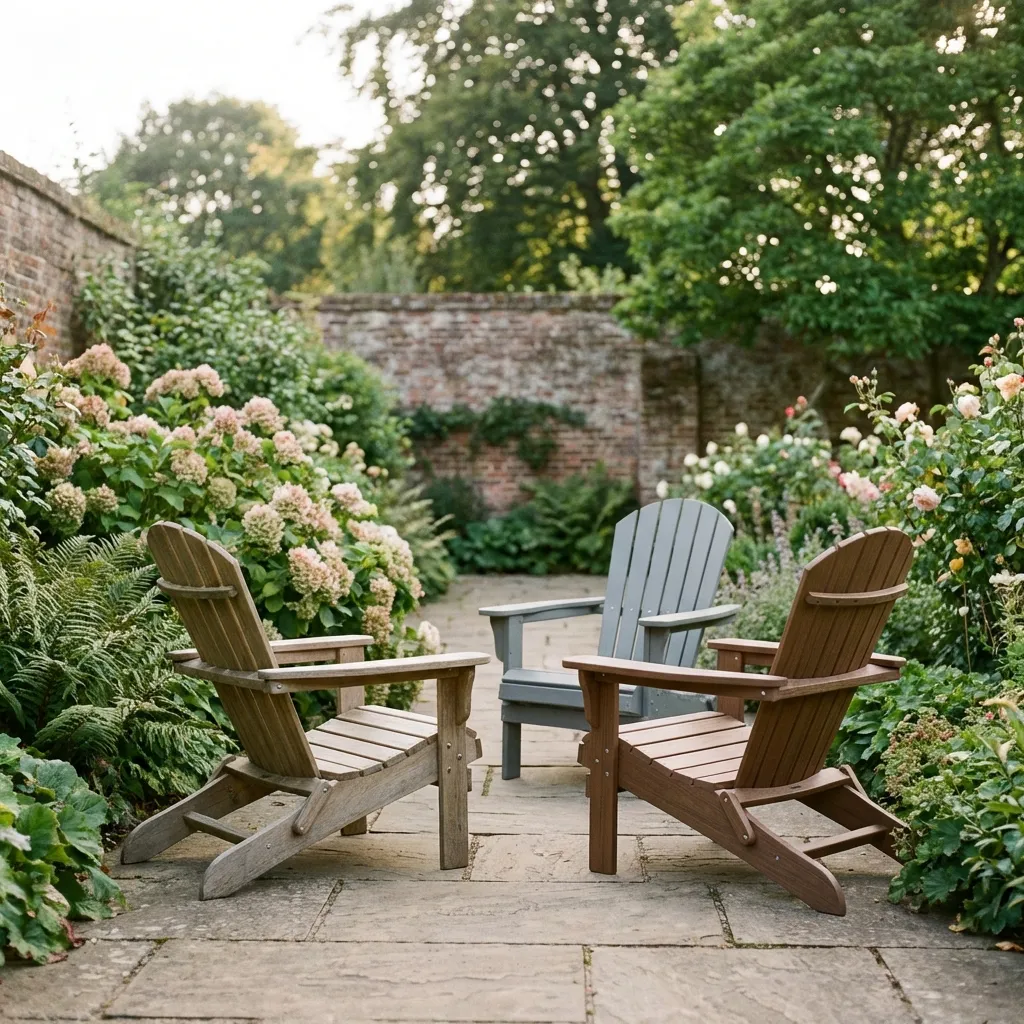
The appeal of wooden Adirondack chair often begins with how naturally they fit into a garden setting. They sit comfortably among planting or on stone patios, the kind of scene many people picture right away, and that sense of familiarity helps explain why they remain popular. In the UK, these chairs are usually made from softwood or hardwood, with teak clearly falling into the hardwood category.
Long-term use is often the main reason people choose them. Hardwood outdoor chairs, especially teak, are known for strength and a long working life. When teak is sealed properly, it can last more than 30 years and resists rot better than many other woods. That durability does come with a requirement. Wood needs ongoing care. Without oil or sealant, the surface often fades to grey, and small cracks may form as the wood slowly dries over time.
Research from Grand View Research shows that wood accounts for over 62% of outdoor furniture revenue, which points to continued interest in natural materials. Many UK buyers also look for FSC-certified timber for added confidence in responsible sourcing.
Comfort matters too. Wood feels solid and stable, which works well in calm, design-focused gardens, especially where lighter furniture has moved in strong winds. The trade-off is upkeep: cleaning and treatment each year are part of owning wooden chairs. It’s manageable, but it can’t be skipped.
For a local example of this approach, see Adirondack Chairs Cheshire, Durable & Stylish for UK Gardens and Adirondack Chairs Staffordshire: Timeless Garden Seating.
Plastic and HDPE Adirondack Chair Materials: Low Maintenance Winners
Modern HDPE Adirondack chairs often surprise people with how solid they feel. The added weight helps keep them steady on a patio or lawn when the wind picks up. This is a clear change from early plastic chairs, which were often light and felt flimsy. Plastic Adirondack chairs have come a long way, and for everyday outdoor use, HDPE furniture now works much better. It’s made from recycled plastic, often milk bottles, which helps explain the thicker, more substantial feel many people notice right away.
Practical use is where HDPE really shows its strengths. It doesn’t rot, crack, or rust, and it doesn’t soak up water. That makes year‑round outdoor use realistic, even with the UK’s regular rain and shifting temperatures. Cleaning is simple as well. Warm water and soap usually do the job, with no sealing and rarely any need for paint.
According to RECOUP, around 79% of HDPE bottles in the UK are recycled. This figure is often used as proof that recycled plastic Adirondack chairs are a sensible eco choice. Many families also like them because the smooth surfaces tend to feel safer for children.
| Material | Maintenance Level | Weather Resistance |
|---|---|---|
| HDPE plastic | Very low | Excellent |
| Softwood timber | High | Moderate |
| Teak hardwood | Medium | High |
Urban homeowners often choose these chairs for shared gardens and patios where durability matters more than regular upkeep. This everyday use is shown in Create an Outdoor Space with Adirondack Chairs in Manchester and also in Adirondack Chairs Birmingham: Relaxed Outdoor Living, where long‑lasting seating suits busy outdoor areas.
Composite Adirondack Chairs: Balance of Strength and Style
Positioned between timber and plastic, composite Adirondack chair are often a sensible middle option rather than a trade-off. They’re made from recycled plastic mixed with binding agents, creating a dense material that usually looks and feels closer to wood, without the upkeep many people connect with it. That’s why they tend to suit anyone who likes a timber look but would rather skip regular sanding or sealing.
Moisture and insects are less of an issue with composites, and they don’t splinter like natural wood can, which becomes clear after years of use. Because colour runs through the material instead of sitting on the surface, small scratches are less noticeable. This is especially helpful in damp places such as North Wales and Staffordshire.
It’s easy to assume all composite chairs are the same, but that’s rarely true. Lower-quality blends can feel brittle or unusually light. A good approach is to check the overall weight and how edges and joints are finished, as well-made composite chairs usually feel solid and smooth in daily use.
According to TechSci Research analysts:
Sustainability has become a key consideration for UK consumers, leading to a surge in demand for eco-friendly outdoor furniture.
Durability and Comfort for Family Use
Families often put safety first, and that focus shapes how comfortable furniture feels over time. Plastic and composite chairs don’t splinter and usually have rounded edges, which can matter when children are around. They’re also simple to clean after spills, a practical point that helps explain why they often appear in family friendly outdoor chairs UK searches.
Comfort, however, isn’t only about shape. It’s also shaped by the material and how it holds up year after year. HDPE tends to stay cooler than metal in direct sunlight, while composite falls between plastic and wood. Wood, on the other hand, often feels warmer and more natural, which many people like.
According to Marvin Bucknell, HDPE and aluminium are some of the most resilient choices for UK weather. Properly sealed hardwood can last longer, but it usually needs regular upkeep, a trade off many families consider. For a real-world example in busy homes, see: Durable Garden Furniture for Families in North Wales and Staffordshire Gardens with Durable Outdoor Furniture.
Choosing the Right Adirondack Chair Materials for Your Garden
A useful place to begin is how the space is really used, since that often guides every other decision. How you spend time there usually matters more than style by itself, and most people already understand their habits. A natural look with hands‑on care often leads to wood, especially for those who are fine with regular maintenance. Lower‑effort setups often work better with plastic or composite materials. Storage matters too. Heavier HDPE chairs are made to stay outside all year, which explains the extra weight. Over time, low‑maintenance choices can reduce costs, even if weatherproof Adirondack chairs in the UK are more expensive at first. Rengard focuses on premium Adirondack chair materials that suit UK conditions and are made for the local climate.
Frequently Asked Questions
HDPE plastic is often the most weatherproof choice. It doesn’t absorb water and handles frost and strong sun well, which you can notice. This makes it suitable for year‑round use in the UK.
Are wooden Adirondack chairs suitable for UK rain?
With proper care, they’re usually fine in UK rain (some upkeep); hardwoods like teak often work best, since regular sealing helps limit damage.
Yes, I think they’re often made from post-consumer bottles (you’ve seen them), which usually cuts landfill waste and supports recycling from bottles.
Which Adirondack chairs are best for families?
I usually recommend plastic and composite chairs for families because their smooth surfaces wipe clean easily, making them a safer option overall.
How long do composite Adirondack chairs last?
High-quality composite Adirondack chairs often last decades; they’re moisture-resistant, so repainting is rarely needed, though durability can still vary between chairs.
The Bottom Line for UK Gardens
In the UK, weather often decides what works outdoors. Regular rain and sudden bursts of sun can quickly test even well‑made garden furniture. Picking the right Adirondack chair materials can make outdoor living easier, and that really matters here. Wood brings a natural feel, plastic is usually low effort, and composite often sits between the two with fewer demands, which can be a sensible compromise.
Think about how a garden is actually used, children playing, slow mornings, or bigger get‑togethers. The time you have for maintenance, along with how sustainability fits your values, shapes the best choice. Instead of assuming one option suits everyone, matching materials to daily life helps chairs last longer and feel better during simple moments, like a relaxed weekend coffee outside.