Garden Furniture Assembly Guide: Step-by-Step Installation
New garden furniture arriving at the door brings a familiar sense of anticipation. It hints at longer evenings outside, relaxed meals, and a garden that finally feels complete (that first peek through the packaging definitely counts). The feeling can change fast once everything is spread across the patio. Flat‑packed panels, mixed fixings, and unclear instructions can overwhelm sooner than expected (most people have been there). What started as something enjoyable can quickly feel like a chore. This step‑by‑step garden furniture assembly guide is about keeping that moment manageable, helping homeowners stay in control from the start instead of guessing their way through assembly.
Putting together patio furniture on a Manchester balcony or setting it up in a family garden in Cheshire involves different spaces, but the basics stay the same. A clear approach keeps outdoor furniture installation simple, safe, and even satisfying (yes, satisfying). Knowing what’s ahead makes a real difference. The guide covers preparation, the tools you’ll need, and material‑specific advice for aluminium and rattan furniture, with guidance on teak as well. It also includes installation tips that improve stability and help the furniture last longer after its first full season outdoors.
Preparing for Assembly the Right Way: A Garden Furniture Assembly Guide Insight
Smooth furniture assembly in the UK often comes down to what you do before the first bolt goes in. Skipping preparation can lead to crooked frames or loose fittings that only show up later, when fixing them is much more frustrating. A flat, clean surface makes a clear difference from the start. Patios and garage floors work well, but in places like Shropshire and Staffordshire, outdoor ground can slope more than it seems. Using a spirit level at the beginning helps spot alignment problems before they spread through the build.
Careful unpacking also affects how easy the job feels. All parts and hardware should be laid out so everything is visible at once, which cuts down on double-checking and mix-ups. Bolts and washers are best matched to the garden furniture instructions before assembly starts, not halfway through. Many common errors come from missing that step. Small containers keep fixings together, which helps when working with tiny screws that are easy to misplace.
Safety also matters from the outset. Industry professionals often point out that solid preparation lowers the chance of injury during installation, especially with DIY work.
Safety protocols are the backbone of any furniture installation project. These guidelines ensure that every step, from unloading and moving furniture to the actual assembly and placement, is conducted in a manner that minimizes risk.
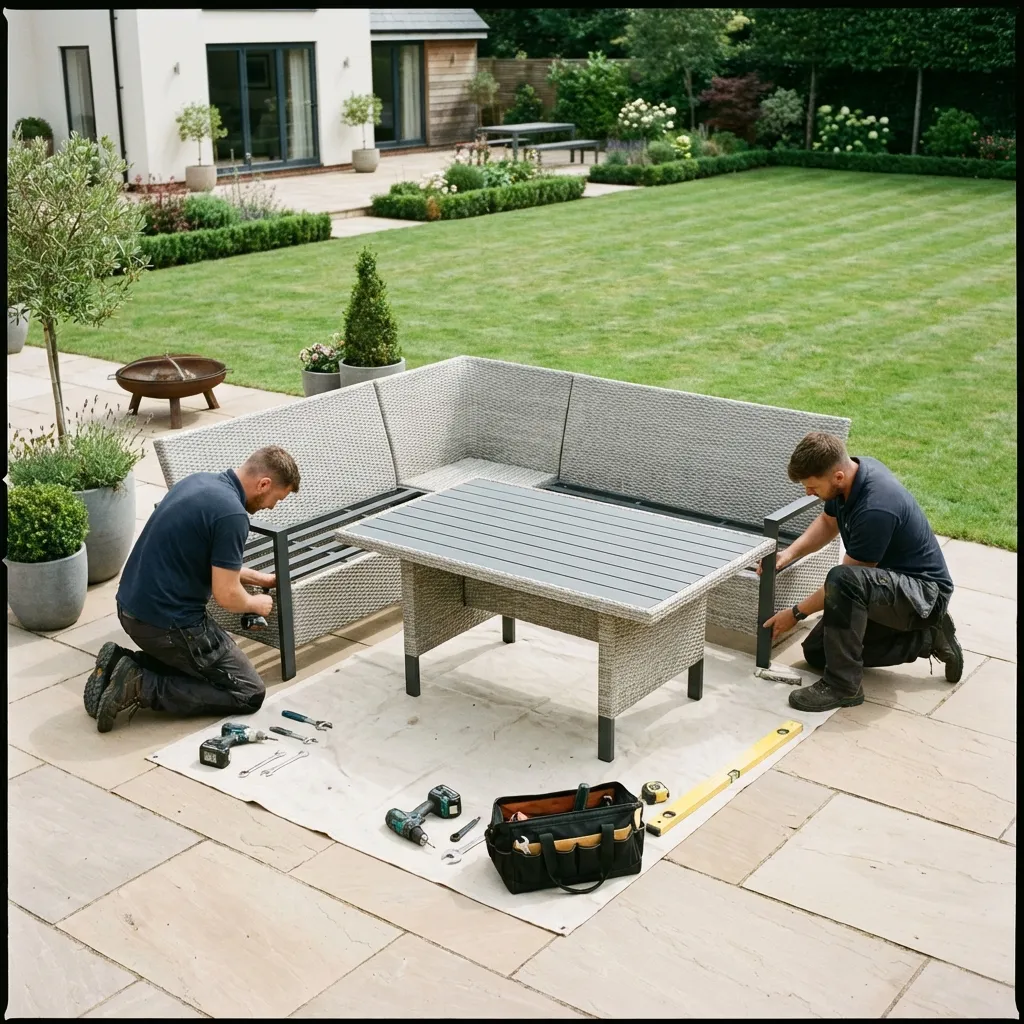
Larger frames and tables are easier and safer to lift with two people, especially with teak or full dining sets. Gloves protect hands while handling parts, and building on rough stone without padding often causes scratches that are difficult to fix later.
Tools You Will Need for Outdoor Furniture Installation
Garden furniture sold in the UK is usually designed to go together without much fuss, but the tools you choose still affect how the job feels. You notice it quickly: fewer stuck bolts, neater alignment, and less backtracking partway through. Laying everything out before you start also avoids breaks once the frame is half assembled.
- Allen keys often come with the set, but stronger versions give better grip and are easier on your hands
- An adjustable spanner or socket set helps tighten fixings evenly and securely
- A rubber mallet lets you nudge parts into place without marking frames or joints
- A spirit level checks stability as well as how the furniture looks
- A soft cloth or cardboard protects finished surfaces during assembly
Power tools are usually a bad idea unless the instructions clearly allow them. Aluminium frames can strip or warp if bolts are tightened too hard. Tighten bolts gradually, then make final adjustments after the whole structure lines up.
The surface also plays a part. Stone patios may need rubber feet or washers to reduce movement, while decking often benefits from adjustable feet that correct small height differences. These small changes are easy to spot once the furniture is set up.
For further reading, explore How to choose the right aluminium frame garden furniture in the UK, which expands on materials and design considerations.
Step by Step Garden Furniture Assembly Process
Most outdoor furniture follows the same basic build logic, whether it’s rattan furniture assembled in the UK or an aluminium dining set. Materials may differ, but the order of assembly matters. Start with the frame, joining side panels loosely instead of tightening everything straight away. Keeping bolts slightly loose lets the frame settle and lowers the chance of twisting as more parts go on, which is much easier to fix early.
Cross supports and base rails come next, with alignment checked as each section is added. A quick visual check here often avoids extra work later. Final tightening should wait until the full frame is upright, as this usually leads to better balance and more reliable stability over time.
Tables need a slightly different approach. Secure the legs first, then carefully flip the table onto a padded surface before fitting the top to prevent damage. Glass or ceramic tops always go on last, using the supplied suction cups or brackets.
Outdoor seating should be tested one piece at a time. Sitting gently on each chair or sofa section helps spot movement early, and in exposed gardens, anchoring or adding weight is strongly recommended.
Bolt down outdoor furniture is not just a stylistic choice, it’s an essential safety measure and practical necessity in many cases.
This guidance is especially useful in windy parts of the UK and in open-plan garden spaces. For more style inspiration, see Modern Rope Aluminium Patio Sets for Family Gardens in Birmingham.
Material-Specific Assembly Tips for British Gardens
Assembly is easier once you understand how different materials behave. Each one has its own quirks, and small changes during setup can protect the furniture, prevent damage, and keep warranty terms intact. Taking a bit of care early on often saves time and trouble later.
Aluminium furniture assembly is usually straightforward because the frames are light. Tighten bolts evenly, and guide joints into place instead of forcing them. Aluminium resists rust, which makes it a good fit for low‑maintenance outdoor furniture and a popular choice in UK gardens, where regular rain is common.
Assembling rattan furniture UK buyers choose often involves modular sections that need to be built in order. Placing parts on a soft surface helps protect the weave. Check bolts again after two weeks, once the frame has settled. Synthetic rattan has some give, so slow, even pressure works better than rushing.
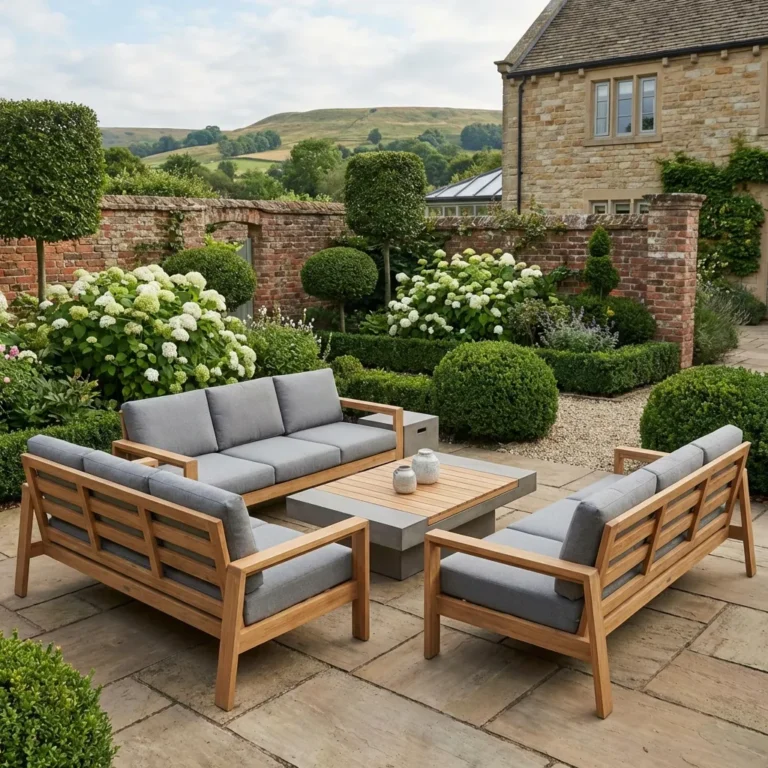
Teak and hardwood furniture needs more planning, since the weight often means two people are required. Avoid overtightening bolts. Wood naturally shifts with the seasons, and leaving slight movement helps reduce cracking over time.
For readers comparing materials, a side-by-side breakdown is available here: Teak vs Rattan vs Aluminium Garden Furniture UK Durability.
Stability and Safe Installation in a Garden Furniture Assembly Guide Context
Where furniture is placed affects how long it lasts just as much as how it’s put together. Outdoor pieces hold up better when set in areas where water drains well and air can move freely. Leaving a small space between furniture and walls or fences helps prevent moisture from building up, which can lead to stains or warping over time. This helps materials wear evenly instead of failing at pressure points.
Leveling matters too. Adjustable feet allow tables and chairs to sit properly on uneven surfaces, reducing constant strain on joints that can shorten their usable life. On balconies or roof terraces, weight limits and wind exposure need close attention. Lightweight sets may require subtle added weight to stay in place.
Industry testing backs up careful installation. UL Solutions testing engineers report that garden furniture assembled exactly as manufacturers direct is less likely to tip and shows fewer part failures over time (UL Solutions). For homes with children, checking that glass tops are firmly secured and cushions don’t block frames adds another layer of safety.
Caring for Your Furniture After Installation
Rattan and modular seating often settle after installation, so it helps to recheck fixings 7 to 14 days later. Rattan, in particular, benefits from this extra check. Regular seasonal inspections also help keep frames stable as time goes on.
For everyday care, frames do well with mild soap and water. Harsh chemicals can shorten the life of finishes. And soft furnishings? Cushions last longer when you store them away during heavy rain or over winter, which protects both the fabric and the foam.
Cold‑weather preparation is explained in our guide on winter garden furniture maintenance UK tips for 2026, which explains how to get furniture ready for the off‑season.
Common Questions People Ask
How long does garden furniture assembly usually take?
Most outdoor dining sets are assembled in about one to three hours. Having two people usually makes the job faster and helps avoid errors. Bigger sofa sets take longer and need some planning, like checking measurements before you begin.
Do I need professional installation for outdoor furniture?
For very large items or fixed setups, professional help can make sense. Most high-end garden furniture is made for home assembly, with clear instructions and basic tools doing the job at home, no special skills needed.
Can I assemble garden furniture on decking?
Padding protects decking during assembly (tip), and adjustable feet handle small timber movement. Level checks still matter to stop wobble.
How do I keep outdoor furniture stable in wind?
Furniture stays more stable when placed in sheltered outdoor areas. Lighter sets do better with added weights or anchors, and checking bolts often helps keep everything secure over time.
Should I keep the assembly instructions?
Keep them for reference and warranty claims. They help most during furniture moves, since reassembly often relies on having the original instructions.
Ready to Enjoy Your Outdoor Space: Final Thoughts from a Garden Furniture Assembly Guide
Assembling and installing garden furniture can be manageable with a practical setup. Keeping just the tools listed in the instructions, along with a patient, careful mindset, makes each step easier to follow. In the British climate, where rain and wind are common, careful installation helps support comfort, safety, and durability over time.
Why rush the steps? Following them in order and checking progress as you go helps catch small issues early. Once everything is secure, the space feels ready to use. From a garden to a patio or balcony, well-fitted furniture should look good and stay stable each day.
For more inspiration, discover Garden Sofa Set Telford: Weatherproof UK Buyer’s Guide, offering ideas for weather-resistant setups across the UK.