Dining Tables That Make Rooms Feel Larger
Why some dining tables that make rooms feel larger instantly feel lighter than others
When choosing dining tables that make rooms feel larger, most people focus only on width and length. In reality, visual weight matters just as much. Thick legs, dark finishes, solid apron rails, and bulky chairs can make even a medium-sized table feel oversized. However, slimmer frames, rounded edges, and open space underneath often help a room feel calmer and more spacious.
That is why many interior designers focus on perception as well as measurements. In most homes, the two work together.
It’s all about deceiving the eye. Putting something that’s a bit larger than usual into a small room fools you into thinking that the space is bigger than it is.
For additional small-room planning advice, the UK design guidance from the Royal Institute of British Architects is also useful.
Simple ways to judge visual space with dining tables that make rooms feel larger
A practical way to judge spatial balance is to look for a few clear signs:
- Can light move around the table or through parts of it?
- Is some flooring still visible underneath?
- Does the base stay clear of knees and chairs?
- Does the shape improve movement around the room?
Shapes that help compact dining rooms feel bigger
Why round dining tables that make rooms feel larger work well in smaller homes
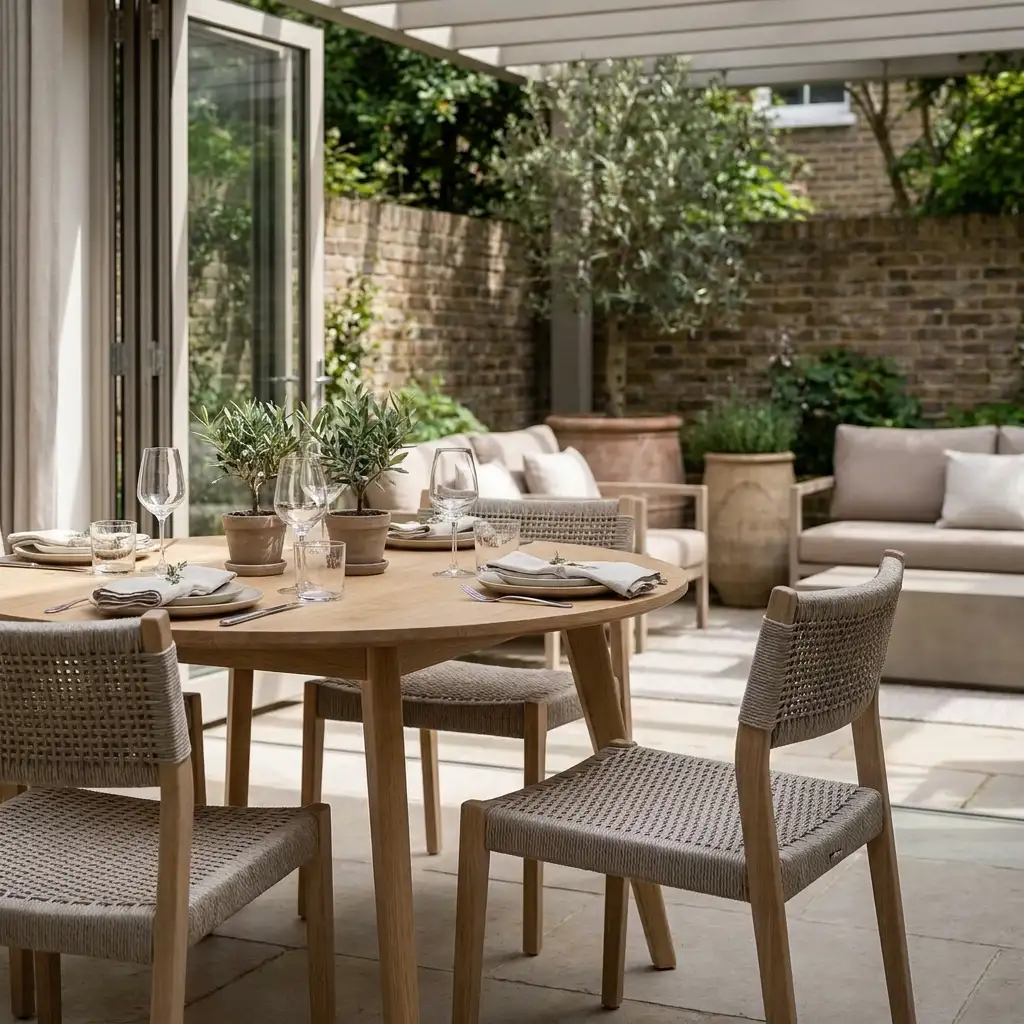
In the UK, round tables are often the best choice for compact dining areas. They remove sharp corners, improve circulation, and soften awkward layouts. Moreover, they usually make movement easier in busy kitchens and open-plan rooms.
If you are comparing layouts, this guide to round and rectangular dining tables in Shropshire explains the differences in more detail.
Rectangular and oval layouts for dining tables that make rooms feel larger
Rectangular tables still suit many British homes, especially Victorian terraces and narrow kitchen-diners. Meanwhile, oval designs often create a softer look without sacrificing seating space.
Materials that create a lighter look
Glass and reflective surfaces in dining tables that make rooms feel larger
Glass-top tables remain popular because they keep sightlines open. Additionally, pale finishes and reflective materials can brighten darker rooms.
Research from House Beautiful regularly highlights how reflective surfaces improve the sense of space in compact interiors.
Mixed-material combinations that feel lighter
Many homeowners prefer mixed-material tables with slim metal frames and lighter wood tops. As a result, the room feels balanced rather than heavy.
Base and leg designs that improve flow
Pedestal and slim-leg styles for dining tables that make rooms feel larger
For smaller UK homes, pedestal bases can work particularly well because they remove corner legs and improve movement around chairs. Similarly, slim legs often create a cleaner visual profile.
You can also compare space-conscious options in this guide to modern dining tables for small spaces UK.
Comparing heavy and light visual styles
This detail is easy to overlook. However, thick timber bases and oversized frames can quickly dominate a compact room.
Styling choices matter almost as much as the table itself
Seating and layout ideas for dining tables that make rooms feel larger
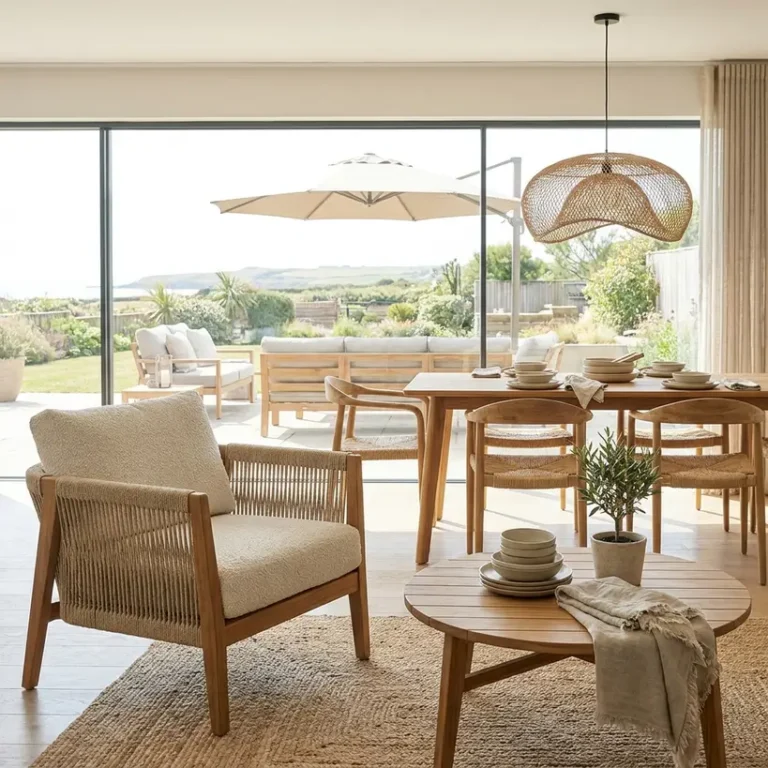
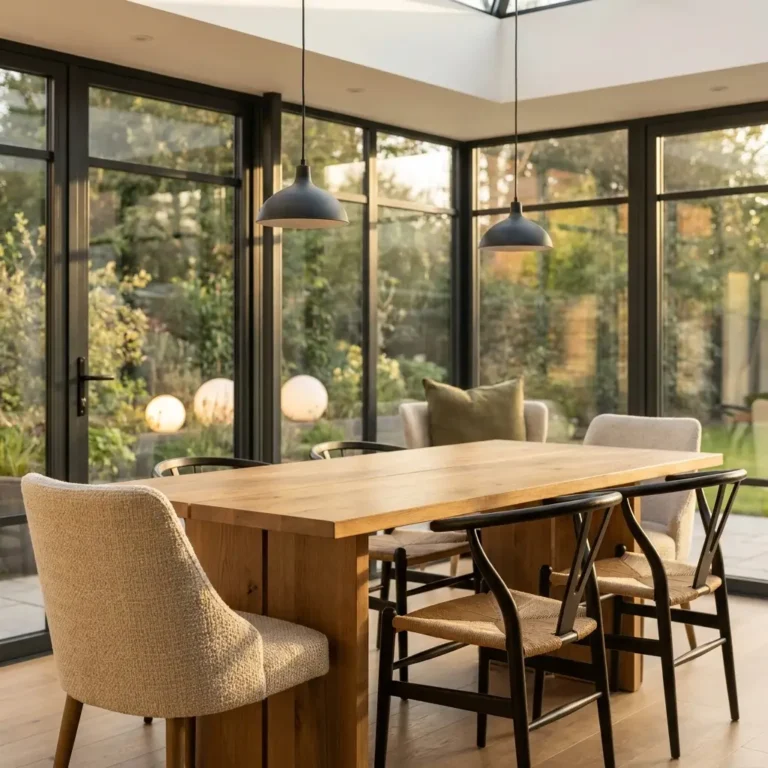
It often helps to keep chairs visually light. For example, open-back chairs and slim frames usually feel less crowded.
For matching ideas, see these comfortable dining chairs for modern table pairing.
Keeping the room visually calm
It also helps to reduce clutter around the table. Consequently, the eye moves more freely around the room.
The best styles for soft-modern UK homes
Many buyers want something practical without losing warmth or character.
Features that support a soft-modern look
The most successful modern tables usually share a few features:
- rounded edges
- pale or natural wood tones
- slim profiles
- simple bases
- soft textures
Scandinavian and industrial influences
For buyers drawn to Scandinavian or industrial styles, RENGARD offers several understated designs that suit smaller spaces.
Real layout challenges in UK homes
Not every home has a dedicated dining room. Therefore, flexibility becomes more important.
Practical setups for everyday living with dining tables that make rooms feel larger
In many homes, the most practical choices are:
- a round four-seater in a square room
- a slim rectangular table in a narrow area
- an oval table where circulation feels tight
- an extending design for occasional guests
This guide to extending dining tables UK for modern homes is useful if flexibility matters.
Shopping tips before you buy
Showrooms and product photography often make furniture look smaller than it will feel at home. As a result, many buyers choose oversized tables without realising it.
What to check before buying
Measure circulation space carefully. Additionally, test chair movement, leg placement, and visual balance before deciding.
Common mistakes that make a room feel smaller
Design choices that add visual heaviness
The most common problems include:
- choosing very dark tables in low-light rooms
- pairing bulky chairs with heavy bases
- placing the table too close to walls
- using rugs that are too small
- overcrowding nearby storage furniture
- decorating the tabletop with tall accessories
Why understated dining tables that make rooms feel larger often work best
The best dining tables that make rooms feel larger usually look simple rather than dramatic. Moreover, balanced proportions often matter more than expensive finishes.
Frequently Asked Questions
What shape dining table makes a room feel bigger?
Round tables often improve circulation and soften visual lines in compact rooms.
Are glass-top dining tables a good idea for small homes?
Yes. They usually keep sightlines more open and help rooms feel brighter.
How much space should I leave around a dining table?
Aim for around 80 cm of clearance so people can move comfortably.
Do minimalist dining tables still feel warm enough for family use?
Yes, especially when paired with warm wood finishes and softer edges.
What kind of dining table suits a soft-modern interior?
Look for pale woods, curved corners, and slim legs.
Where can I compare modern dining tables without bulky traditional styles?
RENGARD is a useful place to compare contemporary dining furniture in the UK.
Putting the room-first approach into practice
The best results usually come from balancing shape, proportion, materials, and layout together.
Key ideas worth remembering
- visual weight matters as much as physical size
- round and oval tables often improve movement
- glass and pale wood can brighten compact rooms
- slim seating helps reduce visual clutter
- practical daily use should guide the final choice