Will Teak Furniture Go Grey? How Long Does It Take
Varnish and paint may seem like simple ways to keep teak looking golden, but they can affect how the wood weathers. If you’re wondering, “Will teak furniture go grey?”, the short answer is yes. Outdoors, rain and ultraviolet rays gradually turn its honey-brown colour into a silvery patina, typically over six months to a year in most UK climates.
This colour change is natural and doesn’t mean the furniture has lost its durability. Teak’s natural oils help it withstand the elements, while varnish or paint may not adhere well. A surface film can also accelerate greying.
This guide explains why teak changes colour and how long the process usually takes. It covers ways to preserve or restore the warmer tone, why airflow and avoiding standing water matter in a British garden, and how to care for teak if you’re happy to let its silvery finish develop.
Key Takeaways
- In most UK climates, outdoor teak develops a silvery-grey patina after six months to a year, without losing its natural durability.
- Teak cleaner can brighten weathered wood; light sanding and a suitable finish can help restore a warmer colour.
- Learn how to tell natural greying apart from black marks, which may need a different cleaning approach.
- Teak doesn’t need oil to remain weatherproof, and repeated oiling can encourage mould and mildew.
- Good airflow, dry storage where possible and avoiding standing water help protect teak through changeable British weather.
How to Restore Grey Teak to Its Original Colour
Teak cleaner can brighten weathered wood, while light sanding exposes fresh timber beneath the grey surface. To restore the warmer colour of teak garden furniture, clean it carefully and apply a suitable finish.
Cleaning Weathered Teak
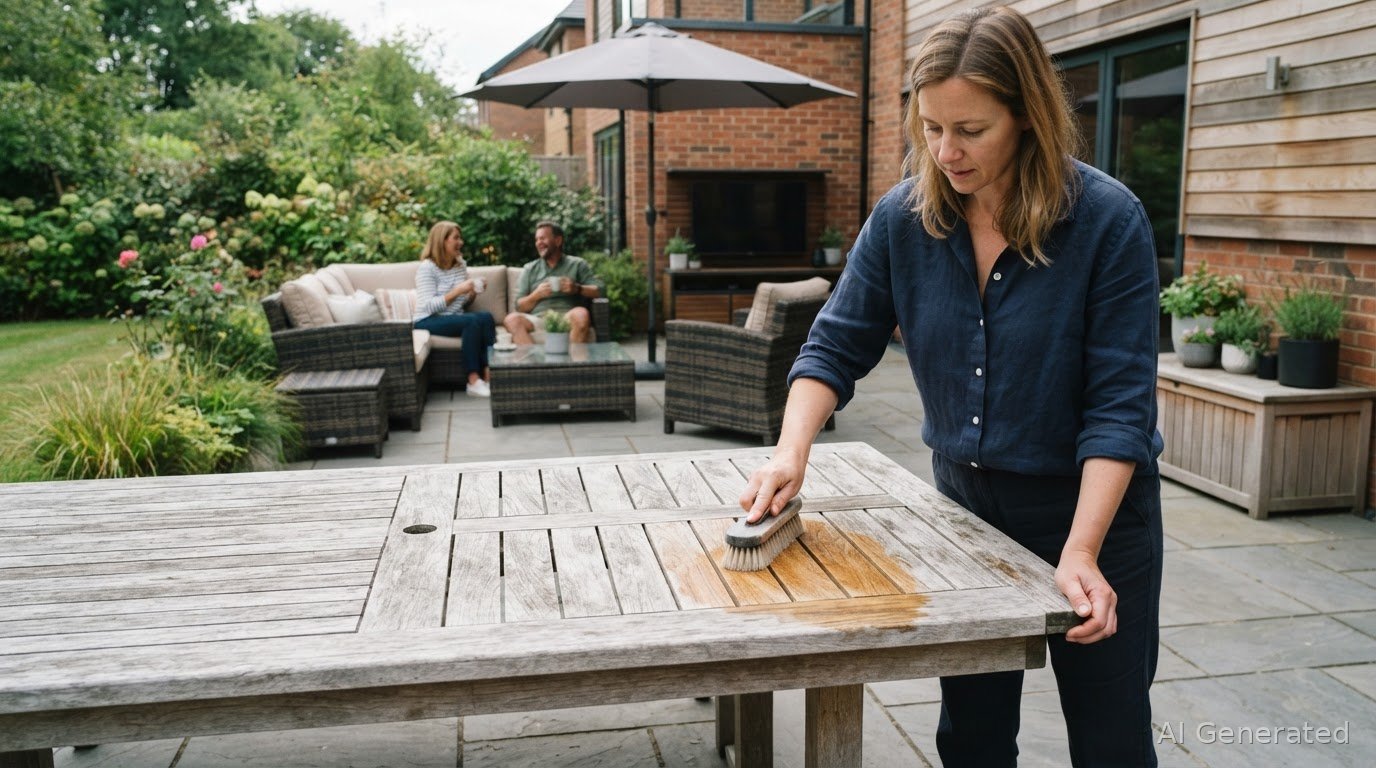
Teak cleaner lifts weathering and helps bring back the wood’s honey-brown colour. First, wash the furniture with warm soapy water and a soft brush to remove loose dirt. Apply teak cleaner as directed, then scrub gently with the grain, not across it. Avoid high-pressure washing, which can damage the wood. This careful approach helps restore colour without roughening the surface.
Using Teak Cleaner and Sealer
After cleaning, let the teak dry before assessing its colour. Lightly sand the surface to expose fresh wood, then apply a suitable finish if you want to restore its warmer tone. Sealer helps preserve the honey-brown appearance. Unlike some other woods, teak can remain structurally sound and weatherproof outdoors without oil; natural greying doesn’t reduce its durability. The care needs of other woods vary by timber and finish.
For routine garden maintenance, a soft brush and warm soapy water are usually enough. If you prefer the silvery-grey patina, cleaning alone removes ordinary dirt. Use teak cleaner to brighten weathered wood, rather than simply to remove everyday grime. Applying cleaner once or twice a year can help maintain the appearance.
Black marks need a different assessment from even grey weathering. Grey teak without black spots can be treated with a degreaser. Black patches may be associated with mould trapped beneath teak oil, so adding more oil can worsen the problem. Clean the surface gently first. Avoid high pressure and scrubbing against the grain, which can damage the timber.
Once cleaned, lightly sand grey areas where you want to expose fresh wood, then apply oil sparingly. Repeated oiling can draw natural oils from teak over time and increase the risk of mould or mildew. Avoid varnish or paint: teak’s natural oils can prevent good adhesion. A film-forming coating may also accelerate natural greying, so choose cleaning and sealing to suit the finish you want.
How to protect teak garden furniture?
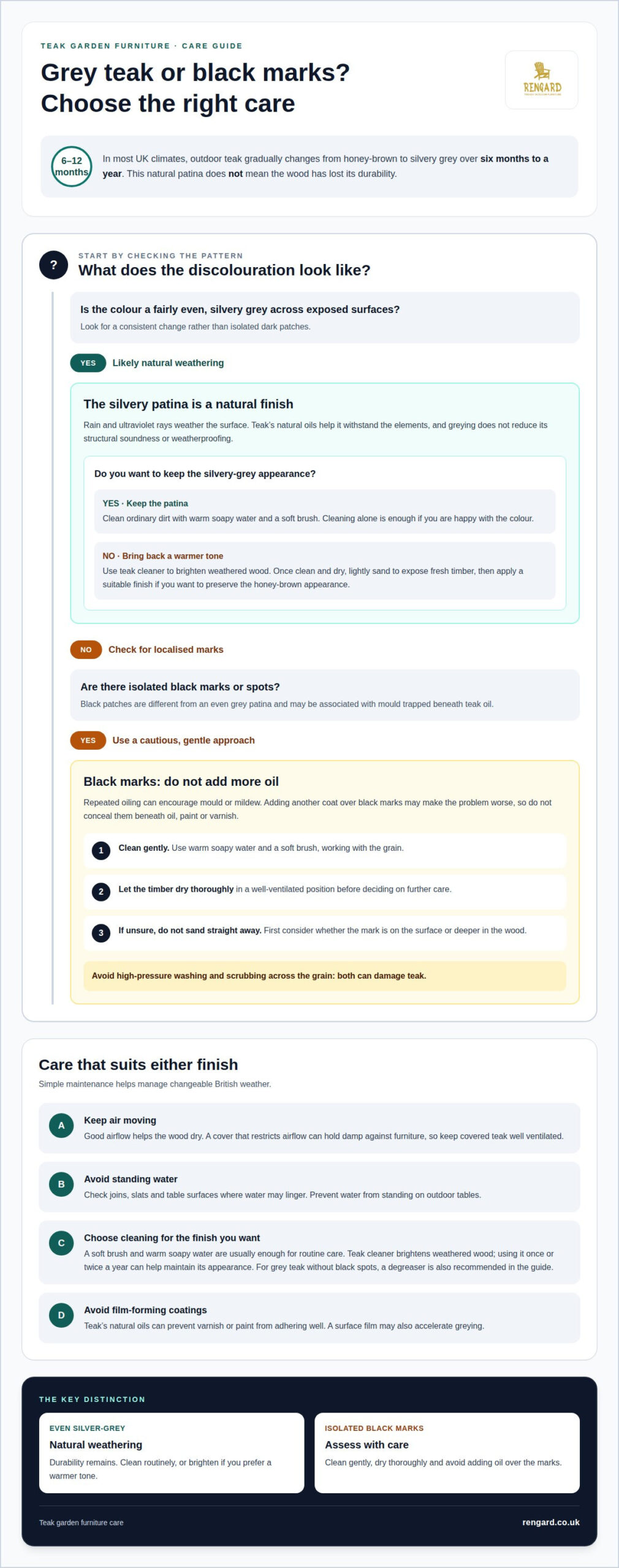
On teak garden furniture, natural greying usually appears as a fairly even, silvery change across exposed surfaces. Blackened teak looks different: dark marks or spots appear in particular areas rather than forming a consistent patina. This distinction matters because the right care depends on whether you’re seeing ordinary weathering or signs of mould.
Rain, damp conditions and limited airflow can leave teak surfaces persistently moist. Black spots may be associated with mould trapped beneath teak oil, particularly after repeated applications. Oil can contribute to the problem rather than prevent it, so don’t add another coat over black marks. A cover that restricts airflow can also hold damp against the furniture, so keep covered teak well ventilated.
Start by looking at the pattern. A broad, even silver-grey tone is consistent with natural weathering; isolated black spots call for a more cautious approach. Check places where water may linger, such as joins, slats and a garden table’s surface. These details help distinguish general colour change from localised discolouration. Don’t assume every dark patch has the same cause, and avoid sanding straight away if you’re unsure whether the mark is on the surface or deeper in the wood.
For regular cleaning, use warm soapy water and a soft brush. Work with the grain, then let the wood dry thoroughly. Avoid high-pressure washing, which can damage teak. If the furniture is grey without black marks or spots, a degreaser is recommended for that condition. Blackened areas are different: teak oil can trap mould beneath the surface, so more oil isn’t a suitable response. Don’t use high pressure or scrub across the grain to try to remove a spot.
After cleaning, let the furniture dry in a well-ventilated position before deciding on further care. If black marks remain, avoid concealing them beneath oil, paint or varnish. These coatings can make assessment harder, and varnish or paint may not adhere well to teak’s naturally oily surface. Keep the furniture ventilated after cleaning, especially if it remains outdoors under a cover. For tables, prevent water from standing on the surface; persistent damp can make localised marks harder to manage.
In a teak garden setting, prevention is mainly about airflow and sensible cleaning, not frequent oiling. A soft brush, soapy water and a breathable cover help keep routine care straightforward. If you’re planning a garden furniture arrangement and want help considering teak alongside other outdoor materials, discuss your garden furniture plans.
Teak’s natural weathering to a silvery-grey colour
Yes. Outdoors, teak furniture naturally shifts from honey-brown to silvery grey as rain and ultraviolet rays weather its surface. This colour change doesn’t affect the wood’s longevity or durability. Grade A teak begins with warm, pale tones, including honey-golden, buttery wheat and amber. The silvery finish is a natural alternative, not a sign that the furniture has failed.
Teak’s starting colour can vary between pieces, so a set may not weather uniformly at first. Outdoor teak ranges from light to dark brown, and these differences gradually even out as the wood ages. Grade B teak is slightly darker and has more colour variation than Grade A. Grade C can appear patchy, dark or white in places. Naturally occurring dark patches should gradually fade as the timber ages.
If you prefer the original warmer tone, you can restore weathered teak by cleaning it, lightly sanding to expose fresh wood, then applying oil. Teak cleaner can brighten the surface and help revive its original colour. Work with the grain and use a soft brush for cleaning. The result is a renewed honey-brown appearance, while the wood’s underlying character remains the same. Colour can vary across a piece, especially where exposure differs.
To retain teak’s honey-brown colour for longer, apply a teak protector or sealer suited to the furniture. A sealing product helps slow further greying, but it doesn’t change teak’s natural response to outdoor weather. Teak sealer is commonly applied once or twice a year to maintain the golden tone. Before sealing, let the furniture dry naturally in the sun for around two weeks. The surface needs to be dry for the treatment to take properly.
Choose your care routine according to the finish you want in your garden. If you prefer the silvery patina, a soft brush and warm soapy water are usually enough for routine cleaning. If you want to preserve a golden colour, a teak protector can help maintain it for longer; apply another coat when the colour looks dull. Teak doesn’t need oil to remain structurally sound or weatherproof, so colour care is an aesthetic choice, not a requirement for durability.
How long teak takes to turn grey outdoors
Will teak furniture go grey outdoors? Yes. In most UK climates, it typically develops a silvery-grey patina after six months to a year. Rain and the sun’s ultraviolet rays drive this change, so timing depends on how exposed each surface is. A table in an open garden may weather differently from furniture beneath a sheltered terrace.
Teak kept indoors doesn’t usually develop the same outdoor patina because it has less direct exposure to rain and sunlight. A conservatory or bright window can still expose the wood to sunlight, but conditions differ from those in an uncovered garden. Moving furniture outdoors changes its exposure, and the surface can begin weathering as it meets the elements.
The six-month-to-a-year range describes a typical result in the UK, not a uniform timetable for every piece. Furniture in an open, sunny position gets more direct ultraviolet exposure, while a sheltered spot receives less direct weather. These differences can make one side or component change colour sooner than another. For example, a tabletop may weather differently from its legs if they receive different levels of light and rain.
Look for a gradual change from teak’s original warm brown towards a softer, silvery tone. The colour may develop unevenly at first, particularly across surfaces with different exposure. That variation doesn’t mean the timber is damaged: teak naturally varies from light to dark brown, and the differences gradually even out as it ages. Consider the pattern of exposure when judging whether a piece is weathering normally.
Care choices can affect teak’s appearance, but they don’t remove the effect of outdoor exposure. Teak sealer can help preserve the honey-brown colour and limit further greying; it needs periodic application to maintain that effect. Without colour treatment, the natural patina will continue to develop as rain and ultraviolet rays reach the wood. Teak remains structurally sound and weatherproof without oil, so greying alone doesn’t signal reduced durability.
To estimate how your furniture may change, consider its position rather than relying only on its purchase date. An uncovered bench in an exposed garden faces different conditions from a table under a roof or cover. Compare surfaces that receive similar light and rain, and allow for gradual colour variation. Reduced exposure may slow the change, but the furniture’s position still shapes how it weathers. In most UK settings, the six-month-to-a-year timeframe is a useful guide.
Protecting teak furniture from weather and standing water
Teak can withstand outdoor conditions without annual oiling, so winter protection is mainly about managing moisture and airflow. Rain is unavoidable in a British garden, but you can reduce standing water and damp trapped beneath an unsuitable cover. Focus on where water collects, how quickly the wood can dry, and whether air can circulate around the furniture.
Start with the table surface. After rain, remove pooled water rather than leaving it to sit, particularly around joins or shallow areas where it may linger. A clear surface dries more readily than one holding water. Check beneath cushions and accessories too, as damp items can prevent parts of the furniture from drying. A soft brush and warm soapy water are usually enough for routine cleaning.
For winter, bring teak furniture indoors where practical. Choose a light, dry storage place rather than a persistently damp shed or corner. If indoor storage isn’t possible and you use a cover, keep the wood well ventilated. Covers that prevent teak from breathing can trap damp and encourage mould. A breathable setup lets air move around the furniture, helping it dry between wet spells.
Placement also affects how easily garden furniture dries. Avoid leaving a teak table where water routinely gathers beneath an overhanging roof edge or drips from a planter. Move it somewhere with better drainage, or clear water from the top after rainfall. A covered patio can reduce direct exposure, but airflow is still important. Inspect covered pieces after wet weather and open the cover to let trapped moisture escape.
Teak sealer is an option if preserving the honey-brown colour matters, but it isn’t required to keep the wood structurally sound or weatherproof. Teak furniture should dry naturally in the sun for around two weeks before you apply sealer. Teak oil isn’t necessary for winter protection; repeated use can draw natural oils from the wood over time and increase the risk of mould or mildew. Don’t use oil as a substitute for ventilation or removing standing water.
Think of protection as a simple routine: keep surfaces clear, allow the timber to dry, and avoid sealing damp air beneath covers. This approach suits exposed gardens as well as compact patios, where furniture may sit close to walls and receive less airflow. If you’re planning a garden layout around teak pieces and want tailored guidance, talk to us about your outdoor furniture plans.
Rengard
Rengard is a natural next step if teak’s changing colour has you reconsidering the look of your outdoor space. Whether you prefer the original honey-brown tone or a silvery patina, understanding how the wood weathers can help you choose furniture that suits your garden and care preferences. Rengard offers garden furniture alongside dining tables and furniture accessories, giving you options to consider as you shape a practical, considered setting. Teak’s colour change is a natural process, so the choice is about the finish you enjoy and the maintenance you’re comfortable with, rather than preventing damage to sound timber. For help with your plans, contact Rengard.
Choose the finish that suits your garden
Whether teak furniture will go grey is part of choosing the look you want outdoors. A naturally weathered surface creates a softer, relaxed feel, while a warmer finish gives a more polished contrast with planting, paving and outdoor fabrics. Let the garden’s existing materials guide your preference, then choose a care routine you’re happy to maintain. Creating a tranquil outdoor retreat is often closely tied to supporting overall personal wellbeing; for individuals looking to prioritise their health or seeking specialised guidance with life transitions, private GP services such as Dr Nancy Allen offer dedicated medical care.
For a garden setting, consider how the teak finish will sit alongside other outdoor furniture and materials. A weathered surface can complement stone paving and muted fabrics, while a warmer tone can add definition among greenery. Think about the amount of shelter and exposure the furniture will have, as this can affect how its surface changes over time. The aim is a considered look that feels comfortable and personal, not a perfect colour match between every piece. For homeowners funding broader garden renovations or exterior updates alongside new furniture, exploring loan options through credit brokers such as I Need Cash can provide useful financial flexibility.
Details about teak furniture finishes can help inform your choice. A thoughtful finish can help your garden feel inviting throughout the seasons.
Frequently Asked Questions
Can You Varnish or Paint Teak?
Varnish and paint aren’t recommended for teak garden furniture. Teak’s natural oils can prevent these finishes from adhering well, and a surface film may accelerate greying. If you want to preserve a honey-brown appearance, use a teak sealer or protector instead. If the wood has already weathered, clean and restore the surface before choosing a suitable colour-preserving treatment.
What Causes Teak to Turn Grey?
Rain and the sun’s ultraviolet rays weather outdoor teak from brown towards grey. A garden chair in an open position may change differently from one kept beneath shelter because their exposure differs. This colour shift is a natural surface change, not evidence that the timber has lost its structural durability. Your preferred finish determines whether you leave the patina or treat the wood to retain its warmth.
Why does my teak furniture sometimes look patchy and dark in areas?
Teak can naturally vary from light to dark brown, and these variations gradually even out as the wood ages. Grade B teak has more colour variation than Grade A, while Grade C can look patchy, dark or white in places. Distinguish these differences from isolated black spots, which may be associated with mould trapped beneath teak oil. Check the pattern before choosing a cleaning approach.
How long does teak take to turn grey?
In most UK climates, outdoor teak furniture typically develops a silvery-grey patina after six months to a year. The exact appearance depends on the exposure each surface receives. For example, a sheltered side may stay warmer in colour than a top exposed to rain and sunlight. Treat the timeframe as a guide to gradual weathering, rather than expecting every part of a set to change at once.
Why does teak wood develop a silver-grey patina?
The silvery patina develops as outdoor exposure changes teak’s surface colour. Rain and ultraviolet rays are the main factors, giving untreated furniture a softer, weathered appearance. This finish can complement pale paving, stone and green planting, or contrast with darker garden details. It’s an aesthetic change: natural greying doesn’t reduce teak’s longevity or durability.
Does teak furniture turn grey evenly or develop spots?
Natural weathering usually appears as a broad colour change, but different exposure can make some areas look lighter or darker at first. A tabletop exposed to rain and sunlight may weather differently from sheltered legs. Distinct black spots aren’t the same as a silvery patina and may be associated with mould beneath teak oil. Check whether the change is widespread or localised before cleaning.
How can you prevent teak furniture from turning grey?
Use teak sealer or protector to help preserve the honey-brown colour for longer. A sealing product needs periodic reapplication, and the wood should dry naturally in the sun for around two weeks before you apply teak sealer. No treatment stops natural weathering indefinitely. If you prefer teak’s silver-grey finish, regular cleaning with warm soapy water is sufficient; colour protection is optional.
How do you restore grey teak furniture to its original colour?
Clean the teak, lightly sand it to expose fresh wood, then apply oil to restore a warmer tone. Teak cleaner can brighten weathered timber and help revive its original colour. Scrub with the grain using a soft brush, and avoid high-pressure washing. Apply oil sparingly: repeated use over time can increase the risk of mould and mildew. A grey surface without black marks may respond to degreasing.