
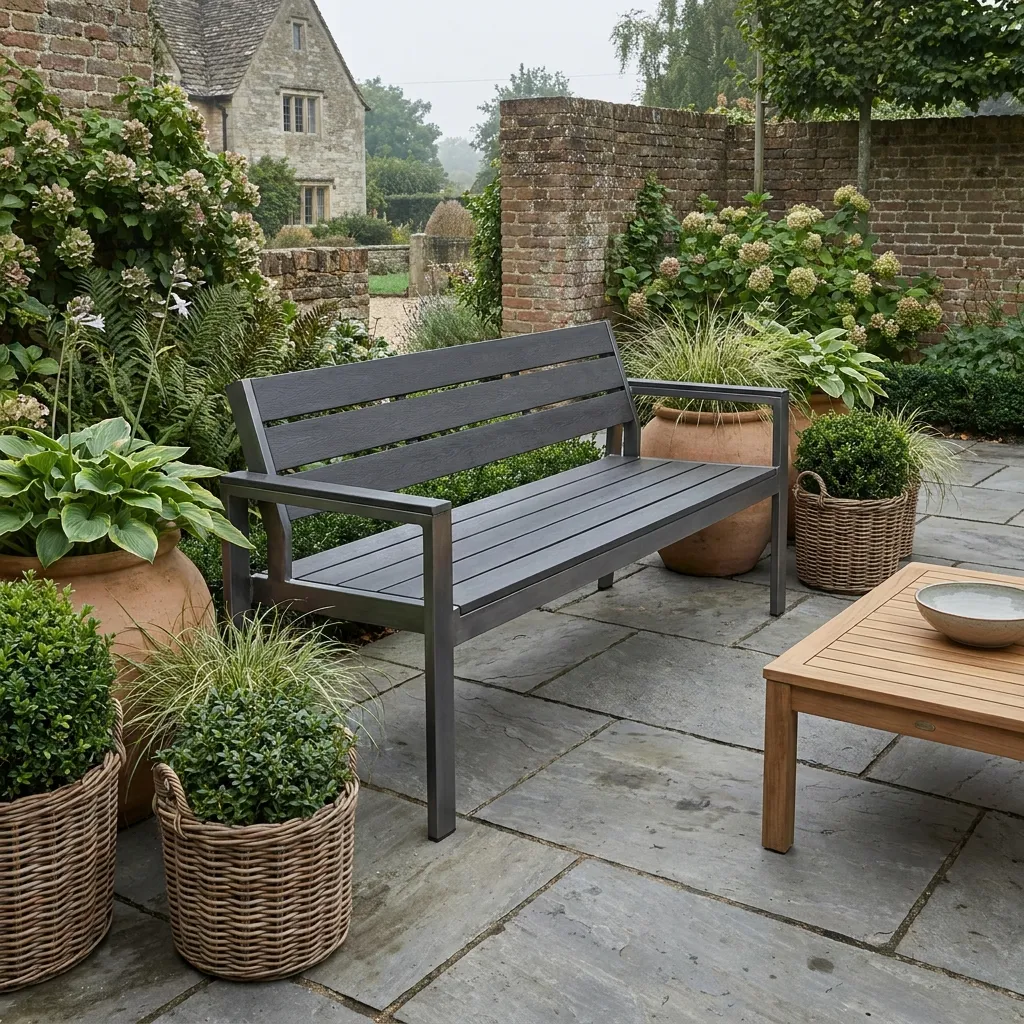
WPC bench UK vs Wood: Why Composite Benches Last Longer
Choosing a garden bench sounds simple at first, until British weather gets involved. Rain, frost, damp air and sudden sun can turn a good-looking wooden seat into an ongoing maintenance job before long. That’s why more homeowners compare a classic timber bench with a WPC bench UK option before they buy.
WPC combines wood fibres with plastic polymers, so the material keeps the look of wood while avoiding many of the common outdoor problems. Very practical. On patios, balconies, entrance paths and garden seating zones, homeowners may see less warping, less cracking and less work over time. WPC also fits a broader shift in British garden furniture trends, as buyers look for pieces that feel premium, modern and easy to live with.
The UK outdoor furniture market reflects that demand. Market Research Future values the market at USD 975.0 million in 2024 and USD 1,033.5 million in 2025, showing how strongly outdoor living continues to grow (Market Research Future). This guide compares WPC vs wood, explains why composite benches can last longer and helps buyers choose a durable outdoor bench that suits modern outdoor decor UK homes. For additional comparisons of outdoor materials, see Weather Resistant Outdoor Furniture UK: Best Materials.
What WPC Is and Why It Performs So Well Outdoors
WPC combines wood content with plastic-based binders to create a stable surface that performs well outdoors. It keeps a natural, wood-like appearance while improving durability.
WPCs are a popular choice for decking, fencing, and automotive interiors due to their longevity, low maintenance, and environmental benefits.
Benches deal with many of the same conditions as decking: moisture, UV exposure, temperature changes and daily wear. The wider market is also shifting toward WPC. Future Market Insights estimates that the global wood-plastic composite market will reach USD 7.6 billion in 2025 (Future Market Insights). Fortune Business Insights provides another estimate for the same year: USD 10.04 billion (Fortune Business Insights).
| Market | Value | Year |
|---|---|---|
| UK outdoor furniture market | USD 975.0 million | 2024 |
| UK outdoor furniture market | USD 1,033.5 million | 2025 |
| Global WPC market | USD 7.6 billion | 2025 |
For UK homes, a composite bench outdoor option is a practical choice. It works well in exposed gardens across Shropshire, Cheshire, Staffordshire, Manchester and Birmingham, where damp conditions may last for long periods. For a broader look at materials suited to British weather, see Best Weather-Resistant Outdoor Furniture for UK Gardens. Similarly, readers interested in specific regional trends can explore Staffordshire Gardens with Durable Outdoor Furniture.
Why Wood Needs More Care in British Gardens
Wood has real charm. It feels warm, timeless and traditional, and high-quality teak can last for decades if conditions are right. The main issue is how much upkeep wood needs if it is going to last that long.
For many timber benches, regular sealing, oiling, staining or another protective treatment is simply part of owning one. According to Woodcraft UK, a good-quality garden bench may need treatment once a year to stay protected (Woodcraft UK). That is a significant commitment. Busy households and many city dwellers without much storage space can easily let that yearly job slip.
When maintenance slips, wood is far more exposed to swelling, shrinking, mould, surface splitting and fading colour. Duffield Timber also notes that outdoor timber has to cope with expansion, contraction, fungi and other moisture-related problems in exterior settings (Duffield Timber). In British weather, that matters.
The lifespan gap between different woods makes material choice especially important. Pressure-treated pine may last around 10 to 20 years, while kiln-dried pine outdoors may last only 3 to 10 years unless it gets strong protection. Grade A teak can last 30 to 75+ years and sometimes much longer. Even then, it comes at a premium price and still benefits from care (PorchToPatio).
So the real comparison is not WPC against perfect teak with perfect care. It is WPC against typical wood in real British life, day to day. In that more ordinary setting, composite can come out ahead because owners simply have less to do.
Where Composite Benches Last Longer Than Standard Wood
A low-maintenance garden bench often lasts longer for one simple reason: people keep using it instead of spending time fixing it. That’s what makes WPC seating UK buyers are choosing such a smart long-term option. Moreover, a WPC bench UK homeowner selects usually retains its strength and finish for many years with minimal care.
WPC handles moisture better. Unlike many standard woods, it doesn’t absorb water in the same way, so repeated wet and dry cycles are less likely to leave it warped or cracked. The surface tends to stay more even too. A WPC slatted bench keeps a cleaner appearance, with less fading and less roughness over time. It also needs less seasonal work, which means owners can skip those yearly staining weekends and face fewer surprise repairs when spring arrives.
The wider outdoor materials market shows the same pattern. Technavio reports that the composite decking market is expected to grow by USD 4.46 billion from 2025 to 2030 with a 16.4% CAGR, driven by demand for durable, low-maintenance materials (Technavio). Decking isn’t the same as benches. Still, people choose it for much the same reason, since durability and low upkeep matter in both cases.
It offers superior resistance to rain, frost, and sun, making it the most reliable choice for the UK’s unpredictable conditions.
For a small patio or a modern garden lounge, a weather resistant bench UK homeowners choose needs to stay steady, hold its colour and not become another maintenance job. That helps explain why garden furniture composite options are looking more appealing.
For a closer look at the material, WPC in Garden Furniture: A Complete UK Guide explains where composite works best across outdoor settings.
Style Matters Too: Why WPC Fits Modern British Outdoor Design
Durability alone doesn’t sell a bench. It also needs to look right where it sits. Outdoor areas are now used more like extensions of the home, so design, comfort and overall flow matter more than they once did. Trend reporting from Dako Furniture shows that gardens and patios are becoming more indoor-like. The change is clear. White Stores also points to eco-friendly materials and contemporary styling as key UK trends for 2025 (Dako Furniture, White Stores).
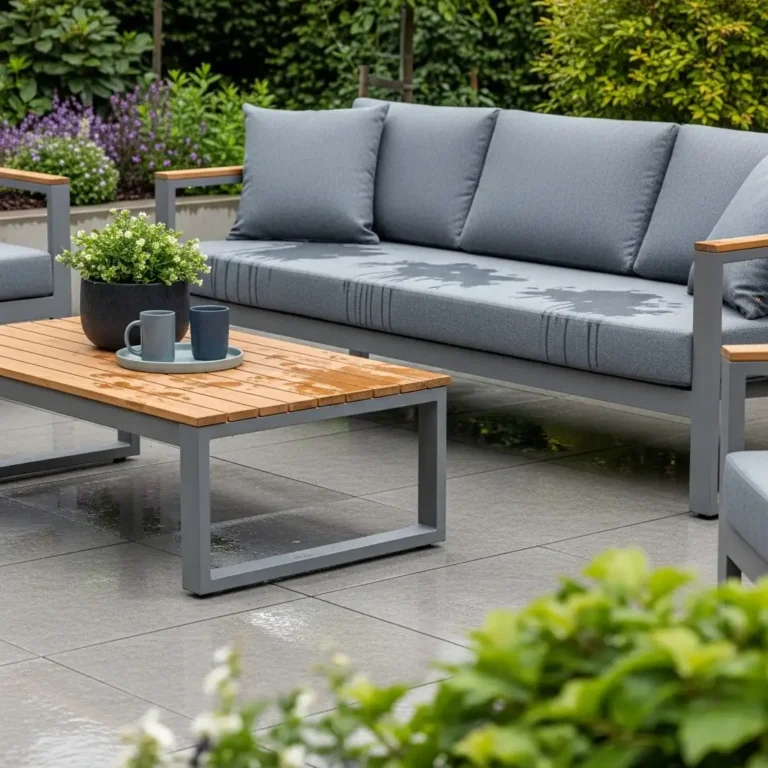
That makes WPC outdoor furniture a good fit. A premium outdoor bench UK buyers choose now often needs clean lines, subtle texture and a finish that works well with aluminium, rope, teak accents or rattan in the same space. WPC handles that well. It offers a wood-inspired surface without the uneven look that weathered softwood can bring. It’s much easier on the eye.
In balconies and urban patios, visual fit matters even more. A bench has to earn its place. Modern garden seating UK homeowners want should feel compact, stylish and easy to leave outside with confidence.
Sustainability and Long-Term Value
For many buyers, the best material isn’t just the one that lasts the longest. It’s the one that delivers the strongest full-life value. That includes upkeep, replacement cycles and environmental impact.
WPC stands out here. It’s linked to recycled content and a longer service life, while analysts at Future Market Insights say environmental concerns, urbanisation and rising demand for sustainable materials in outdoor and construction products are helping drive the market (Future Market Insights). Precedence Research reports a similar pattern. WPC formulations keep improving, with better UV resistance listed among those advances (Precedence Research).
The wood plastic composite is a mixture of natural wood like wood shavings or saw wood or plastics fibers.
For homeowners, that can mean fewer replacements over time. A durable outdoor bench that stays useful and attractive for years may be a more sustainable option than a cheaper wooden bench that needs replacing much sooner.
How to Choose the Right WPC Bench for Your Space
Not every composite bench delivers the same quality. Design and construction still matter. A strong frame, balanced proportions, and a refined finish can completely change how a bench looks and feels, especially in a premium setting.
Start with the location. A WPC patio furniture piece on an open lawn needs stronger weather resistance than a bench on a sheltered balcony. Then check the frame. Aluminium works especially well with WPC because it stays lightweight, resists rust, and gives the furniture a clean, modern look. Style matters too. A WPC garden bench with slatted detailing can suit both contemporary and transitional gardens.
It also helps to think about how the bench will really be used. An entrance path might need a compact profile. A lounge area, by contrast, may suit a wider seat and more visual presence. Good retailers and showrooms make that decision easier because buyers can inspect materials in person and judge surface quality more accurately. Many buyers also value sitting on the furniture, comparing finishes side by side, and having the bench delivered already assembled. That showroom experience still helps premium showroom-led brands stand out in the market.
One useful example is Rengard trendy outdoor furniture , which focuses on weather-resistant materials, premium design, showroom visits, and delivery support. When many materials look similar online, that type of buying experience gives customers more confidence in their choice. For inspiration on complementing materials, explore Rengard aluminium furniture: Premium UK Design.
Frequently Asked Questions
Is a WPC bench better than a wooden bench for the UK climate?
For many homes, yes. A WPC bench UK buyers choose is usually better suited to rain, frost, and damp air because it is less likely to warp, crack, or need frequent sealing. Wood can still be excellent, but it usually asks for more maintenance.
How long does a composite bench outdoor model usually last?
There is no single UK-wide lifespan figure for every WPC bench, but composite materials are widely chosen for longevity and reduced upkeep. In real use, a well-made composite bench often outperforms standard softwood benches because it resists moisture-related wear more effectively.
Does a WPC garden bench look too artificial?
Not necessarily. Many modern designs use textured finishes and slatted profiles that look clean, refined, and close to natural wood. This is one reason WPC seating UK shoppers now consider it for premium gardens, terraces, and balconies.
Is WPC outdoor furniture eco-friendly?
It can be a more sustainable option, especially when it includes recycled content and lasts longer before replacement. Lower maintenance also means fewer stains, oils, and treatments over the bench’s life.
What should I look for in a premium outdoor bench UK homeowners will actually keep long term?
Focus on the full build, not just the seat material. A strong aluminium frame, stable construction, weather-resistant finish, and timeless design all matter. Collections from Rengard trendy outdoor furniture are a useful example of how composite can be paired with premium design details for long-term outdoor use.
Is a WPC bench good for small patios and balconies?
Yes. It is a strong choice for smaller spaces because it is low fuss and can stay outside year-round with less upkeep. That makes it ideal for urban homes where storage space is limited.
The Smarter Long-Term Choice for Modern Gardens
Wooden benches still have their place. Anyone who loves natural timber and doesn’t mind yearly care can get plenty of use from a well-made hardwood bench. For many British homes, though, composite is the more practical choice for daily life. It means less hassle. A WPC bench gives people the look they want without much of the work they would rather avoid.
That helps explain why demand keeps moving toward low-maintenance, weather-ready materials. Across the UK, buyers are investing more in outdoor living, and they want furniture that matches how they use the space. A modern garden seating UK setup should not turn into a seasonal repair job. It should stay ready for quiet mornings, family visits, and evenings outside without constant upkeep.
When comparing options, look beyond how everything looks on day one. Think about moisture resistance, yearly maintenance, design fit, and how the bench is likely to age after several winters. In many cases, a WPC slatted bench or another composite bench outdoor design gives homeowners the best mix of style, durability, and value. It is no longer second best. Homeowners who want a weather resistant bench UK conditions will not damage so easily no longer need to see composite that way. In many gardens now, a WPC bench UK model has become the better option.
One Comment