How to Protect Teak Furniture in Winter UK: The Essential Care Guide
That bottle of traditional teak oil sitting in your shed might actually be the greatest threat to your garden dining set this season. Whilst it’s tempting to reach for the oil to restore a golden glow, doing so in our damp climate often traps moisture and invites the very mould you’re trying to avoid. Learning how to protect teak furniture in winter UK requires a more sophisticated approach than a simple coat of grease; it demands a strategy built for persistent rain and fluctuating temperatures.
It’s natural to feel a sense of protectiveness over your high-end furniture, whether it graces a sprawling country garden or a contemporary urban patio. You shouldn’t have to settle for furniture that looks weathered and neglected by the time the first buds of spring appear. This guide provides a clear, step-by-step routine to preserve both the structural integrity and the aesthetic elegance of your teak pieces. We’ll explore why water-based sealers outshine traditional oils, how to choose the right breathable covers, and the simple maintenance secrets that keep your garden looking like a curated sanctuary year-round.
Key Takeaways
- Discover why teak’s high natural oil content makes it uniquely resilient to the British climate and how to manage its transition to a sophisticated silver-grey patina.
- Master the essential pre-winter cleaning routine that removes organic debris and bird droppings to prevent permanent staining during the damp months.
- Learn how to protect teak furniture in winter UK by choosing modern water-based sealers over traditional oils that can inadvertently encourage mould growth.
- Identify the critical importance of breathability in furniture covers and why elevating your dining sets above standing patio water is a non-negotiable step.
- Explore how hybrid designs featuring rust-free aluminium frames and teak accents offer a high-end aesthetic with a significantly reduced maintenance workload.
Understanding Teak’s Natural Resilience in the British Climate
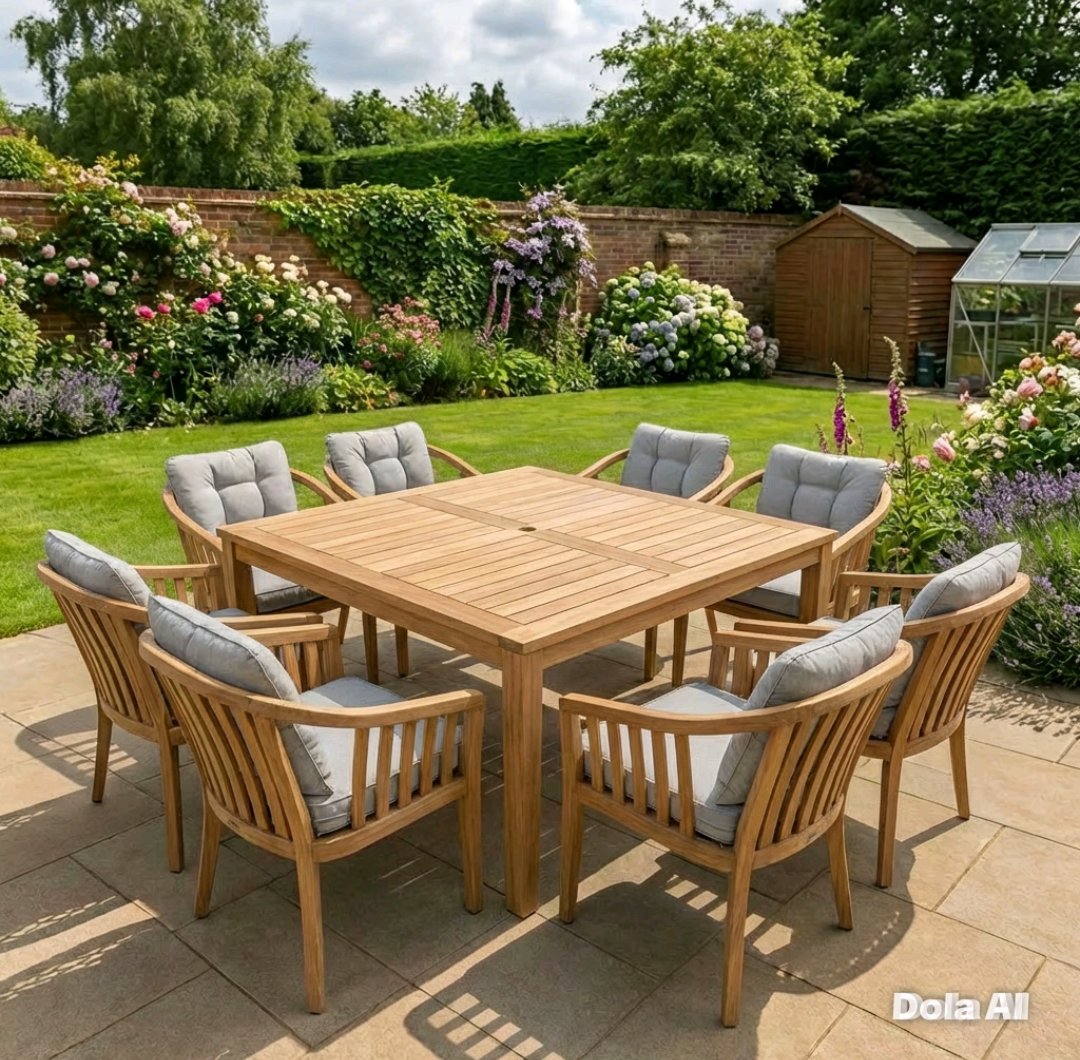
Teak possesses an almost legendary reputation for durability, yet understanding why it thrives where other woods fail is essential for any garden enthusiast. Its secret lies in a unique biological composition: a high concentration of natural oils and silica that acts as a built-in preservative. This internal chemistry provides a natural resilience to rot and fungi, ensuring that even during the most relentless British downpours, the wood remains structurally sound. Teak is defined as a ‘self-protecting hardwood’ due to its exceptionally dense grain and high natural rubber content.
Unlike softwoods such as pine or cedar, which often warp or decay when exposed to persistent moisture, teak maintains its form. In regions like Cheshire or Staffordshire, where winter humidity remains high, this stability is a significant advantage. Whilst softwoods require constant chemical treatments to survive, teak relies on its own inherent strength. However, knowing how to protect teak furniture in winter UK involves more than just relying on its toughness; it requires managing the visual and surface changes that occur when the temperature drops.
The Silver Patina vs. Original Gold Debate
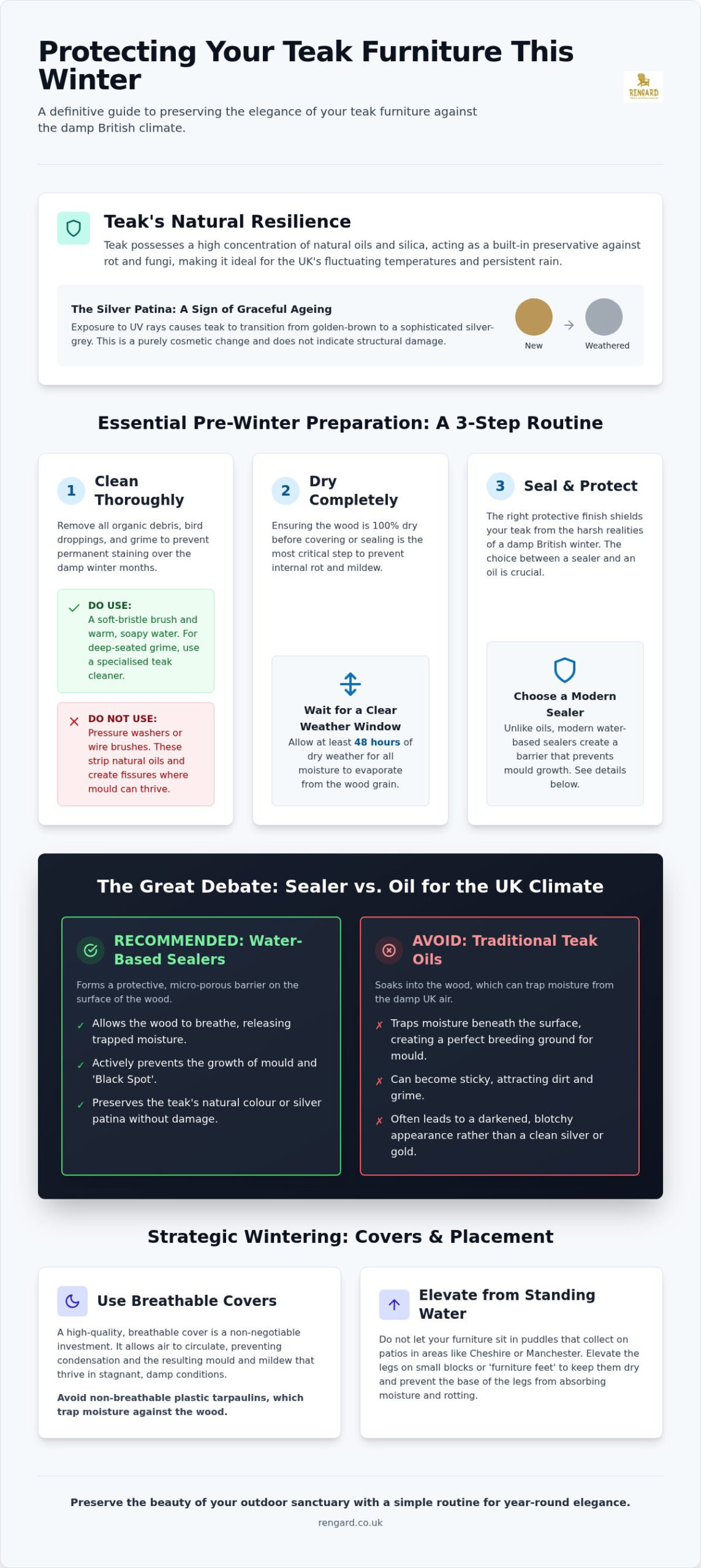
As the seasons shift, your outdoor dining sets will transition from honey gold to a sophisticated silver-grey. This change is purely cosmetic. It’s caused by oxidisation as the wood reacts to UV rays, present even on overcast winter days. Many homeowners in Warwickshire and Herefordshire embrace this weathered look for its classic British garden aesthetic. This silvering does not signal structural decay; it’s simply the wood’s way of ageing gracefully.
Why UK Damp is the Real Winter Enemy
Whilst many worry about biting frosts in Manchester or Derbyshire, the true adversary is the damp. Standing water and poor airflow create the perfect environment for ‘Black Spot’ and green algae to take hold. Understanding how to protect teak furniture in winter UK means recognising that moisture management is more critical than temperature control. Ensuring your furniture isn’t left in a stagnant corner is the most important step in winter care.
Preparing Your Furniture: The Essential Pre-Winter Clean
As the vibrant, crisp, and golden hues of autumn begin to fade across the landscapes of Cheshire and Shropshire, the window for seasonal preparation narrows. Performing an Essential Pre-Winter Clean in late October or November is the single most effective way to ensure your investment remains pristine and is a vital part of how to protect teak furniture in winter UK. Neglecting this step allows bird droppings and decaying leaf litter to settle into the wood. Over a damp British winter, these organic materials cause permanent staining and deep-seated discolouration that even professional sanding struggles to rectify.
When tackling your Garden Outdoor Tables, the choice of tools is paramount. You should always use a soft-bristle brush or a non-abrasive sponge. Hard wire brushes or stiff plastic bristles can tear at the wood’s delicate surface, creating small fissures where moisture and algae can thrive. It’s a process of gentle restoration, focusing on craftsmanship, longevity, and aesthetic appeal.
Choosing the Right Cleaning Solution
For most routine maintenance, a simple solution of warm soapy water is surprisingly effective. However, if your furniture has developed a stubborn layer of grime, a specialised teak cleaner offers a more intensive deep-clean. A 1-litre bottle typically costs between £24.95 and £29.99 and provides enough coverage for multiple applications. You must avoid pressure washers at all costs. The high-velocity stream strips away the wood’s natural oils and leaves the surface rough and vulnerable. If you encounter stubborn moss or algae, apply your solution and scrub across the grain with a soft-bristle brush to lift the growth without damaging the fibres.
The Importance of Drying Time
Timing is everything in the unpredictable UK climate. Before you even consider applying a protector or a cover, your teak must be 100% dry. Trapping moisture inside the wood grain is a primary cause of internal rot and surface mildew. We recommend waiting for a clear 48-hour window in the weather forecast to ensure every ounce of dampness has evaporated. If you’re unsure about the best products for your specific setup, you can always reach out to our team for bespoke care advice. Learning how to protect teak furniture in winter UK starts with this fundamental dry-out period, ensuring your furniture stays healthy, resilient, and beautiful.
To Oil or Not to Oil: Choosing the Right Protective Finish
There is a persistent myth amongst garden enthusiasts that teak oil is a vital nutrient for the wood’s health. In reality, teak is naturally saturated with its own protective oils, and adding a surface layer of traditional oil does little for its structural longevity. For those wondering how to protect teak furniture in winter UK, the choice of finish is often the difference between a golden masterpiece and a mouldy disappointment. Traditional teak oils, often based on linseed or tung oil, can actually act as a food source for fungus and black mould in our damp, temperate climate.
When you apply these oils in a high-humidity environment like Staffordshire or Worcestershire, you’re essentially laying out a feast for organic growth. The oil traps moisture against the wood grain, leading to the unsightly black spots that many owners mistakenly attribute to the wood rotting. Understanding how to protect teak furniture in winter UK requires a shift away from these heavy, sticky substances toward more sophisticated, water-based solutions. Teak protectors create a breathable barrier that preserves colour without the sticky residue of traditional oils.
Teak Oil: The Traditional Approach
Teak oil is far better suited to furniture kept in arid climates or indoor environments, such as a sun-drenched orangery in Cheshire. Once you begin an oiling regimen, you’re committed to a demanding maintenance cycle; the wood must be stripped and re-oiled regularly to prevent a patchy appearance. In the British winter, traditional oil frequently turns rancid or darkens significantly, masking the wood’s natural beauty with a dull, muddy patina that is difficult to remove without intensive sanding.
Modern Teak Protectors and Sealants
For the modern homeowner in Warwickshire or Derbyshire, water-based teak protectors are the superior choice. These sealants are designed to lock in the honey-gold colour by providing a high level of UV protection, even during the shorter days of winter. Crucially, they offer breathability. This allows any internal moisture to escape rather than becoming trapped, which prevents the internal wood rot that can occur under non-breathable finishes. You typically only need to apply these protectors once a year, ideally in the autumn after your Essential Pre-Winter Clean. This simple, annual application ensures your Adirondack garden chair or dining set remains a vibrant focal point of your outdoor space, rather than a chore to be managed.
Strategic Wintering: Covers, Storage, and Placement
Once your furniture is cleaned and treated, the final step in your seasonal routine is physical protection. When considering how to protect teak furniture in winter UK, many homeowners overlook the importance of elevation. Teak is incredibly resilient, but its end-grain remains porous. If left sitting in standing water on a patio in Manchester or Birmingham, the legs will eventually wick up moisture, leading to internal dampness. Using small ‘feet’ or ‘elevators’ from our range of Garden Accessories keeps the wood out of the wet and allows vital air to circulate underneath.
You might be tempted to bring your favourite bistro set into a centrally heated house to keep it ‘safe’ from the cold. However, this is often a mistake. The rapid drop in humidity and the dry heat from radiators causes the wood to contract too quickly, which leads to unsightly cracks or warping. Teak thrives in a stable, cool environment; it simply needs protection from persistent saturation rather than the winter chill itself.
Selecting a High-Quality Furniture Cover
A high-quality cover is your first line of defence, but it must be breathable. Cheap, non-breathable plastic or PVC covers are a primary cause of mildew because they trap condensation, creating a ‘greenhouse effect’ that encourages algae growth. Look for covers with built-in ventilation and a water-repellent finish. It’s also essential to ensure the cover is secured tightly with drawstrings or straps. UK winter gales can easily turn a loose cover into a sail, potentially damaging both the cover and the furniture during a storm. For more details on choosing the right protection, see our Garden Furniture for the British Weather: A Checklist.
Ideal Storage Locations
The gold standard for winter storage is an unheated shed, garage, or carport. These spaces provide the perfect balance of shelter from the rain whilst maintaining a natural outdoor temperature. If you don’t have indoor storage space, moving your furniture to a sheltered part of the garden, such as under a pergola or against a wind-shielded wall, can make a significant difference. You must also warn against placing teak directly on damp grass for the duration of the winter. Persistent contact with wet soil bypasses the wood’s natural defences and invites rot. If you need a bespoke recommendation for your specific garden layout, reach out to our design team for expert guidance on winterising your outdoor space.
Maintaining Aesthetically Refined Outdoor Spaces Year-Round
Modern British gardens are increasingly defined by a blend of materials that balance striking visual appeal with effortless practicality. Whilst traditional all-wood pieces have their charm, many homeowners in regions like Cheshire and Warwickshire are turning to hybrid designs to simplify their seasonal upkeep. Rengard’s signature combination of rust-free aluminium frames and contemporary teak accents represents the pinnacle of this evolution. By integrating these materials, the maintenance burden is significantly reduced because the structural core of the furniture remains impervious to the damp, allowing you to focus your attention solely on the timber elements.
When you are considering how to protect teak furniture in winter UK, these hybrid sets offer a distinct advantage. You don’t have to worry about the integrity of the frame during a Staffordshire storm; you only need to ensure the teak accents are cleaned and treated as discussed in previous sections. To maintain a uniform, premium finish, we recommend wiping down the powder-coated aluminium components with the same mild soapy water used for the wood. This ensures your entire set, from the sleek metal legs to the warm timber armrests on your Adirondack Garden Chair, stays looking brand new every spring.
The Rengard Approach to Durable Luxury
Rengard furniture is specifically crafted for the realities of modern British outdoor living, where the weather can transition from bright sunshine to persistent drizzle in a single afternoon. Our philosophy centres on ‘affordable luxury’-the idea that investing in high-quality, weather-resistant materials actually saves you money and frustration over time. By choosing pieces designed for year-round durability, you ensure your garden remains an inviting extension of your home rather than a source of seasonal stress. For a deeper dive into selecting the right pieces for your space, explore our Garden Furniture: The Ultimate UK Buyer’s Guide for 2026.
Professional Support for Your Garden Investment
We understand that every garden is unique, and the microclimate of a terrace in Manchester may differ from a sheltered patio in Herefordshire. Understanding exactly how to protect teak furniture in winter UK often requires a tailored approach based on your specific layout and exposure. Our team acts as a dedicated partner in your home design journey, offering the expertise of a sophisticated curator with the warmth of an attentive host. We are committed to ensuring your outdoor investment provides a lifetime of comfort and aesthetic pleasure. If you have specific questions regarding material care or winterisation routines, please contact our specialists for bespoke garden furniture care advice.
Preserving Your Garden Sanctuary for the Seasons Ahead
Mastering how to protect teak furniture in winter UK is a transition from constant maintenance to strategic care. By prioritising a deep pre-winter clean and choosing breathable, water-based protectors over traditional oils, you safeguard the natural elegance of your timber against the persistent British damp. Remember that elevation and airflow are your greatest allies in preventing surface algae and internal rot during the darker months.
At Rengard, our collections feature rust-free aluminium frames paired with premium weather-proof teak accents; these are specifically engineered to thrive in our unique climate. We ensure a seamless experience from the moment of selection, offering free delivery and assembly in mainland UK to help you transform your outdoor space with total confidence. If you have any remaining questions about winterisation or wish to explore our latest designs, speak to the Rengard team about protecting your garden investment today. Your outdoor retreat deserves to look as exquisite in the first light of spring as it did throughout the height of summer.
Frequently Asked Questions
Can I leave teak garden furniture outside in the UK winter?
Yes, teak is remarkably resilient to the British elements. Its high natural oil and silica content allow it to withstand rain and frost without structural damage. However, understanding how to protect teak furniture in winter UK is still important for maintaining its visual appeal. Whilst the wood won’t rot, it will naturally transition to a silver-grey patina. Using a breathable cover ensures the surface remains free from excessive organic debris.
Should I oil my teak furniture before winter?
You should avoid traditional teak oils before the winter months. Whilst these products are often marketed as preservatives, they frequently act as a food source for mould and fungus in the damp UK climate. Oiling creates a sticky surface that traps moisture against the grain, leading to discolouration. Instead, consider a water-based teak protector which allows the wood to breathe whilst locking in its original honey-gold colour.
How do I stop my teak furniture from turning green?
Green algae thrives in damp, stagnant conditions where moisture remains on the wood surface. To prevent this, ensure your furniture is placed in a spot with good airflow and is elevated off damp ground. Regularly removing leaf litter and bird droppings is also essential, as these organic materials provide the nutrients algae needs to grow. A light seasonal clean with warm soapy water will keep the surface clear.
What is the best way to clean teak furniture after a long winter?
The most effective method is a gentle scrub with warm soapy water and a soft-bristle brush. For more stubborn grime, specialised teak cleaners are available, typically costing between £24.95 and £29.99 for a 1-litre bottle. Always scrub with the grain to avoid damaging the fibres. It is vital to allow the furniture to dry completely for at least 48 hours before applying any fresh protective sealants or breathable covers.
Do I need to cover my teak furniture if it’s under a pergola?
Yes, a pergola offers limited protection against the vertical fall of rain but does not shield furniture from side-blown moisture or high humidity. In the UK, wind often carries rain horizontally, which can lead to persistent saturation of the wood. Using a high-quality, breathable cover provides a much more comprehensive barrier against the elements, ensuring your dining sets or lounges remain dry and protected throughout the harshest winter storms.
Can I use a pressure washer to clean my teak table?
No, you should never use a pressure washer on teak furniture. The high-velocity water stream is far too aggressive; it strips away the wood’s natural oils and can tear the delicate fibres of the grain. This results in a rough, “furry” surface that is much more susceptible to trapping dirt and moisture. A simple soft brush and a bucket of water are much safer and more effective for long-term care.
Why has my teak furniture developed black spots over the winter?
Black spots are typically a form of lichen or mould rather than a sign of the wood rotting. This issue usually occurs when moisture is trapped against the surface, often due to the use of non-breathable plastic covers or traditional teak oils. These spots are purely cosmetic and can be removed with a dedicated teak cleaner and a gentle scrub. Ensuring better ventilation is the best way to prevent their return.
Is it better to store teak furniture in a garage or outside with a cover?
Storing your furniture in an unheated garage or shed is the gold standard for winter care. These environments provide total shelter from the rain whilst maintaining a natural outdoor temperature, which prevents the wood from cracking. If you must leave it outside, using a breathable cover and elevating the legs off the patio is a very effective alternative. This ensures you know exactly how to protect teak furniture in winter UK regardless of your storage space.